Contemporary romance dramas are desperate to get a slice of the PO fiction pie.
As more and more people on short-video platforms believe that "physical attraction is the true love", modern romance dramas are also actively peddling "sexual hints", using kissing scenes, (peripheral products of) bed scenes to cater to the audience's new imagination for this genre.
When you click into a batch of modern romance dramas that have recently released trailers, such as *Green in the Fog*, *A Thousand Miles of Stars for You*, *Want to Hide You and Time*, the male and female leads have followed the example of Luke and Flora, kissing so passionately that they cannot bear to part, as if they want to skip the pure love era and go straight to mature romance.
However, these lustful scenes look very attractive, but when they are broadcast together, the calculations are almost laid bare to the audience. Originally, the creators assumed that domestic drama audiences had never seen large-scale content and wanted to serve a wave of shocking and exciting highlights, but after the audience browsed all the trailers, they found that on the one hand, the scale is not that large at all, and it is impossible for the whole drama to be full of bed scenes; on the other hand, the visual elements are too similar, which reminds people of the industrial saccharine content such as the rotating kissing and slow-motion hugging of previous years, and the alarm bells start ringing immediately.
The breakthrough of scale ultimately requires solid genre innovation support and solid narrative foreshadowing. Otherwise, it is just a stimulant with extremely short effect, which can hardly provide a "wealth code" for all domestic modern romance dramas.
Modern Romance Dramas' Clever Use of Erotic Novels
Tracing the source of this "large-scale" trend, it is hard to avoid the clever adaptation of erotic novels by modern romance dramas.
The adaptation of erotic novels by modern romance dramas has actually gone through a long period of trial and error. Generally speaking, modern romance dramas will choose erotic novels with criminal investigation or suspense themes. This type of online text has a clear main plot line, which is suitable for film and television adaptation, such as *The Sun in the Dark* in 2020, and *Steel Forest* this year. The drama version retains the emotional tension between the characters in the original work, but the content will be drastically modified, and the final foothold is still to punish evil and promote good.
*Goose Down Snow*, which was broadcast last year, is an exception. It retains the more distinct female-centered desire expression of female-oriented erotic novels. The female lead has wealth and status, and also actively chooses and seduces the other party. The shots of the male lead show a rare female gaze in Chinese dramas. However, this drama was broadcast in the form of a horizontal-screen short drama at that time, which can hardly provide reference for long dramas in terms of creation and censorship.
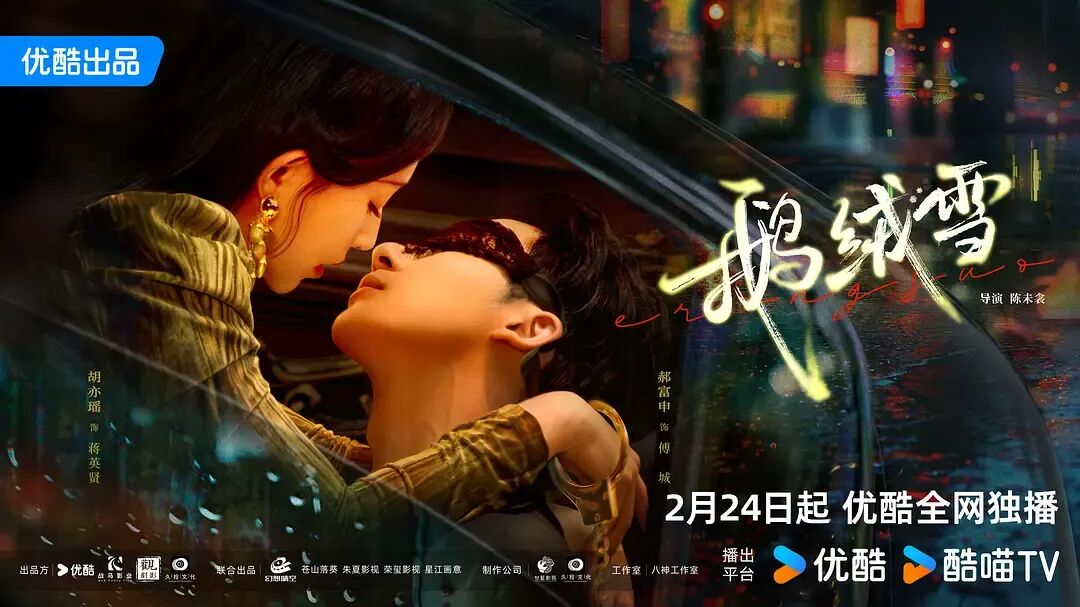
But this batch of modern romance dramas now has obviously found a more clever 2.0-level usage of erotic novels. Their text sources are not erotic novels, but they essentially absorb the creative experience and the core of attracting audiences of erotic novels, which can be regarded as a relatively advanced roundabout way to achieve the goal.
First, they borrow the highly tense emotional templates. The high-ranking official romance stories and taboo love that break through ethics, which are often used in erotic novels, appear more and more frequently in modern romance dramas. This year's two hit modern romance dramas, the workplace underground romance in *Early Spring Sunny* and the sibling incest in *Wild Dog Bones*, both adopt relationship settings with resistance. Most of these modern romance dramas that have released large-scale trailers also follow similar emotional templates. For example, *Green in the Fog* tells the story of two well-connected aristocratic families, where the male lead falls in love with his younger brother's girlfriend; the original work of *Want to Hide You and Time* also starts with a "one-night stand", which starts from desire to ask for true love.
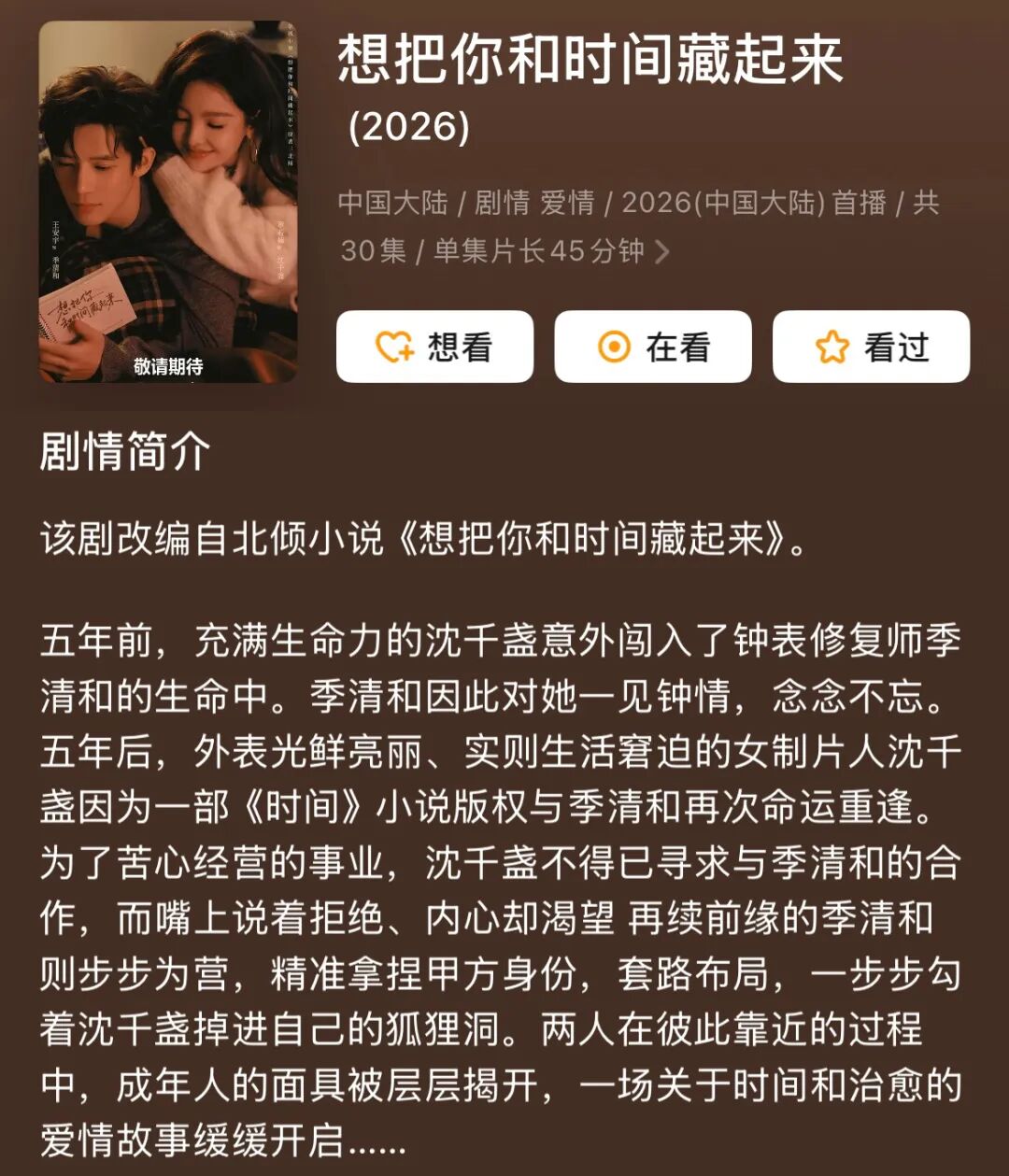
Secondly, intimate scenes have become the actual selling point. Although from the perspective of text volume, most of the space in erotic novels and these modern romance dramas is used to lay the foundation for emotions, and intimate scenes only account for a small part of the whole work, no matter the authors and directors, or the readers and audiences, are very clear that the lust scenes are the main course. Only when the kissing scenes and bed scenes are written or filmed with high quality can the audience's expectations be fulfilled, and the drama can be said to have reached its upper limit.
In addition, the most critical and clever point of modern romance dramas is that, like erotic novels, they call on the audience's imagination to complete secondary creation. Erotic novels require the audience to convert the text into visuals. Although film and television dramas provide specific faces and sounds, the scale cannot break through the red line after all, so the audience needs to complete the imagination of the follow-up in their minds.
As we all know, stimulating secondary creation will strengthen the stickiness of fans, which is the charm of participatory fan culture. The audience has completed the emotional narrative to a certain extent, they will "overestimate" their participation and influence, and develop a mentality similar to that of a worried mother-in-law. The fans of *Early Spring Sunny* scolding Liu Wen fiercely may also come from this mentality.
Modern romance dramas have adopted the relationship templates, the selling point of intimate scenes, and the method of mobilizing imagination from erotic novels. Although the scales are very different, they have similar effects on the audience.
From Industrial Saccharine to "Industrial Aphrodisiac"
For a long time, modern romance dramas have been criticized for abusing industrial saccharine. Now that pure and innocent saccharine can no longer arouse the audience's dopamine, "industrial aphrodisiac" has emerged as the times require.
The classic scenes of industrial saccharine are already familiar to the audience: falling down and kissing for no reason, spinning and hugging, the overbearing CEO's head pat and princess carry, the female lead being humiliated and the male lead coming to rescue, matched with romantic music and repeated slow motion, and a sweet scene is produced.
These routines of distributing sweet content have been too stereotyped, and the audience has gradually become immune. At the same time, women's scrutiny of intimate relationships has become more complex, and the traditional distribution of character personalities appears outdated in values, which is difficult to meet the new aesthetic needs.
When the marginal effect brought by "sweetness" decreases, modern romance dramas begin to seek dividends from "desire", which is more primitive and has more instinctive impact. This is also supported by certain audience psychological needs. More and more female audiences can no longer be convinced by pure love fairy tales, but their desire for intimate relationships has not disappeared. They hope to see more complex and more tense emotional relationships, and also paradoxically hope that the relationship can land stably.
*Early Spring Sunny*, *Wild Dog Bones* and this batch of modern romance dramas all put love in a more extreme environment to test it, and let it accept the trial across class, secular convention and time. Of course, the nature of romance dramas determines that the test result is safe, and the intense kissing scenes and bed scenes are not only the way for the male and female leads to test their true hearts, but also the reward for the successful test.
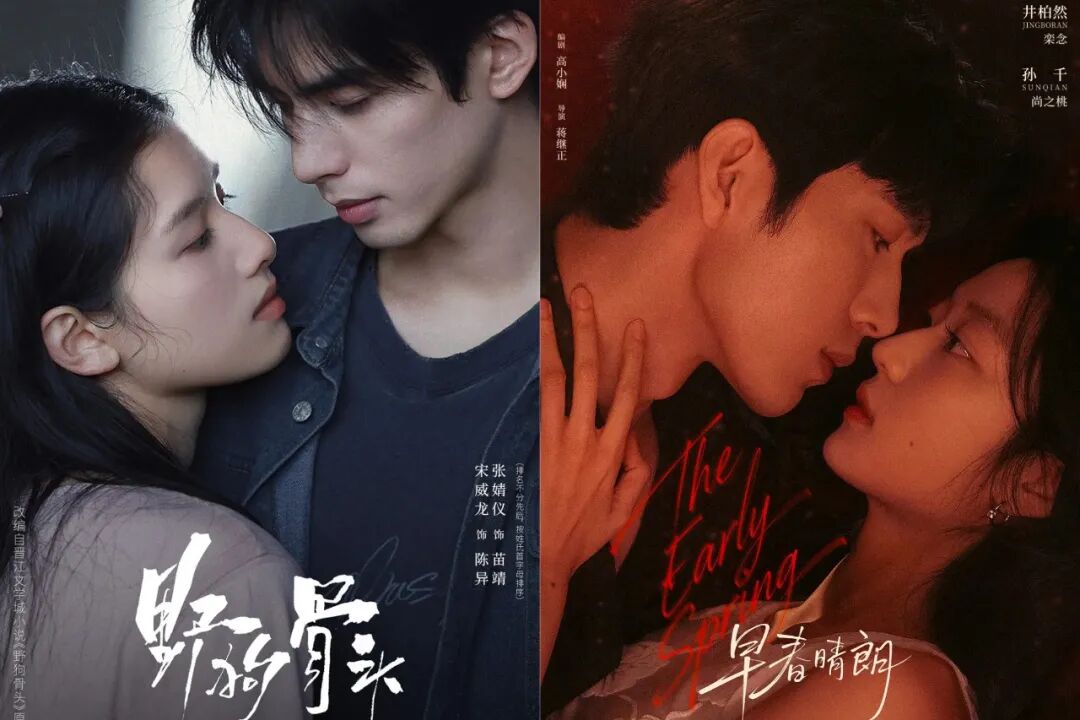
From this perspective, modern romance dramas are advancing with the times, and to a certain extent break the confinement of pure love narrative and move towards maturity. But if you peel off the industrial saccharine and the "industrial aphrodisiac", you will find that their visual appearances are very different, one is pure and harmless, the other is dangerous and exciting, but the initial motivation of creation is similar: both rely on making a kind of visual consumer product to provide immediate emotional satisfaction.
When sweet pet dramas can no longer show specific heart-fluttering moments and delicate emotions, creators make unexpected encounters and cohabitation plots; when facing the evenly matched emotional progression and spiritual resonance, they all turn to kissing scenes and bed scenes. The propositions carried by modern romance dramas are changing, but the creative method of satisfying fantasies is still taking shortcuts.
The Cost-effectiveness of Sexual Tension
Since everyone knows it is a shortcut, why is the industry still flocking to it? The reason is that in the current drama market, the cost-effectiveness of "sexual tension" is extremely high.
*Early Spring Sunny* has obviously given a lot of inspiration to the industry. Although many views attribute its success to the delicate emotional tug and proper atmosphere, and the intimate scenes are just the icing on the cake. But from the homogeneous elements in the trailers of this batch of new dramas, it is not difficult to find that the experience the industry actually draws is all in the latter part. It can be seen that every creator has a clear scale in their mind, knowing which is more important, which is easier to learn and which is more effective.
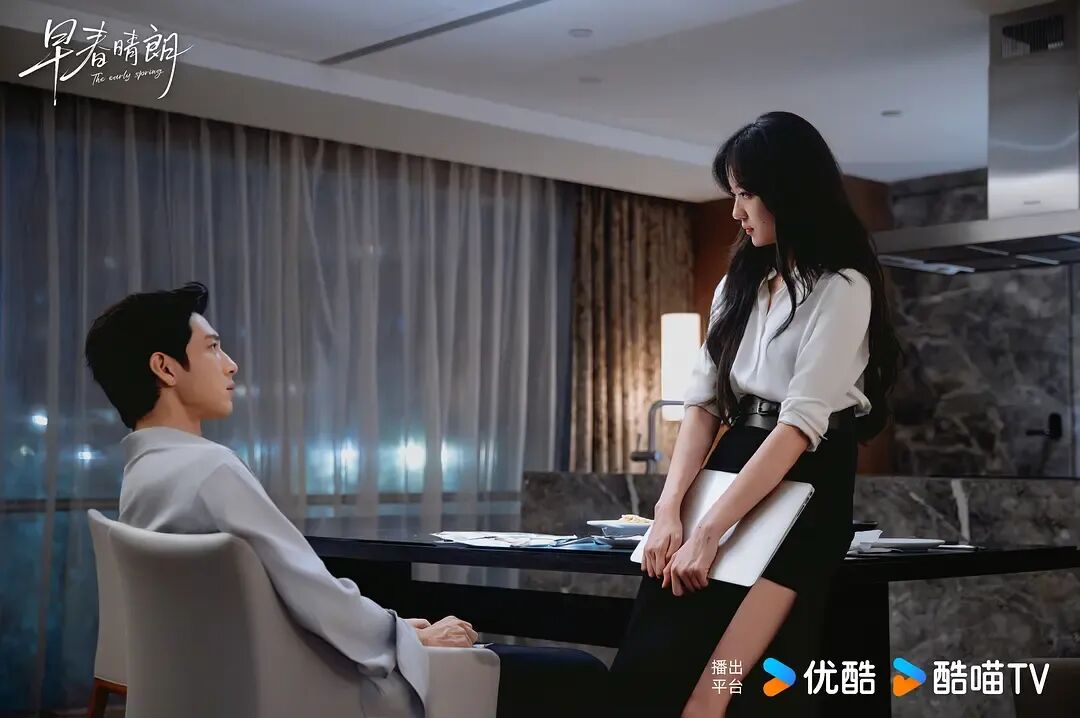
As for the reason, it is because the methodology that modern romance dramas need to create atmosphere is outdated and empty, which is difficult to guide actual creation. It not only requires the script to have details and the director to have aesthetic taste, but also requires chemical reaction between actors. Each indicator is difficult to quantify, and the creation threshold and trial and error cost are not low.
On the contrary, the audio-visual presentation of sensory stimulation is much easier. Considering the low starting point and low stimulation threshold of modern romance dramas, there is a lot of room for creation.
Judging from these trailers, modern romance dramas have finally abandoned the previous lazy attitude towards intimate scenes, and no longer shoot symbolic kissing scenes that are just a peck or shot with camera tricks. The scene has changed from a beautiful outdoor location to a closed space, the shot has changed from a surrounding full shot to a medium close-up, which focuses on shooting the actors' micro-expressions and movement details, matched with hazy color filters, the most emotionally charged "bold lines" in the whole drama, as well as ambiguous breathing sounds and ambient sounds. Although it is essentially still a kissing scene, under the heavy seasoning of audio-visual packaging, the scale looks much larger, which is enough to arouse the audience's appetite when placed in the trailer.
However, it is too exaggerated to say that it is "large-scale". The so-called Chinese entertainment industry entering the "era of heavy kissing scenes" means that people keep kissing endlessly even on the bed, at most showing the male lead's back muscles, which is still far away from the "era of real bed scenes".
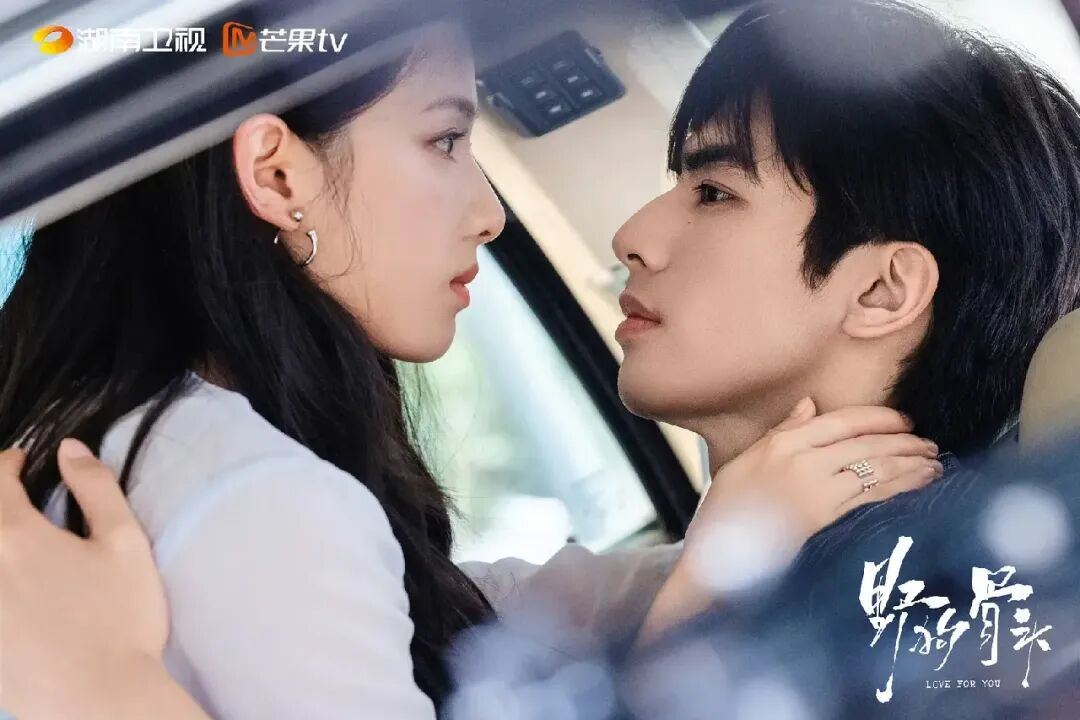
But for every small step forward in this huge gap, the difficulty of creation does not increase much, but the tension of the rebound from long-term sexual repression will grow geometrically. The audience who love this kind of content will use their own brain to fill in the defects for the creators, and even count their own imagination into the "scale" of the drama.
Creators only need to give a little gimmick, and they have the opportunity to get a sense of stimulation that exceeds the actual presentation. The audience gets obsessed with the CP because of a certain clip, and advertisers may also generously pay for the breakthrough of scale to place advertisements. These are all expected returns. The cost is transferred, but the return can be magnified, which shows how high the input-output ratio is.
For modern romance dramas that have been focusing on pure love for many years, the breakthrough of scale is certainly gratifying, but if the scale is just a gimmick, when the drama is actually broadcast, the audience will not buy it, but will feel deceived, and the cost-effectiveness of creation will be nothing but a miscalculation.
Modern romance dramas seem to have learned to tell stories in the language of adults, but the result may be another speculative creation. Boring desire is as limited in shelf life as boring sweetness. When the audience's threshold for sensory stimulation is raised to the maximum, what else can modern romance dramas use to save the situation next time? This may be a real problem that creators and the industry have been avoiding, but they have to face eventually.
This article is from the WeChat official account "Du Mou" (ID: DomoreDumou), written by HU Yujing, edited by LIU Nandou, and published with authorization from 36Kr.