Windows is "rushing" to phase out old-generation Snapdragon laptops, which could actually be a good thing.
On September 29, 2026, Microsoft released a very short announcement on its official website.
As the saying goes, more often than not, "the shorter the statement, the bigger the issue", and Microsoft's announcement is no exception. It announced that the next major version of the Windows 11 system after 26H2 will no longer support devices based on the Qualcomm Snapdragon 850 processor.

Many people may not quite understand what this "no longer supports" means. To put it simply, the last time Microsoft made a similar clear statement was in 2024. At that time, it stated that starting from 24H2, Windows 11 would mandate that processors must support the SSE4.2 instruction set, and hardware that does not support this feature (mainly old processors before 2008) will not be able to boot into the system normally.
Prior to that, although Microsoft had adjusted the hardware performance requirements for successive generations of Windows systems many times, it generally provided workarounds. Therefore, old processors and old computers at most had poor compatibility, and users could still use them normally instead of being completely unable to access the system.
For this reason, if we look at the "collective ban" on old processors in 2024 together with this phase-out of the Snapdragon 850 by Microsoft, we will find a very obvious problem. Microsoft phased out a large number of old x86 platforms 16 years ago in 2024, but now the Snapdragon 850, which was born just over 8 years ago, is also about to be "banned".
So, is Microsoft's long-term support for Arm processors much worse than that for x86?
To be honest, if you are still using a Windows computer with the Snapdragon 850 (or even the earlier Snapdragon 835) platform, it is reasonable to think so. But if you understand the changes in the software and hardware of the x86 camp and Arm camp over the past years, you will definitely not have such an idea.
In fact, the fact that Microsoft phases out old Arm processors at a faster speed is a positive affirmation for the Arm camp instead.
Why do we say so?
Let's go back to the aforementioned incident of phasing out old x86 processors in 24H2. Intel first introduced the SSE4.2 instruction set on the first-generation Core i series launched in 2008, the second-generation Core i series in 2011 brought the AVX instruction set, and in 2013, the fourth-generation Core i series introduced AVX2.

Up to today, the floating-point instruction set of the latest consumer x86 processors still has no key difference from their predecessors in 2013
But what happened after that? As of today in 2026, the mainstream floating-point instruction set for consumer-grade x86 processors still stays at AVX2. The more advanced AVX-512 has not been popularized yet, and the next-generation AVX10.1 and AMX are only at the rumor stage, with no actual implementation in sight.
In contrast, what is the situation on the Arm PC side? We have summarized it in a table.
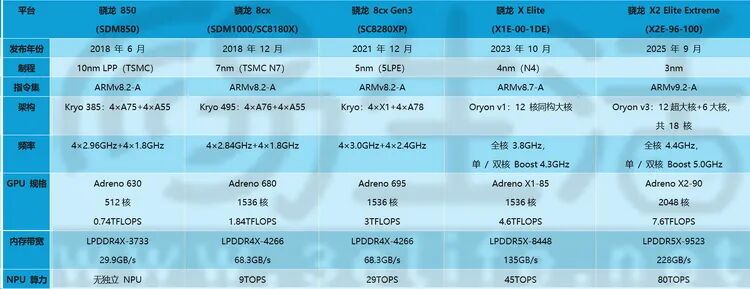
It can be seen that from the Snapdragon 850 in 2018 to the current Snapdragon X2EE, almost every generation of Snapdragon PC processors has undergone earth-shaking changes compared with the previous generation. From doubling the GPU scale to adopting the all-big-core design for the first time, and then to two revolutions of the self-developed architecture, no matter in terms of hardware performance, underlying instruction set or driver compatibility, the hardware that the Windows system needs to face is completely different for each generation.
After understanding this, it is not difficult to realize a key issue. That is, the reason why Windows phases out x86 processors at a slow speed is not only because the latter has a high market share and a large number of old computers are still in use, which Microsoft has to take into account, but also a very important factor: many x86 processors from many years ago have almost no difference with the latest architecture products in terms of software compatibility and instruction set adaptation.
This kind of "longevity" caused by the slow progress of the technology itself, can it be said to be completely for the benefit of users? I'm afraid not.
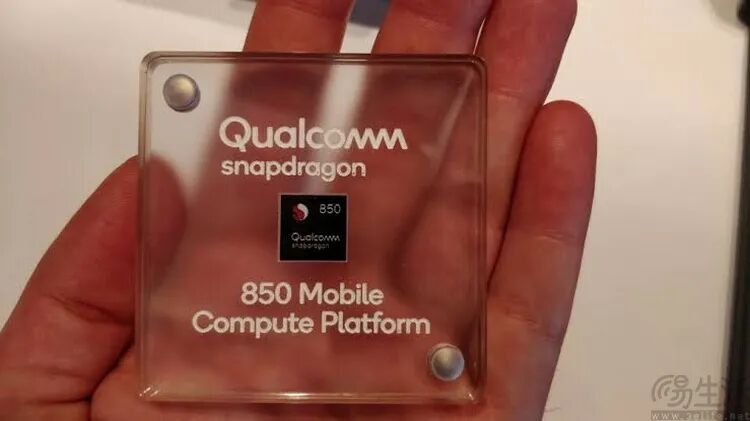
At the same time, from the perspective of the Windows on Arm ecosystem, as the first Snapdragon platform specially designed for PCs, the Snapdragon 850 does have many immature points in its design (in fact, it is almost a slightly overclocked version of the Snapdragon 845 in mobile phones). It is completely understandable that this old platform with experimental nature and absolutely insufficient performance is abandoned from further optimization.
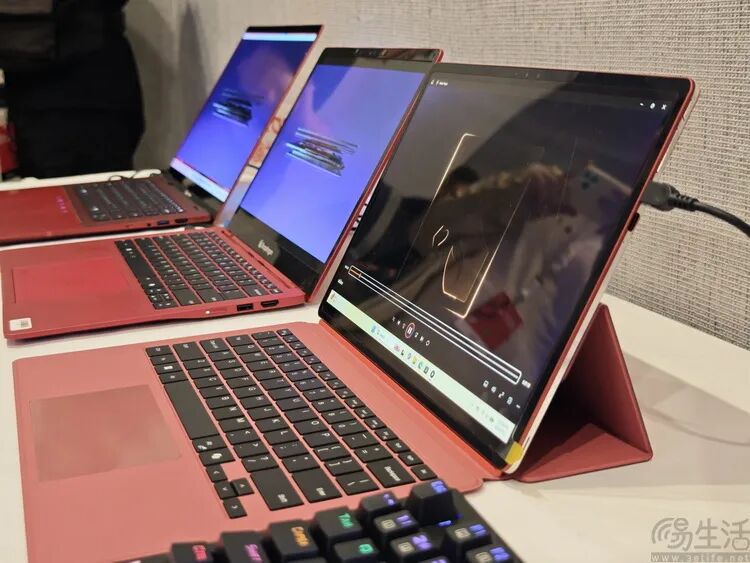
Secondly, if you follow Microsoft's moves in the Arm PC field in recent years, you will find that Microsoft's investment in Windows on Arm is indeed much larger than that in the x86 platform. Various NPU-based end-side AI functions and Windows native game super-resolution (Auto SR) functions are first launched on the Arm platform. Not to mention that when Microsoft launched the Snapdragon X generation, it completely rewrote the underlying translation engine of Windows, which directly gave the new platform (and some old platforms) leapfrogged program running performance and compatibility improvements.
Therefore, when we clear up the misconception that "Arm processors are phased out by Windows faster than x86 processors", we will find that the truth behind it is likely to be completely opposite to the appearance. The "long-lived" side is essentially slow in progress and thus too cumbersome to make changes; while the "short-lived" platform on the contrary represents a more radical product iteration speed and greater investment in system adaptation.
This article is from the WeChat official account "3eLife" (ID: IT-3eLife), written by San Yijun, and published with authorization from 36Kr.