Apple, which has been vigorously building its hardware matrix, still fails to put the elephant into the refrigerator.
Apple is about to hold another launch event, and this time, the spotlight falls on the smart home sector.
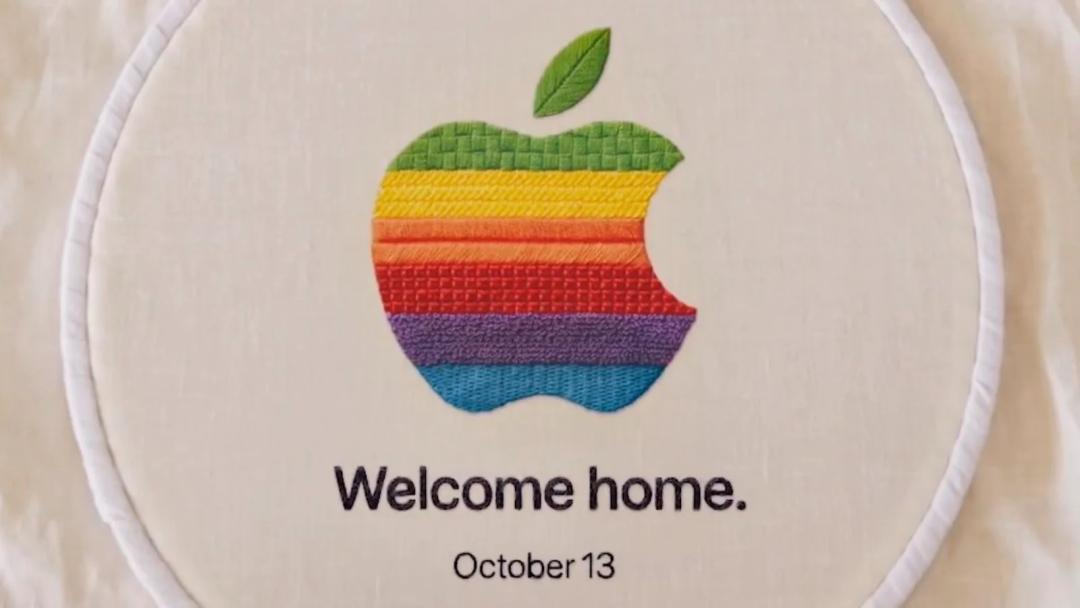
On October 9 Beijing time, Apple unveiled the invitation for its "Welcome Home" new product event scheduled for October 13. It is expected that its first smart home hub, the new HomePod mini and Apple TV 4K will make their debut together. Earlier reports also revealed that Apple is cooperating with LG to develop accessories including doorbells, door locks and thermostats.
Apple's smart home business has stayed lukewarm for years, and the company has also sidelined it for a long time. Why is it suddenly putting top priority on this business now?
In fact, foreshadowing has been laid at the September autumn iPhone launch event. New CEO Ternus put forward the concept of "Smart Personal Hub", and now the "perception entry" centered on this concept has been extended to home devices.
Is Ternus trying to follow Xiaomi's footsteps? Speakers, TV boxes, door locks, plus a hub that connects all of them, this product lineup looks oddly familiar. Xiaomi and Huawei have long been building such product portfolios.
If something looks like IoT, sounds like IoT, and functions like IoT, it is IoT. Adding a few more screens and launching more hardware products hardly changes the essence of this matter.
Ternus's change of attitude is also quite notable. Back then, he was an opponent who was reluctant to invest in the smart home business; in March this year, he was reported to be in charge of promoting new home products, and now he is even taking the lead to grow this business in his capacity as CEO.
Since he took office, news of reforms and new product plans have kept emerging, and Ternus has obviously kept Apple much busier. But most of these moves still fall within the hardware business that Apple is most familiar with.
The harder Apple tries to cling to the present, the more it reveals its helplessness facing the future. As LetterRank put forward a judgment in the article "Personal Agent: The First Step for Humans to Move Towards Silicon-based Intelligence?": Personal Agent is the soul, and hardware is the carrier. Whoever the user hands over tasks to first will get the chance to decide which device to call and which service to use next.
Apple has added far more "bodies" for its ecosystem, but it has not yet proved that Siri can become the personal Agent soul that commands all of them.
Ternus is busy adding new gadgets to every corner of the house, but that big elephant is still standing right in the room: what is Apple going to do with its AI business?
A
The current new product launch rhythm of Apple now shows a taste of the prosperous, diverse product lineup that domestic mobile phone manufacturers had at their peak.
Before the October 13 launch event even arrives, news about the next round of new product releases later in October has already come out. According to Bloomberg, there will be another round of Mac and iPad updates around October 27, which is rumored to include the long-rumored touchscreen MacBook. Launching two batches of new products in half a month, Apple seems to have started its hardware "mass product" strategy.
All the busy moves Ternus has made since taking office are centered on Apple's existing advantages. His strongest expertise happens to be the comfort zone that Apple is most reluctant to leave. Ternus's expertise in hardware is strengthening Apple's short-sighted path dependence.
The first moves of the new CEO were targeted at the engineering team. According to reports, Ternus plans to streamline middle management, shorten the decision-making chain from engineers to executives, so that new products do not have to be crowded into fixed launch schedules all the time. He also frequently appears in design studios, refocusing the CEO's attention on product development.
However, where exactly are these upcoming new hardware products innovative?
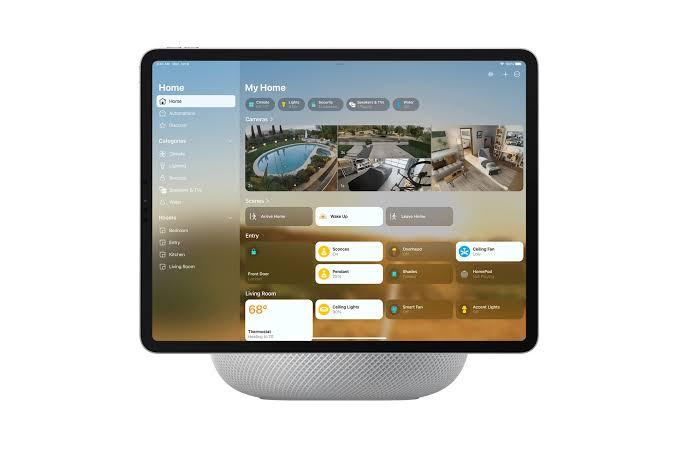
Take the home hub expected to be launched at this event as an example. According to leaks, it is a 6-inch square screen that supports both wall-mounted and desktop placement modes. Equipped with a base, it reminds people of the classic iMac G4 from years ago. Controlling home appliances and checking information are all familiar functions that users have seen on many other devices.
Behind Ternus's changed view on the prospects of the smart home business, he is still concerned about the same core question: how to make more profits.
When the first generation of HomePod was under development, Ternus, then Vice President of Hardware Engineering, was reported to have opposed adding cameras and sensors on the grounds of cost. At that time, he doubted whether the smart home business could become a profit growth point worthy of Apple's large-scale investment.
Now as the CEO, he needs to worry about the next revenue stream of the entire company. Apple's new hardware product list is getting longer, and these products need to drive new growth. Erik Woodring, an analyst at Morgan Stanley, recently pointed out that Apple's product roadmap looks promising, but earnings expectations have not changed significantly after the autumn launch event.
For Apple, the smart home business is a business that can sell hardware repeatedly to the same household and generate continuous service fees. According to current reports, Apple hopes users place multiple hubs in different rooms, use cameras and sensors to identify people approaching the devices, and display schedules and information that belongs to the specific person. One household does not need to buy only one device. The usage demands originally fulfilled by a single mobile phone can be scattered on walls, desks and bedside tables.
The mature model to generate continuous revenue for the smart home business is already ready. HomeKit Secure Video is bundled with iCloud+ subscriptions. The $0.99 per month plan for US users supports recording from one camera, and the $2.99 plan supports 5 cameras. After the hardware is sold out, the subscriptions can still bring continuous revenue.
The cooperation with LG supplements the product categories that Apple does not need to produce by itself. HomeKit has long supported external brands such as Philips and Honeywell. The change mentioned in recent reports is that Apple and LG will jointly develop these accessories. Door locks and thermostats can carry other brands' logos, while the hub, accounts and services that connect them are still provided by Apple. Apple is back to its familiar platform business model: integrating other manufacturers' hardware and continuing to sell its own services.
There is nothing wrong with what Apple is doing right now. But when a company famous for defining new products bets its next step on expanding product categories, integrating existing technologies and selling more products to old users, it is no more than a traditional hardware manufacturer that dares not aim for the future.
The public is joking that Apple is learning from Xiaomi this time. But in our view, if Apple is aligning itself with Xiaomi on product development, it is aligning itself with large PC manufacturers like Lenovo on strategy. Even in building a compelling future narrative, Apple is doing worse than Lenovo.
The pressure Lenovo is facing now is no less than that of Apple. The latest IDC data shows that global PC shipments in the third quarter fell 20.1% year on year, and Lenovo's shipments dropped 22.6%. Pre-stocking, price hikes and supply restrictions dragged down the shipments of this quarter, and it is increasingly difficult to drive growth just by telling stories about PC replacement.
But Lenovo is at least "performing AI development", repeatedly emphasizing hybrid AI that realizes collaboration between end-side, edge-side and cloud-side, and drawing a common future for its computers, mobile phones and servers. At the Tech World event it preheated three months in advance on October 7, it was still emphasizing this narrative.
In contrast, Apple is also talking about AI, but it has not come up with a convincing enough future narrative that can support this round of hardware expansion. In redefining the relationship between people and devices, it is not even as bold as Lenovo.
Cook was good at scaling up already-profitable businesses, and now Apple is increasingly relying on this kind of certainty. Ternus is improving its operational efficiency for the present, but he has not changed its powerlessness facing the future.
Apple now seems to have lost the courage to aim for the future, and has not demonstrated the capability to do so.
B
Why is Ternus so busy expanding its hardware product matrix after taking office? Doesn't he know what Apple's real problem is and what the outside world is expecting from it?
In fact, the only big elephant standing in front of Apple all the time is: what are you going to do with your AI business?
The problem is that Ternus sees this problem, but he has no way to answer it.
He can only schedule more and more launch events and fill Apple's product shelves with more gadgets, as if this can help him evade the question of "what to do with AI". Diligence has become a stalling tactic here: tactical busyness is used to delay the answer to the core strategic question.
However, tactical diligence cannot cover up Apple's strategic laziness.
In the battle of large language models, Apple gives the public the impression that it almost "surrenders before the war even starts". Facing the new round of competition, it looks completely at a loss; even when it turns to external help, it still drags its feet and cannot deliver a qualified answer.
Apple's self-developed AI business has not made solid progress for a long time, and the new Siri has to rely on Google's Gemini for support first. But the fact that it chose Gemini, which also faces many development delays, seems to show that Apple does not have a very good eye for partners.
Apple originally had plenty of time to avoid ending up in this situation. Siri was launched by Apple back in 2011. Looking back 15 years later, Siri got up extremely early, but still failed to catch up with the latest wave of development.
Siri was launched earlier than many of its peers: Amazon's Echo and Alexa did not come out until 2014. But Apple's own HomePod did not launch until 2018, and other manufacturers had already occupied the living room market first. When ChatGPT sparked a new round of competition, Apple had to start from scratch to catch up on large language model development, until it was completely left behind by the times.
Two years after Apple Intelligence was launched, it still has not fully delivered the promises it made back then. The new version of Siri that can understand personal information and handle tasks across apps was only gradually opened in English beta version in September this year.
On the other hand, from Apple Intelligence and Siri AI to "Smart Personal Hub", Apple keeps updating its description of AI, but the delivery of key promises has been delayed again and again.
While products are being delayed, Apple's R&D talents are also leaving. Pang Ruoming, the head of the basic model team, left Apple last year, first joined Meta, and then joined OpenAI this year. After Meta's Muse was launched in September this year, it topped the free App Store chart in the US in less than two weeks, driving a boom in personal Agent development. OpenAI also released its own personal Agent assistant Dots.
Even companies that do not make mobile phones are building their own "soul" for their ecosystem. Apple, which is best at tightly integrating software and hardware, loosened its grip on the AI business first.
In contrast, the new versions of Apple Intelligence and Siri AI have exposed many embarrassing problems in overseas tests.
In the test conducted by tech author David Pogue, Siri can find his Uber consumption records, but cannot call a car for him, and can only open the Uber app for him; when asked to make a transfer via Venmo, it gets stuck because the app has not been connected to the new Siri.
Some users even find that Siri cannot complete the tasks that the old version of Siri used to handle. User feedback collected by 9to5Mac is even more awkward: some users asked Siri to turn off the alarm, but Siri said no alarm was set; Apple Watch users tried to set a timer, but were told that the Clock app was not installed on the device.
The reason why personal Agent is highly anticipated is that people no longer need to revolve around their mobile phones. A qualified personal Agent needs to remember what you have told it, understand why the task needs to be done, and then continue to complete the task for you.
Now when personal Agent enters the home scenario, Siri will face far more challenges.
Turning on the light and adjusting the temperature can already be completed by pre-set rules; knowing who is back home, remembering his preferences, and then arranging subsequent tasks is what an Agent that can continuously understand human needs is required to do.
Looking further ahead, when a personal digital avatar enters the life of an entire family, whose instructions should it follow? When children are asleep and parents are still active, how to balance different people's habits and permissions? When the Agent "recognizes you", it cannot only recognize you as an individual.
In fact, the cost of Apple's delay in AI development has already affected the update rhythm of its hardware products. According to reports, the home hub was originally planned to be launched in 2025, and was later delayed due to the slow progress of Siri.
On the contrary, Apple has taken the lead in rewriting the rules for Agent's access to user data permissions.
Recently, Apple announced that it will add new control measures for "Full Disk Access" on macOS, requiring users to go through more explicit operations to grant apps broad access to data such as files and emails. The announcement specifically mentioned the increasingly autonomous AI Agents.
Apple's exposed product plans cover almost everything, but the big elephant in the room is still there. News about server chips, smart glasses, and desktop robots has all come out.
Developing a few more hardware products obviously cannot make up for this huge debt in the AI sector.
The importance of hardware will continue to decline. If you do not have your own Agent, other manufacturers will always control you.
C
Since Apple wants to build "bodies" for Agents, why does it choose to make home devices instead of directly making robots?
Is it because it cannot, or it dare not? In fact, Apple is far behind the two most popular mainstream narratives in the tech circle right now: AI and embodied intelligence.
The robot track is already very hot. In China, the shipment of humanoid robots exceeded 19,000 units in the first half of this year. During this National Day holiday, robots worked as tour guides and sold drinks in scenic spots, made coffee and ice cream in business districts; in pharmacies, robots have taken on tasks including sorting, packaging, restocking, and preparing goods for instant delivery.
Apple is not without research on robots. In January 2025, it published a research prototype in the form of a desk lamp in its papers and demo videos, which expresses attention and responds to people through the movement of its lamp head and support, but it has not been officially released as a consumer product. According to other reports, last April, Apple transferred a robot team to Ternus's management.
What this question really tests is whether Apple still has the ability to define a new category of products. But after the iPhone, Apple has suffered successive setbacks in its automotive and AI projects.
When Apple develops a product, it needs other manufacturers to pave the way first. In the Steve Jobs era, Apple paved the way by itself, but later Apple needs other companies to blaze a trail for it. Out of respect for the iPhone that created the mobile internet era, we like to use the "strike late but win the game" narrative to save face for Apple. The so-called "strike late but win" is essentially that Apple dare not launch products early and cannot launch revolutionary products. Apple is not that it can afford to wait, it has been used to waiting for too long.
Mark Zuckerberg mocked on the Joe Rogan show last year that Apple seems to have been sitting on the success of the iPhone left by Steve Jobs all the time. The lack of revolutionary products for a long time can be interpreted as Apple being cautious; when a product finally comes out, it can be interpreted as accumulated strength leading to a breakthrough. According to this logic, Apple can never be wrong.
The iCar project is the most famous example. After nearly a decade of investment, rounds of reports and product plans, the project was finally terminated in 2024. Apple once wanted to build a self-driving car that does not need a steering wheel, but it kept lowering its goals later, and finally canceled the entire project, with part of the team transferred to generative AI development.