19.9-yuan Replicas of Restaurant Signature Dishes, "Office Worker Pre-made Meals" Precisely Harvest Me
In the past, people perceived pre-made dishes as meal kits full of excessive additives and preservatives, like witch's brew simmered in dark corners. But today's consumers have learned to distinguish "good pre-made dishes" from "bad ones", and are actively embracing the former.
While Chinese catering businesses are caught in cutthroat competition in the freshly cooked food track, this generation of thrifty householders have already started processing pre-made dishes on their own.
On the subway after work, urban office workers open the fresh grocery supermarket App, pick a favorite product for dinner from a wide range of constantly updated fresh food, ready-to-cook semi-finished products and soup bases. By the time they get home, the ingredients have already been delivered. They only need to unpack them, follow the instructions on the package to heat or do simple cooking, and a viral delicacy identical to that served in restaurants can be easily replicated.
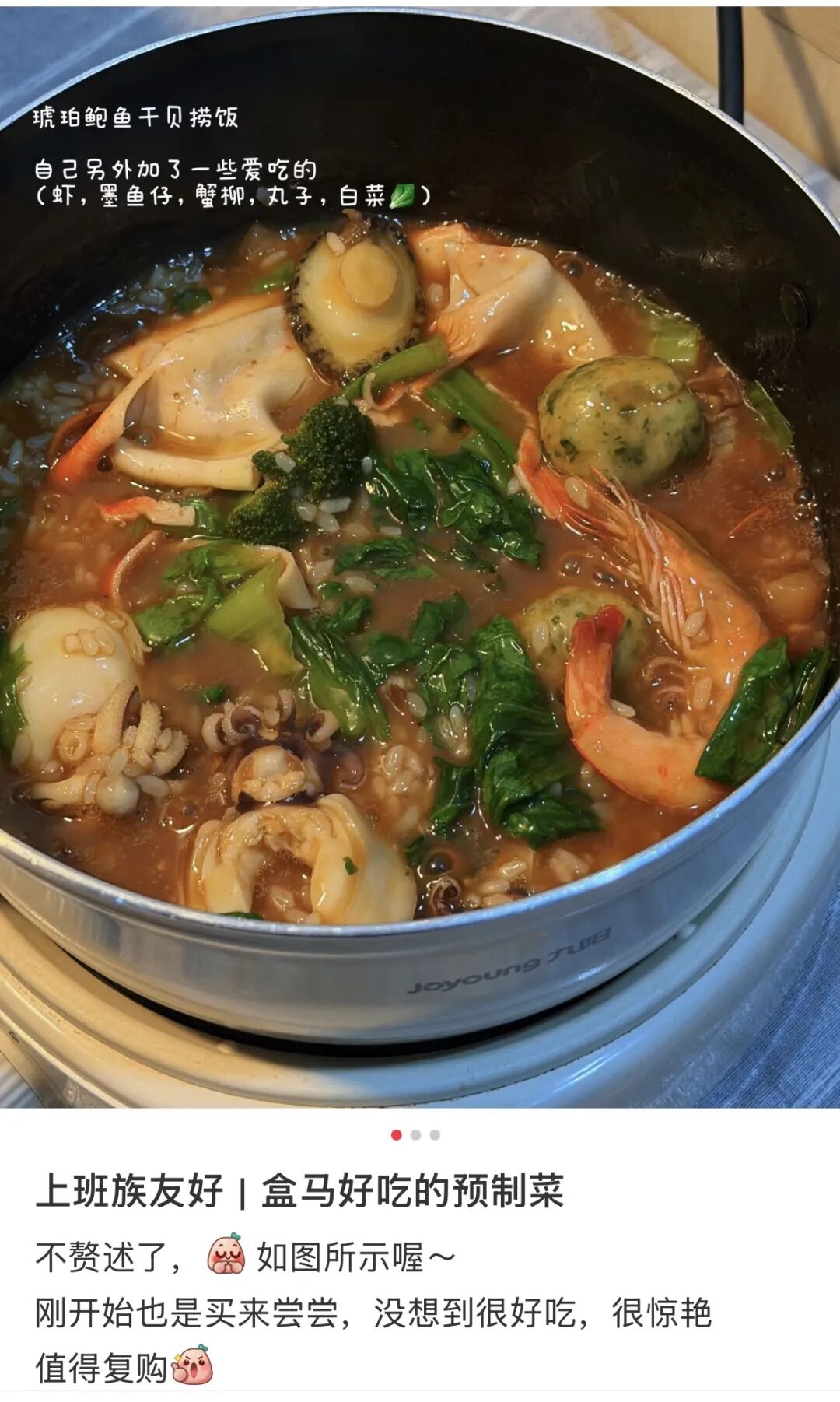
Pre-made dishes that "can be eaten as soon as you get off work" are still evolving with endless new tricks. (Photo from social media screenshot)
In recent years, a variety of pre-made dishes have gradually appeared on young people's dining tables, ranging from Dezhou braised chicken, spicy crayfish to lemon spicy chicken feet, Sichuan pepper chicken, Yan Du Xian, and seafood poke bowl, covering Chinese, Japanese and Western cuisines with all kinds of options available. These novel dishes have also aroused people's enthusiasm as if they were tasting hundreds of herbs like Shennong.
According to the 2025 Pre-made Dishes Industry Insight Report: Consumer Behavior and Competition Pattern, the C-end (household use) market size of pre-made dishes reached 197.3 billion yuan in 2025, accounting for 30%-40% of the total market, with a year-on-year surge of 41.2%, far exceeding the 21.5% growth rate of the B-end (catering enterprises).
Actively embracing household pre-made dishes does not mean that people no longer need freshly cooked meals. It is just that in this efficiency-oriented era, having freshly cooked dishes is regarded as a luxury, while speed, health and cost-effectiveness are more common choices in daily life.
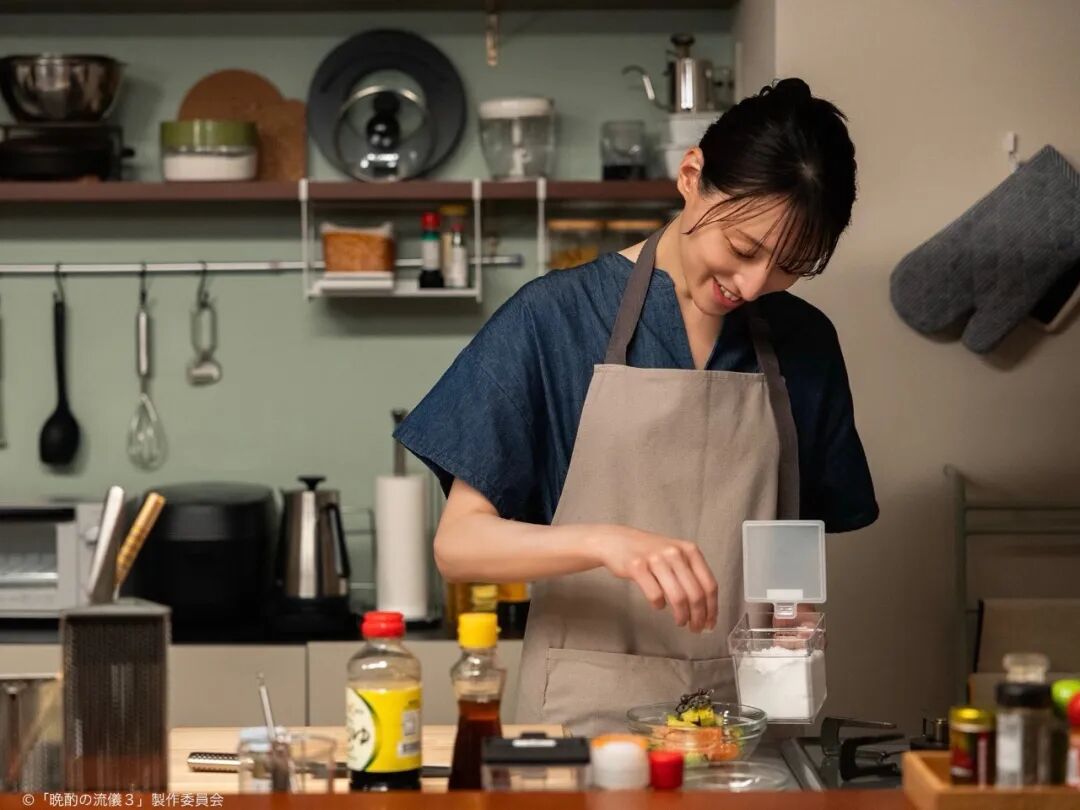
Japanese people have long used pre-made dishes to save kitchen time. (Photo from Home Drinks Club Season 3)
With pre-made dish kits, everyone can be a chef
How to recreate the copper pot braised chicken with soy sauce that is identical to the signature dish of the viral restaurant "Huoshao Yun" at home? If you search for tutorials online, you will find that you need to crush materials such as amomum tsao-ko, lemongrass and chili peppers in a food processor first. This step alone has already discouraged half of the people. First of all, you need a professional food processor to crush the hard amomum tsao-ko and lemongrass; before that, you have to buy fresh lemongrass first.
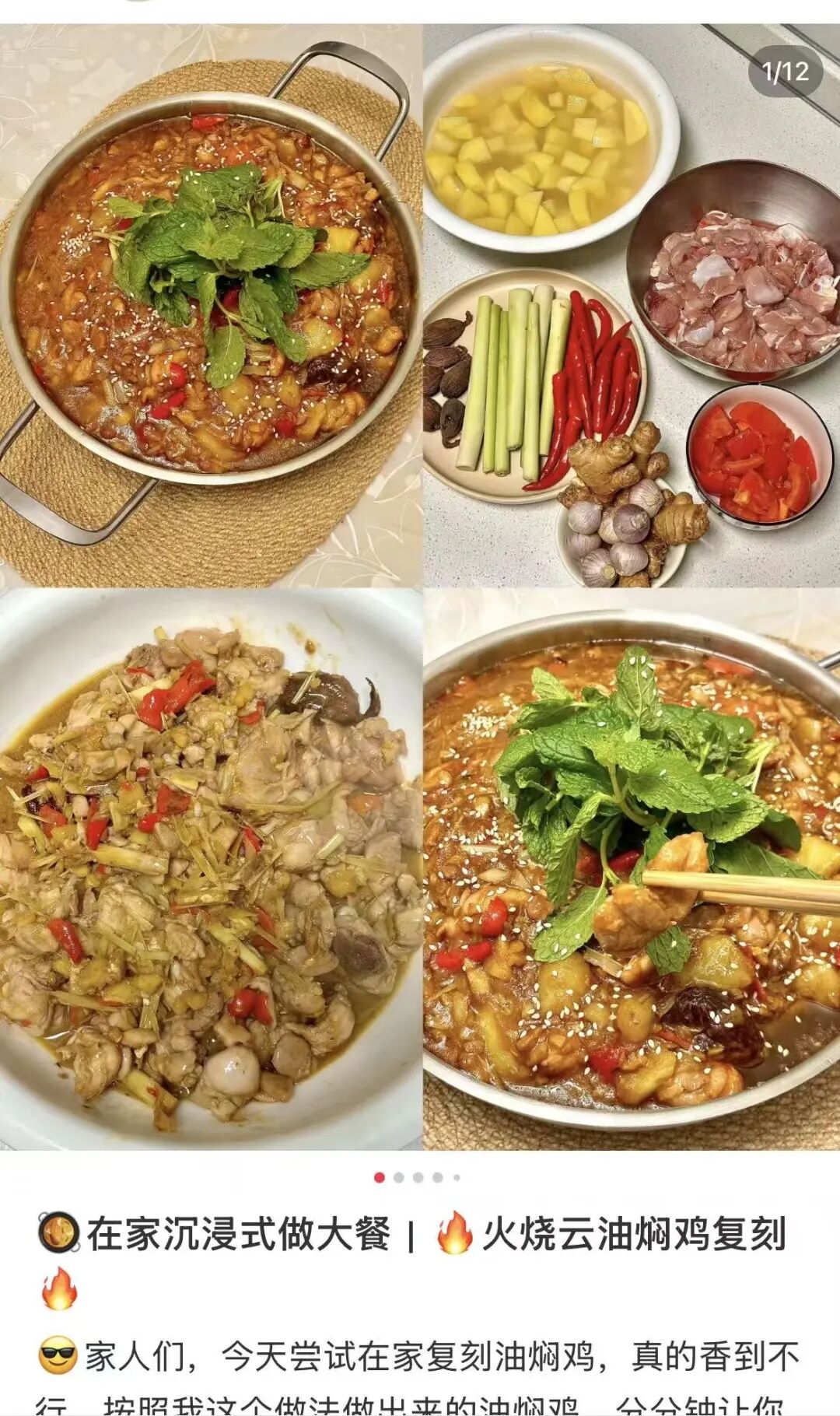
It is not an easy thing to recreate braised chicken with soy sauce at home. (Photo from social media screenshot)
However, now you only need to open a 19.9-yuan sauce packet, stir-fry fresh chicken with it, and finally add the pre-prepared mashed potatoes to finish the dish. If you are more careful and serve the dish in an exquisitely prepared beautiful plate, almost no one will find that it is made from a pre-made dish kit.
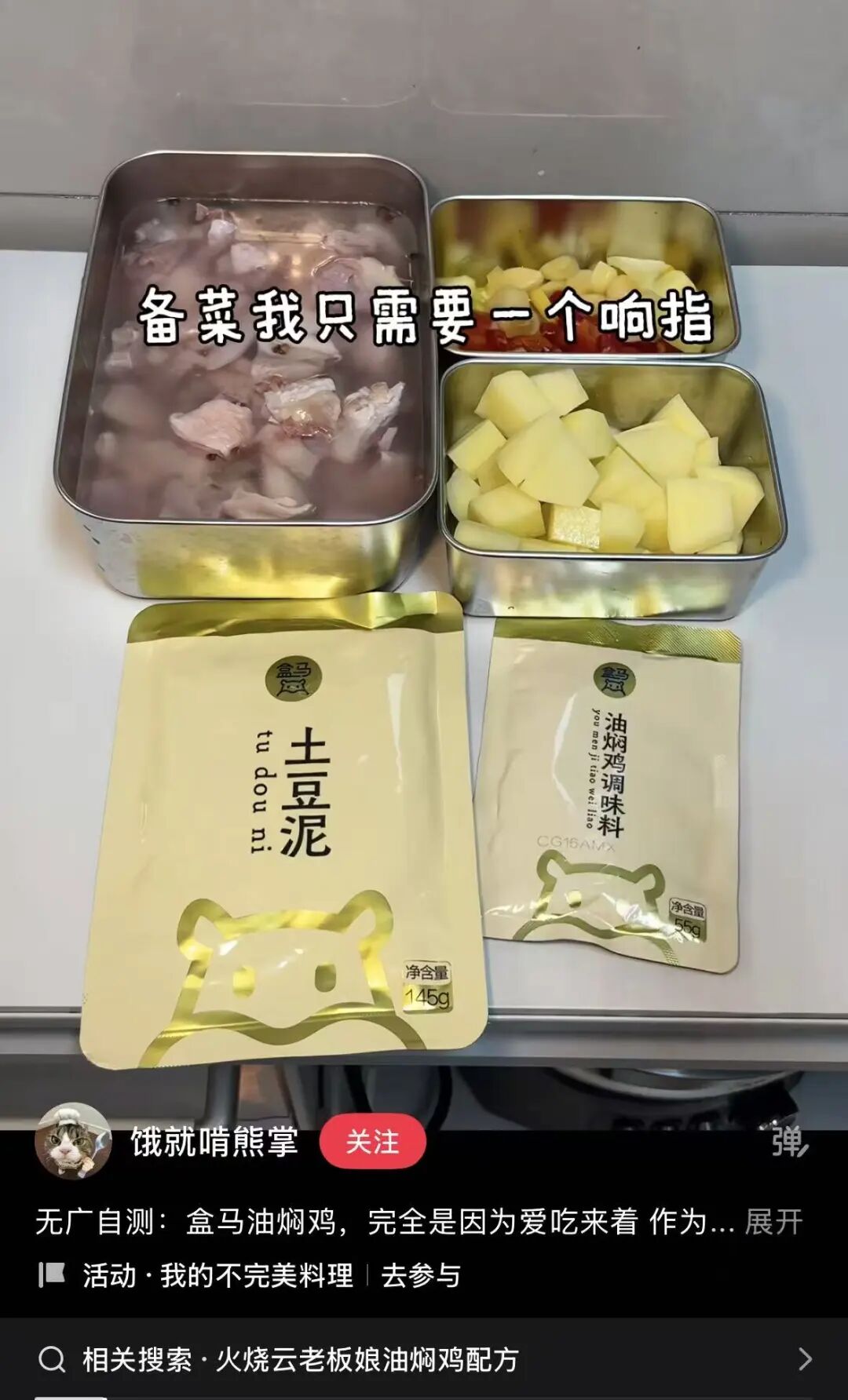
Between cooking by themselves and ordering takeout, people choose semi-finished products. (Photo from social media screenshot)
This is the beginning of people's "decline". In the product comment section, a group of people exclaimed "it is almost comparable to the dish served in the restaurant" and "a authentic big meal for only more than ten yuan"... Since the emergence of pre-made dishes with higher and higher taste restoration degree, "home chefs" have also lost their advantages and been defeated.
Every day after work, my colleagues and I always browse the fresh grocery supermarket App on the subway on the way home. After adding all kinds of meat and vegetables to the shopping cart ambitiously, we will always leave those semi-finished products, even cooked food and pre-made dish kits that do not require complex processing for no particular reason.
For example, the seafood poke bowl that is very popular in the Japanese cuisine industry contains raw shrimp, salmon and fish roe, etc. The average price of this dish in first-tier city restaurants is about 58 yuan. But if you buy it on the online fresh grocery platform, it only costs about 33 yuan, almost half of the price of eating in the restaurant.
Another example is the Yan Du Xian, a spring soup that people in Shanghai love so much. It was originally always the recommended dish in restaurants, but now you only need to throw the divided ingredient packets into a pot and boil them at home, and you can also drink this extremely delicious soup.
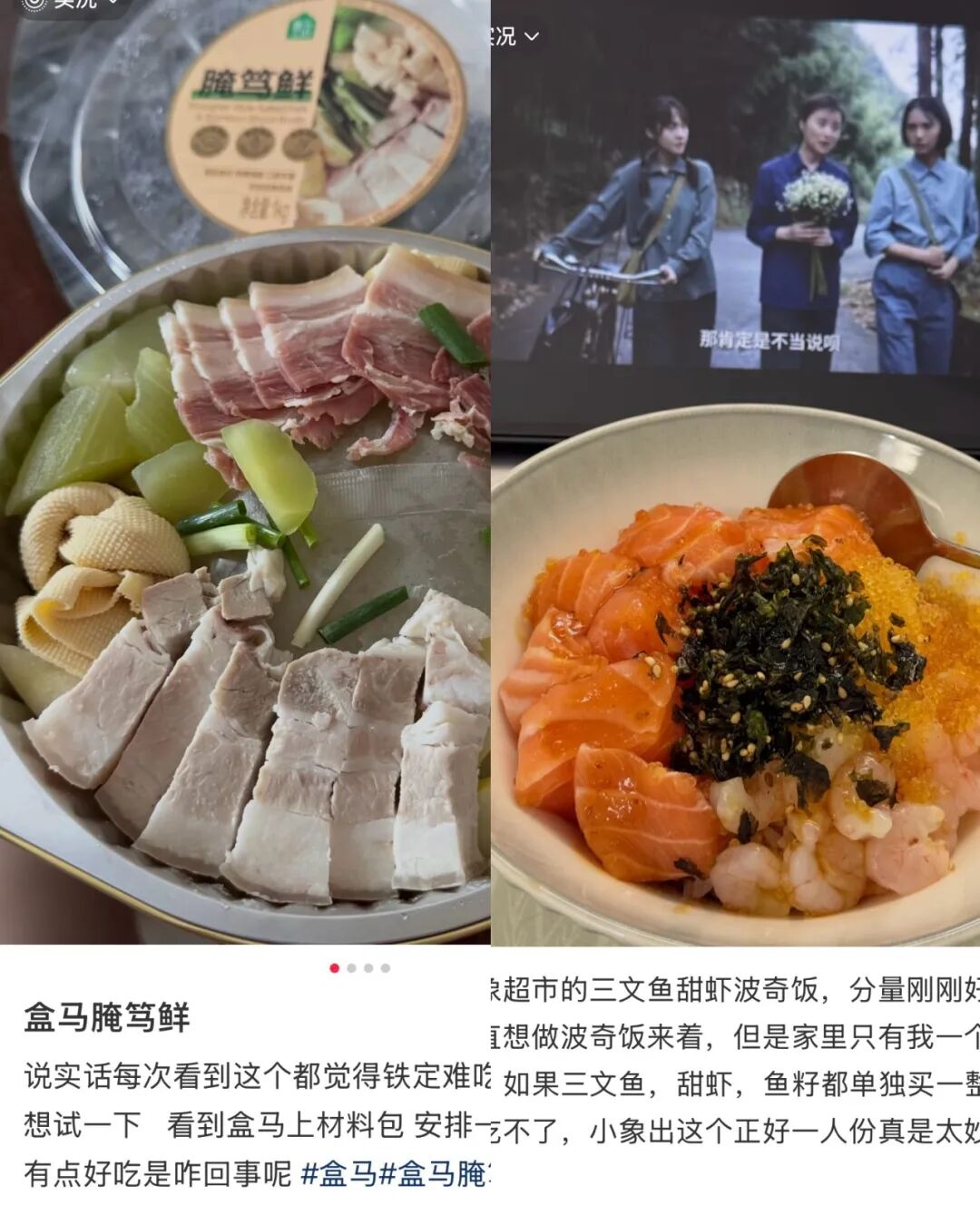
Young people usually go through the mental journey from questioning, to understanding, and then to falling in love with pre-made dishes. (Photo from social media screenshot)
In the retail context, pre-made dishes are divided into three categories: ready-to-eat, ready-to-heat, and ready-to-cook. Ready-to-eat refers to light food or cooked food such as seafood poke bowl; ready-to-heat includes grilled fish, spicy crayfish, Yan Du Xian, etc.; ready-to-cook includes semi-finished quick dishes to be processed — all side dishes have been cut and matched, and are also equipped with seasoning packets, which means that people can eat "freshly made" meals almost without any cooking skills.
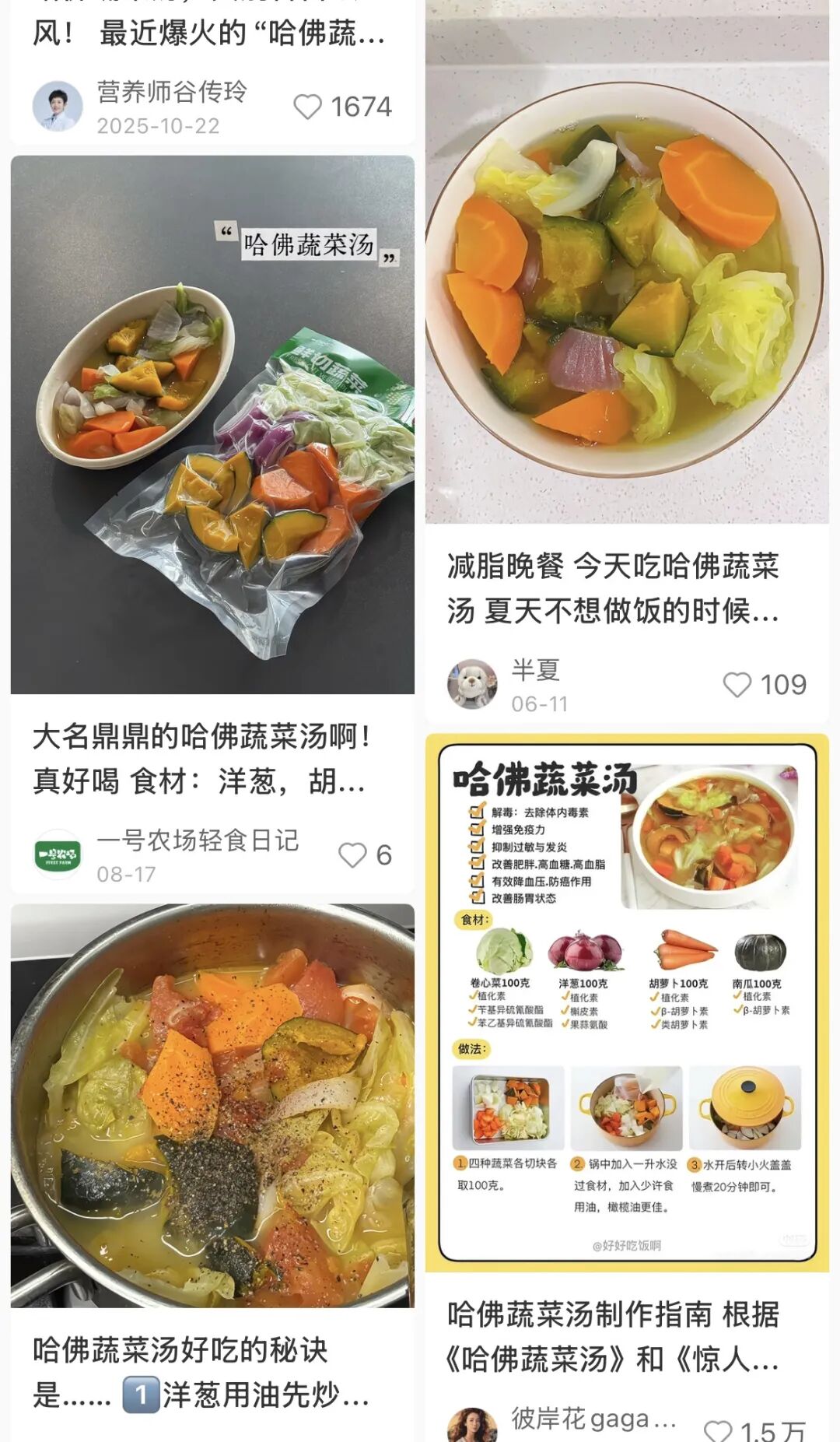
Last year, a Harvard vegetable soup was very popular among urban white-collar workers. (Photo from social media screenshot)
According to the previous cooking logic, to make a decent big dish, you often need to buy a lot of ingredients. But for ready-to-cook pre-made dishes, the ingredients have been matched, and the portion is just enough for one meal.
Not only that, under normal circumstances, from purchasing to cleaning, preparing ingredients, cooking and cleaning, it takes at least an hour to have a dinner; with pre-made dish kits, this time can be compressed to 10-30 minutes.
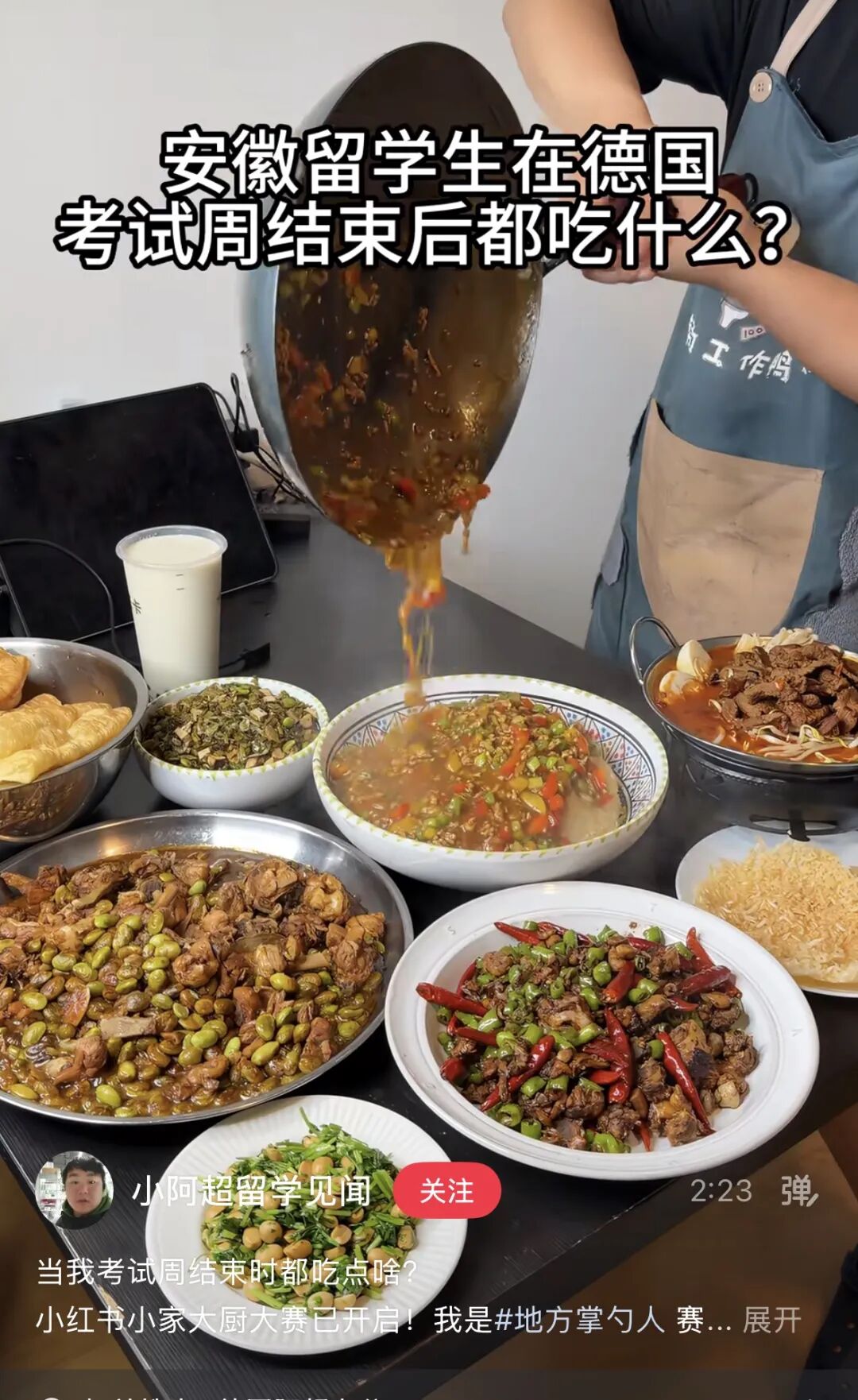
Nowadays, except for cooking bloggers, people have gradually lost the motivation to "cook carefully". (Photo from social media screenshot)
For individuals, using pre-made dish kits means they don't have to drag their tired bodies to face the stove after work, and they can also serve decent meals in the rental house. When friends come to your home for a small gathering, you can cook by yourself, and also match several ready-to-cook and ready-to-eat pre-made dishes to "cheat" a little.
The user profile of C-end pre-made dishes is obvious, which is also consistent with our perception of this round of pre-made dish boom. The 2025 Pre-made Dishes Industry Insight Report: Consumer Behavior and Competition Pattern shows that C-end pre-made dish consumers are mainly young and middle-aged white-collar workers aged 22-40, of whom women account for nearly 60%, and are highly concentrated in first- and second-tier cities.
Looking at the comment section of the online fresh grocery App, everyone was like me at first, just trying these novel pre-made dishes out of curiosity, and then shouted to the merchants: "Praise, this product must never be removed from the shelves."
The thrifty householders who are careful with money finally find their appetite and the sense of excitement that their wallets can afford in pre-made dishes.
Have pre-made dishes taken on a new look?
It is obvious that in the past one or two years, almost all restaurants have scrambled to emphasize that "our dishes are freshly cooked", and people are used to saying "this is pre-made" in a low voice when they eat unpalatable dishes in restaurants. But in fact, people do not seem to hate pre-made dishes as much as they imagined, they just do not want to pay for freshly cooked dishes and end up eating pre-made ones. If pre-made dishes can meet most people's needs for taste, health and price, almost no one will reject them.
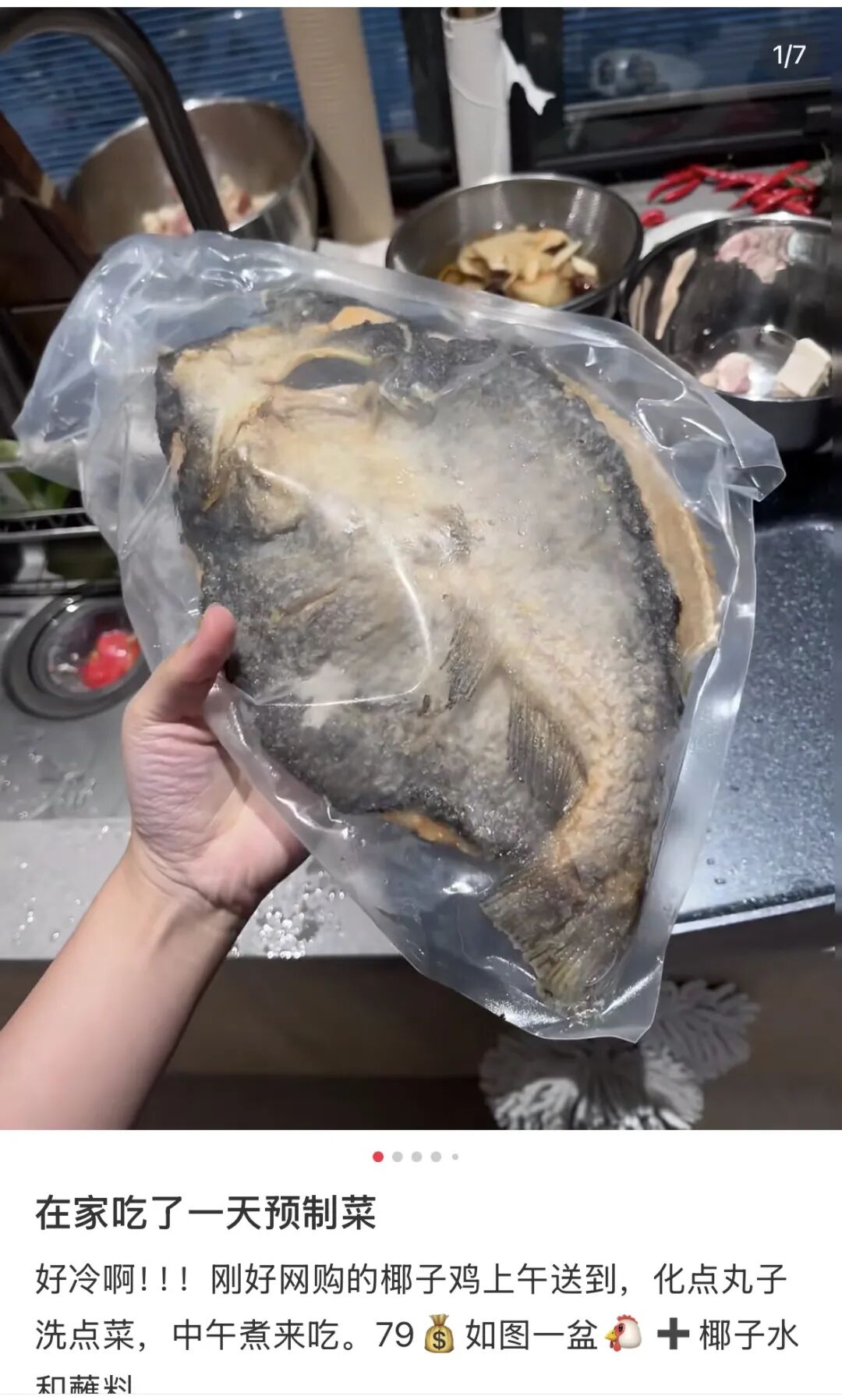
When you don't want to go out, the advantages of pre-made dishes are even more obvious. (Photo from social media screenshot)
In the past, people perceived pre-made dishes as meal kits full of excessive additives and preservatives, like witch's brew simmered in dark corners. But today's consumers have learned to distinguish "good pre-made dishes" from "bad ones", and a simple and crude method is to "check whether the ingredient list is clean". Some people on social media have summed up the experience: when buying pre-made dish kits, check whether preservatives are added and whether the number of additives exceeds three; products with too long ingredient lists should not be bought.
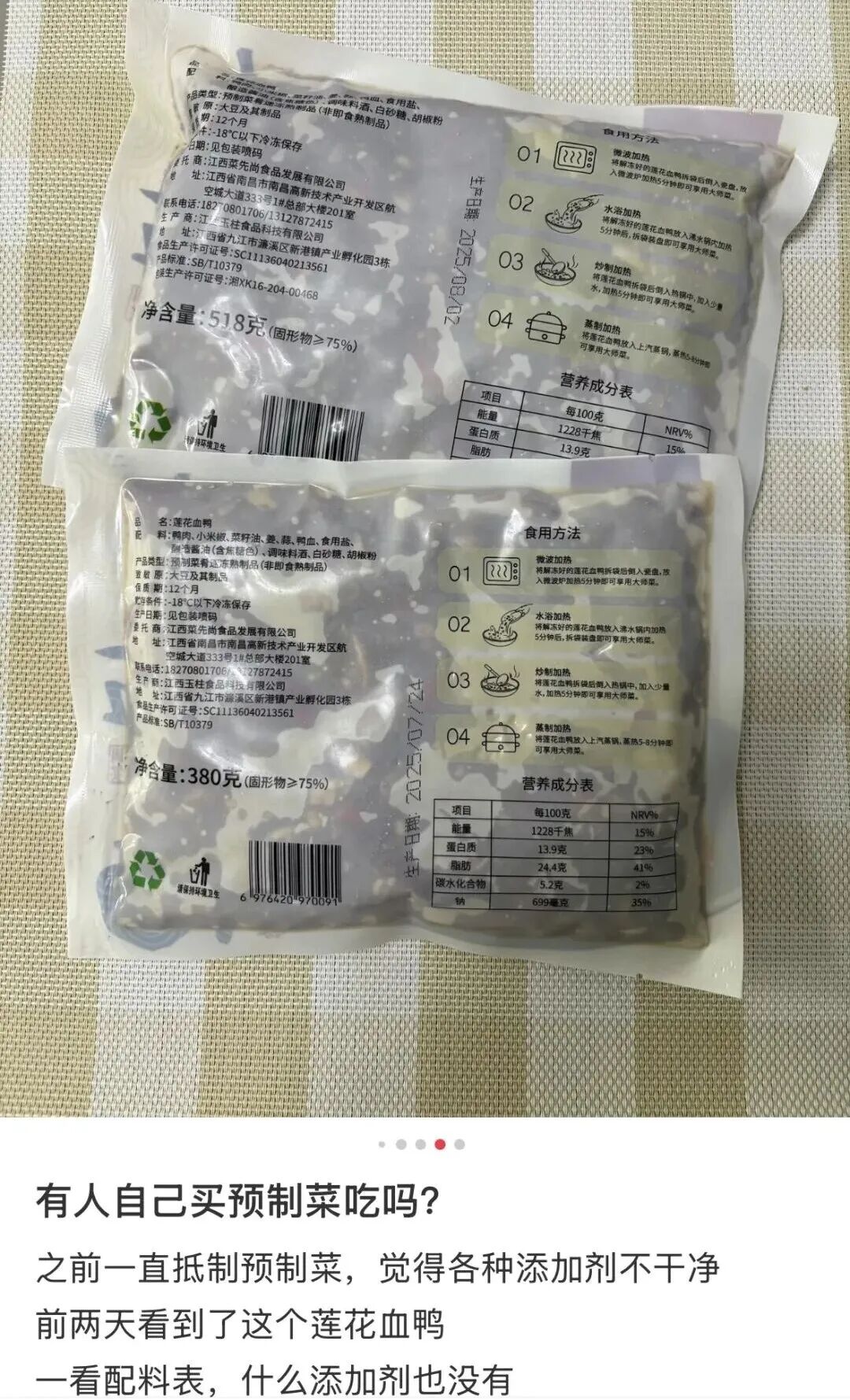
Learning to read the ingredient list is the basic operation for eating pre-made dishes. (Photo from social media screenshot)
For pre-made dishes, the upgrading of taste and the progress of fresh-keeping technology are two sides of the same coin. The soul of pre-made dishes lies in the taste restoration degree, and fresh-keeping technology is the key. Some fresh pre-made dishes have a shelf life of only 3-4 days, while other pre-made dish kits with longer shelf life have adopted fresh-keeping technologies such as liquid nitrogen quick freezing, high-pressure treatment and vacuum fresh-locking packaging. The first national standard draft for comments on pre-made dishes released in February 2026 further stipulates that no preservatives shall be added to pre-made dishes, the use of additives shall be reduced as much as possible, and the principle of "no addition unless necessary" shall be followed.
Not only are pre-made dishes more delicious than before, but the renewal of varieties is also very fast. The speed of product iteration can be said to be the biggest attraction that makes young people eager to try. Several major online fresh grocery platforms will launch corresponding new pre-made dishes according to different seasons and scenarios. For example, for New Year dishes, there are innovative eight-treasure glutinous rice red crab, air-fryer style squirrel fish; in spring, there are seasonal dishes such as shepherd's purse tofu skin rolls, and Malan head mixed with dried tofu.
Not only that, differentiated cuisines from different regions and hit products that have been verified by restaurants also provide inspiration for pre-made dishes. For example, the Yunnan-style braised chicken in soy sauce, Japanese seafood poke bowl and Guizhou sour soup beef hot pot mentioned above.
In addition, these online fresh grocery platforms also cooperate with time-honored catering brands and chain catering brands. The latter provide formulas to allow the platform's production chain to better restore the taste. This cooperation mode also revitalizes these catering brands at the same time.
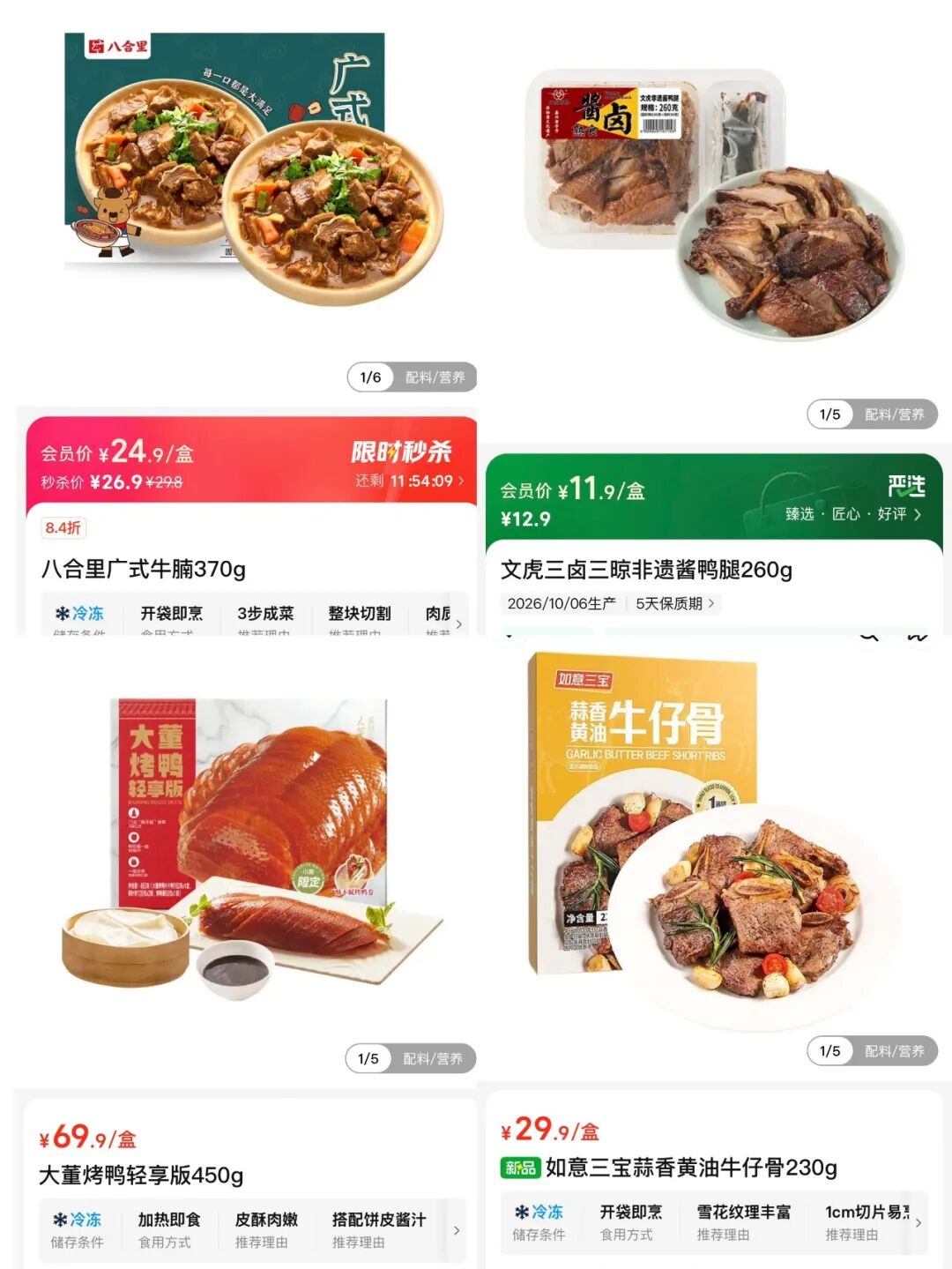
Classic dishes are revitalized again at the C-end. (Photo from online fresh grocery platform screenshot)
In the past, the biggest dissatisfaction of consumers with pre-made dishes came from the fact that they paid the price for freshly cooked dishes but ended up eating heated meal kits, which was a sense of being cheated brought by information asymmetry. But in the scenario of online fresh grocery platforms, the product form is transparent, and the ingredient list is visible. Instead of denying that they are pre-made dishes, it is better to present pre-made dishes in a transparent way generously. When online platforms present pre-made dishes in a more transparent way, they actually ensure that consumers can get exactly what they see.
Let pre-made dishes be served on the table openly
In fact, when we try to distinguish what pre-made dishes are, they are almost everywhere. The frozen dumplings that were always kept in the family refrigerator when we were kids, the quick-frozen tangyuan in the supermarket freezer, and the pre-cut and pre-plated marinated food in the deli shop are essentially pre-made dishes.
Therefore, pre-made dishes are never a new species that suddenly appeared. They just re-entered young people's kitchens as families became smaller and the pace of urban life accelerated.
From a longer historical perspective, pre-made dishes are actually jointly driven by factors such as urbanization, smaller family size and the rising female employment