Is it worth spending a thousand yuan on a candle from the To Summer x Pop Mart collaboration?
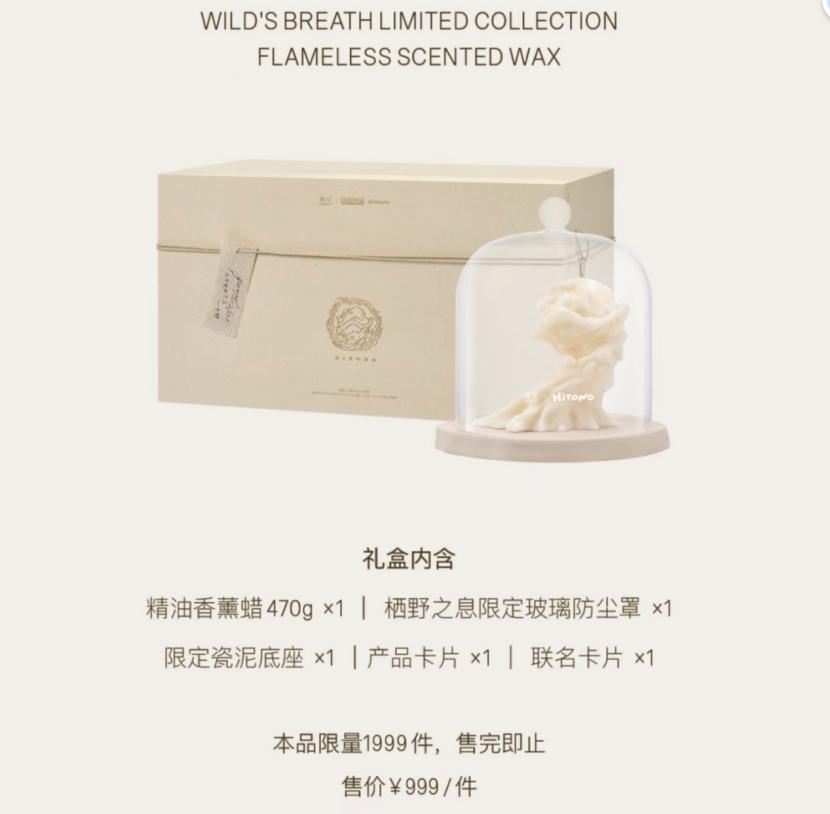
Priced at 999 yuan, in an era of widespread public consumption downgrade, the "sky-high priced" scented candle immediately faced value judgment as soon as it was launched.
On September 27, To Summer, a local high-end fragrance brand, officially announced its collaboration with Pop Mart's Hirono IP, launching a limited co-branded scented candle priced at 999 yuan with only 1999 units available for sale.
This product, which carries the dual-brand "traffic buff", was supposed to be a hit sought after by niche communities, but it immediately sparked heated discussions among users after launch, and public opinion quickly polarized.
Although loyal fans are willing to pay for its oriental aesthetic design, IP scarcity and emotional value, more ordinary consumers directly call the pricing "absurd", arguing that a non-essential scented candle priced at nearly 1000 yuan has a gross profit margin as high as 99%.
And there are many more voices of this kind......
Looking back at Pop Mart's collaboration portfolio, its partner brands cover multiple categories including beauty, food, and designer toys. These co-branded products have won over young consumers with high cost-effectiveness and strong entertainment value, achieving both excellent reputation and strong sales performance.
But this time, the co-branded product of To Summer and Pop Mart has obviously triggered polarized public opinion. What are the reasons behind this controversy?
Thousand-yuan flagship product: Excellent hard power still fails to support brand premium
The public's controversy over this thousand-yuan co-branded scented candle does not stem from cheap materials or rough craftsmanship of the product. The core contradiction lies in that although To Summer's product strength has reached the domestic high-end level, the lack of century-old brand accumulation cannot meet the market value expectation of thousand-yuan luxury products.
In fact, To Summer has long outperformed mass market affordable scented candle brands in raw material selection and fragrance craftsmanship, with solid high-end product capabilities.
On the raw material side, To Summer rejects cheap industrial fragrances, and has long cooperated with top global fragrance groups including Givaudan and France's Maubert, sharing the same upstream supply chain and senior perfumer teams as international top brands. At the same time, it deeply cultivates the oriental fragrance raw material system, launching a ten-year Oriental Fragrance Raw Material Traceability Plan, and deeply participates in the whole chain of planting, picking and extraction of local rare fragrance materials such as tea scent, osmanthus and bamboo fragrance, realizing the high-cost purification process of extracting 1kg of pure essential oil from 2500kg of fresh osmanthus, with far higher purity and naturalness of materials than most scented products on the market.
On the craftsmanship side, To Summer has also reached the same level as international top brands.
However, high-quality raw materials and craftsmanship are not equivalent to top-tier brand premium.
Although To Summer stood out with its unique oriental aesthetics and scenario-based marketing, has a certain popularity among young consumer groups, and rapidly developed into a leading domestic fragrance brand in a few years with its best-selling products exceeding 100 million yuan in sales, due to its short brand development cycle and lack of long-term accumulation in the high-end market, it has not yet formed a universally recognized high-end brand perception among the public.
In the public's perception, To Summer is only a high-quality domestic high-end fragrance brand, not a thousand-yuan niche luxury fragrance. This time, the co-branded pricing far exceeds consumers' psychological price anchor, so public acceptance is naturally low.
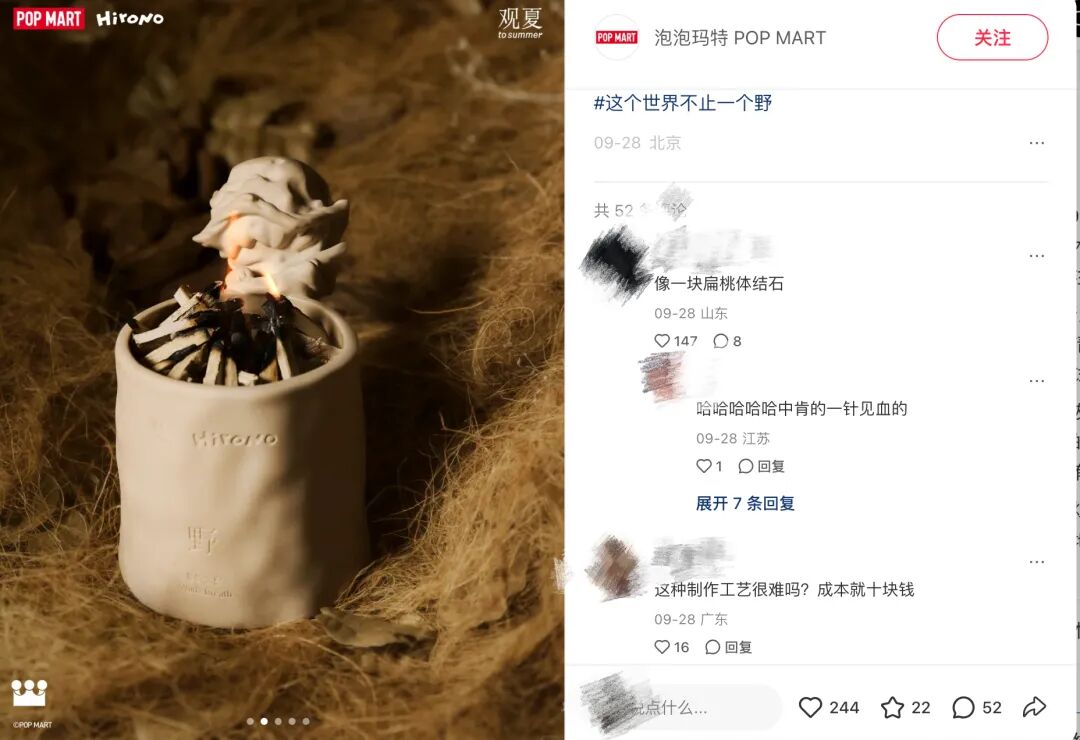
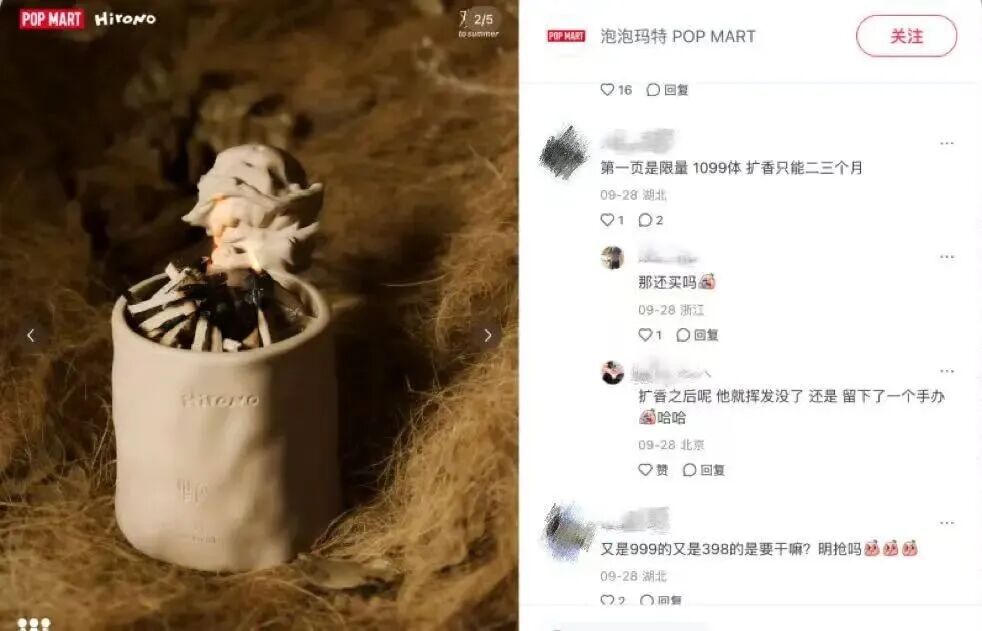
Image source: Xiaohongshu
High-end brands have top-tier brand premium, and even if the quality of their co-branded products is not necessarily perfect, they can still win market pursuit.
Take LV as an example.
In 2023, Manner Coffee and LV launched a co-branded canvas bag in Shanghai, priced at 580 yuan. Even though it was evaluated as "IQ tax" by the public at that time, it still triggered long queues of fans for purchase and reselling by scalpers at marked-up prices.
Obviously, what consumers buy is not the practical value of the canvas bag, but the high-luxury brand tonality and high-end identity attribute of LV, which is exactly the century-old brand premium of LV.
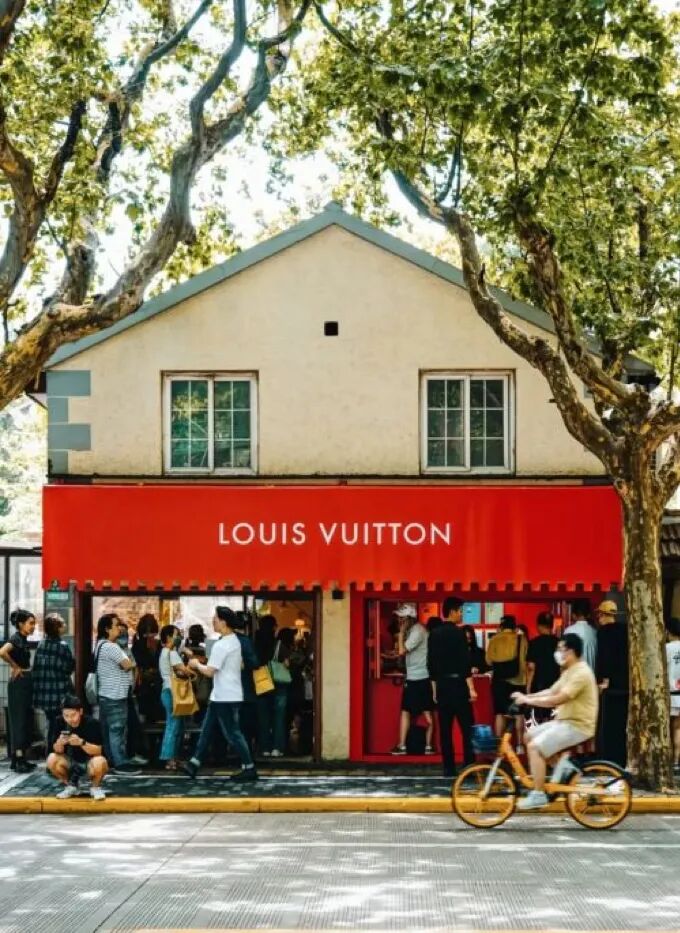
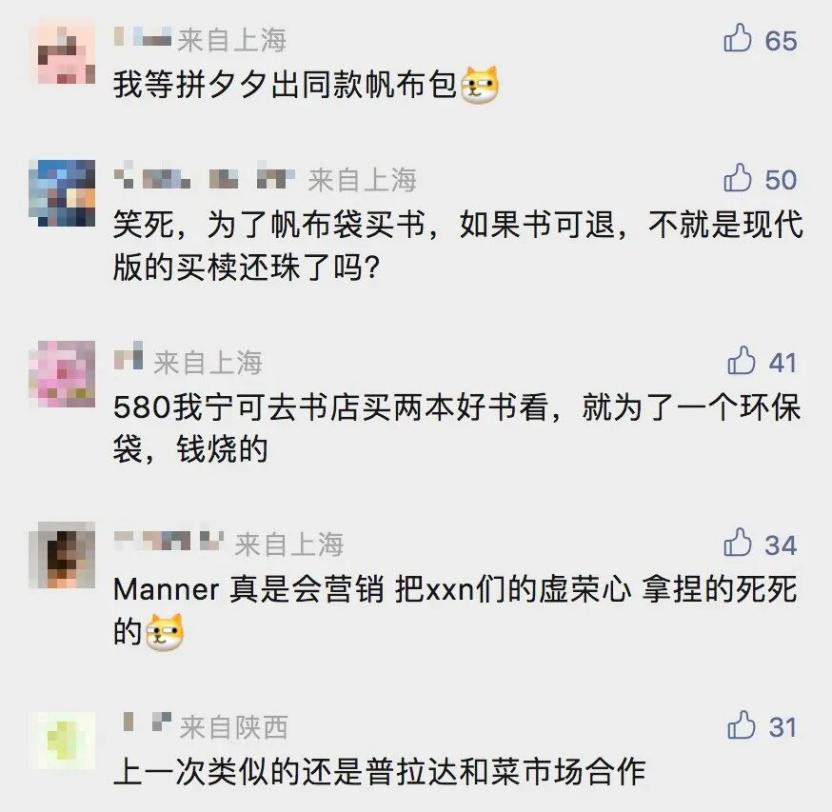
Image source: Xiaohongshu
In the eyes of skeptical consumers, To Summer's price increase is an act of deliberately raising its status and overdrawing brand premium, which naturally makes it difficult to obtain widespread market recognition.
However, this is also the unavoidable controversy and test for emerging brands in the process of pursuing high-end positioning.
Great brand, defeated by the wrong collaboration logic
The second reason for the price controversy over the co-branded scented candle lies in Pop Mart's collaboration history.
Looking back at the brands that have cooperated with Pop Mart in the past, most of their collaboration logics share two common points: first, the customer unit price is not high, and second, the brand has high public awareness.
Categories such as food and beverages, color cosmetics and skincare, and affordable streetwear belong to low-unit-price products, and their purpose of IP collaboration is very clear: the co-branded product has a small price markup, so consumers have low decision-making cost, which belongs to light consumption that they can complete easily on a whim.
For example, during the Children's Day marketing campaign this year, fast food brand McDonald's chose to collaborate with Pop Mart's Little Starman IP, launching four toys: Burger Starman, Fries Starman, Nugget Starman, and Milkshake Starman. Users can take away one limited co-branded toy as long as they make any purchase plus pay an extra 59.9 yuan.
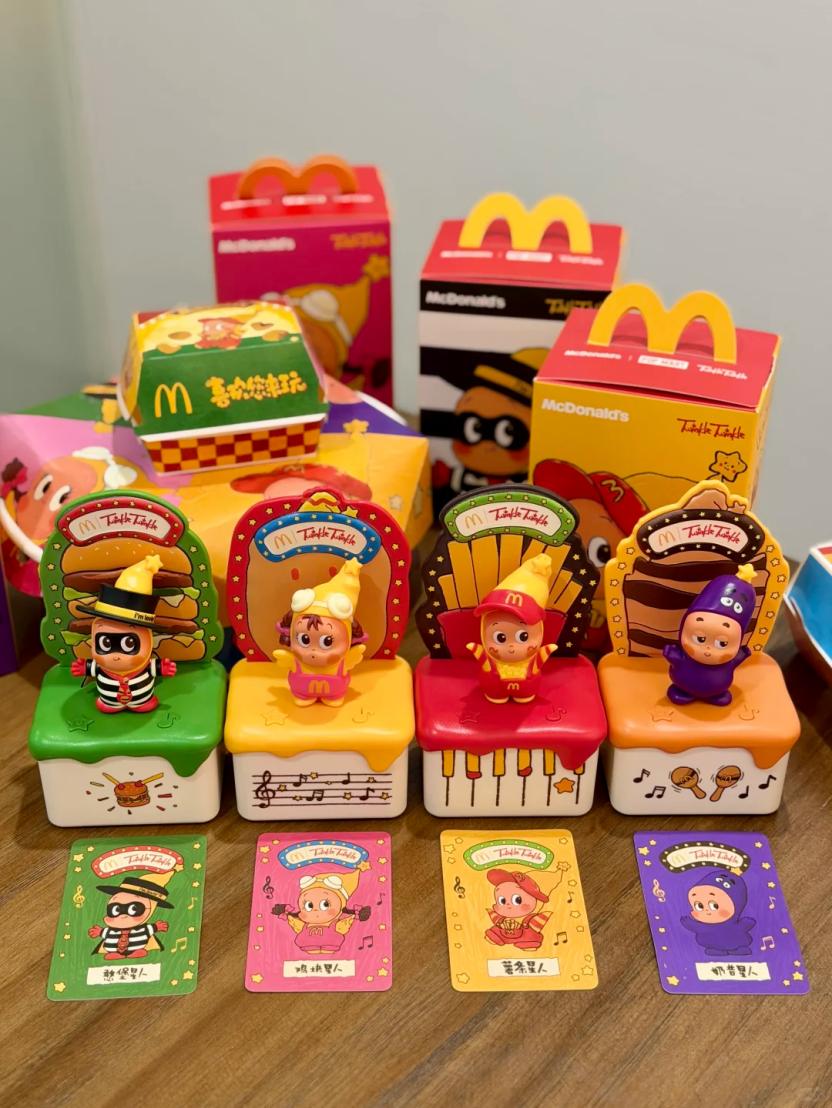
Source from the internet: McDonald's x Little Starman Children's Day Limited Edition
The logic of such brand collaboration is to boost sales with the help of IP. The IP attracts traffic, and then the product caters to public demands. Relying on the affordable price and high-frequency scenarios, both fans and ordinary consumers can get the limited benefits, so the reputation is naturally positive.
On the other hand, Pop Mart's previous high-end oriented collaborations all relied on mature brands with extremely high national recognition and huge fan base such as Huawei. Even with a reasonable premium, they can obtain market recognition with the brand strength of their partners.
For example, this year Huawei and Hirono jointly launched the co-branded versions of Huawei nova 16 Pro and WATCH FIT 5, with hand-painted details covering everything from packaging to watch faces. Even with a certain premium, a huge group of loyal fans are willing to pay for it thanks to Huawei's own brand influence and popularity.
The collaboration logic between To Summer and Hirono is somewhat different.
To Summer itself focuses on the niche high-end fragrance track, with high customer unit price and narrow audience circle. The core purpose of the two parties' cooperation is no longer low-price traffic attraction and bulk sales, but a high-end circle cooperation that mutually elevates brand tonality. Its target audience has also accurately shifted from the general public to niche aesthetic enthusiasts, designer toy collectors, and pursuers of high-end lifestyles.
From the affordable co-branded products priced at hundreds of yuan to the high-end limited edition priced at thousands of yuan, the huge price span and niche audience positioning make some ordinary consumers who are used to Pop Mart's affordable collaborations difficult to adapt, thus generating doubts.
Weak category cognition: Niche track cannot support high price tags
Finally, behind the collaboration controversy there is also an easily overlooked reason — the public cognitive foundation of China's domestic fragrance market.
According to reports from multiple media outlets, the overall penetration rate of domestic scented products in China is only about 5%, and the overall market popularity is relatively low.
In the broad fragrance category, non-fire fragrance products such as perfumes and fragrance sprays have long been popularized among the public, becoming supporting consumer goods for daily makeup and outfit matching, with a mature and clearly stratified market pricing system. Consumers have a clear and unified perception of the price positioning of high-end, mid-range and affordable fragrance products.
However, fire-based scented products represented by scented candles are more niche and segmented in comparison, and have not yet entered the public's daily consumption scenarios. Most consumers only define them as non-essential home decorations rather than high-frequency consumer goods. This also means that before the products enter the mass sales stage, the public has lower price tolerance for scented candle products.
To Summer hopes to break out of the niche circle among young people with the help of Pop Mart's IP, but it chooses the niche track with weak public cognition, superimposing the three attributes of thousand-yuan high price, IP premium and limited scarcity at the same time. This is equivalent to forcibly raising the category pricing in the field where the public's consumption mindset is not yet mature, further amplifying the imbalance between price and value, making market controversy inevitable.
For emerging niche consumer categories, in the stage when public consumption habits have not yet been formed and category cognition has not yet been popularized, every attempt of brand high-end positioning and high pricing is bound to bear corresponding public opinion controversy and market doubts.
Conclusion
In fact, the nationwide controversy caused by To Summer's thousand-yuan co-branded product this time is not an individual case of To Summer, but a common problem that all emerging domestic brands may face in the process of pursuing high-end positioning.
It is never an overnight process for a brand to grow from a niche internet-famous brand to a high-end benchmark, and it will inevitably go through stages of mismatched public perception, pricing controversy and polarized reputation.
For To Summer, this controversy is not a bad thing: first, the continuous popularity of the collaboration empowers the brand, strengthening its topic label of high-end fragrance; second, it allows To Summer to clearly see the gap between its own brand heritage and the public's consumption mindset, providing an important reference for subsequent high-end layout and optimization of the product pricing system.
Back to the original question: Is this thousand-yuan co-branded candle really "worth the price"?
Ordinary consumers base their judgment on practical value and cost-effectiveness, niche enthusiasts pursue aesthetic experience and emotional value, and the brand focuses on track positioning and long-term high-end growth. Due to different stances, the answers to this question are naturally different.
This article is from the WeChat Official Account "TopMarketing" (ID: TMarketing), written by Top Jun, and published by 36Kr with authorization.