Why is the problem of long queues at EV charging stations on expressways during long holidays seemingly "permanently" unsolvable?
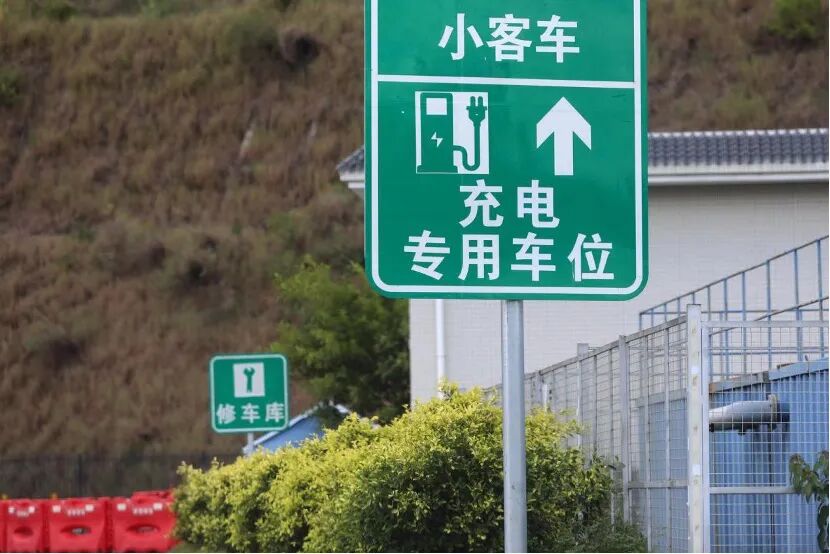
"3 a.m., 7-hour queuing", "I've woken up from a sleep and it's still not my turn", "The large-scale tribulation scene of charging during the National Day holiday"... During the 2026 National Day holiday, these short videos on the Douyin platform all received tens of thousands of likes and comments. This shows that while new energy products and technologies are facing increasingly fierce internal competition, the long-standing charging problem during long holidays has not been solved.
On October 8, the National Energy Administration successively released the statistical data of new energy vehicle charging on expressways during the first 3 days of the National Day holiday and the entire holiday. These data come from 62,700 expressway charging facilities (guns) on the National Charging Infrastructure Monitoring and Service Platform, which gives a glimpse of the "charging difficulty" problem during the National Day holiday.
In the first three days of this year's National Day holiday, the total number of new energy vehicle charging sessions on national expressways reached 2.9686 million, with an average of 989,500 sessions per day; the total charging volume hit 71.6193 million kWh, with an average of 23.8731 million kWh per day.
From 0:00 on October 1 to 24:00 on October 7, the total number of new energy vehicle charging sessions on China's expressways reached 6.711 million, the total charging volume reached 163 million kWh, and the average daily charging volume was 23.2566 million kWh.
This means that in the first three days of the holiday, a new energy vehicle running on the expressway can only get an average of 24.1 kWh per charging session; even if the time span is extended to the entire holiday, the figure is only 24.3 kWh.
The data reveals the concentrated outbreak of new energy vehicle charging difficulties on expressways during long holidays, and the core reason is the excessively high charging frequency of new energy vehicles. Mr. Li, a new energy owner who drove from Beijing to Luoyang during the National Day holiday, said that he basically had to choose a charging point when the remaining battery level reached 20%-30% before arriving at the service area, and leave the station after charging to 70%-80%. Otherwise, the cruising range may not support driving to the next service area, or the energy replenishment will take too long.
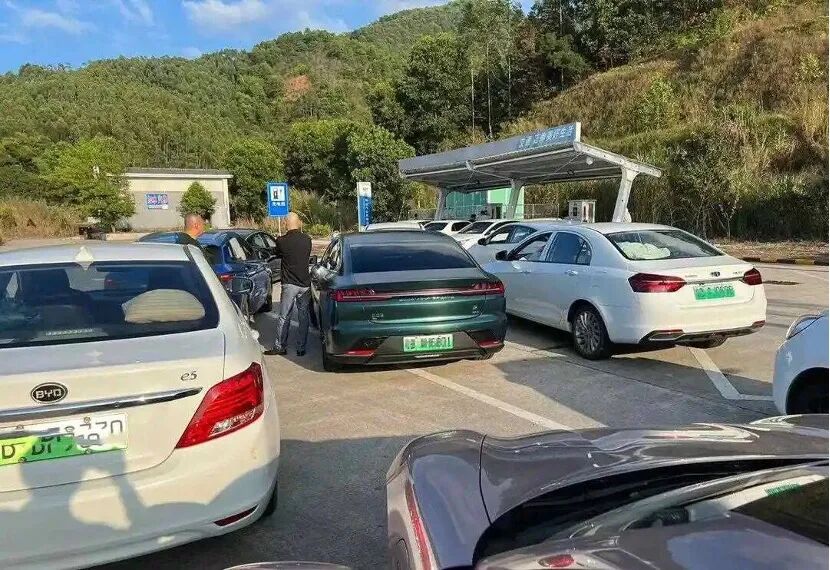
Expressways Cannot Cope With Short-term Surge in Charging Demand
On the night of September 30, Mr. Liu, a car owner from Chengdu, was driving from Chengdu to Inner Mongolia. He was not allowed to enter two service areas for charging due to excessive traffic flow. He finally arrived at Lingjiang Service Area at 6 p.m. that day, but had to take a number to queue. His number 99 was not called until about 11:30 p.m. to start charging, and the whole process took more than 6 hours including the charging time.
On the G65 Baotou-Maoming Expressway, a new energy car broke down not far from the charging station after entering Dazhou North Service Area with only 1% power left, and had to be pushed into the charging station with the help of other people.
However, some car owners also reported that when driving from Nanjing to Shandong, they hardly encountered queuing for charging at expressway service areas, and even if there was a queue, the waiting time did not exceed half an hour.
Overall, queuing for charging for new energy vehicles is still the main theme of this year's National Day holiday, and many new energy car owners have pointed the finger at range-extended electric vehicles. Some car owners complained on social media: "Among the 10 charging piles in the expressway service area, 8 are used by hybrid vehicles (including range-extended vehicles)", "I saw several queues, most of the cars in the queue are range-extended vehicles, which have short cruising range".
Mr. Liu, who drove back to his hometown from Luoyang, Henan during this National Day holiday, represents the car usage habits of the vast majority of range-extended car owners: "Range-extended electric vehicles have a better pure electric driving experience, and many car owners are used to prioritizing electricity in daily use and do not want to rely on fuel." Ms. Huang, a range-extended car owner who also queued for charging at Zaoyang North Service Area in Hubei on October 1, is the same.
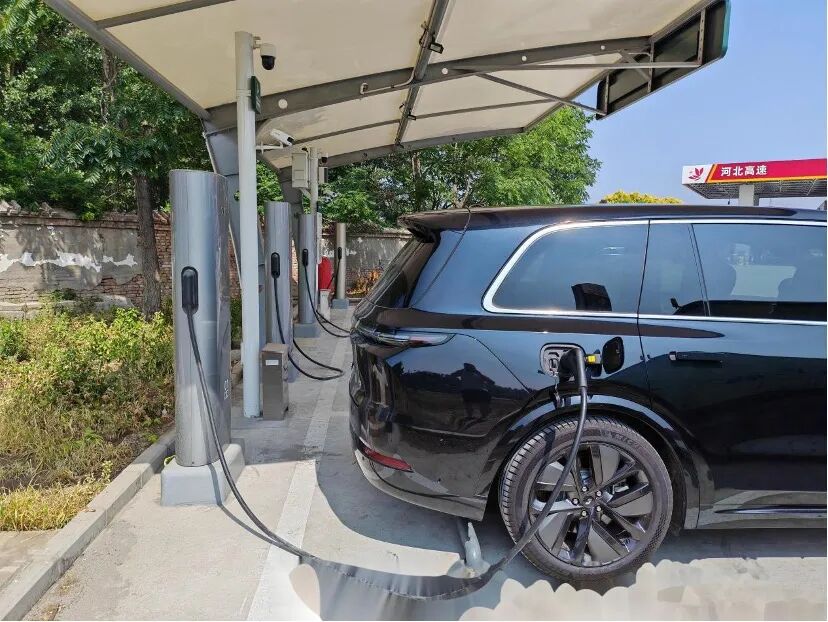
A Li Auto vehicle is charging at a dedicated charging station
However, the problem of long queues for charging at expressway service areas during holidays cannot be simply attributed to the fact that range-extended vehicles also need charging. Since the annual sales of range-extended vehicles first exceeded 100,000 units in 2021, it did not break through the threshold of 1 million units of annual sales until 2024. Therefore, the proportion of range-extended vehicles in new energy vehicles is not high.
Combined with the sales volume of range-extended vehicles and the 36.89 million new energy vehicles in ownership announced by the Ministry of Public Security by the end of 2025, the proportion of range-extended vehicles is about 10%, which is lower than that of plug-in hybrid models — estimated according to the annual sales volume of plug-in hybrid models and new energy vehicles, the proportion of plug-in hybrid models in new energy vehicles is about 20%.
The number of charging piles is not the core reason either. According to data from the National Charging Infrastructure Monitoring and Service Platform, by the end of August this year, among China's electric vehicle charging infrastructure (guns), the public charging facilities (guns) reached 5.16 million. Among them, a total of about 86,000 charging piles have been built in expressway service areas across the country, covering more than 98% of expressway service areas except those in a few high-altitude and extremely cold regions.
Based on the ownership of new energy vehicles, the ratio of new energy vehicles to public charging piles is about 8 to 1, which is equivalent to the level of previous years. The problem comes from the short-term surge in travel demand. The Ministry of Transport released the expressway traffic forecast for the National Day holiday at a press conference held by the State Council Information Office, in which the flow of new energy vehicles on the first day of the National Day reached about 17.8 million vehicle trips (the number of times vehicles pass through the expressway, not the number of new energy vehicles running on the expressway at the same time).
As a result, the peak of charging demand appeared in expressway service areas. Data monitored by the Smart Vehicle Internet Platform shows that from 7 a.m. to 8 p.m. on October 1 was the first expressway charging peak during the National Day holiday. There are slight differences in different regions. For example, in Zaoyang North Service Area in Hubei, Baoding Service Area in Hebei and other places, the peak was advanced to the night of September 30.
Compared with the queuing for charging of range-extended vehicles itself, the deep-seated reason for the queuing contradiction is the short-term surge in charging demand, the fact that a large number of new energy vehicles do not have 800V high-voltage charging capability, and the limitation of grid capacity.
XPeng G9, launched in September 2022, is the first mass-produced vehicle in China that is truly based on the 800V high-voltage SiC platform. Since 2024, the 800V technology has been gradually applied to entry-level models priced at 150,000 to 200,000 RMB. Among them, hybrid models such as range-extended vehicles did not have 800V fast charging capability until they transitioned to the "fast charging + large battery" solution in 2025.
In addition, the media "Dianchang" learned from a number of third-party charging pile operation platforms that the power grid will not set up a dedicated private network for charging stations. Yu Xiang, who once served as vice president of NengChain in charge of charging business, told Dianchang that it does not conform to the priority management of the power grid for all charging piles to run at full power. At the same time, it also means that the investment in supporting facilities of charging stations increases significantly. In the case of uncertain profitability, almost no operator is willing to make excessive investment to meet the short-term surge in charging demand on expressways.
Ms. Huang, a range-extended car owner who queued up and finished charging at Zaoyang North Service Area in Hubei, mentioned this point: "Because there are too many cars charging at the same time, the power is limited, and it takes more time to charge to 80% than usual."
Yu Xiang once mentioned the deviation between automobile enterprises' marketing and "expectation management". He believes that automobile enterprises are keen to use radical marketing publicity terms to highlight the selling point of "fast charging", so as to reduce consumers' range anxiety of new energy vehicles and achieve the purpose of selling vehicles. This has greatly raised consumers' expectations, forming a fixed cognition that "charging is fast, not much different from fuel vehicles", leading a large part of users to believe that as long as the charging pile is good, the car can be charged quickly, ignoring the actual charging performance of the vehicle and the operation rules of the power grid.
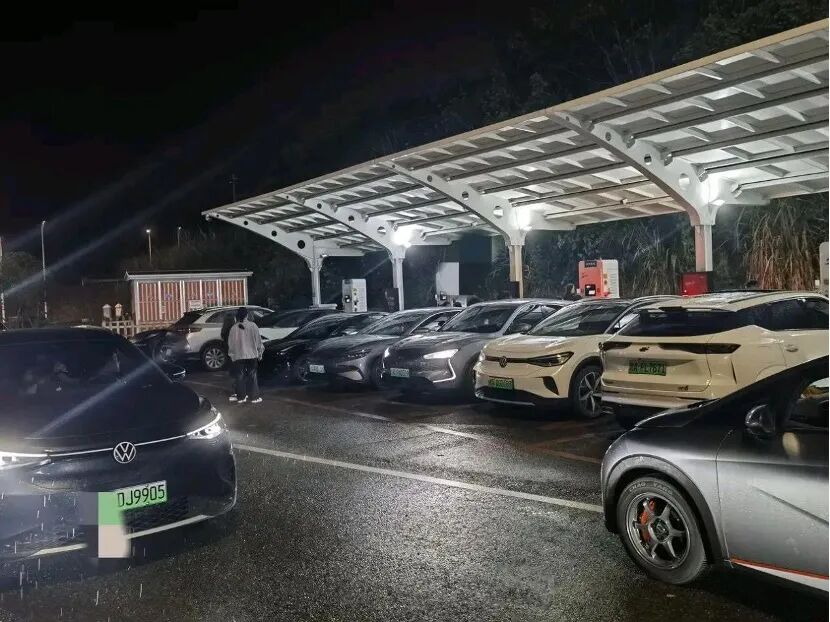
In fact, although the ownership of new energy vehicles is steadily increasing, it is still difficult for charging stations to realize the optimal allocation of resources. It is more difficult to achieve profitability by simply improving the operation efficiency and the performance of station piles. Operators have no strong willingness to update equipment on a large scale in expressway service areas to improve charging efficiency, because such demand only occurs 2 to 3 times a year.
"Operators definitely prefer to build stations and lay piles in popular locations in core cities of the Beijing-Tianjin-Hebei region, Yangtze River Delta, and Pearl River Delta. Building stations on expressways is purely a loss-making business to fulfill corporate social responsibility," said an unnamed third-party operator.
Why Must People Charge on Expressways?
The interviewed third-party operator predicted that this contradiction will still exist for a long time, and it is difficult to solve at least in the next 5 years. It is not realistic to add a large number of charging piles in expressway service areas and upgrade existing equipment. The capacity of the service area itself and the power grid capacity are relatively limited, which is not commercially attractive to operators.
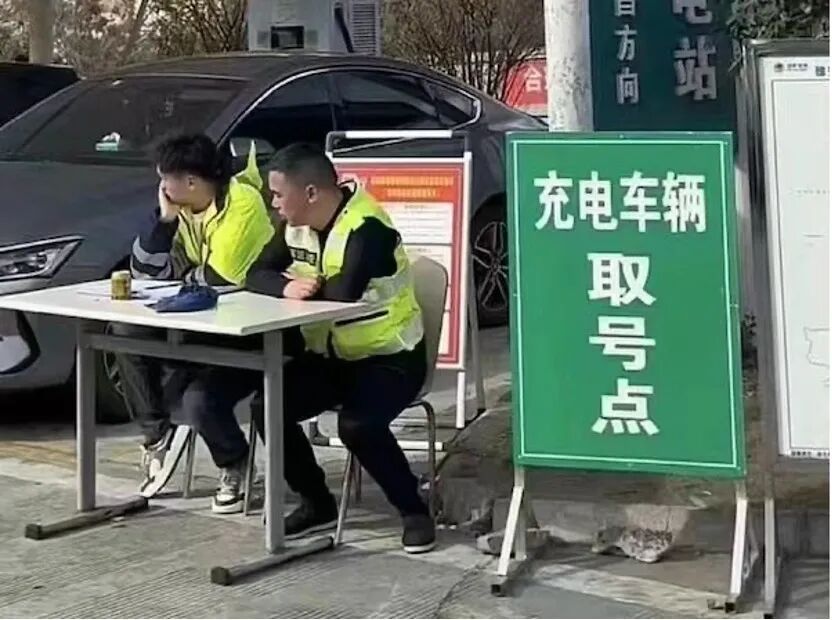
In previous years, expressway service areas had relatively single management methods for charging stations during long holidays. Taking the Beijing-Hong Kong-Macao Expressway as an example, during the 2025 Spring Festival, many service areas along the route only arranged management personnel to maintain the queuing order on site, and did not carry out other interventions. During this year's National Day holiday, many service areas have begun to implement queuing management by taking numbers and 80% charging limit to maximize the turnover efficiency.
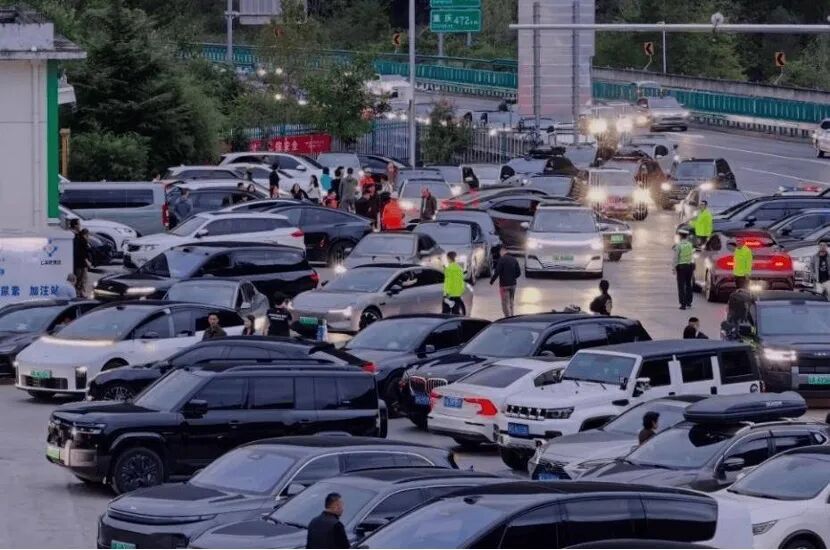
Some car owners also reported that some expressway service areas have used the tidal pattern of traffic flow, opened the passage of the opposite service area to divert part of the pressure of long queues of new energy vehicles. Some car owners even put forward suggestions that since expressways are free of tolls during long holidays, service area operators can provide information of charging stations and catering services at the nearest exit to divert some car owners to get off the expressway for charging and rest.
However, on social media, car owners have different views on the call that range-extended vehicles and plug-in hybrid vehicles should try to refuel instead of blindly choosing to charge during long-distance travel on expressways during long holidays. Mr. Li, a pure electric car owner who drove from Shanghai to Hubei during this year's National Day holiday, believes that the original design intention of range-extended vehicles is that they can use both oil and electricity for long-distance driving without range anxiety. Therefore, range-extended car owners should consider the queuing pressure of pure electric car owners and take the initiative to choose to refuel at the service area instead of queuing for charging, "because many range-extended vehicles are still 400V, and charging is very slow."
Range-extended car owners also have their own views, believing that it is the car owner's own choice to spend time waiting for charging or directly refuel without wasting time queuing. The fuel tank of a range-extended vehicle only provides one more choice, not a mandatory option. Therefore, for expressway operators, this is still a problem to be solved in management.
This article is from the WeChat official account "Dianchang", written by Hua Zijian, and published with authorization by 36Kr.