Windows also comes with pre-installed software, and Microsoft has picked up bad habits from the mobile phone industry.
Back in 2021, Meizu declared war on the "back-end charging" convention in the mobile phone industry, and launched the Meizu 18 series, a "three-zero" mobile phone featuring zero advertisements, zero push notifications and zero pre-installed applications. But as we all know, this attempt by Meizu did not succeed. The back-end charging model remains rock-solid to this day, and has even spread in reverse to overseas markets.
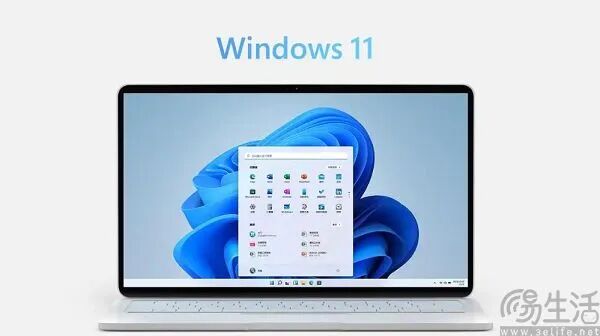
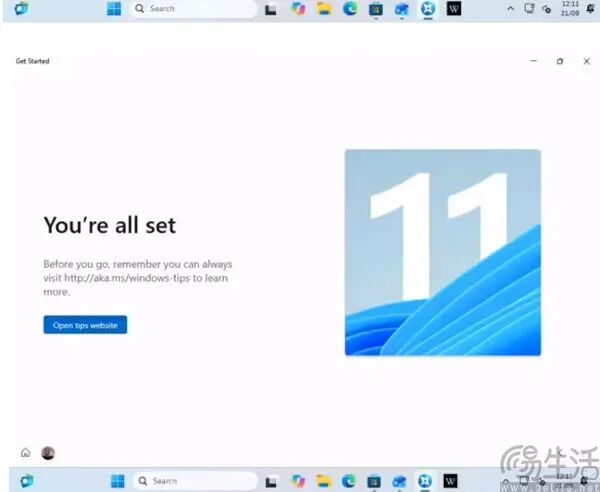
Recent reports show that Microsoft has tested the optional "Assisted Setup" boot guide in the Windows 11 Build 26340.9354 preview version released on September 8, which allows users to install software such as TikTok and Netflix with one click after completing the first Out-of-Box Experience (OOBE).
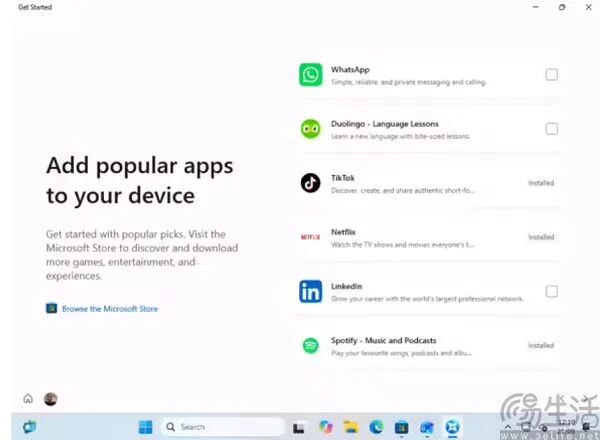
Doesn't this look familiar? Microsoft's move has almost officially legitimized the pre-installation of popular applications that was standard on pirated Windows versions in China. Specifically, at the final stage of Windows 11 installation, when the system prompts "Your PC is ready", an optional "Show optional settings" option is added. After clicking this option, the page will list six popular applications: WhatsApp, Duolingo, TikTok, Netflix, LinkedIn and Spotify.
After checking the boxes, users do not need to jump to the Microsoft Store, and the relevant software will be downloaded directly to the desktop. That's right, Microsoft, which has always maintained a rigorous style, has also started to roll out pre-installed applications on Windows 11.
Pre-installed applications have been widely promoted in the mobile phone industry. Even Apple clearly lists pre-installed apps on iPhone such as Pages, GarageBand and Clips on its official website, and Google has launched GMS, requiring partners' products to pre-install its own apps such as Gmail, Google Maps and Google Play. However, the originator of pre-installed applications is precisely Microsoft.
However, the pre-installation behavior in those days left a huge negative impact on Microsoft.
Since 1995, Microsoft has directly pre-installed its own browser Internet Explorer (hereinafter referred to as IE) in the Windows system and provided it to users for free. This move laid a solid foundation for IE to outperform Netscape Navigator, but also attracted the attention of anti-monopoly regulators in Europe and the United States. The final result was that Microsoft was forced to reach a settlement, required to provide the option to uninstall IE, and allow third-party browsers to replace IE.
The decision to pre-install IE allowed Microsoft to successfully suppress Netscape, but it also paid an excessively heavy price. That being the case, why did Microsoft pick up the pre-installation model again more than 20 years later? Money is undoubtedly the most direct factor, after all, pre-installation is an important way for application promotion. For Duolingo, Netflix and TikTok, more users are always welcome.
Compared with placing advertisements on online channels to attract users and then requiring users to actively download and install applications from channels such as app stores, the fact that applications appear directly on users' devices obviously has obvious advantages in reach. Moreover, pre-installed applications often have exclusivity, and products with serious homogenization are unlikely to appear at the same time, a situation that is obviously difficult to avoid when placing advertisements.
Since application developers need pre-installation as a promotion channel, they will naturally pay for it. Although Microsoft is a large enterprise, the Windows department is not having an easy time, and it is no longer the most concerned growth center of the company. According to estimates by third-party institutions, revenue from the sale of Windows operating system licenses accounts for only 5% of Microsoft's total revenue in fiscal year 2026.
Not only that, Windows' market share is no longer rock-solid. Data released by Statcounter shows that after Windows 11's market share reached a peak of 55.18% in October 2025, it dropped to 53.7% in November of the same year, and further fell to 50.73% in December. Thanks to the affordable pricing of MacBook Neo, the share of Apple's macOS has achieved rapid growth.
Therefore, for Windows today, pre-installed applications are not an expansion, but a way to stop losses, and to explore a second growth curve for the Windows department. Thanks to mobile phone manufacturers in the adjacent industry, PC users are actually not so resistant to pre-installation now. WhatsApp, TikTok, Netflix, LinkedIn and Spotify are all leaders in their respective tracks, and overseas users will basically install these applications when setting up a new system.
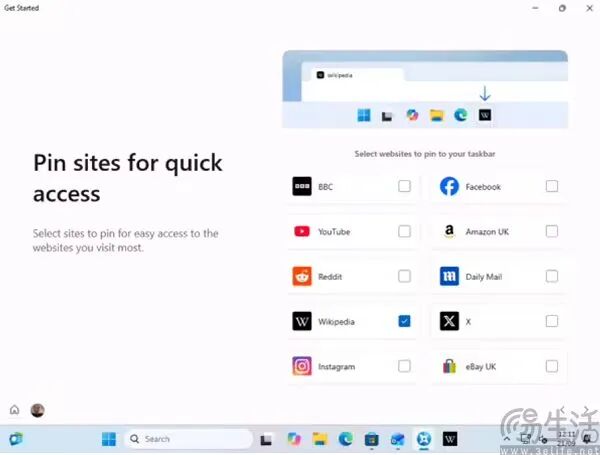
The change this time is nothing more than shifting from users installing applications by themselves to Microsoft "pre-setting" applications for users. Besides, software download in the Windows ecosystem has always been a pain point. In the more than ten years since its birth, it has never established a unified application distribution channel. It is the tradition that developers act independently, and official websites, cloud disks and download stations are the mainstream channels for Windows users to obtain software.
Even with the Microsoft Store, it treats users all over the world equally, and whether users can connect to it smoothly depends entirely on luck. At this time, having a channel that allows users to pre-install clean software is a good thing. Especially for the domestic market full of rogue software, Windows pre-installed applications can be regarded as a "beneficial policy".
All images in this article are sourced from the Internet.
This article is from the WeChat Official Account "Three Easy Life" (ID: IT-3eLife), written by San Yijun, and published by 36Kr with authorization.