CES 2027 Super Preview: Geely and XPeng Confirm Attendance, Mobility Has Become a Core Topic
Against the backdrop of the "AI + Automotive" wave, vehicles are increasingly taking on the attributes of consumer electronics and AI hardware. For this reason, CES (International Consumer Electronics Show), the bellwether of the consumer electronics industry, has become a major stage for automakers in recent years, and has even been teased by tech media circles as "the second largest auto show in the United States". Many automakers participated in CES 2026, with AI large models for vehicles, autonomous driving, and automotive agents becoming hot topics. Jensen Huang, Founder and CEO of NVIDIA, even unveiled Alpamayo, an open-source physical AI reasoning model that can solve the "long-tail problem" of autonomous driving.
CES 2027 is about to kick off in Las Vegas on January 6, 2027, and the official has announced that mobility will be a major theme this year.
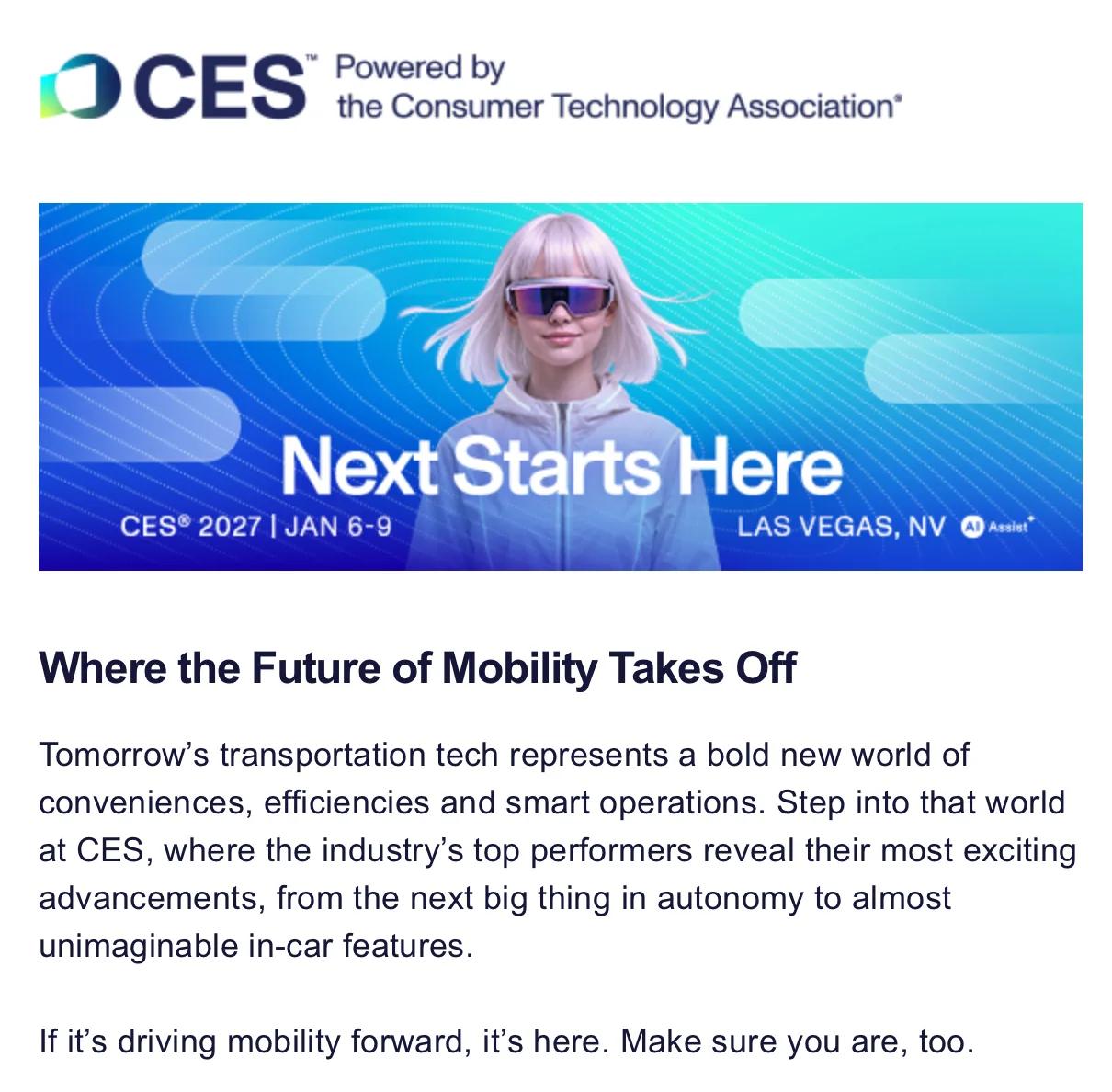
(Source: Email sent by CES official to Leikeji)
In early September, global automotive giant Stellantis confirmed that it will deliver a speech on the opening day of CES 2027. Stellantis is a multinational automaker established through an equal merger of PSA Peugeot Citroën and Fiat Chrysler Automobiles (FCA) on January 16, 2021. It owns brands including Peugeot, Citroën, DS, Opel, Vauxhall, Fiat, Alfa Romeo, Lancia, Abarth, Jeep, Chrysler, Dodge, RAM and Maserati.
The latest official CES email shows that the first batch of mobility sector enterprises confirmed to participate in CES 2027 has been released, with Chinese brands Geely and XPeng prominently on the list.
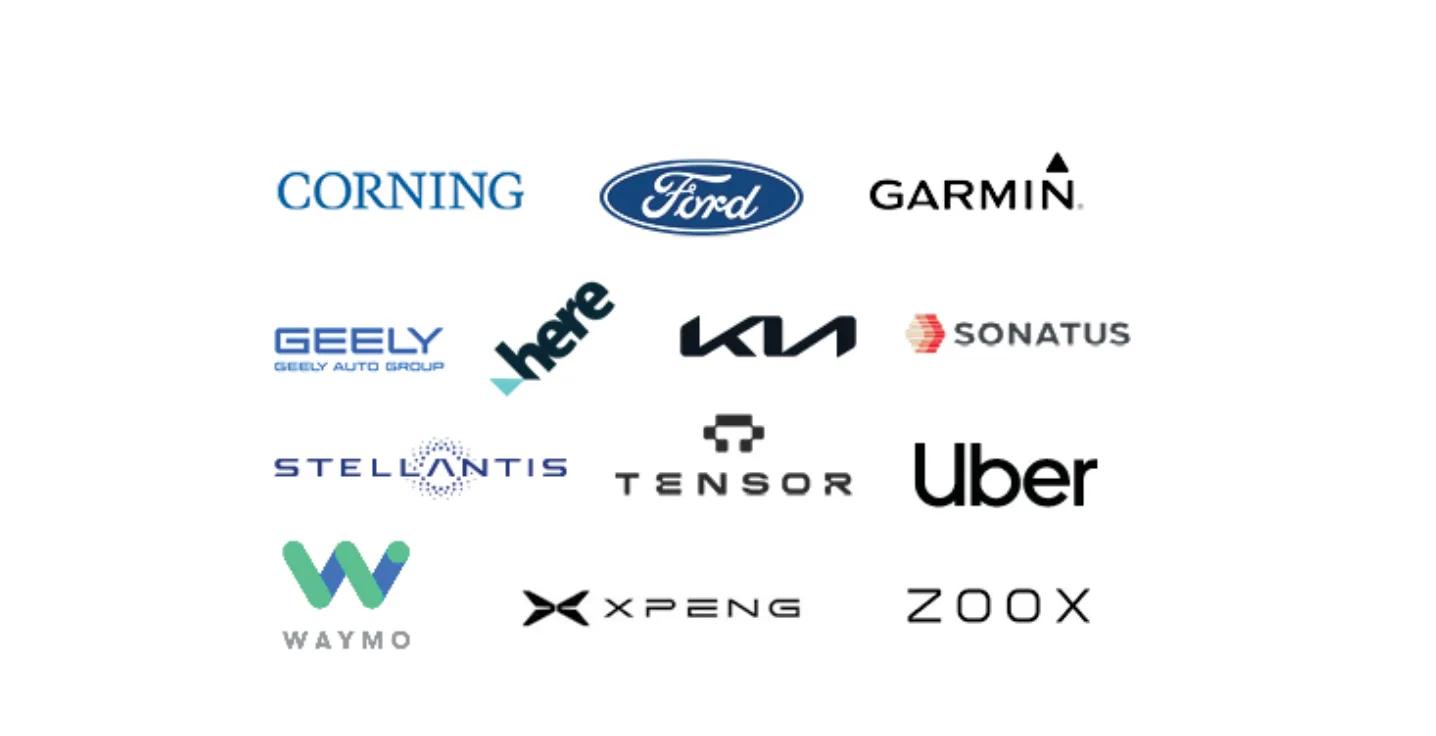
(Source: CES)
Almost at the same time, Geely Group announced that its subsidiary Geely Auto has officially entered the Canadian market, is promoting the construction of local retail and service networks, and plans to launch the first batch of models in 2027. Under such market moves, CES is even more important for Geely Auto: events like IFA and IAA have major influence in Europe and Africa, while CES's core influence lies in the North American market. Therefore, participating in CES will help Geely open up the Canadian market and the entire North American market. It is foreseeable that the listed mobility enterprises are just the tip of the iceberg, and more automakers and mobility enterprises will participate in CES 2027 in the following period.
Accelerating Overseas Expansion, Chinese Automakers Have Become the New Leading Players of CES
The United States has set high tariffs on domestically produced new energy vehicles, and Chinese automakers face certain thresholds when entering the local market. However, against the background of overflowing Chinese automotive production capacity and the industry's accelerated overseas expansion, the number of Chinese brands participating in CES has continued to hit new highs.
After entering 2026, the overall domestic new energy vehicle market is under pressure, and independent brands are all increasing their efforts in overseas markets. Data released by the China Association of Automobile Manufacturers shows that in the first half of this year, China's auto exports reached 5.096 million units, a year-on-year increase of 65.3%, of which new energy vehicle exports reached 2.355 million units, a year-on-year increase of 1.2 times.
Brands including BYD, Chery, Great Wall, Geely, XPeng, Li Auto, and NIO all regard overseas expansion as a top priority, and naturally need to "show their strength" on more overseas stages. CES is a globally renowned large-scale exhibition. Even if they do not enter the North American market for the time being, they can "show their strength" to enhance global influence, so domestic automakers are paying increasing attention to this stage.
It is particularly worth mentioning that XPeng Motors, which did not participate in CES 2026, has confirmed its attendance at CES 2027. At the 2024 and 2025 CES exhibitions, XPeng mainly displayed its HT flying cars instead of passenger vehicles. In 2027, XPeng is very likely to bring its G-series, P-series, and MONA-series passenger vehicles to the CES stage.
As a benchmark player in China's domestic intelligent driving technology (teased as China's Tesla), XPeng is focusing on businesses such as RoboTaxi and self-developed chips. Leikeji believes that at CES 2027, where mobility platforms including Waymo, ZOOX, and Uber gather, XPeng will focus on demonstrating its intelligent driving technology, self-developed chips, RoboTaxi business, the GX model oriented to the L4 era, and the right-hand drive version of G9L built for 64 countries including Australia and Southeast Asia.
The other two new power brands, NIO and Leapmotor, may also appear at CES 2027. Both participated in CES 2026 but did not have independent booths: NIO displayed an ET9 at the Dolby Live booth in Park MGM, while Leapmotor jointly released a cross-domain fusion central controller based on dual Snapdragon 8797 chips with Qualcomm.
Geely and Great Wall participated in CES 2026 and had independent booths.
On the first day of CES 2026, Great Wall Motors (GWM) grandly held a press conference with the theme of "GO With More Life", focusing on displaying core technologies including ASL, Hi4-Z architecture, V8 engines, hydrogen fuel cell engines, and semi-solid-state batteries. At that time, the Leikeji CES 2026 reporting team was honored to have an exclusive interview with Wu Huixiao, CTO of Great Wall Motors.
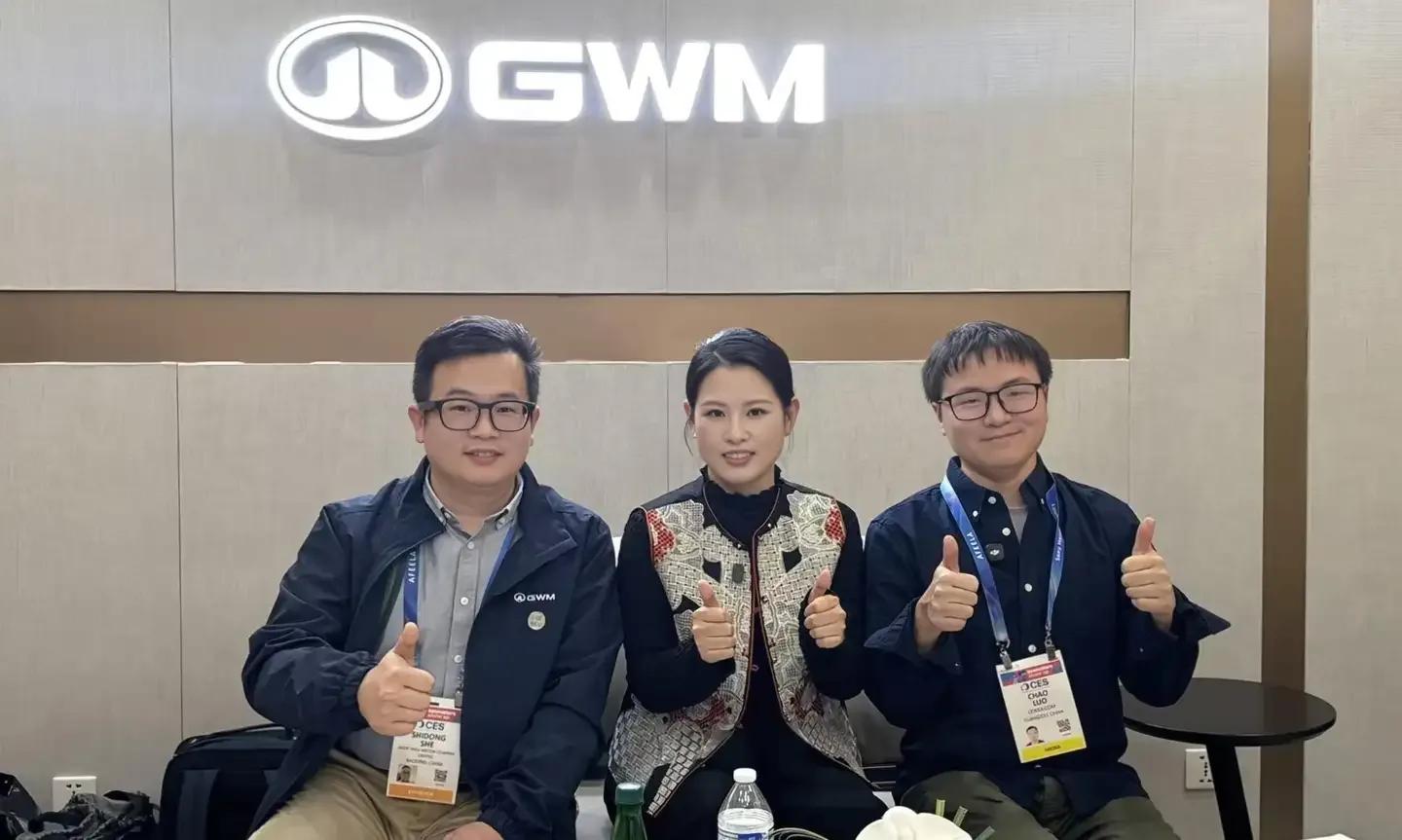
The Leikeji CES 2026 reporting team was also invited to the event held by Geely on the eve of the opening of CES 2026. Geely not only displayed models of brands such as Zeekr and Galaxy, but also debuted the WAM World Action Model for the first time, announced the English name of its assisted driving system Qianli Haohan as G-ASD, integrated the two technologies of VLA and WM (World Model), and announced the launch of Robotaxi, marking the advancement of its full-domain AI technology system to the 2.0 era.
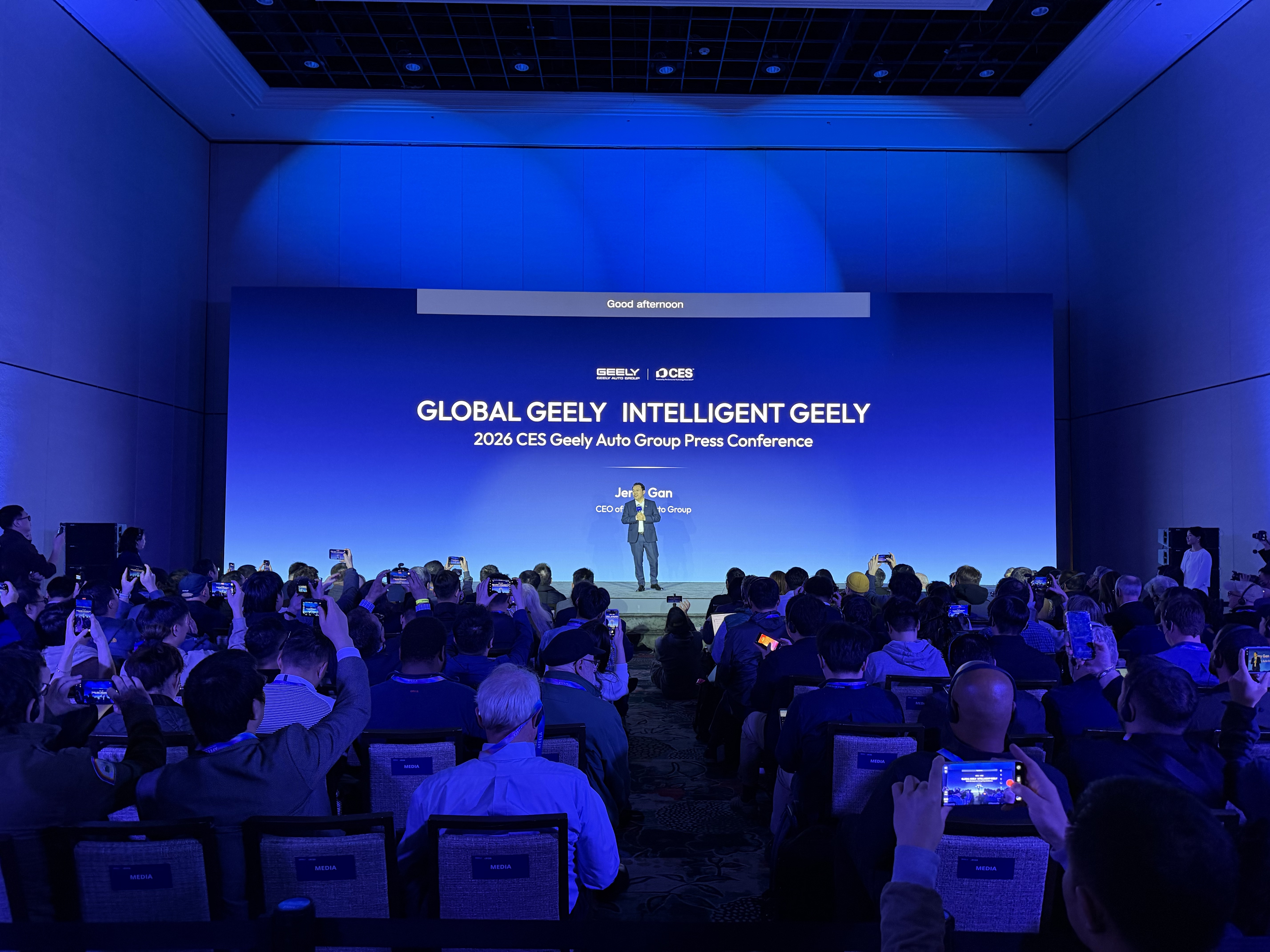
(Source: Dianchetong shot at CES 2026)
From the announcement of the English name of Qianli Haohan at CES 2026, it can be seen that Geely was already planning to enter the North American market at that time. From its participation in the CES exhibition at the beginning of 2026 to a series of actions this year, and then to securing the booth quota for CES 2027 in advance, Geely's layout in the North American market is closely linked. Since Geely takes Canada as the starting point to lay out the North American market, the exhibits and new technologies at CES 2027 will definitely be more and more exciting than those at CES 2026.
Dianchetong (ID: dianchetong233) believes that Geely and Great Wall, two automakers that displayed multiple models at CES 2026, are expected to further expand their booth scale at CES 2027, and it is very likely that more Chinese automakers will display their products with independent booths, such as brands including BYD and Xiaomi.
The most noteworthy one is Xiaomi, which is accelerating its layout in overseas markets, and displayed multiple models, concept cars and its unique "people-vehicle-home" ecosystem at the just-concluded IFA 2026. At CES 2027, Xiaomi may bring its "people-vehicle-home mode" to the exhibition and display core new cars such as the Pengcheng series.
After entering the new energy vehicle era, Chinese automakers have achieved corner overtaking over overseas brands. At almost all exhibitions where independent brands participate, Chinese enterprises can become the focus of attention through new technologies and new products. At this critical moment before the implementation of L3-level autonomous driving, Dianchetong predicts that many Chinese automakers will display new products built based on the L3-level autonomous driving architecture at CES 2027.
What Attracts People Most to CES Is Always New Technologies
The reason why CES is regarded as the "bellwether" in the consumer electronics field is that many enterprises choose to debut new technologies and new products at this exhibition. Of course, there are many auto industry exhibitions. In China alone, there are two super auto shows, the Beijing Auto Show and the Shanghai Auto Show. New technologies are rarely debuted at CES, but there will be no shortage of displayed technologies and products.
For example, at CES 2026, Great Wall Motors displayed its full range of products including the spatial language intelligent agent large model, Coffee EEA 4.0, ASL 2.0, Hi4-Z, semi-solid-state battery, hydrogen fuel engine, and V8 engine.
Combined with the development of the new energy vehicle industry this year, the mainstream trend of intelligent driving technology is end-to-end VLA + world model, which has evolved from the simple "perception-decision-execution" framework to being able to predict the motion trajectories of surrounding objects, so as to make responses in advance and greatly improve the driving safety of the intelligent driving system. For example, XPeng's X-Foresight predictive world model can deduce what will happen in the next 6 seconds.
Apart from the world model, another mainstream trend of intelligent driving systems is data simulation. Real vehicle data is an important source for the basic training of intelligent driving systems, while data simulation can generate a large number of long-tail scenarios and difficult scenarios through the virtual world for targeted training, to improve the performance of the intelligent driving system when facing high-difficulty scenarios. At CES 2027, the upgrade of world model and data simulation capabilities will still be the focus.
As for the AI aspect, judging from BYD's Didi Xia in-vehicle AI and Li Auto's self-developed Mind GPT, the trend is not much different from previous years. In-vehicle AI is still developing towards the direction of "embodied robots", which can complete more tasks according to user instructions, such as high-level intelligent driving, ticket booking, and shopping.
Stellantis's pre-heated speech will also focus on advanced technologies that integrate vehicles, software and digital ecosystems, to improve users' car experience through humanization and intelligence.
Among the two core pillars of new energy vehicles, electrification and intelligence, the key to electrification lies in the three-electric system, and the most important part of the three-electric system is the battery. You may have heard the saying "solid-state batteries are about to be mass-produced on a large scale" so many times that you are tired of it, but solid-state batteries are really approaching us.
This year, semi-solid-state batteries from enterprises including Chery, Dongfeng, CATL, and Honeycomb Energy have been installed in vehicles in batches. All-solid-state batteries are still under testing and are expected to be put into small-batch trial production in 2027. CES 2027 is held right at the beginning of the new year, so power battery enterprises are very likely to display solid-state battery technologies at the exhibition.
It is worth noting that a few days ago, seven departments including the Ministry of Industry and Information Technology jointly issued the "15th Five-Year Plan" for the Development of the New Battery Industry, which plans to realize the initial large-scale application of all-solid-state batteries by 2030. On October 9, the stocks of the A-share solid-state battery sector rose collectively, and multiple stocks including Keheng Co., Ltd. and Fengyuan Co., Ltd. hit the daily limit, which shows the strong development momentum of the solid-state battery industry.
In the new energy vehicle era, it seems that the threshold for automakers to enter the industry has been lowered. In fact, without technical heritage, it is difficult for products to stand out in competitiveness. Consumers are willing to buy BYD vehicles because they value BYD's three-electric technology and product quality. Even Leapmotor, which is famous for cost performance, released its self-developed world model this year to sprint into the first echelon of intelligent driving technology. It is believed that many automakers will display their latest technological R&D achievements at CES 2027.
Robotaxi, Another Focus of the CES Mobility Sector
From the list officially announced by CES, Dianchetong noticed four brands, namely Uber, Waymo, Zoox, and Tensor. The first three enterprises are already familiar to most people: Uber is a global giant in the online car-hailing sector, while Waymo (Google-backed) and Zoox (Amazon-backed) are the leaders in the Robotaxi field.
At CES 2026, Uber, Waymo, and Zoox all displayed Robotaxi models, among which Zoox also displayed a Robotaxi designed without steering wheel and pedals. On July 30 this year, Zoox obtained the world's first commercial operation license for steering-wheel-free and cab-free Robotaxi, taking the lead over Tesla.
Tensor is an autonomous driving startup that reached a cooperation with Lyft Inc. in the United States last year, planning to form a Robotaxi fleet consisting of hundreds of autonomous vehicles in North America in 2027.
There is no doubt that Robotaxi is another focus of CES 2027, and the steering-wheel-free and pedal-free design driven by automakers such as Zoox and Tesla will become the main development trend of the industry. Daring to remove safety guarantee designs such as steering wheels and pedals shows that Robotaxi companies are confident enough in their intelligent driving technology.
Due to the strong regional restrictions of Robotaxi, domestic leading enterprises in this field including Apollo Go, WeRide, Pony.ai, and Didi Robotaxi are most likely not to participate in CES 2027 with independent booths, but may jointly display some technologies and models with supply chain enterprises such as Hesai Technology, Black Sesame Technologies, Zhuoqu, Horizon Robotics, and Momenta.
There are nearly three months left before the opening of CES 2027, and there is limited exact breaking news in the industry at present, but it is not difficult to predict that the excitement of the mobility sector at this exhibition will fully surpass that of CES 2026.
As automakers accelerate to break through in overseas markets, they will inevitably pay more attention to foreign exhibitions. Geely and XPeng have secured their booth quotas first, and a number of leading domestic brands including BYD, Xiaomi, and Great Wall are also expected to appear. More automakers will unlock independent booths, making Chinese strength the protagonist of the exhibition's mobility section.
The continuous iteration of intelligent driving technologies such as VLA world model and data simulation, the advancement of in-vehicle AI to embodied robots, coupled with the key industrialization breakthrough of solid-state battery technology, will fully demonstrate the latest achievements in the intelligence and electrification of new energy vehicles.
Although many Chinese brands will be absent from the Robotaxi field and the highlights may be less, the new direction led by Tesla, Zoox and Waymo is also worthy of our attention.
Since there is still plenty of time, there is not much exact information available. Dianchetong can only conduct analysis based on the participation of mobility enterprises in previous CES exhibitions and the development trend of new energy vehicles this year. It is expected that major automakers will start to warm up for CES 2027 in the next few weeks and reveal more key information, and Dianchetong will continue to pay attention to it.