Sometimes, the "peace of mind" that adults seek can come from a pen.
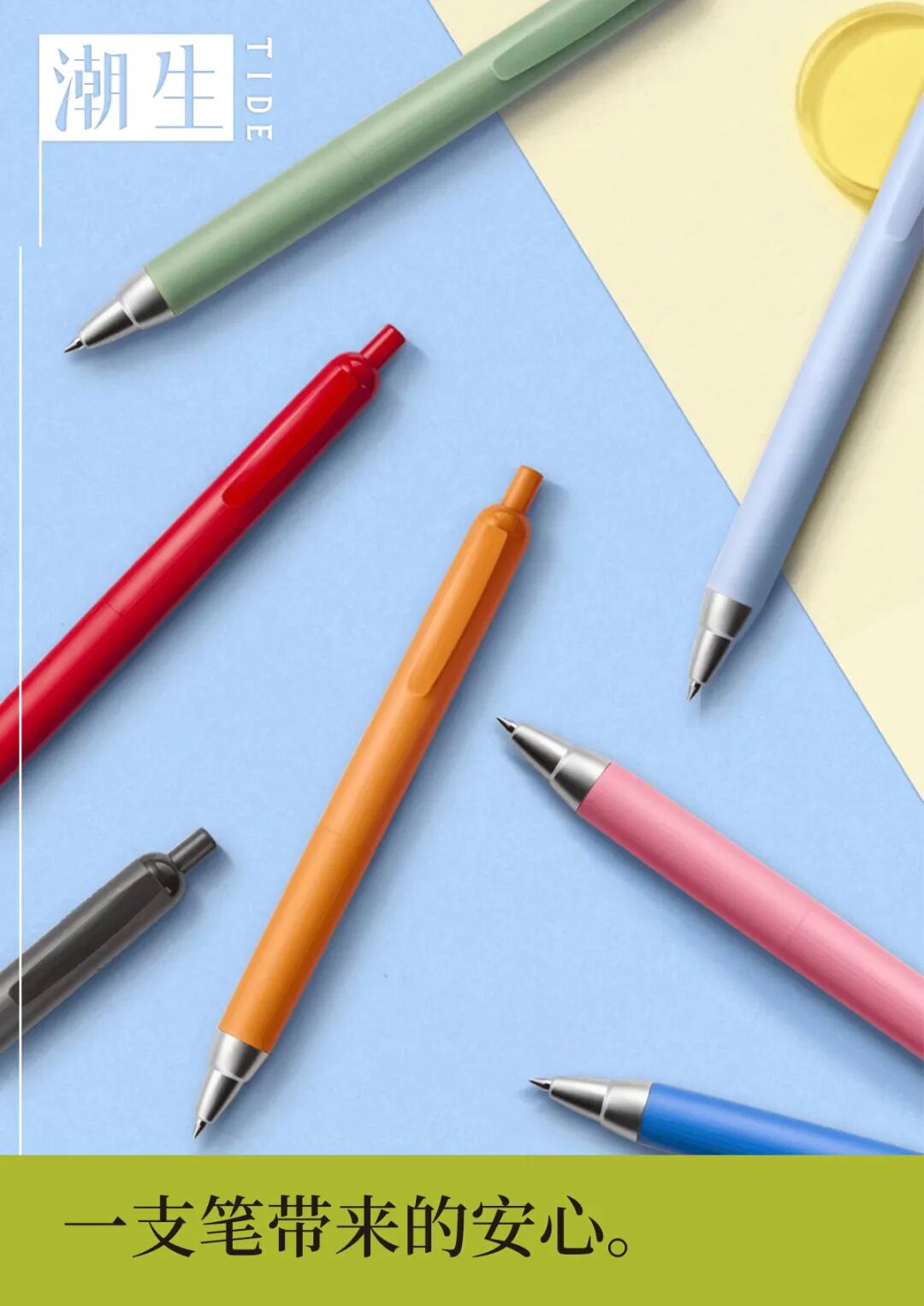
In the fast-paced, high-intensity modern metropolis, we are being pushed forward every day, and life seems to be in a state of slight loss of control and disorder at any time.
When everything can be quickly replaced by screens and algorithms, we instead begin to miss the tangible, real sensations that we can see and touch. Picking up a pen again, crossing off a task on a sheet of paper, jotting down a flash of inspiration, this extremely concrete act of writing is becoming the "emotional safety net" for adults: no matter how chaotic the day is, at least this stroke is entirely under your control.
Most of the time, this reassuring feeling comes from the good pen on your desk that fits comfortably in your hand and writes smoothly.
An Unexpected Encounter at the Subway Station: The Moment When Adults Stop for a Pen Again
In the underground transfer passage of Lujiazui Subway Station in Shanghai, the flow of people seems to have been pressed the fast-forward button.
The crowds always move forward at an almost consistent hurried pace, and the huge large screens on both sides of the passage alternately display gorgeous advertisements. These bright and eye-catching visual symbols have long formed a fixed urban background board of the top financial district.
But during the just-passed National Day holiday, people encountered a rather special advertisement here.
What was neatly spread out on the large screen was a fresh, clean blue and white background. There were no exaggerated special effects or luxurious product displays in the picture, and the protagonist was the well-known singer Zhou Bichang wearing a light green suit and a capable shirt. She either smiled and held a sleek light blue gel pen pointing at the camera, or interacted briskly with a giant gel pen; next to it was a very eye-catching bold text — "KAYOU Stationery, every pen is a great pen".
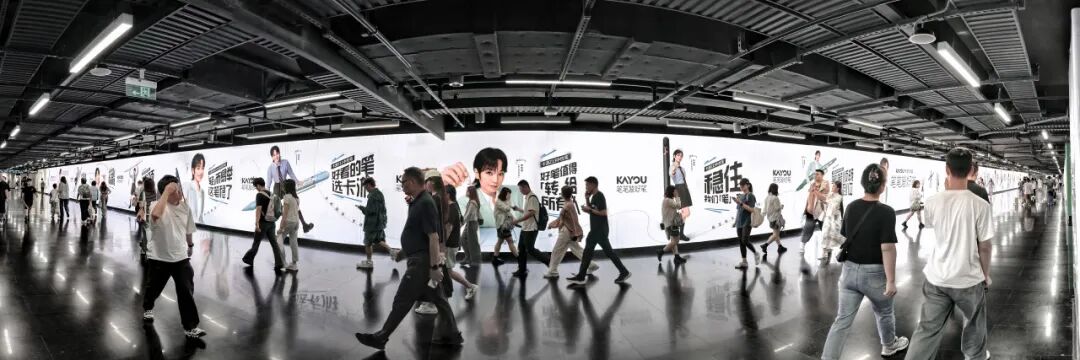
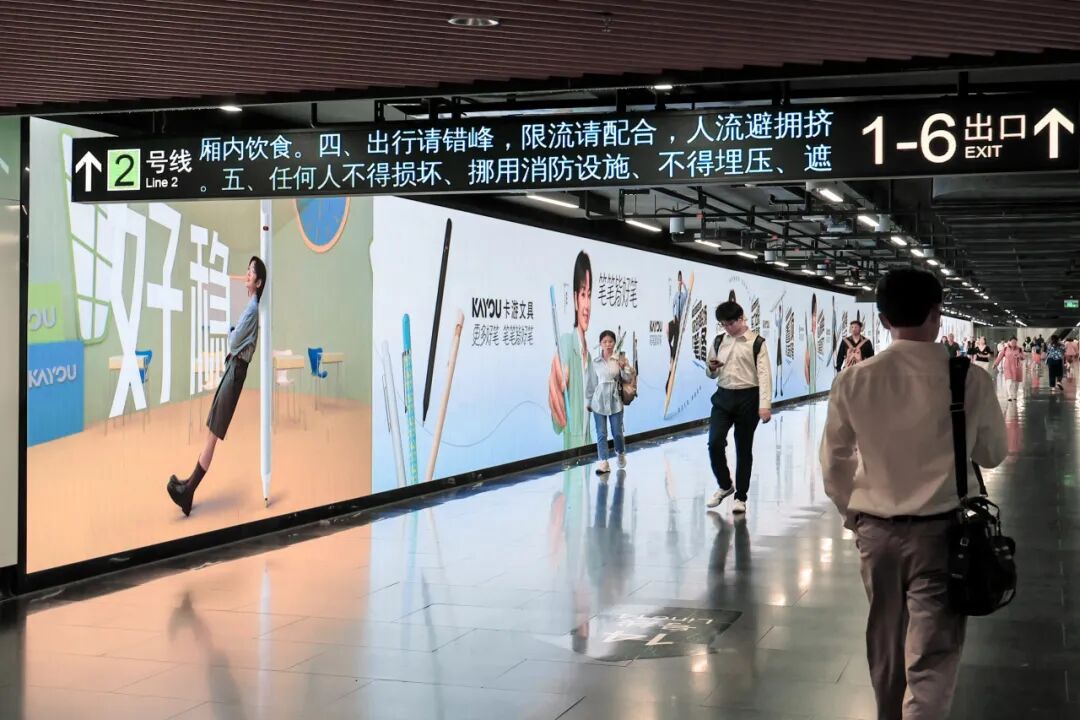
In the crowded underground corridor, this somewhat scholarly picture is like a sudden insertion of a blank space in the urban noise, which makes many hurried urban residents can't help slowing down and taking a second look.
This is undoubtedly a scene full of contrast.
In the inherent perception of many people, the large-screen advertisements in the core area of Lujiazui are often filled with various grand, cool urban symbols and commercial promotions. Stationery, especially the daily indispensable gel pen, has always been classified as an unknown practical consumable, or a "student supply" that relies heavily on channels around schools.
The core group of people here — white-collar workers, new middle-class people and Generation Z office workers shuttling between office buildings — have long been accustomed to fully digital office work in daily life. The sound of keyboard tapping and the cold touch of the touch screen take up most of their time, and they seem to have long been away from the peak period of stationery use when they needed to study hard and do a large number of exercises.
But if you look at it from the intersection of business and public sentiment, this placement is very appropriate.
Because the consumption logic of young people for stationery is changing now. In the past, when we bought a pen, it was often out of pure functional demand, and we considered "whether it is durable" and "what the price is"; but today's adults re-enter stationery stores, or get attracted by a pen on social platforms, the motivation for consumption has long gone far beyond the simple act of writing itself.
A pen with exquisite design, comfortable grip and smooth ink output is evolving into a low-cost, high-reward emotional decompression item, a portable "sense of life safety net". When the work schedule is filled with countless to-dos and endless meetings, crossing off a task by hand on paper, this moment with strong tactile feedback can quickly bring people a reassuring sense of being backed up in the chaotic daily life.
From this perspective, KAYOU's choice of Zhou Bichang as the global spokesperson for stationery and such a life-oriented, scene-based visual presentation in Lujiazui has a very accurate and natural fit in itself.
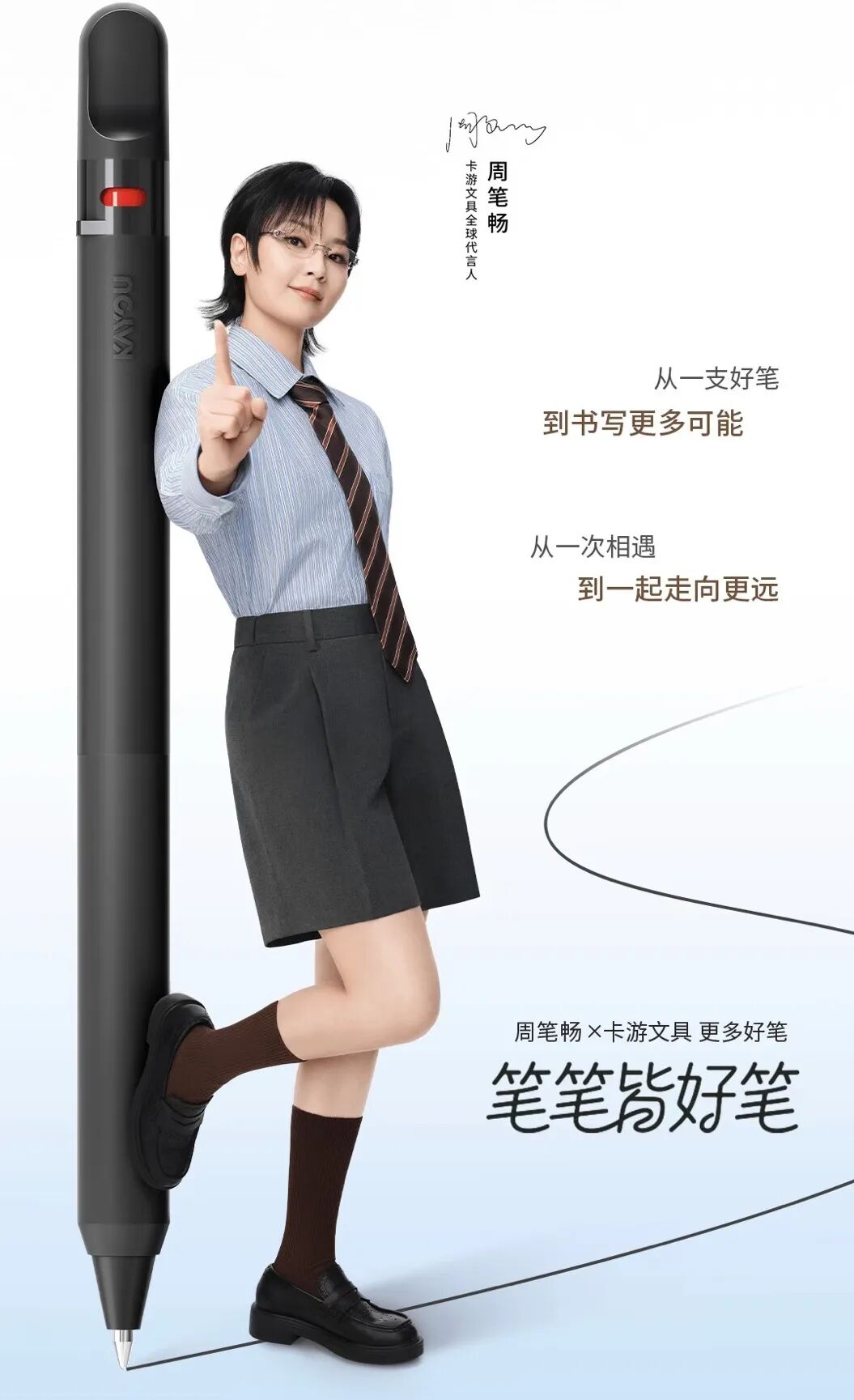
First of all, there is a natural homophonic clever connection between Zhou Bichang's name and the product selling point. The character "Bi" (pen) in Zhou Bichang's name, together with the memory points of "every pen writes smoothly" and "every pen is a great pen", allows consumers to generate a high degree of association and imagination the first second they see the picture, becoming an opportunity for communication between fans and passers-by.
More profoundly, it is the collision between Zhou Bichang's personal characteristics and KAYOU Stationery's quality concept. Since her debut, she has been a powerful singer who has accompanied the growth of young people. From the early image of a "top student singer" to her current focus and restraint on the music track, the traits of being unpretentious, quality-oriented, pragmatic and patient that Zhou Bichang possesses coincide exactly with the smooth, stable and reliable quality pursued by a "good pen".
When "Good Stationery" Goes Out of the Niche Circle and Becomes a Perceivable Quality Consensus for the Public
As early as last December, when KAYOU officially announced Zhou Bichang as its stationery spokesperson and simultaneously launched the Zero Series gel pens, this natural sense of trust had already completed the first wave of word-of-mouth precipitation on e-commerce platforms and social networks. Many consumers shared their experiences on Xiaohongshu or in e-commerce comment sections: "I originally bought it to try because Bichang endorsed it, but I found that the grip feel and ink output are really amazing" "The workmanship is very solid, and my mood gets better when I put it on the desk".
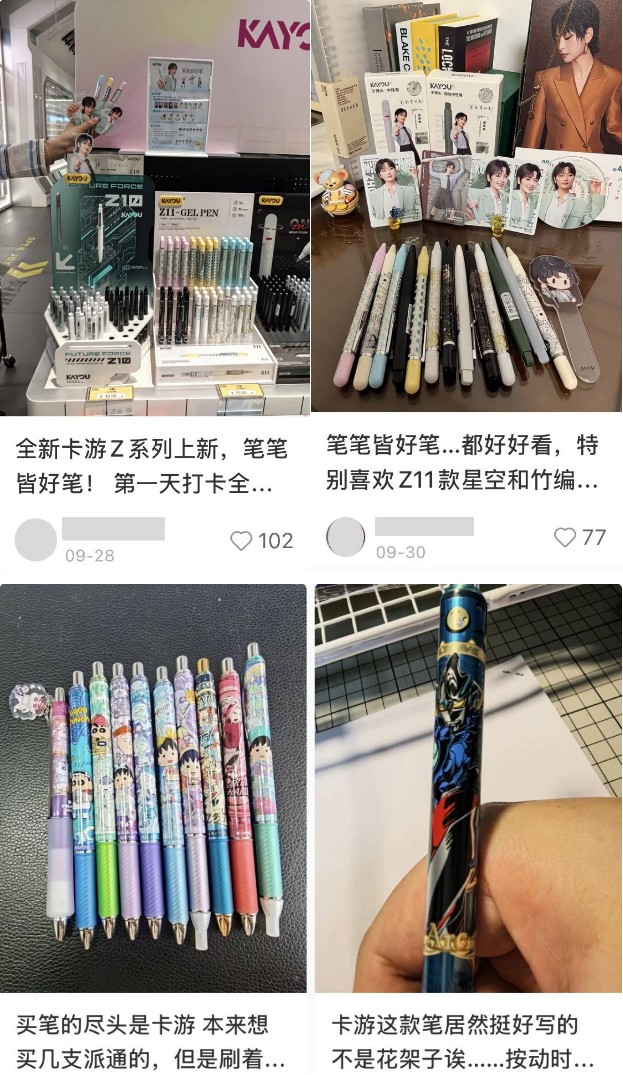
Users' spontaneous sharing, source @Xiaohongshu screenshot
This experience exceeding expectations is inseparable from the high requirements of KAYOU Zero Series functional stationery for product design and writing feel.
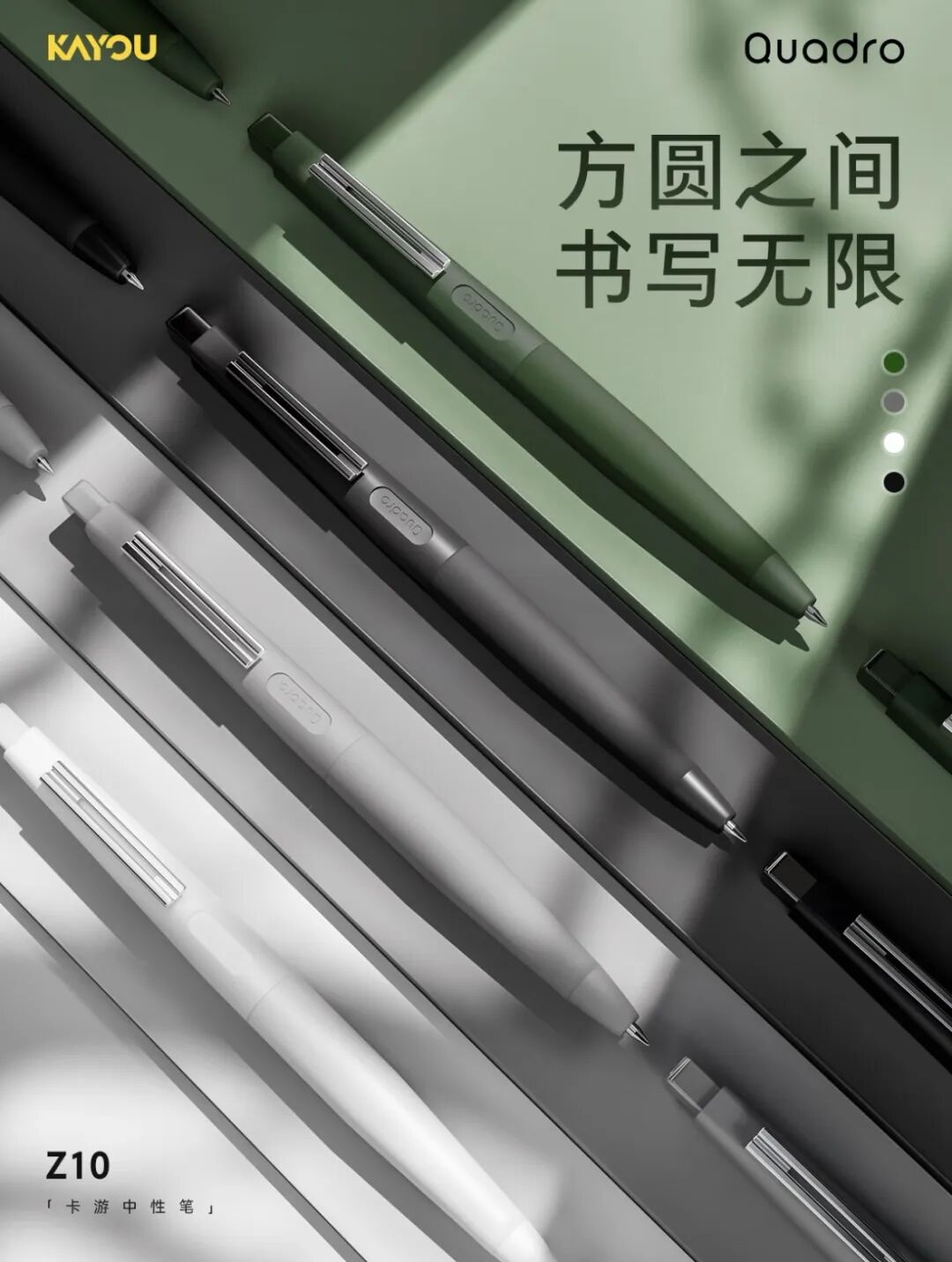
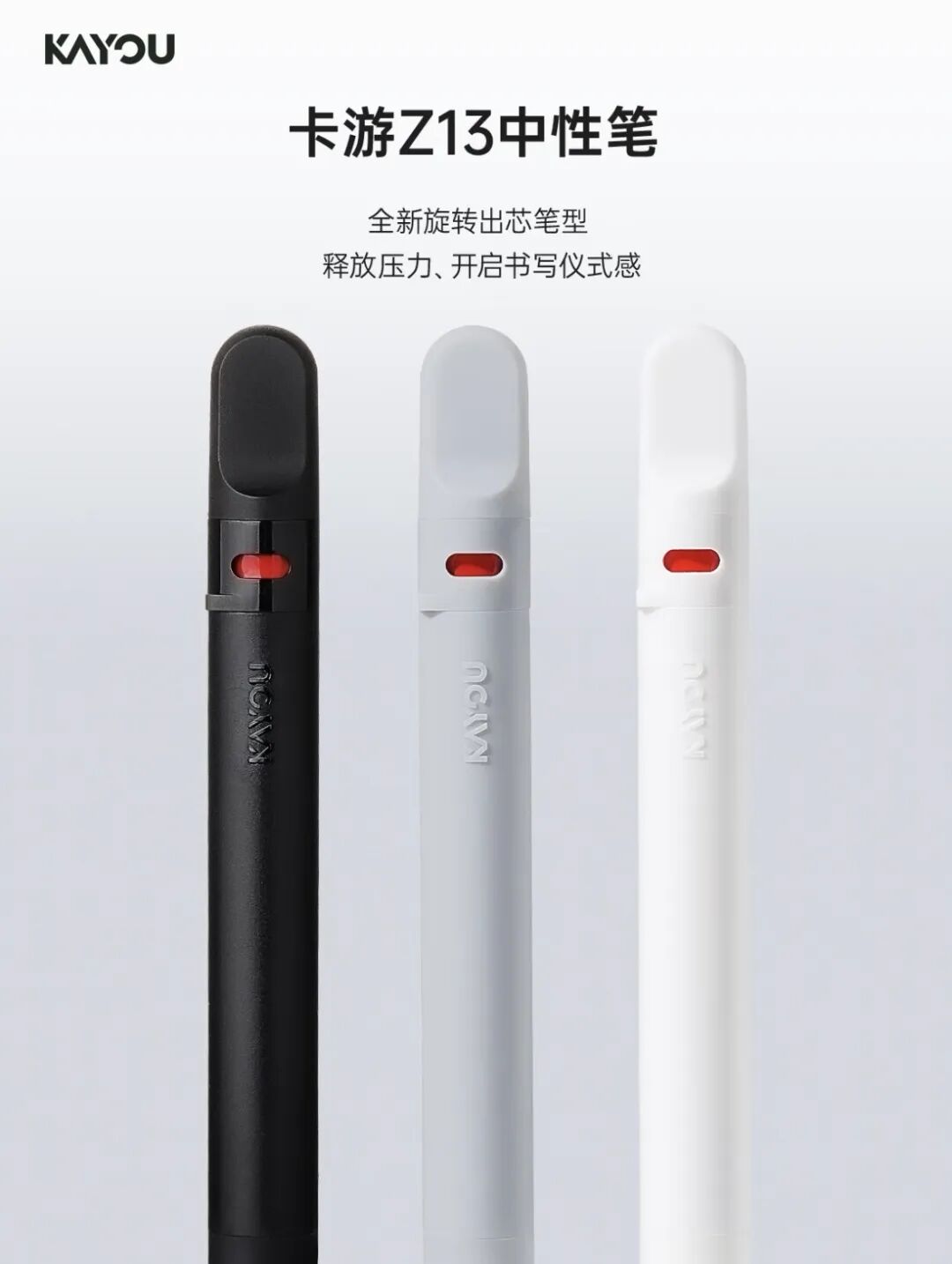
Taking Z10 and Z13 in the Zero Series as examples, the design team skillfully integrates modern minimalist aesthetics with ergonomics.
Z10 breaks the form stereotype of traditional stationery, adopting the line language of "combination of square and circle" — the pen holding area has a rounded arc that fits the hand shape, and extends from the middle of the pen body to the top into a sharp geometric square. Considering the comfort of holding the pen for a long time, it also endows the product with a highly recognizable visual focus.
For Z13, it adds a unique rotating lead-out structure and eye-catching red switch visual elements to the minimalist solid color texture. The crisp "click" sound when rotating 90 degrees and the red visual prompt turn every process of starting to write into a small ritual full of sensory experience.
The product logic of KAYOU Stationery is actually to make a daily consumable with the idea of manufacturing precision instruments.
Producing a pen requires 5 to 6 sets of molds, a single set of mold contains 200 to 300 parts, totaling more than 1000 high-precision parts, and the pen tip alone has to go through 24 processes. The pen tip uses a tungsten carbide ball, which is wear-resistant and delivers stable ink. There is a centrifugal pressure maintaining process in the assembly process, whose purpose is to expel the air that may enter the pen core during installation — because the most annoying moment in writing is that the ink suddenly breaks off halfway through writing.
This pursuit of high quality also allows KAYOU to stand out on the international high-standard stage.
KAYOU also has a more high-end stationery line KAYOU+, which targets professional scenarios with higher writing accuracy requirements such as drawing and design.
In the 14th Japan Stationery Store Award known as the "Oscar of the stationery industry", KAYOU+ won the first and fourth place in the mechanical pencil category, and the second and fourth place in the ballpoint pen category. The judges of this award are not ordinary consumers, but professional buyers from 13 well-known Japanese stationery stores such as Tsutaya Books, Maruzen & Junkudo, and LOFT, who screened about 1200 nominated products one by one.
The first place winner in the mechanical pencil category is a high-precision drawing mechanical pencil called AIMVISION Pro. The evaluation given by judges and professional media is: high-rigidity pen barrel with proper counterweight, knurled non-slip pen grip, and writing accuracy that "draws professional lines without deviation". At the same time, this mechanical pencil also won the German iF Design Award, and then won the Red Dot Design Award.
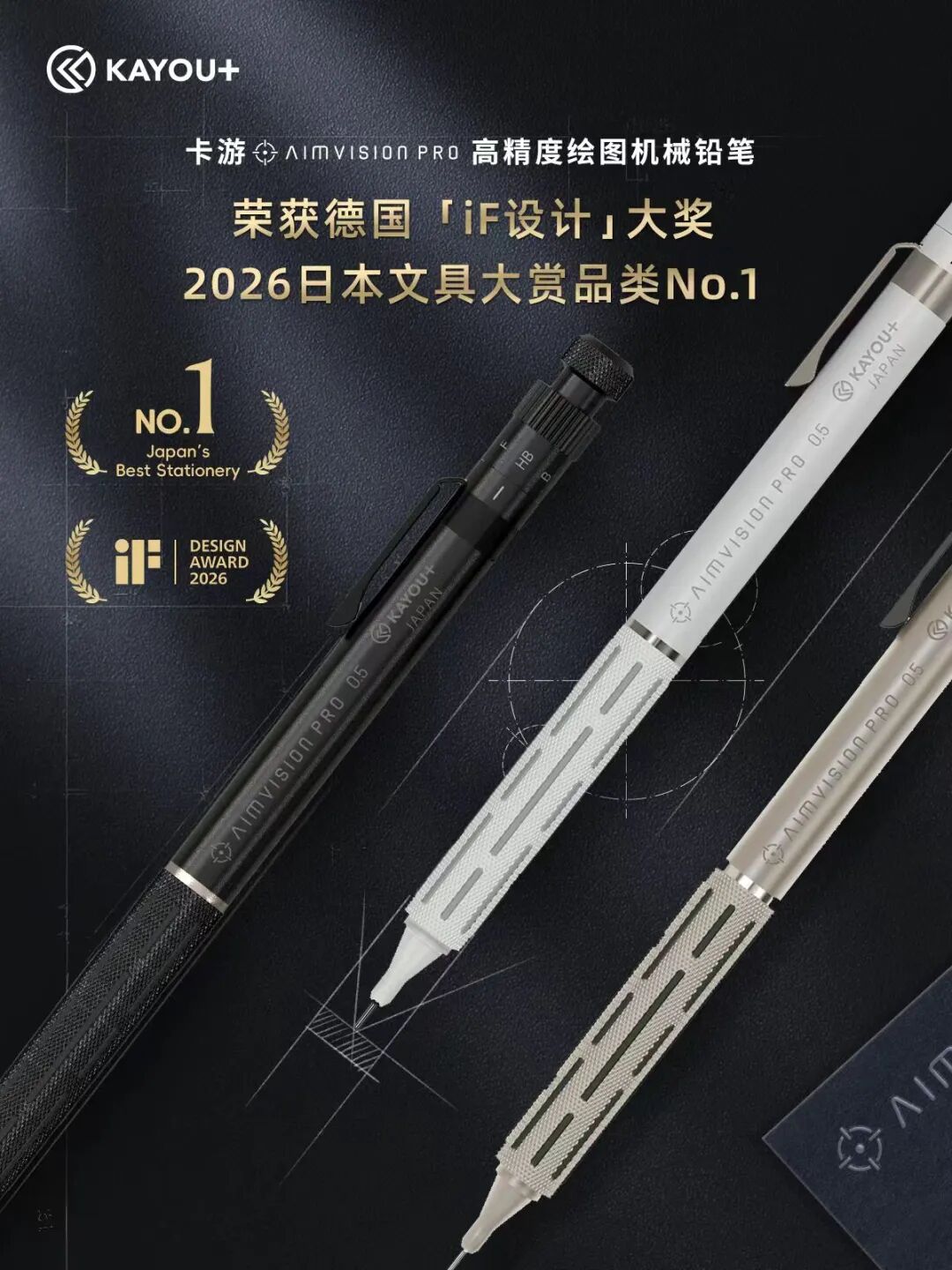
The significance of these awards is not only to prove that a pen is well made, but also to make the evaluation criteria that originally belonged to the professional stationery field begin to be seen by more ordinary consumers.
In the past, professional industrial design and ultimate writing experience were often hidden in a small number of high-end stationery brands and enthusiast circles; but now, when the grip feel, counterweight, pen tip accuracy and even mold craftsmanship of a pen have begun to become things that consumers can perceive, discuss and choose, "good stationery" is no longer just a professional judgment of a few people.
From this perspective, what KAYOU is doing is actually bringing these originally somewhat niche quality standards further into the public's daily life. With industrial manufacturing capabilities and relatively affordable product prices, the stylish appearance and writing experience that used to be obtained at a higher cost have begun to become daily consumption within easy reach of more people.
When "good stationery" is no longer unattainable, quality becomes something everyone can feel when they pick up a pen.
Adults' "Emotional Safety Net" Starts With a Pen
If you shift your sight a little further away from a pen, you will find that today people are willing to spend a little more money on stationery, and what they really buy is not just "easy to use".
After all, in this era where everything can be digitalized, the pen itself is no longer an irreplaceable tool. There are memo pads in mobile phones, computers can record at any time, and there are corresponding software for calendars, to-do items, and meeting minutes. Theoretically, we no longer need to carry a pen with us.
But interestingly, paper and pens have not disappeared because of this, but have begun to return to young people's lives in another way.
A very intuitive change has taken place in the planner. Tmall data shows that in 2025, the transaction volume of planners on the platform increased by more than 30% year-on-year, and the number of related merchants increased by more than 70%; under the planner category alone, the number of buyers increased by nearly 50% year-on-year.
This means that when people pick up pen and paper again, it is not necessarily because digital tools are "not convenient enough". On the contrary, it may be precisely because digital tools are already convenient enough.
When a large amount of information surges from the mobile phone in a day, messages, meetings, to-dos, and schedules keep switching, writing has become one of the few actions that people need to complete by hand and will not automatically pop up the next notification.
A thought pops up temporarily, jot it down on paper; make a plan on weekends, write down the places you want to go next in the notebook; even just subconsciously doodle a few times on the edge of the paper... These actions are no more efficient than tapping the keyboard a few times, but they have a "sense of completion" that digital tools can hardly provide.
Therefore, a handy pen is more like a portable fulcrum, giving the chaotic daily life the smallest unit of "safety net".
It does not need to take up special time, nor does it need to learn any complicated usage. As long as it is placed on the desk or in the bag, it can help people refocus their attention on themselves in those moments that are fragmented by work and life.
This is also why buying stationery is more and more like a lifestyle consumption now.
The "Trend White Paper of Taotian Stationery and Educational Electronics Industry" released in 2025 shows that the decision-makers for stationery purchase have long been adults, and people aged 30 to 39 are one of the main purchasers; among the consumer groups of office stationery, the preference of white-collar workers in tier 1 to tier 3 cities is also prominent. At the same time, the purchasing group of interest stationery shows a younger trend, and the preference of people aged 18 to 24 is obvious.
In other words, stationery is no longer just a matter of "what students need to buy for the new semester". It has begun to enter adults' desks, bedrooms, suitcases and daily plans.