Lenovo's PC sales dropped sharply by 22% year on year, and the AIPC story is also hard to promote.
Latest data from IDC shows that in the third quarter of 2026, Lenovo shipped 14.9 million units in the quarter, compared with 19.3 million units in the same period last year, a 22.6% year-on-year decline, and its market share dropped from 24.6% to 23.8%.
A year ago, according to the same IDC report, Lenovo shipped 19.4 million units in the third quarter of 2025, representing a 17.3% year-on-year increase with a 25.5% market share, leading the second-ranked player by 5.7 percentage points.
In just one year, the trend reversed sharply from a 17% growth to a 22% decline.
IDC attributes part of the reason to supply issues and high prices, as the memory crisis continues to escalate.
However, Zhang Dongwei, a senior technology and internet expert, believes that the more fundamental change is: enterprise-level demand is being replaced by cloud computing, and individual-level demand is shifting to smart terminals such as mobile phones.
Lenovo's business volume is still huge, but it has become increasingly less attractive to the market.
I. The Fading Glory of ThinkPad
The logic behind enterprise PC procurement is changing.
In the past, it was a standard process to equip every newly recruited employee with a latest high-specification PC.
Nowadays, more and more CIOs are calculating a different account: by moving computing power to the cloud, it is sufficient to deploy a low-cost thin client for each employee.
Enterprises are reducing their spending on computer procurement and turning to cloud desktops. After the computing burden is transferred to the cloud, enterprises do not need to equip each employee with a high-performance PC. The devices can be cheaper, and the replacement cycle can also be extended.
From the perspective of total cost of ownership, the cloud terminal solution can help enterprises reduce hardware procurement costs by more than 50% and save maintenance costs by more than 85%. Gartner predicts that by 2027, 95% of employees will work through virtual desktops.
Looking at the data, from 2021 to 2025, the global commercial PC shipment volume has dropped by about 15% in total, while the average unit price has risen by about 30% in the same period. The decline in volume and rise in price indicate that the willingness to procure is decreasing, and the remaining buyers are purchasing higher-end and more durable equipment with lower procurement frequency.
Commercial PCs are evolving from consumables to durable goods, and the total market size will only shrink further.
In fact, not only Lenovo, but also Dell and HP are facing the same situation.
The three giants all recorded a decline of over 20%. It is not that they did something wrong, but that enterprises are shifting their spending on enterprise computing from purchasing PCs to buying cloud services. The global cloud computing market size is expected to increase from 832.8 billion US dollars in 2025 to 959.7 billion US dollars in 2026, with a compound annual growth rate of 15.24%.
The rise of cloud and the fall of PC are no coincidence.
Enterprises are not cutting spending, but their budget is flowing from hardware boxes to cloud and services.
II. The Downgraded PC
The enterprise market is shrinking, and the consumer market is in a worse situation.
In 2025, the number of mobile internet users in China reached 1.116 billion, accounting for 99.4% of the total internet users. For the generation born after 2000, the mobile phone is their first computer, and even possibly the only one they use.
Doing homework, watching videos, socializing, and shopping are all done on mobile phones. PCs are no longer daily tools, but professional equipment for specific scenarios.
A survey conducted by CNET in 2025 shows that 52% of American adults still use laptops to create and view documents, but 66% of them have completed organizational management tasks on mobile phones.
PCs are being downgraded, shifting from personal computing centers to specific-task tools, just like printers — you need them, but you rarely think of them.
The peak of global PC shipments was 365 million units in 2011.
The epidemic brought a short-term rebound, followed by a downward trend again. Shipments were 293 million units in 2022, down 16%; 254 million units in 2023, falling below the 2019 level; and barely returned to 263 million units in 2024. By the third quarter of 2026, single-quarter shipments plummeted 20.1% year-on-year.
It is not that PCs are no longer easy to use, but that users no longer need such high-performance PCs.
People use mobile phones to watch short videos, reply to emails, attend meetings, and even make do with making PPTs on mobile phones.
Mobile phones can basically do almost everything PCs can do, except for a smaller screen and slightly lower efficiency. But for most people, being sufficient is enough.
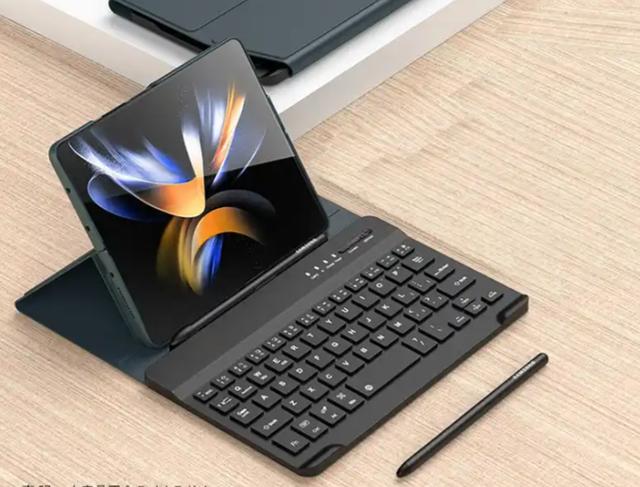
PCs have not been killed by mobile phones, but have been squeezed from the daily center to the professional niche by mobile phones.
III. The AI Story Sounds Attractive, But It Is Not Easy to Profit From Computing Power
Facing the decline of its core PC business, Lenovo has bet big on AI.
The direction is correct, but the implementation is not easy.
Let's look at the latest figures first. In the first quarter of the 2026/27 fiscal year, Lenovo's AI-related revenue increased by about 60% year-on-year, accounting for 35% of the group's total revenue; in the 2025/26 fiscal year, its AI-related business revenue increased by 105% year-on-year, with full-year revenue reaching 83.1 billion US dollars, up 20.3% year-on-year. Since April 2025, Lenovo's Hong Kong stock price has risen by more than 60%.
But there are two unavoidable problems.
First, is the AI PC a real demand after all?
We need to distinguish different statistical calibers: according to the data disclosed by Microsoft in May 2026, Lenovo's market share in the Windows AI PC market once reached 31%; according to Lenovo's disclosure in the first quarter of the 2026/27 fiscal year, its global AI PC market share is 25.1%.
However, at present, ordinary users still have vague perception of AI PCs. It is more like a selling point for manufacturers to stimulate replacement of old devices, and no one can tell how long the effect will last.
Second, AI server manufacturers are essentially working for NVIDIA.
NVIDIA's gross profit margin in fiscal year 2026 is 71.1%. Although it has declined from 75.0% in the previous fiscal year, it still remains above 70%.
In contrast, the gross profit margin of midstream assemblers is suppressed at single-digit or low double-digit levels: the gross profit margin of Foxconn Industrial Internet's AI server business is 7.15%, Quanta's is 5.02%, and Wistron's is 5.66%.
Lenovo's ISG business also only has a full-year operating profit margin of 3.6%. The gross profit margin of chip manufacturers is 71%, while that of complete machine manufacturers is 5%, a gap of more than 14 times.
No matter how large the assembly turnover is, it is only the hard-earned money from OEM processing.
The Next Platform analysis points out that almost all the profits from building AI systems flow to NVIDIA.
Changes are also taking place at the organizational level. At the end of 2025, Lenovo's ISG China region was exposed to large-scale layoffs, with hundreds of employees in the Shanghai team being dismissed as a whole, and all software, firmware and OS teams in the China region were laid off. Lenovo accrued a restructuring fee of 285 million US dollars in the latest fiscal quarter, which is related to the AI server division.
Analysts point out that the ISG China region is facing the pressure of domestic substitution and the dilemma of low gross profit margin, and the core of the layoffs is to pursue profitability and structural optimization.
Between the comfort zone of PC business and the deep water zone of AI, Lenovo is using organizational restructuring to exchange for the admission ticket for the next decade. But the input-output ratio is still unclear for now.

Lenovo's AI story has made progress, but the pricing power and ecological dominance are not completely in its own hands.
Dongwei's Insight
PCs will not disappear. Enterprises need them, professionals need them, and they are still irreplaceable in certain scenarios.
But as a mass consumer product, the golden age of PCs has passed. Enterprise demand is shifting to the cloud, and individual demand is shifting to mobile phones. The superposition of the two forces constitutes a long-term downward structural pressure.
Lenovo is still the world's largest PC manufacturer, and this position will not be shaken in the short term.
However, "the largest" is never the same as "the most worthy of investment". Kodak was once the world's largest film manufacturer, and Nokia was once the world's largest mobile phone manufacturer. When the underlying logic of the category changes, being "the largest" may instead become the biggest burden for transformation.
Lenovo's layout in AI is obvious to all, and the direction of developing both AI PCs and AI servers is correct. However, the demand for AI PCs has not been verified, and the core value of AI servers is still in the hands of NVIDIA.
For mid-tier businesses, scaling up means greater scale, while poor operation will lead to overstocked inventory.
The golden age of PCs has passed. Lenovo still holds the top position in PC shipments, but it must prove that it can transform from "the first in shipment volume" to "the first in profit".
Otherwise, the larger the scale, the slower the turnaround.
This article is from the WeChat official account "Zhang Dongwei", written by Zhang Dongwei, and published with authorization from 36Kr.