Keynote Speech: Why Is It "Imaging Scenario Industry"? | 2026 Global Imaging Scenario Industry Conference
From "capturing the world clearly" to "understanding the world" — as imaging is no longer merely a hardware-driven business, China's imaging hardware industry is redrawing its own boundaries. At the 2026 Global Imaging Scenario Industry Conference held in Shenzhen on September 22, Zou Ping, Dean of 36Kr Research Institute, delivered a keynote speech titled "Why the 'Imaging Scenario Industry'?"
She put forward a judgment: China's imaging scenario industry is evolving from a single competition over hardware to a comprehensive contest of ecosystem and user experience.
From Zou Ping's perspective, the positioning of imaging is undergoing a qualitative change: at the policy level, it is no longer a niche category that needs policy support, but is defined as the "end-side intelligent perception infrastructure" and "core technology base empowering cross-industry development" written into the outline of the 15th Five-Year Plan; at the technical level, hybrid artificial intelligence shifts the core value of the industry from "imaging quality" to "perceptual intelligence" — devices are no longer only responsible for recording images, but begin to understand image semantics, support real-time interaction, and even generate content. In other words, imaging is transforming from a defined independent industry to the underlying foundation that supports the digital and intelligent transformation of thousands of industries, and its growth ceiling is no longer within the original coordinate system.
The logic of industrial competition has been rewritten accordingly. From the era of optical imaging to mobile imaging, AI Imaging 1.0, and then to end-side imaging AI, China's imaging scenario industry has completed four leaps along the technology curve, yet the competition has long centered on lenses, sensors and imaging parameters. What makes this round different is that end-side AI systematically "decentralizes" the imaging capabilities that used to be mastered only by professionals to ordinary users, turning the creator structure from a pyramid shape to an olive shape. The key to winning is no longer single hardware performance, but the ability to cover more scenarios and retain users in its own system through the accessory ecosystem. Data has sent a clear signal: the next five years will be a window of opportunity for large-scale growth in China's imaging hardware market, in which the annual growth rate of peripheral supporting equipment will reach 9.2%, significantly outpacing that of main devices; a track that achieves 9% growth in a market with an overall annual growth rate of 6.73% is solid evidence of the shift of growth engine.
"Main devices are the trunk, peripheral equipment are the branches and leaves, and application scenarios are the soil. The three together form a sustainable imaging scenario industrial ecosystem." Zou Ping's conclusion is straightforward: the next phase of China's imaging industry has moved beyond competition over hardware to the battle for scenario ecosystem.
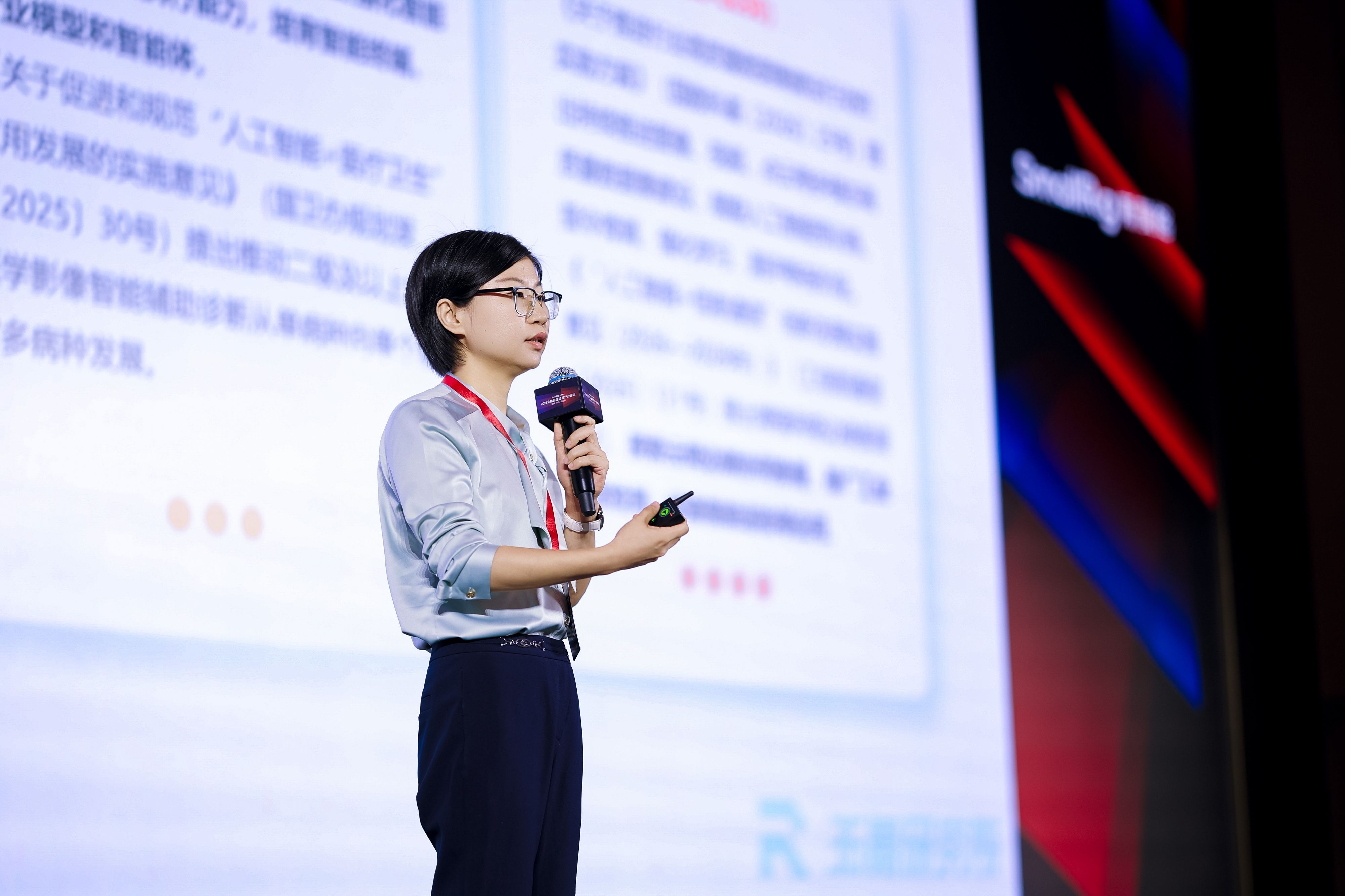
The following is the edited transcript of the speech.
Zou Ping: Good morning everyone! I am Zou Ping from 36Kr Research Institute. Thanks to Leqi Innovation for the invitation, so that 36Kr can participate in today's event. In the context of economic downturn, we can see such a vibrant industry, which will bring certain hope to the development of the whole industry.
Before starting the presentation, I would like to briefly introduce our institute. We focus on research of new economy fields, new models, new business forms and new industries. The imaging scenario industry, the theme of today's sharing, is also our key research object. Especially with the support of hybrid artificial intelligence, we can see that imaging terminals are undergoing profound changes. It is a great honor for me to take this opportunity to share our insights into the imaging scenario industry, including the development of imaging hardware, the evolution of application scenarios and the forecast of the future scale of the hardware industry.
This year marks the starting year of the 15th Five-Year Plan. The central government and local governments have successively issued the outline of the 15th Five-Year Plan, clarifying the key industrial directions to be focused on in the next five years. According to the outline of the 15th Five-Year Plan and relevant policies, we have made a rough statistics that the overall positioning of the state for the imaging hardware industry can be summarized as two key points: end-side intelligent perception infrastructure and core technology base for cross-industry empowerment. This means that imaging is no longer just a single product or function, but has become an important foundation supporting the digital and intelligent transformation of multiple fields such as industry, content production, consumer film and television across thousands of industries.
Around this positioning, relevant departments have successively introduced a series of supporting policies, mainly covering government-guided fund support and scenario opening. In order to support the high-quality development of the imaging scenario industry, many local governments have provided substantial financial support to effectively reduce the innovation cost and innovation threshold of enterprises.
In the field of AI image generation, computing centers in Beijing, Shanghai, Shenzhen and other regions provide computing power subsidies for training, and give one-time incentives to qualified generative AI services that have completed filing. On the whole, national policies have shifted from the past model of only issuing honorary titles to the current model of providing scenarios, orders and financial support, which can effectively help relevant enterprises achieve high-quality development, and drive the large-scale implementation and application of the imaging scenario industry to become an important cross-industry empowerment infrastructure. As Mr. Zhou Yang mentioned earlier, it can become the most fundamental base for thousands of industries to realize digital and intelligent transformation and high-quality development.
Our institute has in-depth research in the field of artificial intelligence, and we have carried out in-depth cooperation and research with many terminal manufacturers, large model enterprises and embodied intelligence enterprises. From the perspective of the development history of the imaging scenario industry, driven by technology, China's imaging scenario industry has experienced four leaps: The first stage was the era of optical imaging, with lenses and image sensors as the core, and the market was mainly dominated by foreign-funded enterprises such as Japanese and German enterprises. Chinese enterprises were mainly engaged in low-value-added work such as module assembly and manufacturing, which was basically at the bottom of the smile curve. With the rapid popularization of smartphones, domestic brands including Huawei, Xiaomi, OPPO and vivo have driven the gradual rise of the supply chain, especially the domestic supply chain, pushing the imaging scenario industry into the second stage. The third stage was the AI Imaging 1.0 era, in which scene recognition, night scene enhancement and portrait blur based on deep learning became standard configurations, and AI capabilities gradually migrated from the cloud to the end-side NPU, still focusing on single-point functions, with the core goal of making images look better. The fourth stage has entered the era of end-side imaging AI. The goal of hybrid artificial intelligence is to enable imaging to no longer be limited to capturing clear and good-looking images, but to understand image semantics for real-time interaction and even generate content, such as real-time translation and space reconstruction. In this stage, the core value of the whole industry has shifted from imaging quality to perceptual intelligence.
To better understand how end-side AI combines with hardware, we need to clarify the definition of hybrid artificial intelligence. The core of hybrid artificial intelligence is to break the limitations of a single model and architecture. By integrating cloud large models and end-side large models, it emphasizes the end-cloud collaboration of heterogeneous computing resources, and builds a diverse and efficient intelligent ecosystem architecture.
For example, hybrid artificial intelligence can flexibly call heterogeneous computing resources of GPU, NPU and CPU according to the requirements of imaging scenarios, task complexity and data privacy. For simple, real-time tasks with high privacy requirements, they can be completed on the end-side. For processing images and videos with high privacy requirements, the editing work can be completed on the end-side computing power without uploading to the cloud, to prevent privacy leakage. For complex tasks such as long video editing, the workload can be diverted to the cloud when necessary, and the computing power support can be flexibly allocated according to the task requirements.
Technological changes are making shooting devices more diversified, and the threshold for shooting is also decreasing rapidly. In the past, the barrier to film and television creation was very high, as creators needed to master the knowledge of aperture, shutter and color grading, and the equipment was very heavy. Now end-side AI is systematically decentralizing the imaging capabilities that used to be mastered only by professionals to ordinary users. Intelligent shooting and intelligent editing have become the most perceptible AI application scenarios for consumers. The decentralization of technology will bring diversification of device forms, and the scenario matrix covering professional level, semi-professional level and consumer level is constantly enriched and improved at an accelerated pace.
Taking handheld intelligent imaging devices as an example, according to the forecast of CICC, domestic sales volume will reach 6.13 million units in 2026, and further rise to 7.71 million units in 2027. The corresponding market scale will reach 23.1 billion RMB. This figure only counts the main devices, not including peripheral accessories. The core reason for the growth of handheld devices is that they fill the gap between professional cameras which are too heavy and mobile phones which cannot meet the functional requirements. They are lightweight, intelligent and ready to use out of the box, which perfectly matches the two major scenarios of short video creation and outdoor sports.
The performance of consumer-grade devices is also very impressive. According to the data from Luo Tu, the online sales volume of action cameras across all channels in the first half of the year reached 3.119 million units, with sales revenue of 8.2 billion RMB, and the year-on-year growth rate of both exceeded 90%. We predict that the annual online sales revenue in 2026 will exceed 20 billion RMB. DJI and Insta360 together account for more than 80% of the total market sales, forming a competitive pattern of two leading enterprises.
The biggest change brought by the diversification of devices and the reduction of shooting threshold is that the coverage of creators is getting wider and wider. By the end of 2024, the number of short video creator accounts in China has reached 1.62 billion, and the daily upload volume of short videos across the country has exceeded 130 million. From a macro perspective, the inclusion of "prospering mass art" in the outline of the 15th Five-Year Plan means that mass creation has become an important part of the national cultural strategy.
From professional film and television teams to semi-professional VLOG creators, travel bloggers, and hundreds of millions of ordinary users, the structure of imaging creators is transforming from a pyramid shape (in which only the top people with professional shooting knowledge and professional equipment can participate) to a spindle-shaped or olive-shaped structure, in which users without professional capabilities can also enter the imaging scenario industry with supporting devices and facilities.
Devices are no longer just production tools for professionals, but daily tools for everyone to express themselves and connect with the world.
The territory of the imaging scenario industry is far more than main devices. When we shift our perspective from "what to shoot" to "how to shoot better" and "how to meet the needs of scenarios", a larger market is taking shape at an accelerated pace, that is, the peripheral equipment market. The core logic of the market explosion lies in the diversification of application scenarios.
Before the meeting, I looked at the peripheral supporting products of Leqi Innovation outside the venue, and I was quite surprised that the equipment can meet the needs of different scenarios, including anti-shake and camera movement assisting devices. It can be seen that the scenarios covered by a single device are relatively limited.
For example, for daily related shooting, a mobile phone is enough. If you want to shoot a high-quality restaurant exploration video, you need a more stable support stand. If you want to do an outdoor live broadcast, you need a sound receiving device to make the sound clearer. There are many similar scenarios, such as outdoor cycling and underwater shooting. The more subdivided the scenario is, the more rigid the demand for peripheral equipment will be.
The popularity of main devices is the entry of traffic, and the diversification of scenarios is the amplifier of value, which will turn every shooting behavior into the demand for a series of accessories such as gimbals, microphones, lighting and storage. What is more noteworthy is that desktop equipment is evolving from an optional choice in the past to a competitive barrier of the ecosystem. The competition center of the industry has been upgraded from a single hardware competition to a comprehensive contest of accessory ecosystem and user experience. This means that after users enter the brand's ecosystem, accessories such as gimbals, microphones, memory cards, filters and extension rods will form a continuous repurchase chain. The depth of the accessory ecosystem has become a key variable that determines whether a brand can retain users and improve their life cycle value. If the diversified accessory ecosystem cannot meet the shooting needs after users purchase the main device, users will easily churn, and the stickiness between the brand and users will be very low.
From the scenario dimension, the trend of diversification is still accelerating. In addition to the three main device forms of professional cameras, handheld imaging devices and smartphones, new terminals such as smart glasses are also rising rapidly. Many humanoid robot enterprises we cooperate with are also applying intelligent imaging products to make the robot's recognition, VLA and world model more accurate.
New terminals and new products are also rising rapidly. The annual shipment of smart glasses in 2026 will reach 4.5 million units. These new products are further expanding the boundary of the imaging scenario industry, making cross-border integration a new normal. According to the calculation of 36Kr Research Institute, the next five years will be a window of opportunity for large-scale growth in China's imaging hardware market. The scale of China's imaging hardware market is expected to grow from 128 billion RMB in 2025 to 177.2 billion RMB in 2030, with an average annual compound growth rate of 6.73%. In this growth process, although main devices will still occupy the dominant position, the annual growth rate of peripheral supporting equipment will reach 9.2%, significantly outpacing the growth of main devices. Peripheral equipment is not a niche market that adds extra value, but a new engine that can drive the growth of the whole industry.
Looking at the whole of China, industries that can achieve 9% growth are very rare, which means that the market that exceeds the overall growth rate is becoming the new growth engine of the industry.
New terminals bring new scenarios, and new scenarios bring a series of new demands for accessories. Main devices can be described as the trunk, peripheral equipment as the branches and leaves, and application scenarios as the soil. The three together form a sustainable imaging scenario industrial ecosystem.
Finally, the industry and economy empower imaging, and imaging empowers scenarios. China's imaging industry is shifting from competition over lenses to the battle for scenario ecosystem. That's all for my presentation today. For more content, please follow the official account of 36Kr Research Institute.