The most frugal young people have started letting strangers online review and approve their spending plans.
"Filling in the price, purchase reason and alternative itself is a very brief moment of self-reflection. When writing the purchase reason, you have to answer yourself why on earth you need this item; when writing the alternative, you will remind yourself whether you already have a similar item, or if there is a lower-cost solution. Most of the time, before the application is even submitted, half of the impulse to buy has already faded away."
As the seasons change, wardrobes always face a new round of "expansion crisis". Recently, Liu Jia took a fancy to a pair of trousers, and she had already pictured a complete OOTD in her mind: paired with the new sweater she just bought, it would definitely become a regular item in her autumn and winter wardrobe.
However, the experience of sorting out clothes when moving gave her an intuitive sense of how strong her desire to shop was. After that day, she set a rule for herself: no more impulsive consumption. But just like running into a barbecue stall while jogging at night, the rule often becomes extremely fragile once it meets the shopping cart.

(Photo: Still from *Confessions of a Shopaholic*)
Right before this pair of trousers was about to be added to her "regret list", she remembered a shopping approval mini-program that has become popular among young people recently. Users can post the items they want to buy on the public square, write down the product price, purchase reason and alternative plan, then let stranger netizens help "approve" the application.
Liu Jia submitted the purchase application for this pair of trousers to the mini-program called "Wallet, Wait a Minute" with a try-it-out attitude. She wrote on the platform that the purchase reason was "it can match my newly bought clothes", and the alternative was "I already bought a pair of trousers of the same color last year". Unexpectedly, a stranger coldly rejected her request: "It's so ugly, you will definitely put it at the bottom of your wardrobe after buying it." Unwilling to give up, Liu Jia uploaded a photo of herself wearing the same style of trousers in a different color, trying to fight for a chance for this item, but netizens still "upheld the original verdict".

(Photo: Still from *Justice Bao*)
After calming down, Liu Jia reflected deeply on herself: "Clothes are ultimately worn to be seen by others. If even strangers think it's ugly, it will most likely just lie in the wardrobe after I buy it." So she finally crossed this pair of trousers off her shopping list.

The pair of trousers Liu Jia wanted to buy was ruthlessly rejected by netizens. (Photo: Provided by the interviewee)
Such scenarios happen every day in the shopping approval mini-program. In a sense, this generation of young people is trying to hand over their consumption impulses to a group of "netizen judges" they have never met to check.
01
When shopping approval gets rejected,
your wallet can "breathe a sigh of relief"
Just like Liu Jia, Volcano recently also realized that she needed to hit the "brake" on her consumption.
After becoming a new member of the workforce, she had a stable income for the first time, and it became easier for her to reward herself. She often vowed: "I must save money next month." But at the beginning of the month, she started to spoil her "past self" again: "What food haven't I tried this month, go eat it quickly." After a month passed, she found that she had spent 3000 yuan just on meals. Even though she lives in Shanghai where the price level is high, she still thinks this level of consumption is not cost-effective.
In early August, Volcano came across a "shopping approval" gameplay online: fill in the items you want to buy in a form, write down the purchase reason and price, then send it to a friend, who will decide whether to "approve" or "reject" it. She thought this idea was very interesting. On one hand, she really needed such a reminder; on the other hand, she thought the form operation was not convenient enough.

Volcano came across the OA form approval for shopping online and was very interested in it. (Photo: Provided by the interviewee)
When she was a graduate student, she majored in interaction design, studied user psychology and product experience, and developing mini-programs and Apps was already within the scope of her expertise. However, this was the first time she made a mini-program that truly went online for herself, "It would be great if we could have thousands of users."
The feedback after the mini-program went online far exceeded her expectations. She originally planned to build a public square, but due to qualification issues, the first version of this mini-program could only support approval in group chats at first. Even so, 9 hours after the mini-program was released, the number of users had exceeded 10,000. Later, the "drifting bottle" function was successfully launched, allowing users to anonymously post shopping applications to the public square and wait for strangers to approve them. Some interesting approval records were reposted to Xiaohongshu, and more people got to know this mini-program as a result. Up to now, more than 300,000 users have participated in it.

Volcano made the demo of the "Wallet, Wait a Minute" mini-program. (Photo: Provided by the interviewee)
Liu Jia has really saved a lot of money thanks to the mini-program. During the National Day holiday, she suddenly had the idea of taking a portrait photo album, and excitedly told her friend about it, "My friend is extremely action-oriented, and she contacted the studio very quickly." However, when the quotation of 1500 yuan was sent over, she glanced at her account balance and started to regret it, "But since I brought up the idea first, I was too embarrassed to say no to the shoot suddenly." So she submitted this consumption plan to the mini-program.
Unexpectedly, the first review from netizens passed the application without hesitation. Unwilling to give up, Liu Jia changed the price to 800 yuan and resubmitted it, and rewrote the purchase reason to sound more "sincere and heartfelt". This time, the application was finally rejected. She sent a screenshot of one of the opposing comments to her friend who was still reluctant to give up the portrait shoot, "But I successfully defended my wallet."
Later, she opened her mini-program homepage and found that because of these rejected consumption applications, she had already "saved" 1049 yuan. The largest sum of that was the portrait photo shoot that she ultimately did not take.

Liu Jia saved a lot of money through "Wallet, Wait a Minute". (Photo: Provided by the interviewee)
College student Xiao Q is also a beneficiary of the shopping approval function. She wrote in her application: "I've been obsessed with journaling lately, and I've already bought some notebooks, but many stores are about to launch new products soon. I'll restrain myself and spend around 50 yuan, the main reason is that buying it will make me happy and improve my mood." Her alternative plan was straightforward: "Don't buy it."
She posted the application directly to the public square, and some of the rejection reasons made her laugh out loud: "As a journaling lover, I would say it's okay, but my own application for buying a notebook just got rejected, so I have to reject yours too." Those who chose to approve her application were very kind: "The person who agreed to my purchase said 'If you really only spend 50 yuan, then I'll say yes', some approval comments also carried a hint of 'disbelief' in me."
The "reject side" of this application lost by a narrow 7:8 vote, and she ended up buying the journal notebook, but the cost was controlled within 20 yuan. "I don't regret it, because the happiness I felt when I received the new notebook was real, and I did spend less than I expected, which is also a result of self-restraint."
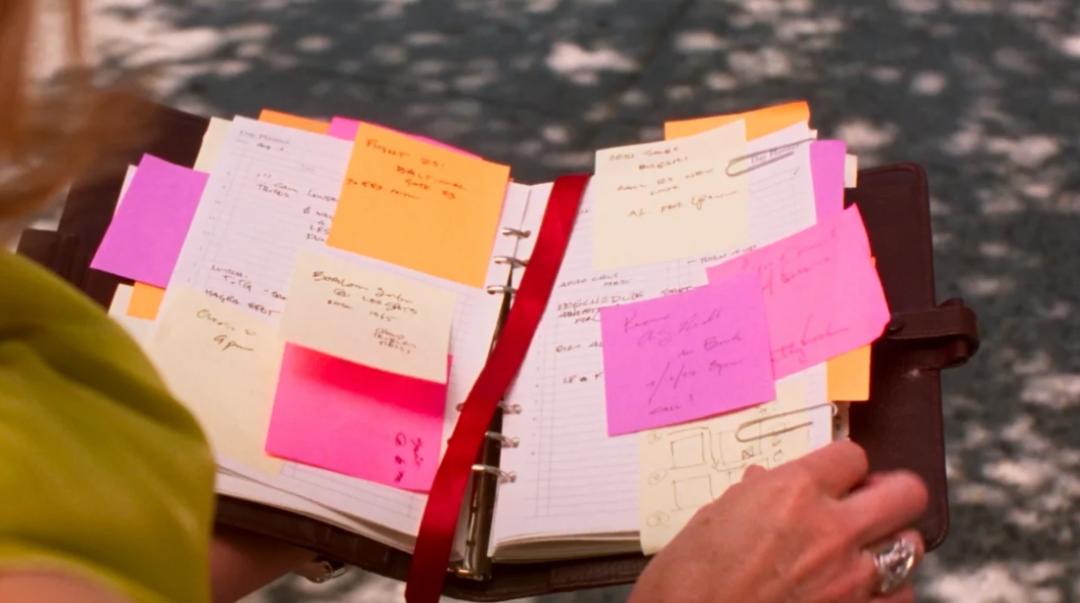
(Photo: Still from *Sex and the City*)
In Volcano's view, the part where shopping approval really works is the process of filling out the application. "Filling in the price, purchase reason and alternative itself is a very brief moment of self-reflection. When writing the purchase reason, you have to answer yourself why on earth you need this item; when writing the alternative, you will remind yourself whether you already have a similar item, or if there is a lower-cost solution. Most of the time, before the application is even submitted, half of the impulse to buy has already faded away."
02
Strangers' suggestions are actually more influential
Some scholars have conducted an experimental study and found that friends' suggestions do affect people's judgment, but this effect is not significantly higher than that of other information sources, including suggestions from strangers. The researchers also found that people tend to look for information that can boost their confidence, rather than information that simply lowers their confidence.
In other words, when a person is hesitating "whether to buy or not", what they really need is a reason to help them reconfirm their own judgment. And opinions from strangers just provide a perspective that is different from their usual one.
Friends are more like after-sales customer service. They know your recent situation: whether you've been too tired from working overtime lately, whether you just got your salary, and whether you'll regret it after buying this item. Liu Jia's friends are very easy to persuade: "Every time we say 'If you buy it, I'll buy it too', we end up buying things without any restraint, and we'll even say 'Buy one more to average down the cost'."

Liu Jia and her friends' whole life of "loving to average down the cost". (Photo: Provided by the interviewee)
Strangers are different. They don't know your life, nor understand your situation, without the filter of personal relationships, they can be ruthless and decisive when rejecting applications.
Xiao Yun is one of those "ruthless approvers". Once, she came across an application where the applicant had just lost their job, only had 5000 yuan left, but was hesitating whether to go to the concert for which they had grabbed tickets before. "Returning the ticket can get back about 1400 yuan, but if they still go to the concert, it will cost about 2000 yuan." Xiao Yun finally chose to reject the application, and advised the applicant to refund the ticket. "I understand that people will have emotional consumption, and want to get happiness through things they like, but if the financial situation is already relatively tight, spending that sum of money may not be worthwhile."
She sighed: "Text is such a slick and misleading thing." When people describe their purchase reasons, they can easily package their application into a state of "must buy" or "must not buy", "The comments that attract in this way may also be that the author has already filtered the opinions they want to hear, it's like playing the "turtle soup" guessing game."
Many people post applications because they have already been dissuaded by friends in real life, but they are not reconciled, so they come to the world of strangers to look for a "chance to turn the tables".

(Photo: Still from *The Shopaholics*)
Sociologist Mark Granovetter divided interpersonal relationships into "strong ties" and "weak ties": the former usually refers to high-frequency interaction relationships such as close friends and family members, while the latter refers to relationships with less mutual contact and shallow understanding. He believes that when acquiring new information and new perspectives, weak ties often play a more effective role than strong ties. The stranger approval in shopping approval is essentially a call for weak ties.
Liu Jia will also send her applications to the drifting bottle function when buying snacks. "Strangers will recommend some products to me, and also remind me to avoid some bad products. I think this is very good, because I often trust advertisements without hesitation." Advertisements only keep "persuading people to buy", while the approval from strangers provides a real consumer perspective.
When designing the mini-program, Volcano also intentionally strengthened the independence of this "stranger judgment": approvers can only see other people's comments after they finish their own approval. She explained: "If you see at the beginning that everyone else has chosen to approve, people are easily influenced by group opinions, just like the hot comments on social platforms, which will affect the judgment of later viewers." Therefore, she hopes everyone can make decisions based on their first reaction first.