A top talent from Tsinghua University who developed vision systems for robots has grown his business into a 10-billion-yuan IPO.
Recently, Camsense, the leading enterprise in spatial perception for robotic vacuum cleaners, successfully went public 13 years after its founding. Its market capitalization once surged to HK$20.8 billion, and then quickly fell back to HK$10.7 billion. Despite the huge fluctuation in market value, the combined net worth of its two founders still reached HK$2.2 billion, and its seed round investors also gained a floating profit of more than 80 times.
01
Combined Net Worth of the Two Founders Reaches HK$2.2 Billion
Robotic vacuum cleaners have entered the lives of more and more people, with brands like Roborock, Dreame and Ecovacs competing fiercely in the market. When purchasing a robotic vacuum cleaner, consumers usually compare suction power, battery life and intelligent performance, but few people will ask: what LiDAR does it use?
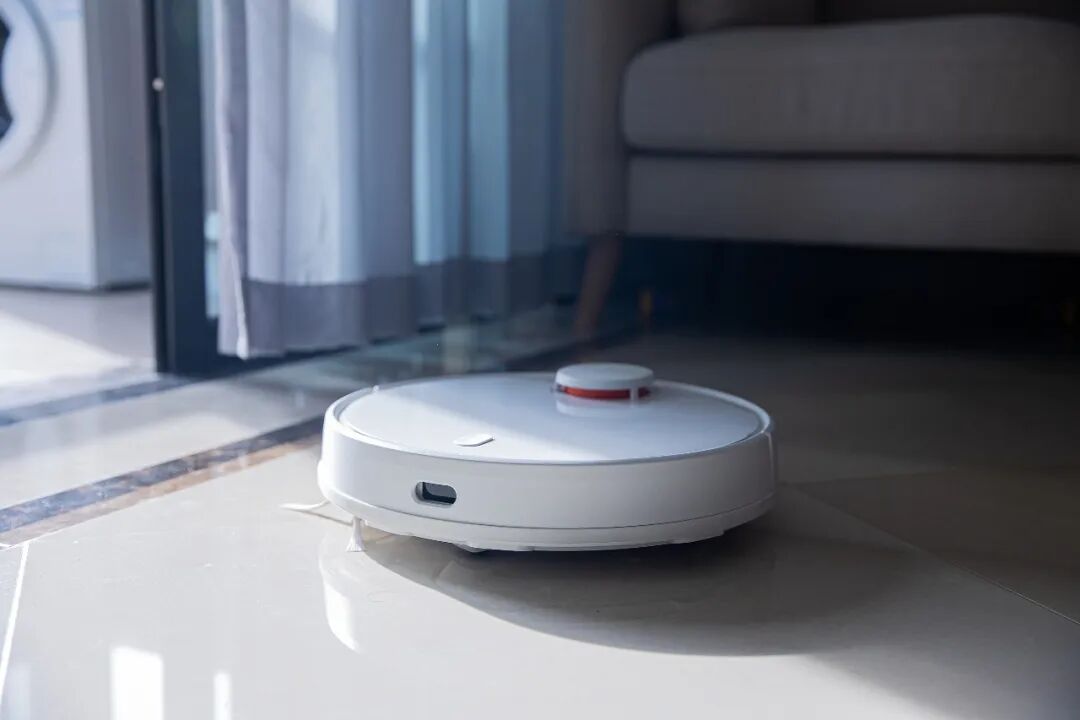
LiDAR is known as the "eye of robotic vacuum cleaners". For intelligent cleaning, a robotic vacuum cleaner needs to "see" the room clearly first. LiDAR helps robotic vacuum cleaners build indoor maps, plan cleaning routes, and avoid obstacles such as tables, chairs and slippers. This seemingly insignificant component has nurtured a hidden champion — Camsense.
On September 30, Camsense was listed on the Hong Kong Stock Exchange at an issue price of HK$58.85 per share. On the first trading day after listing, its share price soared by 265.7% to HK$215.2 per share, with a market capitalization of HK$20.8 billion. However, on the second trading day after IPO, Camsense's share price plummeted by 47.5%. As of the close of trading on October 8, its total market capitalization fell back to HK$10.7 billion.
The cornerstone investors of Camsense's IPO have attracted widespread attention. Golden Link under BYD and Taiwan Zhongrun under Zhongrun Optics subscribed for HK$100 million and HK$10 million respectively, holding 1.76% and 0.18% of the shares respectively after issuance. At present, BYD is expanding its industrial robot and intelligent equipment business.
Camsense, headquartered in Shenzhen, is the absolute leader in its niche industry. In terms of shipment volume, Camsense's LiDAR products account for about 50% of the global market share. That means for every 2 robotic vacuum cleaners sold on the market, roughly 1 of them is equipped with Camsense's LiDAR product.
As a hidden leader in the robotic vacuum cleaner industry chain, most consumers have never heard of Camsense. Similarly, its two top-educated founders are also very "mysterious".
The founding partners of Camsense are 52-year-old Wang Jian and 48-year-old Zhou Kun. Wang Jian graduated from Xi'an Jiaotong University in 1996 with a bachelor's degree in mechanical manufacturing. Zhou Kun graduated from Tsinghua University in July 2000 with a bachelor's degree in precision instruments, and obtained a master's degree in automation from Tsinghua University in 2003.
Wang Jian is a business operator who has a deep understanding of industrial rules. He once served as sales manager in the Marketing Department of China Hualu Panasonic Electronics, General Manager of Shanghai Office of Zoran, and Director of Sales and Marketing at C2 Microsystems, with more than 20 years of experience in the telecommunications and electronic equipment manufacturing industry.
Different from Wang Jian, Zhou Kun takes the technical development path. He has worked in Chicago Bell Labs, China Mobile's subsidiary Zhuwang Technology, Shenzhen Taishan Sports Technology and other enterprises, serving as R&D engineer, senior engineer and vice president, and has accumulated rich technical experience in the fields of human-computer interaction and visual positioning. During his tenure at Shenzhen Taishan Sports Technology, Zhou Kun was responsible for technical R&D as a co-founder.
At the end of 2013, Wang Jian and Zhou Kun formed a "market + technology" partnership in Shenzhen and co-founded Camsense. Shortly afterwards, KuaiBo invested in the company and allocated an office space for Camsense in the Maikelong Technology Building. At that time, Wang Jian, Zhou Kun and KuaiBo held approximately 47.4%, 40.1% and 12.5% of the equity of Camsense respectively.
However, only three months later, Camsense lost the external support from KuaiBo and entered a crisis period. It was not until July 2014 that Camsense managed to survive by relying on the business of supplying cameras for Skyworth televisions.
During the most vigorous period of entrepreneurship in China, industry trends came and went, and Camsense's business remained in the exploration stage, from the TV body-sensing camera business in the early stage of its founding to the VR field.
For example, in 2016, Zhou Kun once regarded the VR spatial business as the second growth curve of the company. However, the popularity of VR did not last long. Zhou Kun once said that everyone was optimistic about the VR direction, but the timing of entry was a very critical matter. Entering too early might lead to failure before the market matures.
It was not until 2017, when a partner mentioned LiDAR for robotic vacuum cleaners, that Camsense ushered in a real inflection point under the leadership of Wang Jian and Zhou Kun.
At that time, the intelligent robot track was on the rise. As the most mature application scenario among consumer-grade intelligent robots, the robotic vacuum cleaner industry was undergoing technological leapfrogging. As the core sensor of robotic vacuum cleaners, LiDAR is as important as eyes, but its cost remained high. This presented an opportunity for Camsense.
Camsense adopted a differentiated technical route to reduce costs. As early as 2018, it launched the monocular LiDAR product Camsense X1, with spatial perception accuracy within 1mm, which greatly reduced the cost. It independently developed and launched its first chip C1 ASIC, marking a fundamental progress in LiDAR technology. In 2020, Camsense launched the miniaturized X2 LiDAR, which became a mainstream product for robotic vacuum cleaners.
Camsense mentioned in its prospectus that in 2020, its LiDAR shipment volume reached 500,000 units. After that, Camsense gradually entered the supply chain system of leading robotic vacuum cleaner giants, established close cooperation with these giants, and captured half of the market share.
At the same time, Camsense has also gained favor from capital. From 2016 to 2025, it completed about 10 rounds of financing. The prospectus shows that in September 2025, Camsense obtained 40 million yuan in Series D financing from Zhongshan Venture and Zhongshan Torch, with a post-investment valuation of 3.04 billion yuan.
At present, Wang Jian serves as Chairman, Executive Director and Co-General Manager of Camsense, responsible for overseeing the overall management and business operation of Camsense, board of directors affairs, formulating strategies and operation plans, and making major business decisions. Zhou Kun serves as Executive Director and General Manager of Camsense, responsible for overseeing R&D.
After IPO, the concerted action group including Wang Jian, Zhou Kun and Liu Yi (seed round investor) holds a total of 27.45% equity of Camsense. At the close of trading on the IPO day, the market value of the shares held by this concerted action group surged to HK$5.71 billion, but fell to HK$2.937 billion after the close of trading on October 8.
Calculated based on the 11.02% stake held by Wang Jian alone after the company's listing, Wang Jian's net worth reaches HK$1.2 billion. Adding the 9.07% stake held by Zhou Kun alone, the combined net worth of the two founders reaches HK$2.2 billion.
In addition, Liu Yi, the seed round investor of Camsense, also reaped rich returns in this IPO. In 2015, Liu Yi invested 2 million yuan in Camsense in the seed round. Now this investment accounts for 1.64% of Camsense's shares, with a corresponding book value of about 175 million yuan, and the book return is about 87 times.
02
Luxury "Partnership Circle" Lineup
In its prospectus, Camsense repeatedly mentioned that the company is a core supplier of the top five giants in the robotic vacuum cleaner market. According to relevant industry reports, the top five giants in the robotic vacuum cleaner market are Roborock, Ecovacs, Dreame, Xiaomi and Narwal.
It can be seen that Camsense's "partnership circle" lineup is very luxurious.
In its 2026 semi-annual report, Camsense emphasized again that it has become a core supplier of the top five market participants in the robotic vacuum cleaner industry, 4 of which are among its top five customers. "The Group has established long-term and continuous cooperative relationships with these 5 leading market customers, with the cooperation period ranging from 4 to 7 consecutive years, and the cooperation with each customer is still ongoing."
From the perspective of revenue sources, Camsense is deeply bound with several leading giants in the robotic vacuum cleaner industry.
From 2023 to 2025 and the first quarter of 2026, the revenue of Camsense from the top five customers accounted for 93.6%, 89.2%, 80.4% and 85.6% of the total revenue in each period respectively. Among them, the revenue from the largest customer accounted for 37.1%, 36.1%, 29.0% and 37.3% of the total revenue in each period respectively.
That means Camsense's performance is highly dependent on large customers. The company also emphasized the risk, stating that once it loses a large customer, it will adversely affect its business, operating performance and financial status. The prospectus shows that Roborock is Camsense's largest customer.
It is worth mentioning that Roborock is not only Camsense's largest customer, but also an important shareholder of the company. As early as October 2023, Roborock transferred shares of Camsense through its wholly-owned subsidiary Roborock Innovation. Before IPO, Roborock Innovation held 1.83% of Camsense's shares.
Camsense's core products are applied in the robotic vacuum cleaner field. In 2025, the shipment volumes of its LiDAR and line laser sensors exceeded 10 million units and 5 million units respectively. In addition, its application scenarios are expanding from indoor to new fields such as lawn mowing robots, pool cleaning robots, humanoid robots, XR and industrial inspection.
Camsense's product matrix is mainly divided into traditional triangular ranging LiDAR, dTOF LiDAR, 3D TOF LiDAR and line laser sensors, which can meet the differentiated needs in multiple application scenarios.
Among them, the triangular ranging LiDAR calculates short-range distance through geometric measurement, with a perception range of about 0.15 to 8.0 meters. This technology is mainly used for navigation and mapping functions. dTOF LiDAR operates by measuring the exact time required for the light pulse to reflect back from the object, with an extended perception range of about 0.1 to 12.0 meters. The perception dimension of 3D TOF LiDAR is upgraded from a two-dimensional plane to a three-dimensional space. The line laser sensor is a supplementary solution for short-range 3D vision, mainly used for forward obstacle avoidance and wall-following movement.
In terms of revenue proportion in 2025, the traditional triangular ranging LiDAR accounts for 65.7%, which is the basic business of the company. The line laser sensor accounts for 21.8% and dTOF LiDAR accounts for 10.6%, these two are the core driving forces for growth. Others (including 3D spatial perception products, robot testing products and XR products, etc.) account for only 1.5%, which is still a small proportion.
Although it is already the industry leader, Camsense presents a situation of "growing revenue and stagnant profit".
From 2023 to 2025, the company's revenue was 332 million yuan, 433 million yuan and 614 million yuan respectively. In the same period, its net profit was -883,000 yuan, -31.375 million yuan and 2.201 million yuan respectively. In three years, the cumulative growing revenue reached 1.38 billion yuan, while the net profit kept fluctuating on the edge of loss and profit, with a cumulative loss of more than 30 million yuan.
In the first quarter of 2026, Camsense achieved a revenue of 196 million yuan, and its net profit was 7.757 million yuan.
Regarding the profit fluctuation, Camsense stated that the loss was mainly due to its large amount of R&D investment, which increased the R&D cost from 54.6 million yuan in 2023 to 76.7 million yuan in 2024. These R&D works are mainly related to the development of spatial perception products, especially dTOF LiDAR and line laser products.
The profitability in 2025 and the first quarter of 2026 is mainly driven by strong revenue growth supported by strong operational and administrative efficiency.
It is still not easy to achieve sustained profitability. Camsense's overall gross profit margin dropped from 21.5% in 2023 to 16.3% in 2024, then rose slightly to 16.5% in 2025, and reached 19.2% in the first quarter of 2026.
"The newly launched dTOF LiDAR products and line laser sensor products in 2024 recorded negative gross profit margins." Camsense said that the reason is that these newly launched products are still in the capacity expansion stage and have not reached the optimal production efficiency. In 2025, with the increase of shipment volume, the expansion of production scale and the improvement of efficiency reduced the unit production cost, and the gross profit margin improved.
Even so, the net profit margin in 2025 was less than 0.4%, and the profitability is relatively fragile.
On September 30, Camsense disclosed its latest semi-annual report. In the first half of 2026, it achieved an operating revenue of 413 million yuan, a year-on-year increase of 41.4%. Its net profit was 12 million yuan, turning from loss to profit, compared with a loss of about 4.16 million yuan in the same period of last year. In the first half of 2026, Camsense's net profit margin was 2.9%.
It can be seen that although deeply bound to the downstream leading complete machine manufacturers, Camsense has not obtained rich profits in the industrial chain. For Camsense, successful listing is only the starting point, and it needs to answer a question to the public market: how to become a technical supplier with strong profitability?
This article is from the WeChat official account "Caijing Tianxia WEEKLY", written by Zhang Xiangyang, authorized for release by 36Kr.