One in every four coffee shops is located in a county town. Where is this new wave of growth in the coffee sector hidden?
During the just-concluded 7-day National Day Golden Week, a cup of coffee has appeared in more and more unexpected places — old streets in county towns, viewing platforms at mountain scenic spots, and expressway service areas on the way back to hometown.
Coffee no longer only belongs to office buildings and business districts.
Recently, Xinhua News Agency jointly released China Coffee Heatmap with Zhaimen, observing the regional distribution and consumption trends of China's coffee market with data. It attempts to answer several questions: Where is the "coffee density" higher than expected? Where is there still incremental space? What is the industrial capacity that supports store expansion?
1
Net increase of 107,000 stores in three years
Coffee has shifted from "occasional drinking" to "frequent drinking"
Let's first look at a set of macro data.
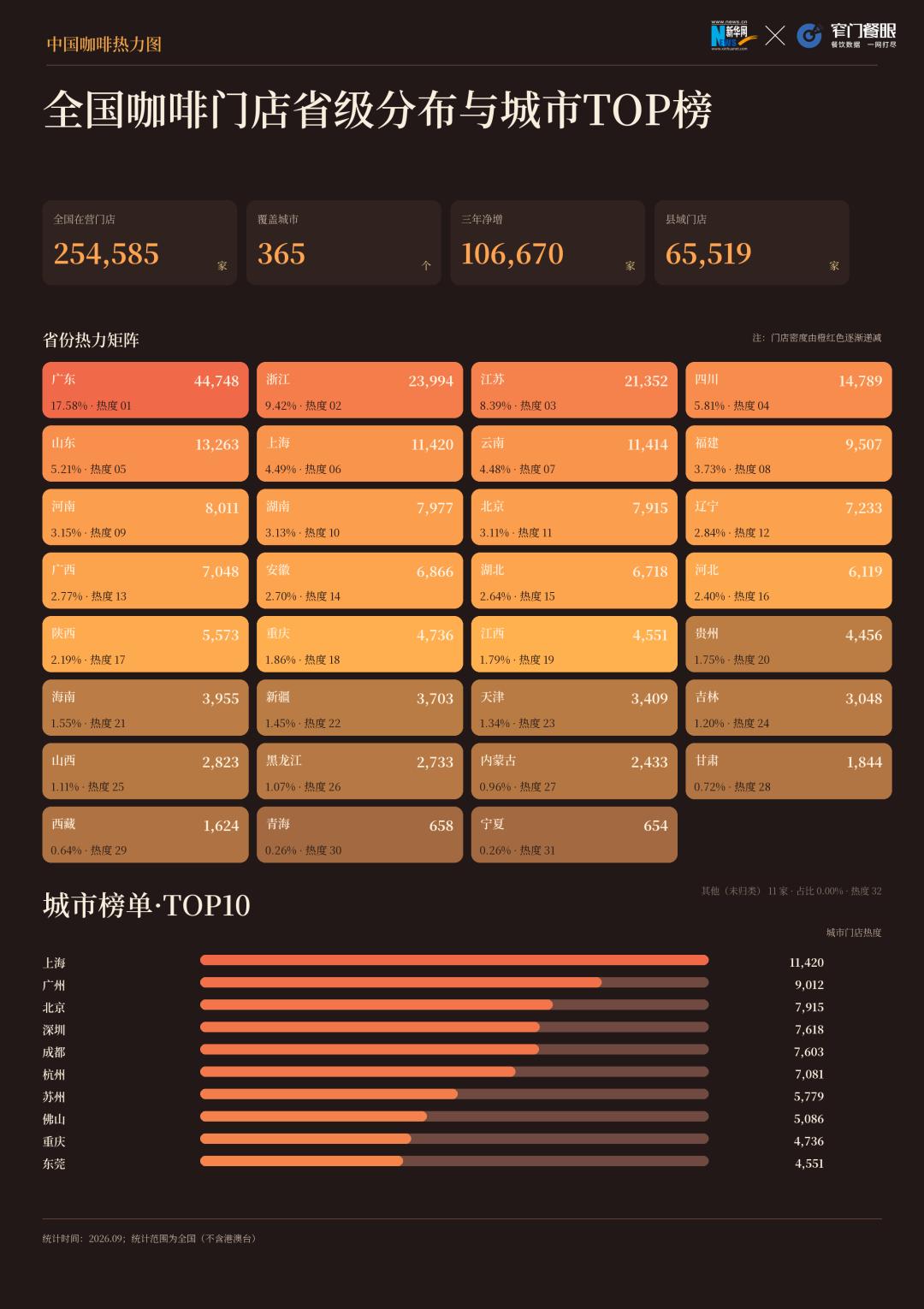
The number of coffee shops nationwide increased from 147,915 to 254,585, with a net increase of 106,670 in three years, representing a growth of 72.12%. The current number of stores is about 1.72 times that of three years ago.
According to 2026 China Urban Coffee Development Report, the scale of China's coffee industry increased from 313.3 billion yuan in 2024 to 354.9 billion yuan in 2025, a year-on-year increase of 13.3%; the annual per capita coffee consumption nationwide increased from 22.24 cups to 28.57 cups.
The per capita coffee consumption was only 16.7 cups in 2023, and it is now close to 30 cups, with a growth of more than 70% in two years. The increase in cup volume reflects that the frequency of consumers drinking coffee is rising rapidly.
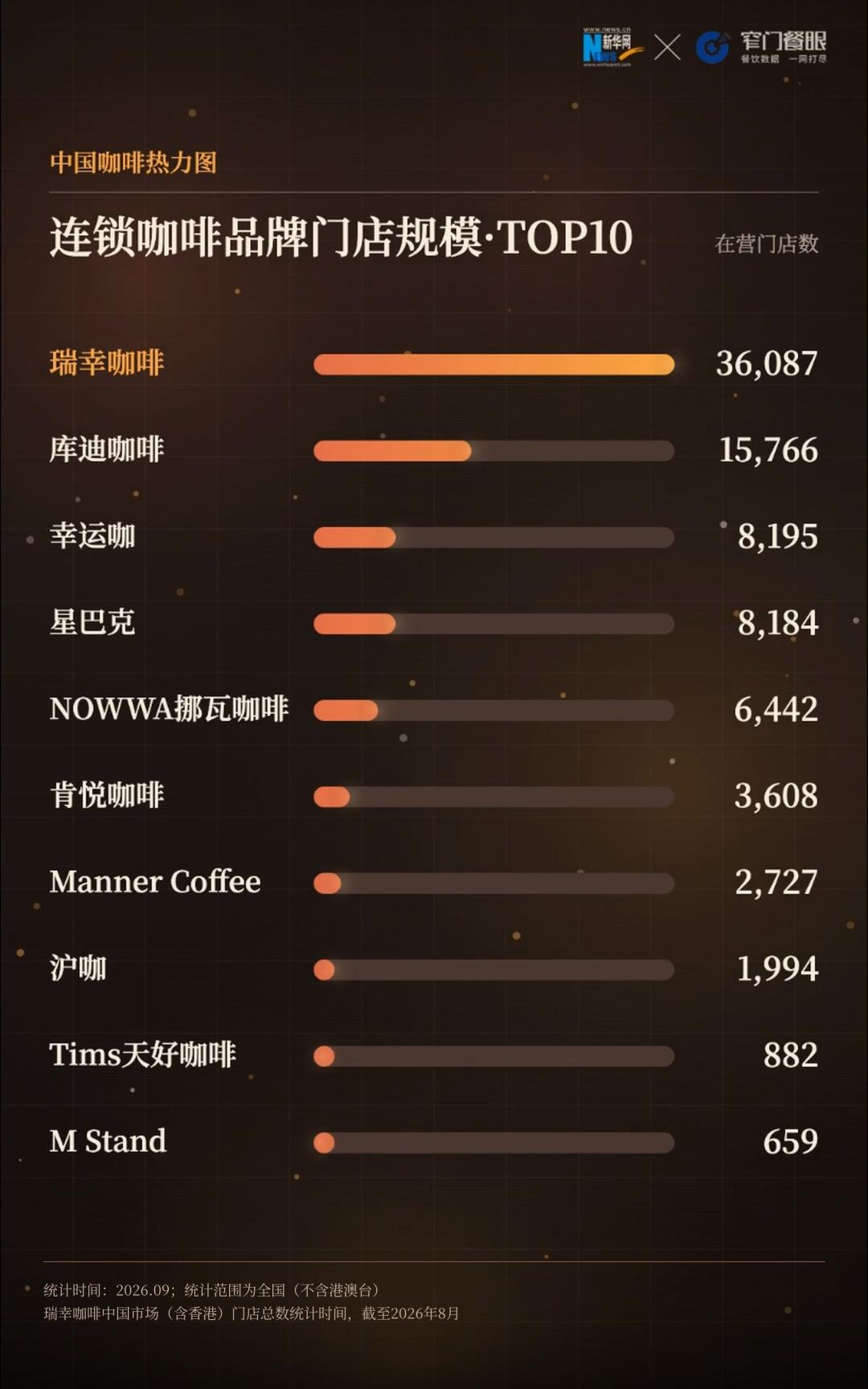
While consumer demand is growing, the store network is also continuing to expand. According to data from Zhaimen Catering Eye, 93,000 new coffee shops opened in the past year, and leading chain brands such as Luckin Coffee have become an important force driving the expansion of the industry.
This round of expansion is also accompanied by changes in consumption habits: from "going out specially for a cup of coffee" to "buying a cup conveniently on the go", consumers' demands for convenience and product stability have become more prominent. Chain brands make a cup of coffee easier to obtain through extensive store layouts and standardized products and services.
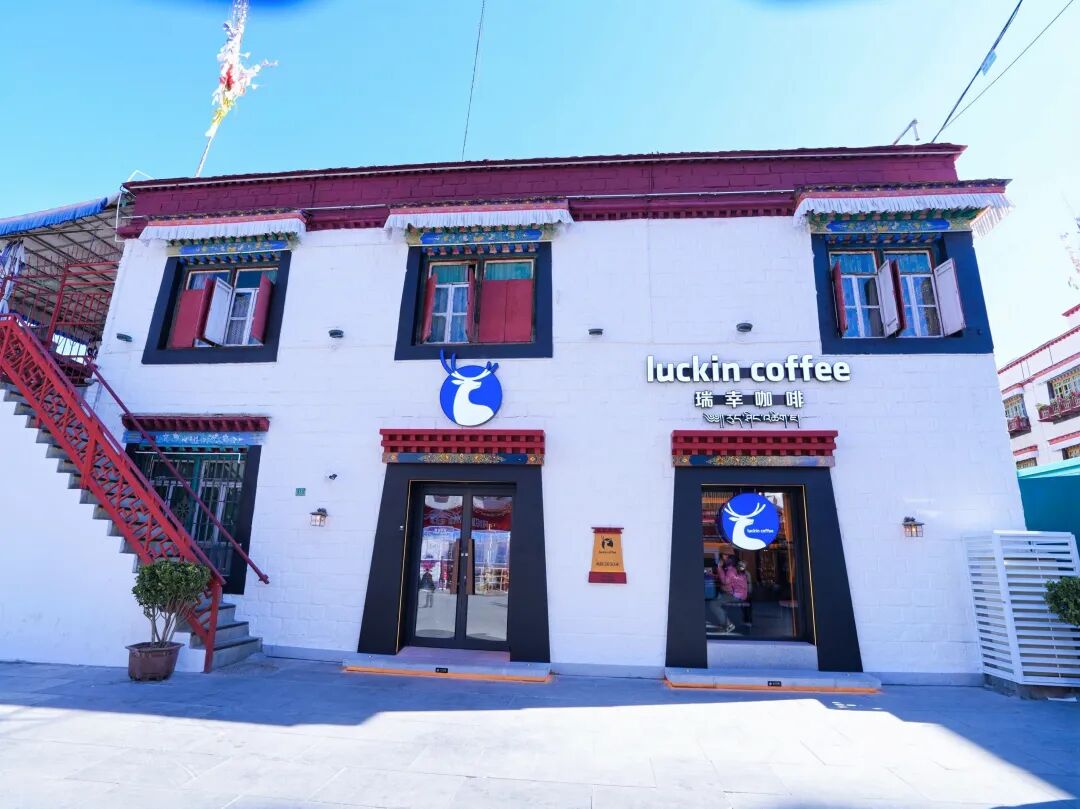
Taking Luckin Coffee, which leads in store scale, as an example, as of the end of the second quarter of this year, the total number of stores in the Chinese market (including Hong Kong) reached 36,087. Its domestic stores extend to Fuyuan, Heilongjiang in the east, Kashgar, Xinjiang in the west, Sanya, Hainan in the south, and Mohe, Heilongjiang in the north. The store at the highest altitude is located on Barkhor Street around Jokhang Temple, Lhasa, Tibet, reaching 3650 meters above sea level.
The extension of the store network has made the convenience of coffee spread from big cities to more places.
As more and more consumers can buy a cup of coffee nearby, coffee is gradually transforming from a trendy consumer product to an accessible daily drink.
2
Urban Coffee:
High-tier cities have the largest total volume
Tourist cities have higher "coffee content"
In terms of regional distribution, Guangdong ranks first among all provinces with 44,748 stores, followed by Zhejiang and Jiangsu with 23,994 and 21,352 stores respectively.
At the city level, Shanghai leads the country with 11,420 stores, and the number of stores in Guangzhou, Beijing, Shenzhen, Chengdu, Hangzhou and other cities all exceeds 7,000.
However, leading in the number of stores does not mean leading in density. Calculated by the number of stores per 10,000 people, the ranking will drop significantly.
Shanghai ranks first in the total number of coffee shops nationwide, with 4.59 stores per 10,000 people, ranking 20th. Chongqing ranks 9th in total number, with 1.49 stores per 10,000 people, ranking 116th.
With different population sizes, the judgment of "whether there are many coffee shops" is completely different.
Some tourist destinations have even higher "coffee content". Lhasa has 831 coffee shops, with 9.41 stores per 10,000 people; Lijiang has 897 coffee shops, with 7.18 stores per 10,000 people; Zhuhai has 6.09 stores per 10,000 people, which is higher than 4.72 in Guangzhou and 4.17 in Shenzhen.
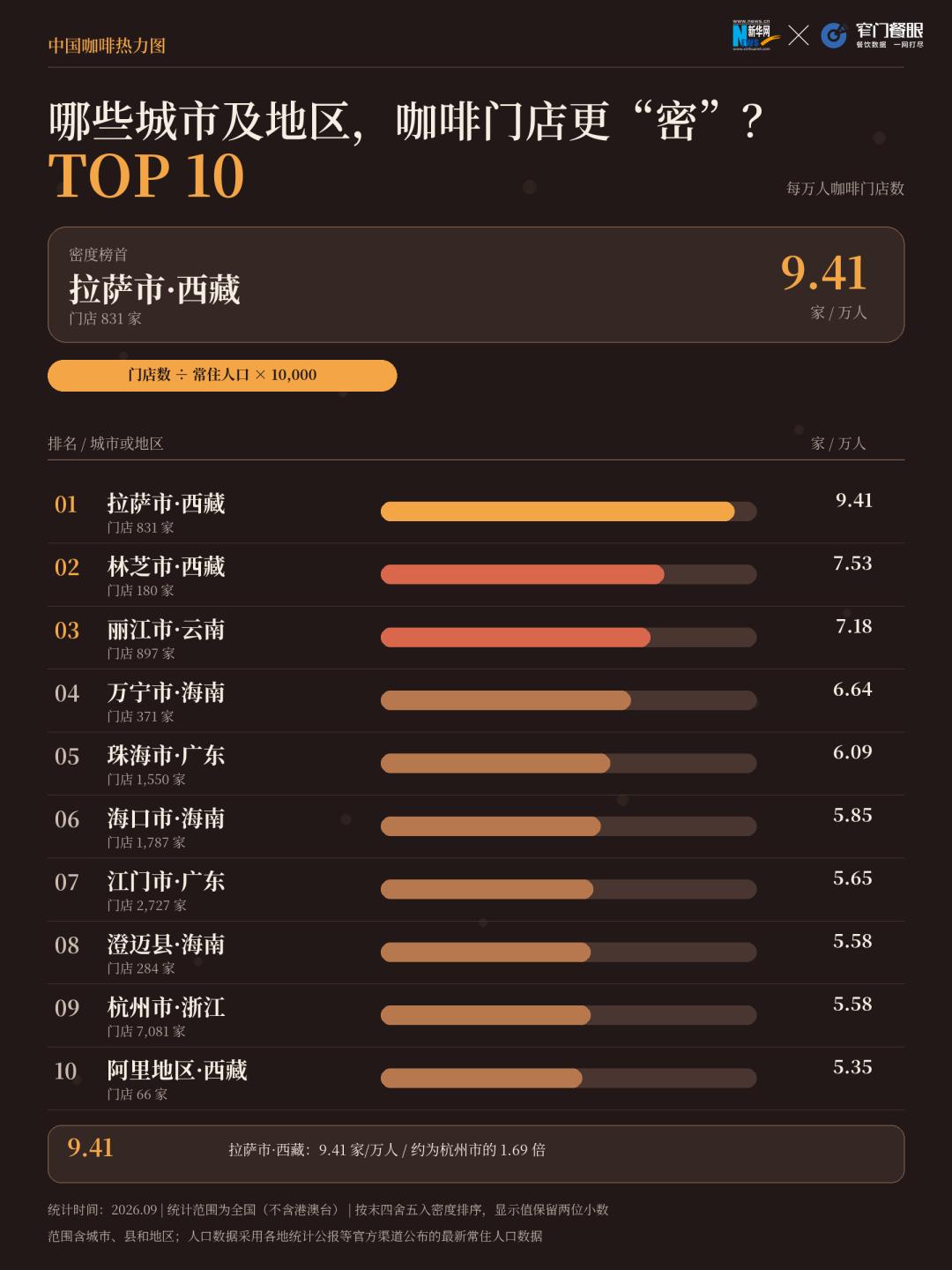
Behind this density difference are different consumption scenarios. The coffee density in Lhasa and Lijiang corresponds to tourism consumption — tourists need a cup of coffee around the scenic spot to "slow down". The density advantage of the Pearl River Delta is related to commuting and fast-paced life between urban agglomerations.
The four cities of Zhuhai, Jiangmen, Foshan and Zhongshan have a total of 11,718 coffee shops, accounting for about 70% of Guangzhou and Shenzhen, while their permanent resident population is less than 60% of Guangzhou and Shenzhen. Calculated per 10,000 people, there are about 5.39 stores in the four cities and about 4.45 stores in Guangzhou and Shenzhen.
The density of coffee shops is not completely positively correlated with city size. For the industry, growth can come from both the increase in consumption frequency in high-tier cities and the expansion of more cities and scenarios. The two paths can be advanced simultaneously.
3
County Coffee:
Some have formed agglomeration, while others are just getting started
The county market is the most noteworthy variable in this round of coffee growth.
There are 58,925 coffee shops in new first-tier cities, and 65,519 coffee shops in county-level administrative regions (counties and county-level cities), accounting for nearly half of the national total. The total number of county-level stores has exceeded that of new first-tier cities, with a three-year growth of 103.41%, far higher than the national growth rate of 72.12%.
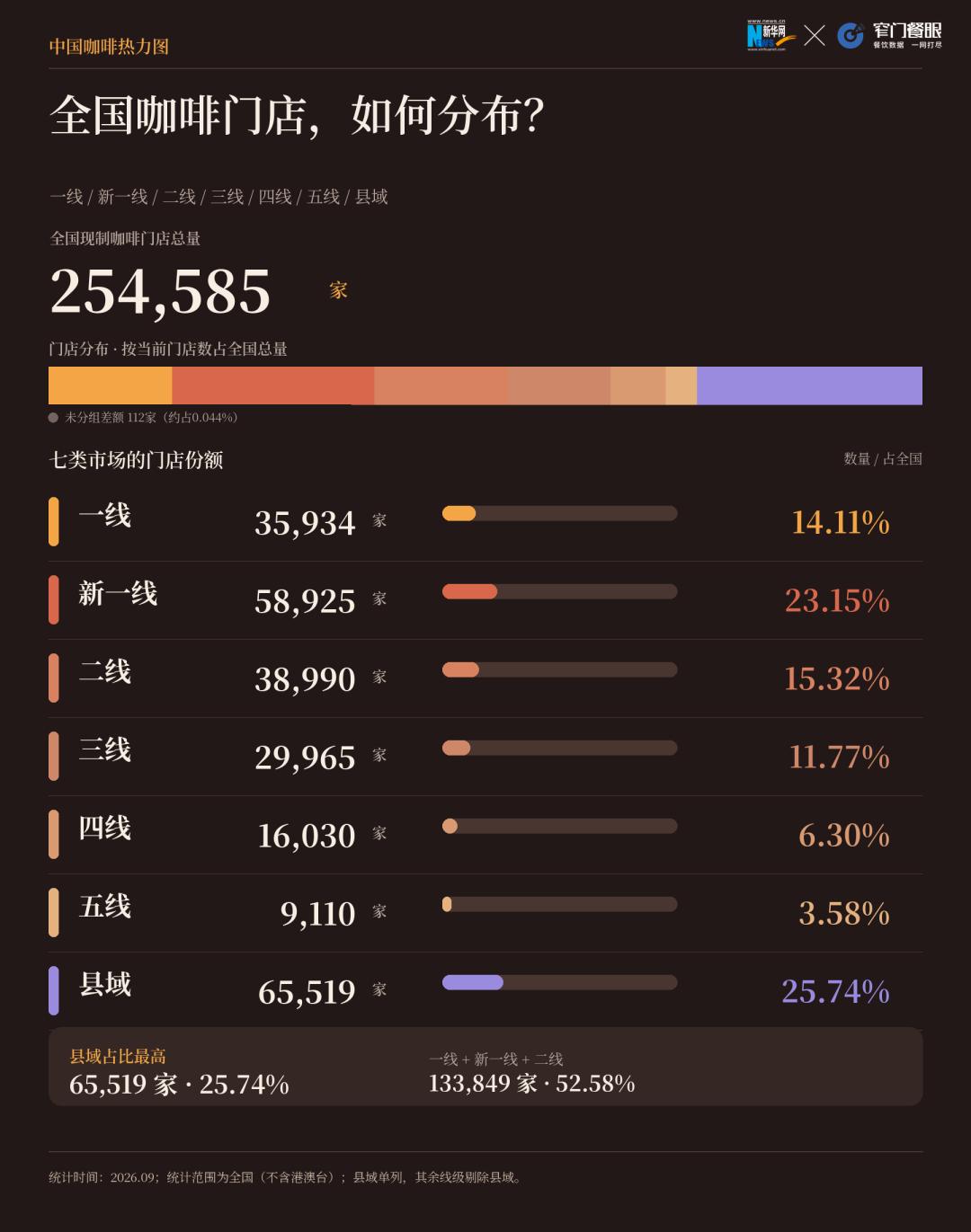
The proportion of county-level coffee shops in the country has risen from 21.78% to 25.74%. About one in every four coffee shops nationwide is located in the county market.
The change is not only reflected in "stores appearing in more places", but also in "places that already have coffee shops continue to increase in density". In county-level cities such as Tengchong, Mangshi and Yining, the number of stores has increased from 70 or 80 to more than 200.
However, the considerable total number of county-level coffee shops does not mean that the market development is balanced across regions. Among the top ten county-level store scales, Dali, Kunshan and Yiwu have a total of 3,383 stores, accounting for 48.79% of the top ten total, close to half. Even among the counties with leading store scales, the gap is very obvious.
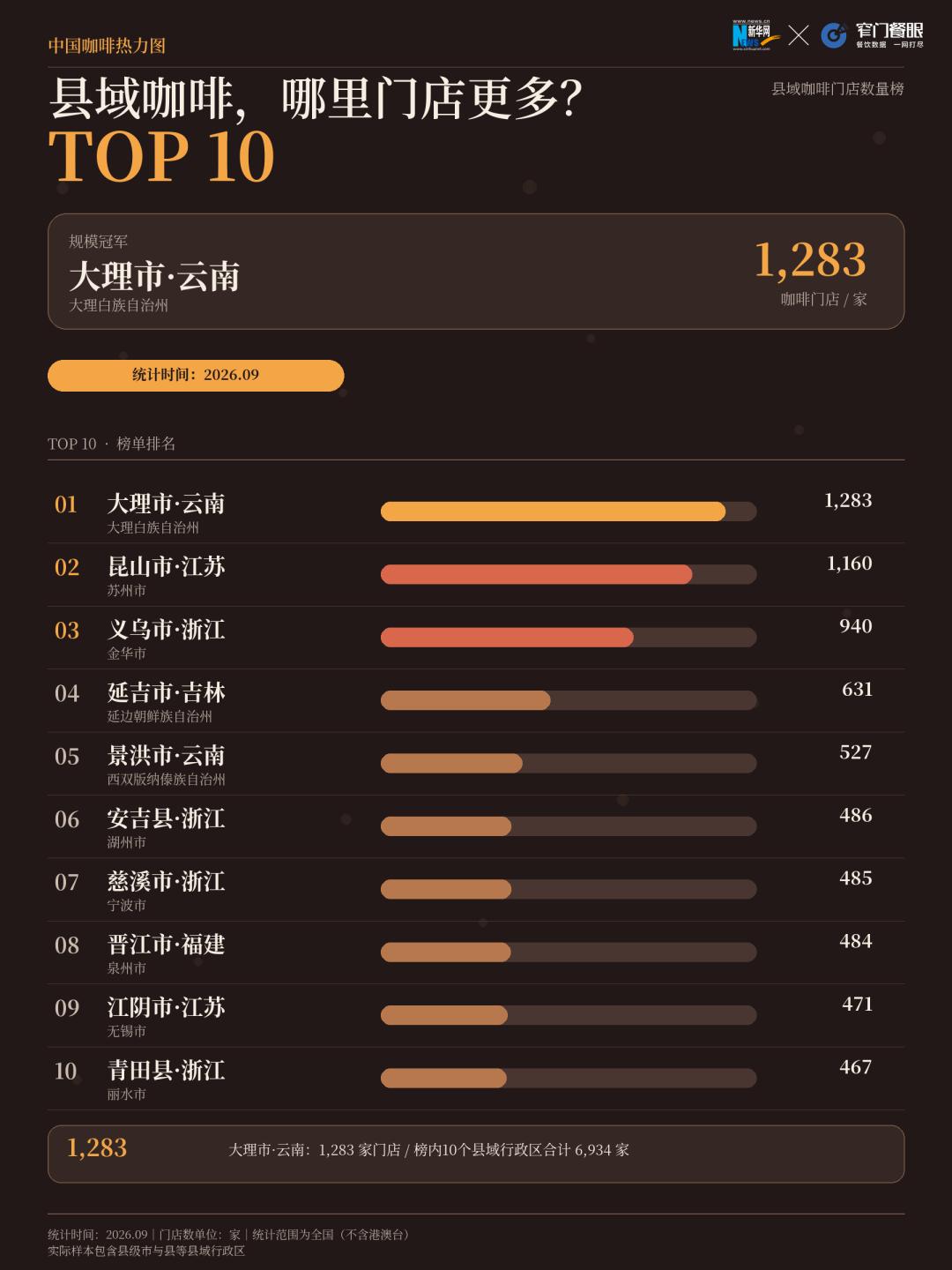
What is also noteworthy is the "village coffee" phenomenon. Among more than 1,000 coffee shops in Kunshan, 168 are opened in rural areas. A village coffee shop in Zibo held a mountain market in August this year, attracting more than 5,000 people to the village in five days. The cave coffee shop in Xiuwen County, Guizhou, sells more than 300 cups a day in peak season.
Coffee is penetrating into county and rural life at different speeds and different densities. Some places have formed agglomeration, while others are just getting started. This imbalance itself is the incremental space of the market.
4
Cultural Tourism Coffee:
A cup of coffee has become part of the travel experience
Tourist destinations are another window to observe coffee consumption.
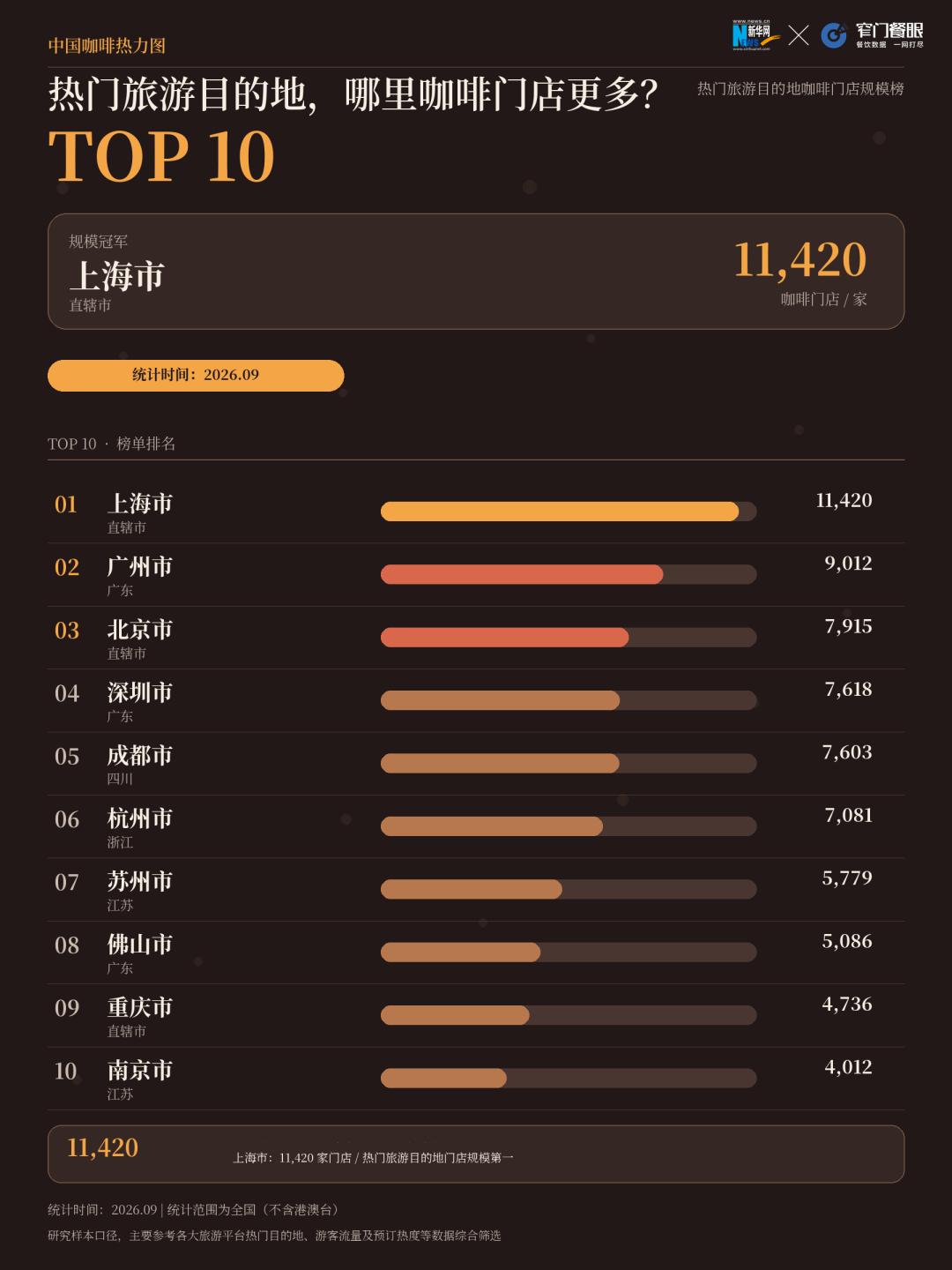
The top 10 popular tourist destinations by number of coffee shops are: Shanghai, Guangzhou, Beijing, Shenzhen, Chengdu, Hangzhou, Suzhou, Foshan, Chongqing, Nanjing.
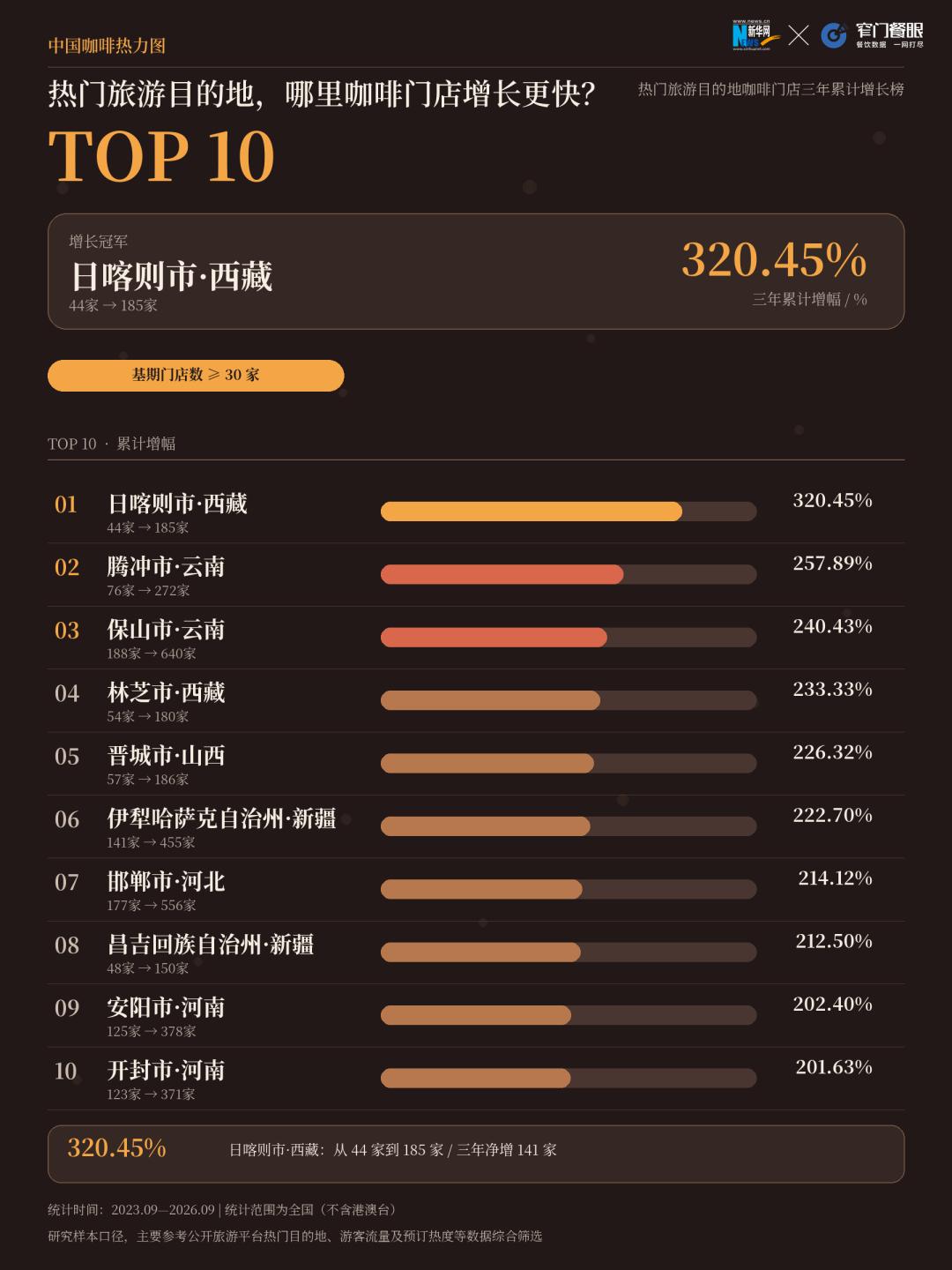
The growth ranking presents another picture: Shigatse increased by 320.45% in three years, Tengchong increased by 257.89%, Baoshan increased by 240.43%, and Nyingchi increased by 233.33%. These cities have relatively small store bases and rapid growth, reflecting that coffee supply is extending to more destinations.
In tourist destinations, coffee shops not only serve local residents, but also meet the consumption needs of tourists during sightseeing, rest and transportation transfer. Some stores become rest spaces for people to experience local scenery and culture, while others allow tourists to conveniently buy a familiar cup of coffee on the way.
Luckin Coffee's characteristic stores also reflect these needs: the tree house store in Wuyuan Valley and the Tibetan-style leisure store next to Jokhang Temple in Lhasa respond to natural landscapes and local culture respectively; the subway station store at Beijing Universal Resort makes it convenient for tourists to buy coffee when arriving at or leaving the park.
From a stop during sightseeing to a daily drink on the trip, coffee is integrating into the travel experience in different ways.
5
Industrial Support:
Store density, supply chain efficiency and scenario penetration
Behind the integration of coffee into daily life is the support of industrial capacity.
Taking Luckin as the observation sample, as of the second quarter of 2026, the total number of its global stores has reached 36,310, with an average monthly transaction customer count of 112.7 million. Among them, the number of stores in county-level areas exceeds 7,400, covering 1,550 counties and county-level cities.
Store density itself is a kind of "daily infrastructure". When a coffee shop is embedded in various life scenarios, consumers can drink a cup of coffee at any time.
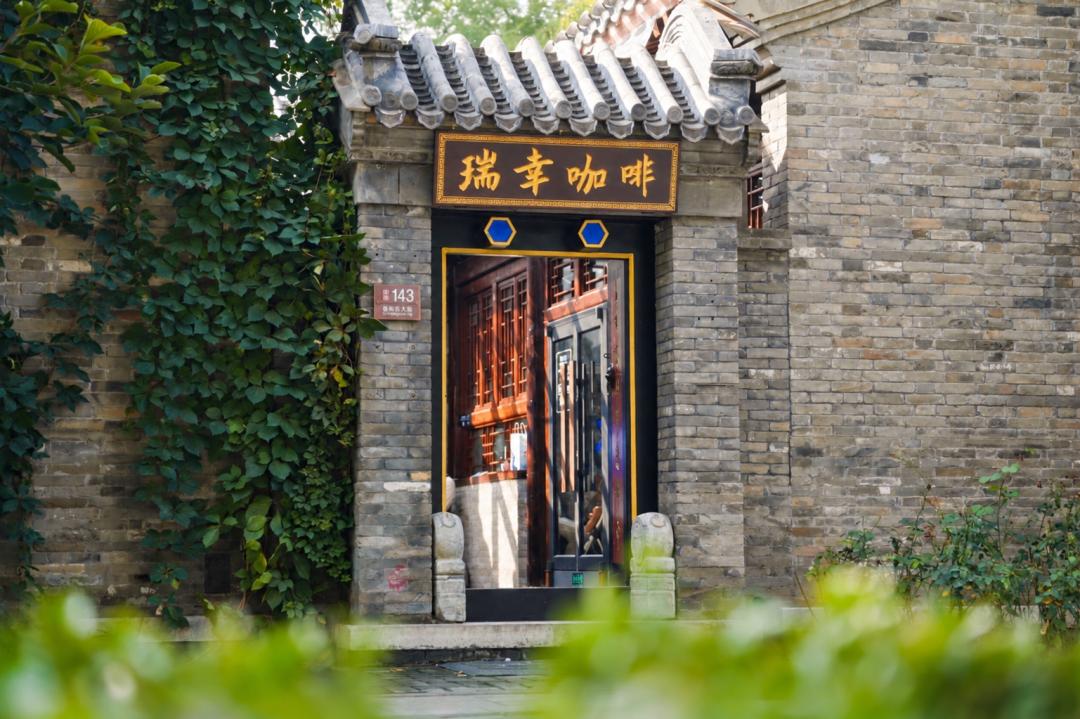
Luckin signed a contract with Suzhou Metro, planning to open no less than 100 subway stores within two years; it cooperated with Xiamen Rail Group, with the first batch of 16 stores covering subway stations, BRT stations, TOD comprehensive development and industrial parks. This layout embedded in the commuting route turns coffee into "on-the-go consumption".
The supply chain is another layer of support. In the 2026 production season, Luckin purchased 33,000 tons of green coffee beans in Yunnan, with a total purchase amount of nearly 2 billion yuan, and the first-class beans accounted for about 50% of the total output of first-class beans in the province. The "Luckin" green coffee bean special railway train departs from Pu'er, Yunnan, connecting the origin and the roasting base.
Luckin Coffee has officially formed a collaborative roasting supply matrix in Qingdao, Pingnan, Kunshan, and Xiamen (under construction), with a total production capacity expected to exceed 155,000 tons, setting a record for roasting capacity in China's coffee industry.
The significance of this supply chain layout is to make coffee a stable and accessible daily consumption instead of an occasional novelty. Whether in an office building in Shanghai or in Tengchong County, consumers can drink products under the same set of standards.
For chain coffee brands, opening stores farther away is only the first step. Whether they can continuously provide stable quality