Wang's conjecture has just been extended to four dimensions.
In July this year, Hong Wang and Yu Deng won the Fields Medal at the International Congress of Mathematicians in Philadelphia.
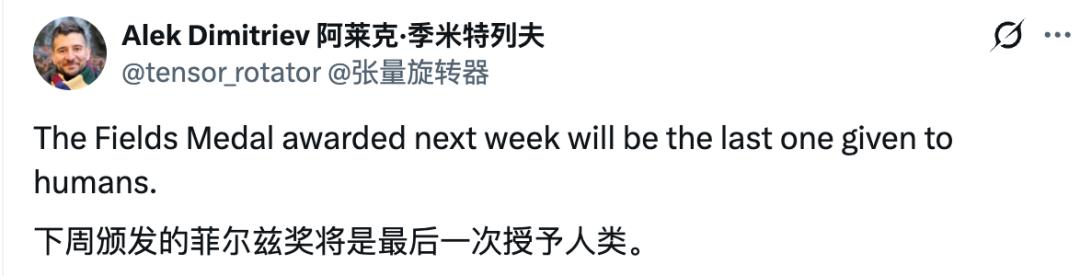
During the days when the news went viral, Alek Dimitriev, an employee at Anthropic, posted a line on X:
This year's Fields Medal will be the last time humanity ever wins this award.
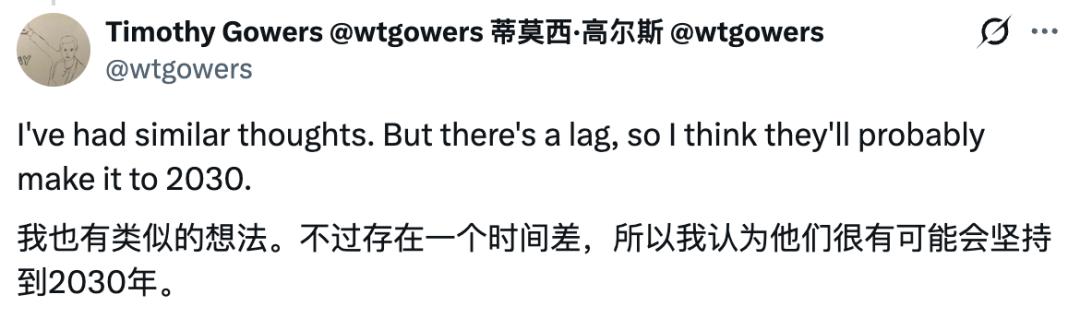
Timothy Gowers, a past winner, commented that he had had a similar thought.
But there is a lag in this process, so I think they can probably hold on until 2030.
Who could have guessed... Gowers might still have been too optimistic.
On October 7, OpenAI released 722 mathematical manuscripts in one go, uploading all the papers and partial Lean proofs to Github.
Group No. 074 contains only two papers, which are exactly in the field where Hong Wang won the award: the Kakeya conjecture.

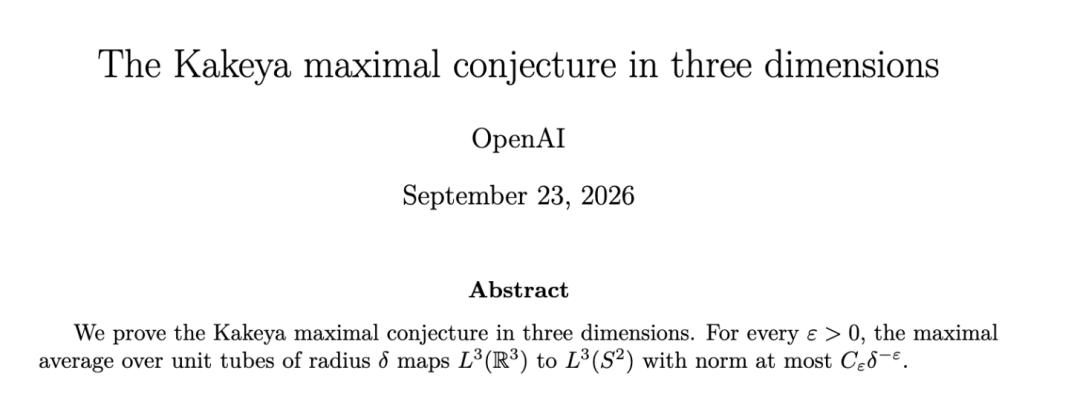
One of the papers claims to prove the Kakeya maximal function conjecture in three dimensions, which is stronger than the version proven by Hong Wang and Zahl.
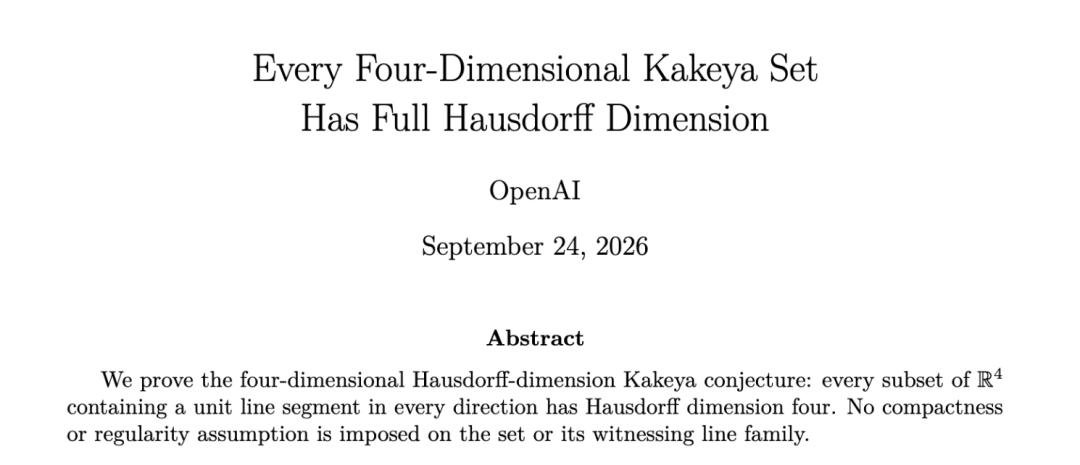
The other claims to prove the four-dimensional Kakeya conjecture.
The two manuscripts add up to 272 pages, and there is only one word in the author column: OpenAI.
Right after Hong Wang and Joshua Zahl solved the three-dimensional Kakeya set dimension conjecture, AI pushed the relevant results to the four-dimensional case.
Could it be... that this year's Fields Medal is really the last one for human mathematics?
What exactly do the two Kakeya papers from OpenAI achieve?
In 1917, Japanese mathematician Sōichi Kakeya raised a question: what is the minimum area required to turn a needle of length 1 all the way around on a plane?
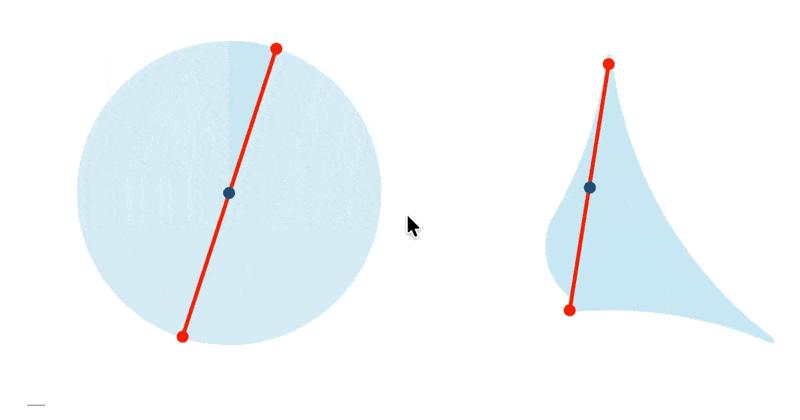
△
Besicovitch gave a counterintuitive answer: the area can be arbitrarily small. Even more surprisingly, a set that can fit a unit-length needle in every direction can have an area of zero.
Since area is not a reliable measure, mathematicians switched to a different metric: "dimension".
The "dimension" here is not just the everyday concept of length, width and height. For such highly irregular sets, mathematicians use tools such as Hausdorff dimension and Minkowski dimension to measure how complex they are at different scales.
A set can have a volume of 0, yet still possess the full spatial dimension.
The Kakeya conjecture states that in n-dimensional space, as long as a set can contain a unit line segment in every direction, its dimension must be the full n dimensions.
The difficulty lies in how these seemingly thin line segments interlace and overlap, and whether the set can still be compressed to a smaller size after overlapping.
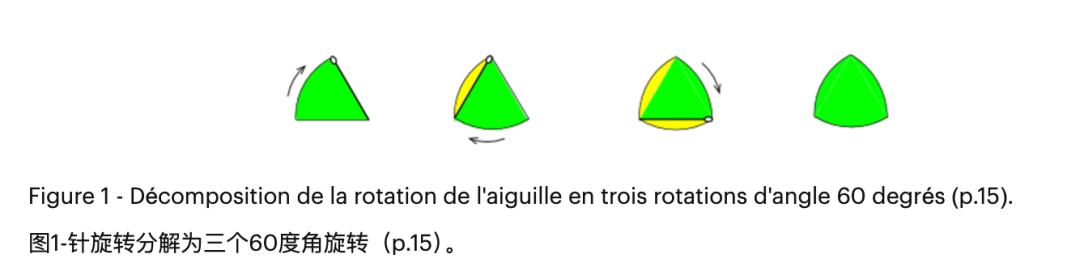
△
The planar case was proven by Davies back in 1971; the three-dimensional case was stuck for half a century until it was solved by Hong Wang and Joshua Zahl in February 2025.
No one has proven the four-dimensional and higher-dimensional cases so far.
The two manuscripts OpenAI made public this time deal with two different versions of the Kakeya problem respectively.
Paper 1: The three-dimensional Kakeya maximal function conjecture
It still focuses on three dimensions, but the problem is replaced with a more difficult version.
You can first think of it as a "tube overlap control" problem: place many thin, long tubes in three-dimensional space, and each tube represents one direction of the needle.
△
What mathematicians want to study is to what extent these tubes can overlap when they face different directions, and whether this overlap can be controlled by a unified estimation.
What Hong Wang and Zahl proved is the "set version", which studies the minimum space these needles must occupy when piled together.
The "maximal function version" proven by OpenAI, however, conducts more detailed research:
Thicken each needle into a thin tube, and assume that only a part of each tube is "solid", with the proportion recorded as λ. When all the solid parts are combined, can the total volume be guaranteed to be no less than the magnitude of λ³?
The smaller λ is, the emptier the tube is, and the harder it is to control. The set version only requires a relatively loose power of λ, while the maximal function version requires this power to be exactly 3.
This point is also clearly stated in the introduction of OpenAI's paper: the theorem of Hong Wang and Zahl gives a power of λ of K(ε), and the "need to replace it with λ³" was explicitly put forward right after their theorem was published.
In other words, this is the next step left by Hong Wang and Zahl. And this 97-page paper from OpenAI claims to have solved this step.
Why is this important? Because the Kakeya maximal function turns the problem of "how thin tubes in all directions squeeze together" into a computable analytical problem.
It is connected with some core conjectures in Fourier analysis, and has long been regarded as an important tool for understanding waves, frequencies and spatial concentration phenomena.
In 1971, Fefferman used Kakeya sets to construct counterexamples and proved that high-dimensional spherical multipliers are not bounded except in L². Since then, the Kakeya problem has been closely linked with the Fourier restriction conjecture and the Bochner-Riesz conjecture.
Paper 2: The Hausdorff dimension of four-dimensional Kakeya sets
On the four-dimensional side, the progress made by humans before is as follows:
In 1995, Wolff used the "hairbrush" method to prove that the dimension is at least 3;
Later, Guth and Zahl used the polynomial method to push it to 3+1/40, approximately 3.025;
In 2019, Katz and Zahl used the "planar brush" method to push it to 3.059;
Subsequent progress was basically only made on the second or third decimal place.
And this 175-page paper from OpenAI claims to have directly proven that the dimension is 4.
△
What is the difficulty of the four-dimensional case? Guth pointed out in his review that the key theorem in Hong Wang and Zahl's three-dimensional proof no longer holds when moved to four dimensions.
This is because in high-dimensional space, tubes can gather near low-degree algebraic surfaces, forming counterexample structures that do not exist in three dimensions.
The core tool of OpenAI's four-dimensional paper targets this problem: using quadratic polynomials to perform local fitting at different scales, and tracking lines that continuously gather across scales.
The word "polynomial" appears 213 times in the full text.
There is another detail: one of the key inputs of the four-dimensional paper cites exactly a lemma from OpenAI's three-dimensional paper. It is equivalent to the two papers forming a chain, and the stronger version of the three-dimensional case paves the way for the four-dimensional case.
Therefore, it can also be said that it has taken Hong Wang's results a big step forward. It strengthened her theorem to the maximal function version in three dimensions, and directly pushed a problem stuck at around 3 in four dimensions to 4.
However, this paper still has its limitations: it only proves the Hausdorff dimension version in four dimensions, and does not solve the four-dimensional maximal function conjecture; the five-dimensional and higher-dimensional cases are not fully proven either, and the paper only gives a lower bound using projections.
It is also worth noting that the results in group No. 074 have not been Lean formalized, nor have they undergone peer review.
OpenAI wrote in the README that some unformalized results "may have problems".
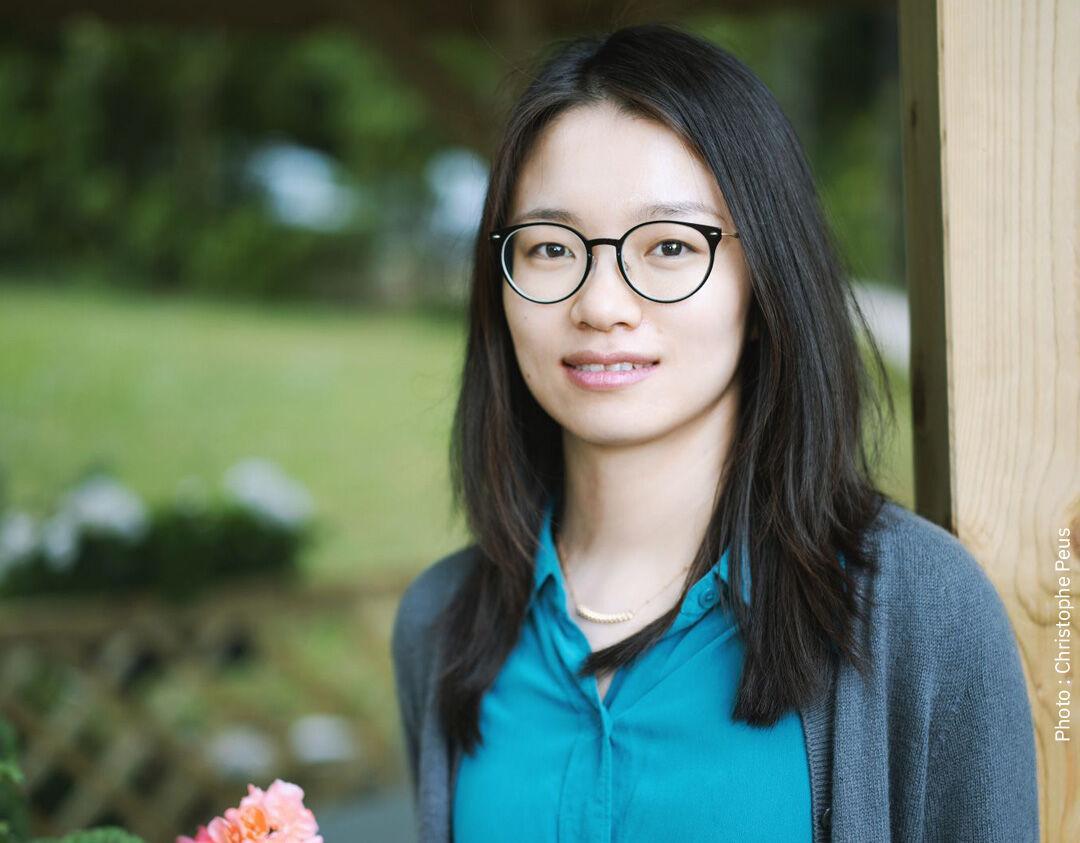
What did Hong Wang achieve?
Some people say that Hong Wang was lucky to win the Fields Medal before AI could catch up.
Is that really the case?
Looking through the full text of the two OpenAI papers, Hong Wang is one of the most frequently mentioned names.
In the three-dimensional paper alone, "Wang" appears 23 times.
Human mathematicians have been climbing the mountain of three-dimensional Kakeya for many years.
Katz, Łaba and Tao discovered very early that near-extreme tube configurations present three structures: stickiness, planarity and granularity.
But for decades, no one could combine them into a complete proof.
Hong Wang and Zahl divided their work into three steps:
In 2022, they first proved the case of "sticky" Kakeya sets, which was later published in the *Journal of the American Mathematical Society*.
In 2024, they solved the Assouad dimension version.
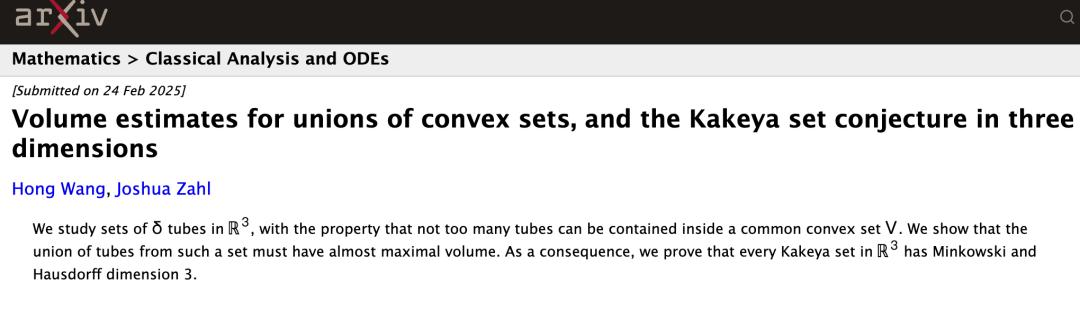
In February 2025, they released a 127-page complete proof, solving both the Hausdorff dimension and Minkowski dimension versions of the three-dimensional Kakeya set conjecture at the same time.
△
Nets Katz commented that this is a "once-in-a-century result".
During the same period, Hong Wang and Kang Ren also solved the Furstenberg set conjecture on the plane, which is also a long-standing problem in harmonic analysis.
All these works have now become the foundation of OpenAI's papers.
The three-dimensional paper directly cites the simplified proof of Guth, Hong Wang and Zahl; Guth was exactly Hong Wang's doctoral supervisor when she studied at MIT. It also uses the planar Furstenberg estimate from Kang Ren and Hong Wang.
The four-dimensional paper uses a dot product theorem from Hong Wang and Zahl.
If the two papers are eventually confirmed to be valid, they are also built as two additional floors on the framework Hong Wang has already set up.
Moreover, Hong Wang's attitude towards AI is not rejectionist.
In an interview after winning the award, she described AI as an "active booster" for mathematical research, and believed that proposing problems, creating concepts and constructing theories are still the core work of mathematicians.
The human mathematics community has been completely shaken...
Right now, it is probably the "critical moment of life and death" for human mathematics.
In the past, the life cycle of an important mathematical result was roughly as follows: one person or a small team spent several years completing the work, posted it on arXiv, peers spent one or two years reviewing it, and the academic community slowly digested it.
After the conclusion was confirmed, it would take a few more years before the award was finally decided.
Hong Wang and Zahl went through this whole path, from the sticky case in 2022 to the Fields Medal in 2026, which took nearly four years.
And this time, OpenAI released 722 mathematical manuscripts overnight. On average, each result took about three hours of ChatGPT Pro's thinking computing power, and only about 42% of the results were Lean formalized.
It is almost like a provocation...
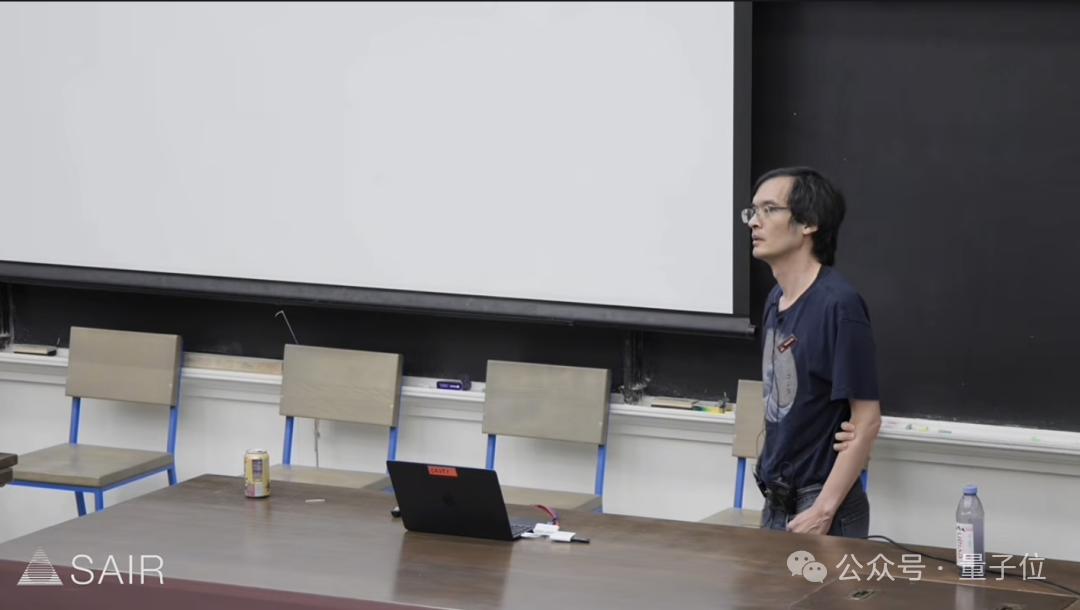
Terence Tao has taken the lead for the Association of Human Mathematicians (AHM) to issue a heavy joint statement, calling for a comprehensive boycott of OpenAI.
The wording of the statement is quite severe:
Mathematicians did not ask for this work. Releasing more than 700 documents at one time is not an act of academia, but an act of power.
The statement finally strongly urges all mathematicians to stop cooperating with OpenAI and return to the scientific vision centered on human understanding.