With drivers queuing for hours to charge their EVs on expressways, can charging pile owners actually turn a profit?
During the just-concluded National Day holiday, electric vehicle owners queued for hours at highway service areas just to charge a few kilowatt-hours of electricity. For car owners, this is the trouble of insufficient charging piles; for charging operators, this was supposed to be a signal of booming business.
But the reality is not that simple. TGood, which has nearly 900,000 public charging terminals, saw its revenue from charging network operation services drop year-on-year in 2025. As more and more new energy vehicles are sold and charging demand continues to grow, why is this business not as easy to do as imagined?
Why do electric vehicles start queuing for charging as soon as the holiday comes?
During the National Day holiday, many electric car owners encountered an awkward situation: they finally drove onto the highway, only to find that the thing that really wasted their time was charging.
At the Zaoyang North Service Area in Hubei, queuing for charging was once managed by issuing numbers in rounds and calling numbers, with nearly 200 vehicles queuing on site. Some car owners waited for a long time, finally got their cars charged, but had to leave before the battery was full. To allow more vehicles to take turns to charge, some service areas began to limit the charging amount of a single vehicle, and vehicles had to leave the site after being charged to 80%.
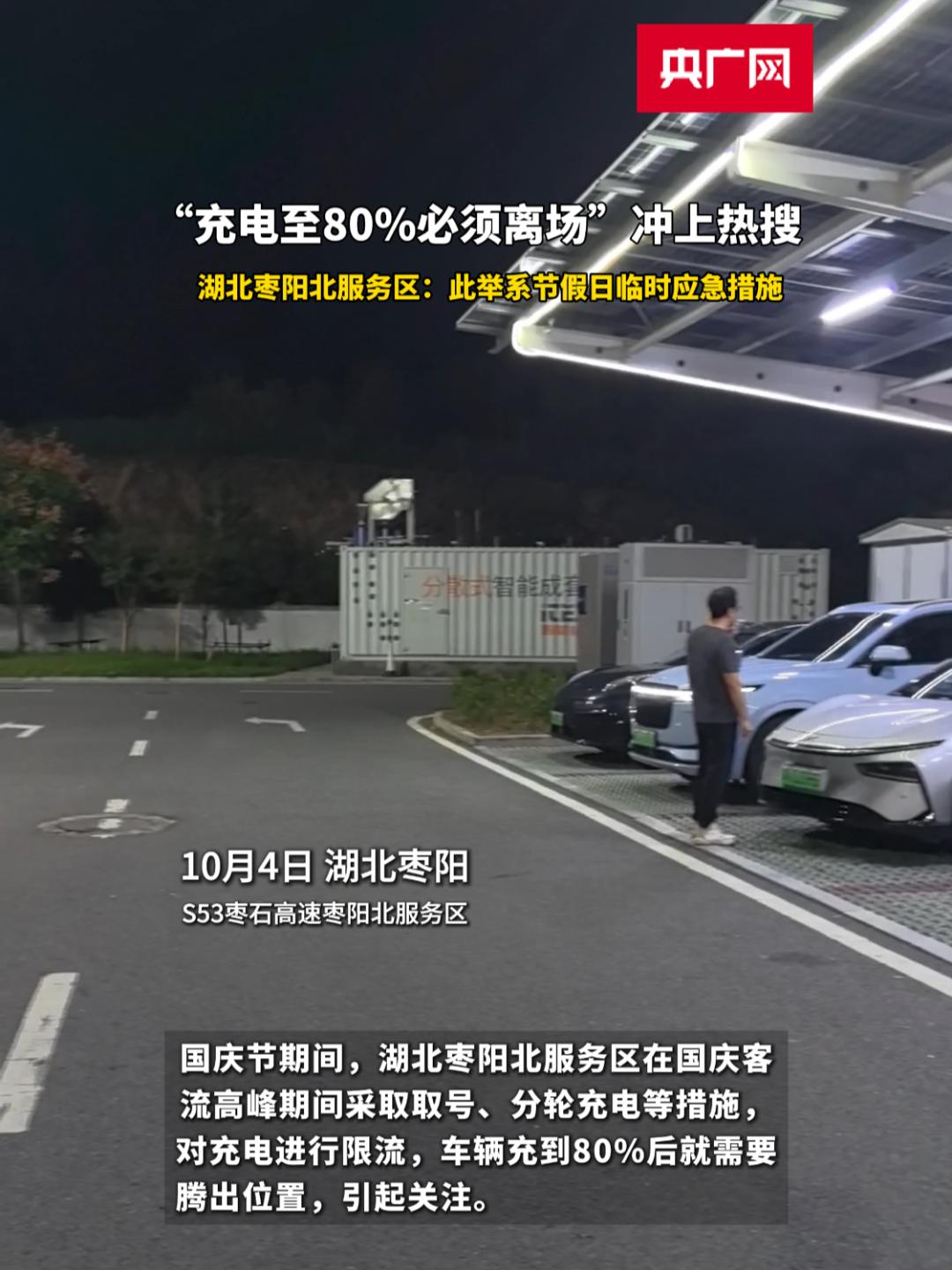
Image source | China National Radio Network
On the other side, fuel car owners pull into the service area, fill up the fuel, go to the toilet, and usually can continue on their way.
Comparing the two sides, electric vehicle owners can't help but feel depressed: new energy vehicles have been developing for so many years, why can't we avoid queuing for charging when traveling long distances?
The problem is of course related to the number of charging piles, charging speed and supporting capacity of the power grid. During holidays, a large number of vehicles drive onto the highway in a concentrated manner, and the charging facilities that are usually sufficient may suddenly become insufficient. Even if there are charging piles, the vehicles may not always be able to charge at the maximum power. As for building more charging facilities, things are not that simple: charging piles need places to be installed, they have to be connected to the power grid, and supporting power equipment is also indispensable.
But from an industrial perspective: when car owners complain about the lack of charging piles, can the enterprises that build and operate these charging piles really make money from the strong charging demand?
This is where "TGood" comes in.
For ordinary consumers, this name may be a little unfamiliar. But when it comes to "Telaidian", more people may know it. It is the charging brand under TGood.
TGood was founded in 2004, initially engaged in the power equipment business. In 2009, TGood became one of the first batch of enterprises to be listed on the Growth Enterprise Market of Shenzhen Stock Exchange. In 2014, with the gradual rise of the new energy vehicle industry, TGood founded Telaidian and entered the public charging field. Recently, the company's application for listing in Hong Kong has just been filed for record.
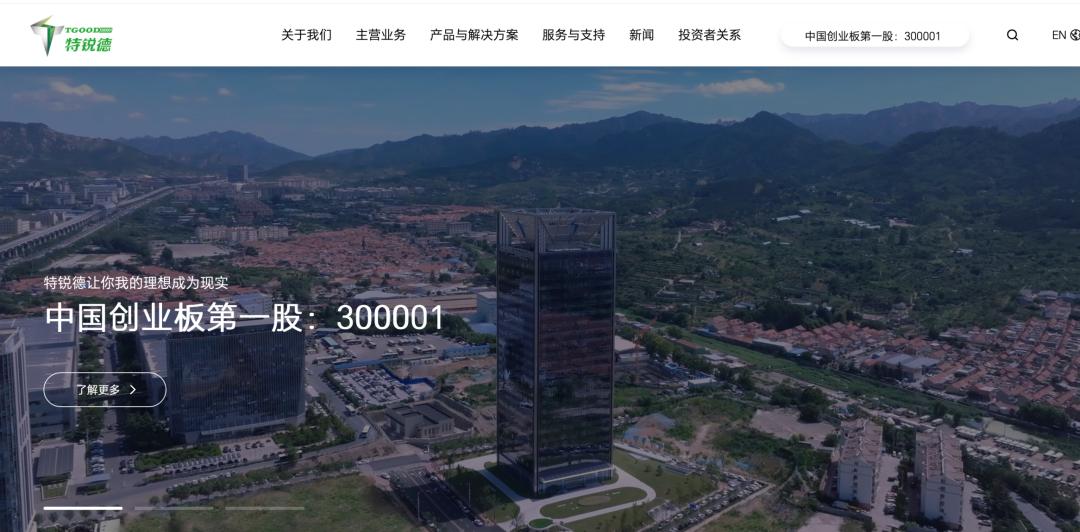
Figure | Sourced from the company's official website
From selling power equipment, to selling charging piles, and then participating in the construction and operation of the charging network, TGood's business has gone deeper and deeper.
But there is an easily overlooked problem: the fact that car owners queue up for charging does indicate strong charging demand, but it does not mean that the charging station is so busy every day. During holidays, a charging pile may be hard to find, but there may not be so many vehicles on workdays; even if the charging piles are built and no one comes to charge, the money spent in the early stage is difficult to earn back. This also explains why there are more and more new energy vehicles, but there is still a contradiction between supply and demand in the charging network.
From selling equipment to operating charging networks, what kind of money does TGood make?
TGood makes money from the charging business in two ways.
One is to sell equipment: customers purchase charging equipment, and the company delivers products and recognizes revenue. The other is to participate in the construction and operation of the charging network, invest funds in the early stage, and obtain revenue from car owners' charging later. The former basically completes the transaction once sold, while the latter needs to continuously attract vehicles to enter the station to recover the investment.
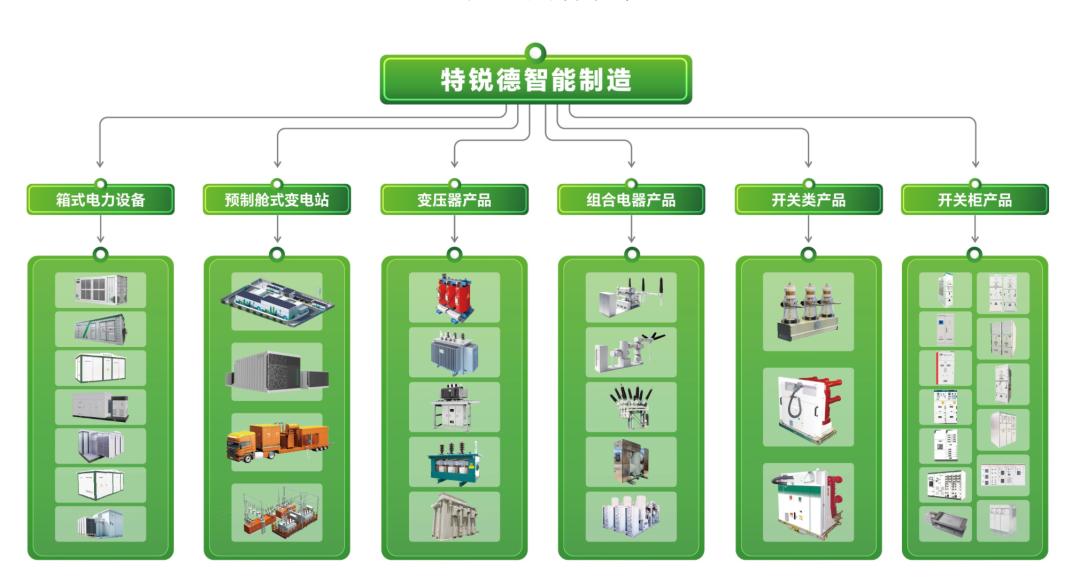
Image source | Company official website
In 2004, 39-year-old YU Dexiang resigned from State Grid to start a business and founded TGood. After gaining a firm foothold in the power equipment field, he turned his attention to new energy vehicles. Around 2014, new energy vehicles had not yet become the mainstream, and the charging network required a large amount of upfront investment, so not everyone was optimistic about this decision.
More than ten years later, Telaidian has occupied a place in the public charging market. But this market is not dominated by one player. There are professional operators such as Telaidian and Star Charge, platform-based enterprises such as Yunkuaichong, and participants developing based on travel scenarios such as Didi Charging.
In terms of the number of charging terminals, Telaidian is in the first echelon. By the end of 2025, Telaidian operated about 900,000 public charging terminals, including 542,000 DC terminals. According to statistics from the China Electric Vehicle Charging Infrastructure Promotion Alliance, TGood accounts for about 24% of the public charging terminal market share, ranking first in the country.
However, having a large number of charging piles does not mean that the actual charging volume is necessarily leading. According to research by Analysys, as of March this year, Didi Charging, Telaidian, and Yunkuaichong accounted for 34.22%, 10.06%, and 9.54% of the charging volume share in the public charging market (excluding dedicated charging scenarios) counted respectively.
Due to different statistical periods and calibers, these two sets of data cannot be directly compared, but at least it shows that the scale advantage of the charging network will not necessarily be converted into the corresponding charging volume, and it also depends on who can attract more vehicles to enter the station.
For operators like TGood, building charging piles is only the first step. Competing for high-quality sites, improving equipment utilization, and finding a balance between charging prices and service fees will all affect the final operating returns.
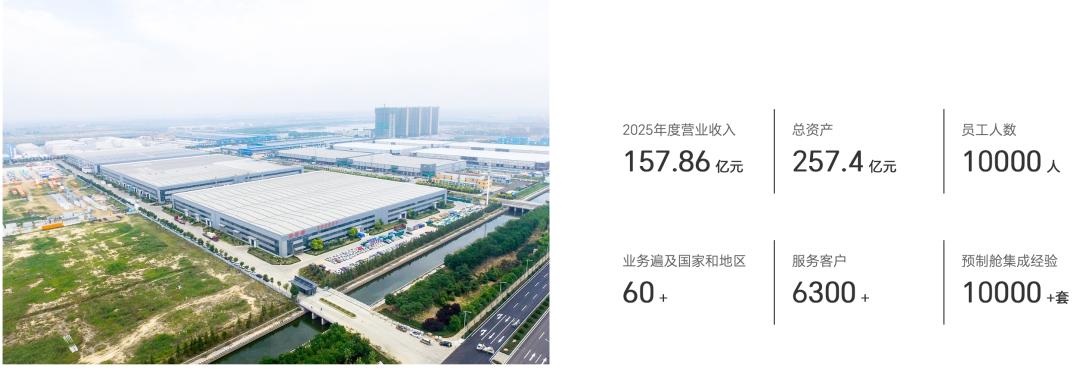
Let's look at TGood's performance again. In 2025, the company's revenue was 15.786 billion yuan, a year-on-year increase of 2.68%; the net profit attributable to shareholders was 1.243 billion yuan, a year-on-year increase of 35.62%. Among them, the revenue from power equipment business was about 10.821 billion yuan, and the revenue from electric vehicle charging business was about 4.966 billion yuan. Traditional power equipment still contributes nearly 70% of the revenue.
The performance within the charging business also diverged. In 2025, the revenue from charging equipment was about 3.394 billion yuan, a year-on-year increase of 3.39%; the revenue from charging network operation services was about 1.572 billion yuan, a year-on-year decrease of 2.19%.
In the first half of 2026, the revenue from electric vehicle charging business was about 1.826 billion yuan, a year-on-year decrease of 0.83%. Among them, the revenue from charging equipment decreased by 2.50%, and the revenue from operation services increased by 1.84%.
It is worth noting that the gross profit margin of operation services rose to 40.18%, an increase of 8.45 percentage points year-on-year. This means that more money is left after deducting operating costs, but revenue growth is still limited.
Cash flow is another observation dimension. As of the end of June 2026, TGood's accounts receivable was about 9.506 billion yuan, accounting for 38.23% of the total assets; the net profit attributable to shareholders in the first half of the year increased by 30.73% year-on-year, but the net cash flow from operating activities was negative 410 million yuan. Although it has improved compared with the same period of the previous year, there is still a gap between the book profit and operating cash flow.
Charging piles used to be a business about speed. With the rapid growth of new energy vehicles, whoever can occupy the site earlier and spread the network can have the opportunity to seize the market. But as the charging network is gradually spread out, the logic of competition is also changing.
For operators, building charging piles is just the beginning of investment. Site rent, power capacity expansion, and equipment maintenance all require costs, while charging demand has obvious time and space differences: during holidays, a charging pile on the highway service area may be hard to find, but some charging stations in the city may not be able to maintain a sufficiently high utilization rate. At the same time, charging platforms, automakers, and energy enterprises are constantly entering the market, and users are paying more and more attention to charging speed, price and service experience.
This means that the charging industry is shifting from competing on network scale to competing on operational efficiency. Whoever can make the charging piles be used effectively for more time, and who can provide more stable services at lower costs, is more likely to convert the upfront investment into continuous returns.
For TGood, nearly 900,000 charging terminals are a scale advantage, but not a guarantee of profitability. How to improve the utilization efficiency of the existing network and how to make the growth of the charging business more stably converted into profit and cash flow are still problems that the company must answer.
Car owners hope to queue less, and operators hope to make more money. A truly mature charging network needs to find a balance between these two things.
This article is from the WeChat official account "Phoenix Technology", written by LU Chunfeng, and published with authorization by 36Kr.