The tailwind of the great era of AI-driven mobility is gradually picking up.
Simply say "I want to go to a certain place" to your mobile phone or other smart terminal, and the AI will automatically understand your travel intention, help you sort out the itinerary, plan the route, and directly reserve an online car-hailing service. When you walk out of your home, a Robotaxi is already waiting by the roadside. You do not need to operate any APP manually, and the vehicle will automatically take you to your destination.
Such AI-style travel that used to only exist in science fiction movies is now taking initial shape on the streets of Chinese cities.
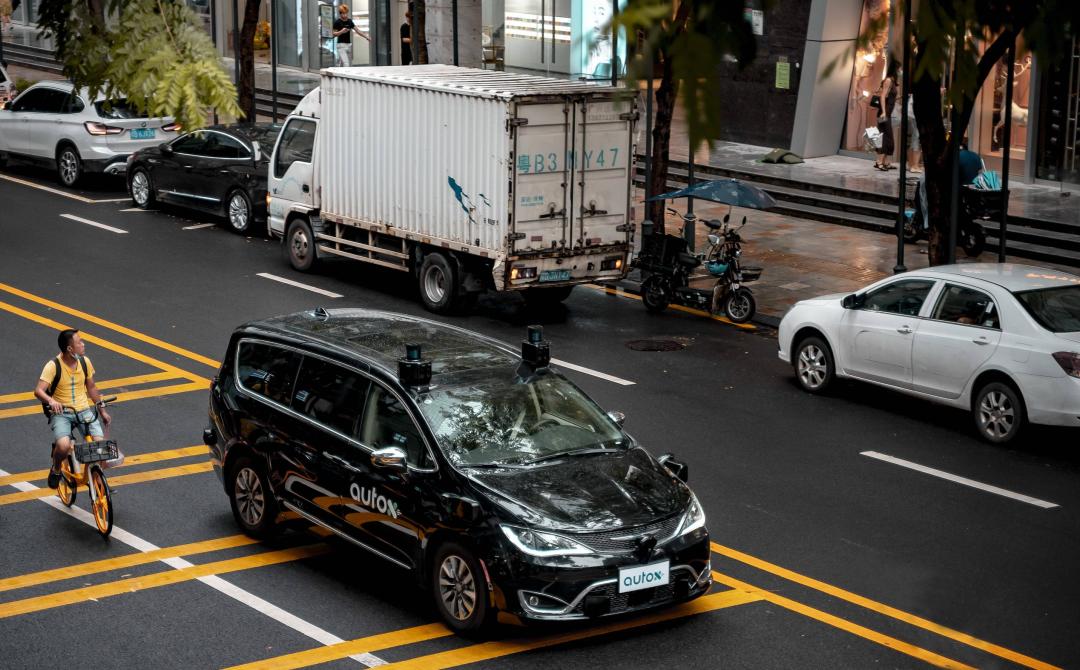
The *2025 Annual Data Report on China's Mobile Travel Market* released by the E-Commerce Research Center of 100EC.cn shows that in 2025, the scale of China's online car-hailing market reached about 4.119 trillion yuan, a year-on-year increase of 6.07%, and the growth rate continued to narrow compared with 8.19% in 2024; the number of domestic online car-hailing users remained at 539 million, which was flat with the previous year. User growth has hit the ceiling, and the traditional traffic dividend has been basically exhausted.
As the whole industry bids farewell to the golden age of rapid growth, the online car-hailing industry must find new growth stories, and AI Agent-driven intelligent travel is the main line of this new story.
In the past three years, the AI wave brought by large models has triggered a series of changes in the travel track. The industry has moved from the stage of technical experiments in closed parks to the formal stage of commercial implementation.
From a deeper perspective, this revolution has led to the disintegration and reconstruction of the entire travel industry chain, as well as the rewriting of the power structure of all links in the chain, and new decisive forces are brewing quietly.
01
Closed Loop
In September 2026, Caocao Mobility intensively completed multiple rounds of cooperation implementation with smart terminals. It is probably the travel company that has taken the most actions and maintained the most aggressive posture in the AI field at present:
On September 14, the consumer version of Doubao Mobile Assistant was officially launched, which is equipped on the Nubia NaviX Ultra mobile phone, and Caocao Mobility became one of the first batch of travel service providers to access this system;
On September 15, Caocao Mobility's AI ride-hailing service was connected to Honor YOYO Agent. Users directly state their travel needs to YOYO, and the agent can automatically identify the start point and end point, match transport capacity, plan vehicle models and routes, and complete the order placement;
At the OPPO Developer Conference on September 17, Caocao Mobility once again announced that its AI ride-hailing service was connected to OPPO Bub Next, and completed the whole process demonstration on site;
On September 22, Caocao Mobility announced its cooperation with Qwen AI Glasses at the Alibaba Yunqi Conference, and the two sides will jointly launch an AI ride-hailing service to realize a hands-free near-eye interactive experience;
Prior to this, Caocao Mobility's ride-hailing capabilities were also accessed to Huawei smart watches and Xiaomi Miclaw Mobile Assistant.
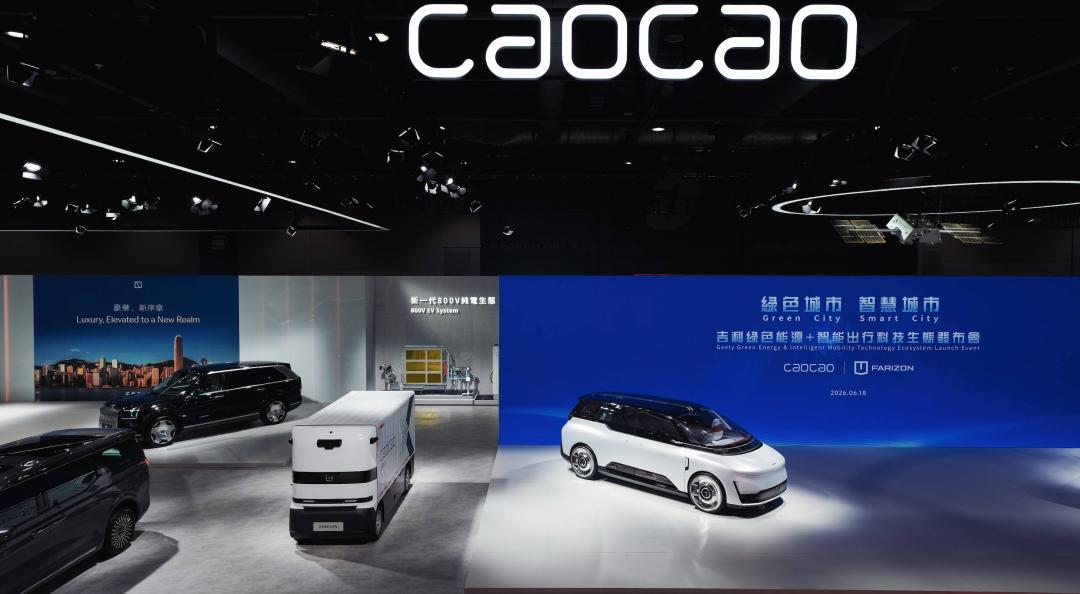
To many ordinary users, these cooperations may only look like a new small function of voice ride-hailing, but from the perspective of the entire Chinese online car-hailing industry, their significance is more important: these cooperations that have been put into commercial practice mark that the AI travel industry chain has initially formed a complete closed loop.
Looking back at the AI attempts of various institutions in the travel field in the past, most of them stayed at certain stages of "semi-AI".
Taking the Robotaxi operating in pilots across the country as an example, the vehicle itself has realized L4-level autonomous driving, and the driving link is completed by AI. However, if users want to call a car, they still need to open the APP, manually enter the address and confirm the order.
Subsequent access of Qwen to Amap Ride-Hailing and the linkage of WeChat AI Agent with DiDi have realized the voice ordering function, but users still need to trigger operations in the APP or WeChat ecosystem, and cannot get rid of the application carrier.
In contrast, the in-depth linkage between Caocao Mobility and the system-level agents of mobile phone manufacturers has substantially separated travel services from independent APPs and embedded them into the natural dialogue between users and agents. Users do not need to open any travel software, and only need to talk to the AI in the mobile phone to complete the entire ordering process.
The transformation of this interaction paradigm gives AI travel the basis of a complete closed loop:
At the front end, terminal agents such as mobile AI assistants and AI glasses serve as entrances to receive users' travel demands at any time.
Large AI models are the key in this process. Taking the mobile phone field as an example, manufacturers such as Huawei, Xiaomi, OPPO, vivo and Honor all take the route of self-developed large models, while mobile phones such as Nubia and Apple adopt the external cooperation mode. Doubao, Alibaba Qwen and Baidu Wenxin have become popular cooperation choices, which is the closest distance for large models as entrances to people sending instructions;
In the middle reaches, operating platforms such as DiDi, Caocao Mobility and Ruqi Travel are responsible for order distribution, capacity scheduling and order management. According to statistics from the online car-hailing supervision information interaction system of the Ministry of Transport, the monthly order volume of national online car-hailing in 2026 has remained at about 1 billion orders, and all online car-hailing platforms have accumulated rich operating experience;
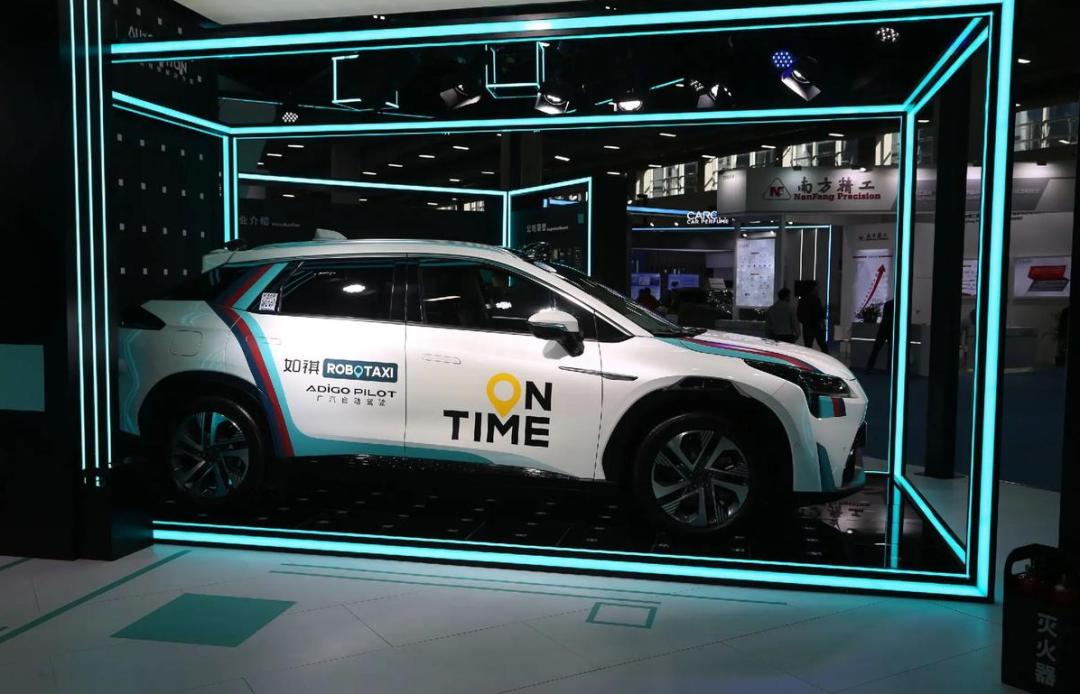
At the back end, Robotaxi and local driverless minibuses complete the transportation of passengers in the physical world and deliver travel results.
In this link, domestic manufacturers are clearly already fully prepared and are on the verge of commercialization:
As of August this year, Apollo Go has landed in 28 cities around the world, with a total of more than 23 million completed orders, and the total autonomous driving mileage has exceeded 350 million kilometers;
Pony.ai's 7th-generation Robotaxi has launched fully driverless commercial operations in Guangzhou, Shenzhen and Beijing. Even the fleets in Guangzhou and Shenzhen have achieved revenue balance per vehicle;
WeRide's L4 fleet has been deployed in more than 40 cities across 13 countries around the world, holds autonomous driving licenses from 8 countries, and has a global fleet size of more than 3,000 units, covering multiple travel carriers such as Robotaxi and driverless minibuses;
Ninebot is also continuously deploying in the fields of low-speed unmanned vehicles and automatic shuttle equipment, and has accumulated a lot of commercial operation experience in short-distance unmanned travel scenarios such as parks and business districts.
After the entire link is connected, AI travel is no longer just a concept in the laboratory, but has become a complete industrial system operating in reality.
02
Revolution
The formation of a new industrial chain closed loop will inevitably bring multiple revolutions to the commercial logic of the travel industry.
The first change is the replacement of traffic entrances.
In the mobile Internet era, aggregation platforms such as DiDi and Amap Ride-Hailing are the core entrances for travel demands. If users want to take a taxi, they must open the corresponding APP. In the future, when users can directly say "help me call a car" to their mobile phones, watches and AR glasses to complete the travel, the large model behind the AI assistant will become the first receiver of travel demands.
What follows naturally is that the traffic entrance is transferred from the aggregation platform APP to various AI agents.
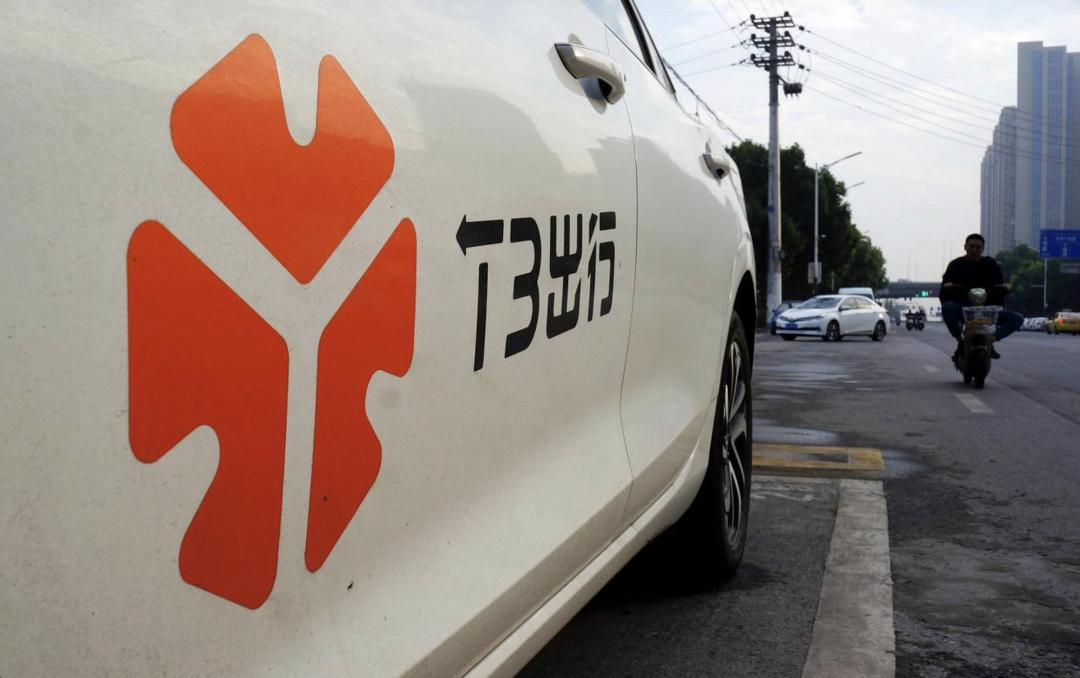
The second change is that the core competitiveness of the industry will be completely restructured.
In the past, the underlying logic of competition in the online car-hailing industry was that whoever could offer more subsidies to attract users, recruit and manage more drivers, could seize a larger market share. In the AI travel era, the competition logic has changed from the past logic of competing on price and drivers to competing on vehicles and technology.
The core of the competition will become which online car-hailing platform can better understand the complex travel needs of users, have a larger scale of Robotaxi capacity, and whose intelligent driving system can more stably cope with complex urban road conditions, so that it is easier to be recommended by terminal agents first and get more orders.
The third change is that the status of the upstream and downstream of the industrial chain will be reshuffled.
The system-level AI agents built into mobile phones and smart terminals are growing into new traffic entrances, which have the opportunity to replace traditional aggregation platforms to receive users' travel demands, and even participate in formulating new service rules for the online car-hailing industry.
In fact, not only in the travel field, AI agents carry the output of a complete life service ecosystem, and travel is only one of the infrastructure modules.
In this new industrial structure, traditional online car-hailing platforms and Robotaxi operators have all become capacity suppliers behind AI agents, or capacity supply modules.
The transformation of industrial logic means that the boundary between platforms and autonomous driving companies is blurring.
In the past, the two basically kept their distance. Online car-hailing platforms operated online car-hailing orders and online car-hailing drivers under the traditional form, and were hardly involved in unmanned driving; while autonomous driving companies focused on the manufacturing of unmanned vehicles and the R&D of autonomous driving algorithms, and their own APPs only operated their limited Robotaxi, and were not involved in large-scale vehicle scheduling and order management.
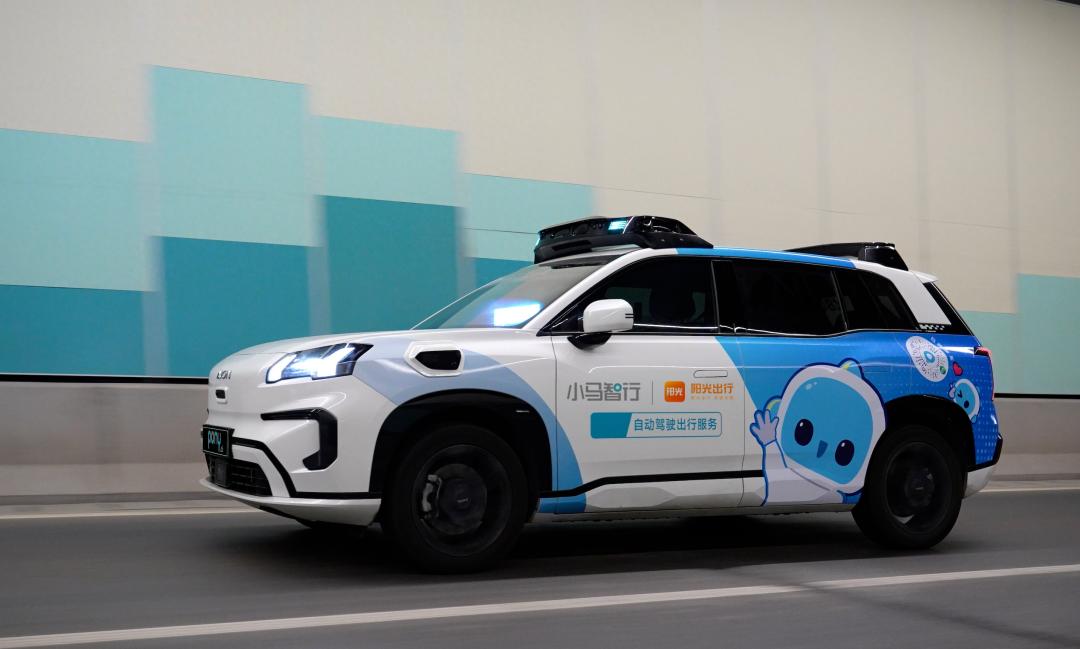
In the AI era, the order entrance is controlled by the agent of the front-end hardware. Unless the capacity-side enterprises also make mobile phones and watches, it is difficult for them to be invaded. However, the online car-hailing platforms and Robotaxi operators on the capacity side can replicate each other's models.
From the perspective of industrial competition and cooperation, those who only master the order scheduling capability without unmanned vehicle capacity will be constrained by the autonomous driving vehicle suppliers in the future; those who only master the autonomous driving vehicle technology without a mature travel scheduling platform and compliant operation system will also find it difficult to independently undertake large-scale user travel orders.
It is very difficult to master both the demand scheduling capability and the unmanned vehicle fulfillment capability, but it can determine the long-term industrial discourse power of enterprises.
Therefore, from a longer-term perspective, online car-hailing platforms and Robotaxi operators will most likely move towards integration in the end.
03
Integration
No matter which one annexes the other, there will eventually be a showdown between the two. This long-term trend has already shown short-term signs — leading online car-hailing platforms have long been laying out Robotaxi business.
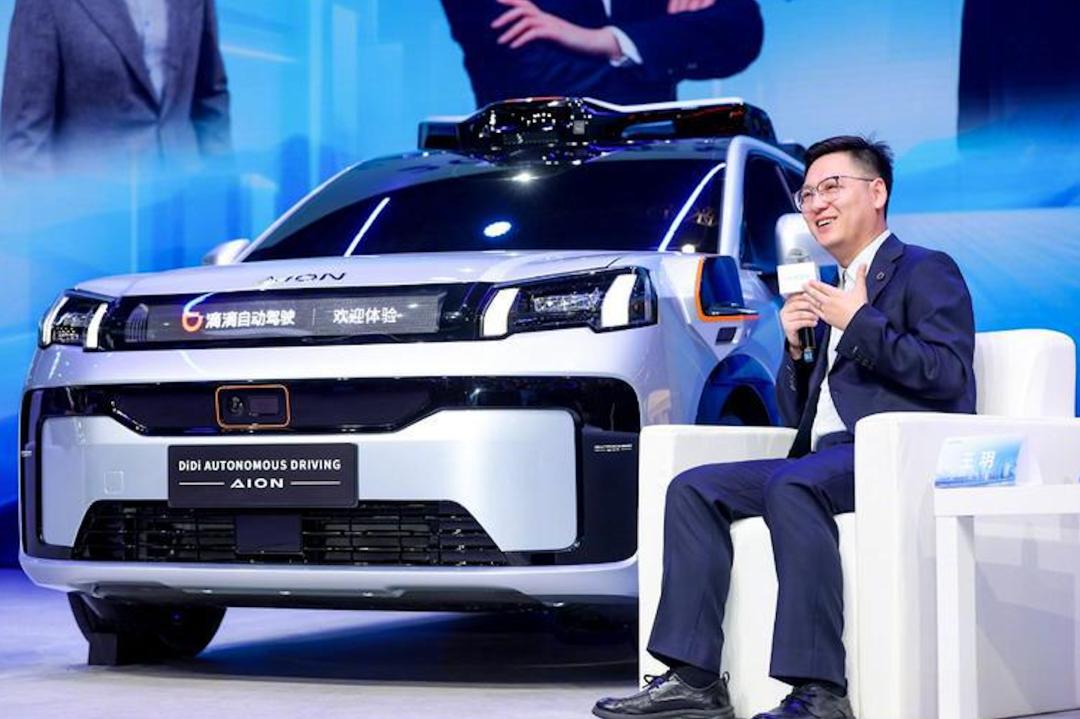
DiDi Autonomous Driving cooperated with GAC Aion to build the new-generation Robotaxi model R2, which completed mass production delivery in January 2026. The first batch of vehicles has obtained road test licenses for intelligent connected vehicles in Guangzhou, and started normal passenger-carrying tests in demonstration areas of Beijing and Guangzhou.
Caocao Mobility is also accelerating the layout of autonomous driving business. In February 2025, Caocao Mobility launched the Caocao Intelligent Travel Autonomous Driving Platform in Suzhou and Hangzhou; in December 2025, it released the Robotaxi 2.0 full-stack solution, and put forward the long-term strategic goal of "100 cities and 100 billion in ten years", planning to continuously expand the scale of Robotaxi implementation.
Obviously, these online car-hailing platforms, while maintaining a huge online car-hailing scheduling network, are developing self-driving systems and launching exclusive Robotaxi models, trying to connect the two ends of order scheduling and unmanned vehicle fulfillment to complete the integrated layout.
On the other hand, Robotaxi manufacturers are also building or cooperating with travel platforms to make up for the shortcomings of scheduling operations.
Apollo Go has long relied on its own APP for operation, and has hardly accessed other external aggregated ride-hailing platforms in China. All order scheduling, fulfillment and customer service are undertaken by Apollo Go's own system.
The cooperation between Pony.ai and Ruqi Travel is a typical case of upstream cooperation.
In March 2026, Pony.ai delivered the first batch of more than 100 7th-generation GAC Aion Tyrannosaurus Robotaxi to Ruqi Travel. The vehicles are equipped with Pony.ai's self-developed autonomous driving system, and are connected to the Ruqi Travel platform for operation. This cooperation model has a clear division of labor: Pony.ai focuses on the R&D and iteration of the "virtual driver" autonomous driving technology, and Ruqi Travel is responsible for fleet assets, safety guarantee, vehicle scheduling and platform operation. The two sides jointly build a large-scale Robotaxi fleet.
Before the era of full integration arrives, the mixed operation model has become a consensus in the transition period of the industry.
After WeRide launched the paid Robotaxi service, all early orders came from its own APP, and later it also accessed third-party aggregation platforms.
In March 2026, WeRide Robotaxi was officially connected to the ride-hailing entrance of WeChat "Me - Services - Travel Services" and opened in the Guangzhou area. Passengers place orders on Tencent Travel Services, select "Autonomous Driving - WeRide Go", and the orders will automatically flow to WeRide's background scheduling system to complete vehicle dispatch, fulfillment and settlement. Overseas, WeRide is connected to platforms such as Uber, and orders are distributed by the platforms, which is also the core source of orders for WeRide's overseas Robotaxi.
