Two Sides of National Day Holiday Catering: Revenue Rises, But Per-Customer Spending Drops Even More Sharply
01
Catering Industry During the 2026 National Day Holiday:
Foot Traffic Remained Steady, Yet Average Customer Spend Dropped
Looking back at the catering consumption during the National Day holiday, two sets of data with stark contrasts are quite revealing.
According to the big data of the Ministry of Commerce, from October 1 to 6, the 78 pedestrian streets (commercial districts) under key monitoring by the Ministry of Commerce saw their passenger flow and turnover increase by 2.5% and 4.7% year-on-year respectively.
Douyin Local Life Services released the 2026 Mid-Autumn and National Day Consumption Report. The data shows that offline consumption during the "double festivals" was booming, with the volume of Douyin group-buying orders rising by 53% year-on-year, among which the number of catering orders increased by over 61% year-on-year.
A comparison of these two sets of data reveals that while the turnover saw a marginal increase, the volume of group-buying orders and total orders surged sharply. This indicates that the overall average customer unit price is declining. Of course, the commercial districts may cover other business formats rather than just catering, so let's take a further look at the catering data across various regions.
The editor of Canqin Neican sorted out the monitoring data from the provincial departments of commerce and found that the catering growth rate during the National Day holiday all fell in the single-digit range, namely between 3% and 7%.
Guangdong (first 3 days): Catering turnover +6.7%
Hubei (first 4 days): Catering transaction volume reached 3.459 billion yuan, +6.6%
Chongqing (full holiday): Catering service sales +5.0%
Sichuan (full holiday): The turnover of 129 key catering enterprises reached 1.23 billion yuan, +3%
Shaanxi (full holiday): Revenue of sampled catering enterprises +2.92%
Tianjin (first 4 days): Turnover of 229 sampled catering enterprises +1.2%
On one hand, the order volume on platforms saw a double-digit growth, on the other hand, the catering turnover across various regions only had a single-digit increase. The core reason behind this is the decline in average customer unit price. A large number of consumers went to stores for consumption via group-buying packages and coupons, which boosted the order volume while directly diluting the per capita consumption of the stores.
This also explains why there were long queues during the National Day holiday, but restaurant owners generally reported that they "did not make money". This National Day, what the catering industry really lost was not customers, but the average customer unit price.
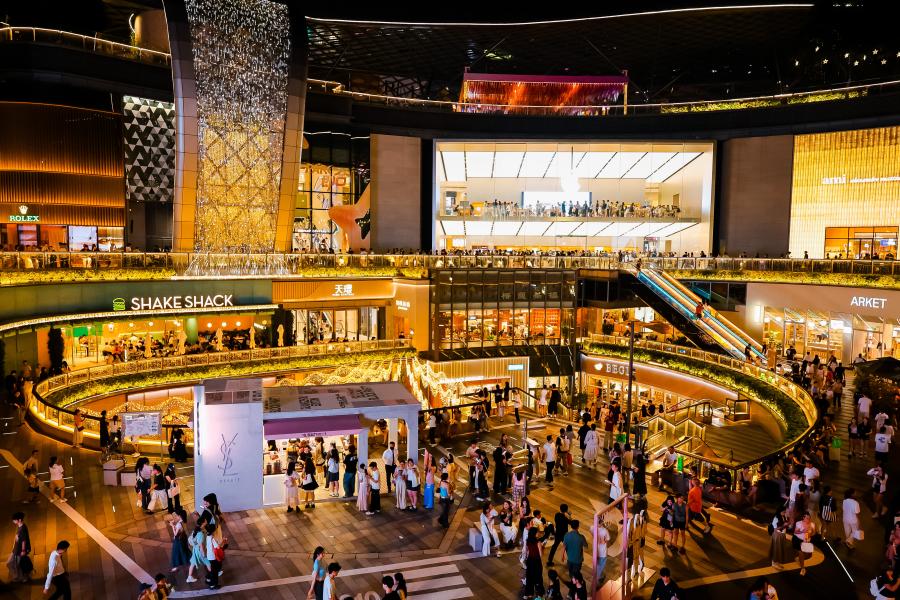
This consumption feature is also confirmed by the consumption data of key cities.
According to the statistics of UnionPay Business big data, in the first three days of the National Day holiday, Wuhan achieved a total offline retail consumption of 6.667 billion yuan, a year-on-year increase of 9.04%; the total number of consumption person-times reached 16.3854 million, a substantial year-on-year increase of 28.33%. Both transaction volume and consumption person-times rose, but the growth rate of passenger flow far exceeded the growth rate of revenue, further confirming that consumers' consumption behavior has become more rational, they no longer blindly pursue high-priced consumption, and cost-effective and pragmatic consumption has become the mainstream of holiday consumption.
Under the bustling overall market, the most obvious growth of catering industry this National Day came from gourmet tourism in small cities. According to data from Dianping, among the merchants on Dianping's "Must-Eat List", the access volume of merchants in third-tier and lower-tier cities increased by more than 2.5 times compared with that before the holiday; the browsing volume of "Local Recommended List" increased by nearly 300% compared with that before the holiday, among which 64% came from third-tier and lower-tier cities.
More and more tourists no longer crowd into popular first-tier cities, but turn to counties and small towns to look for local characteristic delicacies. "Eating like locals" has become a new travel consumption habit, bringing passenger flow dividends to county characteristic small shops and time-honored brands.
02
Catering Owners Are Looking Forward to It
"There are many people on the street, but no one comes into the store to consume"
According to data from the Ministry of Transport, during the 2026 National Day holiday (October 1 to 7), the cross-regional population flow of the whole society reached 2.142 billion person-times, with an average of 306 million person-times per day, a year-on-year increase of 0.6% compared with the daily average of the 2025 Mid-Autumn and National Day holiday; but it decreased compared with the total cross-regional population flow of 2.433 billion person-times during the 2025 National Day and Mid-Autumn holiday, which may be related to the 8-day holiday caused by the overlap of the two festivals last year.
On the evening of September 30, the editor of Canqin Neican was at Tangshan High-Speed Railway Station, where an online car-hailing driver complained that "this National Day is particularly deserted, no one takes a taxi, I only received 2 orders a day, and I was too busy to handle orders at this time last year." With the convenience of transportation, scenic spots across various regions have dispersed tourists. For example, in Hetou Old Street of Tangshan, many family tourists from surrounding cities such as Tianjin and Beijing choose to go on a one-day self-driving tour.
In Tianjin, the editor of Canqin Neican learned from a staff member of Bawangchaji that the business during the National Day holiday was relatively average. It was very busy on October 1, but not busy in the following days, which is related to the location of the store: it is located in an office building area and near a university, so during every holiday, people go home and the passenger flow decreases.
A chain catering brand in Beijing said that its business during the National Day holiday did not meet expectations, the passenger flow was the same as last year, and the overall revenue decreased. Although it did not disclose the specific reason, it can be seen from the comment section that queues are as usual, but people tend to pursue cost performance and often choose group-buying packages or buy vouchers.
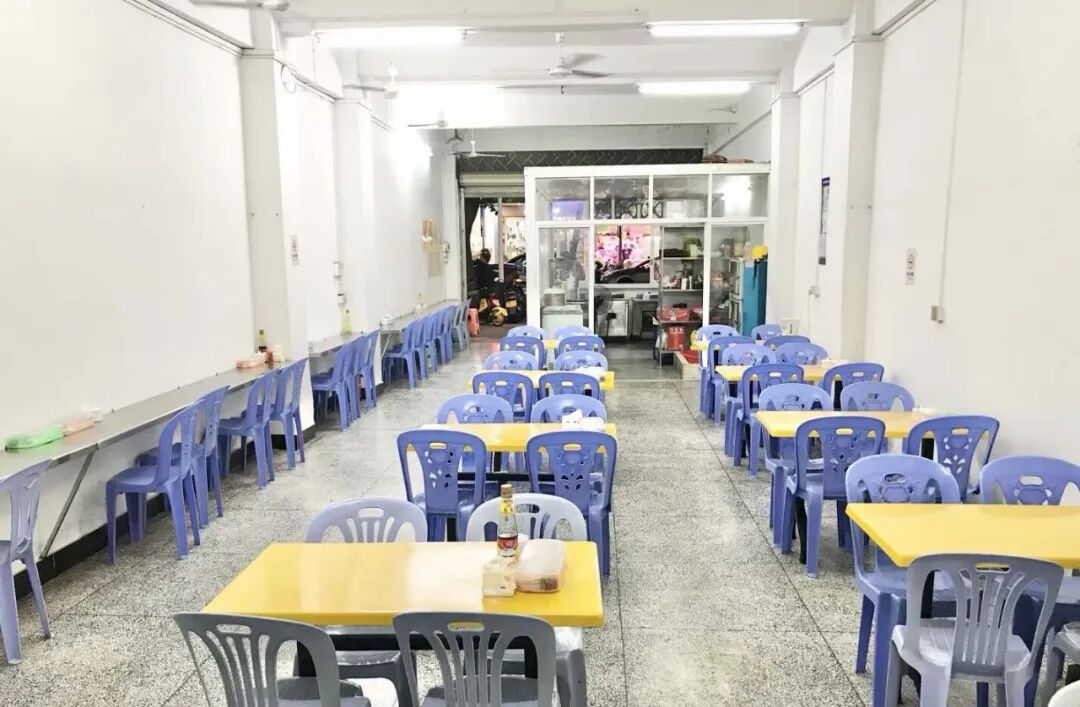
A catering owner running a beef rice noodle shop in Chaozhou, Guangdong said that "there were no diners at 7:30 p.m. on the second day of the National Day holiday, and the prepared beef had to be used to cook beef offal, which is a bit distressing. This is the way of catering business: when there are customers, you are too busy to stop, and when there are no customers, you can only stare at the tables and chairs in the store in a daze."
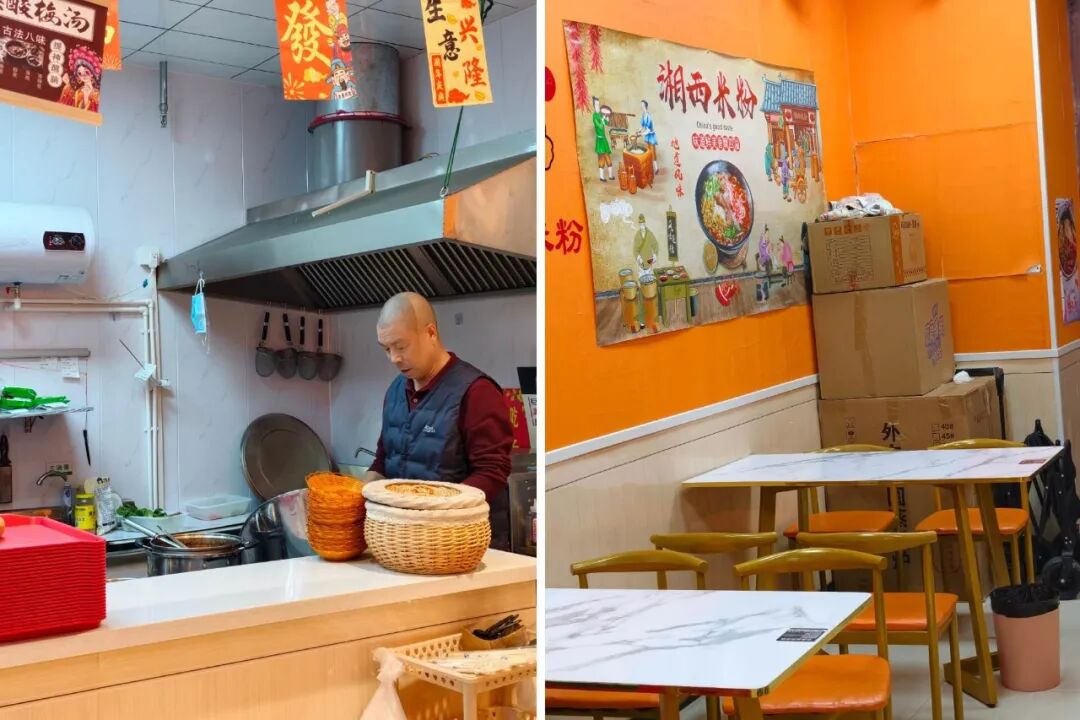
In Chongli, Zhangjiakou, Hebei, the owner of a fast food restaurant near a hotel said, "Last National Day, I could sell 3,000 to 4,000 yuan a day, but today (October 5) I only sold more than 100 yuan, and I don't know where all the people went." He admitted that for catering business in tourist areas, the real peak operating season of the whole year is only four months at most. Every mid-November, Zhangjiakou ushers in the snow season, and the passenger flow reaches its peak. "At the busiest time, I need to hire 3-4 employees, but in the off-season, I am the only one left in the store."
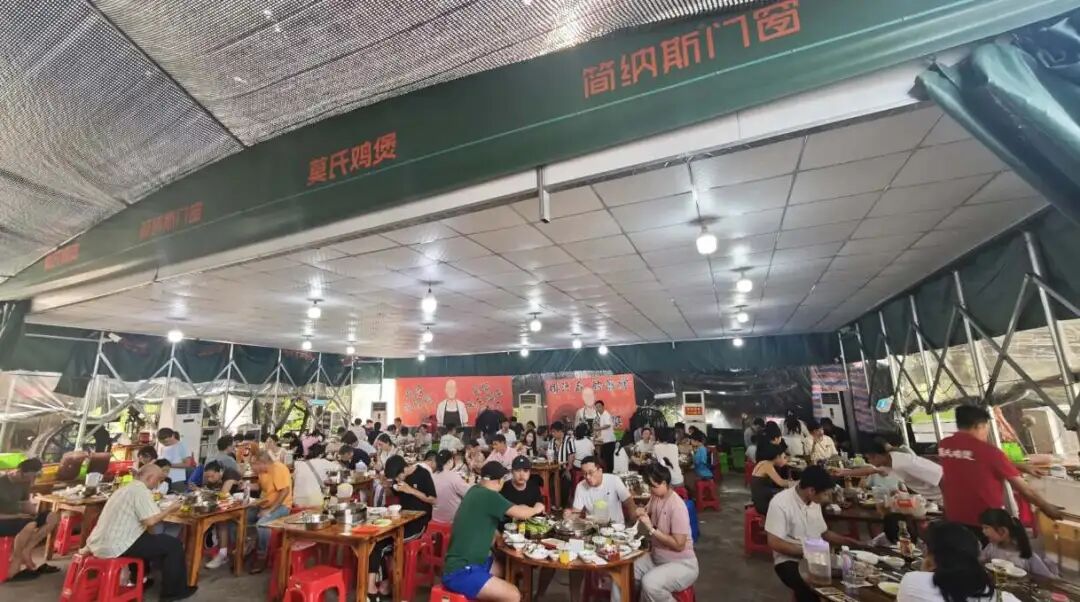
The business of Moshi Chicken Hotpot fluctuated during the National Day holiday. There was not much passenger flow on October 1, the "waiting pavilion for chicken" at the entrance of the main store was removed, the rain shelter was turned into a small shop, and the number of staff was reduced from 180 at the peak to more than 30, with the business dropping by 40% compared with usual. Queues appeared at noon from October 2 to 6, with the highest queue number reaching 88. Of course, there is a big gap compared with the peak period when there were more than 200 tables waiting for meals and the waiting time was 3-4 hours when the store just became extremely popular.
Many small fast food shops even directly took a vacation during the National Day holiday.
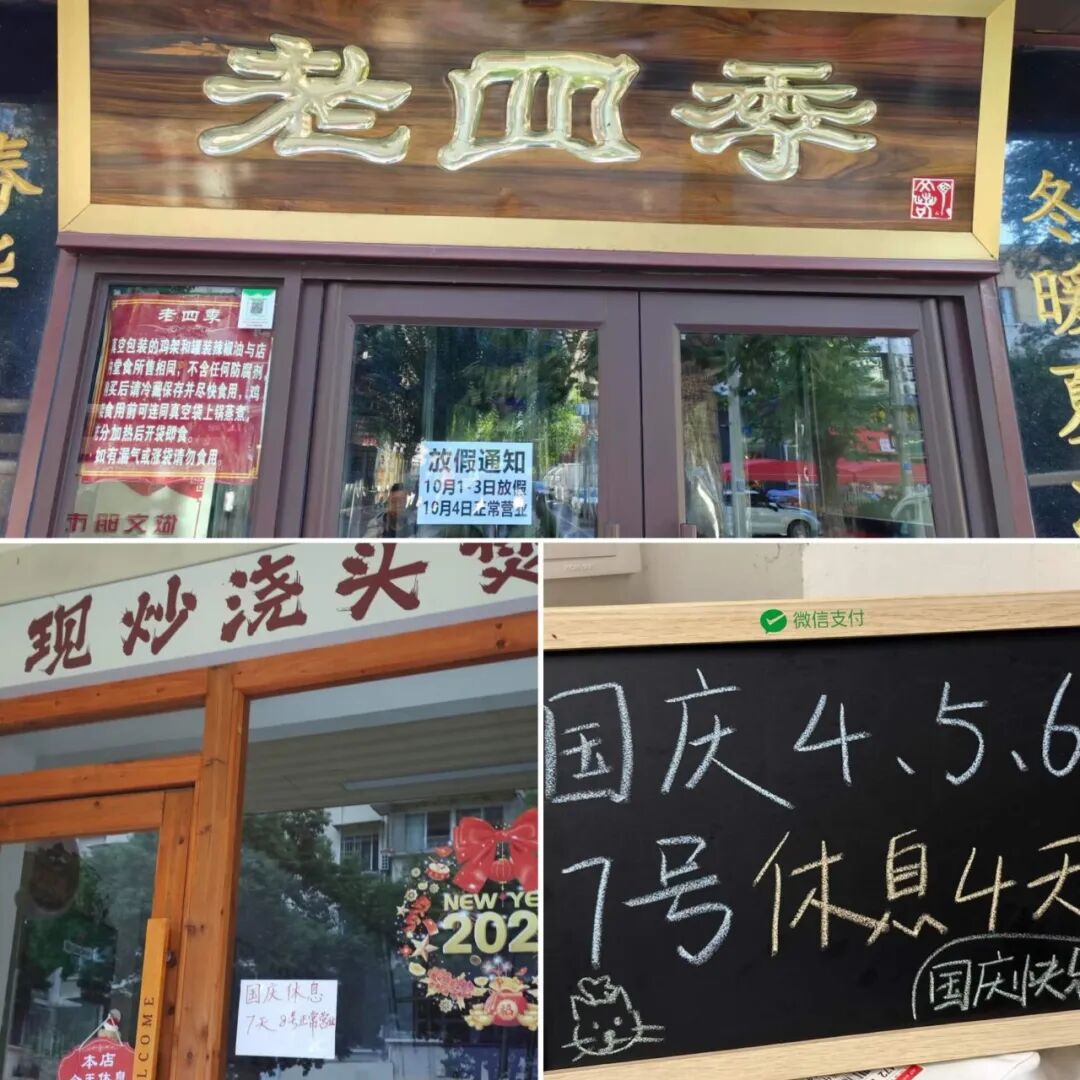
Some are happy while others are sad, the business situation presents a stark contrast.
We can see that in some popular cities, many leading brands, popular restaurants and high-quality restaurants still have long queues.
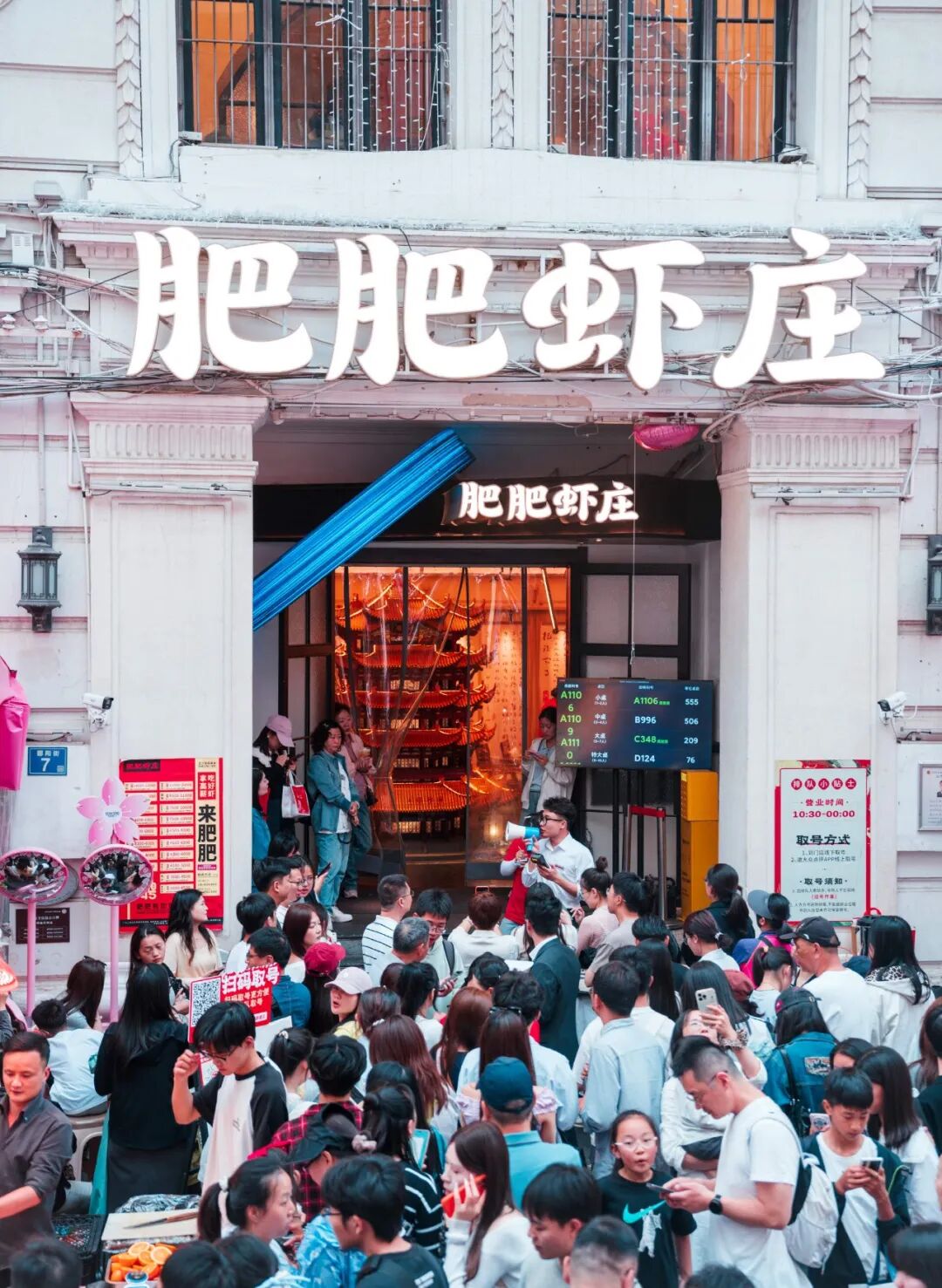
According to data from Wuhan Catering Association, the passenger flow in places like Shanhaiguan Road and Liangdao Street kept coming, stores such as Yanzi Soup, Cailinji and Sijimei were busy from morning to night, with the seat occupancy rate as high as 260%; the seat occupancy rate of local characteristic restaurants such as Feifei Shrimp Restaurant and Fish Head with Rice reached 128%;
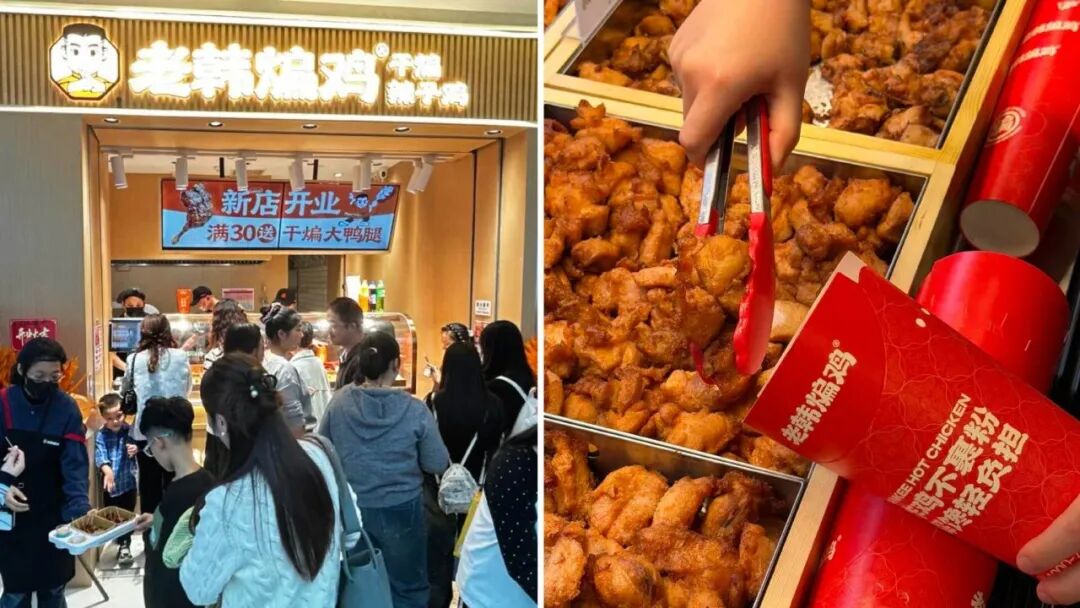
Data from Lao Han Fried Chicken shows that during the National Day holiday, the revenue of many stores exceeded 100,000 yuan, more than 50 stores had an average daily actual revenue of over 10,000 yuan, and the dine-in proportion reached 67.4%. Fried chicken snack category has the characteristics of regional features, high cost performance and easy to carry, and also benefits from the advantages of store location. For example, the Nanjing Jingfeng Center store and Beijing Chaoyang Hopson One store in first-tier cities have an average daily revenue of over 15,000 yuan +; the store in Huai'an West Tour Park fits the strong catering demand of "eating while playing" during holidays, thanks to the scenario advantages of concentrated passenger flow, strong consumption willingness and long staying time.
Public data shows that at noon on October 7, more than 500 tables were waiting for meals at the Huiju store of Huqia·Jingde Jiangxi Cuisine; there were nearly 200 tables waiting at the Palace Museum store of Sijiminfu Peking Duck; in addition, Taotaoju at the newly opened Guangzhou Baitantan The Mixc had up to 1206 tables queuing up......
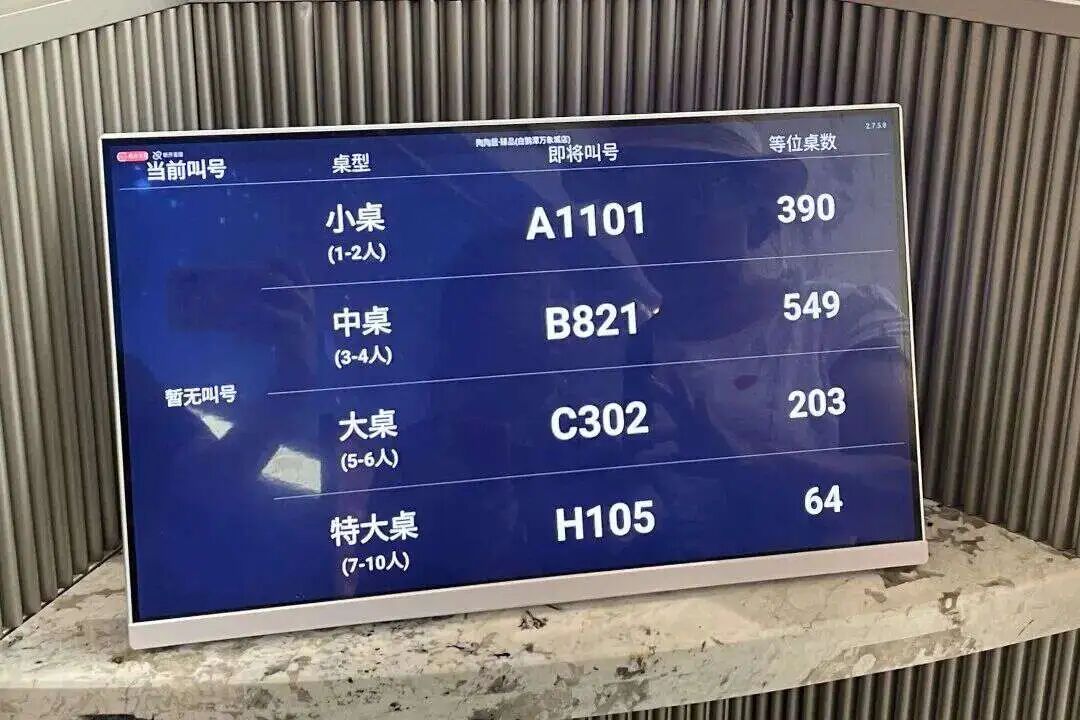
The two top queuing brands still have impressive data:
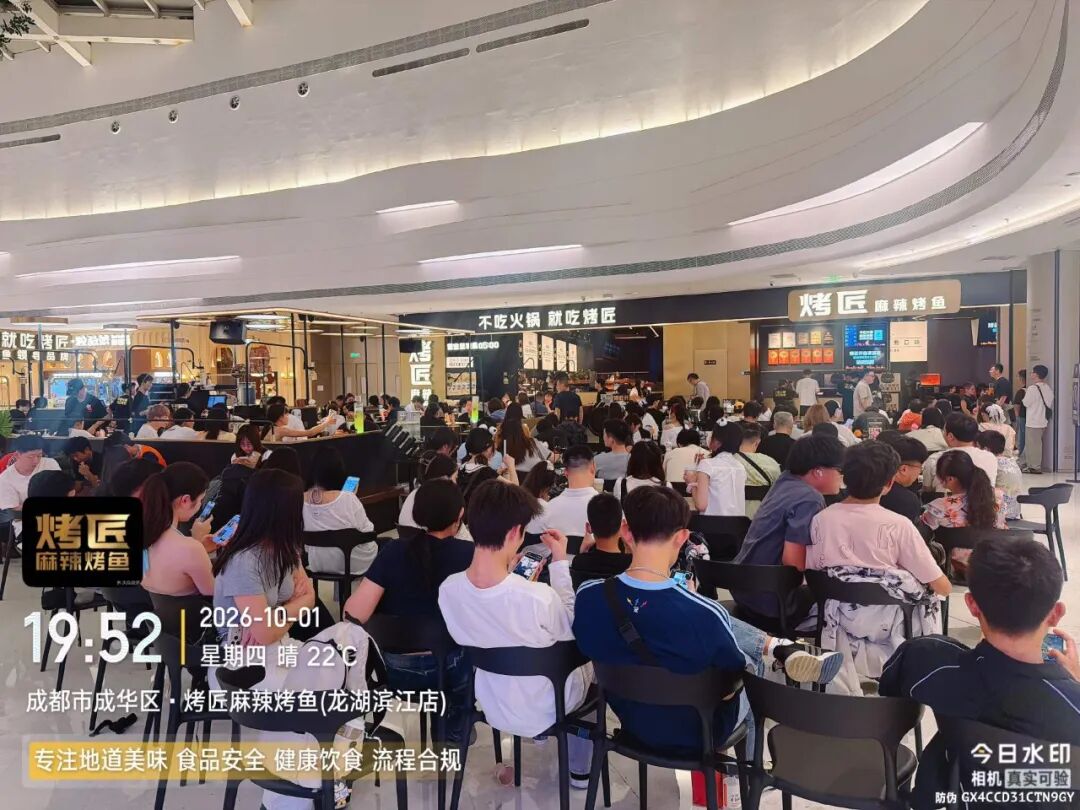
The official disclosure of Kaojiang Spicy Grilled Fish shows that from October 1 to October 7, the 81 stores across the country had a total queuing volume of over 230,000 tables, with an average daily number of queuing tickets of over 30,000, serving nearly 450,000 customers in total, with an average waiting time of 4-6 hours.
From the perspective of the Beijing market, the increase in stores has caused a certain degree of diversion. During this year's National Day holiday, 8 stores issued 76,657 queuing tickets, while the total number of queuing tickets of 4 stores in the same period last year was 42,501. On average, the average number of queuing tickets per store this year decreased slightly.
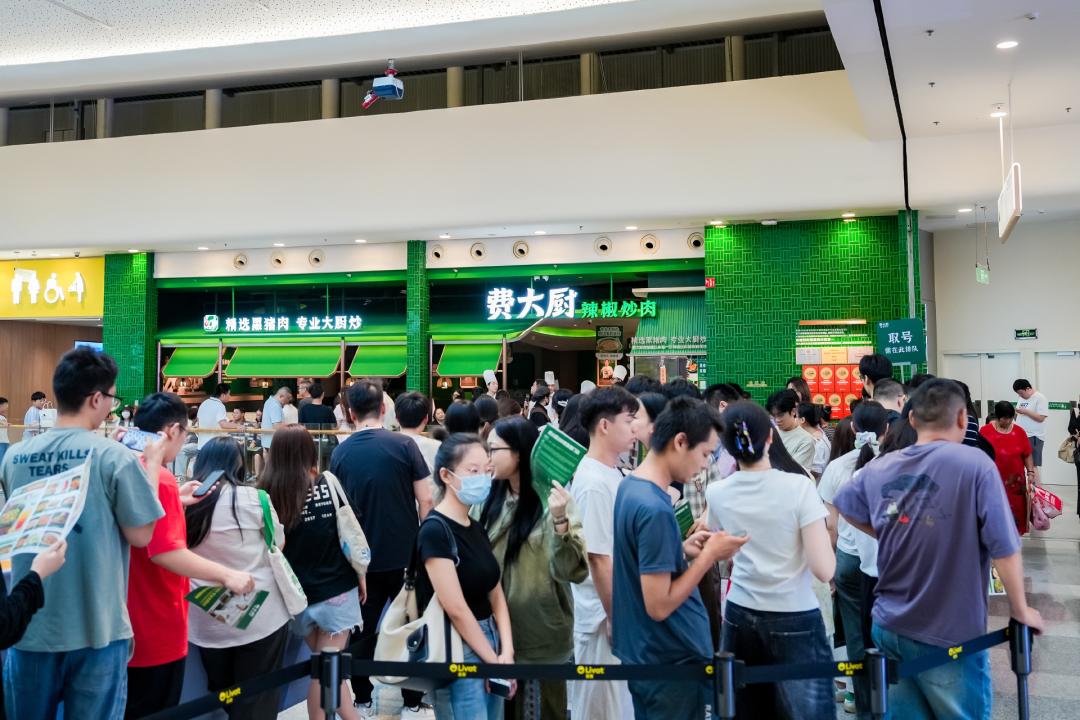
As a representative of the perennial "queuing king", all stores of Master Fei's Stir-Fried Pork with Chili across the country once again ushered in a peak passenger flow. It is normal for the number of queuing tables to exceed 1,000 throughout the day. In cities such as Beijing, Shanghai, Guangzhou and Shenzhen, the average waiting time at Master Fei's stores is more than two to three hours.
Cost-effective catering has taken the leading advantage:
On