Robot "The Tale of Figure 02's Retirement": It leaps straight into the steelmaking furnace and is turned into a $1,900 limited-edition collectible figure.
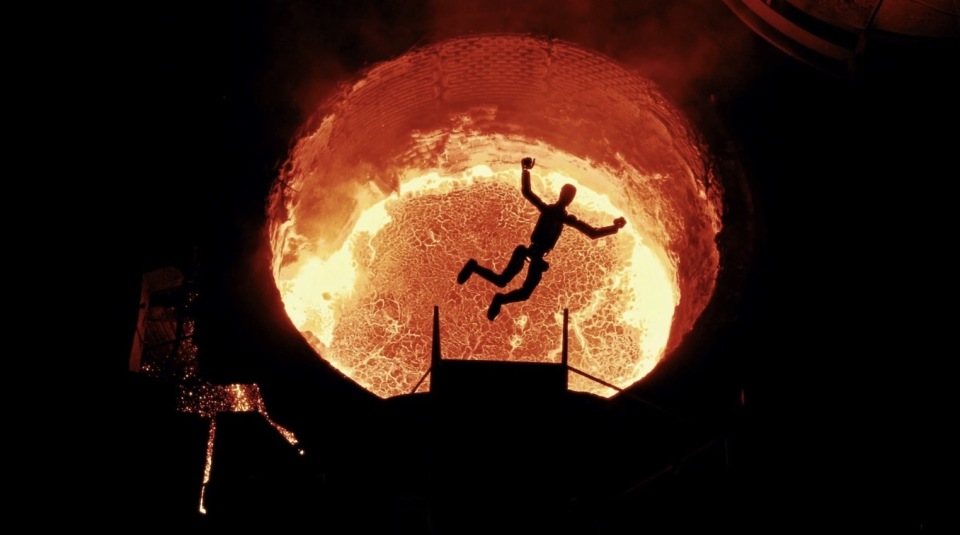
A humanoid robot made its final "appearance" in a 75-ton electric arc furnace, an industrial furnace that melts metal using electricity.
On September 30 local time in the United States, American humanoid robot company Figure AI released a video in the style of *Terminator 2: Judgment Day*, which drew widespread attention and discussion among netizens.
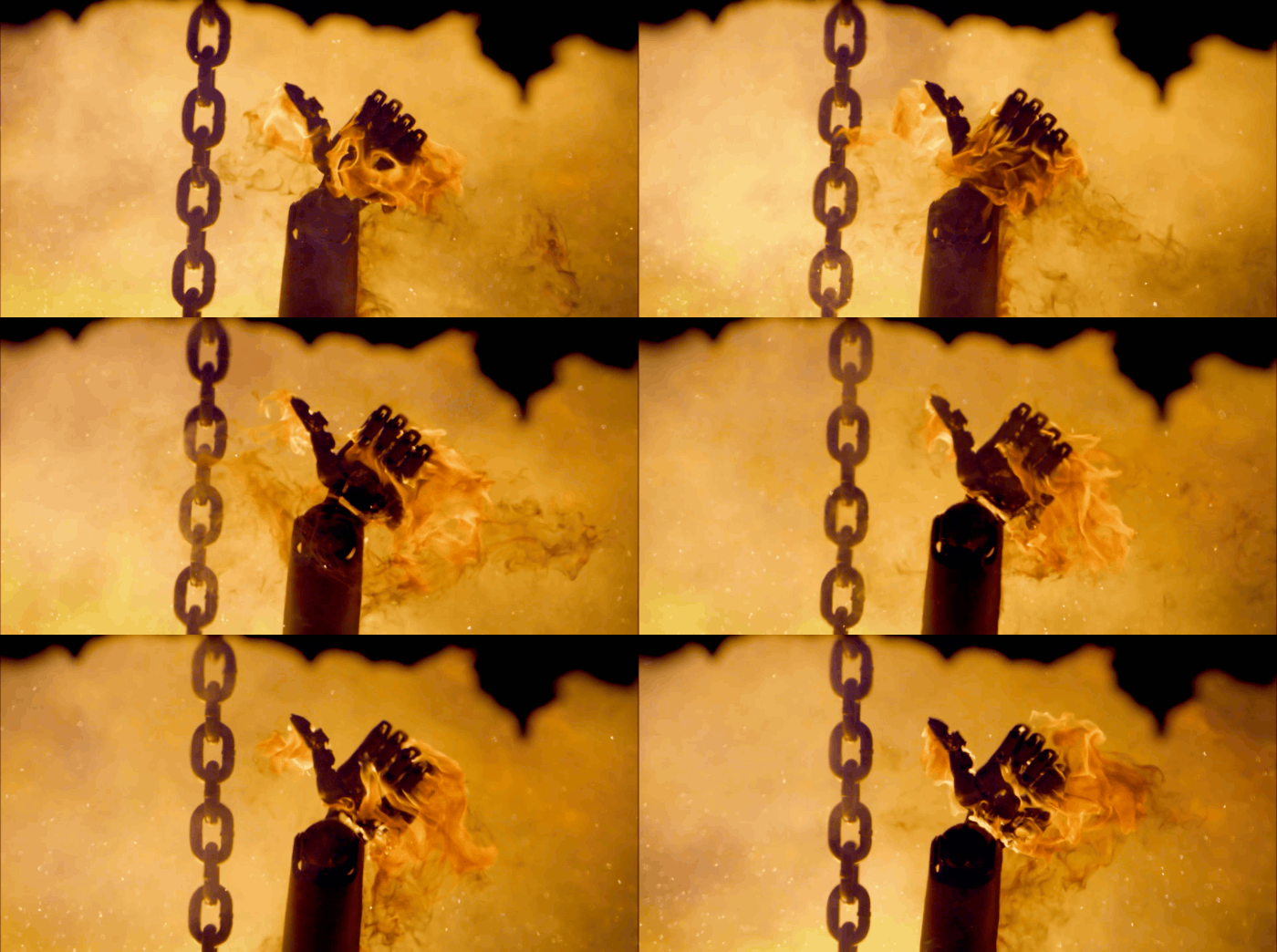
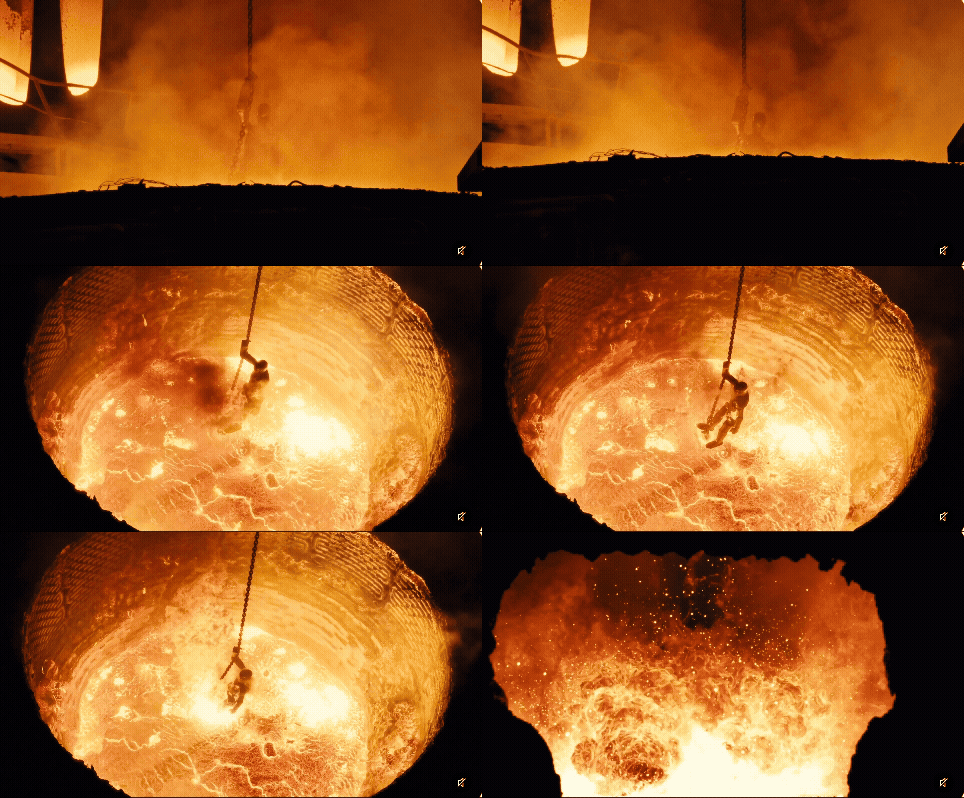
In the footage, multiple Figure 02 robots stand at the edge of the furnace, lean in to look at the churning molten steel, then step back, build up speed, and leap into the furnace in various postures; another robot is hoisted up by chains and slowly lowered into the molten metal, and before it is fully submerged in the steel, it raises its robotic hand to make the iconic "thumbs up" gesture.
There is also a familiar figure on site — Arnold Schwarzenegger, the lead actor of the *Terminator* franchise. He personally participated in this special decommissioning ceremony and said goodbye to Figure 02: "Hasta la Vista, Figure 02", which is a perfect tribute to *Terminator 2*.

Movie star and former Governor of California Arnold Schwarzenegger
In today's era where AI-generated videos are becoming increasingly common, Figure AI specifically emphasized that this is not synthesized footage. The company actually trained the robots to jump autonomously, shipped them to Finland, and had them enter the molten steel.
This seemingly crazy "decommissioning ceremony" actually stems from a very thought-provoking question: as robots continue to iterate and update, how should older generations of humanoid robots be disposed of?
Figure AI stated in its official announcement that Figure 02 has completed multiple "firsts" for the company, including the first deployment in a BMW factory, the first run of the Helix system, the first execution of household tasks, and the first logistics deployment. As the number of Figure 03 units continues to grow, there is no need to maintain Figure 02 any longer.
Considering that Figure 02 contains a large number of custom actuators and other proprietary hardware inside, disassembling each unit one by one would not only require technicians to invest a huge amount of time, but also may delay the development progress of Figure 04. Therefore, Figure AI came up with the most thorough solution: melt them down.
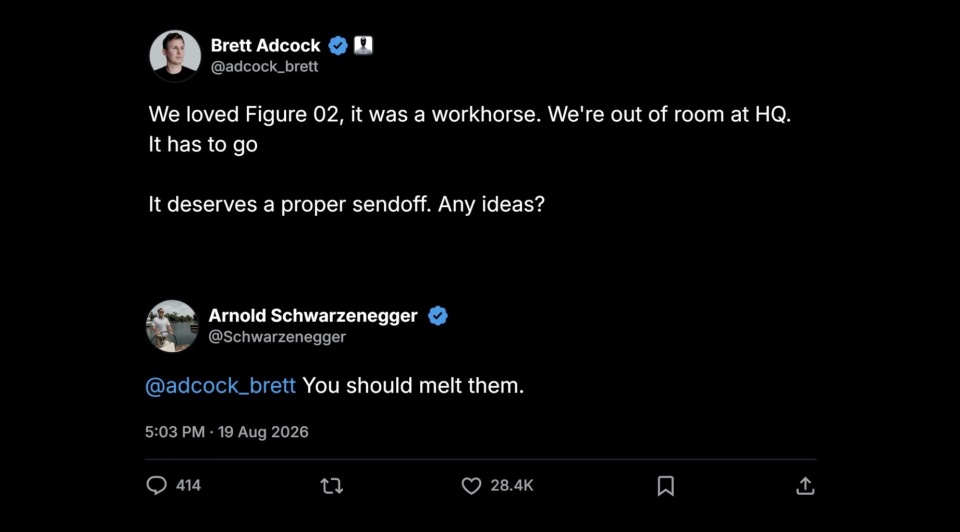
Post by Brett Adcock, CEO of Figure, and Schwarzenegger's reply
This idea was not even first proposed by Figure AI. Earlier, Brett Adcock, CEO of Figure, once asked netizens on the social media platform X for suggestions on how to say goodbye to Figure 02. Schwarzenegger then replied: "Melt it."
Figure AI ended up actually doing exactly that, and invited the "Terminator" himself to participate in the process.
01 In order to make the final jump, Figure 02 had to first learn how to leap into the furnace
Sending a humanoid robot equipped with batteries, electronic components and complex mechanical structures into a furnace is far less simple in actual implementation than it appears in the video.
The first issue is the venue. Figure AI said that the company contacted multiple metal foundries in the United States and Mexico, but none of them were willing to allow a humanoid robot with a lithium-ion battery to enter their expensive smelting equipment. The team even reached out to former members of *MythBusters* to find a suitable solution.
Eventually, Figure AI shipped the robots to a steel plant in Imatra, Finland. The plant uses a 75-ton electric arc furnace powered by three large graphite electrodes, which is originally used to melt solid scrap steel. The entire shooting process only lasted 24 hours, the team only had 6 smelting opportunities, and each smelting session only had a window of about 20 minutes, after which the molten steel would gradually cool down and form a hard surface.
But finding a furnace is only the first step. Figure 02 still needs to complete the jump on its own.
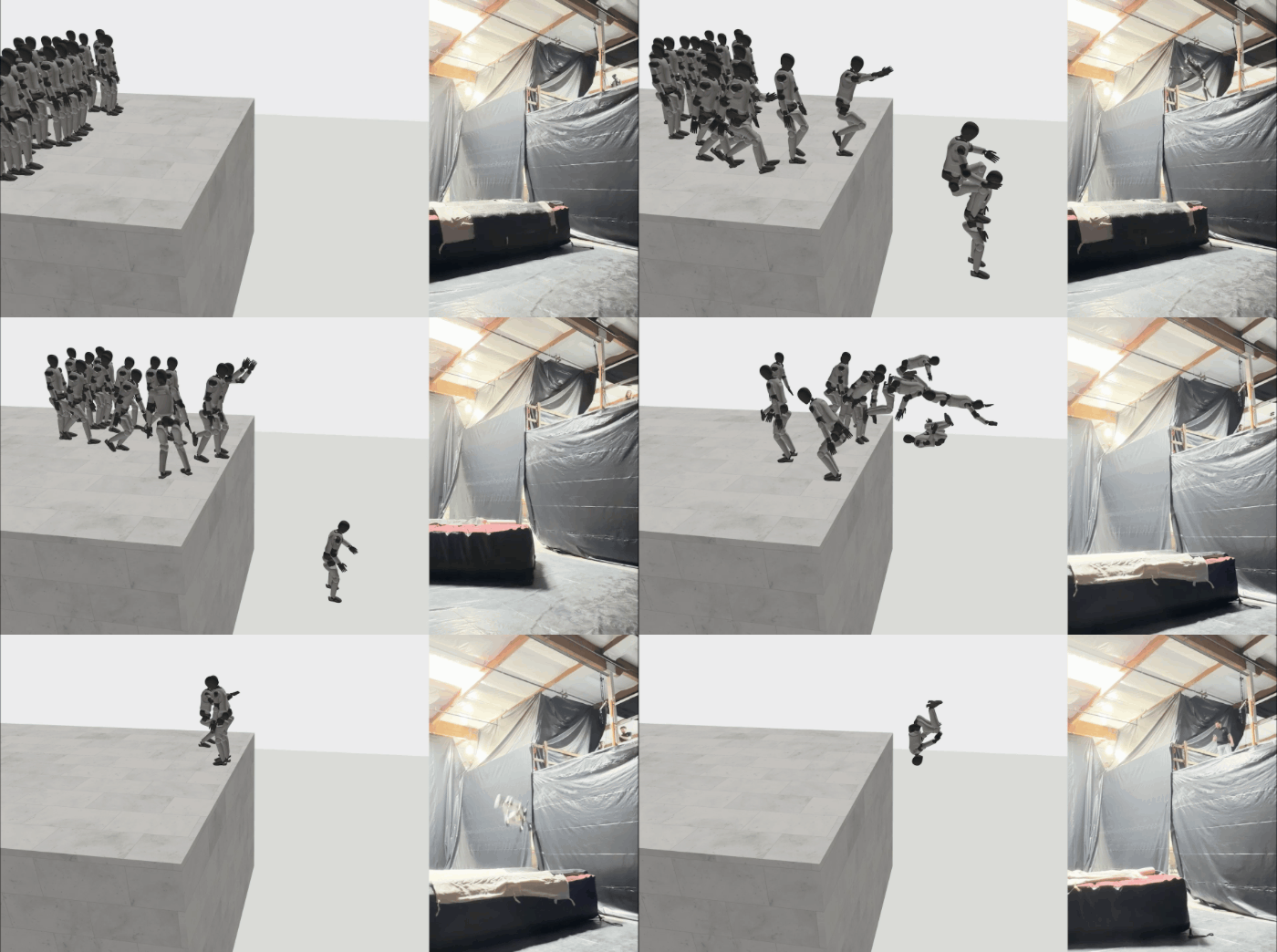
Before the robots were shipped to Finland, Figure AI set up large airbags at its headquarters in San Jose, USA, to let the robots practice jumping repeatedly from the second floor of the company's office building. The engineering team also referred to the movements of stunt performers, and trained a new AI model in a simulated environment, so that the robots could accurately jump into the furnace in a steel plant they had never been to before.
This means that Figure AI did not repeatedly test and make mistakes in the real furnace environment in advance, but tried to let the robots master the final jump through simulation training.
When they actually arrived at the site, challenges still remained. High temperatures and strong electromagnetic fields caused some of the on-site camera equipment and other electronic devices to fail, but Figure AI said that despite the harsh environment, the AI control strategy (AI policy) of Figure 02 for performing jumping actions still ran seamlessly and successfully completed the predetermined movements.
As a result, the robot movements that once required engineers to debug continuously were finally used to complete the robots' own "decommissioning ceremony".
02 Why not disassemble them, but melt them directly?
The excellent marketing effect demonstrated by the video is certainly eye-catching, but in depth, the core demands behind Figure AI's decision are reasonable.
First, the considerations for proprietary hardware protection and technical security. Figure 02 contains a large number of custom actuators and proprietary hardware. For products that have reached the end of their life cycle, the company needs to prevent these core hardware and their design information from leaking out. Disassembling each unit one by one requires technicians to spend a lot of time handling these proprietary hardware; through full smelting with high specifications, the risk of core technical asset leakage can be avoided, and the workload of manual disassembly of each unit can be greatly reduced.
Second, R&D resources. Figure AI is currently advancing its next-generation products. The company clearly stated that disassembling Figure 02 units one by one would take up a lot of time for the technical team and may affect the release of Figure 04.
In contrast, melting the entire robot directly can complete the physical destruction of most of the hardware at one time, while reducing the workload of manual disassembly of each unit. This is also the realistic logic behind this "Terminator-style decommissioning": when the previous generation of robots has completed their historical mission, the company is more concerned about how to complete the decommissioning with the lowest time and labor cost.
And Figure AI did not let these robots disappear completely. The metal obtained after smelting Figure 02 was shipped back to the United States and processed into limited-edition figurines. According to Jeff Brown, a technology market analyst, small figurines are sold for $500, and the large version is priced at $1900, with the large version sold out within hours of its launch.
For Figure AI, this originally pure hardware scrapping has gained an additional layer of product and brand significance: the robot is gone, but the metal it left behind is reprocessed into a physical souvenir that consumers can own.
03 From "being able to move" to "being able to work", the competition of humanoid robots is entering the next stage
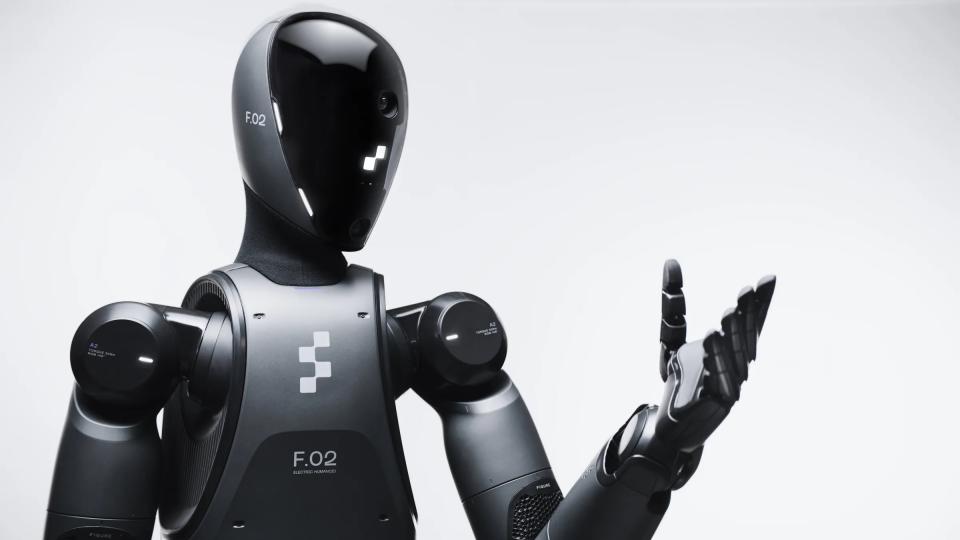
Figure AI chose to send off Figure 02 in such a high-profile way, which exactly reflects the changes taking place in the humanoid robot industry.
In the past, humanoid robots were mostly regarded as carriers to demonstrate technical capabilities: being able to walk, run, grasp, and complete complex movements was enough to make news. But as products begin to enter real working environments, the criteria for evaluating robots are changing.
Figure 02 itself is an example. During the product development process of Figure AI, it has undertaken multiple important tasks, including entering BMW factories, running Helix, performing household chores, and completing logistics tasks. Now, as the number of Figure 03 units continues to increase, Figure 02 is beginning to step down from the historical stage.
This means that for humanoid robot companies, the significance of a generation of products is no longer only about "whether it can be built", but also about whether it can enter real scenarios and eventually be replaced by the next generation of products.
The iteration speed of next-generation products is also accelerating. Figure AI has further focused its R&D efforts on Figure 04. The company's CEO Brett once said that one of the important R&D directions for Figure 04 at present is to further improve the dexterity of both hands. The company hopes that the hands of the next-generation robots will have a joint structure and operation capabilities closer to human hands, and regards dexterous hands as a key link for humanoid robots to improve practicality and production efficiency.
In other words, the decommissioning of Figure 02 does not mean that Figure AI is slowing down its pace. On the contrary, it shows that the company is shifting resources from the previous generation of hardware to next-generation products at a faster speed.
04 Robots are iterating rapidly, who will handle the eliminated hardware?
The fact that Figure 02 was sent into the furnace has another noteworthy significance. With the development of embodied intelligence, humanoid robots are gradually having a life cycle similar to that of complex hardware products such as smartphones and automobiles: R&D, deployment, iteration, and finally decommissioning.
The difference is that humanoid robots contain more complex mechanical and electronic systems. They have not only batteries, but also actuators, sensors, computing devices and various proprietary hardware. As product iteration speeds up, how to handle the previous generation of robots is no longer simply "storing old equipment in the warehouse".
Figure AI chose smelting this time. This method seems a bit "extreme", but it is also thorough enough. It needs to be pointed out that direct smelting of the whole machine is by no means the normal decommissioning route for humanoid robots. The batteries, PCB boards, plastics and various metals of Figure 02 are mixed together, and conventional disposal is very likely to cause safety and environmental risks, which is also the reason why many factories in the US and Mexico refused to take the order.
But under the coordination of Figure AI's special project, this physical destruction not only avoids the leakage risk caused by long-term storage of old robots in their complete form, but also greatly saves the manpower and time for disassembling each unit one by one.
The robot leans in to look at the molten steel, steps back, builds up speed, and then leaps into the furnace; even another robot that is hoisted up makes a "thumbs up" gesture in the molten steel. Although these actions themselves have no consciousness, and do not mean that the robot is really "going to die".
But as the appearance and movements of robots become more and more similar to humans, people are still very likely to associate the process of watching a machine "reach the end of its life" with the feelings of saying goodbye or even sacrifice, which has also caused some doubts from some netizens.
This is perhaps one of the most special features of humanoid robots: they are not only simulating the human body, but also changing the way humans view machines.
This highly ceremonial decommissioning that caused a global sensation is not only due to the footage itself, but also because Figure AI successfully transformed the classic film symbol of *Terminator* into a phenomenal tech marketing campaign.
But behind this high-profile "Terminator-style" farewell, it reflects an extremely realistic industrial logic: with the accelerated iteration of embodied intelligence and humanoid robots, how old hardware can exit safely, how new architectures can seamlessly take over, and even whether robots can continuously deliver satisfactory results in real factories, has become an unavoidable new topic for the entire industry.
As the farewell "Hasta la Vista, Figure 02" fades away, the historical mission of Figure 02 has officially come to an end. And the fierce competition on the track belonging to the next generation of humanoid robots has just kicked off.
Special contributor Wu Ji also contributed to this article
This article is from "Tencent Tech", Author: LI Hailun, Editor: XU Qingyang, Published with authorization by 36Kr.