A 58-year-old former senior executive of Mercedes-Benz failed to save a bakery.
When meal time comes, Rongxiang Plaza in Shunyi, Beijing is still deserted. Among more than a dozen shops, there are very few customers. The flagship store of Spring Sowing Autumn Storing Bakery is located right here.
On August 20, Li Hongpeng put up a white standing sign at the store entrance, which carried a store closure notice: September 28 will be the last business day of Spring Sowing Autumn Storing Bakery.
After the notice was released, the bakery saw a peak of foot traffic. Many regular customers made special trips to the shop to show their support by making purchases; new customers who came attracted by its reputation checked in at the store and would take a bag of bread with them before leaving. "There has been no shortage of guests every day, and everyone wants to buy the last batch of bread before the store closes," Li Hongpeng said with a smile.
58-year-old Li Hongpeng wears a light purple shirt with cuffs rolled up, and his short hair is neatly combed to one side. He looks very relaxed. When talking about past events, he still remembers details like the styling controversy before the Audi A6 was put into production and his first meeting with Nico Kuepper, then CEO of Mercedes-Benz China. Especially when talking about his work experience at Volkswagen and Mercedes-Benz, he was in high spirits.
Before the store closed, we talked with Li Hongpeng in this 7-year-old bakery for nearly 4 hours. The conversation started from two photo walls, which were covered with photos of his 30-year career in foreign enterprises, as well as group photos with colleagues and friends.
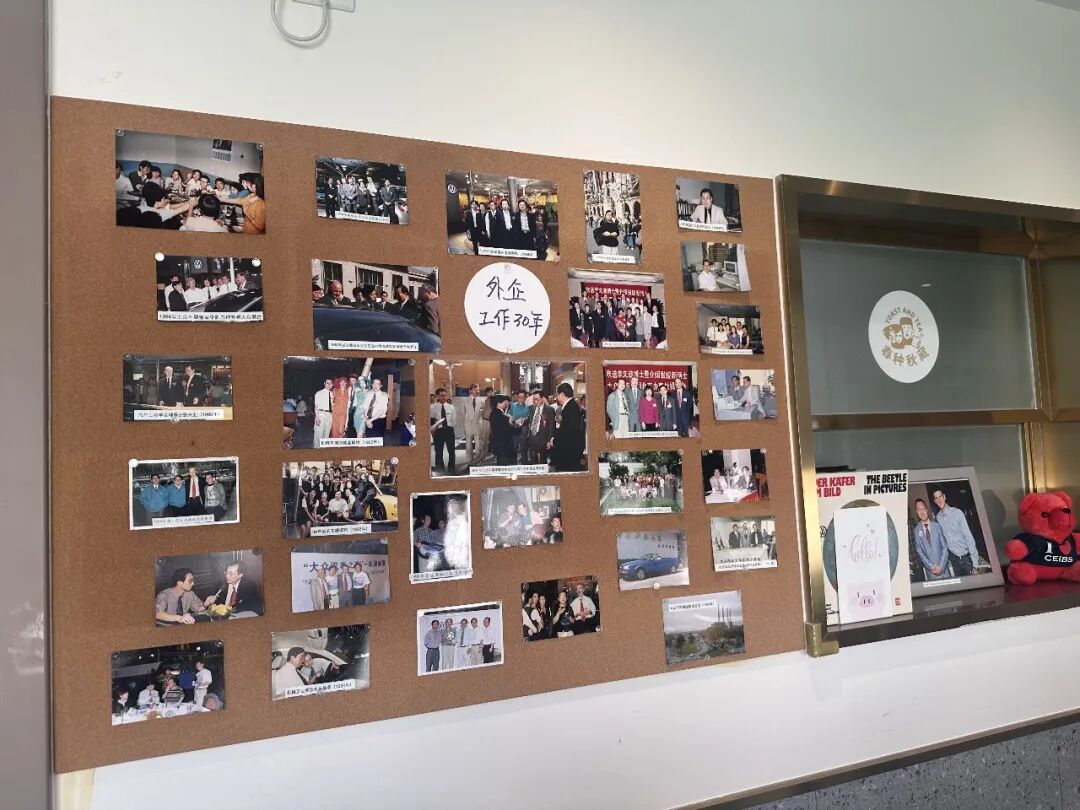
Photography by Ren Yafei
Before that, his more well-known identity was a senior executive at Mercedes-Benz. His 11 years in the Mercedes-Benz system (2007~2018) was the peak of his career. During his tenure as Senior Executive Vice President of Beijing Mercedes-Benz Sales Service Co., Ltd., Li Hongpeng coordinated the relationship between Chinese and German shareholders, built an efficient and highly profitable national distribution network, put forward the "Fish-Water Theory" to build trust between the manufacturer and dealers, which contributed to the "Mercedes-Benz Path" that helped Mercedes-Benz overtake its competitors in the Chinese market. During his tenure, China became the world's largest single market for Mercedes-Benz.
However, for a long time after he left Mercedes-Benz, he was overwhelmed by a strong sense of frustration. During his stints at Ford, Hyundai, Wanda, and HiPhi, he described his situation with the term "alien": a parachuted professional manager may not necessarily get sufficient time and authorization to do his work.
In 2024, Li Hongpeng decided to leave the automotive industry and take over the bakery run by his wife. He wanted to salvage the family business first: "The capabilities I have accumulated over more than 30 years in my career should be enough to solve this difficulty. I really thought so at that time, and I also wanted to challenge myself."
He gave himself three years.
This time, he had all the time and full authorization he needed, but he had to re-adapt to his new identity. Faced with the confusion of people around him, he had to explain himself over and over again. He described this process as repeatedly "tearing the wound open, letting it scab over, tearing it open again, and scabbing over again". It was not until 2025 that he began to appear in short videos, and named himself "Little Mr. Li of the Bakery". In his opinion, the long gown that made him keep a pretentious posture was finally taken off.
He gradually adapted to his new identity, but the business did not improve. In the first year after taking over the bakery, he learned to make milk tea and coffee, and studied under Peng Fudong, champion of the World Bread Championship, becoming the "oldest apprentice" in the class. Later, Li Hongpeng adjusted products, renovated the store, and organized customer activities, but still failed to pull the flagship store out of loss. For more than two years, the store lost more than 20,000 yuan per month.
As the lease expired, Li Hongpeng decided to stop investing. "I can accept not making money, but I can't accept losing money continuously for a long time." He did not want to spend more money and time to maintain a business that had deviated from his original intention.
01
Years at Mercedes-Benz
In 1994, Li Hongpeng joined the Beijing Representative Office of Volkswagen Group Germany, responsible for production coordination of joint venture projects. In the first few years, he traveled frequently between the two joint venture plants of FAW-Volkswagen and Shanghai Volkswagen, coordinating production projects, including project communication before the domestic Audi A6 was put into production.
In 2000, he transferred to Shanghai Volkswagen Sales Co., Ltd., mainly responsible for the construction of 4S stores. At that time, Shanghai Volkswagen was integrating the originally separated sales and after-sales service networks, promoting the 4S store model, and the original special maintenance stations also began to sell complete vehicles. By 2002, 190 outlets had completed the 4S store renovation.
But after 9 years of working at Volkswagen, Li Hongpeng hit a career bottleneck. "I had mastered all the knowledge I needed, so I wanted to venture out and try something new," Li Hongpeng said.
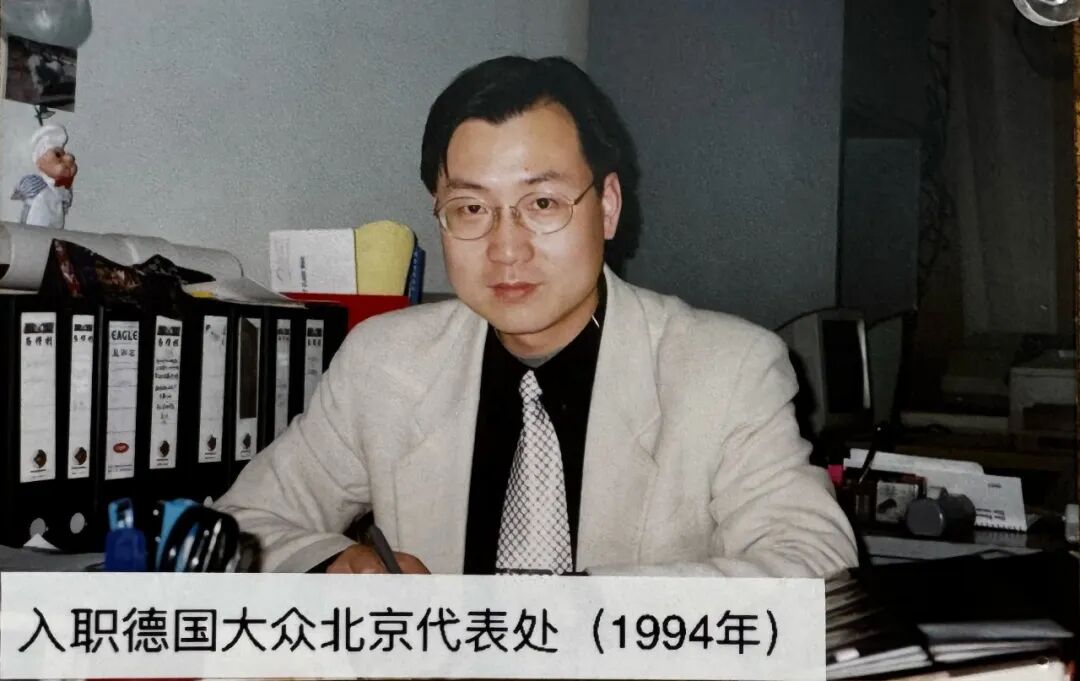
Source: Interviewee
After leaving Volkswagen, he worked in investment for a period, and then worked for a German auto parts company for three years, visiting the procurement department and product engineering department of automakers, knocking on doors over and over again to introduce his products. "At that time, I was full of drive, contacting different things, different people and negotiating different matters every day, and I felt that the future had unlimited possibilities," Li Hongpeng said.
It was not until 2007 that Li Hongpeng started his career at Mercedes-Benz. At that time, Yazhijie and BAIC jointly established the Mercedes-Benz Beijing Center, and Li Hongpeng worked at this flagship store for 3 months. In the same year, he joined Beijing-Benz and served as General Manager of the Sales and Marketing Department of Beijing-Benz.
In the following five years, Mercedes-Benz saw rapid growth in the Chinese market. But 2013 became a turning point for Mercedes-Benz — due to reasons such as infighting within the distribution channel, its sales volume declined in both the first quarter and the first half of the year.
In order to solve the internal friction of the distribution channel, Mercedes-Benz integrated the originally separated sales business of imported cars and domestic cars in 2013. Li Hongpeng was appointed as Senior Executive Vice President of Beijing Mercedes-Benz Sales Service Co., Ltd., becoming the Chinese-side person in charge. Faced with more than 1,000 people from the merger of the two original organizations, who would take which position, which business they would be responsible for, and how to adjust the original interests and working habits? "Everyone thought that their own people should be given priority," he recalled.
In order to improve team cohesion, he and Nico Kuepper, then CEO of the sales company, launched a "label-tearing campaign" to eliminate estrangement within the team. The two launched the Post-Merger Integration (PMI) project. "First, make it clear that everyone serves one brand; second, show absolute mutual respect." The "label-tearing campaign" lasted for three years, and Mercedes-Benz gradually completed the organizational integration. Li Hongpeng recalled that by the beginning of 2016, the Mercedes-Benz team had become "invincible". The data shows that from 2013 to 2017, the sales volume of Mercedes-Benz brand in China increased from 218,000 units to 588,000 units, and China became the world's largest single market for Mercedes-Benz.
Faced with the externally praised "Mercedes-Benz Speed", he attributed it to "favorable timing, favorable geographical conditions, and support from people".
Li Hongpeng remembered that when the two met for the first time in the Mercedes-Benz Building in Wangjing, Nico Kuepper saw him off at the elevator entrance and said he was very different from the Chinese managers he had heard of before. Li Hongpeng responded that he was familiar with the working methods of German enterprises and would cooperate with him in accordance with professional norms. But as the person in charge dispatched by the Chinese side, he also had to fight for the interests of the shareholders. If the two did not cooperate, no one could get things done properly. "If we join forces, there is nothing we can't achieve," Li Hongpeng said. Nico Kuepper patted him on the shoulder and responded: "I trust you."
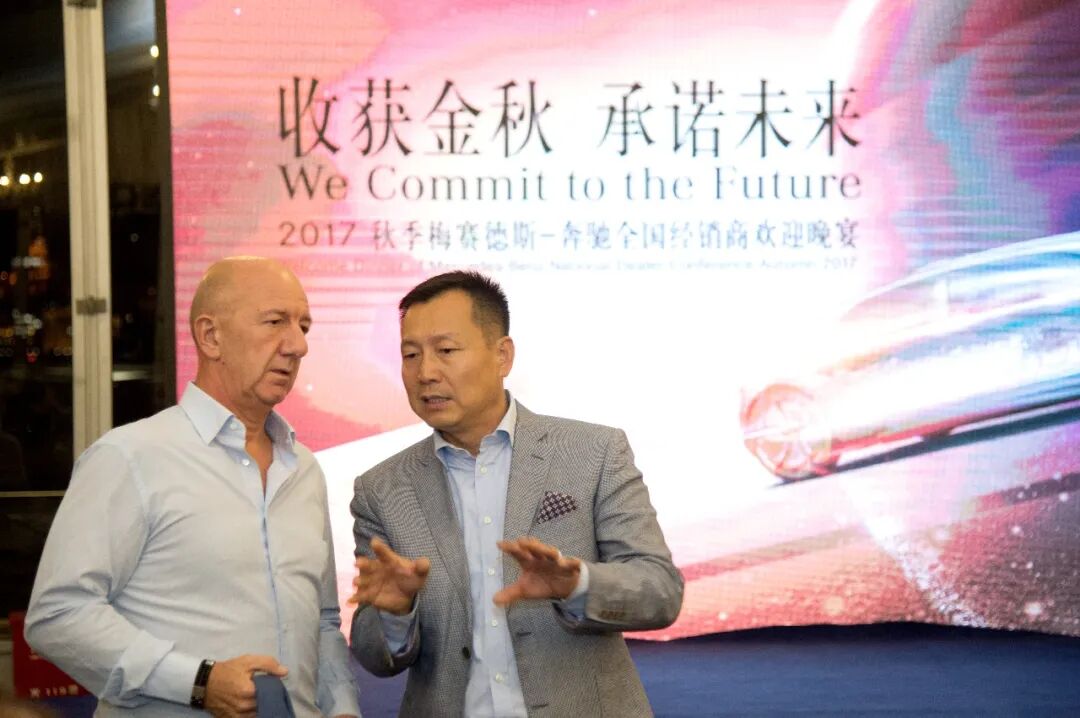
Li Hongpeng and Nico Kuepper (left) Source: Interviewee
"We two are just complementary, one gentle and one tough, giving full play to our respective advantages," Li Hongpeng said. Nico Kuepper was tough, dared to fight for products and policies from the German headquarters, and was willing to withstand pressure. He was responsible for coordinating the relationship with BAIC. "If we two hold up the sky, the team will have room to get things done."
After that, if there were issues that could not be resolved at the meeting, they would pause the discussion first. Li Hongpeng would go to Nico Kuepper's office, or Nico Kuepper would come to his office, clarify their differences, and then confirm the adjustment plan with the shareholders. Li Hongpeng recalled that from the establishment of the company to the time he left, Nico Kuepper never used his one-vote veto power as CEO.
In addition to integrating the internal organization, he also needed to properly handle the relationship with dealers. At that time, Mercedes-Benz's channel resources were concentrated in the hands of large groups such as LSH Auto and Zung Fu. After the new sales company was established, he and his team introduced more dealers, promising to help them expand their store network. At the same time, they also needed to ensure that dealers who met the sales target could make profits.
This promise was also included in the assessment of the management. In addition to sales volume, the profitability of dealers was included in internal assessment, and the cost and revenue of each store had to be calculated clearly. "If we only require dealers to meet the sales target but they cannot make money, they will not be willing to cooperate with us." More importantly, we also need to give investors confidence. He invited dealer owners to the German headquarters to learn about new products in the next five years, and arranged test drives. Once the owners had confidence, they would drive the business teams of their dealerships. "The general manager listens to the boss, not the manufacturer."
Confidence must be matched with fighting spirit. Li Hongpeng remembered that on the map of the Chinese market in 2015, Mercedes-Benz flags were only planted in two provinces, which meant that Mercedes-Benz led the luxury car market in those two provinces, and BMW led in all the rest.
At a dealer conference, Duan Jianjun (then Executive Vice President of Sales and Marketing of Mercedes-Benz Sales Co., Ltd.) played an inspirational clip from the movie Facing the Giants.
The film tells the story of a high school football team that failed to win a game for six consecutive years, with key players transferring out, and the team falling into despair. To rebuild confidence, during a training session, the coach asked the team captain Brock to do extra "death crawl" training. "Death crawl" is extremely demanding on physical fitness. Two people need to cooperate during the training: one lies prone, the other lies on his back, with knees suspended in the air without touching the ground, and crawls forward supported by hands and feet. In the video, the coach asked Brock to cover his eyes, carry a teammate weighing 72kg, and crawl forward. At the beginning, Brock thought his limit was only 30 yards, and he could try to crawl 50 yards. But under the coach's continuous positive encouragement and feedback — shouting "come on" 15 times, "don't give up" 23 times, "don't stop" 3 times, "keep going" 48 times, a miracle happened. Brock finally crawled 100 yards (about 91.4 meters) with his teammate on his back.
After the video was played, the dealers in the audience stood up and applauded with tears, and Li Hongpeng also cried. Duan Jianjun asked: "Can we beat BMW?" This time, no one said no. When it was Li Hongpeng's turn to give the closing speech, he asked to play the video again. After it was played, he asked everyone to applaud for themselves.
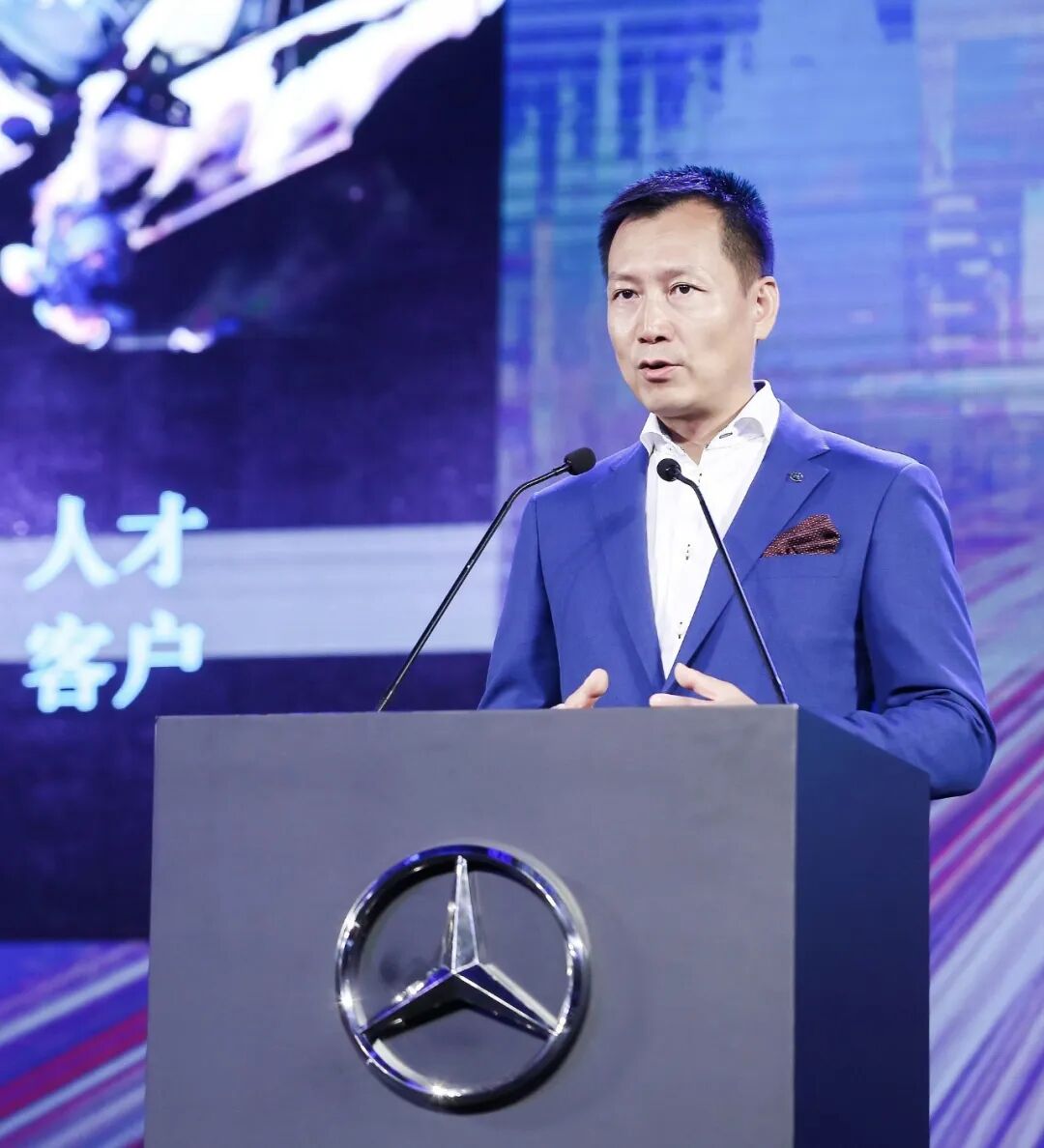
Source: Interviewee
In the following two years, Mercedes-Benz's sales grew rapidly. Data shows that Mercedes-Benz's sales in China exceeded 370,000 units in 2015, while BMW's sales reached 460,000 units. In 2016, Mercedes-Benz sold about 472,800 units in China, still lagging behind BMW's 482,200 units. By 2017, Mercedes-Benz's sales in China increased 25.9% year-on-year to 587,900 units, surpassing BMW's about 560,000 units and completing the overtaking. This means that on the map two years ago, Mercedes-Benz signs were planted in almost every province.
In 2018, Mercedes-Benz Sales Company announced that Li Hongpeng had completed his five-year tenure and would be transferred back to BAIC in accordance with the rotation arrangement for dispatched cadres. Li Hongpeng officially ended his 11-year career at Mercedes-Benz.
02
"Alien"
Feeling that he had reached the ceiling of career development in the Mercedes-Benz system, "If I continue to work, I can only get a lateral transfer to another position, which makes no sense", Li Hongpeng chose to leave BAIC.
In May 2018, Li Hongpeng joined Ford as Vice President of Sales and Marketing for Greater China, and concurrently served as President of Changan Ford National Sales Service Organization. What the other party valued was exactly his experience in joint ventures and high-end brand sales. Coordinating Chinese and foreign shareholders, adjusting organizations, and repairing dealer relationships are his strengths. In Li Hongpeng's view, this set of mature methodologies that had been verified successfully at Mercedes-Benz should help Ford reverse its decline. But reality dealt him a heavy blow.
At that time, Ford's development in China was blocked. Data shows that in 2016, Ford China's sales in China reached 1.273 million units, the highest in history. Sales declined in 2017, and in the first half of 2018, sales in China were only 400,000 units, down 25% year-on-year. This decline was the largest semi-annual drop for Ford since it entered the Chinese market in 2001, hitting a new low in its historical sales for the same period.
Faced with declining sales, Li Hongpeng believed that he needed to accept the reality first, adjust the internal organization, management and operation methods, let Chinese and foreign shareholders rebuild trust, and wait for more competitive products to be in place before pulling up sales. He believed that the decline in product power and brand power had been transmitted to the sales end, and the Chinese team could not decide product-related matters, so it was difficult to reverse the situation only by sales efforts.
Disputes arose as a result.