Facing India, 7-Eleven chose to turn around and exit.
The 7-Eleven convenience store story in India has come to an end.
On October 6, 2026, 7-Eleven's parent company 7&I Holdings confirmed to the media that Reliance Retail, its Indian franchise partner, has closed all 31 stores in Mumbai and Pune.
This means that the convenience store giant, which has proven its viable business model in many regions around the world, has officially ended its five-year journey in India.
7-Eleven initially entered the Indian market in partnership with a top local Indian consortium, but the result was unexpected: in the last fiscal year, it posted revenue of 920 million rupees (about 66 million yuan) in India, with a net loss of nearly 900 million rupees.
Why did a mature convenience store model that has been repeatedly verified in East Asia fail to gain traction in the Indian market with a population of 1.4 billion?
01
High-profile Entry into the Indian Market: "Earning 900 Million Rupees and Losing 900 Million Rupees" on Revenue
With dense store network layout, high-margin ready-to-eat products, and a standardized store management system, 7-Eleven has built a profitable model in multiple global markets.
Relying on this mature business strategy, it has successively entered many countries in East Asia and Southeast Asia, opened tens of thousands of stores, and become a ubiquitous infrastructure for convenient urban consumption.
India is the 18th country and region that 7-Eleven has entered in its global territory.
The picture is the promotional image on the homepage of Reliance Retail's official website. Source: Reliance Retail official website
In 2021, 7-Eleven's parent company 7&I Holdings finalized its partner in the Indian market — Reliance Retail. The two sides have a Master Franchise partnership, and Reliance Retail obtained the exclusive master franchise authorization for 7-Eleven convenience stores in India.
Reliance Retail is the absolute leader in India's retail track. The company is affiliated with Indian giant Reliance Industries, has nationwide warehousing supply chain and offline store resources, and enjoys high brand recognition among local Indian consumers.
For 7-Eleven, leveraging Reliance's local identity can also help it bypass India's complex regulatory restrictions on foreign-funded retail.
Because India has set strict foreign direct investment (FDI) rules for multi-brand offline retail, if foreign investors directly enter the market to engage in multi-brand retail, the maximum shareholding is only 51%, and they cannot go through the automatic approval channel, but must be approved by the Indian government.
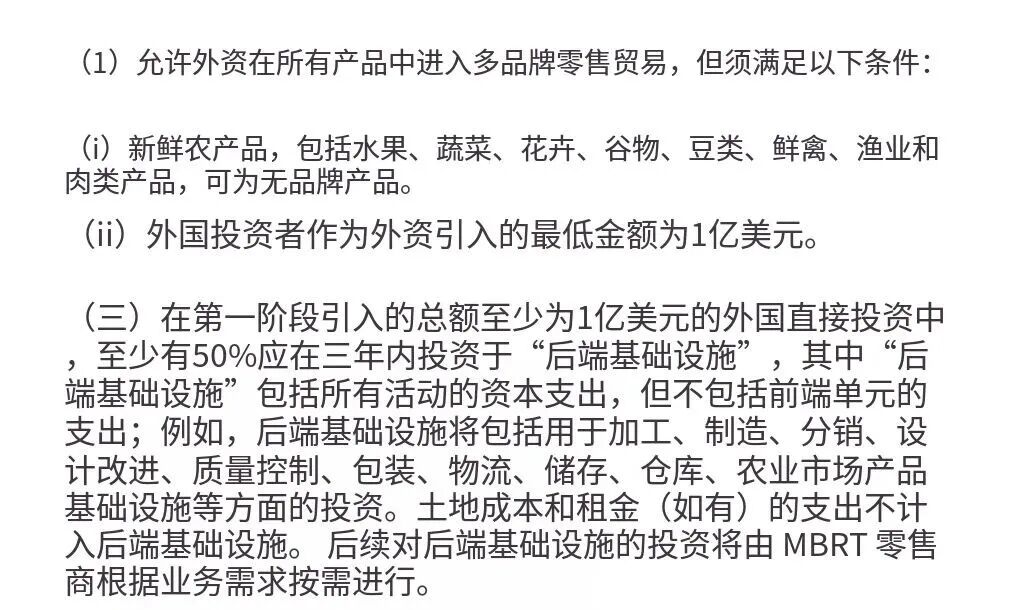
The picture shows the translated version of India's multi-brand retail FDI policy provisions released in 2020. Source: Ministry of Commerce and Industry of India
There are also a series of hard constraints. The minimum FDI amount brought in by foreign investors is 100 million US dollars; at least 50% of the first 100 million US dollars needs to be invested in back-end infrastructure within three years. The back-end scope includes processing, manufacturing, distribution, quality inspection, packaging, logistics, warehousing, etc., and land acquisition costs and rents are not included in this capital expenditure.
On the procurement side, at least 30% of the processed manufactured goods purchased by enterprises must be sourced from local Indian micro, small and medium industrial enterprises, for which the maximum investment in plant, machinery and equipment is 2 million US dollars.
Convenience stores are typical multi-brand retail formats, with dozens to hundreds of external brands of food and daily necessities sold on store shelves at the same time. If 7-Eleven's parent company 7&I chooses to directly invest in opening stores, it must fully meet all these thresholds.
Adopting the master franchise model will not trigger the above-mentioned multi-brand retail FDI regulatory provisions. 7-Eleven only provides trademarks and the entire operation management system, and does not hold assets of local Indian stores; store opening, investment, supply chain and personnel management are all completed by local enterprise Reliance Retail, so there is no need to meet the above hard conditions at the levels of investment, procurement and government approval.
The market generally predicted at that time that the project would start in Mumbai, then expand to core cities such as Delhi and Bengaluru, and grow into a chain network with thousands of outlets across India in the future.
The first batch of stores were located in core business districts and office building clusters in Mumbai, following the brand's consistent strategy of 24-hour operation, selling imported goods and freshly made bento meals, targeting urban white-collar workers and middle- to high-income urban groups, trying to replicate the model that had proven successful in other Asian markets.
But the ideal expansion blueprint never came to reality.
In five years, 7-Eleven only opened 31 stores in India, all concentrated in Mumbai and Pune, failing to set foot even in the Delhi Capital Region.
While store expansion progressed slowly, losses accumulated sharply. According to the financial report of the project subsidiary under Reliance Retail cited by The Economic Times of India, in the 2025-2026 fiscal year, the entity dedicated to operating 7-Eleven stores in India achieved revenue of 920 million rupees (about 66 million yuan), with a net loss of nearly 900 million rupees, which is equivalent to an annual loss of about 29 million rupees (about 2.07 million yuan) per store.
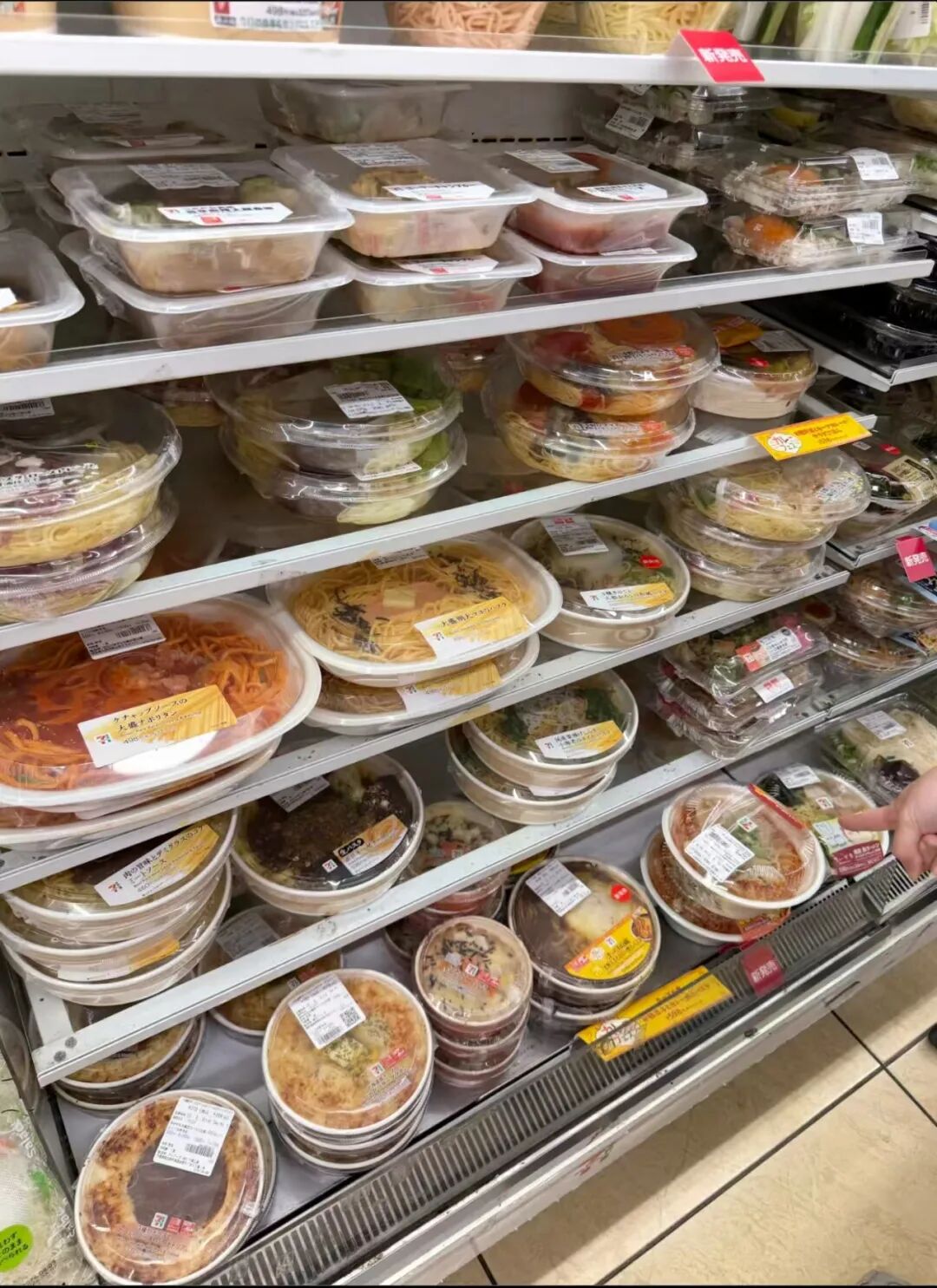
The picture shows the refrigerated cabinet for fresh bento in Japanese 7-Eleven convenience stores. Source: Online
According to the official financial report of 7&I Holdings, the average daily sales of all 7-Eleven stores in Japan is about 670,000 yen, equivalent to about 32,000 yuan, of which fresh food and fast food products contribute about half of the sales, and the gross profit margin of this category is about 36%-40%.
It is precisely by relying on high-frequency and rigid-demand ready-to-eat products such as bento, rice balls and oden that convenience stores can drive customer flow and store efficiency to a level enough to cover the high rent in core business districts.
In India, however, the annual revenue of 920 million rupees spread across 31 stores translates to an average daily sales of only about 81,000 rupees per store, equivalent to less than 6,000 yuan, less than one-fifth of that of mature stores in Japan.
The profit model of convenience stores is highly dependent on fresh food, but it has never taken root in the Indian market.
The operator did not fail to make localized attempts: stores once launched snacks and local drinks adapted to Indian tastes, but never created any hit products that could drive repeat purchases.
As a result, the best-selling products in stores are still imported packaged foods and daily groceries. With a relatively high customer unit price, in the eyes of many Indian consumers, it is more like a high-end exquisite grocery store selling imported goods, rather than a neighborhood store that people would casually drop by for daily meals and shopping.
02
Millions of Family-run Stores in India and the Rising Instant Retail
The local Indian retail landscape also forms an insurmountable barrier for 7-Eleven.
The ubiquitous family-run small shops across India and the booming instant retail have squeezed the living space of standardized chain convenience stores like 7-Eleven.
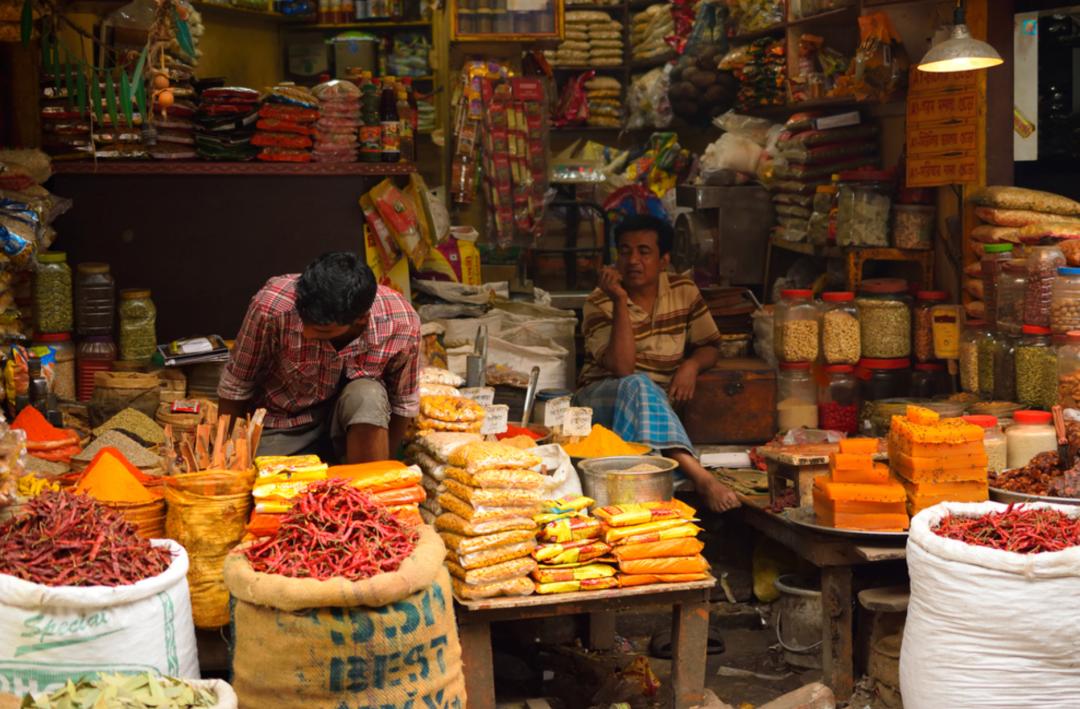
The picture shows a traditional local grocery store in India. Source: Screenshot of social media
To understand the Indian retail market, the first thing that cannot be avoided is the "Kirana store", which is equivalent to the family-run neighborhood grocery stores that can be seen everywhere in Chinese streets and alleys.
In India, such small shops are the cornerstone of the retail market.
According to the 2024 retail report jointly released by FICCI and Deloitte, the number of Kirana stores across India exceeds 13 million, spread all over streets and alleys, deeply embedded in communities and residential areas, and even penetrating into sinking areas that modern retail can hardly reach. Ordinary residents can walk a very short distance to buy most daily necessities such as grain, oil, snacks and daily chemicals, and the convenience level is no less than that of chain convenience stores.
In terms of market share, a 2025 survey by Redseer shows that Kirana stores still account for about 91% of India's food and grocery market, while organized retail such as supermarkets and chain convenience stores only account for about 6% in total.
Apart from the location advantage, Kirana stores have two other competitive advantages that foreign brands can hardly replicate.
The first is the price advantage brought by low costs: without extra overhead from group headquarters management and brand marketing, the selling price of the same product in small shops is usually 10% to 20% lower than that in chain convenience stores, which is highly attractive to price-sensitive Indian consumers.
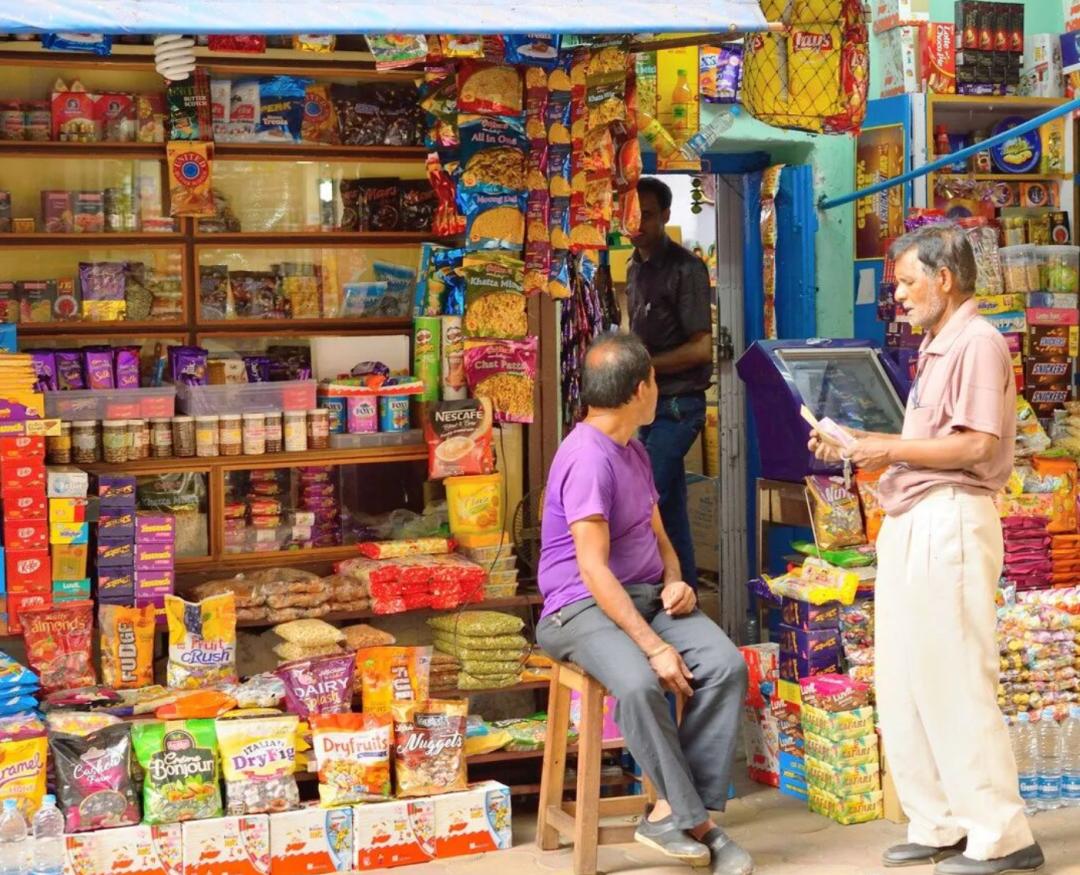
The picture shows a traditional local grocery store in India. Source: Screenshot of social media
The second is service stickiness brought by acquaintance social relations: many Kirana store owners are familiar with their neighbors, and can provide flexible services such as ordering by phone with door-to-door delivery, and credit on account. This kind of human relationship rooted in the local neighborhood is very difficult for standardized chain stores to establish quickly.
While offline traditional family-run stores have secured the foundation of community consumption, India's rapidly developing instant retail has impacted convenience stores from another dimension.
This minute-level delivery format is not unfamiliar to Chinese consumers, and typical platform-based instant retail services in China include Meituan Flash Purchase and Taobao Flash Purchase. The platforms connect surrounding offline physical stores, and after placing an order online, goods are delivered to homes in about half an hour.
India's instant retail (locally also known as Quick Commerce) is in a stage of rapid explosive growth.
According to a research report by Morgan Stanley, the size of India's quick commerce market grew from 500 million US dollars in fiscal year 2022 to 3.3 billion US dollars in fiscal year 2024, with a year-on-year growth rate of 73%, 5 times the growth rate of the overall e-commerce market. The institution optimistically predicts that the market size is expected to reach 57 billion US dollars by 2030.
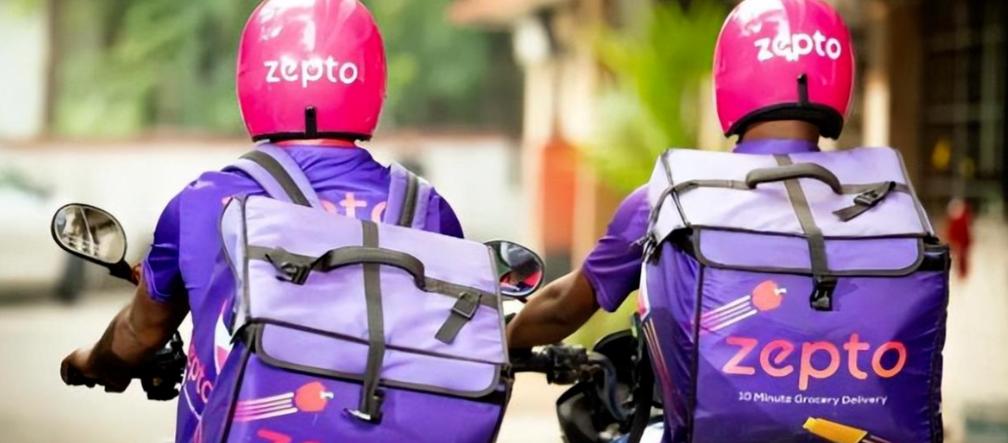
The picture shows a Zepto instant retail delivery worker. Source: Zepto official website
Local platforms such as Blinkit, Zepto and Swiggy Instamart dominate the market, among which the combined market share of Blinkit and Zepto has exceeded 60%.
Major cities in India generally face heavy traffic congestion and hot climate, so the time and physical cost of going out shopping is not low. Instant retail exactly solves this pain point. Without going out, users can place orders on their mobile phones, and snacks, daily necessities, fresh groceries will be delivered to their doorsteps in 10 to 30 minutes, with far more SKUs than a single offline convenience store. The price of many products is no more expensive than that in offline stores.
For the most core emergency scenarios of convenience stores, such as consumers temporarily needing a bottle of drink or a pack of daily necessities, instant retail provides a more alternative solution. At this stage, the overall penetration rate of quick commerce in India is only 7%, and the industry is still in the expansion and rising cycle, so the diversion effect on offline convenient consumption will continue to release in the future.
Before 7-Eleven had time to lay out a sufficiently dense store network, it had already faced diversion from online formats.
The two retail forces online and offline have squeezed the living space of 7-Eleven for selling standard groceries.
03
Unable to Compete Even with Street Food in India
Looking back at the development of 7-Eleven in the East Asian market, commuters are a very important source of store traffic.
Breakfast during morning rush hour, lunch bento on workdays, drinks and snacks on the way off work support a large part of the store's revenue, and subway entrances, office buildings and transportation hubs are prime locations for site selection.
But this logic hardly applies to India.
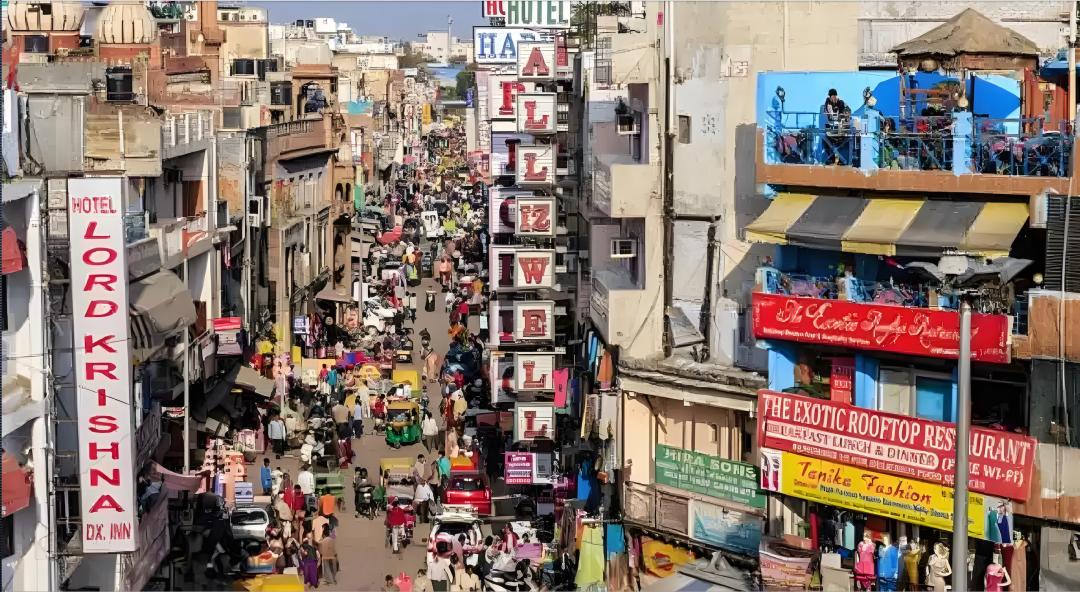
The picture shows the commercial block in the old town of an Indian city. Source: Screenshot of social media
India's overall urbanization rate is about 35%, and the employment structure within cities is special with a high proportion of informal employment. The urban white-collar workers who have stable 9-to-5 jobs and corresponding consumption power are only concentrated in partial areas of a few cities such as Mumbai and Bengaluru, with a limited overall base.
At the same time, the urban public transport system is not perfect. A large number of ordinary people rely on motorcycles and three-wheelers for travel, with highly scattered travel routes, and there is no concentrated passenger flow node brought by a dense subway network.
The hub stores and office building stores that 7-Eleven is good at operating can hardly get a steady stream of stable passenger flow.
24-hour operation was originally a major selling point of convenience stores, but most Indian cities have a weak night commercial atmosphere and weak evening consumption demand. The labor and energy consumption costs brought by overnight