Hard mathematical problems are being conquered in batches by AI, while mathematicians are forced to clean up the mess left by AI.
Many years later, when confronted with artificial intelligence, mathematicians will most likely recall that distant morning when OpenAI sent shockwaves through the entire mathematics community.
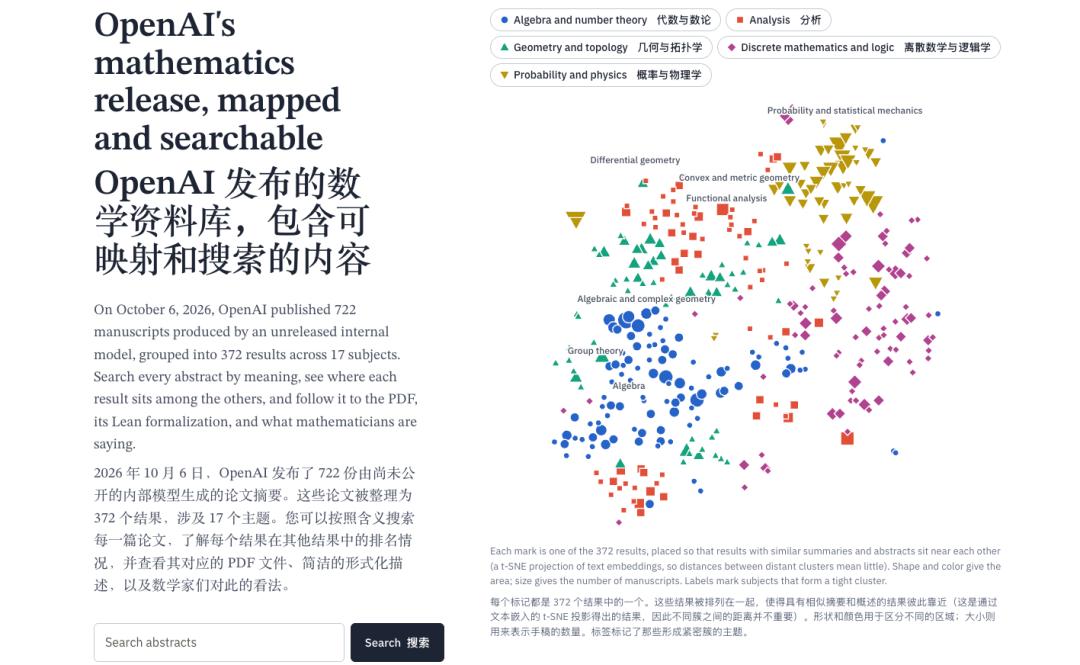
On October 6, OpenAI dropped 722 manuscripts on GitHub in one go, containing proof research for 372 notoriously difficult mathematical problems, which delivered a massive bombshell to the mathematics circle.
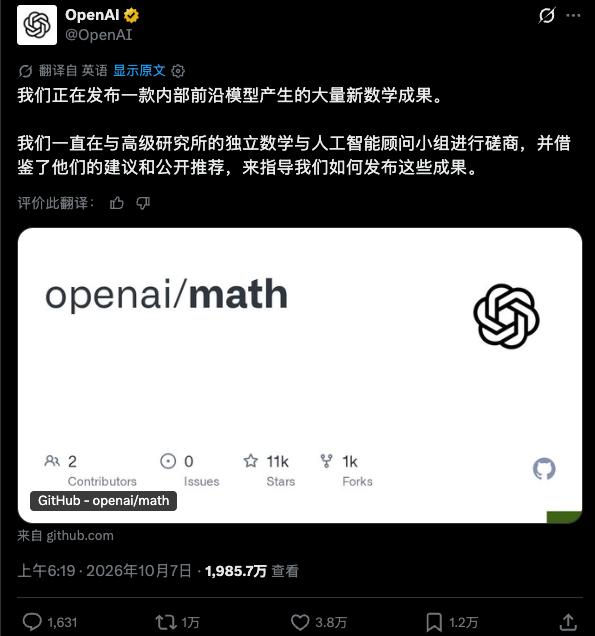
We cannot fathom how groundbreaking these problems are, but judging from the reactions of internal researchers in the mathematics field, this incident may be even more exaggerated than the last time GPT quickly cleared the Millennium Prize Problems.
Alex, a number theorist at Rutgers University, said bluntly that this is almost playing a joke on everyone: the quasi-Riemann hypothesis has been proven, so the Fields Medal and other similar honors might as well just be awarded to it directly.

Thomas, a researcher at the Royal Society, holds a more laid-back attitude, suggesting that everyone take a vacation, spend time with their families, get close to nature, and then come back to work.

There is no way around it. The last time the Millennium Prize Problem was quickly solved, people did not feel such a strong shock, after all, mathematics has many subdivided fields, and different fields are far apart from each other.
But this time OpenAI did not play by the unspoken rules, its coverage of shock spanned 17 fields, including number theory, algebra, geometry, topology, and its coverage of influence reached the maximum level.
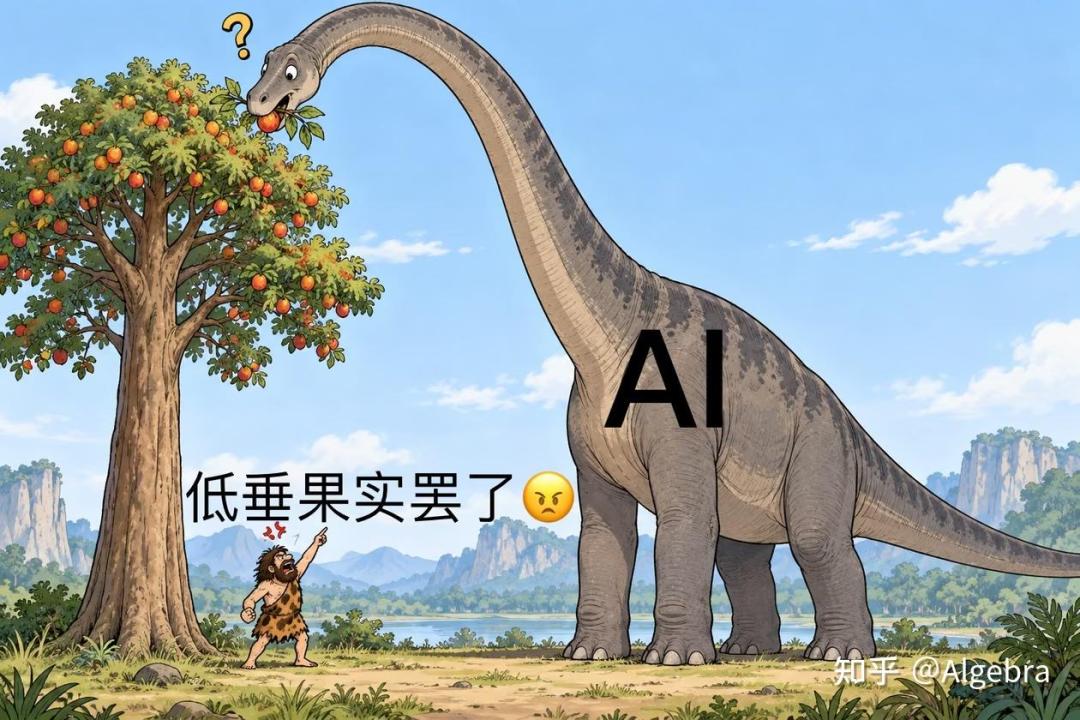
In addition, the cost of solving problems has also plummeted. When solving the NS equation last time, tens of thousands of Agents needed to work together for 88 hours, but this time on average, each problem only consumes 3 hours of computing resources of ChatGPT Pro.
That's right, it even works in the regular Chat mode...
Is mathematics really coming to an end?
Well, from the traditional perspective, the situation is indeed not optimistic. We have interviewed industry insiders before, you can check this content Honor of Kings matches that last 15 minutes have become a shelter for math PhD students, the trend of AI-assisted mathematical scientific research has long been unstoppable.
But the current point of controversy for everyone is not here, but that the flood-like, crude proofs released by model manufacturers like OpenAI may be harming mathematics, and even scientific research itself.
Because most of the process descriptions and papers they released are full of nonsense and make no sense. Although they can pass machine verification, it is difficult to precipitate into knowledge that humans can understand.
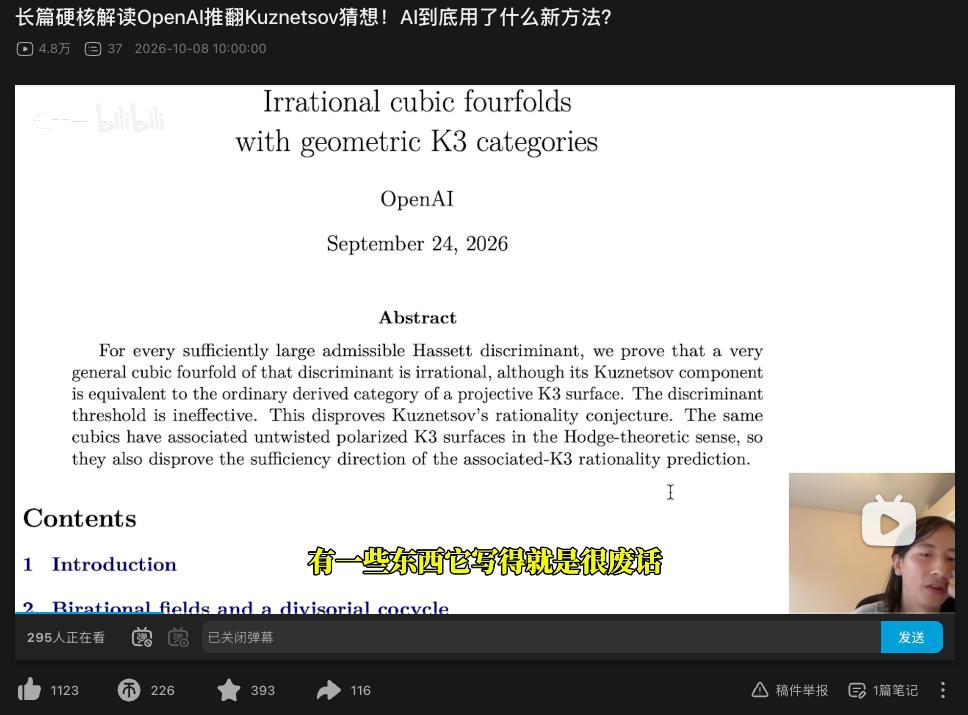
Mathematicians have made appeals about this for several rounds.
On the 11th of last month, right after the NS equation problem was solved, Terence Tao jointly issued a joint statement with 25 Fields Medal laureates, which focused on exactly this issue.
They pointed out that AI is really powerful in doing mathematics, but the current usage is wrong, there is a serious mismatch, and AI companies should not treat mathematical problems as benchmarks to brush up scores.
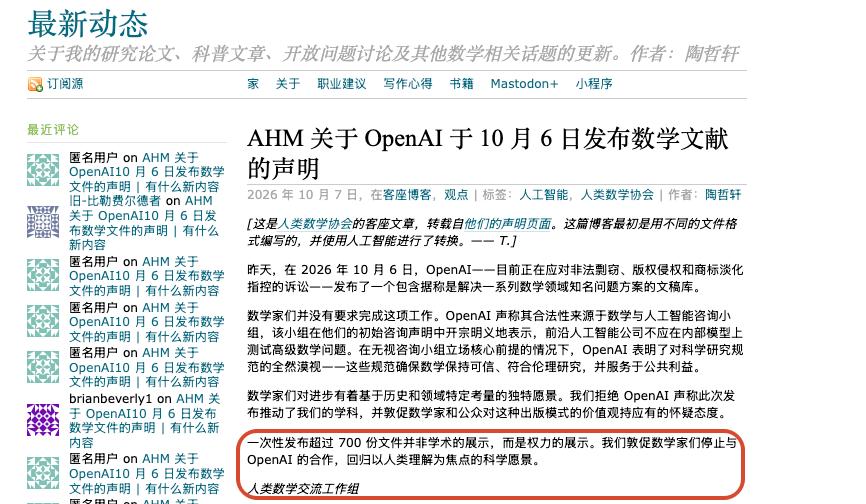
After this incident, the statement issued by the Human Mathematics Association AHM was even more intense.
They called on mathematicians to stop cooperating with OpenAI, because it only shows off its capabilities and ignores scientific research norms, and everyone must return to the human-centered scientific research model.
This is not a grievance complaint about being upstaged by AI, but they truly feel that such reckless, flood-like releases from AI will definitely cause real problems.
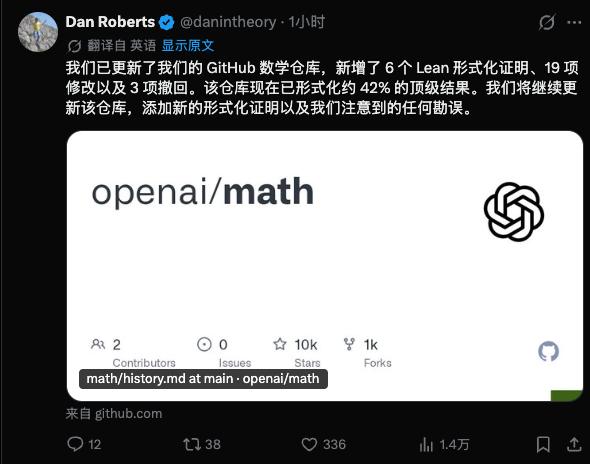
For example, this afternoon, OpenAI just withdrew 3 of the already published manuscripts.
The reason is very absurd: a plus or minus sign in one paper was wrong, which led to an error in the key conclusion, and the chain reaction dragged down the other two papers that depended on it.
Not to mention other things, if AI companies continue to do this, the chain of chain reactions will probably get longer and longer, and the hallucination problems will accumulate to an uncontrollable level.
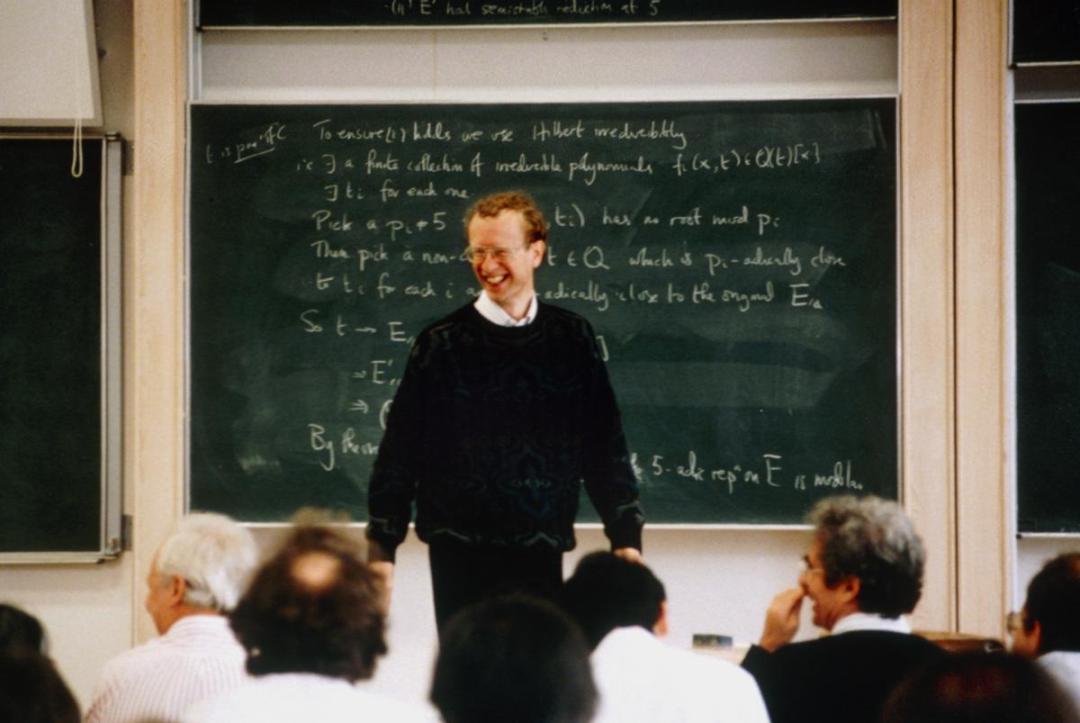
Of course, mistakes in mathematical proofs are not rare, human mathematicians also make mistakes frequently. Even Andrew Wiles, who proved Fermat's Last Theorem, spent a year patching up his original proof process.
But the trouble is, AI is so fast, so fast that it is in a different dimension.
In the past, mathematical achievements were published one by one, and everyone could review them slowly and discuss them at their own pace.
Now AI releases hundreds of manuscripts at one go, and the work of verifying correctness, sorting out ideas, and organizing them into knowledge that humans can understand all falls on human mathematicians in the end.
Don't forget, people have just been hit by the AI shockwave, what kind of mood will they be in to clean up the mess for AI?
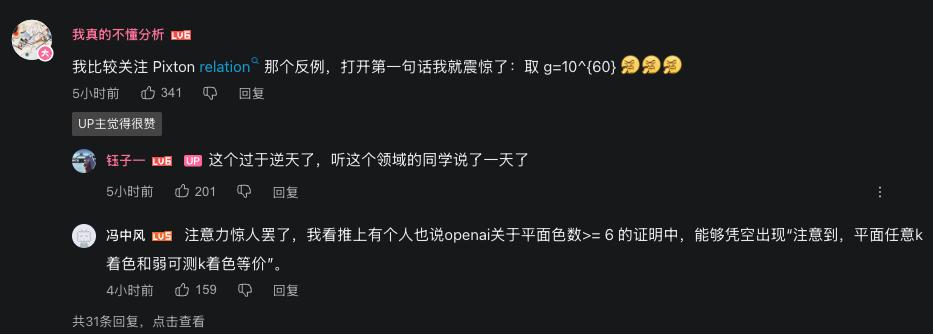
Without these processes of sorting and precipitation, many disconnected proof results are likely to be completely useless.
Because compared with the proof itself, what is more worthy of attention in mathematical research is the new ideas and new tools hidden in these proof processes.
Take the Fermat's Last Theorem mentioned earlier as an example, it looks like a simple equation, but generations of mathematicians worked on it for 358 years, and finally solved it completely after Wiles took over.
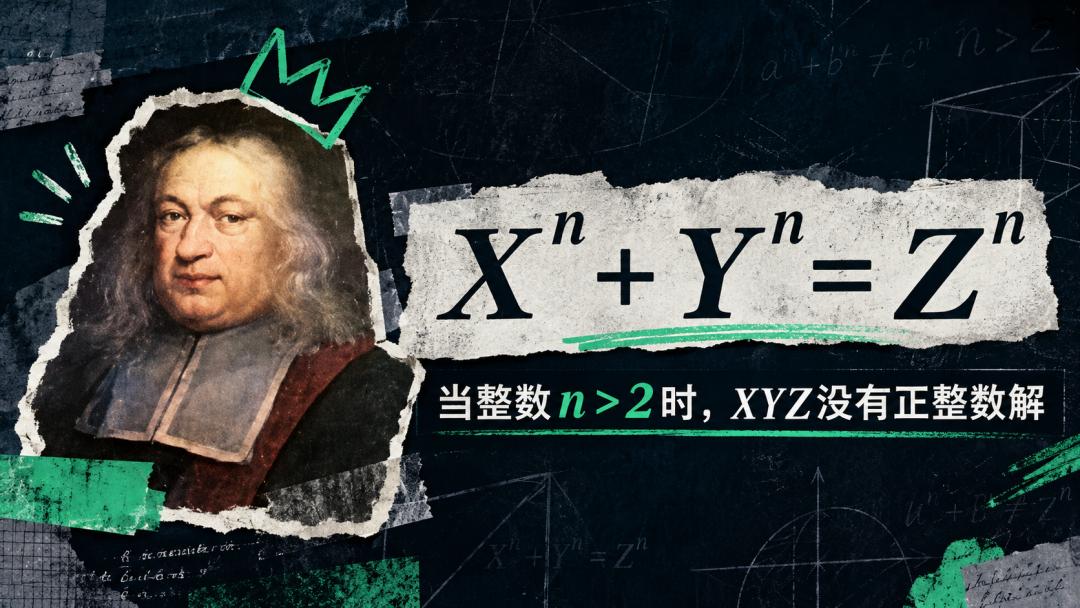
During these 300+ years of persistent efforts, if we only got a conclusion about whether the equation has a solution, it would be a huge loss.
The biggest gain for mathematicians is precisely the various mathematical tools they built continuously in order to find the answer.
For example, in the 19th century, Kummer developed the ideal number theory around the problem of number decomposition, which later became one of the foundations of modern number theory.
There is also the elliptic curve in the 20th century, which went out of the field of pure mathematics and was applied in cryptography, and it also contributes to the data transmission of our online chat.
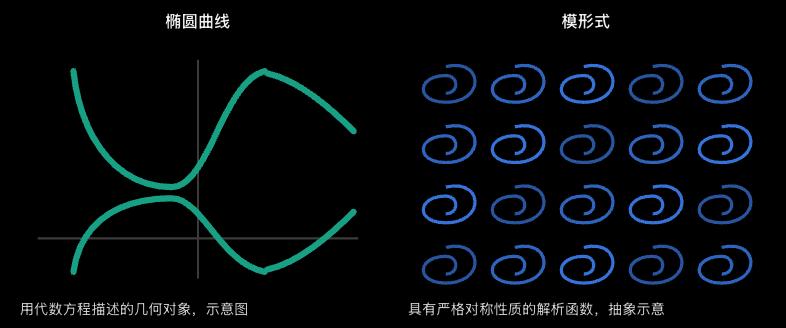
There are also modular forms, Galois representations and so on, passed down from generation to generation, each developing in different directions, and then gradually connected in Wiles' hands.
When he finally conquered Fermat's Last Theorem, what he actually proved was a broader mathematical conclusion, and Fermat's Last Theorem became a corollary obtained incidentally.
These theories and methods developed in the process will not retire after this problem is solved, but will become powerful tools for mathematicians to study other problems.
In the documentary, Wiles himself said that the value of a good mathematical problem does not lie in the problem itself, but in what kind of mathematics it can give birth to.
A proof can end a problem, but the truly vibrant mathematics starts from one problem and allows humans to see things that were invisible before.
But unfortunately, according to the feedback of some mathematics researchers at this stage, this part is exactly the big shortcoming of AI.
AI is indeed good at calling different tools and combining knowledge from various fields, but the tools it combines are basically existing ones created by humans before. As for whether it has created new tools itself, we will not know until these more than 700 "manuscripts" are sorted out...
This shortcoming of lack of "creativity" is not a temporary stereotype, but the personal experience of many industry leaders.
Alessio, the Fields Medal winner in 2018, talked about his experience of using AI, saying that if a problem has no recognized problem-solving ideas, no relevant literature and previous achievements, AI will be very easy to get stuck.
The model used by the leader is definitely not comparable to OpenAI's internal model, but even if new tools really come out this time, we will still return to that old question: how to be understood by humans and how to be reused?
This may be what mathematicians, and even scientists really care about.
Because we can't just be spectators, cheering for AI adults to solve problems, but know nothing about what they used and how they did it.
The current dilemma is exactly this: as these proofs become cheaper and cheaper, understanding them becomes more and more expensive.
Because in the final analysis, mathematical proofs have to be interpreted by mathematicians little by little to the general public, but their motivation and rewards are gradually shrinking under such indiscriminate bombing of AI.
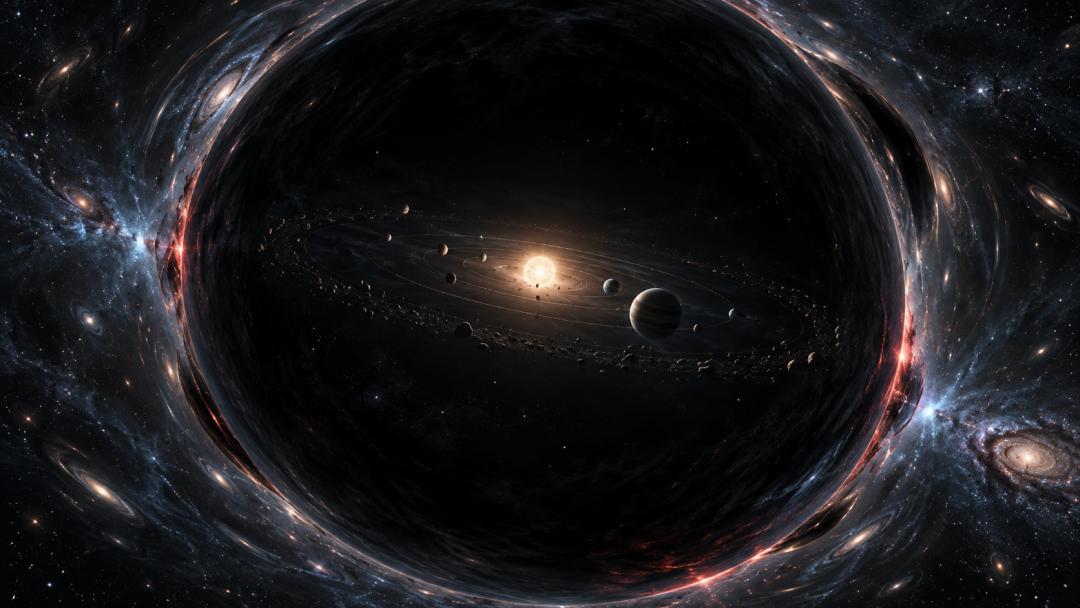
If no one is willing to interpret AI's abstract papers anymore, this piled-up mathematical building may become the black domain in *The Three-Body Problem*, seemingly mastering unprecedented power, but in fact it becomes a barrier of understanding, locking the civilization inside.
As the only existing human species on the earth, Homo sapiens did not survive to today just by using tools.
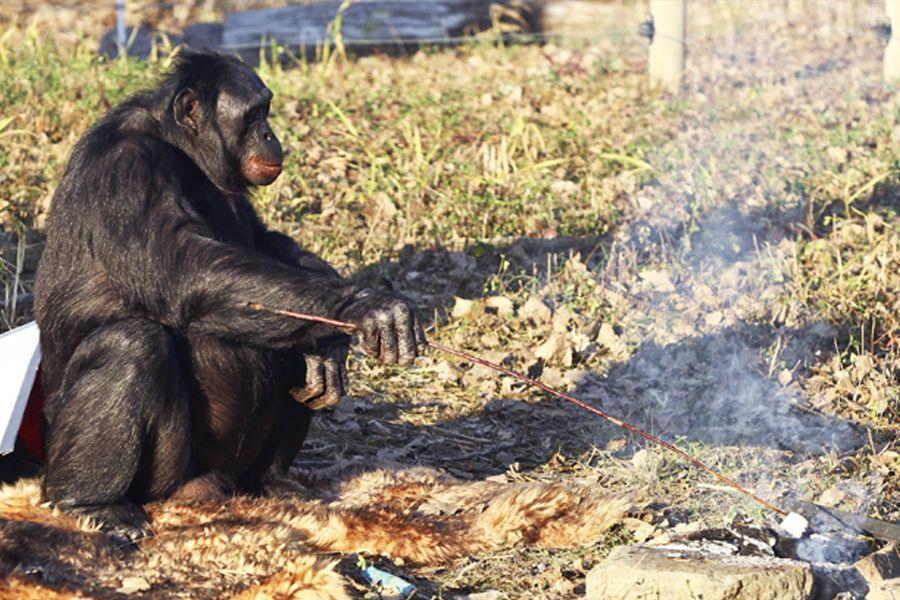
You can see in the BBC documentary that chimpanzees can even use branches to insert marshmallows and roast them to eat.
But they will not wonder how the fire burns, and what else they can do besides roasting marshmallows.
It is this motivation to