Film and television companies are standing at the AI poker table: who is going all in, who is taking a wait-and-see attitude, and who is swimming naked.
AI manhua drama hits are starting to achieve revenue of tens of millions, and AI feature films have obtained the official theatrical release license and are scheduled for cinema screening —— as "creating content with AI" has evolved from a PPT concept to a definite and profitable business, 27 A-share and Hong Kong-listed film and television listed companies have all gathered at the same poker table.
(Image: The live-action life-and-death gamble of *Kaiji: The Ultimate Gambler* starts)
There are no draws at this poker table named AI: some have put in real money, some are holding chips and hesitating to make a move, others are pinned down by previous debts, and even their qualification to check the cards is at risk.
We have sorted out all the public layouts of 27 film and television listed companies (17 on A-shares, 10 on Hong Kong stocks) in the AI field as of October 8, 2026, and divided them into three groups with four measurement standards.
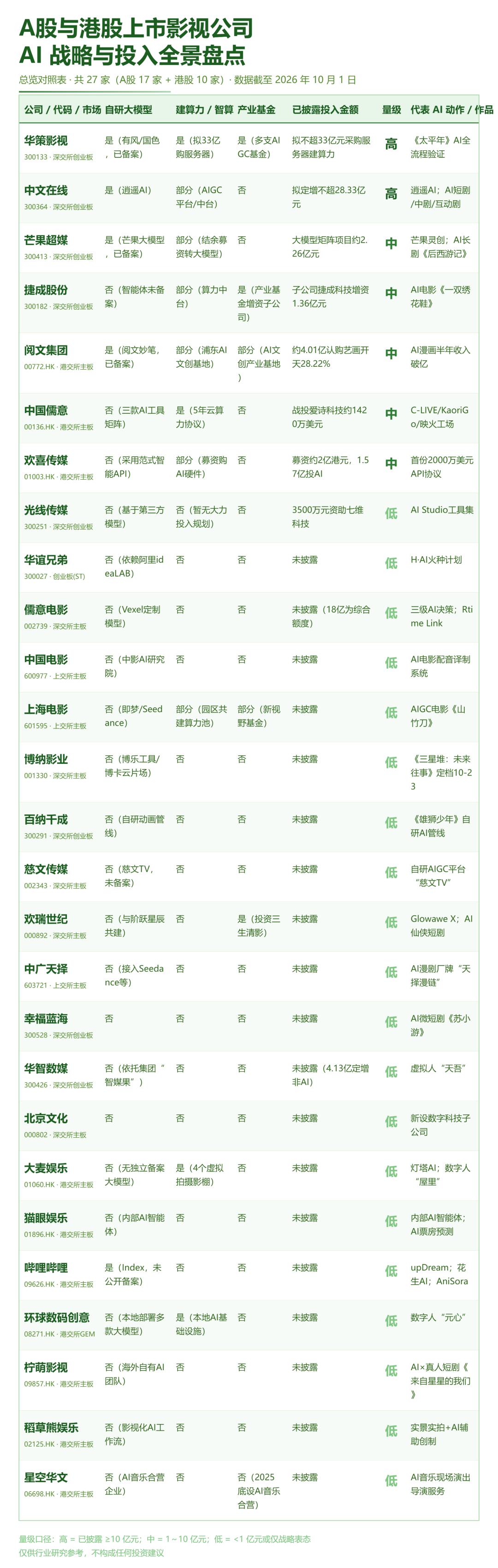
One chart to understand the AI layouts of 27 film and television companies
We counted 27 film and television companies listed on A-shares and Hong Kong stocks, including content-oriented companies, platform-oriented companies, and internet and media companies with film and television businesses, and classified them according to the following four dimensions:
1. Investment amount: Classified according to the scale of enterprises' investment in the AI field, divided into three levels: high = disclosed investment ≥ 1 billion yuan; medium = 100 million to 1 billion yuan; low = disclosed investment < 100 million yuan, or only strategic statements/tool application, or the company has not disclosed any special AI investment amount.
2. Independent R&D of large models: Whether the enterprise has publicly stated that it independently develops large models, or relies entirely on external access;
3. Self-built computing power: Whether the underlying infrastructure is controlled by itself, or rented from others;
4. Establishment of industrial funds: Whether to turn capital into long-term ammunition for continuous industrial chain layout; or make a one-time investment just to follow the trend.
Those who meet all four standards are all-in players; those who only meet one or two are wait-and-see players; those who meet none and are burdened with debts are bare swimmers.
According to the above criteria, we draw the following conclusions:

1. There are 2 all-in players, namely Huace Film and Television and Chinese All Digital. They have fully bet on AI, there is no turning back, they have disclosed large investment commitments, and their bets exceed their conventional regular investment.
2. The majority are wait-and-see players, totaling 21, Mango, China Literature, Enlight Media, Jetsen, Bona, Shanghai Film, Ruyi Pictures, Bilibili, Linmon Pictures and others are all on this list. They take a follow-up attitude towards AI, with real actions but restrained investment, and keep their chips in hand.
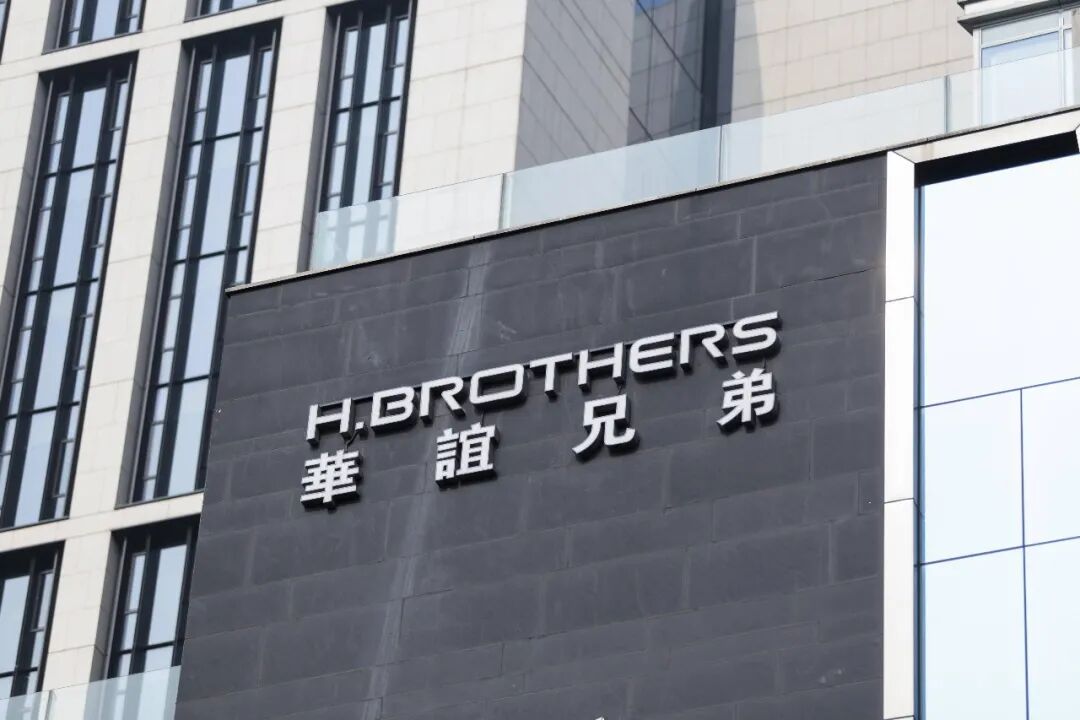
3. There are 4 bare swimmers, they have fallen behind in the previous stage of competition, ended up mired in debt, and are basically unable to keep up in this round of AI wave. They are Huayi Brothers (ST · Pre-reorganization), Huazhi Digital Media (formerly Tangde Film), Beijing Culture, and Star China Media.
All-in Players: Stake their future on the table
All-in players stake their future on the table.
Huace Film and Television chose to "press all three lines". As the only A-share film and television company that bets on computing power, model and fund at the same time, Huace, which is not large in size, has basically staked everything: Huace's original core AI route is to build self-owned production capacity, that is, the AIGC Application Research Institute independently develops two film and television vertical large models, "Youfeng" and "Guose", while deploying an AIGC super factory and intelligent computing center in Tonglu, to build competitive advantages relying on integrated software and hardware.
After entering 2026, Huace Film and Television's investment in the AI field has accelerated significantly. After April 2026, it has successively increased its stakes in three industrial funds, all targeting the artificial intelligence and AI video generation fields; at the end of September, it took shares in two AI application companies, Shuimu Intelligence and Zhiling Xinjing. The three funds plus the two direct investments at the end of September were implemented within half a year, with a total investment of nearly 600 million yuan.

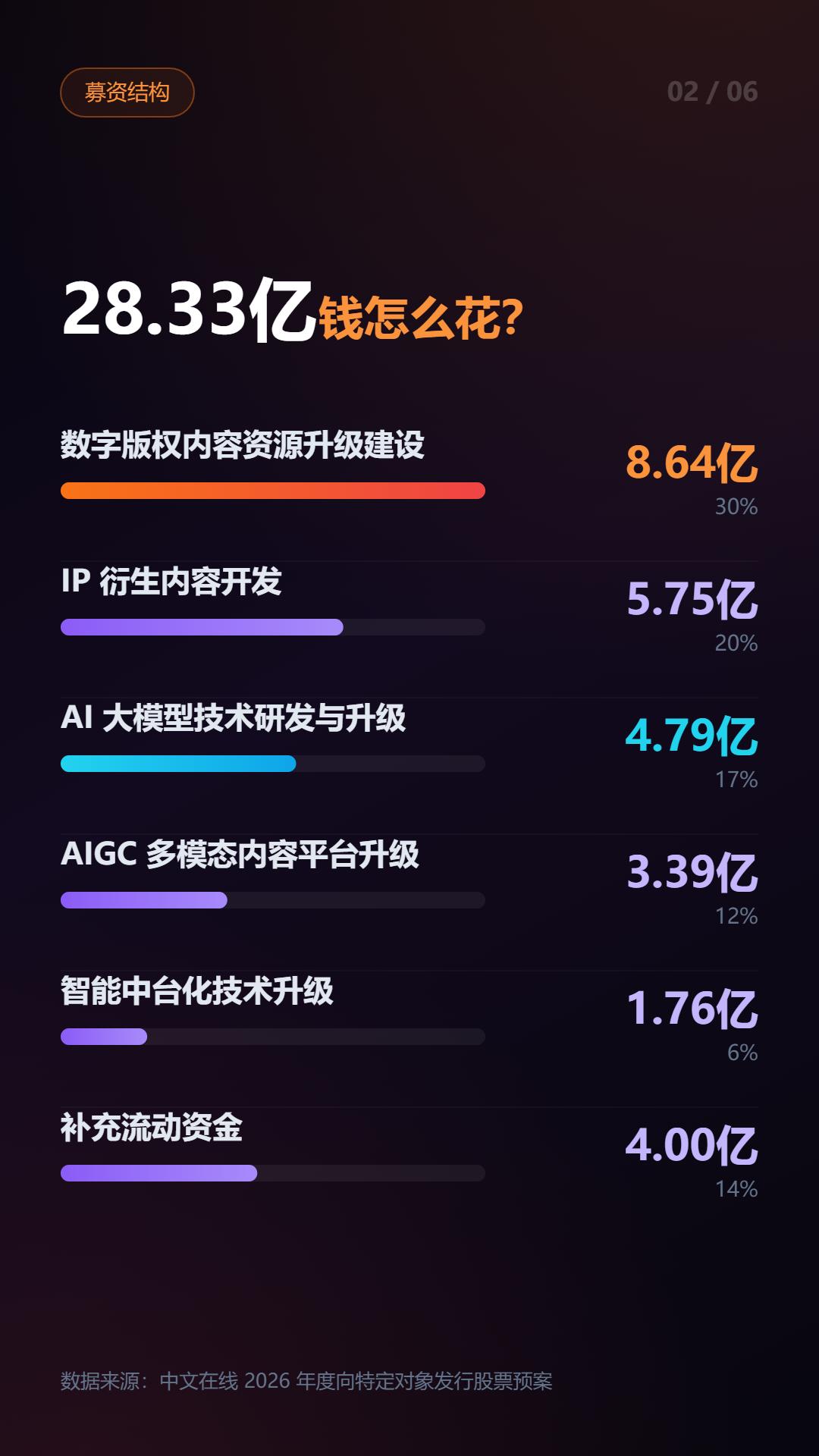
Chinese All Digital also chose to "leverage for all-in". On September 30, Chinese All Digital announced a 2.833 billion yuan private placement, which is about 10.8 times its attributable net assets at the end of June 2026 (263 million yuan) — a company that was still making losses in the first half of the year, staked its entire business on the expectation of "stocking copyrights to feed models, and using models to produce content". This is not an investment, it is an all-in. As a result, it became the first target targeted by regulators: two days after the plan was disclosed, the Shenzhen Stock Exchange quickly issued an inquiry letter, requiring the company to explain the rationality of the financing amount in combination with the fact that the raised funds are more than 10 times the net assets and the above financial data.
On the evening of October 8, Chinese All Digital issued an announcement, announcing the direct termination of the 2.833 billion yuan private placement, and the simultaneous termination of its H-share listing.
But it has to be admitted that the profit logic of all-in players is clear — they bet that the outbreak of AI technology will be faster than the speed of industry transformation, and the marginal cost of content production capacity will be rewritten. This is a gamble that pre-subs future cash flow. Huace's 3.3 billion yuan is "planned investment", Chinese All Digital's 2.833 billion yuan has not yet been approved, and Huaxi's 200 million US dollar API is a rigid commitment.
Once the bet is right and the technology outbreak arrives as scheduled, they will be the winners, the fast fish eating the slow fish; once the arrival is delayed, the heavy leverage will backfire on their balance sheet.
Wait-and-see Players: Holding chips, not yet placing bets
Wait-and-see players have choices. They hold funds and wait, which is a force that cannot be underestimated in this market.
According to different actions, the 20 wait-and-see players can be roughly divided into two forms:

One is volume-based wait-and-see, that is, real actions but small bets relative to their own scale. Mango Super Media holds the Mango large model, one of the first batch of radio and television filed large models, and the AI long drama *Post Journey to the West* has been broadcast on satellite TV, but its special AI investment is only about 226 million yuan, most of which comes from the remaining raised funds; China Literature has the filed "Miaobi" large model, and the AI manhua drama has achieved a revenue of over 100 million yuan in half a year, but the 401 million yuan was invested in animation production capacity (28.22% equity of Yihua Kaitian), not pure AI armament, and it still carries 1.8 billion yuan of goodwill impairment on its books.
The other is path-based wait-and-see, taking the light route of "external model access + tool application", and the investment amount is generally not disclosed. Bona obtained the first domestic AI theatrical film with public release license (*Sanxingdui: Past and Future* scheduled for October 23), but the investment amount is unknown; Shanghai Film has tied up with DreamTech / Volcano Engine Seedance, and its computing power follows the "park co-construction" model without paying by itself; Enlight Media even publicly stated that "there is no plan for large-scale computing power investment for the time being", and the 35 million yuan is in the form of financial support.

These companies are not unqualified to place bets, but they are holding the most valuable chips — stock IP and cash — waiting for the certainty of the track.
Once the business model of AI manhua drama is verified, and AI medium & long dramas and films generate stable returns, they are the most likely to add more bets.
This is also the key signal to observe "when is the safest time to enter the market".
Bare Swimmers: People with their backs to the poker table
Bare swimmers are the forces left behind in this arms race.
Their common point is that they have fallen behind and been trapped in debts since the traditional film and television stage. When industrial transformation requires heavy asset investment, as listed companies, they cannot even afford the admission ticket.
Take Huayi Brothers for example. It launched pre-reorganization in April 2026 and is under ST status. Although its "Spark Plan" includes 9 AI short dramas + 1 AI film, 3 of which have been launched and won the AIGC Award at the Beijing International Film Festival, all its technologies rely on support from Alibaba ideaLAB, and it does not have a penny of special AI funds of its own. Trapped in debts, they can only touch the cards with others' hands.
Huazhi Digital Media (formerly Tangde Film) recently issued a 413 million yuan private placement, but the purpose is written as "repaying loans and supplementing working capital", not AI. The company itself has no independent large model, and its short dramas rely on accessing the group's "Zhimeiguo". Debt repayment is the priority, and there is no way to talk about entering the AI track.
Beijing Culture's official statement is "not involved in AI for the time being", and it has only newly established two digital technology subsidiaries with registered capital of 1 million yuan each. It is in a state of no works, no investment, no layout, and is completely "empty-handed" at the AI poker table.
As for Star China Media, its revenue in the first half of 2026 decreased by 22.2% year-on-year, its loss expanded by 267.6%, and its variety show IP revenue plummeted by 77.2%; AI only has sporadic trials such as music concert directors. Struggling under operating pressure, it is difficult for them to even lay a solid foundation.
The above enterprises have fallen behind in this round of AI competition, and the next step is to see how big the gap will be widened, and whether there will be technology companies willing to integrate the relevant production capacity.

(They have lost their initiative)
Where will this bet push the industry
Video is the track closest to monetization in the AI ecosystem, second only to vibe coding.
This certainty has accelerated the process of the film and television industry embracing AI. From the perspective of investment targets, the logic of film and television companies investing in AI is biased towards the application layer. They are not investing in concepts, but in AI tools, models and production capacity that can be directly connected to their own content pools. This is because content providers understand usable AI better than financial VCs, and are more daring to bid for targets that "can be integrated into their own production lines".
Although their money is not as much as that of internet companies, they have created a mutual empowerment effect in the vertical track.
It is worth noting that the enterprises that dare to go all-in in this round have a common background: they are companies