Generate a game with a single sentence, hands-on test of Google Playground: Who could have imagined that AI would beat 4399 first?
Integrating AI into games is no longer a new topic.
As early as in the 2005 game *F.E.A.R.*, Monolith Productions introduced AI technology to endow enemies in the game with certain thinking capabilities. They can not only communicate with each other through simple instructions, but also judge threats based on players' behaviors, and even use maps and weapons to carry out tactical operations such as flanking.
But have you ever thought that one day, we won't even need a game engine, and an AI large model alone can automatically generate games?
You don't need to wonder, because this has already become a reality.
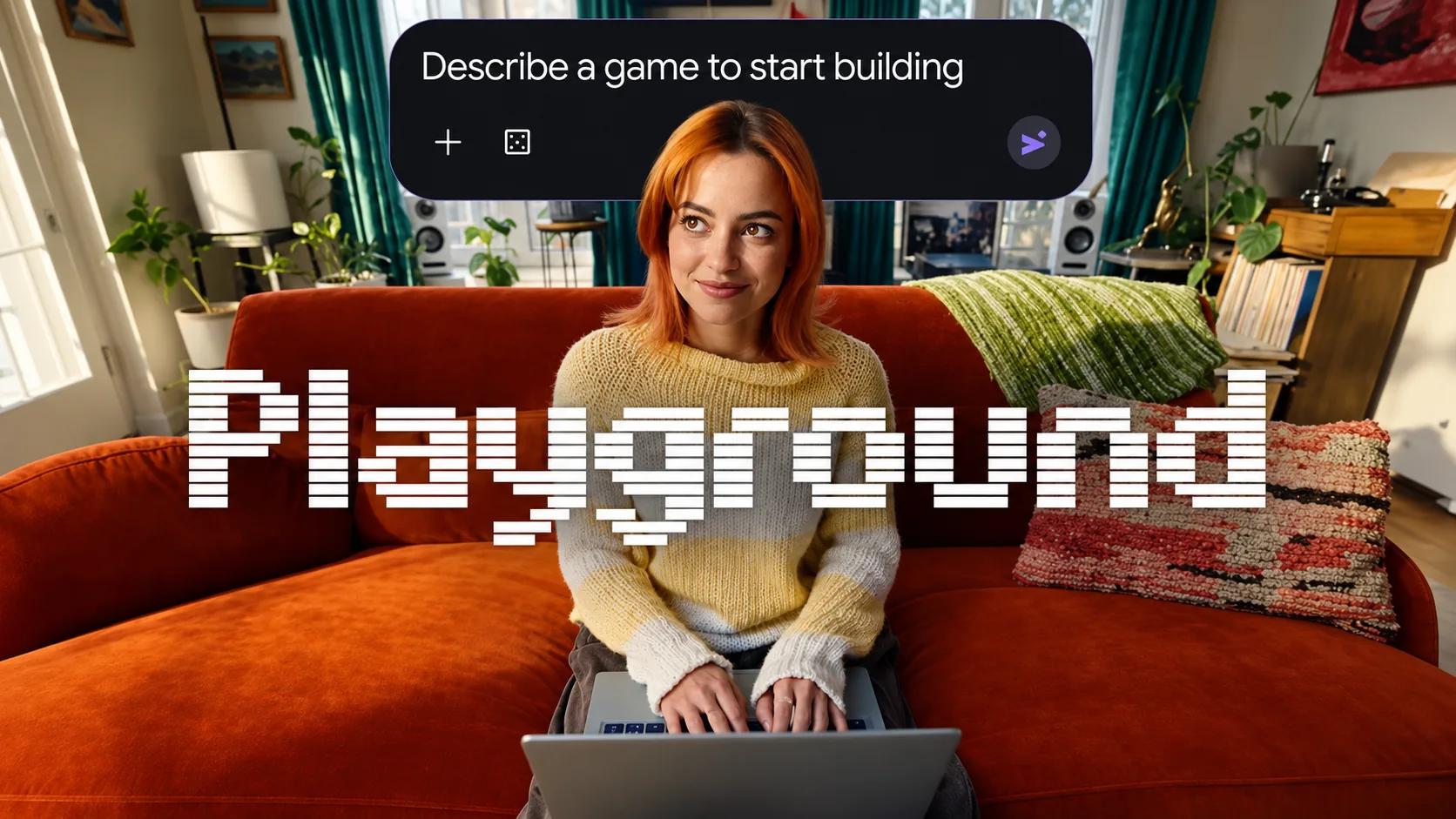
(Source: Google)
In the early hours of this morning, Google officially announced a partnership with the well-known game engine Unity to launch the experimental AI game platform Playground. Users can not only play games created by others on the platform, but also make games by themselves through simple prompts, which greatly lowers the threshold for game development.
Human cognition of games may really be completely subverted by AI. Leikeji has conducted an evaluation of it as soon as possible.
Google's version of "4399 Mini Games"
The method to experience Playground is actually quite simple.
According to the current official announcement from Google, the platform is already open to users over 18 years old in the United States. As long as you have a US Google account, you can directly open playground.google in your browser to access it.
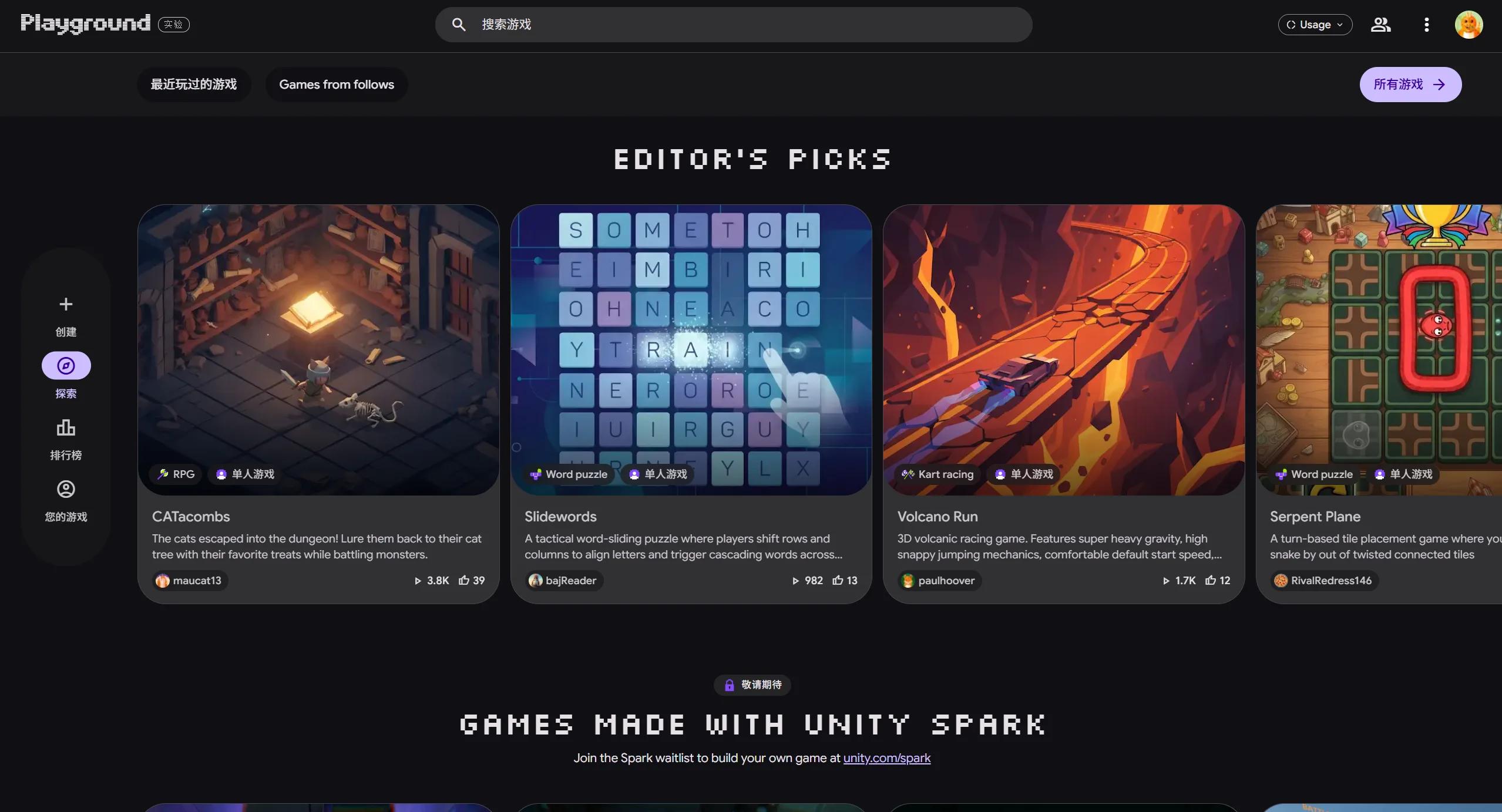
After opening the webpage, you will see a page like the one below.
Observant users may have noticed that, yes, this webpage is basically designed for mobile standards. It does look a bit odd when opened on a computer: the elements in the webpage are too large, and the content displayed on the entire page is rather sparse.
(Source: Leikeji)
Of course, almost all the games here are made by overseas users now, and all the content introductions are in English, but overall it is very easy to understand what they are about.
In short, the top row of the webpage shows high-quality works selected by Google's website editors.
The middle row of the webpage displays content created through Unity Spark integrated by Google, which is characterized by using the Unity engine to create more complex gameplay and content with high-precision 3D graphics, and some of the works even show the traces of commercial games.
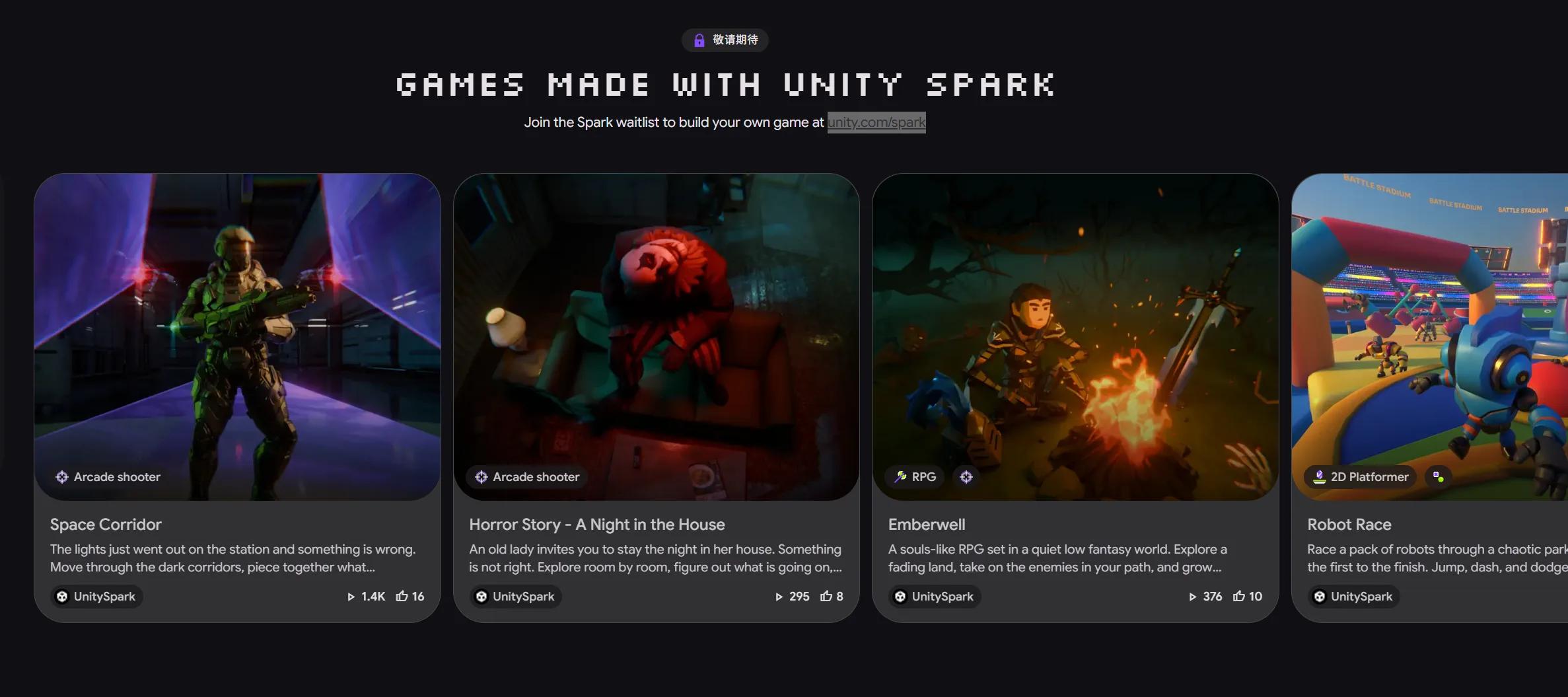
(Source: Leikeji)
As for the more traditional game categories, Playground certainly has them too.
Now, let's cut the crap, go directly to the Hot tab, and experience the three most popular games on the Playground website right now.
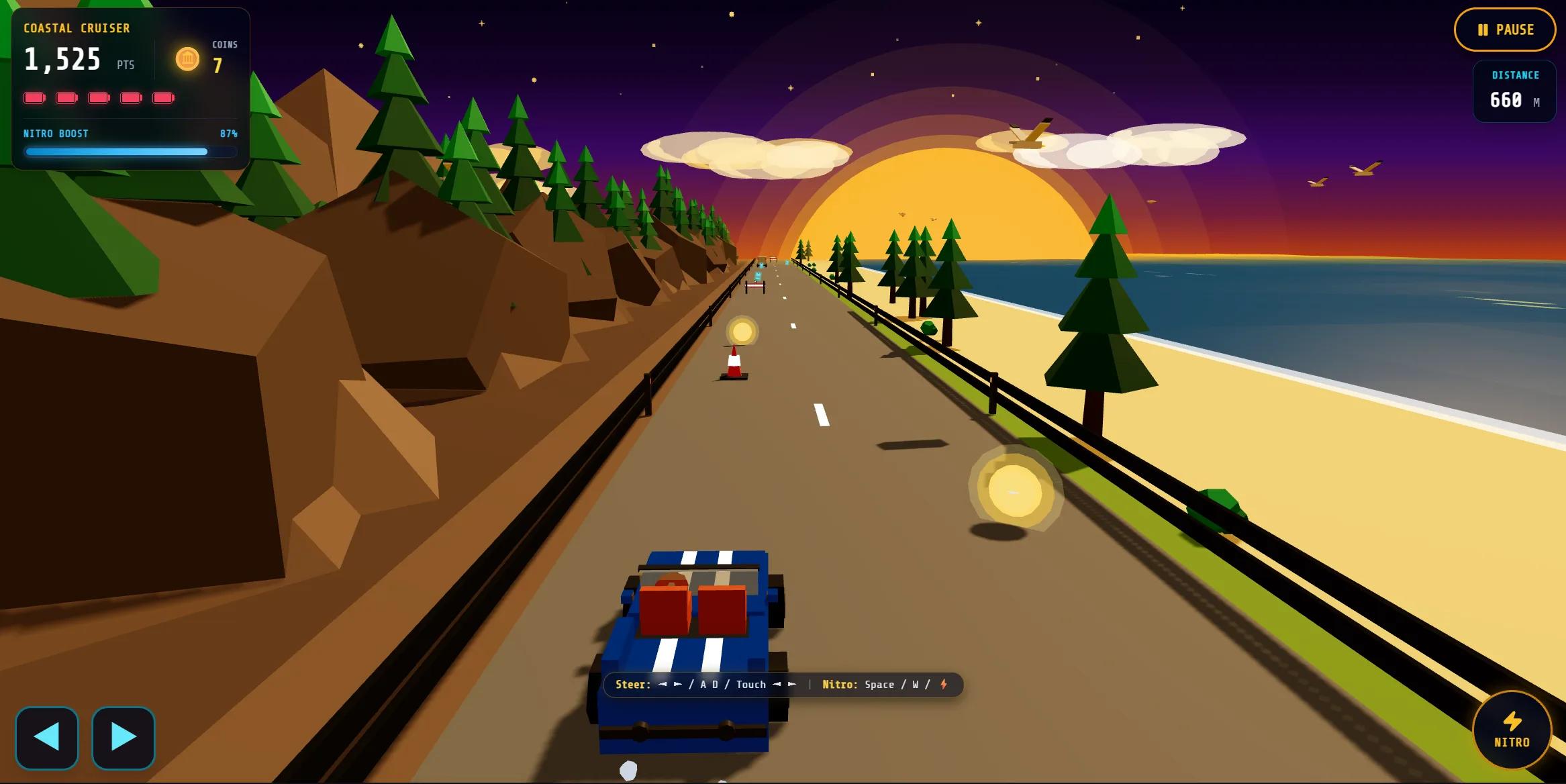
The first game is called *Coastal Cruiser*, which is described as an infinitely playable racing game.
(Source: Leikeji)
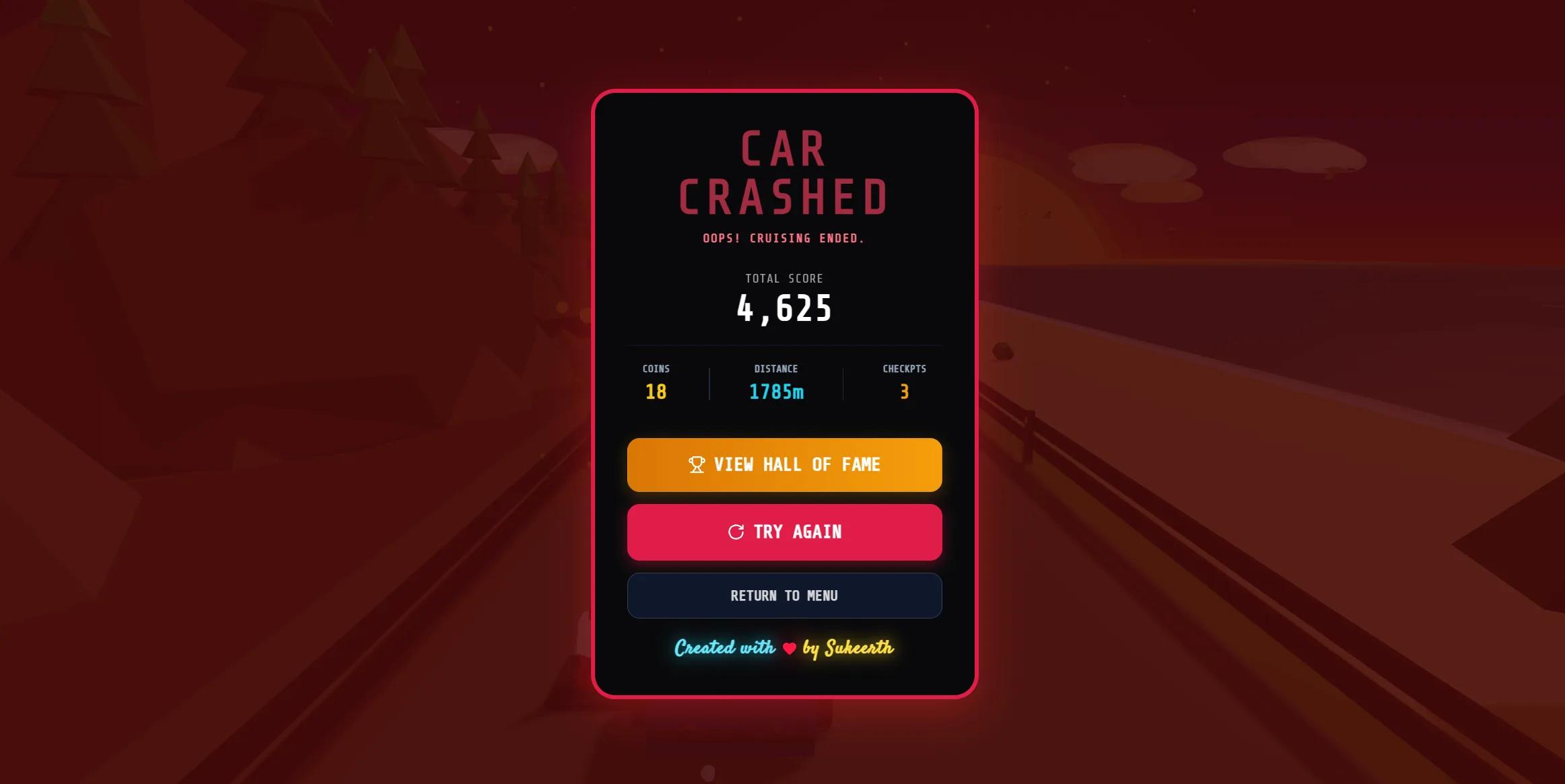
Judging from the visuals, the game adopts a relatively simple Low Poly style. The sunset, coast, mountains and pine forests form a coastal highway. Although the scene modeling is relatively rough, the color matching is quite comfortable. At least at first glance, it really has the vibe of an indie mini game.
The gameplay is quite simple. Players need to drive a blue convertible sports car on a continuously extending highway to avoid roadblocks, while collecting yellow coins and blue nitrogen canisters along the way. Coins can increase the score, nitrogen can be used for acceleration, and the ultimate goal is to drive as far as possible to challenge for a higher score.
After actually playing it, I think the control feel of this game is just so-so.
The steering of the vehicle is obviously a bit floaty. After pressing the direction key, the lateral movement of the car body is not easy to control. You have to adjust the position in advance if you want to accurately collect coins or avoid obstacles. In addition, the road is always a straight line, and you will feel a bit monotonous after playing for a few minutes.
(Source: Leikeji)
But considering that this is a mini game generated by AI, it already has complete graphics, controls, scoring and item systems, which is at least a fully playable prototype.
Next, let's try a 45° top-down shooting game, *The Associates: Nexus Breach*.
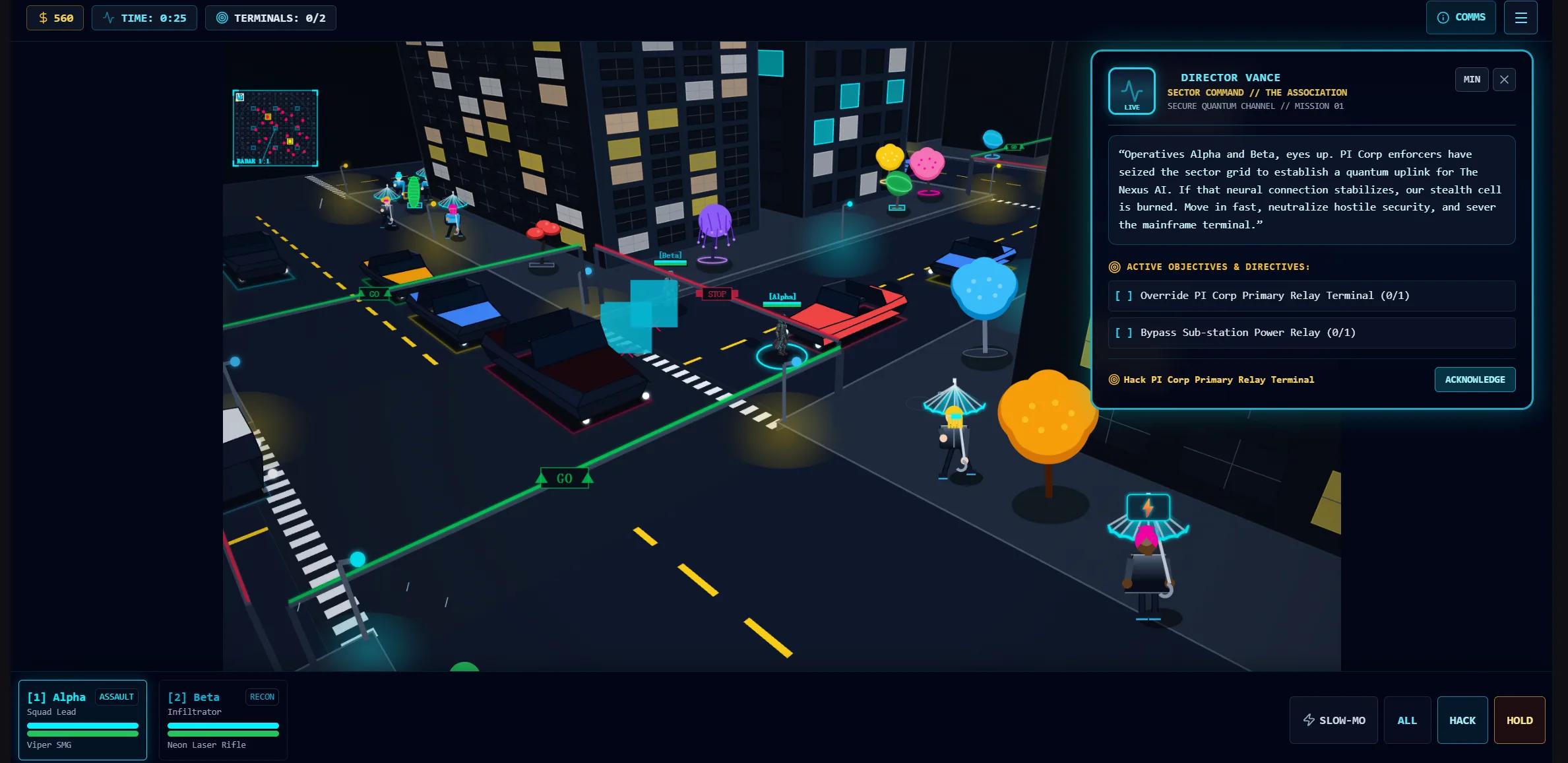
What I didn't expect is that this is actually a strategy shooting game that lets you control a multi-person tactical team, and it has quite complex mission mechanics. The problem is that the AI-generated compass is completely useless for direction guidance, the characters are very small and will be blocked by the cursor, and playing for more than five minutes is a kind of torture.
The last one is a simulation management game called *Westbound Frontier*.
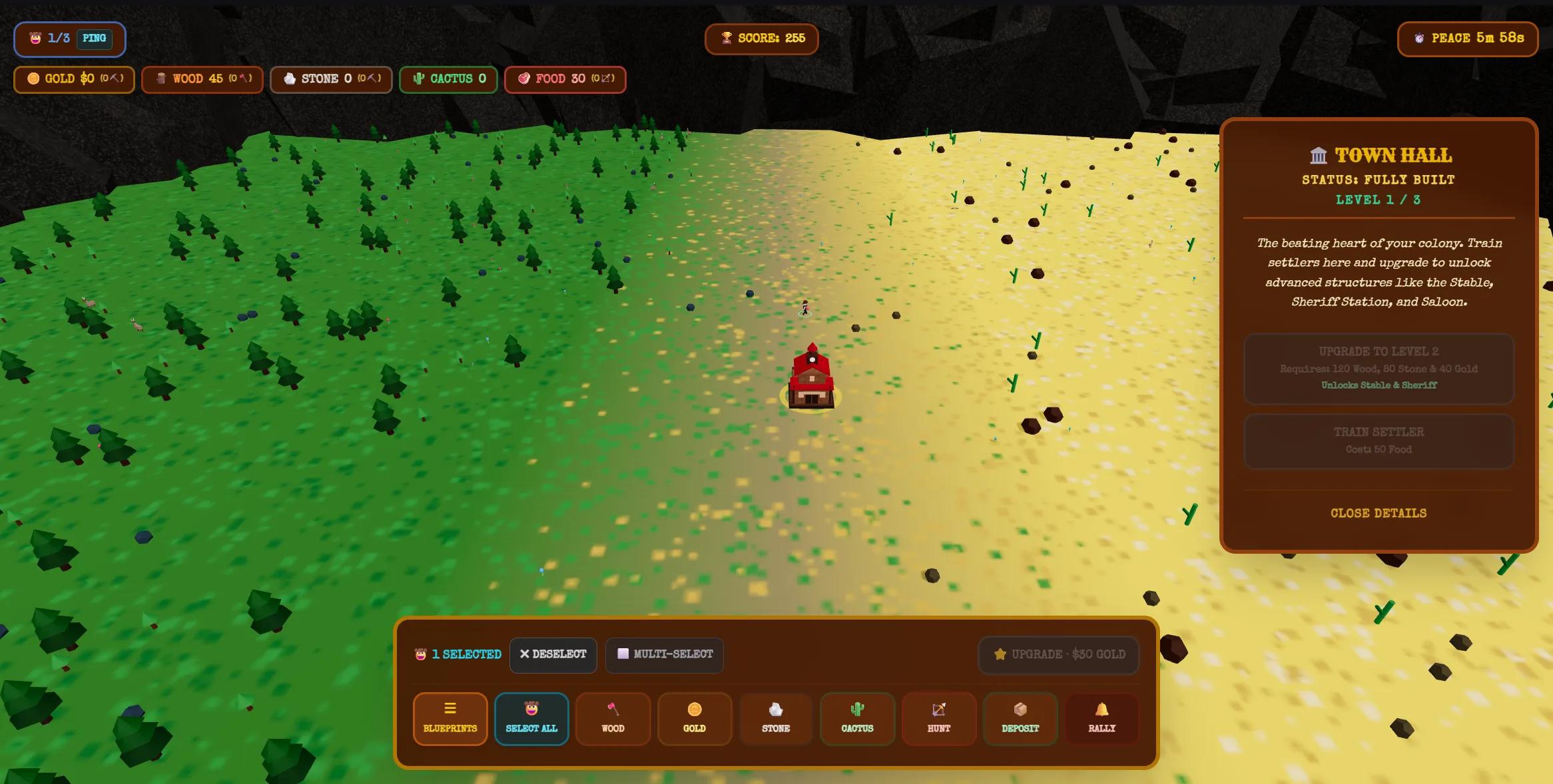
This game is probably the worst of the three. The entire game process is limited to 10 minutes. The player's goal is to collect resources with farmers and build buildings as quickly as possible to get high scores. But because the game controls are very clunky, I kept selecting my character and repeatedly performing/canceling actions.
As you can see, half of the time has passed, and I still haven't managed to build the second building.
(Source: Leikeji)
It follows that the more complex the game mechanics are, the harder it is to implement them with Google Playground, which is also the limitation of current large models.
Want to develop games? It's so easy that anyone can do it!
Reading up to this point, you may have the same doubt as me.
Judging from this, the logic of these games is very simple, and the production method should not be difficult. So even a person who knows nothing about game development like me can interact with Playground to create a playable web game, right?
Come on, don't overthink it, I suggest just getting straight to it.
Currently, Playground has no restrictions on playing games, but there are certain restrictions on game creation. Free users need to join the waiting list and wait for batch access to creation permissions. However, as a premium Google One AI member, I naturally got the creation permission directly.
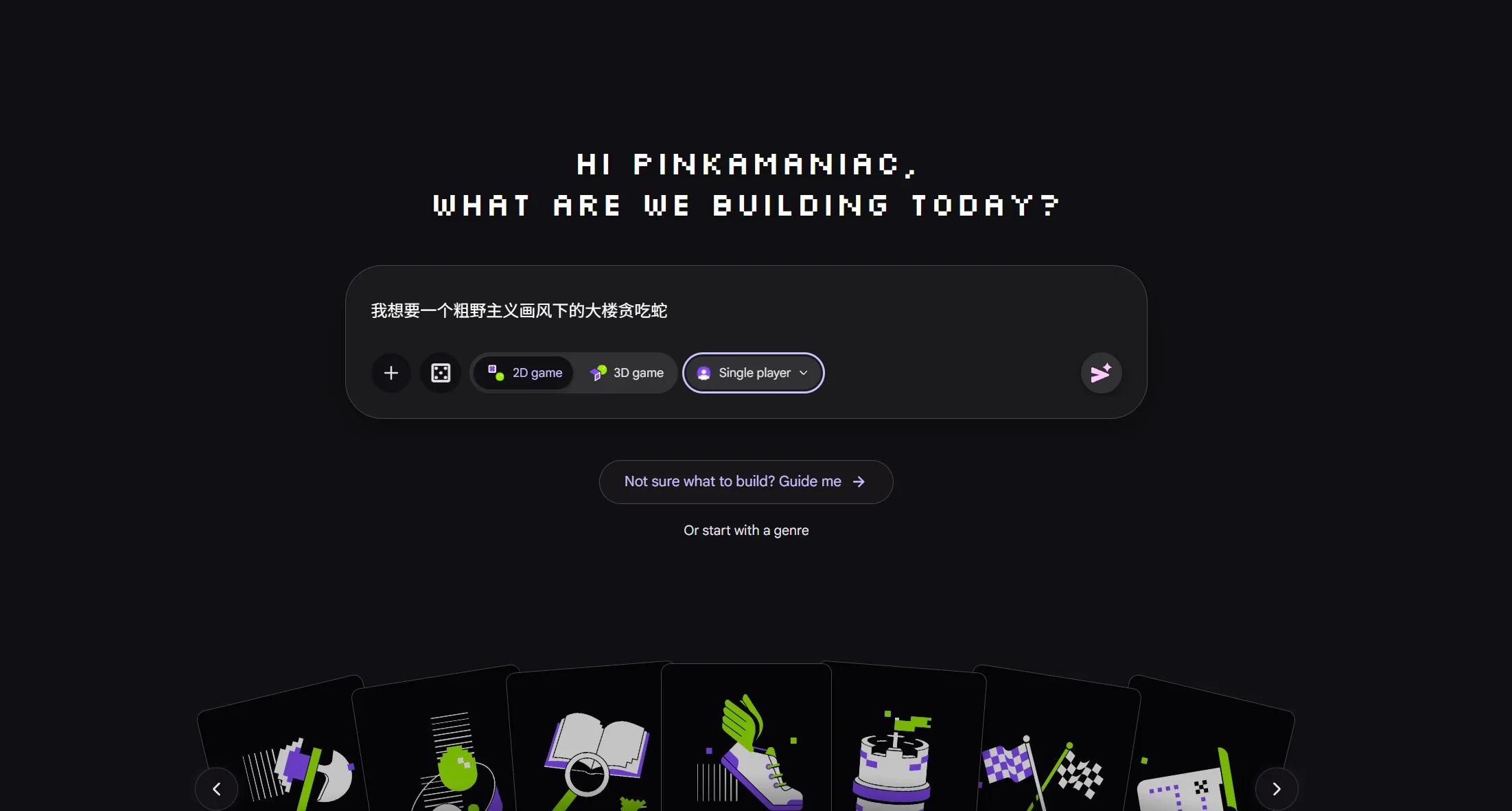
Let's start with a simple one. For example, I want a building-themed Snake game in the Brutalist art style.
I can directly enter my vague requirement in the creation interface, choose whether the game type is 2D or 3D, single-player or multiplayer, and then Playground will proceed with the game generation on its own.
(Source: Leikeji)
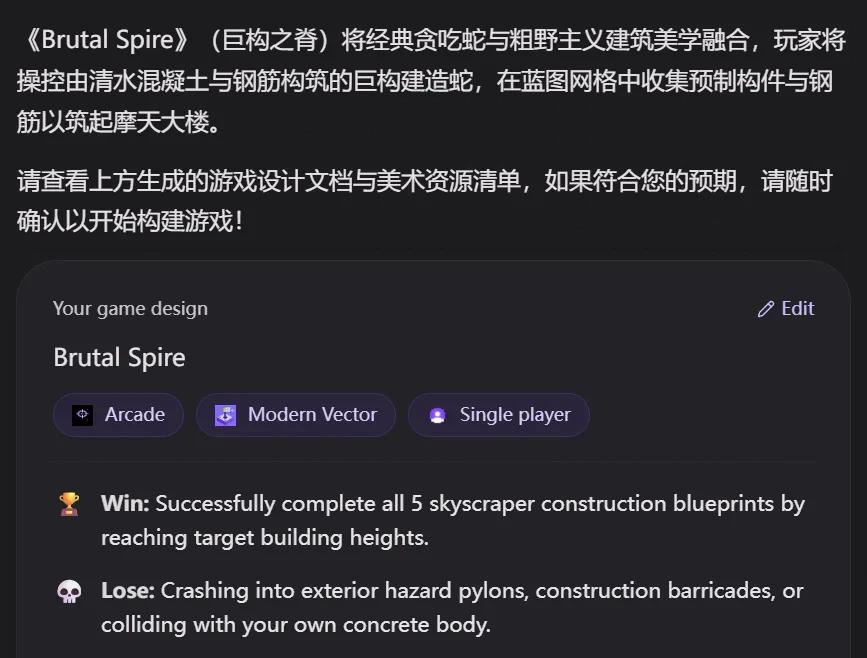
Judging from the generated design scheme, I think Playground has a pretty good understanding ability.
(Source: Leikeji)
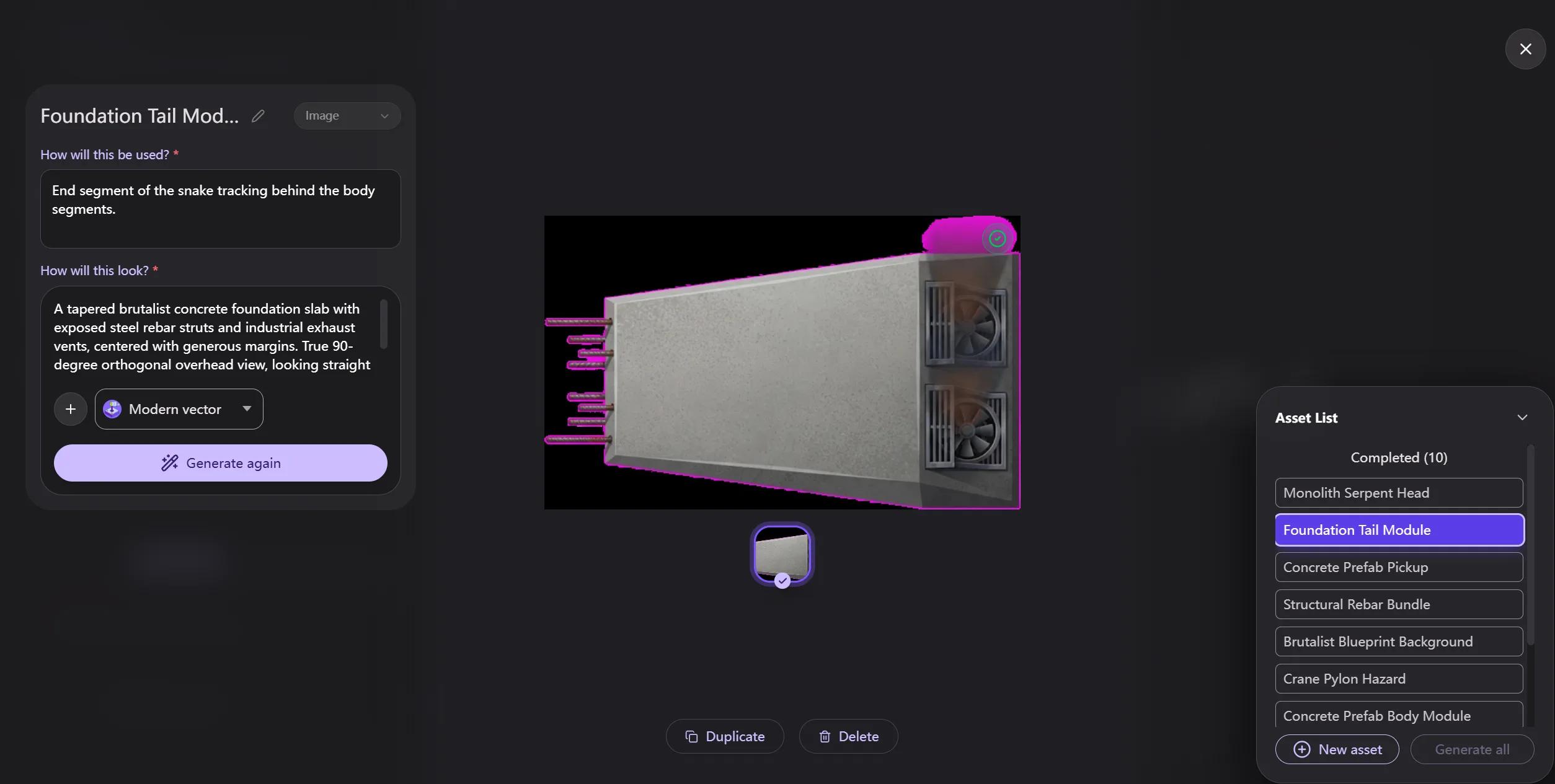
Next, you can choose to make it output the game directly, or generate the corresponding art assets first, then adjust them according to your own preferences.
(Source: Leikeji)
I think these 2D assets are quite in line with the theme, so I continued the generation process.
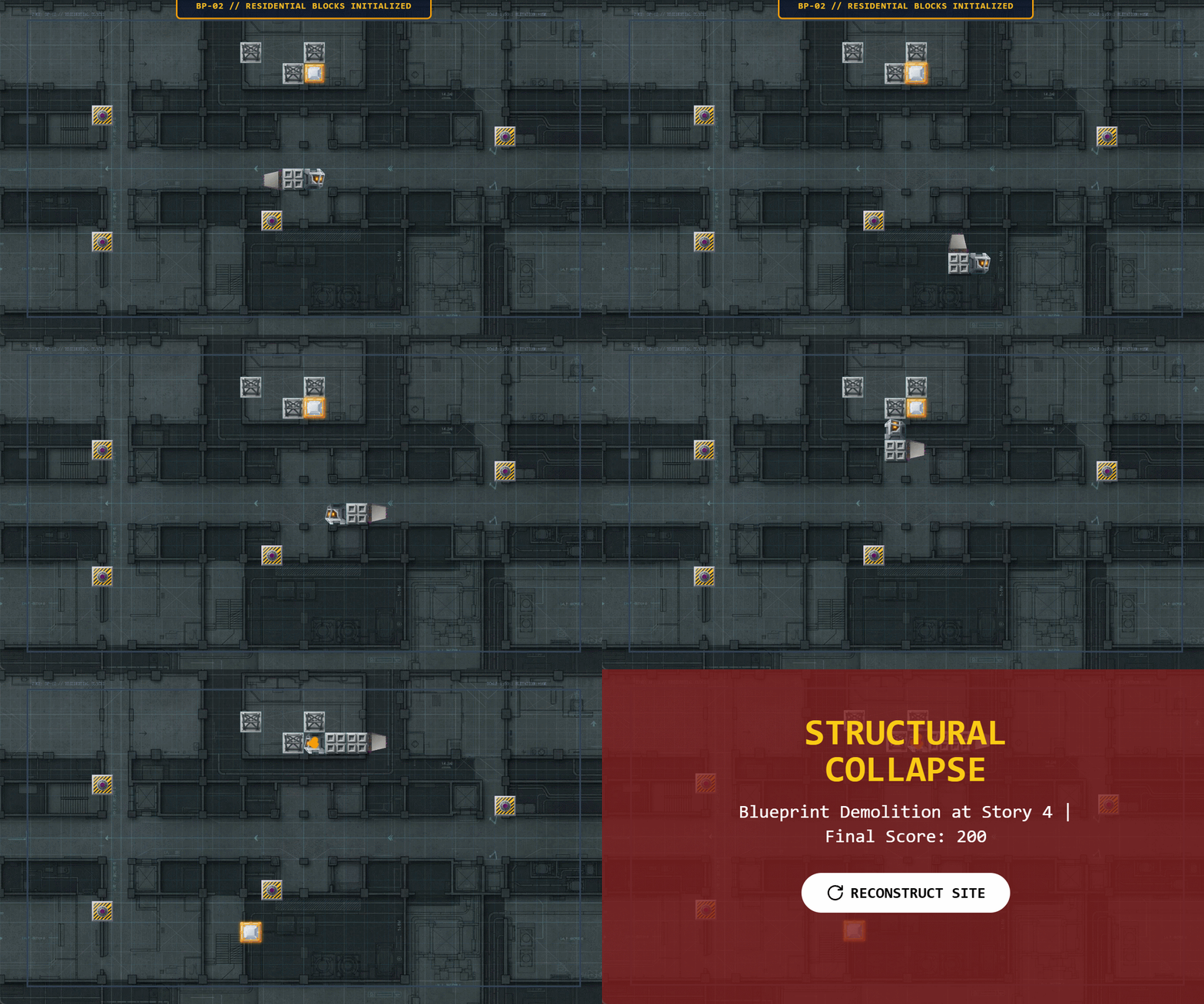
The final result is like this: a Snake game that barely fits the Brutalist art style. The gameplay is the familiar rule of eating beans to grow longer, with some random obstacles and props to add more fun. As the first game I generated, it's actually not bad.
(Source: Leikeji)
For those who want to experience the game, you can try this link: https://playground.google/g/gv8ev7.
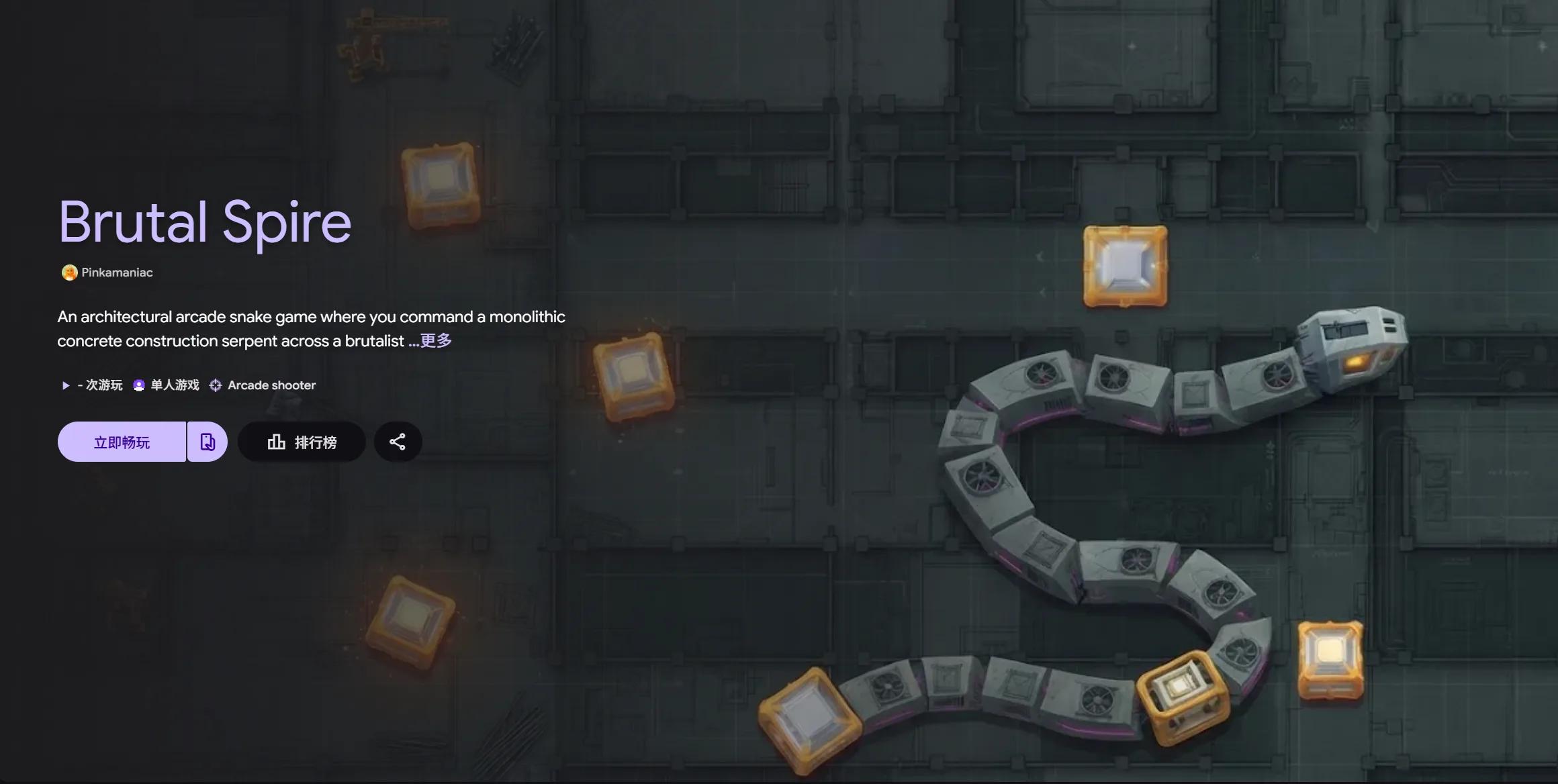
Oh, by the way, there is another flaw: Google will let Nano Banana2 automatically generate thumbnails for games, and these thumbnails are far more stunning than the actual game screen, which can be completely regarded as false advertising.
(Source: Leikeji)
Since simple prompts work well, what will happen if we use a relatively complex prompt?
In fact, I have always wanted to make a roguelike action game. I have a lot of ideas, but they all stayed in the planning stage. Today I have such a good opportunity, so I asked ChatGPT to help me polish the prompt, then sent it to Playground to see what it can produce.
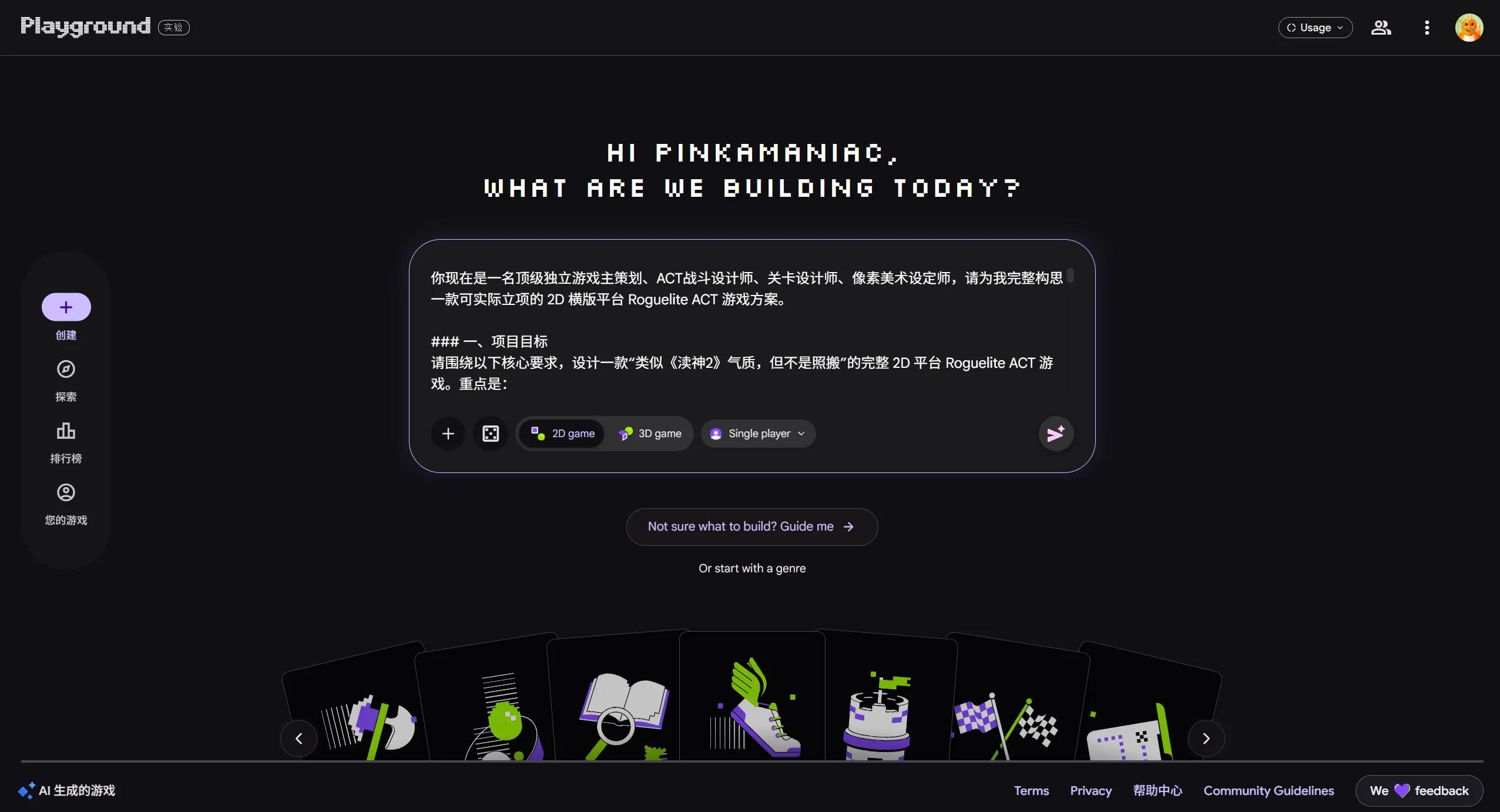
The first version: enemies have no concept of platforms, they will float and roam directly, and the player character has no attack animation.
The second version: there are animations now, but enemies still have no logic at all, which is far from a playable demo.
After that, I adjusted five versions one after another, spent two hours, and finally got a decent result.
Now the protagonist has three weapons: a transforming axe that can switch between a sword form with medium attack speed and an axe form with slow attack speed, which supports perfect parry.
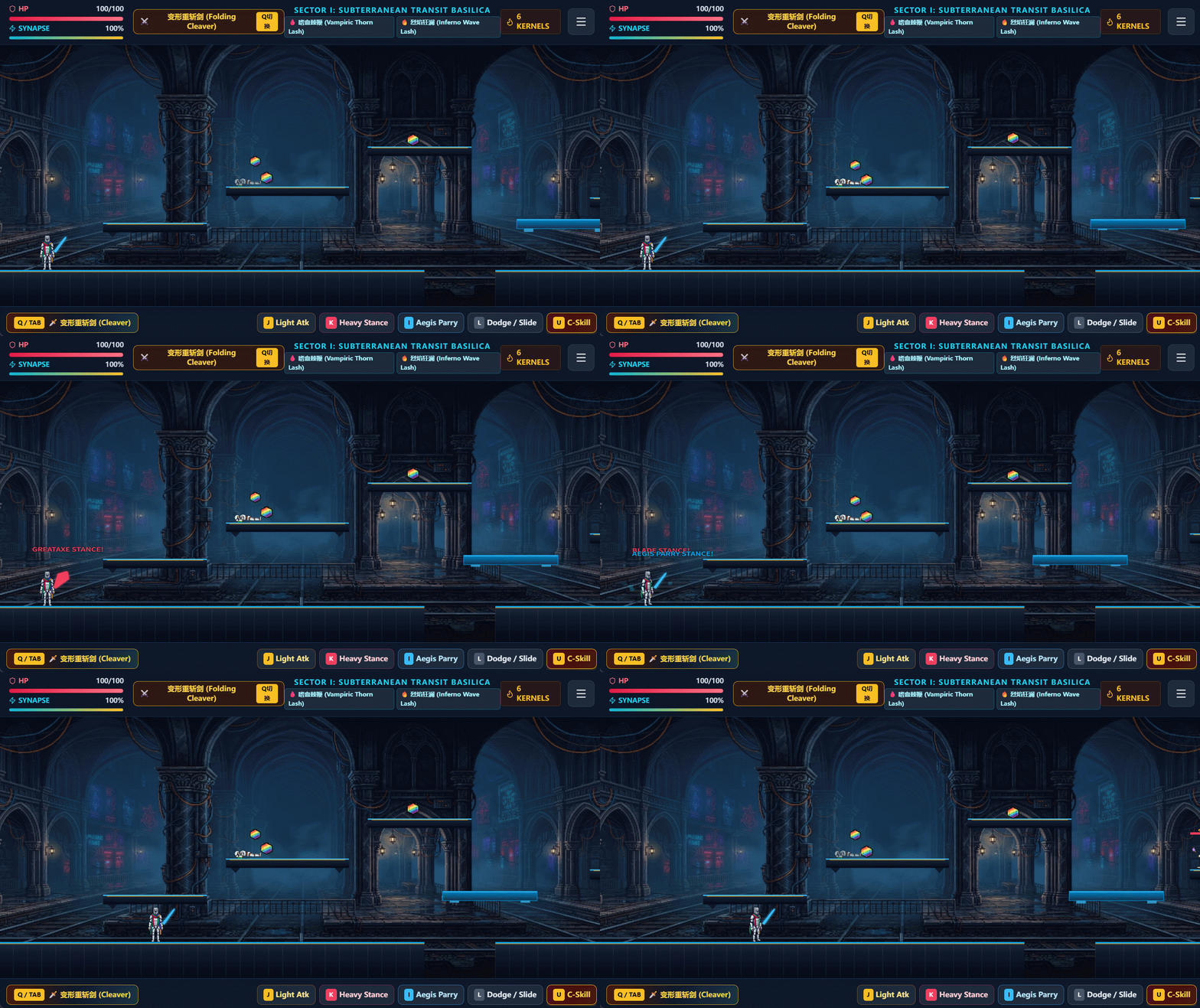
(Source: Leikeji)
The second weapon is a holy silver whip that has absolutely nothing to do with the whip in *Castlevania*. It can even rotate 360 degrees, as if a member of the Belmont family has arrived.
