AI fear-mongering content is dominating short video feeds, internet influencers are pivoting to peddle anxiety, and it turns out they are doing this in exchange for sponsorships.
Before this summer, the TikTok account of internet celebrity Avalon Warren was no different from most young content creators: her millions of followers saw daily clips of her trying on clothes, changing hairstyles, and sharing beauty tips.
She still posts this kind of content now, but many of her videos have taken on a distinct apocalyptic vibe.
For example, one post is captioned: "Day 8 of my outfit check — since the AI apocalypse is coming anyway, I might as well dress nicely." Another clip features footage from the AI protests in San Francisco, with the caption: "We get to decide what the future looks like, no one else."

(Source: Generated by Doubao AI)
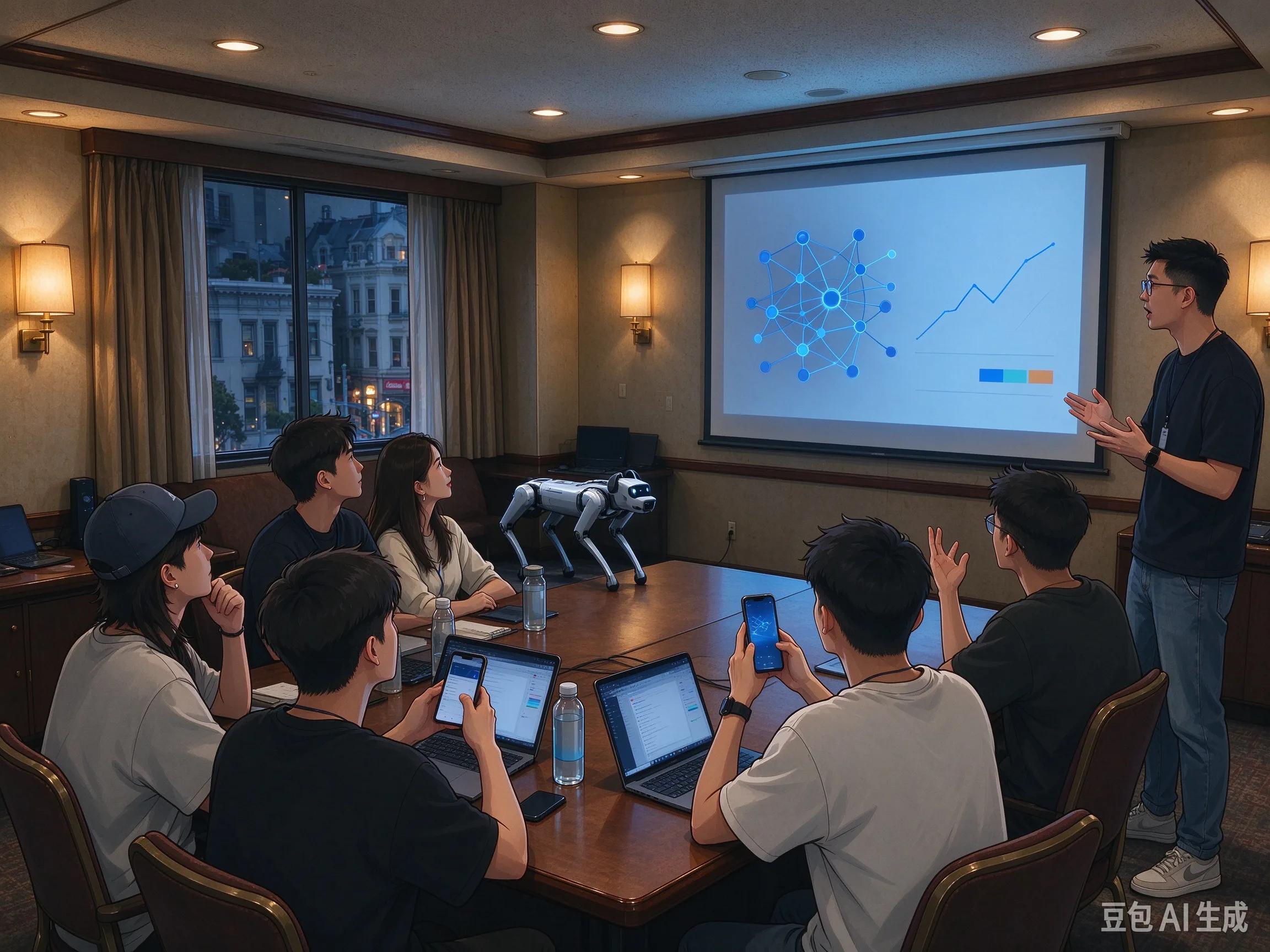
This sudden shift in style happened after she joined a creator bootcamp called "Plzdontkillus" near San Francisco, and stayed there for a whole month.
This program for content creators, housed in an old hotel, has now become a stronghold for AI safety advocates.
The bootcamp covers food, accommodation, and even pays a stipend, with only one strict rule: participants must post one related video every day, or they will be asked to leave immediately.
At the camp, influencers get to listen to speeches from well-known AI doomers such as Eliezer Yudkowsky, as well as Grimes, the singer and ex-girlfriend of Elon Musk, talking about the dangers of AI. There are also robot dogs wandering around the venue, fully amplifying the immersive atmosphere.
The logic of this group is very straightforward: if they want to wake the whole world up to the threat of superintelligence, they have to rely on TikTok and YouTube.
One of the bootcamp's organizers wrote: "People naturally love listening to good-looking people talk. If you want to grab attention, you have to find a way to make people willing to click in."
Over the past few years, a group of researchers, philosophers and former tech executives have been calling on AI companies and politicians, warning that AI is an existential threat to humanity — fearing that superintelligence could one day trigger a cyber disaster, or develop bioterrorism that wipes out the entire human race.
But in the past, these discussions mostly took place in niche forums, on Twitter, and in long-form podcasts, completely out of reach of ordinary voting members of the public.
(Source: Generated by Doubao AI)
Now, this "advocacy campaign" has set its sights on short-video platforms that people spend hours scrolling through every day, with a far larger audience base.
Becca Lyle, a singer who has attended the bootcamp, said: "The core is to bring 'ordinary people' into the conversation. Let them talk about AI and AI safety, expand the boundaries of the topic, and eventually make it something people can casually chat about over dinner."
ControlAI, a UK-based AI safety organization, is funded by Janus Friis, the co-founder of Skype.
They claim that by sponsoring creators to post videos about superintelligence and human extinction risks, they have already accumulated more than 6.3 million views.
One of these videos is from popular science YouTuber Hank Green, with a sensational title: "We Are Already Losing Control of AI". The video also directs viewers to a page that teaches people to write to their members of parliament, calling for a ban on the development of superintelligence.
"Experts have known about these risks for years," said Andrea Miotti, founder of the organization. "But in the past, all discussions were full of technical jargon among experts, essentially keeping the public and the government in the dark. We believe our mission is to make this known to ordinary people."
Of course, not all influencers buy into this narrative.
The organization's lobbying has also pushed for related "AI kill switch" bills to be proposed in both the UK and the US. However, German physicist and YouTuber Sabine Hossenfelder directly rejected their invitation to cooperate, and publicly spoke out about the incident.
"They dictate exactly what the video should cover, even down to the exact lines you should read," she said. "But as long as the money is good enough, there will always be people willing to do it. Political lobbying has seeped into the field of science and tech popularization, whose audience has never encountered this kind of tactic before."

(Source: Generated by Doubao AI)
In response, the organization stated that they only control the content of the sponsored segments in the videos, and they have always required creators to clearly disclose the sponsorship relationship.
Miotti also added that compared with the lobbying and advertising budgets of tech companies, their operation is negligible in scale.
For example, OpenAI held a luxurious "Summer Club" in upstate New York this year, inviting dozens of influencers; it was also exposed that the company spent 100 million US dollars to acquire the tech talk show TBPN. "We are providing people with information, not teaching them what to think," Miotti said.
In any case, getting internet celebrities to endorse their cause has become standard practice in the AI safety circle.
London-based creator Lauren Goldgrabe has received funding from both projects at the same time.
Her account "Lauren's Little Study" used to focus mainly on book reviews, but now more and more of her content covers AI risks. In one of her TikTok videos that got 1.8 million views, she warned her followers: "Whether the future still belongs to humanity depends on the choices we make right now."

(Source: Generated by Doubao AI)
But no matter if it's the narrative pushed by influencers or the inherent concerns of the public, AI safety anxiety has indeed become a mainstream topic.
Poll data shows that three quarters of British people think AI companies are under-regulated, and 61% support slowing down AI research and development; in the US, a quarter of people believe that AI systems will threaten human survival. More and more members of parliament are also calling for regulation, saying that this is the demand of voters.
As for those influencers, it is really hard to say whether constantly shouting "humanity is doomed" is good content or not. Many creators who participated in the "Plzdontkillus" bootcamp later went back to posting their regular content like fashion and beauty.
One of them put it bluntly: "This stuff is just not my cup of tea."
This article is translated by Leitech from The Telegraph
Original link: Tech security advocates recruit creators to spread AI panic for pay
This article is published by Leitech, authorized for release by 36Kr.