Who says tourist attractions are not popular? Have you ever waited in a line with a total of 35,000 people?
"Attention, all visitors: you still need to wait for 3 hours in the queue here..." When staff at Beijing Wildlife Park notified visitors queuing up in the wild animal zone, some visitors stood on tiptoe and looked at the queue not far ahead, murmuring to themselves: "The queue doesn't look that long. Are the staff deliberately diverting the crowd to avoid congestion?"
It was not until they passed through dozens of twists and turns that some visitors realized they were too naive — about 35,000 people flooded into the wildlife park that day, and the vast majority of them chose to queue up in the wild animal zone first...
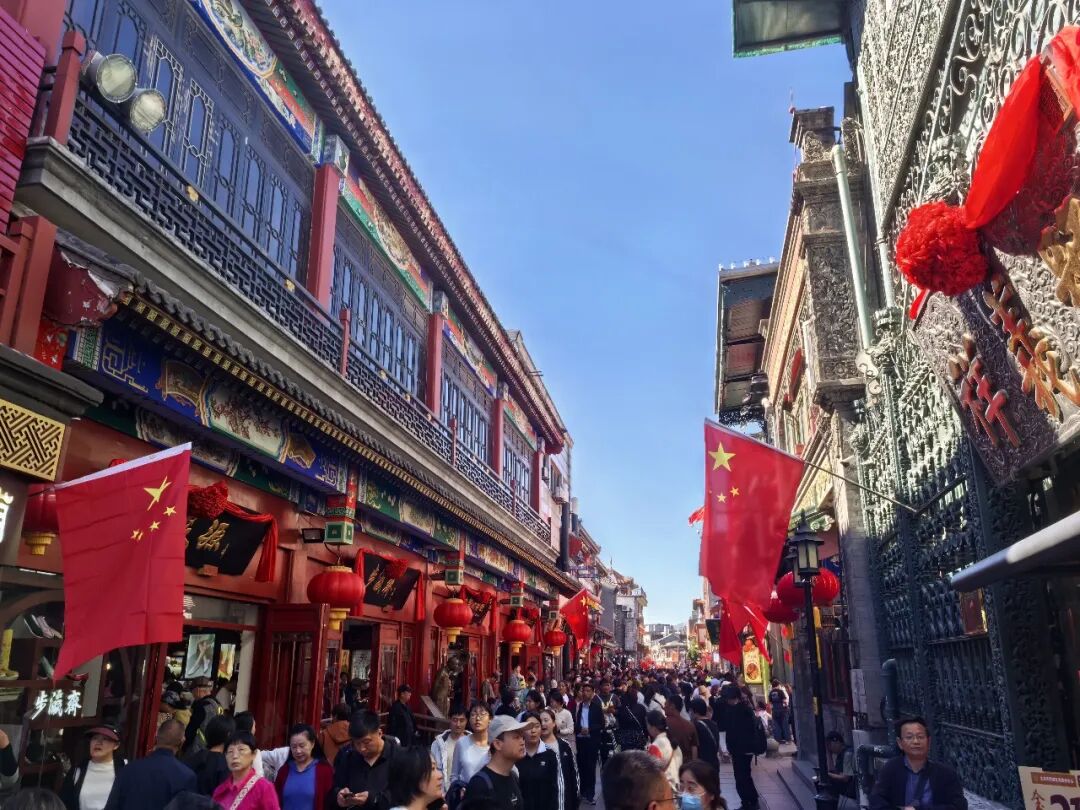
It is not an isolated case. During this National Day holiday, Haotou Old Street in Tangshan, Hebei was crowded with visitors, receiving more than 100,000 tourists per day on October 1st and 2nd. Some reports described that the crowd density in the old street reached 2.8 people per square meter. As of July 31, the total number of tourists received by Haotou Old Street Scenic Area in Tangshan, Hebei in 2026 exceeded 6 million, with a year-on-year increase of 55.79% in tourist volume and 57% in revenue, hitting a new all-time high. There is also Qilian County in Haibei Tibetan Autonomous Prefecture, Qinghai Province, which became popular because of Highway 9: 100,000 people flooded into this small county with a population of only 50,000 in a single day...
However, such bustling scenes are not the universal feature of all scenic spots across the country. While top-tier scenic spots have to restrict visitor flow due to overcrowding, traditional scenic spots in some areas still receive very few visitors. Many old scenic spots that rely on natural landscape resources have more empty parking spaces than parked cars, with only a handful of tourists in front of the ticket windows. On the core routes that used to focus on "sightseeing and check-in", it takes half a day for a single tourist group to finish the whole route. In 2026, how many people are still asking about Zibo barbecue and the spicy hot pot in Tianshui, Gansu?
This stark contrast between the two situations, like a mirror, reflects the core proposition of the industry: when the number of domestic trips has long recovered to the pre-pandemic level, and the high-speed rail and expressway networks have included almost all third- and fourth-tier cities into the 3-hour travel circle, tourists no longer distribute their trips evenly to all scenic spots. Some destinations are packed to the brim, while others have long been stuck in the dilemma of low passenger flow.
In other words, the cultural tourism industry has entered a brand new stage of development. What exactly does the market competition focus on? For a large number of regions that lack profound historical and cultural heritage and do not have national-level IP support, how to break away from the fate of being a one-off internet-famous spot and create sustainable cultural tourism popularity is no longer an optional bonus question, but a must-answer question related to their survival.
01
At this node where industry differentiation is becoming increasingly obvious, a series of unprecedented cultural tourism operations have emerged one after another — Erlongshan Xingluji Grand Forest Scenic Area in Guangzhou, Guangdong, and Shanhai Jiulongyuan in Zhenhai, Ningbo, Zhejiang publicly recruited "savage" NPCs before the National Day holiday. The threshold for the position is not high, only requiring applicants to be outgoing and good at interacting freely with tourists. Netizens joked that this is "going crazy legally" and you can even get a daily salary of 200 yuan.
Hundreds of kilometers away, Situ Ancient Town in Jincheng, Shanxi launched a total budget of 30 million yuan to recruit 100 NPCs from the whole society, among which the highest annual salary can reach 10 million yuan. The related topic hit the hot search list of short video platforms as soon as it was released, attracting more than 7,000 applicants.
These seemingly "wildly imaginative" operations were almost unthinkable in the cultural tourism industry ten years ago. At that time, scenic spots competed for 5A ratings, ticket pricing power, and the scarcity of core natural landscapes. No one would have thought that one day scenic spots would offer an annual salary of 10 million yuan to recruit a group of actors who can interact with tourists impromptu on the street.
Photography by Zhu Qiangsheng
Public data shows that the number of tourists received by the top 50 5A-level scenic spots across the country during the "National Day" holidays from 2023 to 2025 has experienced "three consecutive declines", with a cumulative drop of about 13%. At the same time, the top 10 most popular scenic spots during the 2026 National Day holiday are all located in small cities for the first time. County-level scenic spots represented by Haotou Old Street in Tangshan and Wansuishan Wuxia City in Kaifeng have strongly ranked among the top in the country, and the popularity of Wansuishan Wuxia City has surged 22 times year on year. Top-tier scenic spots in Beijing, Shanghai, Guangzhou are also very popular, but due to the large number of scenic spots in first-tier cities, the passenger flow is largely dispersed, and the pattern of "one single spot being overwhelmingly popular" has not been formed.
Another set of data is also noteworthy. According to data from the Ministry of Culture and Tourism, by the end of 2025, there were nearly 17,000 A-level scenic spots across the country, receiving 7.5 billion tourists throughout the year, with tourism revenue exceeding 550 billion yuan. However, in the six years from 2019 to 2025, the number of A-level scenic spots increased by more than 4,000 net, while the average annual revenue of a single scenic spot dropped from more than 40 million yuan to more than 23 million yuan. In September 2026, Anhui Province cancelled the 4A qualification of 6 scenic spots at one go, several of which were in an empty shell state of "no tourists, no staff, no operating projects".
All these point to the same core problem: China's cultural tourism industry has completely bid farewell to the old stage of reaping benefits passively by relying on resources, and entered a brand new competition cycle.
In the past few decades, the underlying logic of the domestic cultural tourism industry has always centered on "resource monopoly": with unique natural scenery and precious historical relics, you have a natural traffic moat. Famous mountains, large lakes, world cultural heritages, with endowment of resources, can maintain operation by relying on ticket revenue. Tourists mainly come for sightseeing and check-in, and leave in a hurry after half a day's tour, with secondary consumption and revisit rate remaining at a low level for a long time.
This is an era dominated by resource dividends. The core assets of scenic spots are the natural or historical relics on the land, and operation is more of a supporting work. As long as roads are built, parking lots are constructed, and basic reception work is done well, passenger flow will come periodically with holidays. The scarcity of resources determines the pricing power and upper limit of passenger flow. Regions with average resource endowment can hardly compete with top famous scenic spots no matter how much marketing budget they invest.
In this round of industry reshuffling, scenic spots with profound cultural heritage have shown stronger risk resistance. Kaifeng Qingming Riverside Landscape Garden Co., Ltd. is a typical sample. Public data shows that Qingming Riverside Landscape Garden received about 9.6 million tourists in 2025, ranking fourth among all single theme parks in China, first among 5A-level scenic spots in Henan, and it is also the only park themed on traditional Chinese culture among the top 5 theme parks in China. From 2023 to 2025, the company achieved revenue of 673.1 million yuan, 741.7 million yuan, and 746 million yuan respectively, with a cumulative revenue of more than 2.1 billion yuan in three years. The park has more than 400 traditional Song-style buildings and 38 large antique water boats, arranging about 410 on-site performances and about 280 NPC interactive performances every day.
However, the revenue structure of Qingming Riverside Landscape Garden also reveals a hidden worry: from 2023 to 2025, the total revenue from admission tickets and the performance tickets of the signature theater "Great Song · Tokyo Dream" accounted for 86.9%, 83.9%, and 83.3% of the total annual revenue respectively. The company's performance flexibility mainly depends on the scale of passenger flow, rather than per capita consumption and consumption frequency. In 2025, the gross profit margin of the company's catering and hotel services was only 3.2%, which means there are still a large number of secondary consumption scenarios in the park waiting to be activated.
Wansuishan Wuxia City has taken another path. According to its 2025 annual report, the number of tourists entering the park throughout the year reached 24.522 million, a year-on-year increase of 146.9%, and the comprehensive revenue was 1.27 billion yuan, a year-on-year increase of 136.5%. From 2019 to 2022, its annual revenue was still around 80 million yuan, with a nearly 15-fold increase in three years. The park has increased the proportion of secondary consumption to 37.8% through 1,500 NPCs, 2,000 daily interactions, and a set of "silver note task chain".
It is worth noting that the two scenic spots are both located in Kaifeng and both focus on Song culture, but their operation methods are completely different: Qingming Riverside Landscape Garden relies on the famous painting IP, with fixed large-scale dramas and Song-style streets as the core, and tourists walk along the designated route to watch the scenery and performances; Wansuishan focuses on martial arts and market life themes, with actors scattered in the streets and lanes, so tourists may be pulled into the plot and participate in tasks at any time. The former pays attention to meticulous polishing, while the latter updates content at a high frequency, and together they have made Kaifeng a high-density destination on the national cultural tourism map.
Haotou Old Street in Tangshan shows another path of cultural empowerment. Public reports show that the scenic spot has built different NPC systems around poets, Tang Dynasty culture, market characters, mythological roles and so on, forming an interactive matrix of more than 1,000 performers.
The most representative NPC "Li Bai" is played by a post-2000 young man. At first he could not even respond to the poems, then he studied poetry assiduously, learned rhythm and tonal patterns by himself, and even wrote poems on his own. Netizens commented that he "is answering the troubles of the world on behalf of Li Bai". On the first day of the Mid-Autumn Festival holiday, the ticket reservation volume of Haotou Old Street directly ranked among the top three in the country, with a single-day passenger flow of about 80,000. As of July 31, 2026, the number of tourists received by the block in that year exceeded 6 million, and the proportion of non-local tourists was close to 90%.
The "Li Bai" in Haotou Old Street does not rely on exaggerated physical interactions, but takes poetry as the core competitiveness to have impromptu conversations with tourists. This path is in sharp contrast with the NPCs in some scenic spots that attract attention by using vulgar and suggestive content.
The fundamental reason why scenic spots with profound cultural heritage can go further is that what they provide is not just "watching", but "immersion". Data from China Tourism Academy shows that in 2025, 68% of Chinese tourists listed "immersive experience" as the primary criterion for choosing scenic spots, far exceeding the 23% proportion that chose "landscape viewing". According to the "China Experience Economy Development Report (2025)" released by China Academy of Information and Communications Technology, by the end of November 2025, the market size of China's experience economy reached 18.4 trillion yuan, a year-on-year increase of 22.6%.
02
Now, a question that almost comes to people's mind immediately is put on the table: where is the way out for those scenic spots that lack strong cultural IP support? Where is the way out for those towns that are purely built by imitation and piling up elements?
The answer may lie in finding your own differentiated entry point — it does not have to be the "only history", but it can be the "only unique perspective".
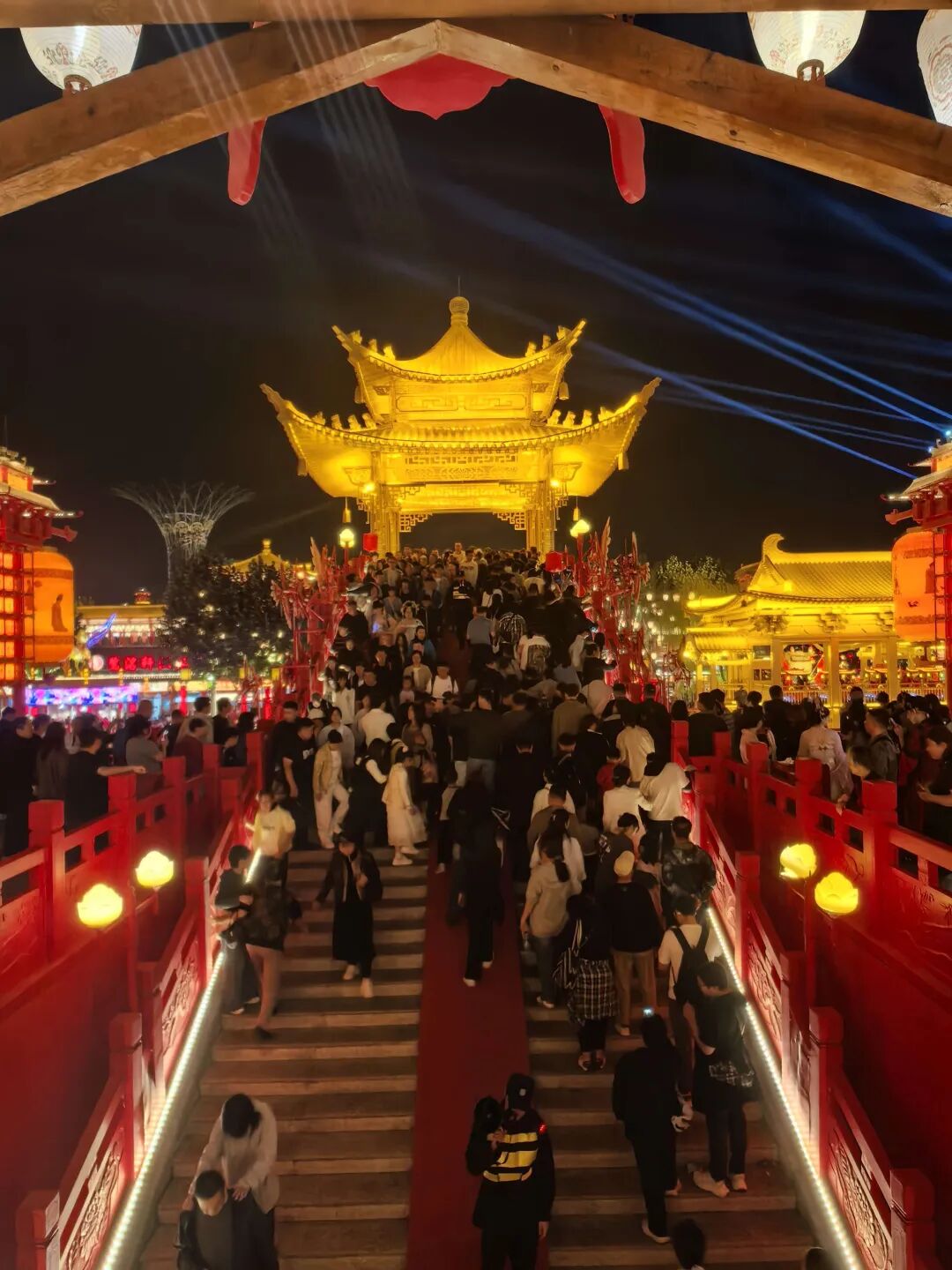
Shanhai Jiulongyuan in Ningbo provides a sample worthy of research. This scenic spot is located in Zhenhai District, belonging to the Hemudu cultural system that can be traced back to 7000 years ago. The overall culture of the scenic spot focuses on the Hemudu primitive tribe 7000 years ago. It is the only scenic spot that outputs the Hemudu cultural system, it does not imitate others, and cannot be imitated by others. Under this cultural positioning, the "savage" NPC is not a deliberate marketing stunt, but a rigid demand for the cultural expression of the scenic spot. On the first day of the Mid-Autumn Festival holiday, at 3:30 p.m., the instantaneous passenger flow of the scenic spot reached 4900 people, close to the maximum carrying capacity of 5281 people, so it was forced to launch the first entry flow restriction measure.
Photography by Zhu Qiangsheng
However, the replicability of the "savage NPC" model also brings new problems. Some insiders said that cultural tourism consumption has entered the era of emotional economy. In addition to enjoying the scenery, tourists need more sense of immersion and interaction. The savage-type NPC has a low threshold, strong sense of participation, and high emotional concentration, which just fills this gap. However, as more and more scenic spots pour into this track, the risk of homogenization is also accumulating.
It cannot be ignored that while NPCs bring traffic to major scenic spots, the content is obviously homogenized, the in-depth integration with regional cultural characteristics and traditional cultural connotation is insufficient, and there is a lack of unique cultural identifiers and memory points. Looking at major scenic spots, images such as Li Bai, Sun Wukong, and the Matchmaker are highly similar. From blooming everywhere to scattered scattered, what is copied is only the appearance, while the unique core competitiveness is missing.
The situation of Situ Ancient Town may be one of the epitomes of this anxiety. This 4A-level rural cultural tourism scenic spot built on a slag hill became famous by relying on the real-scene iron-fire performance "Millennium Iron Soul". Its revenue in 2024 was 133 million yuan, ranking first among 52 A-level scenic spots in Jincheng. However, the passenger flow is concentrated on weekends and winter and summer vacations. There are few playable contents in the park during the daytime, so tourists can only wait passively for the iron-fire performance at night. Ticket revenue accounts for 81% of operating revenue, and secondary consumption is weak. Zhou Xiaoming, founder of the scenic spot, released a video at the end of September announcing that he would "invest 30 million yuan to recruit 100 NPCs", with the highest annual salary up to 10 million yuan.
However, according to reports from some media, the passenger flow of the park was not crowded during the National Day holiday. Compared with many internet-famous scenic spots driven by young tourists, "most of the tourists here are families traveling with the elderly and children". What really supports tourists' reputation is still real benefits such as free three meals, characteristic snacks, and iron-fire performances. A local college student said after playing in the interactive area for more than an hour: "The NPCs here are relatively shy and hardly talk much."
Of course, the exploration of Situ Ancient Town is not without direction. It plans to recruit roles of Shanxi historical figures such as Guan Yu, Diaochan, and Wang Wei, aiming to shift from relying on the single hit performance "iron-fire" to building a continuous content system, benchmarking the full-chain operation model of Kaifeng Wansuishan.
The problem is that NPC is only one part of the experience system. Obviously, measures such as spending 30 million yuan on NPCs can drive a round of passenger flow, but cannot fundamentally solve the underlying problems such as thin profit structure.
If we broaden our horizons, we can see clearly behind this round of scenic spot differentiation