The community most sought after by game companies has been built into "an island" by Xiaohongshu.
Text by Er Ji
On October 6, the second last day of the holiday, RED LAND came to an end in the cool night.
When RED LAND made its debut last year, people exclaimed that the ACG community finally had its own "Disneyland", and every visitor was the "protagonist" of this "open-world adventure island". This year, this carnival has ushered in its first major version update: the venue has expanded from 80,000 square meters to 150,000 square meters, the number of game and anime IPs landing on the island has grown from 50 to more than 160, the event duration has also changed from 3 days to 5 days, and the first-ever ACG themed float parade has been launched, pushing the atmosphere to the climax.
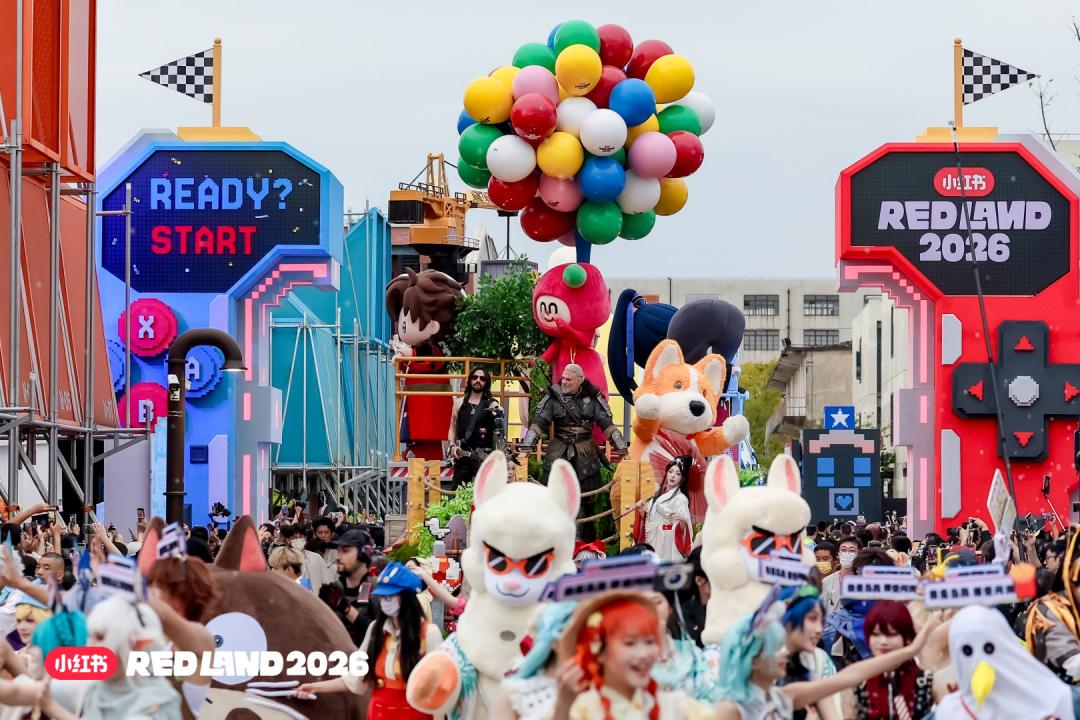
Day 1 Float
However, the "protagonists" have more or less complaints about the Fuxing Island venue.
It is not very close to the urban area, and the outdoor venue is easily affected by the weather. Last year, RED LAND was even jokingly called "ACG Training Simulator" by netizens: the booths are far apart, and visitors had to face high temperatures in August and dust on dirt roads.
This year, the infrastructure on the island has been significantly improved, and the roads and buildings have been renovated. The climate in October is also much more comfortable.
But two days before the opening of RED LAND, several annoying rains fell in Shanghai. While complaining on Xiaohongshu, everyone still came to the event regardless of the bad weather.
Bai Ban, the initiator of RED LAND, revealed that 70% to 80% of ticket buyers this year came from outside Shanghai. The "protagonists" are all fully prepared: itasha bags are packed, free fan-made gifts are ready, and the makeup, costumes and props for Cosplay are all complete.
Not only at RED LAND, every time I see these enthusiastic participants at various exhibitions, I feel a little admiration. They wear extremely inconvenient costumes, carry big bags and parcels, walk long distances, and wait in long queues. They spend money and energy just to attend a gathering of like-minded people.
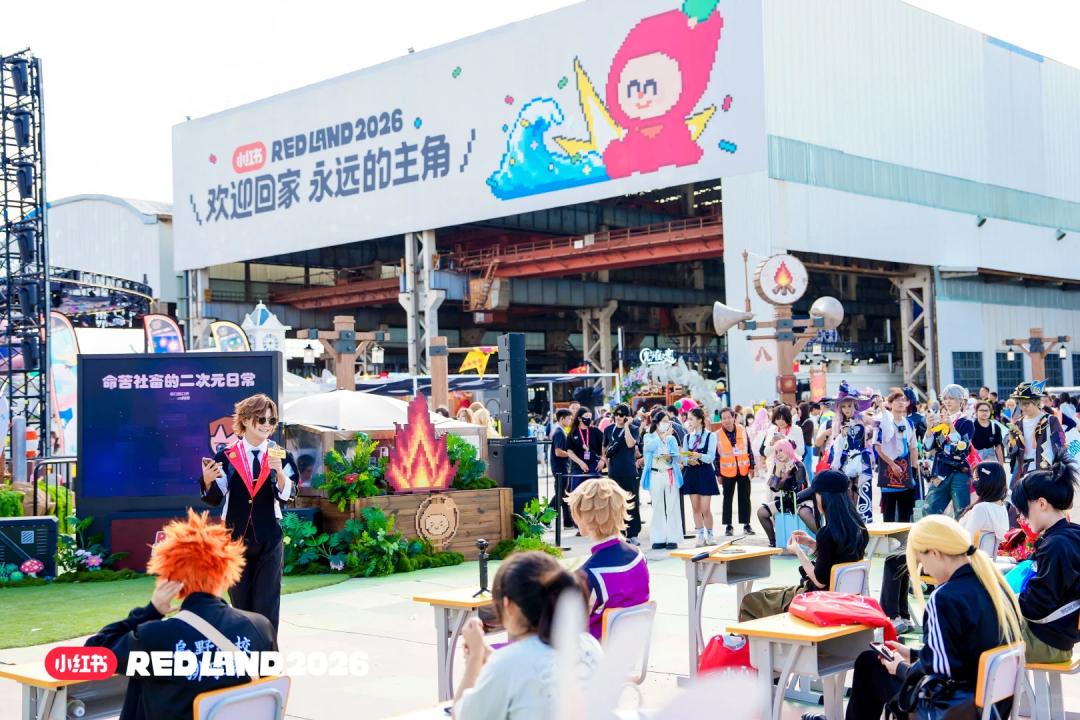
Coser at the scene
In fact, many game manufacturers are also studying why ACG audiences are willing to go through all this trouble. Nowadays, when community stickiness has increasingly become a rigid demand for game IPs, manufacturers hope to maintain the long-term relationship between players and IP through communities, so that players will willingly stay around the IP, continue to contribute out of passion, and continuously generate activity and value.
It seems not convincing enough to simply explain this phenomenon with "passion". Moreover, "passion" is not a KPI that can be directly written into the operation plan, it can grow, and it can also fade away.
We once published an article discussing "Why everyone is doing game promotion on Xiaohongshu". Now the question is reversed: why are players willing to stay on Xiaohongshu all the time, spontaneously produce high-value content, and build a lively IP community with real human presence?
At RED LAND, I seem to have found some answers.
01 IP is not only the core of curation, but also the anchor point that attracts audiences to the scene
Traditional ACG exhibitions are roughly divided into two types:
At game exhibitions, products are always the top priority. Players' attention is firmly locked on the new game launches, PVs, trial plays and content reveals of well-known manufacturers. Comic exhibitions pay more attention to the sharing, interaction, fan creation between players and the corresponding content consumption.
However, as long-running mobile games take the center stage of exhibitions, game exhibitions and comic exhibitions are gradually integrating. IP has begun to change from an accessory to products to the real protagonist of the exhibition. When a mature long-running game no longer lacks product awareness, the task of participating in the exhibition changes from "introducing itself" to "deepening the brand". New long-running games also need to establish this kind of IP awareness beyond gameplay from the very beginning to quickly occupy users' minds.
Previously, the IP activities of game exhibitions have already had a relatively mature plan: large installations restore the scenes in the game, official representatives interact with the audience, and the audience repeats the process of "queuing → making an appointment → following social media → checking in and interacting → receiving a big bag of peripheral gifts".
RED LAND has gone a step further in IP curation. Many booths do not directly "materialize" the content of the game itself into the exhibition, but combine the original platform characteristics of Xiaohongshu, follow the "daily life flow" content ideas covering clothing, food, housing and transportation, and carry out secondary conceptual packaging of IP.
Honor of Kings has created the "Xiao Wang 5A-level Farmer Friend Resort"; Honkai: Star Rail has set up a "Holiday KTV" to welcome Trailblazers to show their singing skills; Naraka: Bladepoint has transformed the booth into the filming set of "Naraka Friends Make a Fuss in Hollywood", and the large screen at the exit is the "premiere scene"; Delta Action has built the "Big Red Block", set up the Weilong Canteen, and the distribution of materials has become "getting meals".
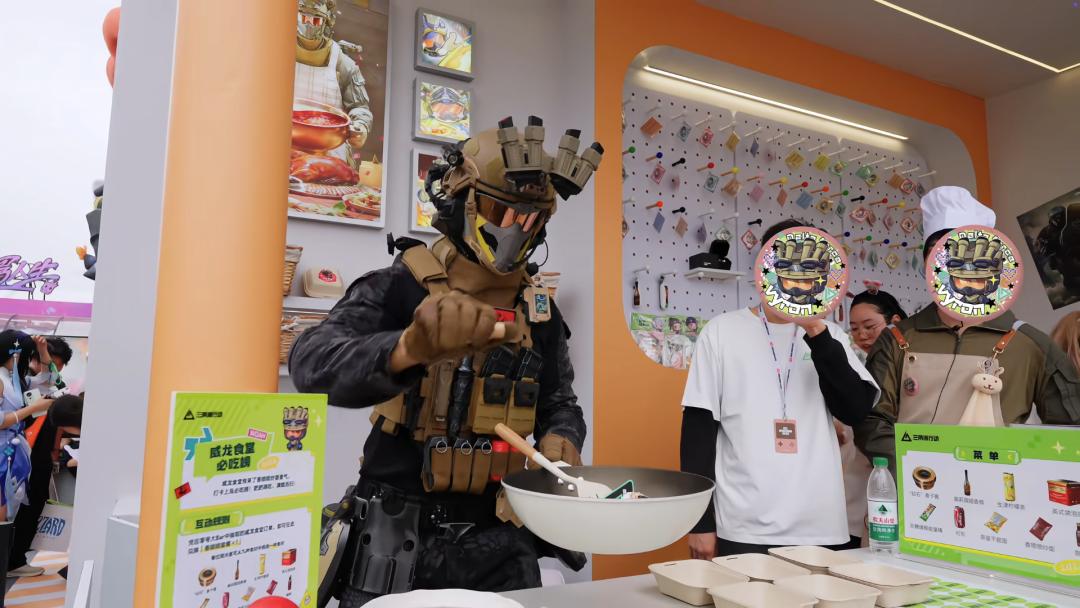
The pot is full of peripheral gifts, and players take them away in lunch boxes
Of course, not all booths have very complex concepts. The game itself of Starbrook Valley follows the life flow style, so they directly moved a coffee shop into the booth. The NPC Nalo in the booth is not a real person under the plush suit, but a Unitree robot. Players can import the memory of their own account into the system, and continue to communicate with AI Nalo offline.
The content of the Code: God Unspoken booth is more straightforward. As long as the "protagonist" makes an appointment for the game on site, they can get three-color ice cream. The three colors exactly correspond to the hair colors of the three male leads, which maximizes the symbolic IP design.
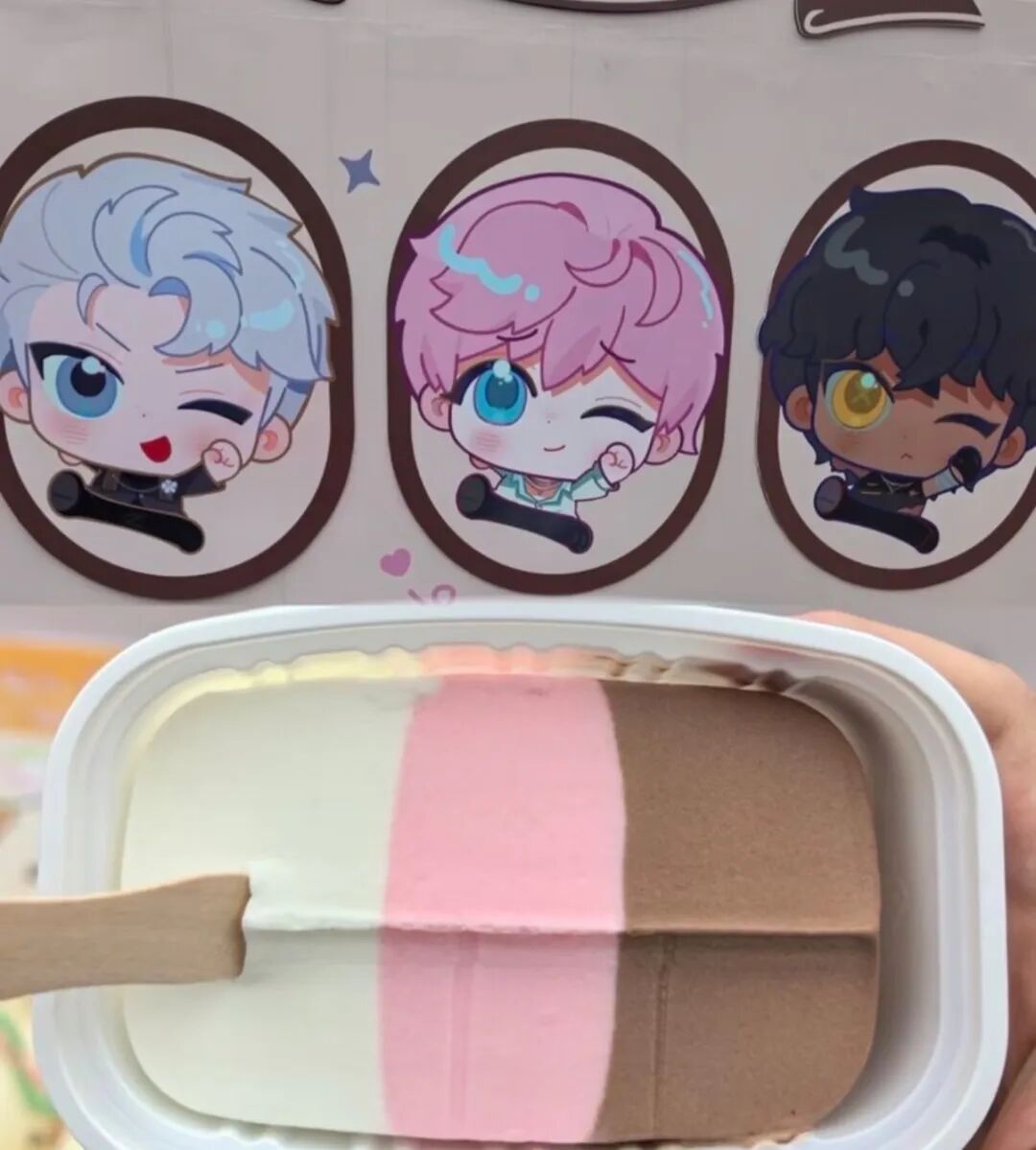
Three-color ice cream of Code: God Unspoken
This "IP in daily life" curation method is also in line with Xiaohongshu's content strategy in the game and anime section. Ying Huo, the head of Game ACG Community at Xiaohongshu, said that Xiaohongshu hopes to work with users to build the 2.5 dimension as a new generation lifestyle, explore how ACG interests can be integrated into daily life, so that activities such as Cosplay group outings, ACG-themed travels, and birthday celebrations for characters can naturally grow in the community.
Xiaohongshu does not just hand over the venue to manufacturers to develop freely, but participates in the curation from scene concepts, interaction mechanisms to daytime and nighttime gameplay. Bai Ban mentioned that some manufacturers were confused at the beginning why they needed to discuss together how to design the booth when participating in Xiaohongshu's event, but in the end, the two sides gradually worked out a joint plan.
The life-oriented curation idea also lowers the threshold for understanding IP content. For veteran players, it provides an opportunity to reconnect reality with the game; for new players who have not played the game, they can also skip the complex gameplay and settings, and enter the IP from a familiar life scene. IP is no longer just an object to be displayed, but also an entry point for new users.
02 Different circles, but similar ways to express passion
Xiaohongshu does not try to mix all game ACG users into one group. RED LAND still roughly divides the booths of ACG mobile games, high-DAU mobile games, console & 3A games, indie games, anime and other categories.
For example, the "Rebirth Trial Ground" gathers most non-3A paid games and TCG card games, and 3A and console content are concentrated in the independent indoor venue of "Turnaround Space Port". The C position of the outdoor area of "Turnaround Space Port" is given to the long-running high-DAU games under Tencent, as well as the "Three Royal Games" under miHoYo and the new work Starbrook Valley. The "facade" of the Golden Coastline is the two competitive IPs Naraka: Bladepoint and VALORANT. Pokemon occupies the riverside area exclusively. After entering the arch, the staff's address to the audience changes from RED LAND "protagonist" to Pokemon "trainer".
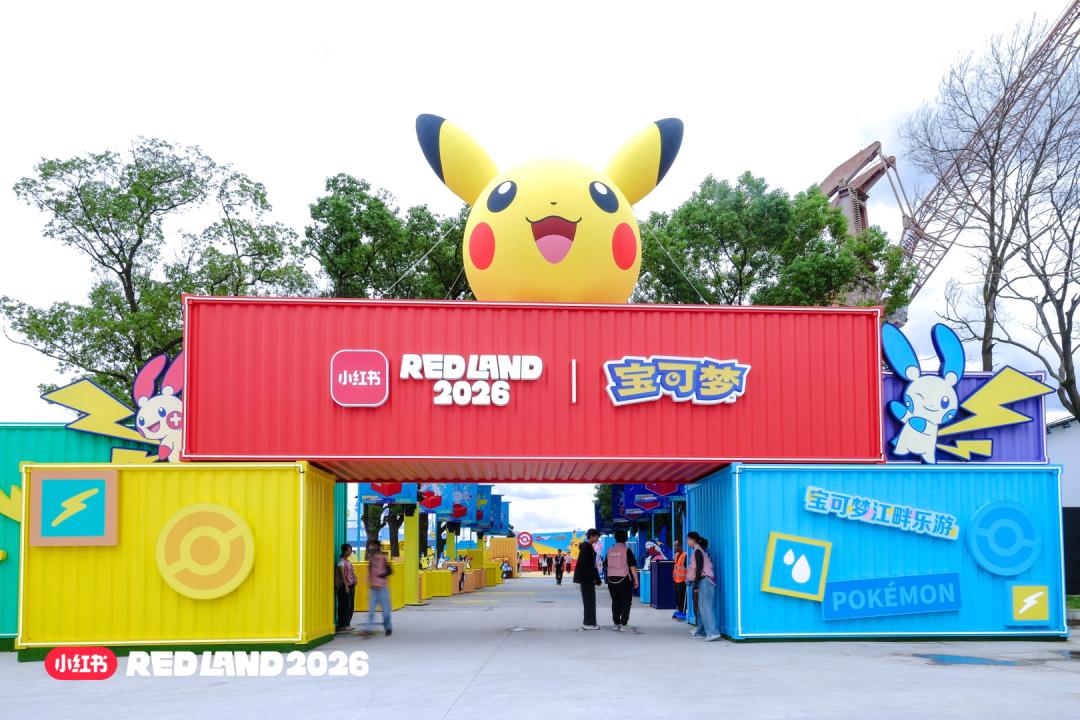
Entrance of the Pokemon zone
This actually fits the real community structure of the Xiaohongshu platform. Ying Huo also mentioned that from the perspective of the platform, games and ACG are never a general market, but a group of specific interest circles: enthusiasts of competitive games, console games, story-driven games, Cosplay, OC, and fan creation all have different needs.
However, after walking out of each booth and moving to the public space of RED LAND, it is easy for everyone to find that the differences between circles are not as big as imagined.
The most amazing scene for me during the exhibition visit was that when I was queuing in the restroom, I saw a group of seemingly unrelated people coming out of the men's restroom next door: Johnny Silverhand, an ACG elf, two staff members in between, then the US soldier from Delta Action, followed by two real security guards, then two muscular men in revealing costumes, who put on the Steve block headgear from Minecraft after going out.
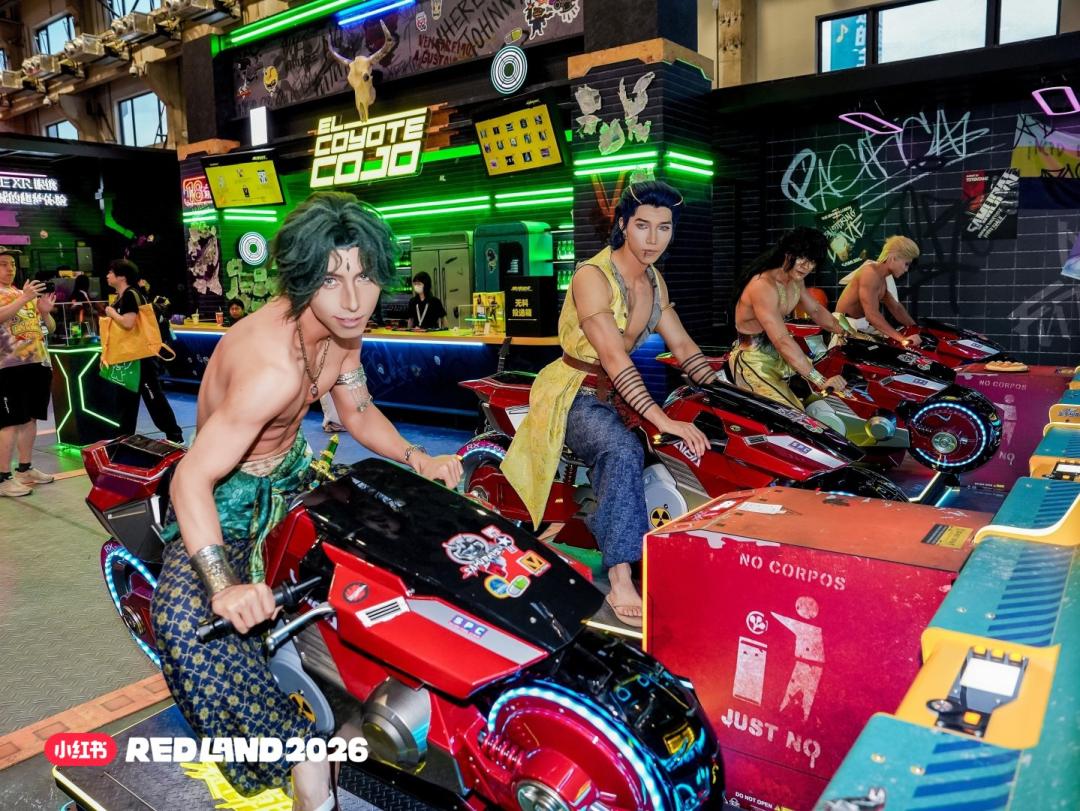
Official representative of Sultan's Game riding a motorcycle in Cyberpunk 2077
Although people like different things, the ways to express their fondness are very similar: buying official fan merchandise, making fan creations, hanging items with the logo of their favorite IP on their bodies, exchanging free fan-made gifts, and so on. I also saw many fans who chase celebrities at RED LAND, they also bring their character dolls and badges here, and it does not feel out of place at all.
Various forms of "free fan-made gift exchange points" are set up at the scene. In addition to exchanging with other "protagonists", you can also exchange for official free gifts themed "Chef God Potato" from Xiaohongshu official, to encourage players' creative behavior.
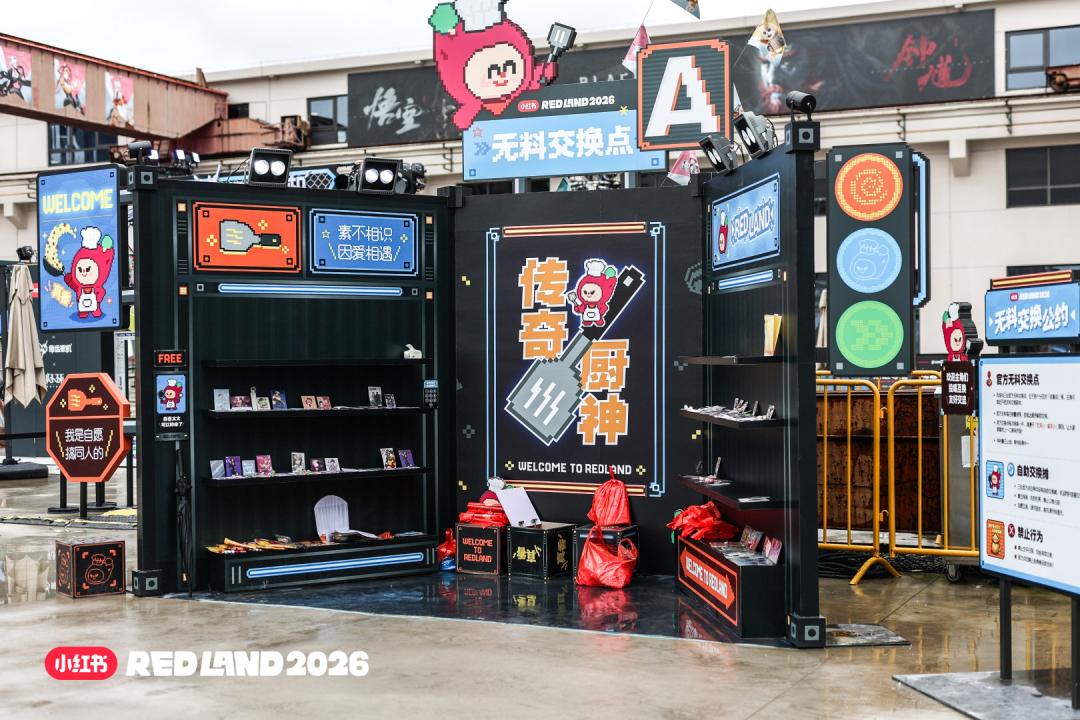
Official free fan-made gift exchange point
This may be the really interesting part of the concept of "2.5 dimension": it lets virtual culture enter the real offline life. Ying Huo introduced in the interview: In the past, people may regard game ACG as content consumption, such as watching a character, following a storyline, buying some peripheral products. But today, users will express their emotions, social relationships and life through Cosplay, fan creation, OC, character birthday celebrations and other ways. This is exactly the game ACG community culture that Xiaohongshu carries.
What RED LAND really enhances may not be "which circle you belong to", but "how you love something".
In this way, "breaking the circle" does not require deliberate arrangement. A person's interests are rarely single: console game players may also watch anime, play mobile games, chase celebrities, and make perler beads.
The float parade on the first day left me a deep impression: Wu Xie and Zhang Qiling on the head of the Justice Online float made the audience around me scream all the time. It turns out that after so many years, this "ancient CP" still has such a huge influence.
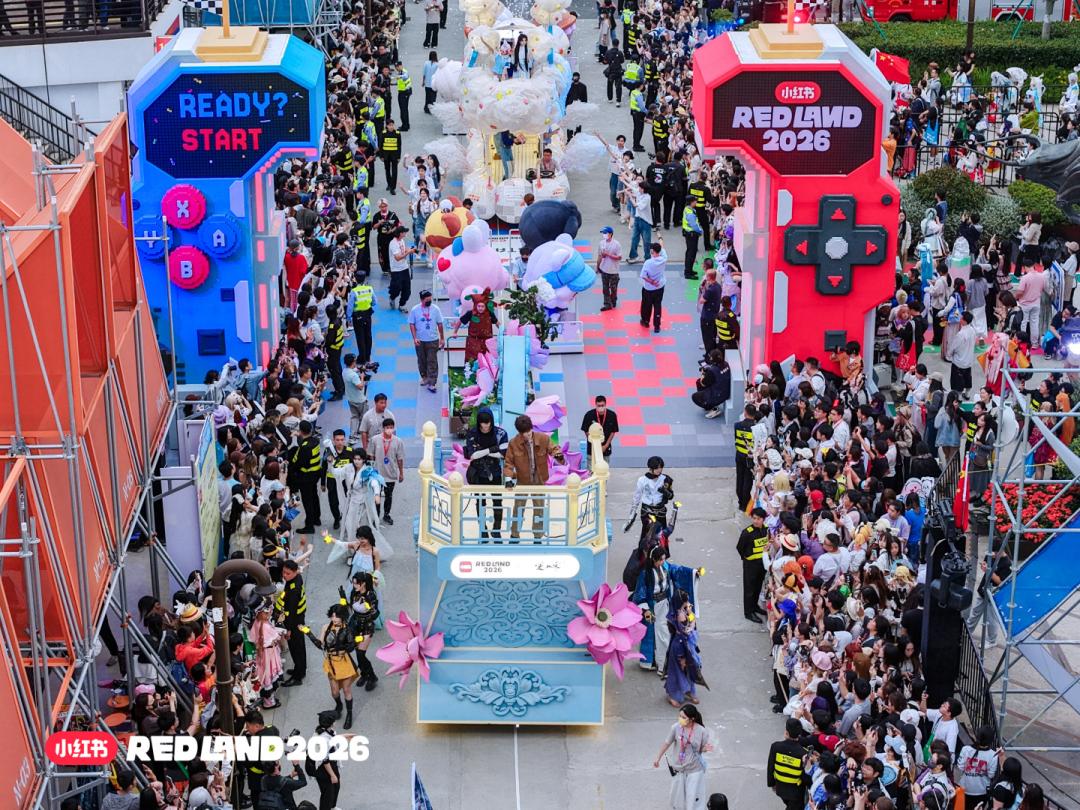
"Pingxie" CP on the head of the Justice Online float
Pokemon is also a very typical example. It spans games, anime and childhood memories, can trigger the resonance of different age groups, and becomes a common topic between different circles.
Ying Huo mentioned that many game users usually do not know that other games also have a large number of discussions and users on Xiaohongshu. Offline activities like RED LAND just allow people who originally played games separately to see each other directly, and also see more IP content that they were not familiar with before.
03 How does RED LAND become the happy hometown for ACG users?
Let's go back to the question at the beginning: why are the "protagonists" willing to spend hours doing makeup, spend money making a lot of props and materials, go all the way to a small island on the edge of the city, buy tickets to attend this grand event?
From another perspective, this question can also be rephrased as: Why can Xiaohongshu become the platform chosen by these content creators and community participants, allowing them to spontaneously produce high-quality content for a long time?
Besides passion, what other reasons are there?
At RED LAND, the first answer I saw is that the platform needs to attach enough importance to these people, and be willing to prepare infrastructure and logistical support for them.
This kind of attention is not just about creating a "creator zone", but starting from the most trivial needs. This year, RED LAND specially provided a dressing shed for Cosers. In addition to basic makeup supplies such as bright large mirrors, powder puffs and rubber bands, it also provides tools that are not common in daily life but often used by Cosers, such as hot