During this year's National Day holiday, AI glasses have found their truly practical use cases.
The popularity of outbound travel during this year's National Day holiday has reached a new high.
According to data compiled by Tianyancha from media sources and Tongcheng, the search volume for outbound travel during the holiday saw a 260% month-on-month surge, with Bangkok, Kuala Lumpur and Seoul ranking among the top popular destinations. Per Trip.com's statistics, orders for overseas airport pick-up and drop-off services on the first day of the holiday rose 43% year on year, while orders for local experience activities abroad increased by 37%.
Hundreds of millions of people traveled abroad, and many of them brought a new piece of equipment in their suitcases: AI glasses.
The reason is straightforward. Translating menus and road signs, giving introductions to scenic spots, navigating in unfamiliar cities, and recording journeys from a first-person perspective are exactly the four core features that AI glasses are designed for, each of which perfectly meets the rigid demand of outbound travel.
This year's National Day holiday marked the first large-scale real-world application of AI glasses in the true sense.
Zooming out, this holiday has witnessed a collective boom of "AI + travel". According to media reports compiled by Tianyancha, the usage of Fliggy's AI "Ask Anything" function during the National Day period increased by 297% compared with August. Tongcheng Travel's AI agent recorded more than 3 times the hourly traffic during the National Day peak hours than usual, and half of the travel plans can be generated within 1 minute.
Tourists ask AI on their mobile phones to make travel plans, and after arriving at the destination, they hand over more personal tasks to the glasses on their noses — the demand for both software and hardware was ignited at the same time during this holiday.
01
What has been verified in real practice
Recently, a reporter took two pairs of AI glasses with displays to Thailand for a six-day field test: one is Rokid Leqi, the other is Alibaba Qwen S1, both are mainstream models priced at around 3,000 yuan — the former ranked first in domestic retail sales in the first quarter of this year, while the latter topped the all-channel sales list in the first 5 months of this year.
Almost all the most practical functions are related to "visual experience". In the hotel buffet area in the morning, there were small Thai signs under each dish. After the glasses took a photo and translated it, the Chinese names of the dishes appeared neatly in front of the eyes in just two or three seconds. According to official data from Leqi, its translation function supports 89 languages and covers more than 100 countries. By taking a photo of a whole page of menu, each line can be matched with the corresponding translation, without the need to scan line by line.
At noon, the reporter took a public boat on the Chao Phraya River to the shopping mall, and asked the glasses to introduce the scenic spots along the way. It gave detailed introductions to the Grand Palace and Wat Arun, explaining the corresponding historical periods and highlights all along the river bank. It does not matter if the Chinese broadcast on the boat is inaudible, as the glasses can directly send the narration to the ears.
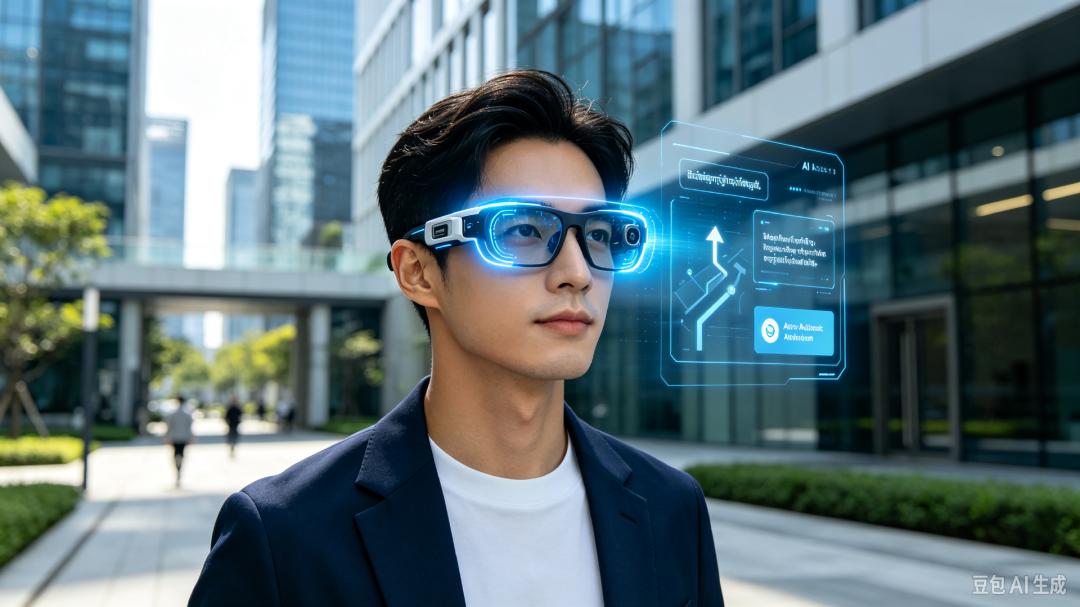
When it was time for meals, its role shifted from a translator to a food consultant. After inputting the name of the restaurant, it can search for reviews from netizens online — it clearly explains whether the restaurant is popular online, what the signature dishes recommended by customers are, and whether the lemongrass grilled fish and mango sticky rice are worth ordering. When encountering a menu written only in Thai and English, it will even ask about your taste preference after taking the photo: whether you prefer a stronger tea flavor or a stronger milk flavor, and then give targeted suggestions. This kind of "taking one more proactive step" reaction is very close to the experience of a personal travel guide.
First-person shooting is another repeatedly highlighted advantage. The reporter played parasailing in Pattaya, wearing the Qwen S1 to record the whole process of taking off from the deck, generating a video with a "bird's-eye view" perspective. Cycling enthusiasts give more direct feedback: the immersive first-person perspective when turning corners cannot be achieved by either mobile phones or action cameras.
When both hands are occupied, the camera mounted on the nose bridge truly shows its value. Scenarios like cycling, cooking, and holding children are all its ideal application scenarios.
02
The category has been developing rapidly
The confidence for real practice comes from the sufficiently large market foundation that has been established.
According to comprehensive media information from Tianyancha and IDC data, global shipments of smart glasses reached 14.773 million units in 2025, a year-on-year increase of 44.2%; shipments in the Chinese market hit 2.46 million units, up 87.1% year on year. Per data from Luo Tu Technology, the all-channel sales volume in China in the first half of 2026 was 909,000 units, a year-on-year increase of 85.5%, with sales revenue reaching 1.88 billion yuan, up 98.7% year on year — the growth rate of sales revenue is faster than that of sales volume, which indicates that the average price is rising, and consumers are willing to pay more for better configurations.
The AI glasses co-developed by Meta and EssilorLuxottica sold more than 7 million units in 2025, while the total sales volume of the previous two years was only 2 million units. Production capacity planning is also catching up, as EssilorLuxottica plans to raise its annual production capacity to 10 million units. At Meta's Connect conference in September this year, it launched three new products at once: the Ray-Ban Display with a display is priced at 799 US dollars, pushing AI glasses from the stage of "listening and shooting" to the stage of "visual experience"; the entry-level Ray-Ban Gen2 is sold at 379 US dollars, and the Vanguard co-branded with the sports brand Oakley is priced at 499 US dollars, covering high, medium and low price segments at one time.
In the domestic market, smart glasses were included in the national subsidy program for the first time this year, with a subsidy ratio of 15% and a maximum subsidy of 500 yuan, meaning that consumers can save 450 yuan when buying a pair of 3,000-yuan glasses.
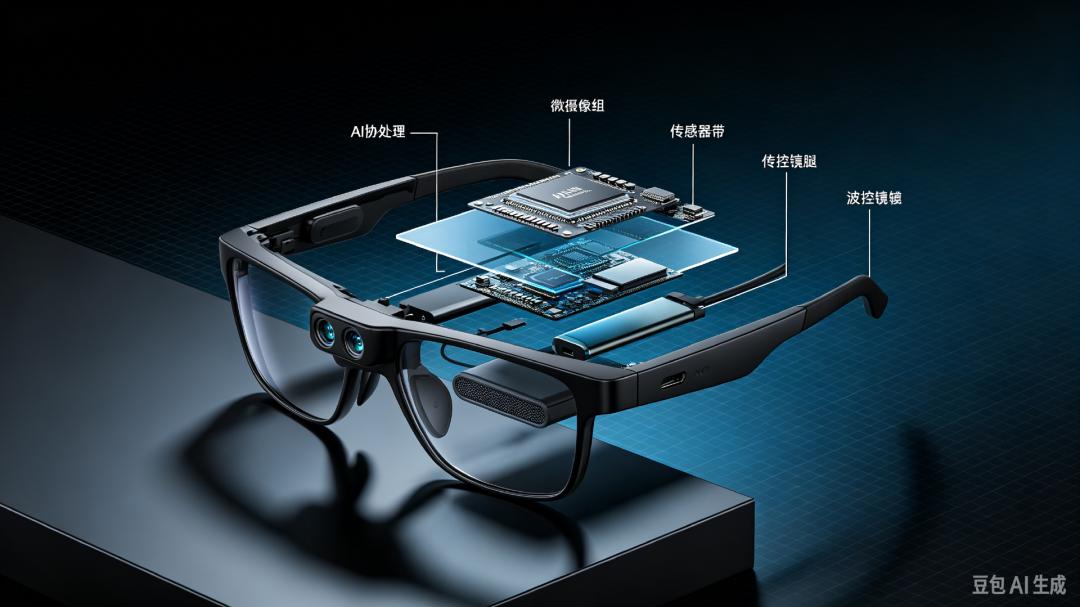
The products themselves are becoming more functional at a speed visible to the naked eye.
Two years ago, AI glasses only had audio and shooting functions, but this year's mainstream models have made the display a standard feature — translation results are directly projected on the lenses, no need to check the mobile phone. Meta's 799-dollar Display is a landmark product, and domestic manufacturers' display-equipped models have also been launched on the market in batches. From audio support, to shooting, then to visual presentation, this category has gone through three generations of evolution in just two years.
In terms of market pattern, IDC predicts that Chinese manufacturers will account for 45% of global smart glasses shipments in 2026, with the corresponding shipment volume expected to reach 22.67 million units, a year-on-year increase of 56.3%.
The price range of market players has been very wide: among AI glasses focusing on shooting functions, Shineyo is priced at 1499 yuan, Thunderbird V3 at 1799 yuan, and Xiaomi at 1999 yuan; among mainstream models with displays, Qwen G1 costs less than 2000 yuan after national subsidy, Rokid Leqi is priced at 2499 yuan, and Huawei's audio glasses start at 1699 yuan.
From entry-level models priced at several hundred yuan to flagship models priced at nearly ten thousand yuan, there are products from Chinese manufacturers in every price segment. The top ranks of online sales are almost occupied by Chinese manufacturers including Thunderbird, Rokid, Qwen and Huawei.
03
Outbound travel points out the next development direction
The greatest value of this National Day real practice is that it marks the next iteration direction for the industry.
Battery life and weight are engineering issues that manufacturers are well aware of; what is more worthy of discussion is the ecosystem. Outbound travel is the most natural application scenario for AI glasses — translation, tour guiding and navigation are all high-frequency rigid demands, which often happen when both hands are occupied and it is inconvenient to take out the mobile phone. Whoever can access the international ecosystem can seize this most high-paying scenario.
Relevant actions have already been taken.
Alibaba announced at MWC in March this year that Qwen will enter the international market within 2026, and achieve deep adaptation with international ecosystems such as Google Maps and PayPal. The deep integration between Qwen S1 and AutoNavi has already verified the experience of navigation projection and arrows following head movement in the domestic market — commuters do not need to look down at their mobile phones, as the route is directly projected in front of their eyes. Replicating this experience overseas is only a matter of time and rhythm.
The reserve of translation capabilities is also being strengthened.

Leqi's translation function already supports 89 languages and covers more than 100 countries; Qwen has connected the scenarios within the Alibaba ecosystem, so that booking flights and hotels abroad can be completed with one sentence, and real-time prices are directly retrieved from Fliggy's database. Industry reports from securities firms list real-time translation as a high-elasticity scenario in the second echelon of AI glasses, backed by hundreds of millions of outbound passenger flows every year.
The demand is actually two-way.
Chinese people need translation when going abroad, and foreigners coming to China also need it — inbound tourism has continued to heat up in the past two years, and there are more and more foreign faces dragging suitcases to find their way on the streets. A pair of glasses that supports real-time mutual translation is also a rigid demand for them.
The passenger flows of both outbound and inbound travel make this scenario large enough.
The application scenarios of glasses are not limited to traveling. During commuting, navigation can be directly projected in front of the eyes without looking down at the mobile phone; during cross-border meetings, the foreign language spoken by the other party can be converted into subtitles in real time; when visiting museums, the introduction will be played immediately after you look at the exhibits. Outbound travel is the most concentrated realization of these capabilities, while daily life is their real main battlefield.
You can see how big the outbound travel market is from the passenger flow data. According to comprehensive media information from Tianyancha, the cross-regional passenger flow across the country reached 334 million person-times on the first day of the holiday, and the number of domestic scenic spot tickets sold on the first day of Fliggy increased by 30% year on year.
As long as people are on the move, the demand for AI glasses will exist.
04
After the real practice
The significance of the first large-scale real practice does not lie in how beautiful the report card is, but in that the demand has been truly verified: translation, tour guiding and shooting are indeed functions that people are willing to pay for, and only the glasses form can perfectly meet these demands.
Mobile phones can of course also translate, navigate and take photos, but in those moments — when you are holding a dinner plate, holding the ship's rail, or gripping the handlebars of a bicycle — when you cannot free your hands, the pair of glasses on your nose bridge is the only solution. From audio support to shooting, then to display, AI glasses have completed the transformation from a novelty to a practical product in just two years; outbound travel, the largest natural scenario, is exactly at the position where its capabilities can be fully realized.
In this year when sales volume doubled, the demand is clear, and the iteration direction is also clear. The list of market players is long enough, the price is affordable enough, and the scenario has just been verified by hundreds of millions of people during the holiday. What remains is to wait for the next generation of products to realize these functions.
When we look at the AI glasses in people's suitcases next National Day, they will most likely be a completely different picture.
This article is from the WeChat official account "LingTai LT" (ID: LingTai_LT), author: Zhang Qian, editor: Hu Zhanjia, published with authorization from 36Kr.