A camper van owner got trapped in a public toilet during the National Day holiday return trip.
01
Last night, Lao Zhou, who had been on a self-driving trip in Xinjiang for a week, suddenly said in amazement to me on WeChat that it was so absurd, absolutely absurd.
I thought he had seen some spectacular scenery, but Lao Zhou said he had been to Ruoqiang County, where there was a public toilet next to the county government office, and the nearby parking lot was crowded with camping vehicles, so his car could only be temporarily parked by the roadside.
What surprised him even more was that some people were waiting at the gate of the toilet with basins to fetch water.
Lao Zhou talked with several car owners and learned that they slept in their cars at night. Some of them drove electric vehicles, laid down the rear seats, spread cushions, turned on the air conditioner in the car, and had all the arrangements for overnight stay done properly.
But when they got up in the morning, they had to find a place to wash their faces and brush their teeth.
One car owner explained to him that parking next to the public toilet made it convenient to use the toilet at night and fetch water in the morning. It was certainly comfortable to drive to places with beautiful scenery, but at night, they could only worry about whether there was a toilet nearby.
Lao Zhou was just passing by, and after listening to their stories, he realized that the parking space next to the toilet had other uses for people sleeping in their vehicles.
What Lao Zhou experienced is just a tiny part of the huge road traffic volume during this year's National Day holiday.
Over the seven-day holiday, the number of cross-regional trips across the country is expected to reach 2.13 billion, with an average of 300 million trips per day, equivalent to 1.7 times of the usual level. New energy vehicles pushed the highway charging volume to a peak: on the first day of the holiday, the national highway charging volume soared to 28.0469 million kWh, hitting a single-day record for holidays, with a year-on-year increase of 60%.
Stories of queuing for charging soon went viral on social platforms. A car owner from Chengdu drove to Inner Mongolia, took a number at the service area and got the 99th position, waiting for a full five hours to get their vehicle charged. In screenshots circulating on social platforms, some people took a number as early as the wee hours and got the number A140, while the staff told them that only the 29th vehicle was being charged at that moment.
Charging is only a minor trouble for the bed vehicle group, while using the toilet, fetching water and washing are the major problems for self-driving travelers during the National Day holiday.
Also on social media, public toilets in Tekes, Xinjiang were featured in warning posts. Some tourists posted notices on public toilets in Tekes, stating that the water and electricity are only for the toilet's own use, and external drawing or private connection is prohibited. Delingha was also specifically named, to remind later travelers that public toilets there do not allow water fetching.
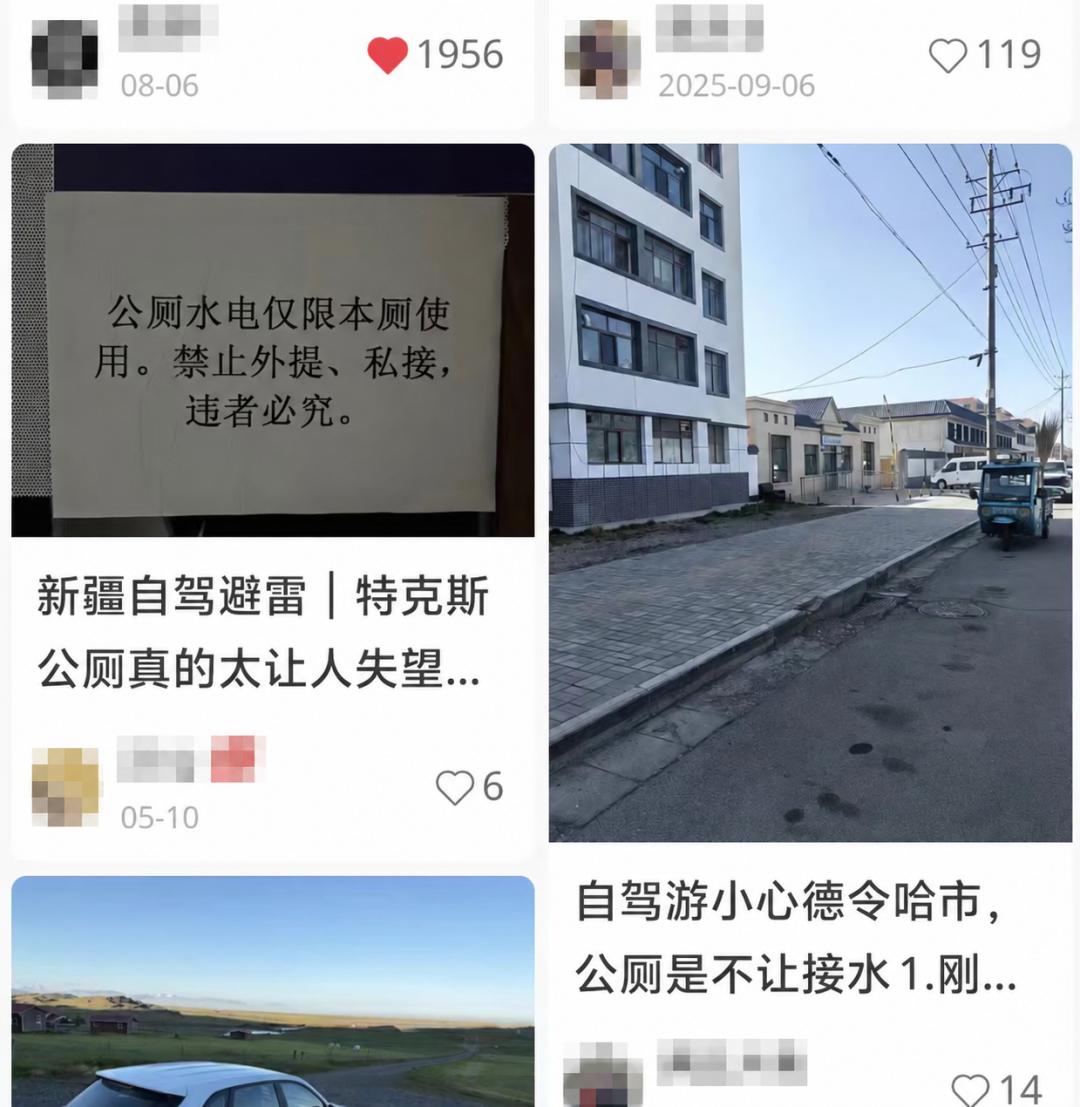
Few people in the comment section stood on the side of the notice. Some people exchanged tips on how to negotiate with the administrators, some shared which service area had unlimited hot water for public use, and some asked where the bed vehicle travelers could go next.
Looking at the mobile phone screen, one can't help but sigh that the descriptions of distant places in self-driving travel guides rarely mention where the wash water comes from after waking up in the morning.
In fact, the Ministry of Transport has previously reminded that the highway charging demand generally shows the feature of dispersion on the outgoing trip and concentration on the return trip. When returning, car owners need to reserve enough time for energy replenishment on the way.
When the anxiety of energy replenishment and accommodation converge at the same center, people returning from trips during this year's National Day took public toilets as the center, moving around within a radius of about 100 meters to seek for resources.
02
The phenomenon of bed vehicles parking and sleeping next to public toilets suddenly became prominent during this year's National Day holiday. Convenience is only the superficial reason, and helplessness is the real answer.
Back in this summer vacation, Travel Business Review exclusively reported the article "The Bed Vehicle Camping Army Has Started to Use Hotel Facilities for Free".
At that time, there were already bed vehicle guides in Delingha, Qinghai that took hotels as free supply points. Some people parked their cars near the public toilet downstairs of Longheng Hotel to fetch water, and some entered the lobby of Rongcheng Hotel to use the toilet. Because Yihai Hotel allowed parking and charging, its toilet location was also specially marked in the guides.
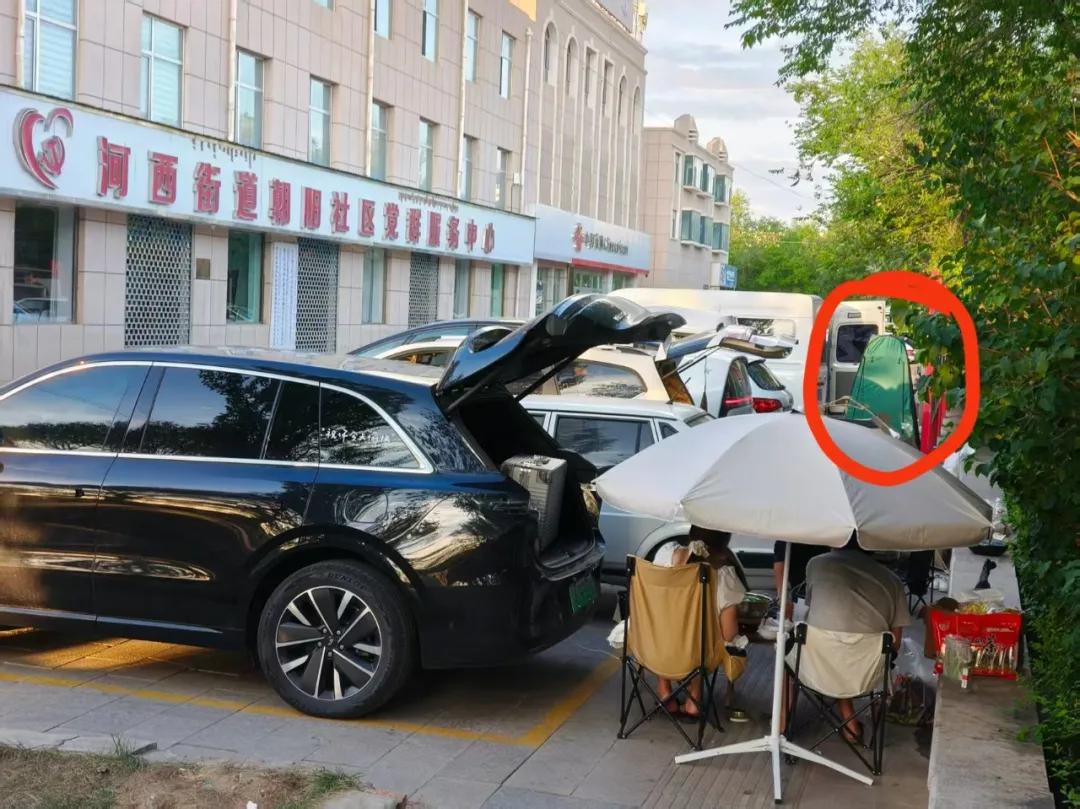
Photo provided by the interviewee
Some car owners even set up shower tents near the hotels, used portable gas canisters and stoves to cook, slept in their cars, and borrowed the hotels' facilities for parking, using the toilet and fetching water.
After the report was released, many hotel owners sent me private messages, saying that they had also noticed similar situations.
At first, the front desk staff were mostly willing to offer convenience to long-distance self-driving travelers, but after the bed vehicle guides sorted out the free parking, toilet and water sources as fixed points and posted them on Xiaohongshu and Douyin, sporadic borrowing soon turned into group arrivals.
The attitude of the hotels changed accordingly.
Some hotel owners said frankly to me that they not only began to tighten the management of parking lots, but also ordered their staff to keep an eye on the toilets and water fetching points, for fear that their hotels would be marked as new free campsites.
Lao Zhao, the person in charge of a state-owned hotel in Delingha, said that he was really helpless. Although persuading people to leave would easily lead to complaints, letting them stay would bring huge pressure on cleaning and safety management.
The concerns of hotel owners are not unnecessary. In August this year, a Chongqing tourist surnamed Wang in Yining, Xinjiang complained that the hotel charged 150 yuan for the vehicle overnight accommodation fee, and the hotel once refunded the fee and compensated 1000 yuan.

The surveillance footage released later showed that many people in his group also set up canopies in the courtyard, cooked, did laundry and used the hotel's water and electricity. Chongqing Daily Group later apologized for the verification omissions in its report.
After this incident, many hotel owners became extremely wary of bed vehicle guests.
However, car owners also have their own grievances.
In their view, the hotel parking lots are empty anyway, so entering to use the toilet and fetch a basin of water does not occupy the hotel's guest rooms.
The two sides obviously have completely different understandings of kindness, but in any case, after the hotels tightened their management, bed vehicle owners began to look for more stable alternatives.
Public toilets usually have parking spaces, which can meet the demand of using the toilet at night, and there is lighting nearby. If they can fetch water there, their needs for washing and cooking the next day can also be satisfied.
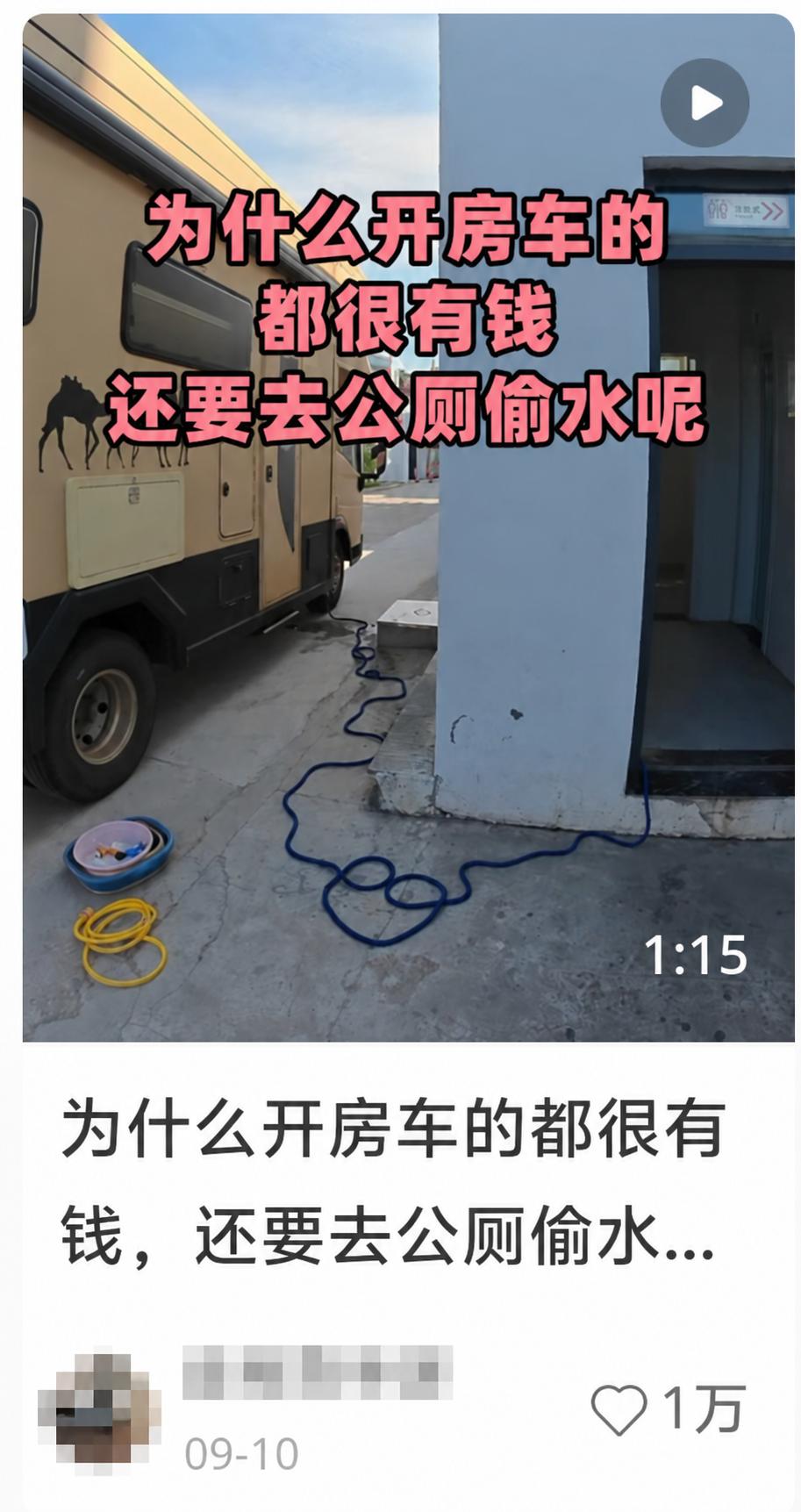
For the bed vehicle group, the public toilet sign on the map is as important as scenic spots and charging stations.
The problem is that public toilets were originally designed for short-term visitors, not for a large number of vehicles to stay overnight.
When more and more people come with buckets and basins, the limited water, electricity, parking spaces and cleaning capacity are quickly overloaded. The ban on external water fetching and private electricity connection at public toilets in Tekes, and the news that water fetching is not allowed in Delingha, all show that these free supply points are under huge pressure.
When late autumn comes to northwest China, the conflict will become more prominent. Continuous power consumption for heating at night and low temperature reducing vehicle range may lead to queuing at service areas during the return trip.
Car owners thought they could stop anywhere at will after leaving hotels, but when they actually hit the road, they found that they could take the bed with them, but the supporting services behind accommodation could not be taken away.
As a result, the bed vehicles blocked from hotel entrances finally gathered next to public toilets.
03
With public toilets full of bed vehicles, the first batch of returning self-driving travelers have begun to look for alternative solutions.
The atmosphere in a bed vehicle self-driving group I joined is also changing quietly. When setting off, car owners discussed enthusiastically how to lay beds in the rear seats and where they could park for free.
Now at the return stage, the questions in the group have gradually turned into which hotels along the way still have vacant rooms and whether there is staff available for check-in when arriving in the wee hours.
Some car owners who shared their vehicle sleeping experience a few days ago started to search for hotels when returning. After finding that only more expensive room types were left, they paid for the rooms after hesitating for a long time, and then joked in the group that if you can't beat them, join them.
Bed vehicle owners also know that last-minute hotel booking means they have to accept the high prices during the holiday season. Now that they are looking for rooms when their bodies can't hold on anymore, there are not many choices left for them.
After driving for several hours continuously, being able to take a shower and lie down to sleep is obviously more important than continuing to save the accommodation fee.
It seems that hotels have won back these guests again.
But from another perspective, the fact that car owners took such a long detour to finally enter the hotel lobby shows that hotels still don't fully understand their needs.
During this year's National Day holiday, Mr. Ma, the person in charge of a hotel in Lijiang, said to me frankly that the tourist flow was not low, and his hotel was fully booked quickly, but many local inns could hardly provide any other products except accommodation, and their value-added services were obviously insufficient.
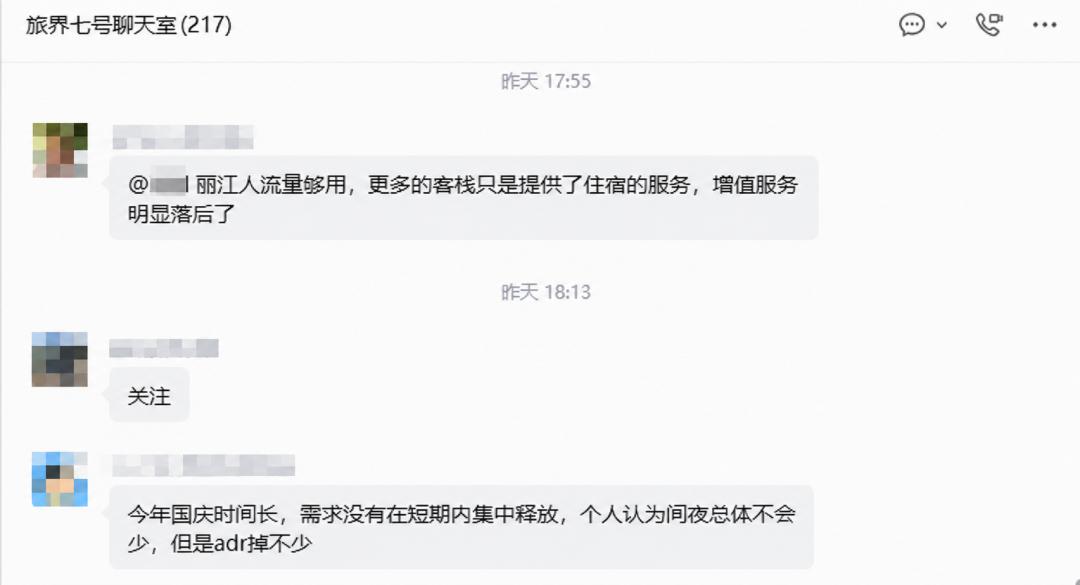
In the industry community built by Travel Business Review, some practitioners predict that this year's holiday is relatively long, and the demand has not been released intensively in a short period. The total number of occupied rooms will not be too small, but the ADR (average daily rate) has dropped significantly.
The coexistence of full occupancy and ADR decline means that it is difficult for hotels to digest the peak tourist flow only by relying on room prices. After all the rooms are sold out, there are still a large number of tourists staying in the surrounding area, who cannot enter the hotels and have no suitable consumption channels.
Bed vehicle owners are exactly part of this group.
Objectively speaking, most destination hotels do not need to open all their facilities for free. They can turn their idle capacity into paid products, for example, set up an independent parking area, charge an overnight fee per vehicle, allow car owners to use the shower room, charge for water supply by usage, set opening hours for the laundry room, and the restaurant can also sell breakfast to them.
Such arrangements will not occupy the guest rooms, and can also attract those who park next to public toilets to the hotels.
It is worth mentioning that hotels with charging facilities have more advantages. Since vehicle energy replenishment takes time, when car owners have arrived at the hotel, the front desk can provide short-term rest products.
Even if the hotel is fully booked on that day, catering and shower services can still generate revenue. Hotels can even mark the bed vehicle service on the booking page, so that car owners can know the charging standard before departure.
In fact, with the boom of self-driving tours during the National Day holiday, city managers also have their own concerns, and hotels can play a role in easing the pressure on cities.
After all, if a large number of vehicles park near public toilets for a long time, it will increase the cleaning pressure and easily cause road congestion. Simply prohibiting water fetching will only make bed vehicle travelers keep looking for the next public facility.
Counties can plan paid parking areas near highway exits or tourist centers, and then surrounding hotels can provide shower and catering services, bringing the scattered demand on the street into normal business operations.
As for online travel platforms, just like pet travel services that allow bringing cats and dogs, they can completely add the information of available overnight parking, shower services and water supply rules to their pages.
Looking back at the scene Lao Zhou saw in Ruoqiang, the basin placed at the gate of the public toilet seems to be a tool for bed vehicle owners to save money, but it also exposes the gap in supporting services along the way.
This article is from WeChat official account "Travel Business Review", author: theodore Xishao, republished with authorization from 36Kr.