Will the "Meituan" of the embodied intelligence world ever be able to make its business model work?
In 2016, autonomous driving company Comma.ai launched a dashcam application called Chffr. After users downloaded and installed it, their mobile phones would turn into a dashcam. When mounted in front of the windshield, the app automatically records data during driving, which is then uploaded to the company's cloud server for autonomous driving model training.
This was an early attempt at data crowdsourcing for AI in the physical world. According to the founder's vision, if enough vehicles were equipped with this application, the company could accumulate massive driving data, train a powerful autonomous driving model in a short period of time, and then deploy it back to every vehicle to form a closed commercial loop.
Ten years later, this company has not become a leading player in the autonomous driving industry. The focus of industry discussion has long shifted to Tesla FSD, and true full autonomous driving has not been realized as expected.
Nowadays, the embodied intelligence industry has adopted the same strategy. Overseas there is the Index platform from Figure AI, while in China, there is Mifeng Pai, a product under Mifeng Technology which is affiliated with Agibot.
At the end of September, Mifeng Technology officially released Mifeng Pai, an embodied data crowdsourcing platform, which consists of three parts: the self-developed MEgo data collection device, the Mifeng Pai App, and the data governance engine MEgo Engine. It claims to be "the world's first full-category high-quality physical AI data crowdsourcing service platform".
The concept of crowdsourcing is most commonly seen on food delivery platforms. It mainly gathers a large number of human resources in a short time through a low-threshold and fast monetization method. On the Mifeng Pai data crowdsourcing platform, users can take on data tasks required for robot training, collect data in exchange for payment. After receiving the data, Mifeng will carry out operations such as governance and classification, and then package the processed data for robot training.
The problem is that crowdsourcing only solves the problem of "quantity". Embodied intelligence is a far more complex AI application scenario in the physical world than autonomous driving. It not only needs the local motion capability similar to that of autonomous driving, but also requires fine desktop operation and understanding of more complex physical laws. Data crowdsourcing for autonomous driving has not achieved a feasible commercial model after ten years of development. When applied to the more challenging embodied intelligence field, can it really work well?
01. Earn 20 yuan per hour, embodied data enters the crowdsourcing era
A courier in a logistics center sorts express parcels with a head-mounted display for an hour, a mother does a meal while wearing the device, and a staff member at a tourist attraction records their daily process of pricing and labeling. After these data are uploaded and reviewed, users can get paid at a rate of 10 to 20 yuan per hour.
This is how Mifeng Pai works. After downloading and opening the App, users will first see a task hall with 22 major scenario categories, including production, life services, catering, logistics, medical care, residential and other sectors. Each scenario corresponds to dozens or even hundreds of tasks, marked with the remaining available slots for application, as well as the payment for each hour of data collection, usually ranging from 10 to 20 yuan.
If you want to earn this extra income, you need to apply for a set of data collection equipment first. The specific process is to contact the local service outlet, pay a certain deposit and rent after passing the review, then obtain the equipment through on-site pickup or express delivery. After downloading the Mifeng Pai App and binding the device, you can start to take on specific tasks. The rent of the device is 39 yuan per day, and 19 yuan during the promotion period. The task payment is composed of the basic pricing of the city plus dynamic subsidies. Calculated at 10 to 20 yuan per hour, during the promotion period, you need to complete 1 to 2 hours of valid data collection to earn back the daily rent, and 2 to 4 hours after the rent returns to the original price.
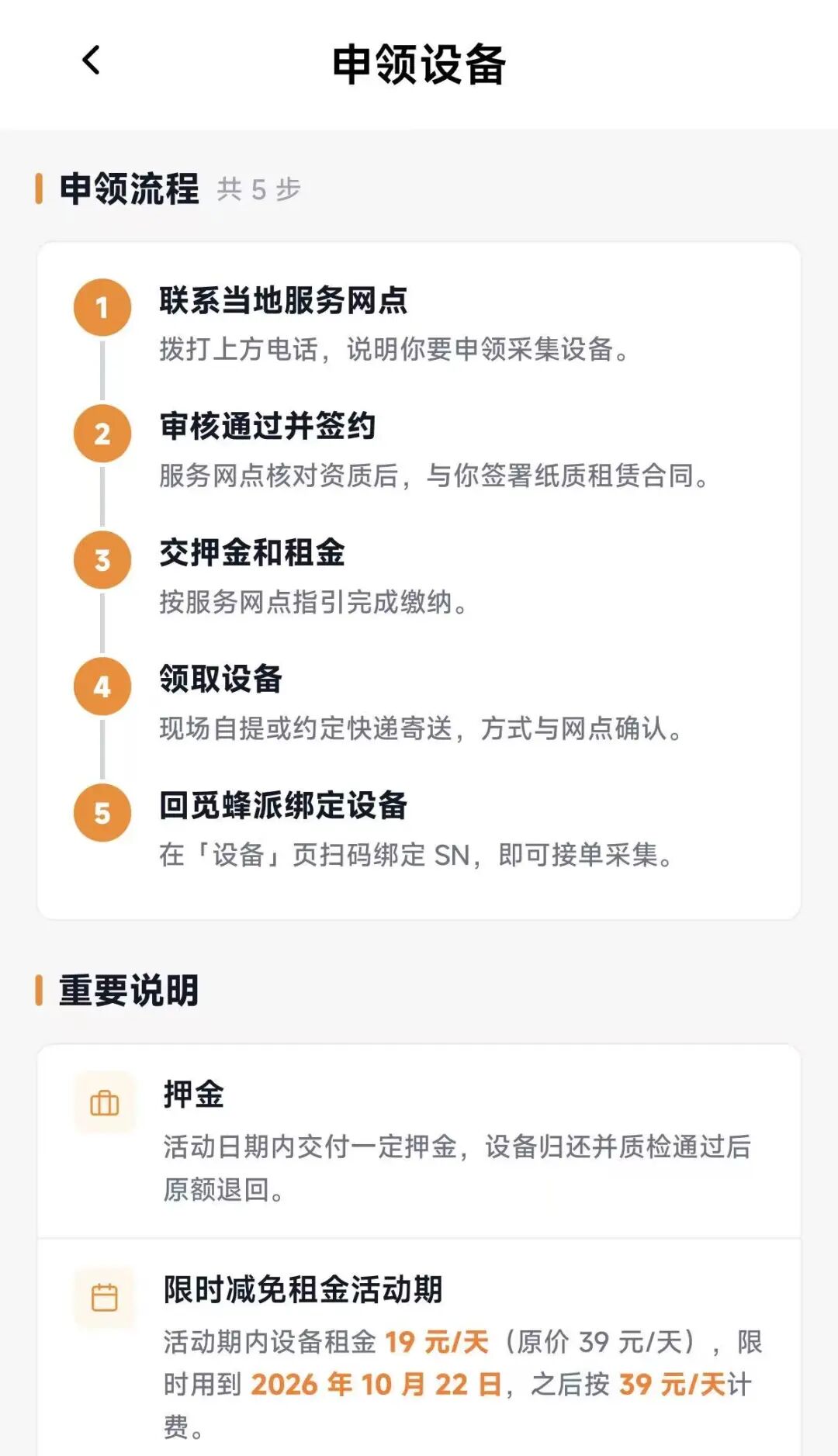
At present, the data collection device distributed by Mifeng Pai is an independent head-mounted display, which collects data following the EGO data collection route. After users finish collecting data every day and upload it, they can get the corresponding payment after the platform approves the submission.
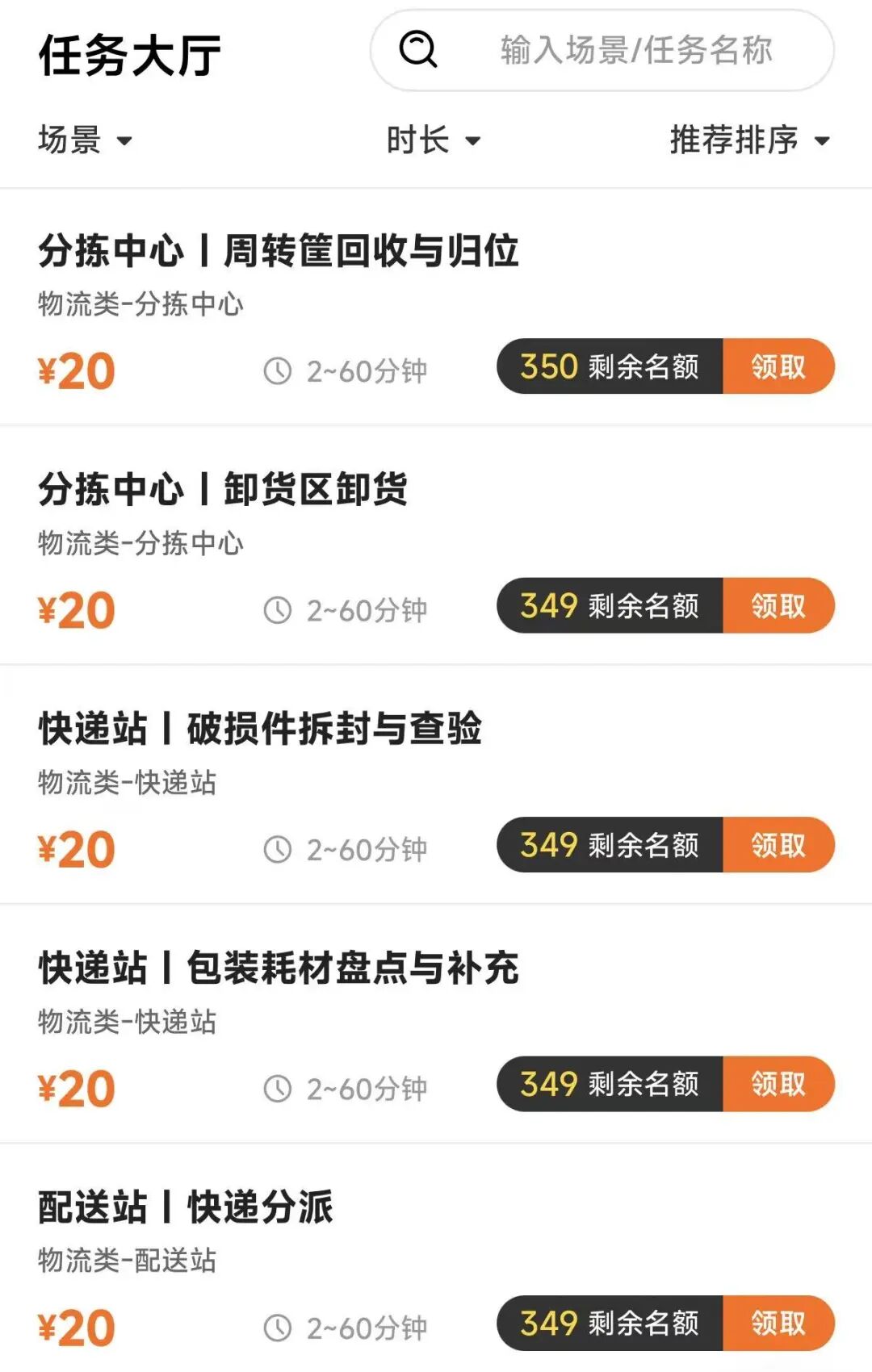
According to the current display of the App, some popular task scenarios, especially the tasks in home life scenarios, have all been claimed with no extra slots left, while there are still relatively many remaining slots in production and logistics sorting scenarios. Multiple users who have experienced Mifeng Pai told *Dingjiao One* that the unit price of many popular tasks has been greatly reduced since the launch. For example, the price of some daily home life scenarios has dropped from 20 yuan to 10 yuan, but the slots are still very popular.
According to official data, within one month of the internal test of Mifeng Pai, there were about 20,000 registered users, and a total of 13,000 tasks were submitted. However, a simple conversion shows that the average number of submitted tasks per person is less than one. After registration, users still need to rent equipment and pass the review, and the number of people who can continue to collect data steadily may be far less than the number of registered users.
It is no longer new that the embodied intelligence industry lacks data. The industry consensus is that for an embodied intelligence model to reach the capability level of GPT-3.5 in large language models, it probably requires data at the order of 100 million hours. Yao Maoqing, Chairman and CEO of Mifeng Technology, once mentioned that the current global effective embodied intelligence data is only about hundreds of thousands of hours, with a gap of two to three orders of magnitude between the current volume and the target.
In the first half of this year, many embodied intelligence companies began to publicly promote that they own data at the order of millions of hours, but there is still a long distance to reach 100 million hours. A founder of an embodied intelligence data company told *Dingjiao One*, If only the high-quality cleaned data is counted, the time span from millions of hours to 100 million hours is at least 3 to 5 years.
This is the fundamental reason why Mifeng Technology launches such a large-scale data crowdsourcing campaign. If data production only relies on ontology companies, data companies and model companies in the industry, the generalization of embodied intelligence will be nowhere in sight.
Mifeng Technology was founded in February 2026 and is controlled by Agibot. Since April 2025, Agibot has spun off several subsidiaries, including Zhiding Robotics which develops commercial cleaning robots, Qingtianzu which operates a robot leasing platform, Critical Point which manufactures dexterous hands, and Agibot Kutuo which develops quadruped robots. Mifeng is the subsidiary responsible for embodied data. However, the industry does not fully approve of this strategy. All these subsidiaries are controlled by Agibot, and they are each other's clients and scenario providers, so it is difficult for the outside world to see their independent profitability. Some investors of Agibot are its product clients themselves. Some analysts pointed out that although this is not a violation of regulations, it will make people question the authenticity and quality of its growth.
Mifeng mainly provides data services to data demand parties such as large model developers, robot companies and scientific research institutions, and provides orders and tools to data collectors, scenario providers and hardware vendors. In addition, it also plans to introduce other third-party data companies to settle in, building a data service platform that combines self-operation and third-party resources.
At the current stage, the data services provided by Mifeng Technology are mainly divided into three categories: real robot teleoperation, simulation and non-ontology data, among which non-ontology data includes two routes: UMI (hand-held gripper collection) and EGO (first-person perspective). The data collection device used by the crowdsourcing platform Mifeng Pai is mainly MEgo View, which belongs to the EGO category. Its complete form is a head-mounted device composed of 3 fisheye cameras and 1 set of binocular cameras, plus a pair of wrist cameras, but the devices currently rented on Mifeng Pai only include the head-mounted display.
In addition, Mifeng Technology also has the MEgo Gripper, a gripper device for the UMI route. Compared with EGO which only uses a head-mounted display to record first-person visual data, MEgo Gripper has a higher operation threshold and is not suitable for large-scale data crowdsourcing.
The model itself is not complicated. What really determines how far this business can go is the capacity of its track and the competition from other players in the track.
02. Three data routes and three types of players
Large language models are built on a large amount of text data on the Internet. In comparison, the physical world data required by the embodied intelligence industry, such as vision, tactile sense, force sense, joint angle, spatial motion trajectory, etc., are extremely scarce.
For robots to truly deliver value, they only need to prove that they can do two things: enter family scenarios to do housework, or work in factories. Both scenarios require robots to have generalization capability, which relies on a large amount of physical world data to achieve.
Demand has supported an expanding market. According to the calculation of Yiou Think Tank, the global embodied intelligence data collection market reached about 737 million US dollars in 2024, and it is expected to reach 7 billion US dollars by 2031, with a compound annual growth rate of 38%.
For comparison, the prospectus of Unitree Robotics shows that the humanoid robot market is expected to reach 15 billion US dollars by 2030, and the volume of the entire data collection market is roughly half of the robot ontology market.
The competition on the supply side is fierce. As of April this year, more than 64 embodied intelligence data collection training sites have been planned or built across China. Agibot has built a 4,000 square meter exclusive data collection factory in Pudong, Shanghai. JD announced that it will build the world's largest embodied intelligence data collection center with the most complete scenarios, and plans to accumulate 10 million hours of real scene video data within two years. Pacini Perception Technology has launched a 12,000 square meter super data factory in Tianjin, which is expected to produce nearly 200 million pieces of data per year, and so on.
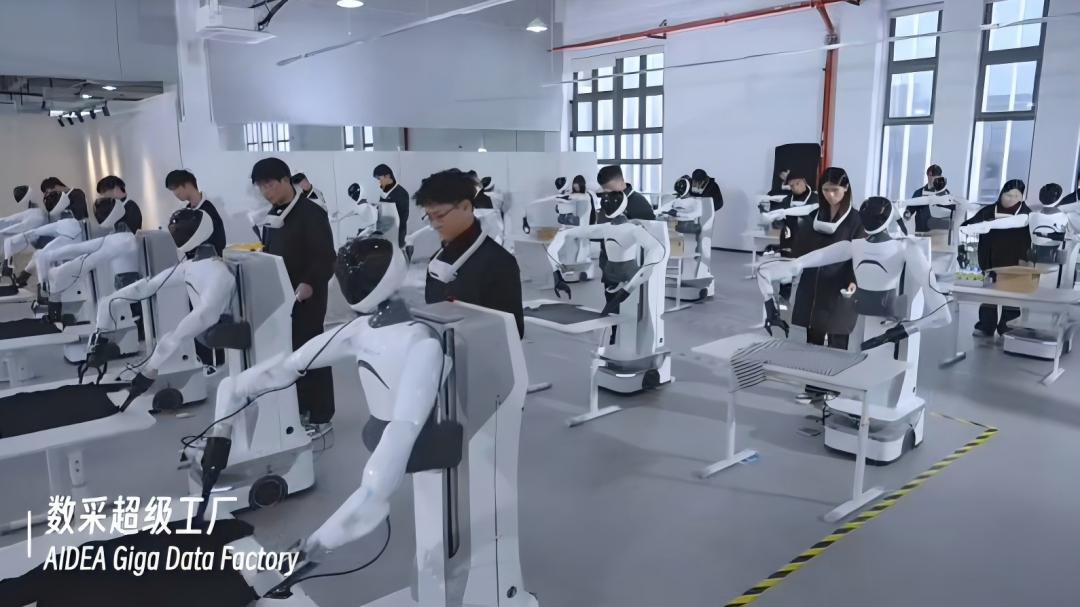
Image source / Agibot official website
At present, there are three main ways for the industry to solve the problem of insufficient data. The real robot teleoperation route has the highest data quality, but the output volume is the most limited. Non-ontology data collection is carried out by people wearing devices, such as UMI, EGO, etc., which has a larger output volume, but the data can only be used after going through multiple links such as cleaning, labeling and governance. The last category is simulation data and Internet video data, which has the largest volume but the worst quality. They can be used to assist training, but the amount of valid data is very small.
Most data collection vendors will not bet on a single data route. From the perspective of industry competition, current data vendors can be roughly divided into three categories.
The first category is the in-house data and model business of robot ontology companies, represented by Unitree, Xinghaitu, Galaxy General, etc. Their advantage lies in the closed-loop system: ontology companies can repurchase real robot data after leasing or selling robot ontologies, and at the same time they can continuously produce real robot data on their own. The data generated by their own real robots has no configuration differences, making it easier to adapt to their own products.
The second category is professional data service providers, including Lightwheel Intelligence, Pacini, Lingchu Intelligence, Tashi Intelligence, Shouyi Technology and Mifeng Technology, etc. The data of these companies can be sold to different upstream and downstream companies, with a more open identity and richer monetization channels. They can be suppliers of ontology manufacturers, or directly serve model developers and scientific research institutions. It is worth noting that pure data collection service providers are becoming fewer and fewer, because companies engaged in data collection ultimately hope to move towards the model layer, and the bargaining space for simply selling data is limited.
The third category is the data collection platforms of large Internet companies, of which JD is a representative at present. The advantage of large companies is that they have scenarios and sufficient human resources. Their warehouses, stores and distribution networks are natural data collection sites, but the problem is that the value of only doing data collection is relatively low, and they mostly play a supporting role to support their own robot ecosystem.
The three types of players have their own advantages, and the market pattern is far from finalized. Mifeng Technology's strategy is rather alternative, as it completely opens up data production to social crowdsourcing, which makes its situation worthy of separate inspection.
03. 100 million hours of data is just the starting point, the economic account behind it is still unclear
Mifeng Technology occupies a special position in this industry. Although it is positioned as an independent data collection platform, it has close ties with Agibot, and its chairman Yao Maoqing is also a partner of Agibot and President of the Embodied Business Unit.
This relationship brings Mifeng orders, scenarios and endorsements, but also raises an unavoidable question. Agibot is both the controlling shareholder and a potential big client. Whether other ontology manufacturers are willing to hand over their data demands to a company under the Agibot system will directly determine the authenticity of Mifeng's positioning as a third-party independent service provider.
In terms of data crowdsourcing, the case that has achieved effective results so far is the overseas embodied intelligence company Figure AI. It launched the Index project in August this year, which was simultaneously launched on iOS and Android platforms, allowing global users to upload real task data through Index.
After its launch, Index has covered 108 countries and regions around the world, with more than 264,000 cumulative app downloads, more than 44,000 weekly active users participating in data contribution, and more than 16 million videos uploaded.
In September this year, Figure AI released its embodied model Helix 2.5, which was pre-trained on Index. In the test, the control model that was not pre-trained on Index only achieved a success rate of about 9%, while the success rate of Helix 2.5 reached 56%, which proves the value of data crowdsourcing to a certain extent.
Mifeng Technology is one of the players with the largest data holdings in China's embodied intelligence industry. According to its official statement, as of August 31, the cumulative non-ontology valid data collected by Mifeng has reached millions of hours, making it the first non-ontology dataset of this scale in China. At the end of August, the 20,000th set of MEgo devices has also been off the production line. After opening up data crowdsourcing, the speed of data accumulation will be further accelerated.
However, before forming a real data scale barrier, Mifeng Technology still needs to figure out several accounts.
The first is the economic account. A practitioner in the embodied data collection industry told *Dingjiao One* that according to his understanding, Mifeng Technology is not only doing data crowdsourcing, but also distributing data collection devices for free in some production scenarios to collect data. Normally, a complete EGO data collection device consisting of a head-mounted unit and wrist cameras costs about 20,000 yuan, and the cost of a single head-mounted display is lower, but it still reaches several thousand yuan.
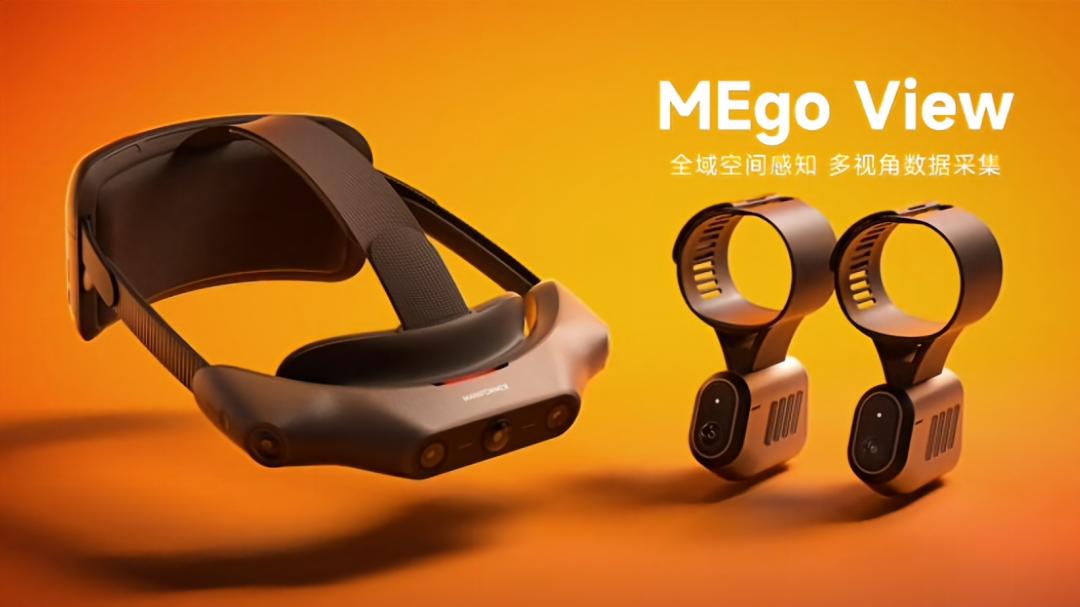
Image source / M