This year's Nobel Prize is awarded to optogenetics. How far is humanity from "brain control"?
Do you believe in light?
This year's Nobel Prize confirms that. On October 5, three scientists Karl Deisseroth, Peter Hegemann and Georg Nagel won the Nobel Prize, in recognition of their discoveries in light-gated ion channels and optogenetics.

Optogenetics sounds like some kind of cyber cultivation practice, right! What it actually does is install light-sensitive switches on specified neurons, then use light to control their activities.
Shine light on a certain area of a mouse's brain, and it may suddenly start running; change the light intensity, and you can even make the behavior of some male mice switch between mounting and attacking. The mouse thinks it is making a tough choice between love and war, but the one who actually calls the shots is the knob in the experimenter's hand.
Why can a beam of light control a mouse's behavior? Is the principle behind it the same as teasing a cat with a laser pointer? Welcome to "The Life of Brain-Controlled Mice".
01. Scientists Found the "Mouse Life Remote Control"
In 2011, a group of scientists set their sights on a group of neurons in the ventrolateral part of the ventromedial hypothalamus of mice. You don't need to memorize this long name, just know that these neurons are related to aggressive behaviors.
When blue light shines into this area, the male mouse will suddenly start attacking another male mouse in the cage. The researchers replaced the target with a female mouse, and it still attacks without hesitation; then they replaced the target with an inflatable glove, and it still pounces on it, scratching and biting.
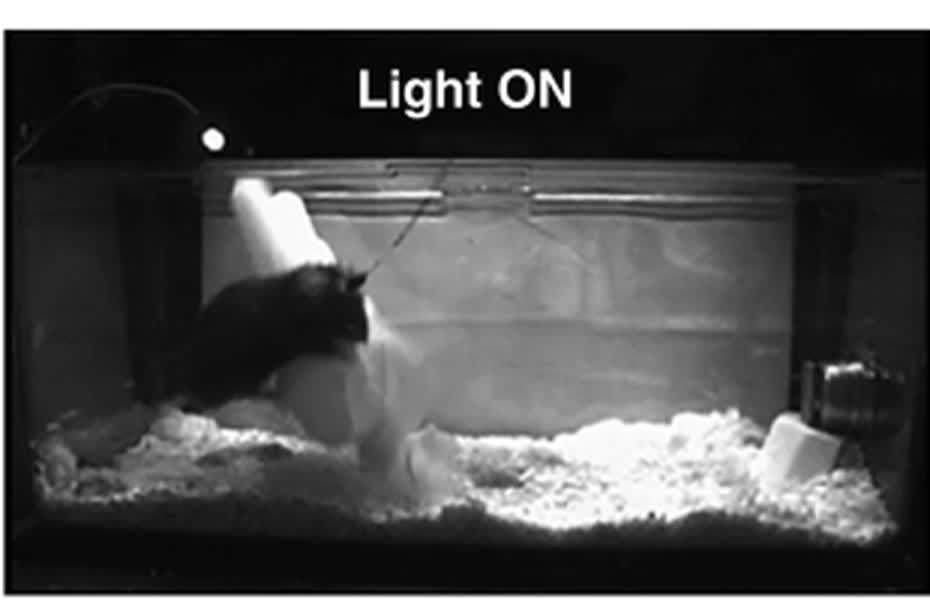
When the light is turned off, the mouse's aggressive behavior stops immediately.
In other words, when the light in the researcher's hand turns on, it is equivalent to directly pressing the "attack button" of the mouse. The mouse will enter a killing mode that ignores all acquaintances, no matter it is a male mouse, a female mouse or an inflatable glove, it will rush over and punch hard.
In subsequent studies, the researchers identified a group of neurons expressing estrogen receptor 1 in this brain region. They are like a switch with gears: when stimulated by low-intensity blue light, the male mouse will sniff, approach, and even mount its counterpart in front of it; when the light stimulation is intensified, the male mouse may turn from estrus to madness and start attacking its companions. Love and hate are separated only by a beam of light.

Apart from fighting and courtship, scientists have also found the "hunger switch" and "sleep switch" of mice.
In a study published in *Nature Neuroscience* in 2011, when the blue light that controls about 800 AgRP neurons in the hypothalamus of mice is turned on, mice that are not hungry at all will pounce on food within a few minutes, and the amount of food they eat is equivalent to that of mice that have been hungry for 24 hours; when the light is turned off, eating stops quickly.
What about sleep? There is a group of neurons in the brain that secrete orexin, which is responsible for maintaining wakefulness. When the mouse is sleeping soundly, the researchers use light to activate this group of neurons, no matter it is in deep sleep or rapid eye movement sleep, it will wake up faster. On the contrary, when this group of neurons is calmed down, the mouse will fall into deep sleep more easily.
The most sci-fi part is the memory experiment.
In 2013, the researchers first placed the mouse in a safe room and let it explore freely, while marking a group of active hippocampal neurons at that time. These cells can be understood as the "memory trace" left by the mouse for this room.
The next day, the mouse was taken to another room and received a mild electric shock. When the electric shock occurred, the researchers used blue light to reactivate the group of cells marked on the first day.
When the mouse returned to the first room where no electric shock had ever occurred, it froze in place, showing obvious fear.
This is because when the electric shock occurred, the memory representing the first room was also reawakened by the blue light. The mouse's brain mistakenly tied the two simultaneous events together, thinking that the danger occurred in the first room.
Doesn't it sound a bit like a sci-fi movie? "If this beam of light falls into the hands of bad people, it will......"
It will have no effect at all. The blue light in the hands of scientists has no magic power. The reason why it can make neurons obey is related to a green alga that doesn't even have a brain.
02. A Green Alga,
Why Is It Worth a Nobel Prize?
After watching these experiments, it is easy to have a misunderstanding that blue light itself can control the brain. In fact, no matter how long you shine blue light on ordinary neurons, nothing special will happen (except that your hand will get sore).
Before the experiment starts, scientists have to modify the target neurons to make them grow a protein that can respond to light. It is equivalent to installing a switch on the neuron that can be controlled by light.
How to install it? When scientists were looking for suitable photosensitive proteins, they targeted a kind of green alga that swims towards light.
The green alga mentioned here is Chlamydomonas reinhardtii, a tiny organism with only one cell that swims in water by two flagella. It has no eyes, but can sense where the light comes from, then swing its flagella to swim towards it, which is equivalent to having a built-in "photosensitive device".
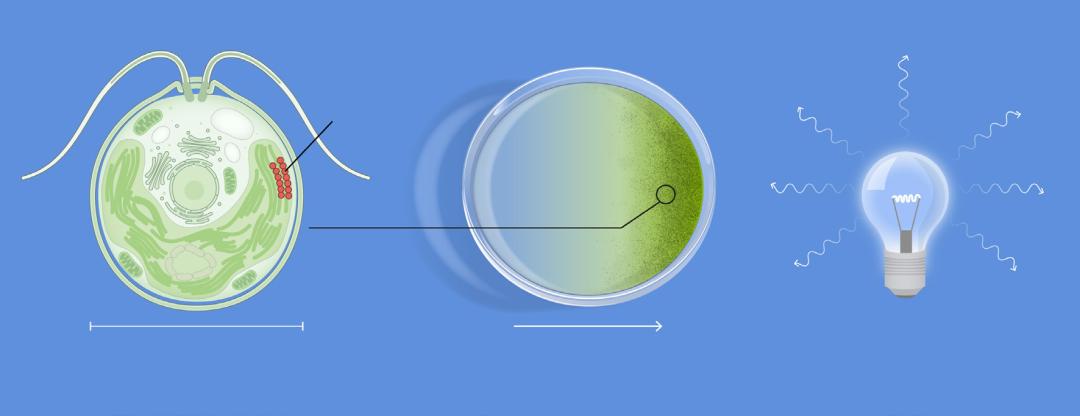
Hegemann, Nagel and others later found the key: on the cell membrane of Chlamydomonas reinhardtii, there is a protein that opens when exposed to blue light. It is a bit like an induction door installed on the cell membrane, which is usually closed. When blue light shines, it opens, allowing charged ions to pass through. As soon as the ions enter, the electrical state inside the cell will change, which is equivalent to receiving a signal of "power is on".
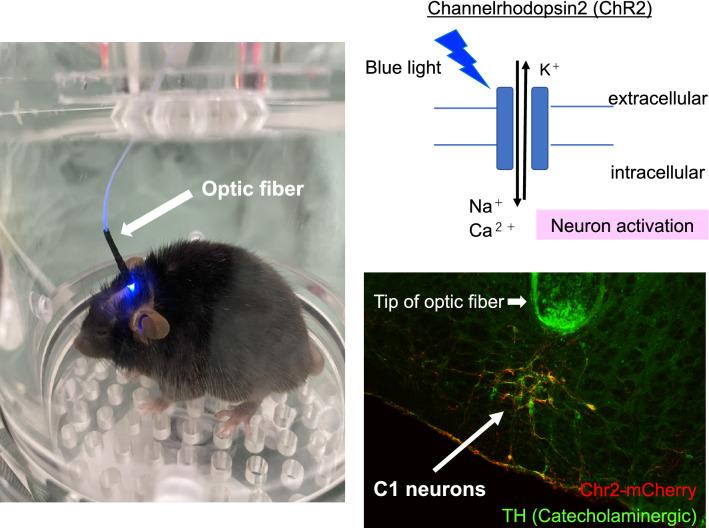
The most classic one of this kind of protein is Channelrhodopsin-2, referred to as ChR2 for short. Scientists soon realized: since it can use light to change the electrical activity of green algal cells, can we remove this "door" and install it on neurons that also work by electrical signals?
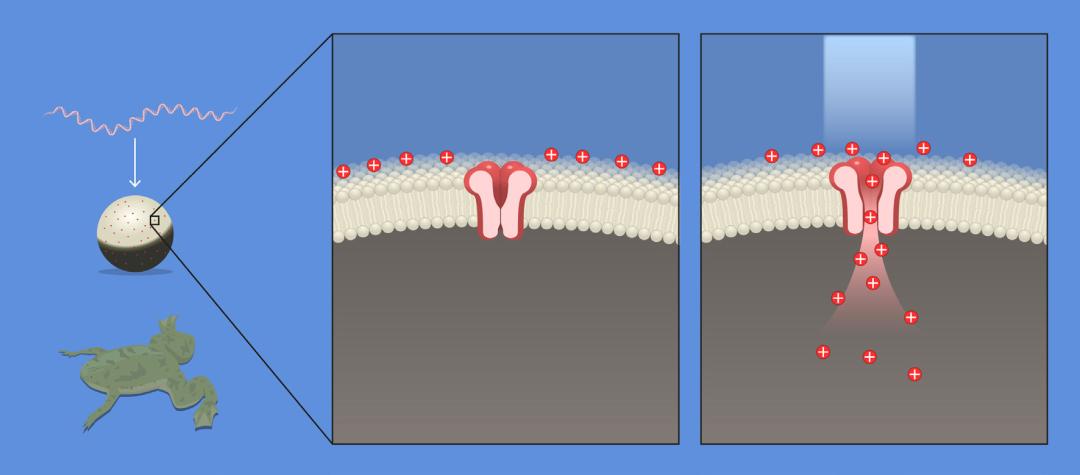
Don't get me wrong, there is no clump of green algae in the experimental mouse's head.
What scientists borrow is only the DNA segment encoding ChR2 in the green alga, that is, the instruction manual for making this protein. The researchers put it into a modified virus, then inject it into the target brain area; after neurons read this segment of DNA, they will produce ChR2 by themselves and attach it to the cell membrane.
To further narrow the scope, researchers can also make this gene only work in neurons with specific genetic markers. In this way, when the same beam of blue light shines into the brain area, neurons equipped with ChR2 will be activated, and the adjacent cells without the switch will be basically unaffected.
Later, scientists found a number of photosensitive proteins with opposite effects, which can temporarily calm down neurons that are working. Since then, neurons have had both the "start button" and the "pause button".
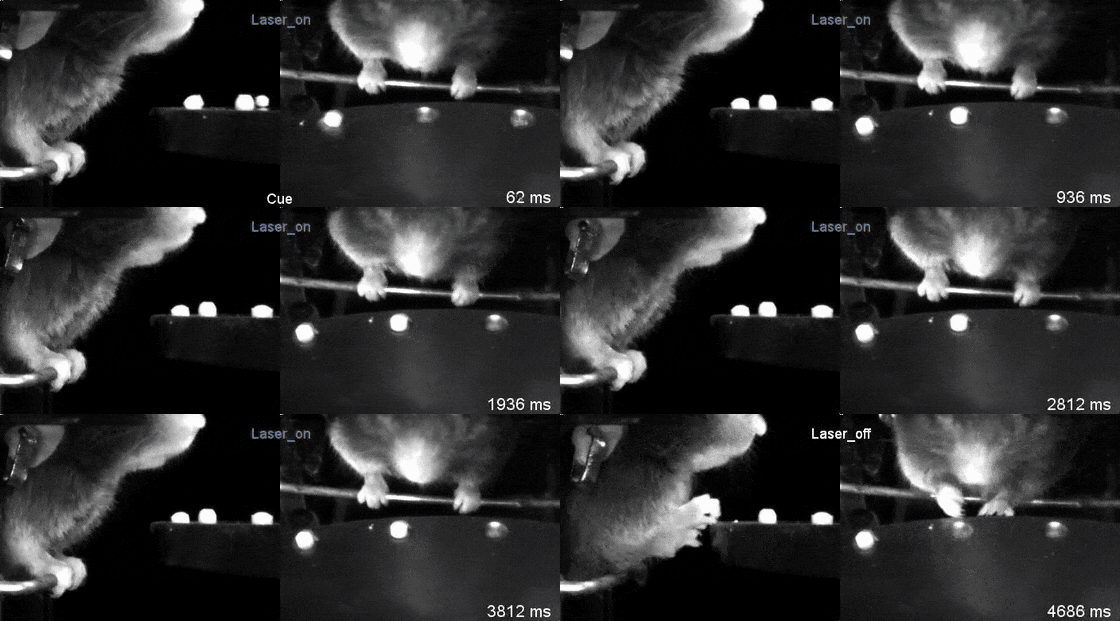
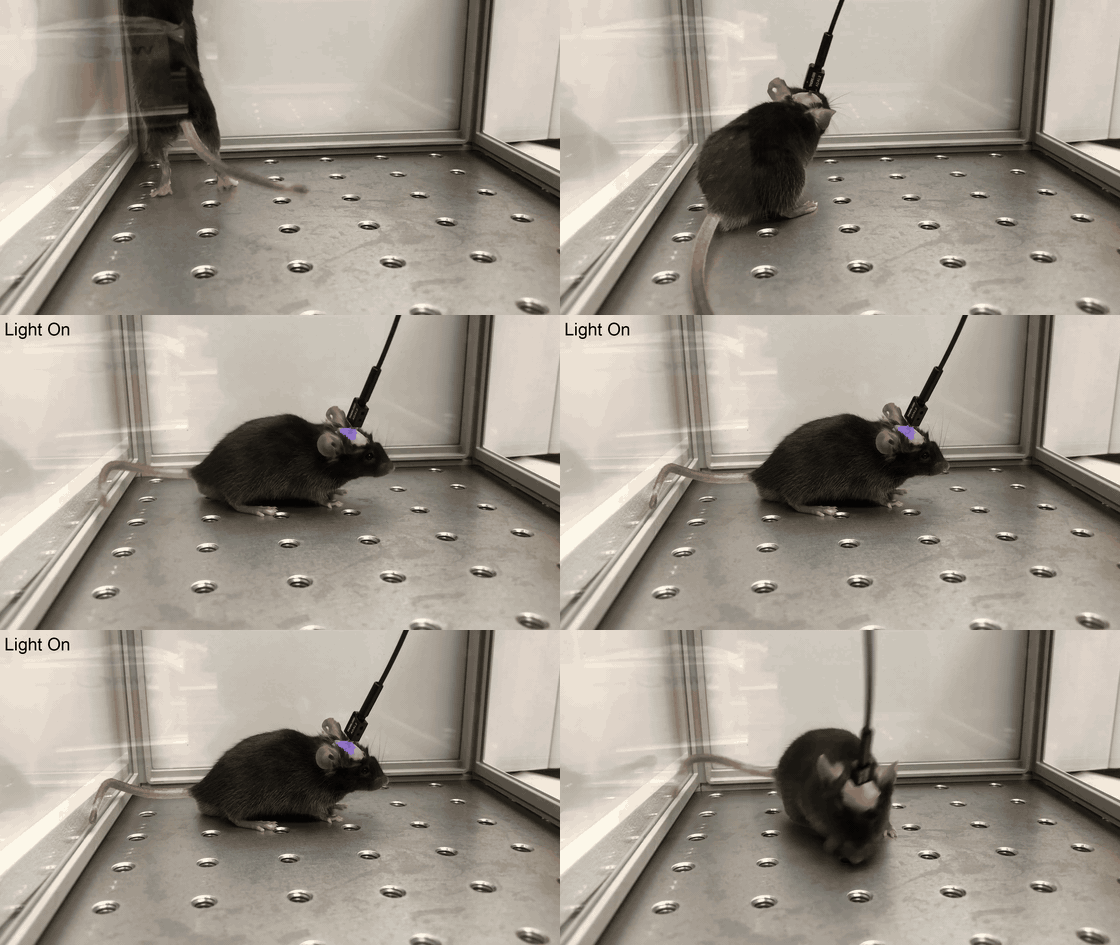
After the photosensitive switch is installed, how to deliver the light to the corresponding place? The brain is hidden inside the skull, and light cannot directly reach the deep part. Researchers usually implant a tiny optical fiber into the mouse, which extends all the way to the target brain area.
So the experimental mice often have a wire connected to the top of their heads. The understated sentence "turn on the blue light" in the paper actually includes a whole set of operations such as injecting the virus, waiting for neurons to produce photosensitive proteins, and implanting optical fibers.
Hegemann, Nagel and others found the "light-controlled switch" on green algae, and Deisseroth's team delivered the ChR2 gene into mammalian neurons in a petri dish, and later made this light-controlled switch work in the brain of a living mouse.
As a result, scientists have obtained a method that can repeatedly and rapidly manipulate specific neural circuits.
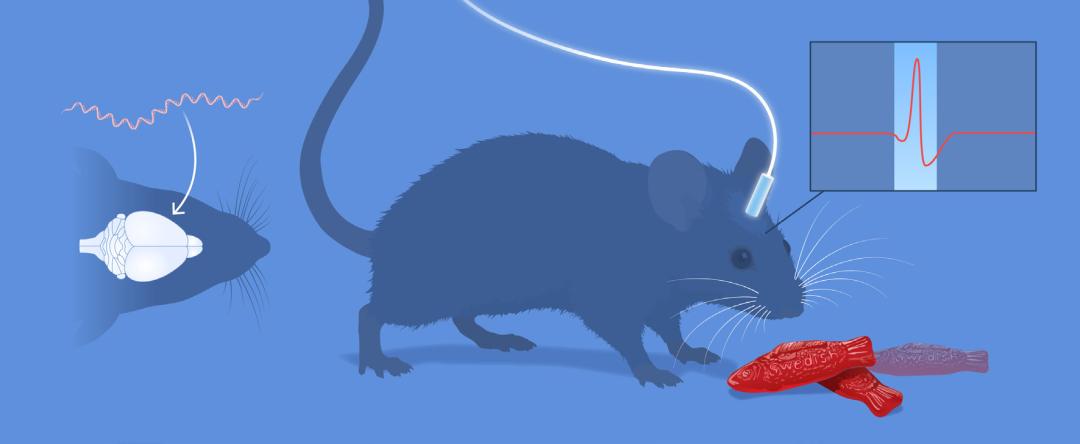
How important this is can be seen by comparing it with the old methods.
In the past, when people wanted to intervene in neurons, electrical stimulation was fast enough, but it was difficult to distinguish different types of nearby neurons, and one stimulation often affected a whole area; drugs can target a certain type of receptor, but they will diffuse, and their onset and regression are not that fast. Optogenetics just makes up for these shortcomings: it can not only select the group of neurons you want to study, but also turn them on and off almost instantly.
The three Nobel laureates this year correspond exactly to the two most critical steps in this technical chain: Hegemann and Nagel found the light-gated ion channel, and Deisseroth turned it into a tool for controlling neurons.
A protein that originally helped green algae find sunlight has thus become one of the most commonly used tools in neuroscience laboratories.
Now, after more than 20 years of development, this road has finally gone from the heads of mice all the way into human eyes.
03. After Mice,
What Else Can This Beam of Light Be Used For?
Seeing mice fighting, courting and being afraid under the light, readers' imaginations are easily divided into two directions.
One group of people are scared first: if the brain of a mouse can be controlled by light, can the human brain also be controlled? The other group of people have already arranged the progress for medicine: since we can make mice fight, eat and sleep, will Parkinson's disease, depression and insomnia be cured soon?
The latter has seen some hope in animal experiments. In 2010, scientists activated a movement-related neural pathway in Parkinson's model mice, and the previously slow-moving mice became active again. Deisseroth's team also once controlled dopamine neurons in the brains of mice, making them show or reduce "depression-like behaviors" such as low motivation and anhedonia in stress experiments.
These experiments can help scientists gradually confirm "which circuit may be related to the motor disorder of Parkinson's disease" and "which neurons may be involved in depression-like behaviors". After finding these targets, people can study drugs and deep brain stimulation and other treatment methods in a more targeted way.
However, there is still a long way to go from controlling a mouse to actually treating the human brain. Up to now, no patient has been treated for depression or Parkinson's disease through intracerebral optogenetic technology.
The reason is also very realistic: the eyes can receive light by nature, but the brain is hidden inside the skull.
If we want to use optogenetics in the human brain, if we copy the current intracerebral optogenetic scheme, we need to deliver genes and find a way to provide light source in the brain - which is very common in mice, but it will be a brain surgery when applied to humans.
What's more, there are no buttons labeled "fear", "depression" or "love" in the brain.
Human emotions and behaviors usually involve many brain regions and life experiences. A single fear, a memory, or an attachment often comes from the joint activities of a large number of brain regions and neural circuits at different times, and will be constantly rewritten by physical states, growth experiences and current situations. Light can turn on a group of neurons, but this group of neurons cannot explain why a person is sad or why someone falls in love with another person, let alone summarize a person's life with several switches.
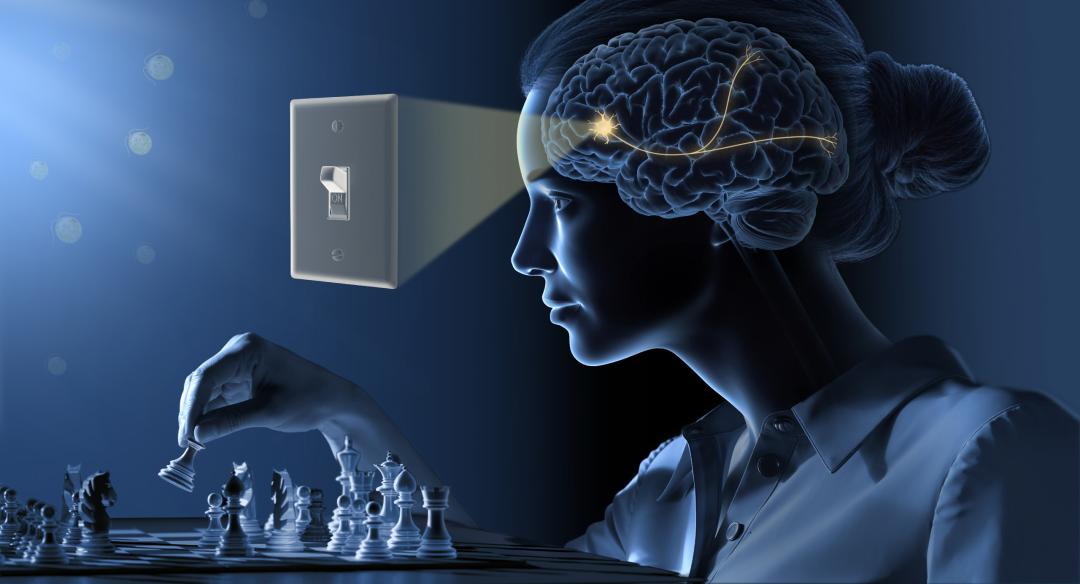
However, optogenetics has not been trapped in the heads of mice all the time. There is a place on the human body that just avoids the trouble of "how to shine light into the brain".
Because that place is originally designed to receive light - the eye.