Chinese New Energy Vehicle Startups Are Collectively Venturing Into the Deep Waters of the Battery Sector
The crazy September saw a boom of automakers' in-house R&D on batteries.
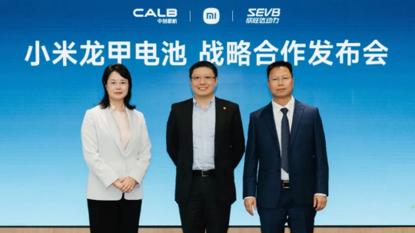
On September 4, Xiaomi released its Longjia Battery and announced partnerships with CALB and Sunwoda Power; on September 7, Li Auto announced that its in-house developed batteries will be gradually installed on all its vehicle models; on September 16, Leapmotor claimed that it has achieved 100% in-house R&D of battery cells; the next day, He Xiaopeng, Chairman of XPeng, stated at the G9L launch event: "Starting from this year, XPeng will develop all its batteries on its own."
* Source: Xiaomi
The motivation behind in-house R&D is that automakers no longer want to be mere battery buyers. Most of their previous battery budgets went to CATL, the king of batteries. Spending money is not the top concern — the fact that the right to define battery solutions and the initiative of the supply chain are in the hands of others keeps some automakers up at night.
As a result, some call this a "de-CATL" trend, while others argue that "in-house R&D" is just a new guise. Judging from various incidents in the battery industry in the past, in-house R&D is far from being that simple.
01 "The auto industry camp stages a collective 'rebellion'"
The direct reason for automakers to extend their reach to the battery industry chain is that they do not want to "pour too much money" into battery suppliers.
In 2022, Zeng Qinghong, then Chairman of GAC Group, publicly stated that battery costs accounted for 40% to 60% of the total vehicle cost, and uttered the famous line: "Aren't we just working for CATL?"
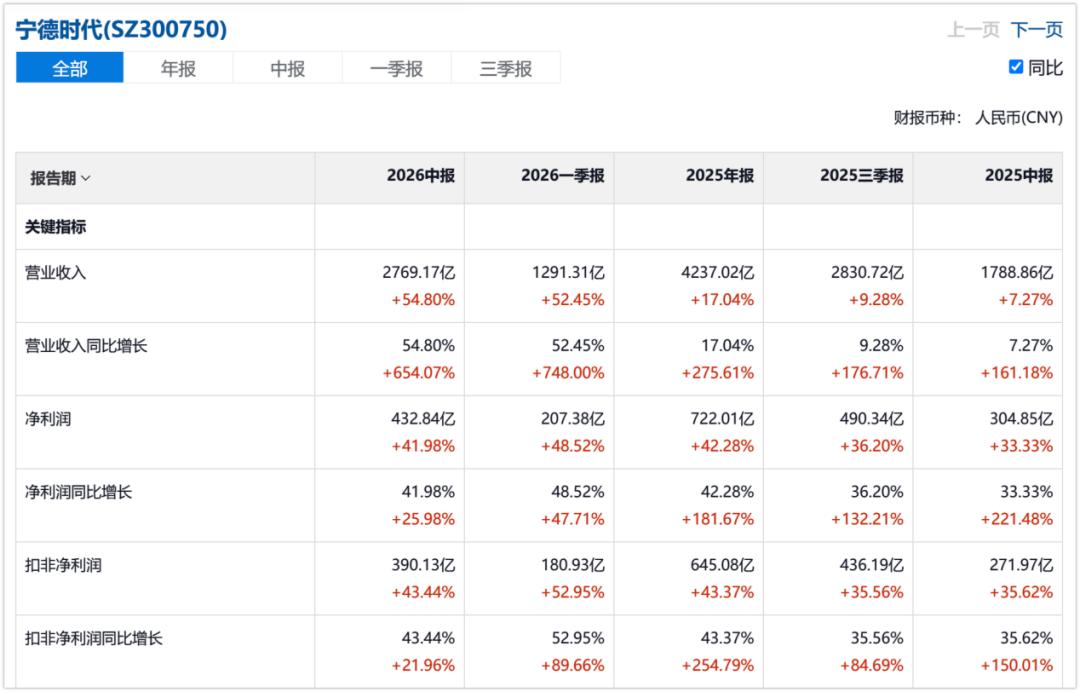
Objectively speaking, CATL's profit performance does make automakers extremely sensitive to the distribution of benefits across the industrial chain. Financial reports show that in the first half of this year, CATL's net profit reached 47.031 billion yuan, up 45.31% year on year, with a net profit margin of about 16%. In contrast, the total net profit of 15 mainstream automakers listed on the A-share and Hong Kong stock markets was only 21.048 billion yuan, and a large number of automakers have a net profit margin of less than 5%.
* Source: Xueqiu
Thus, conflicts emerge.
Automakers have to bear the pressure of vehicle price competition and sales, while a large part of battery procurement costs is determined by the supply chain. Battery prices can rise along with upstream raw material costs, but automakers dare not raise vehicle prices arbitrarily, otherwise it will arouse consumers' resentment and do more harm than good. Tiny fluctuations in battery procurement prices can directly determine whether an automaker makes a profit or loss, which in the eyes of automakers is an unbearable inversion of power.
Not only that, at this stage, if automakers want to truly develop their own differentiated products, they have to delve deep into battery development inevitably.
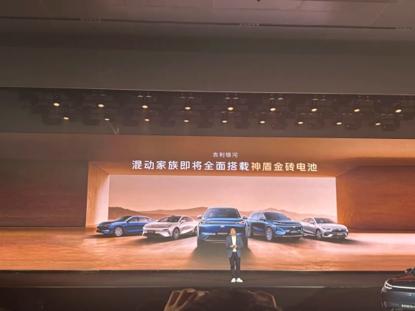
In the past, battery procurement was largely similar to "off-the-shelf selection". Suppliers provided mature products, and automakers selected products according to requirements for cruising range, interior space and cost, then completed vehicle adaptation. Even if the two sides carried out joint development, the openness of material formulas, manufacturing parameters and production data still depended on the specific cooperative relationship.
* Source: Internet
However, with the development of 800V high-voltage platforms, ultra-fast charging and cell-to-chassis (CTC) integration technologies, such boundary is increasingly difficult to maintain. The "three core electric systems" today are equivalent to engines and gearboxes in the era of fuel vehicles, belonging to core technologies that directly affect the final user experience of vehicles:
The structure of the battery pack affects cabin space, total vehicle weight and body rigidity; thermal management affects continuous fast charging capability; the battery management system affects cruising range estimation, power output and service life. Batteries are deeply coupled with the vehicle architecture. If automakers want to define products in depth, they have to rely on battery enterprises, which is unacceptable for them.
Therefore, among the latest batch of in-house R&D cases, the change in the relationship between automakers and suppliers is the most obvious.
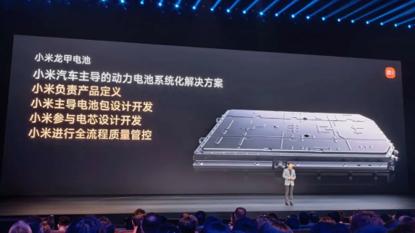
The Longjia Battery released by Xiaomi on September 4 is led by Xiaomi in battery pack design and development, and Xiaomi participates in in-depth R&D of battery cells with its partners. CALB and Sunwoda Power provide battery cell R&D and manufacturing capabilities, while Xiaomi participates in product definition and vehicle adaptation.
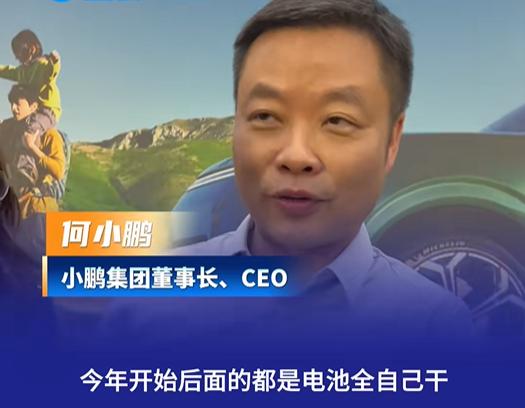
He Xiaopeng commented on in-house R&D like this: "It's not just about battery cells. Investing in battery cell companies still leaves the core technology in others' hands. We have also invested in three battery cell enterprises, but starting from this year, we will develop all batteries on our own."
* Source: Internet
According to public information, the three companies are most likely CALB, Sunwoda and SVOLT. XPeng mainly carries out in-house R&D and manufacturing of battery pack systems, while battery cells are led by its partners, whose purpose is to increase supply sources to grasp more initiative.
It can be seen that this collective "rebellion" is essentially a move by vehicle enterprises to change their right to speak in the industrial chain. As for whether they can become real definers, it depends on how much capability they master, rather than how loud slogans they shout.
02 "After technology popularization, in-house R&D becomes a bargaining chip"
The reason why automakers can enter the battery field today is related to the gradual maturity of mainstream technical routes and the increasing number of battery supplier options.
At present, both lithium iron phosphate and ternary lithium batteries have formed mature industrialization routes, and manufacturers such as CALB, Sunwoda and SVOLT are also expanding production capacity and improving manufacturing capabilities, which gives automakers the freedom of choice.
Take Xiaomi's Longjia Battery as an example. According to 21st Century Business Herald, CALB customized and developed the electrochemical system and materials according to Xiaomi's definition, and built a dedicated production line. Sunwoda also built a customized production line for it, and both parties passed the verification of Xiaomi's quality control standards.
* Source: Xiaomi launch event
This seems to be a win-win situation: battery manufacturers digest production capacity and gain performance growth, automakers acquire manufacturing capabilities, and ease supply chain conflicts. XPeng has a say in this aspect.
In 2021, due to soaring deliveries and the need to ensure supply chain stability, XPeng planned to introduce CALB as a supplier. At that time, 36Kr reported that this caused friction between XPeng and CATL. In 2022, XPeng diversified its supply chain and successively introduced other suppliers. It was not until the end of 2025 that the two sides had high-level contacts again.
Now He Xiaopeng announces battery in-house R&D. The change is not a direct jump from "only buying CATL batteries" to "completely not buying external batteries", but automakers are continuously increasing their own capabilities and supply options to spread risks as much as possible.
However, a little attention will find that no matter it is Xiaomi, XPeng or Li Auto, most automakers do not build all capacity from battery cells to battery packs on their own. Behind the in-house R&D, capital and supply chain cooperation seems to be more eye-catching than actual R&D.
Li Auto chose another cooperation mode. According to Tianyancha, in 2022, Li Auto invested 400 million yuan through its affiliated entity to participate in the Pre-A round financing of Sunwoda Power, obtaining about 3.2% of the equity. Subsequently, Sunwoda set up a dedicated business unit for Li Auto with a team size of more than 1,000 people.
In September 2026, Li Auto announced that it plans to increase its capital by 2.65 billion yuan to Sunwoda Power again. After the transaction is completed, it will hold 11.17% of the shares and become the second largest shareholder. Li Auto and Sunwoda also each hold 50% of the shares to establish Shandong Li Auto Battery Co., Ltd.
The first batch of delivered Li Auto i9 models released on September 16 are equipped with CATL's 5C ternary lithium batteries, which will be replaced by Li Auto's in-house developed 5C ternary lithium batteries after the production capacity ramps up. Li Auto's announced plan is to switch all i6 models to in-house developed batteries starting from the fourth quarter of 2026, and then gradually promote this to other models.
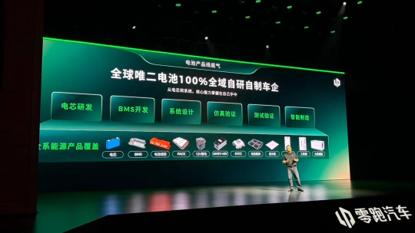
In addition, Leapmotor also announced at its September 16 Technology Day that it has achieved 100% in-house R&D of battery cells, iterated CTC technology to version 3.0, and announced the progress of the Zhongling project jointly established with CALB. Leapmotor introduced that its super battery integrated factory has realized the full-process production from battery cells, modules, PACK to box and liquid cooling plate.
* Source: Leapmotor
At this point, there are divergences in in-house R&D between new EV forces and traditional automakers. Traditional automakers have stronger "desire for control" over the supply chain.
Take Chery as an example. In May this year, Chery established its subsidiary Qida Power, and substantially took back the equity of Deyi Energy. Deyi Energy is the core platform for Chery to promote the industrialization of power batteries, and has currently laid out battery production bases in Tongling, Wuhu and Suzhou of Anhui Province with a total planned production capacity of more than 40GWh. It serves Chery's self-developed Rhino Battery.
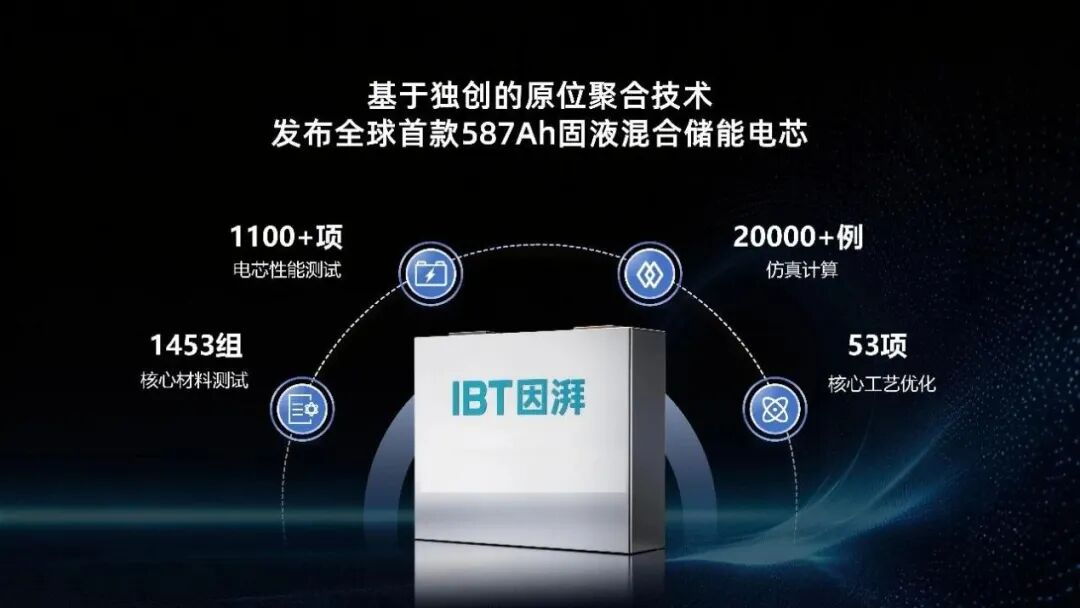
Similarly, large automakers such as GAC have deep layouts in battery cell R&D and production capacity. GAC's In-Power Battery has built a 18GWh mass production line and delivered products stably, serving diversified product lines including vehicles and energy storage.
* Source: In-Power Battery
This easily leads to a question: To what extent can it be counted as real in-house R&D? What kind of guarantee can automakers provide for in-house R&D?
As we all know, BYD is one of the few automakers that can realize full-link in-house R&D and manufacturing. Its FinDreams Battery covers links such as materials, battery cells, BMS and recycling, and its Blade Battery is also the result of long-term industrial accumulation. Long-term R&D investment and large-scale sales support form a closed loop that is difficult for other enterprises to replicate.
In the first half of 2026, BYD's R&D investment reached 28.9 billion yuan, with cumulative R&D investment exceeding 270 billion yuan; CATL's R&D expenditure in the same period was 11.377 billion yuan, with more than 60,000 patents at home and abroad. New EV forces that are still in joint ventures can hardly achieve this level of investment for now.
According to automakers' calculation, in-house R&D requires that the comprehensive cost of building a team on its own is lower than that of external procurement, and the final sales performance will not be affected, or even better. In the current situation, the final effect of in-house R&D still needs to be tested by the market.
03 "Can't be completely split, can't go back to the past, dynamic balance is also hard to achieve"
From the market perspective, in-house developed batteries can help automakers build a technology image, but also push safety responsibility and user trust issues to the vehicle brands.
Especially when facing CATL, the top supplier, the so-called impact of in-house R&D is worth pondering.
Battery brands used to be a selling point at automakers' press conferences. Adopting head suppliers such as CATL can help consumers form a layer of quality cognition from familiar brands; after switching to automakers' self-owned batteries, cruising range degradation, low-temperature performance, fast charging stability and safety accidents will all be more directly attributed to the vehicle brands.
In-house R&D is not just an extra technical label, it also means that automakers have to take more complete responsibility for battery quality management and after-sales services.
Some automakers have taken this into consideration. For example, the "Peace of Mind Guarantee Plan" launched by Xiaomi for its Longjia Battery provides lifelong guarantee of "no spontaneous combustion of power battery" and "no fire after power battery collision" for the first non-commercial vehicle owners.
However, according to Nielsen IQ's "2026 Global New Energy Vehicle Consumer Research Report", 37.1% of Chinese consumers said that if their intended model is not equipped with CATL batteries, they may give up purchasing.
A very simple reason is that automakers and CATL always mention the importance of quality and safety in their product promotion. But the yield of battery cell manufacturing, scale cost, continuous R&D, quality traceability and global compliance still require long-term investment.
Ni Jun, Chief Manufacturing Officer of CATL, said when talking about automakers' in-house R&D: "Being able to make cars does not necessarily mean being able to make batteries. Professionals should do professional things." This sentence is not just the supplier's position to maintain professional division of labor, but also points out the manufacturing threshold that vehicle manufacturers need to cross.
In addition, on September 22, the News Center of the Ministry of Industry