The Truth Behind the Queues at Jinlimen: A Small Shop Blocks the B1 Floor
At 7:30 p.m. on September 30, on B1 floor of Foshan MixC, it was the third day of Jinlimen's opening. Hema was on one side, Holiland on the opposite, and Jinlimen was sandwiched in the middle, with a queue at the door that took at least 15 minutes to get through. Staff holding signboards walked back and forth, and riot security guards stood on one side of the queue. At the same time and along the same route, there was no need to queue to enter Hema or Holiland, and the only possible queue was at the checkout; however, customers had to queue up to get into Jinlimen.
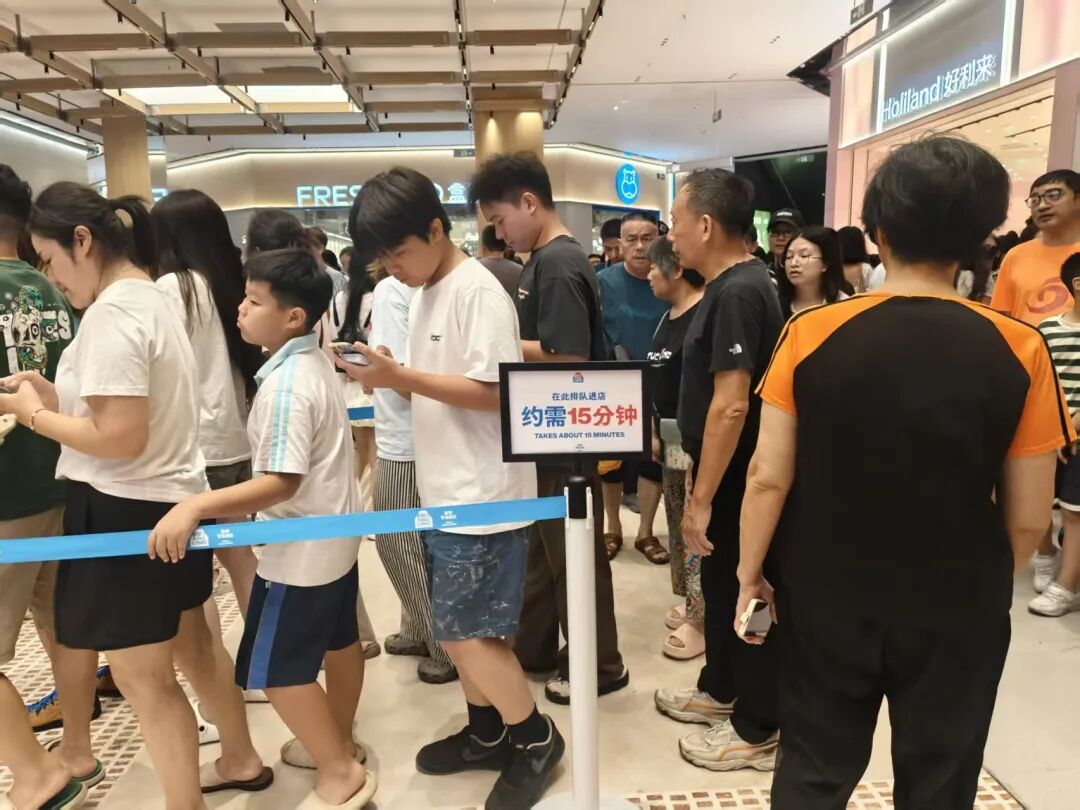
This Jinlimen store is not large. Estimated based on its regular store format, it covers an area of about 300 to 500 square meters, while the total area of Hema Fresh MixC store is nearly 4,000 square meters. Hema is 8 to 10 times larger than it. With such a big area gap, only Jinlimen needs to implement passenger flow control. The Jinlimen store at MixC Hangzhou Xiaoshan has launched specific flow control measures: originally, the checkout counters were only set up inside the store. To cope with high passenger flow, more than 20 additional store employees were specially assigned to the outside of the store to be responsible for checkout, and another three employees held signboards to maintain order. There is also a side effect of checkout outside the store: the queue is extended to the public passage, and the length seen by passersby is far greater than the actual number of people waiting inside the store.
When I went down again at 9 p.m., the Z-shaped elevators were almost all running upward. To get back to B1, I had to go down to the parking lot first, and then follow the crowd to walk back. The storefront of Jinlimen is located at the only access point. The elevators, sign-holding staff and security guards together form a checkpoint around it. People have to pass through here, and goods also have to pass through here, no one can bypass it. Once it is blocked, the whole passage is impassable. But queuing is not the whole story of this article. The real problem is hidden behind the shelves, and also hidden in the consumers who walk out of the store.
01
Why do people go to buy:
Three layers of motivation, good taste is not the reason for queuing
To answer why people queue up at Jinlimen, we must first ask a more basic question: what exactly are the people who enter the store buying?
The first layer: the illusion of cost-performance -- "affordable sense of premium"
The price of mainstream single products of Jinlimen is concentrated in the range of 10 to 25 yuan. The freshly made milk jasmine fermented drink costs 6.5 yuan, crispy shrimp chips 6 yuan, and spicy konjac shreds 8.5 yuan. These prices are anchored at milk tea shops and convenience stores, but Jinlimen opens its stores on B1 floor of MixC, core business districts like Xinjiekou in Nanjing, and uses industrial-style decoration, open transparent counters, and transparent operation rooms to create a "sense of premium". When consumers walk out of the mall with red and blue shopping bags, their psychological feeling is similar to "spending the money for milk tea, and experiencing a store like Sam's Club".
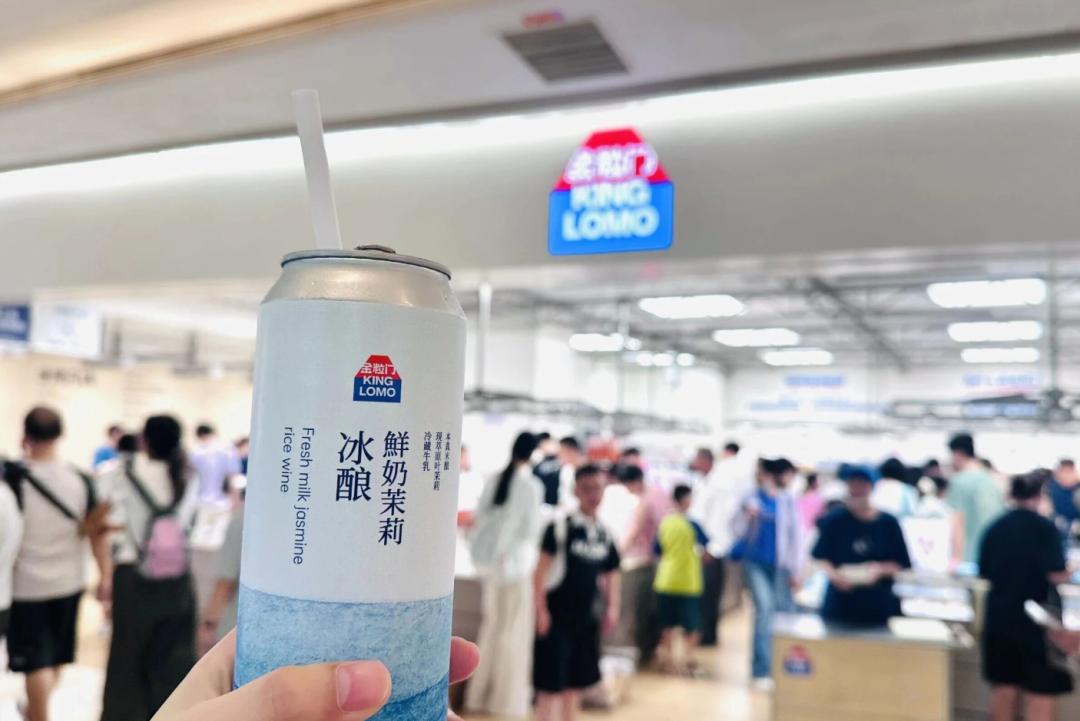
Image source: the Internet
A consumer wrote very straightforwardly on Dianping: "I think it's worth it to get this quality at this price." But the key word in this sentence is "this price" -- it implies a comparison: the objects of comparison are Sam's Club and Hema, not the bulk snack store next door. Jinlimen is called "affordable mini Sam's Club" by some consumers. It draws on the product selection logic of membership-based supermarkets, splits large packages into small portions, and serves consumer groups that "do not need membership fees and do not need large packages". What Jinlimen sells is "cheap sense of premium". Snacks are just a cover, and low price is only the reason to attract people to enter the store. What people really buy is the feeling that they do not lose their grade even if they spend a small amount of money, look exquisite, and hold decent goods.
The second layer: short shelf life urgency -- "if you don't buy it now, it will be gone"
The core selling point of Jinlimen is short shelf life: SKUs with a shelf life of 1 to 5 days account for about 50%, contributing more than 60% of sales. The shelf life of freshly made drinks is only 24 hours, and they are cleared out on the same day. This "sense of urgency" is deliberately amplified by the brand -- the LED screen says "good taste is worth waiting patiently", and the prompt signs of "sold out on the same day" can be seen everywhere on the shelves.
The sense of scarcity created by short shelf life is the most effective consumer psychological design of this model. When consumers face drinks with a shelf life of only 24 hours, their decision-making logic is no longer "do I want to drink it", but "if I don't buy it now, it will be gone tomorrow". The mode of daily limited quantity and same-day sell-out makes fresh snacks come with a "sense of scarcity" naturally. But to put it bluntly, this sense of scarcity is designed. They only make so much every day, and stop selling when they are sold out. The phenomenon of supply falling short of demand is only the explanation on the surface. It doesn't matter much whether it is really in short supply. The key is to make customers feel that it is scarce, hard to buy, and they have to rush to buy.
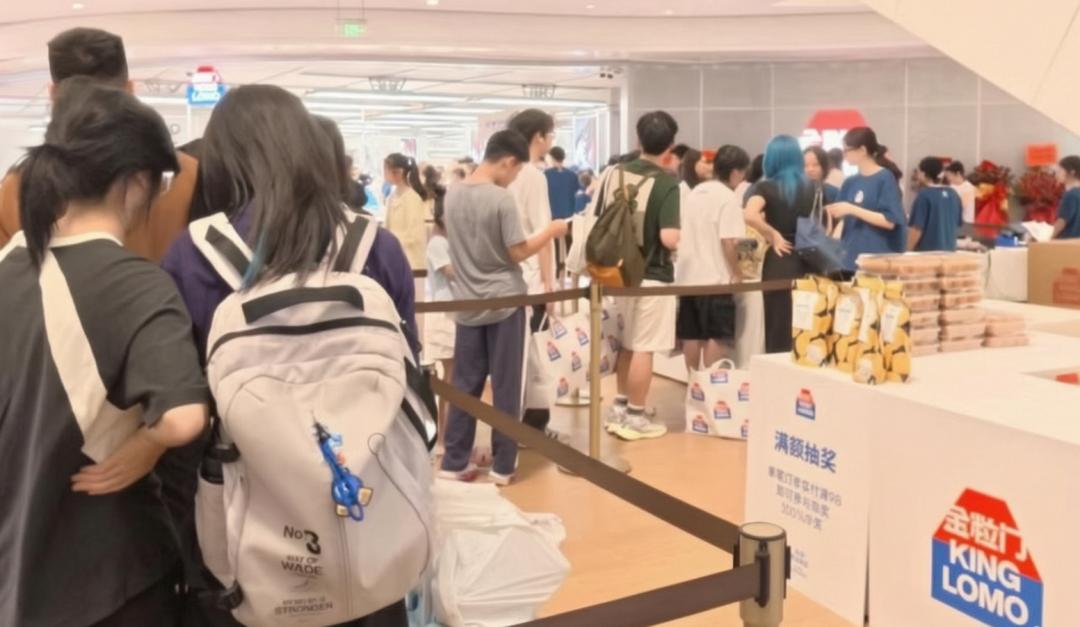
Image source: the Internet
The third layer: social currency -- "conquering Jinlimen" itself is a piece of content
On Xiaohongshu (as of September 2026), "conquering Jinlimen" has become a hot topic, with endless queuing strategies, must-buy lists, and mine-avoidance guides. Some people describe the shopping experience as "chaotic, breathless, and overwhelmed". Some consumers said that the 2-yuan shopping bags were resold at a markup on second-hand platforms.
Young people go to Jinlimen, and snacks are bought as an afterthought. The real protagonist is the content that can be photographed and shared. Snacks are responsible for appearing in photos, and the store is responsible for producing good-looking photos. Whether the food in the store tastes good or not is another matter. First of all, it must be photogenic and shareable. Queuing up at a snack store to "stock up" has gone beyond the nature of food itself, and has become a new type of social currency and life ritual for young people. Under this logic, queuing is part of consumption -- the longer the queue, the more communicative the content is.
But when the three layers of motivation are added together, good taste is not the first driving force for queuing. It is more like a passing line, not a reason for queuing. Consumers pay for the scene, emotion and social interaction, and the taste of the product itself is only a side dish above the passing line. This is the most fundamental vulnerability of the fresh snack track: when the scene is replicated, the emotion is diluted, and the social topic is replaced by the next hot spot, consumers have no reason to stay. Some people said bluntly: "I went there twice, and I feel that the product homogeneity is serious. They tell stories just to emphasize freshness, but the actual experience is not amazing."
02
What is the difference between the models:
The path divergence between Jinlimen and Jiduquan
The three layers of motivation explain "why people go", but cannot explain "whether this business can last". To answer this question, we have to look at its model itself -- Jinlimen and Jiduquan take two completely different paths.
Jinlimen takes a reduced version of the "Sam's Club logic": all directly-operated, selected SKUs, regional factories + cold chain daily distribution, and bound to MixC commercial complexes. There are dozens of directly-operated stores across the country (as of September 2026), 99% of which are private brands, with a customer unit price of 45 to 60 yuan. High-quality stores have monthly sales of more than 4 million yuan, with a gross profit margin of 35% to 40%. The advantages of this model are unified quality control and consistent experience. The cost is that the expansion speed is strictly locked by the production rhythm of the factory -- every time entering a new region, a factory must be built first, and then a store can be opened.
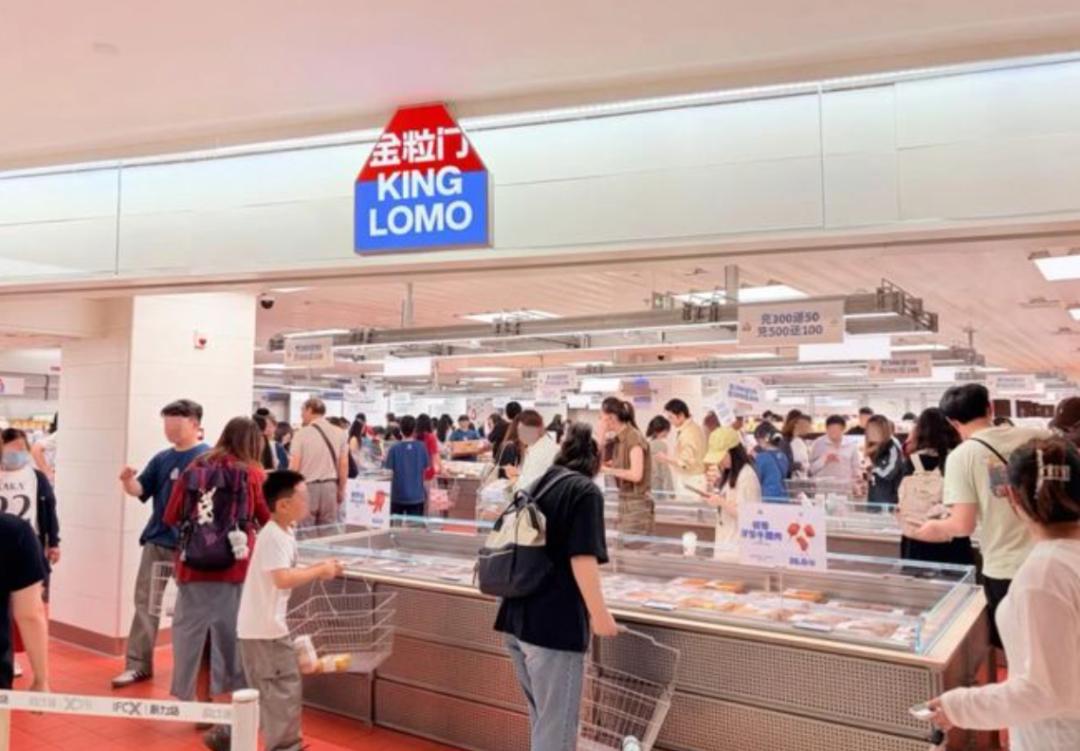
Image source: the Internet
Jiduquan follows the "group army logic": backed by Wuai Group, the parent company of Heise Jingdian, it reuses the ready-made supply chain, cold chain and franchise management system, and opens franchises to quickly expand its territory. According to public reports, the number of stores has exceeded 200, and 600 to 1,000 new stores are planned to be added in 2026. The expansion speed is much faster than that of Jinlimen, but the risk of quality control is also multiplied.
So who is more suitable for the current stage? Jinlimen bets on building word of mouth through quality, while Jiduquan bets on seizing the market through scale. Orient Securities summarizes this problem as the "impossible triangle" of fresh snacks -- it is difficult to take into account the three factors of scale, quality control and price.
03
Are buyer stores always popular?
The truth of product selection logic
No matter it is Jinlimen's "Sam's Club logic" or Jiduquan's "group army logic", their core capability they publicize to the outside world is "product selection". But is product selection really a barrier? If it is just "being good at picking goods", why can't others replicate it?
Jinlimen's product selection strategy draws on Sam's Club's logic of "wide categories and narrow SKUs": there are enough categories, but few single products. According to the public information of the brand, Jinlimen has about 180-200 SKUs, short-shelf-life products account for nearly 50%, and each niche category only retains the most popular hit products with the highest market recognition.
This set of product selection logic seems to rely on "being good at picking", but in fact it relies on supply chain management. Product selection is the front-end action, and the supply chain is the back-end foundation. Whether it can get goods stably, control costs, control quality, and keep up with the new product launch rhythm, these factors determine whether it can operate successfully. Being good at picking goods is a superficial action. Only being able to pick the right products, supply them stably, and sell them well counts. The premise for Jinlimen to achieve wide categories and narrow SKUs is that it has regional factories and a cold chain daily distribution system, which can replenish stores with high frequency and small batches.
The key point is that Jinlimen's product selection is not completely "self-developed". Here we need to distinguish two concepts: private brand (brand ownership) is not equal to self-production (production ownership). The brand's publicity that "the proportion of self-developed and self-produced products exceeds 90%" means that the formula and technology are mastered by the brand side, and the production links are still largely entrusted to OEMs. The food safety incident in January 2026 exposed the structural defect of this model -- the formula is its own, but the workshop is not its own. The involved OEM carried out secondary repackaging of the already sealed products. 64,031 boxes of involved products were sold, with sales of 1.2678 million yuan. Jinlimen set up a special compensation fund of 12 million yuan for this, and the compensation amount was nearly 10 times the sales of the problematic products.
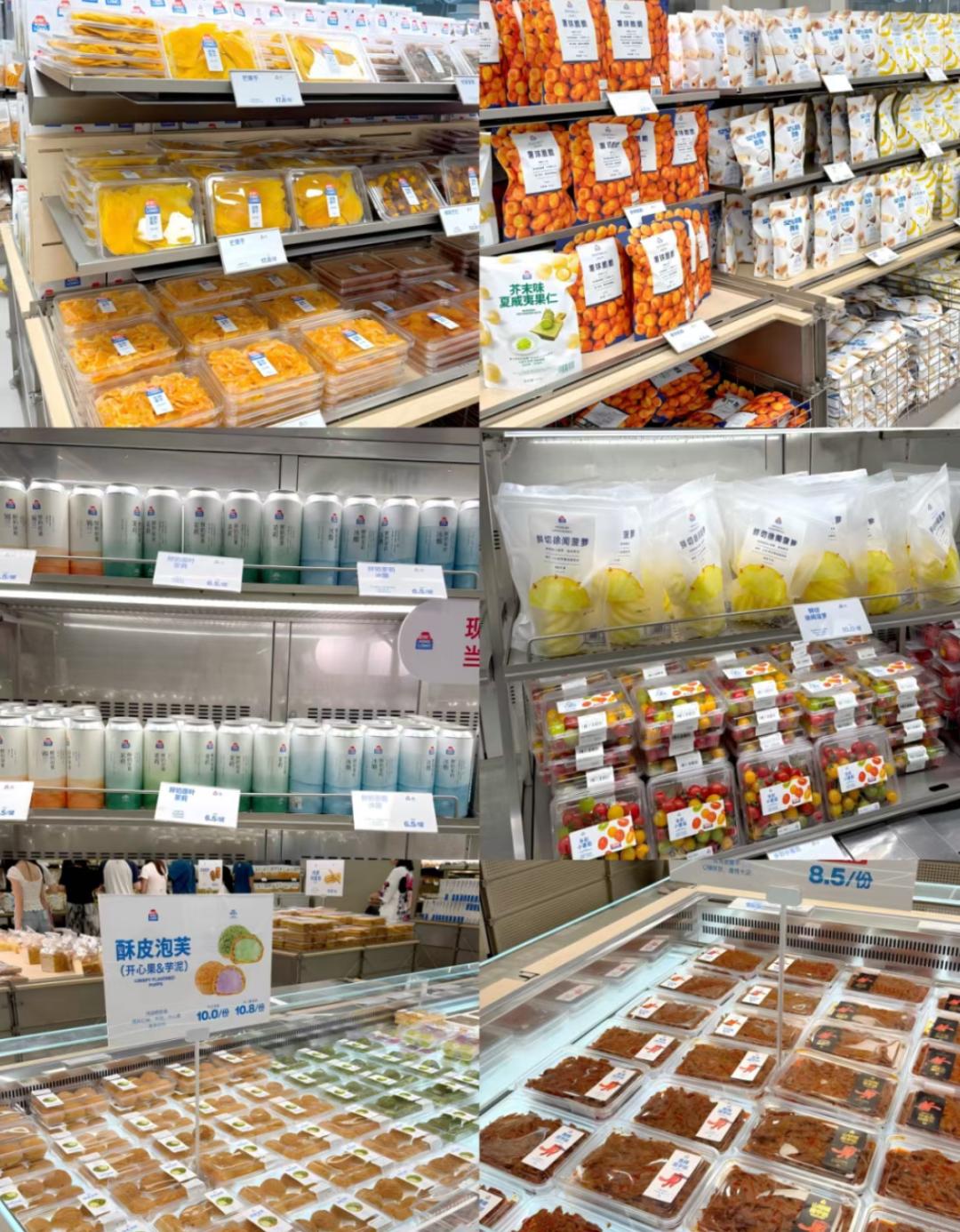
Image source: the Internet
The root of product homogeneity lies in the back end. Braised food, baked goods, nuts, and dried fruits have become standard configurations. Free tasting, sales scripts, decoration, and pricing ranges are also converging -- because the sources of their supply chains are highly overlapping. The new categories launched by Jinlimen can soon be launched with similar products by Jiduquan. Some consumers found that "the product categories are relatively similar. When Jinlimen launches new products, similar products can soon be seen in Jiduquan". When the two stores open on the same street, customers' selection criteria have degenerated into comparing prices and the number of SKUs -- no longer comparing who is fresher. Product selection is the easiest capability to replicate. What is difficult to replicate is factories and daily distribution. Jinlimen has an advantage over Jiduquan in this regard, but it is still far from the level of barriers of Sam's Club.
04
Loss and repurchase:
The most ruthless part of the short shelf life model
Product selection and supply chain determine "whether the products can be sold", while loss and repurchase determine "whether the products can be sold continuously". The most vulnerable part of the short shelf life model lies in the latter.
Loss will not break out alone. The trouble is that it is tightly tied to passenger flow. Once the passenger flow drops, the goods cannot be sold, and the short shelf life cannot wait, so the loss rate will rise immediately. Once the loss is high, the store can only raise prices or reduce quality. These two measures will hurt repurchase again, and the number of customers will decrease further. The most ruthless part of short shelf life is here: if customers don't come, you not only earn less, but also magnify the fact that "you will lose even if they come".
Signal 1: The gold content of the repurchase rate is questionable. According to a survey by Huachuang Securities, the repurchase rate of Jinlimen members exceeds 60% (Source: Huachuang Securities, 2026-09), which is a very high level in the retail industry. But this is the caliber of securities firms/brands, and the membership system was only launched in June 2026, which needs to be verified in the normal sales period: the statistical caliber is the proportion of registered members who consume again, and Jinlimen's membership system currently only has a basic point system, with no community, membership card, or fission mechanism