Mathematics Big Bang: OpenAI Cracked 722 Mathematical Problems Overnight, the Quasi-Riemann Hypothesis Has Been Proven
Just today, the global mathematics and AI communities have been stunned by this piece of news —
With no prior warning, no peer review, and even ignoring the long-standing etiquette in academic circles, OpenAI has released a series of new mathematical results generated by its internal cutting-edge models.
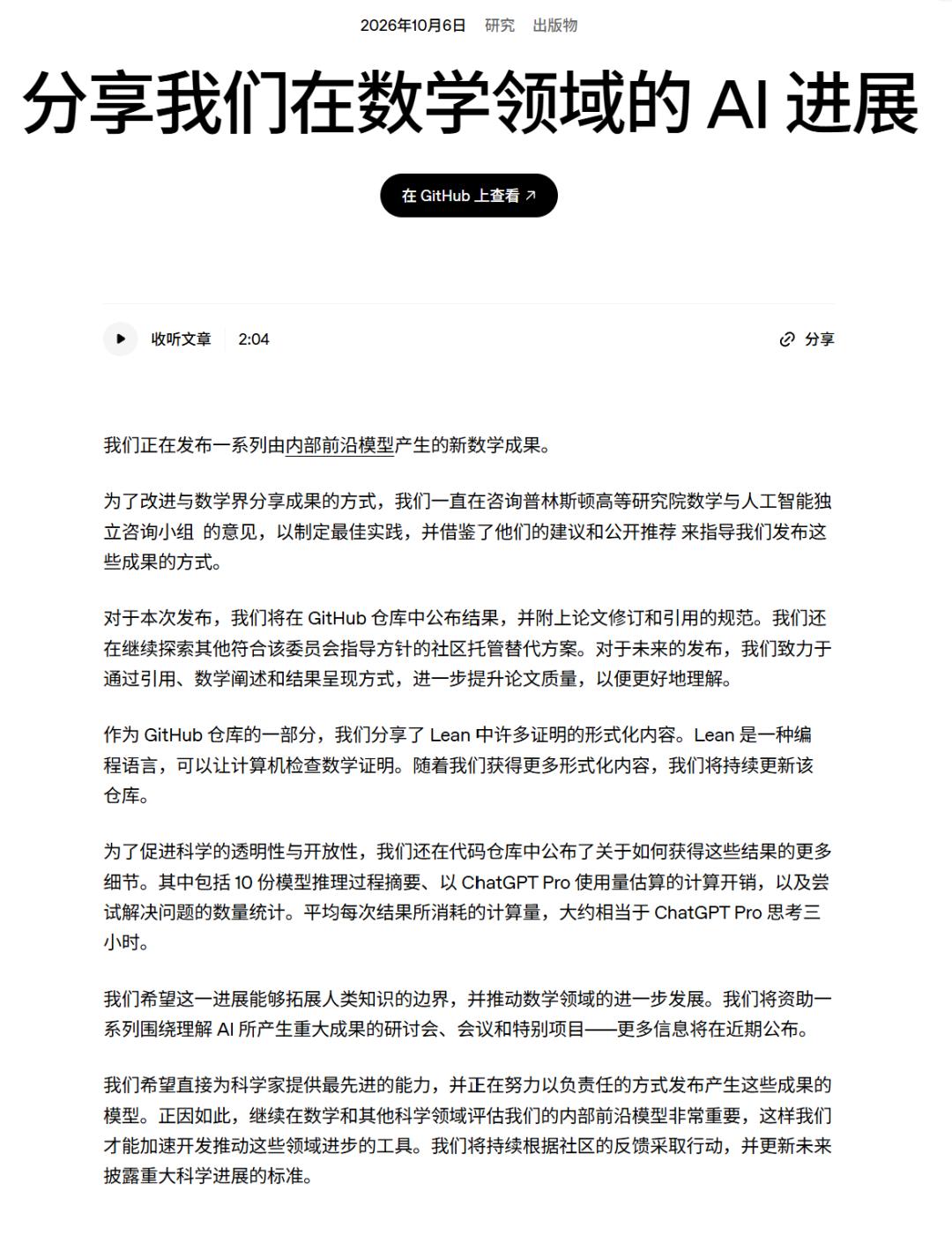
They directly and unceremoniously released the GitHub project repository called math.
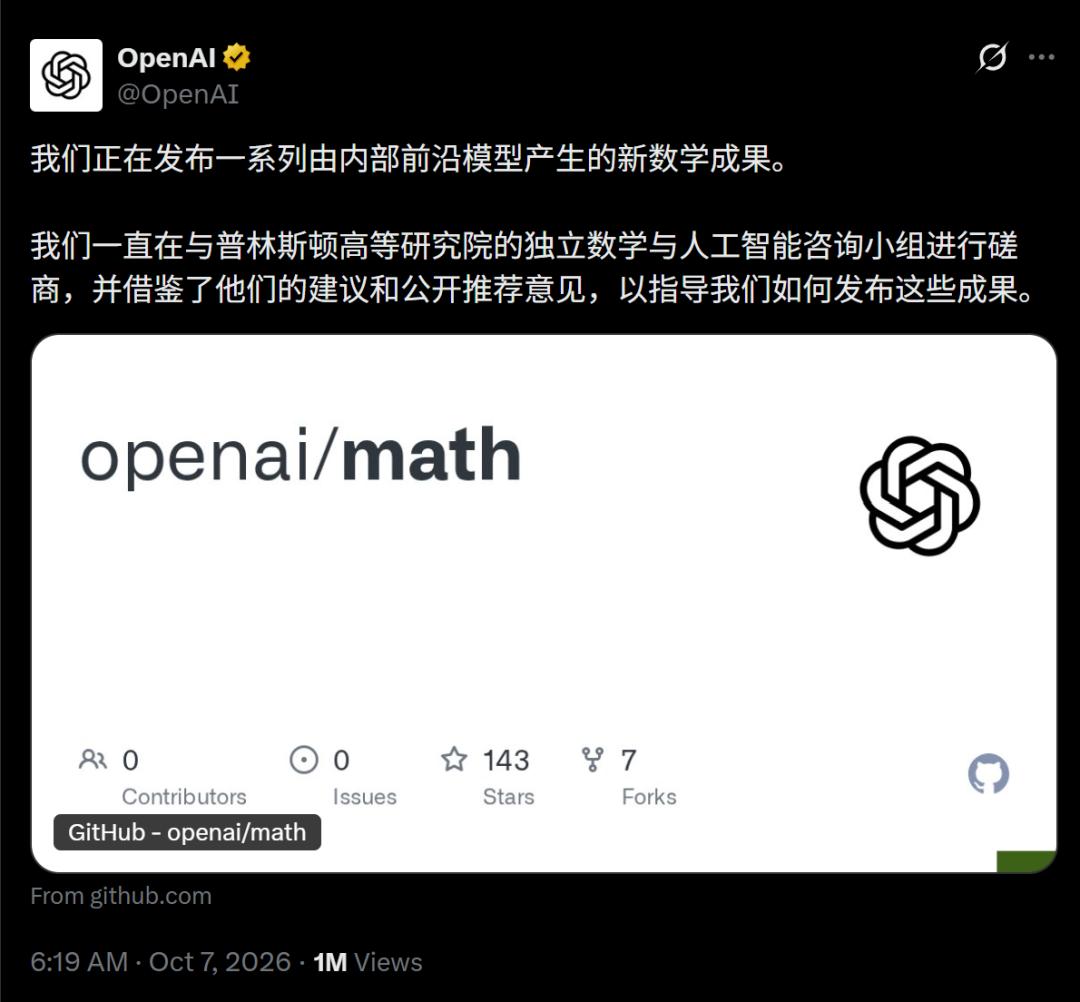
Link: https://github.com/openai/math/
It contains 722 mathematical manuscripts, covering 372 families of top-tier unsolved mathematical problems that had remained unresolved before.
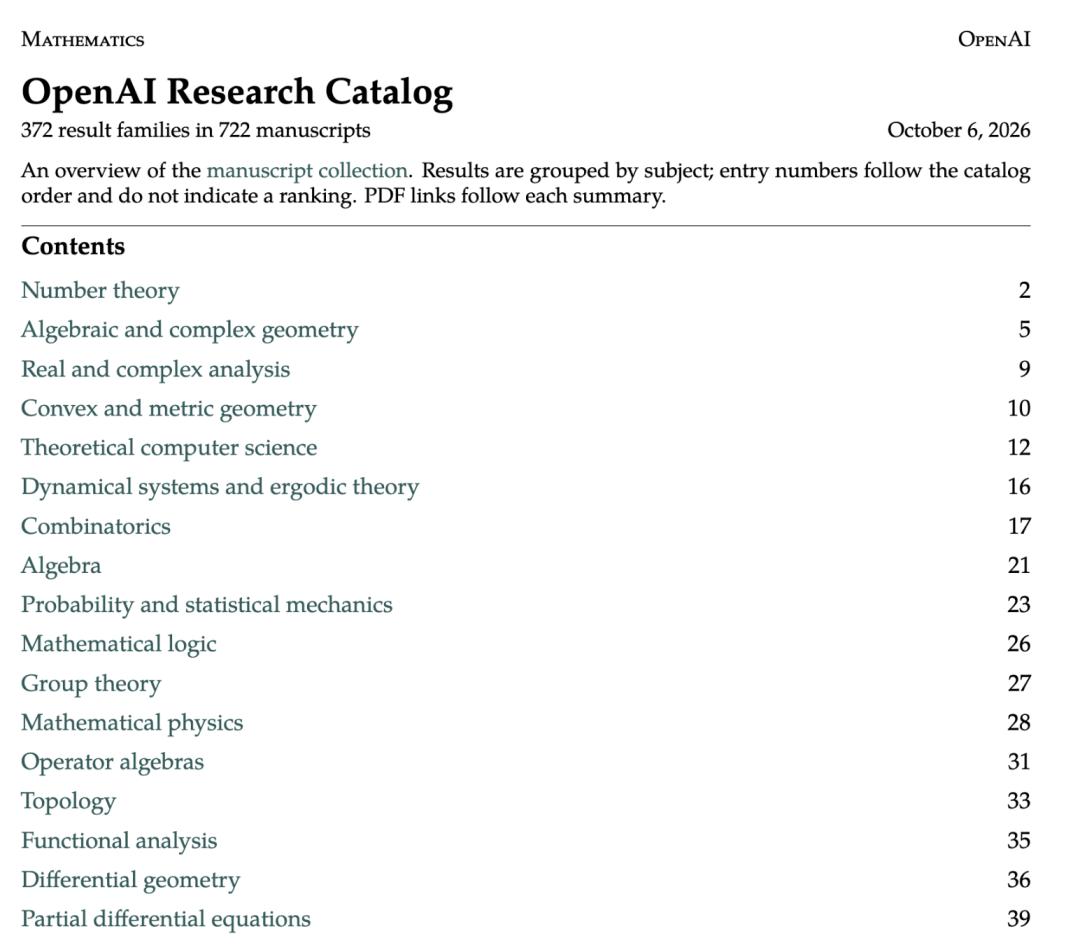
Link: https://github.com/openai/math/blob/main/overview.pdf
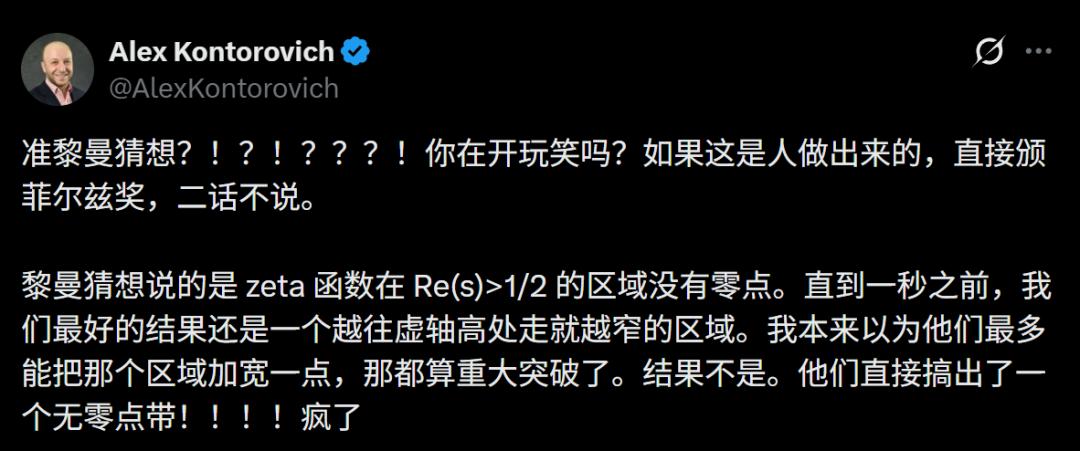
Among them, an unreleased AI model from OpenAI has proved the quasi-Riemann Hypothesis, and simultaneously released the Lean formal verification. If confirmed, this will be a historic breakthrough in the field of number theory, as well as a landmark moment in the history of AI development!
According to OpenAI's disclosure, the proofs for the vast majority of these difficult problems only consumed an average of 3 hours of ChatGPT Pro reasoning computing power from their unreleased internal model!
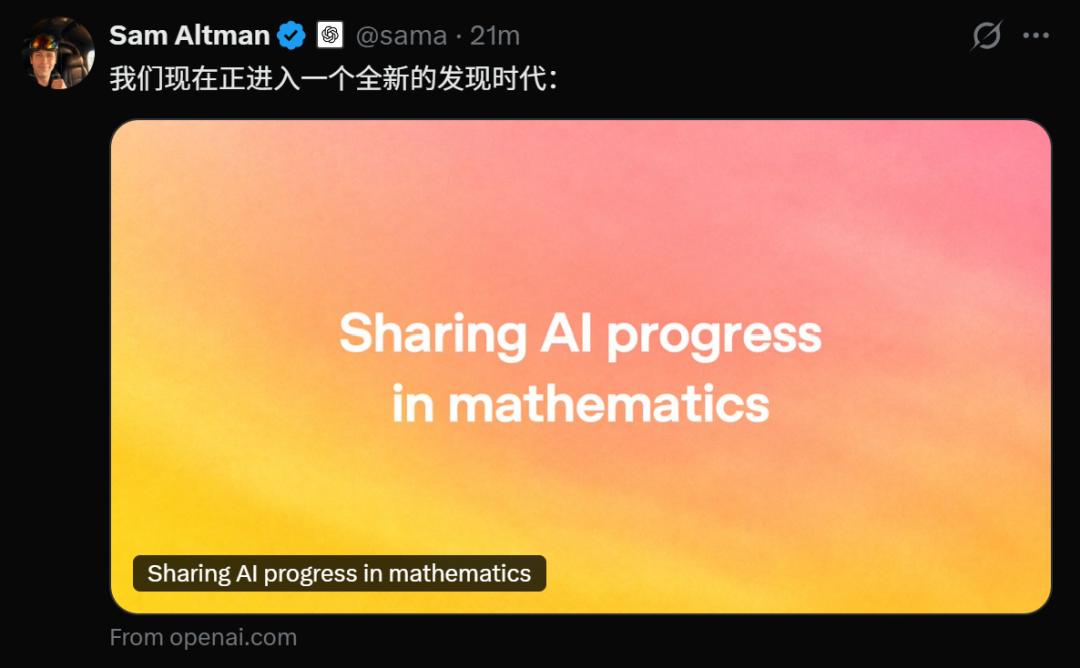
Sam Altman posted on X saying: We are entering a brand new era of discovery
In response, mathematicians are furious.
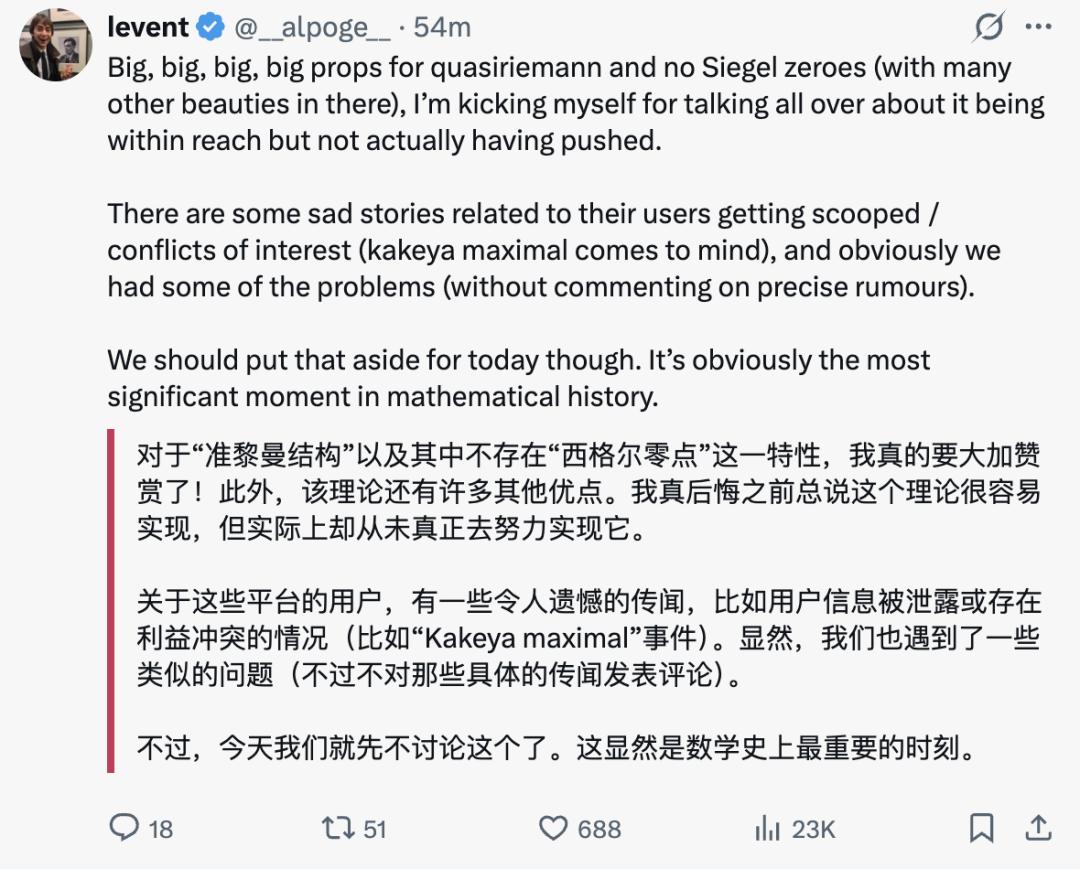
This list of solved problems is breathtaking.
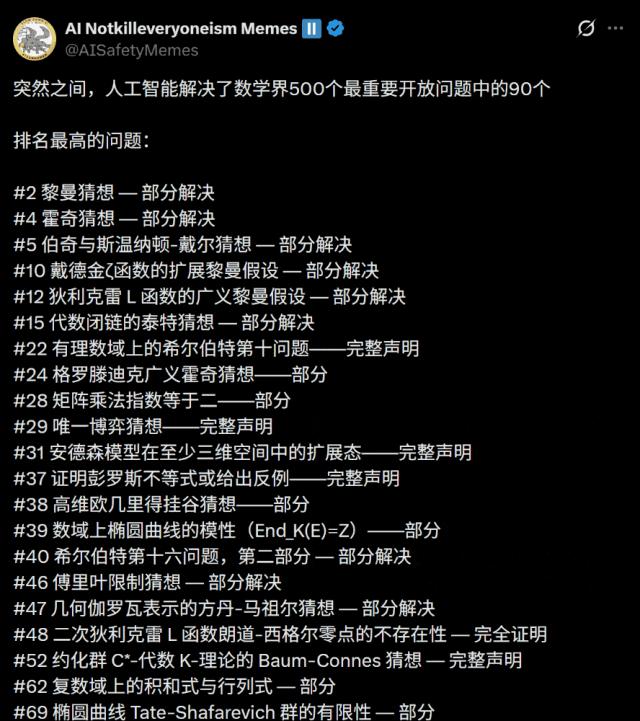
The Great Math Explosion!
Behind this "academic massacre", tensions between OpenAI and mathematicians have long been running high.
According to Wired's disclosure, as early as August this year, OpenAI secretly gathered 40 of the world's top mathematicians for a closed-door meeting, and raised a suffocating topic: "What should we do if AI fully surpasses humans in the field of pure mathematics?"
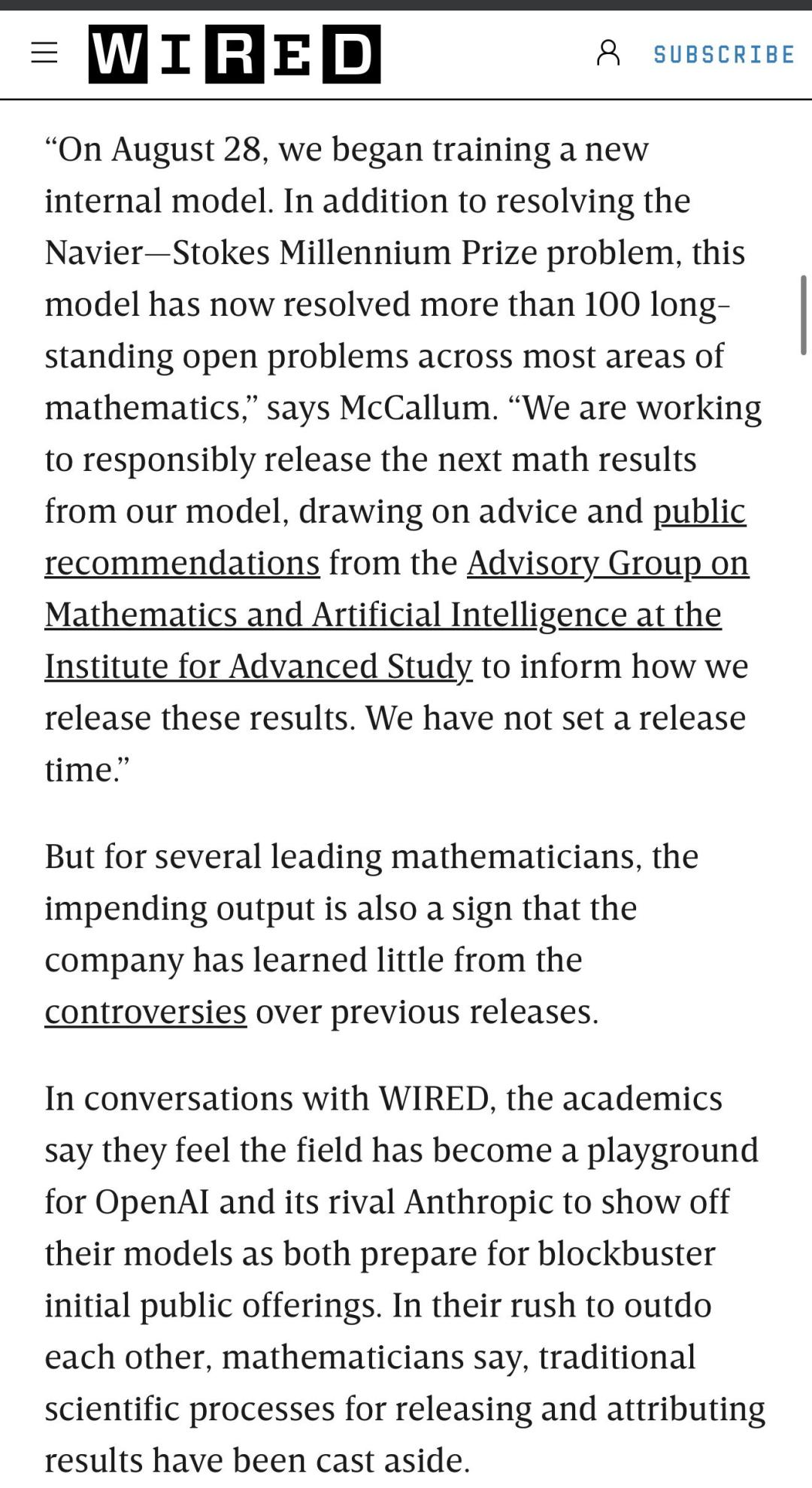
At that time, OpenAI vaguely revealed that its internal model had already broken through hundreds of unsolved cases.
Bryna Kra, a renowned mathematician from Northwestern University, recalled that the atmosphere on site was "a mix of the utmost excitement and the utmost fear".
The scholars earnestly advised OpenAI: Do not ever just post tweets or short blogs like internet influencers, you must publish rigorous papers in accordance with academic norms, leaving human scholars time to digest and verify the results.
However, OpenAI asserted its sovereignty in the most brusque way, and even pre-empted the breakthrough of the Navier-Stokes equation in academic publishing.
Nestor Guillen, a visiting professor at New York University, angrily accused —
In the eyes of mathematicians, the actions of these AI giants are simply like gangsters! Everyone feels extremely panicked, not just because of AI itself, but because the highest-dimensional intellectual power of humanity is being unscrupulously monopolized by a tiny number of technology oligarchs.
Some people disclosed that some OpenAI engineers have reached a private consensus: "Classical mathematics is dead today, and AI will, with an unstoppable momentum, end the careers of most professional mathematicians."
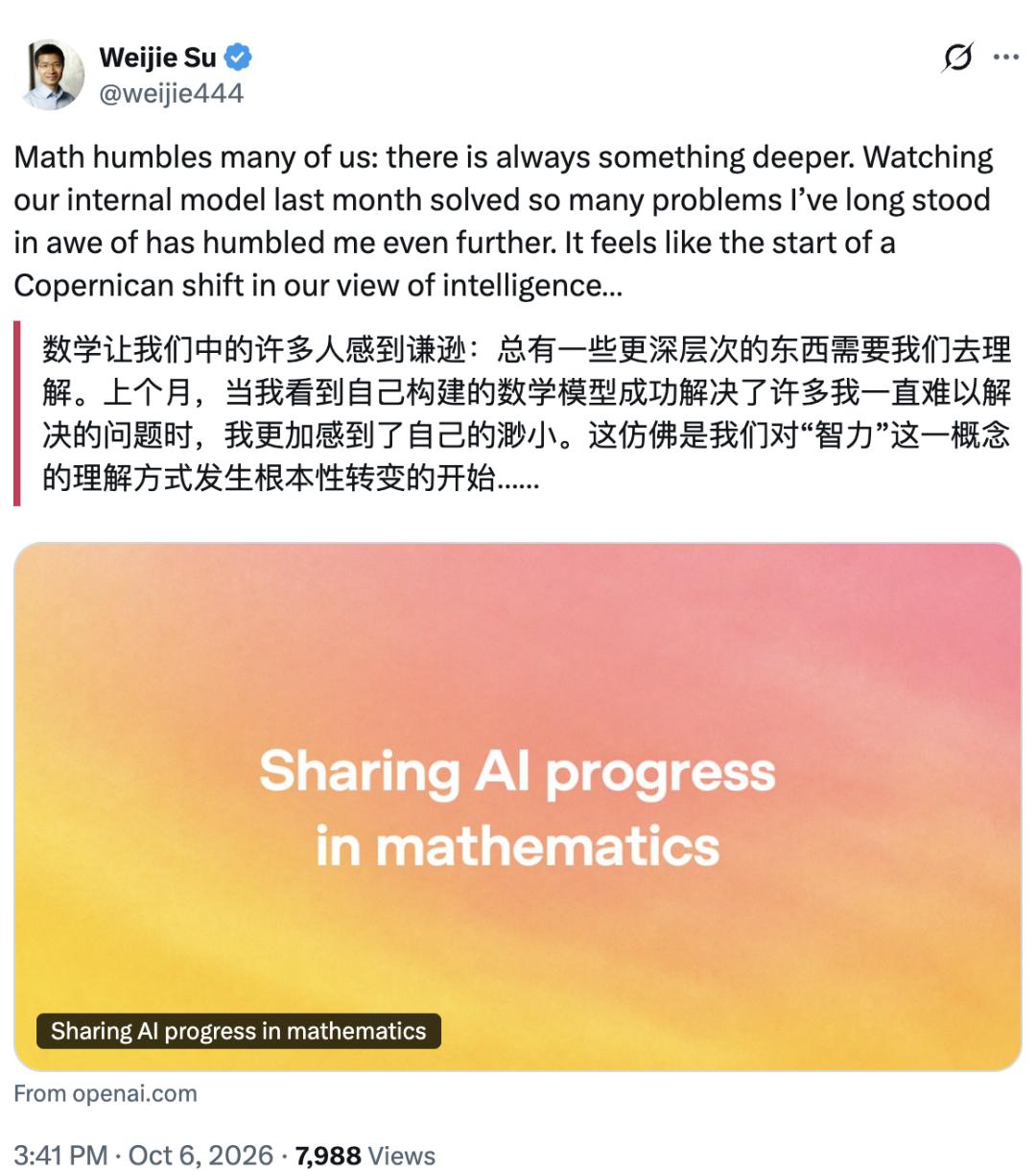
Su Weijie, an alumnus of Peking University's School of Mathematical Sciences, winner of the Cop Presidents' Award (one of the top honors in statistics) and a researcher at OpenAI, said bluntly: This is like the beginning of a Copernican paradigm shift in humanity's understanding of the concept of intelligence.
Nuclear-level AI achievement: The quasi-Riemann Hypothesis is conquered, with formal verification completed
Among all the conquered "fortresses", the first one that sent the entire number theory community into a frenzy is the super achievement numbered Result 003 — it has torn open the door to the Riemann Hypothesis, the ultimate holy grail of mathematics head-on.
The Riemann Hypothesis is widely recognized as the "crown jewel" in the mathematical world. Hundreds and thousands of theorems in modern number theory are all built on the foundation that "the Riemann Hypothesis holds true". It asserts that all non-trivial zeros of ζ(s) lie on the straight line where the real part ℜs=1/2. For more than 160 years, humans have not even been able to rule out the existence of its zeros in regions far away from the 1/2 line.
Moreover, there lurks the ghost of the "Landau-Siegel zero" — some Dirichlet L-functions may have abnormal zeros on the real axis extremely close to 1, which has dashed many hopes.
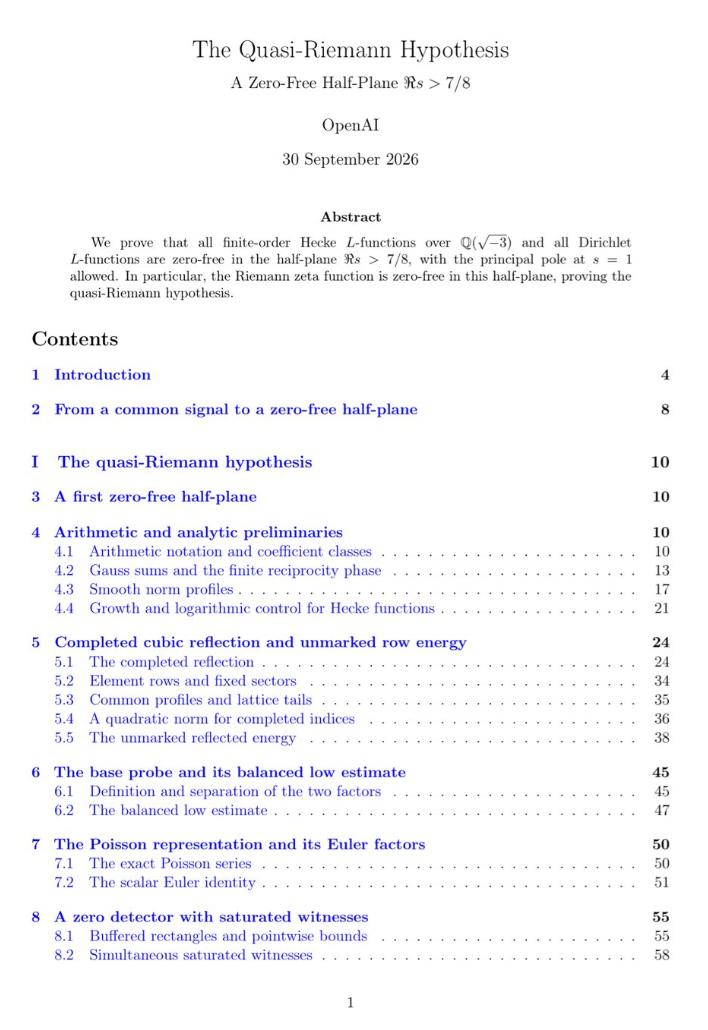
In the manuscripts made public this time, the OpenAI model has fully conquered the "quasi-Riemann Hypothesis": it proves that all Dirichlet L-functions have absolutely no zeros in the entire half-plane where the real part ℜs>7/8!
Furthermore, it completely eliminates the Landau-Siegel zero.

OpenAI admitted in its GitHub note that the vast majority of problems were solved fully automatically by the model. Only for the work on the zero-free region of the Riemann Zeta function, the research team conducted extremely rigorous manual review and readability polishing.
Although this has not yet fully reached the final ℜs=1/2, pushing the zero-free region to a fixed constant bound (7/8 and 11/12) in one go and uniformly ruling out the Siegel zero is already an unprecedented earth-shattering leap in analytic number theory in half a century!
Peak moment: Conquering "ordinary NP-hardness under the basic semidefinite threshold"
In the field of computer science, if P vs NP is the ultimate crown, then "ordinary NP-hardness under the basic semidefinite threshold" is the "uncrowned king" that determines the limit of human algorithms.
This is also the most disruptive research in OpenAI's result library (numbered Result 102).
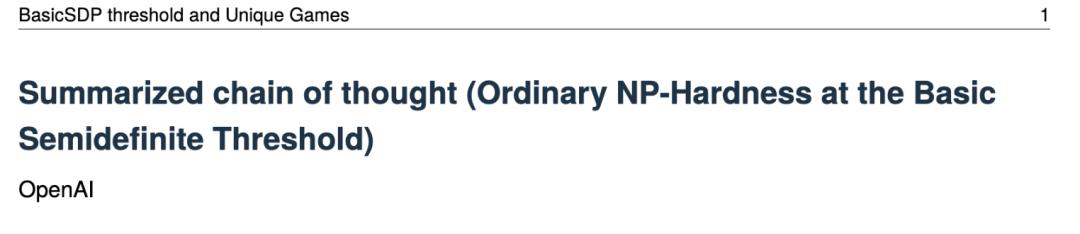
Link: https://github.com/openai/math/blob/main/reasoning_traces/basic-semidefinite-threshold-np-hardness.pdf
What is NP-Hard?
In the real world, a huge number of large-scale optimization problems (such as chip routing, logistics scheduling, route planning, graph coloring) are classified as NP-Hard problems.
Humans cannot calculate the optimal solution in polynomial time, so they have to settle for approximate solutions. The Basic Semidefinite Programming Relaxation (Basic-SDP) is recognized as the most powerful approximation tool.
In 2008, computer scientist Prasad Raghavendra published a landmark paper. He proved a surprising conclusion: For any fixed finite constraint language (Max-CSP), the approximation ratio that Basic-SDP can achieve is the absolute theoretical limit for polynomial-time algorithms!
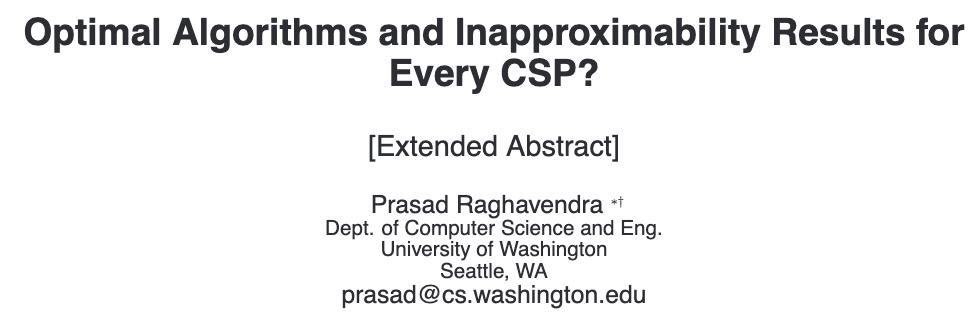
Link: https://dl.acm.org/doi/epdf/10.1145/1374376.1374414
However, this great theorem has a fatal premise — it must be built on the basis that the "Unique Games Conjecture" (UGC) holds true.
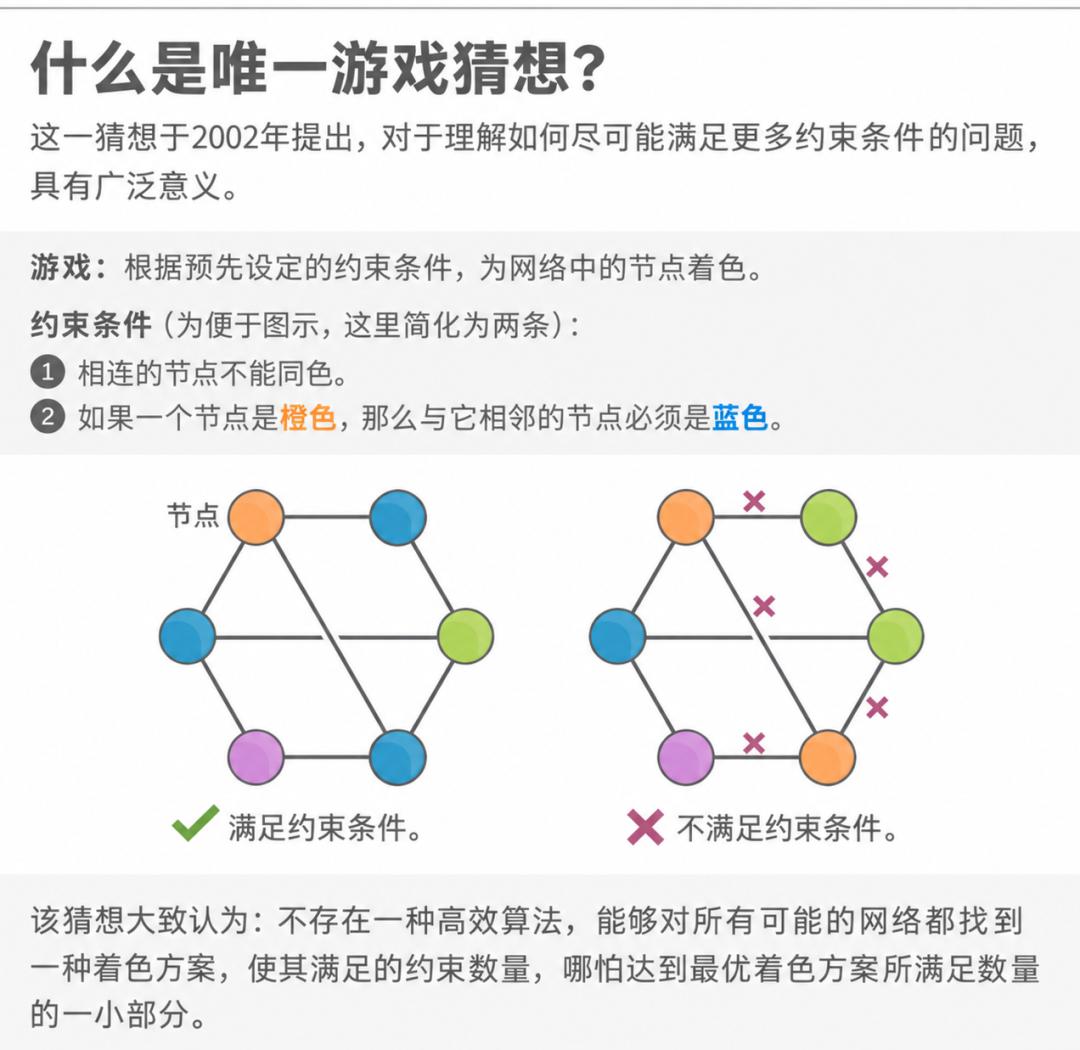
UGC is a century-old problem proposed by Subhash Khot in 2002.
If UGC is false, Raghavendra's theoretical edifice will collapse instantly, which has been the "Achilles' heel" of theoretical computer science for nearly 20 years.
Over the past two decades, the dream goal of countless theoretical computing scholars is: Can we get rid of the UGC assumption, and directly prove that the gap problem corresponding to the Basic-SDP threshold is itself ordinary NP-Hard, under the pure, unconditional classic framework that only assumes P≠NP?
If this conclusion holds, it means that under the pure P≠NP assumption, any polynomial-time deterministic algorithm that attempts to outperform Basic-SDP is mathematically and logically impossible to exist!
How did AI tear down this barrier head-on? Below is the Chain of Thought for solving the problem.
Step 1: AI first reviewed Raghavendra's original framework, confirming that repeated variables and local probability distributions do not provide loopholes to construct counterexamples.
AI realized that if it bypasses UGC, the core obstacle is: in the classic PCP (Probabilistically Checkable Proof) construction, the tensor representation will "leak" the projection coordinates, allowing cheaters to pass easily.
In order to suppress information leakage without breaking completeness, AI abandoned the smooth function route and introduced an algebraic core on a finite field of characteristic 2:

Then, AI designed a non-linear decoder with shift equivariance

Extremely insensitive to tiny noise, but can be captured constantly by high-rank linear features, this resolves the information leakage dilemma.
Then AI used extremely sparse projections with a probability of only
