A camera app that teaches users how to pose has raised tens of millions of yuan in financing.
Whether it's traveling, checking in at popular local stores or going shopping in daily life, getting Instagram-worthy satisfying photos has become the top demand of young people.
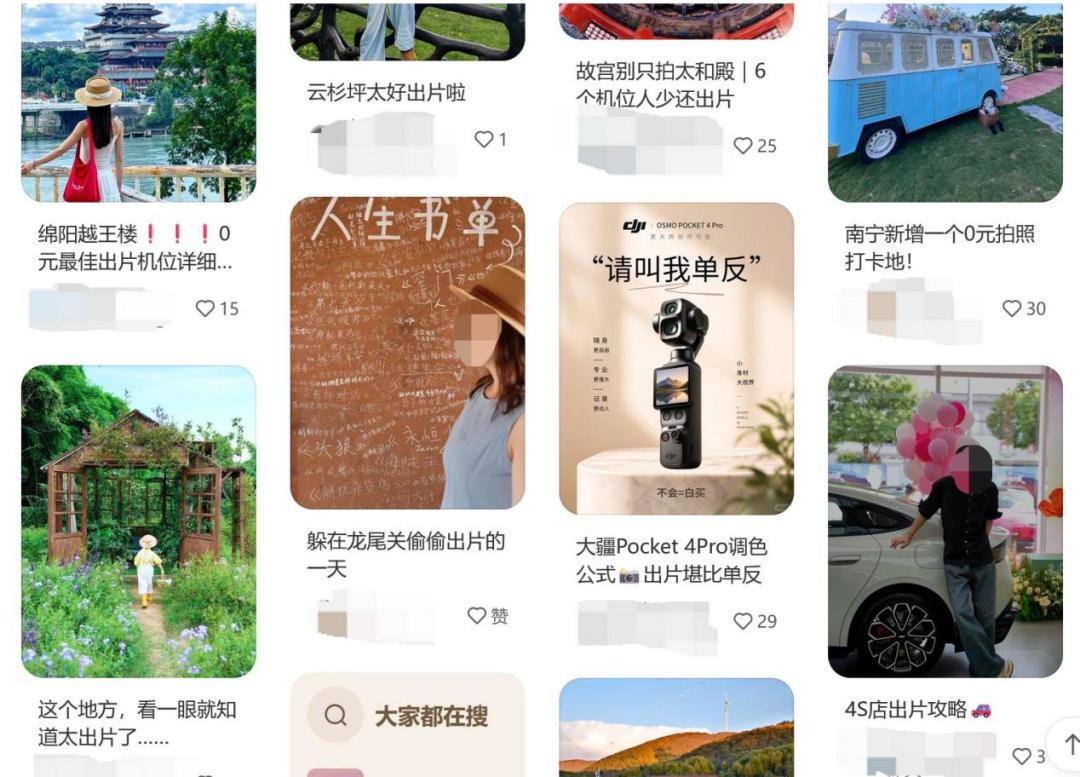
From 4S stores to the Hall of Supreme Harmony in the Forbidden City, users have a strong obsession with getting satisfying photos in all kinds of scenarios | Source: Xiaohongshu
However, getting good photos is never easy. Many people will become unnatural the moment they face the camera, and completely forget all the poses they saved in advance. People who take photos also face no easy situation: it is not rare to be blamed for taking bad photos during trips.
The AI camera app "Superpose" targets this pain point, using AI to teach the subject how to pose, and meanwhile guide the photographer to take proper shots. On September 15, "Superpose" announced the completion of a $2.2 million seed round of financing, led by Khosla Ventures, with Meitu and OVTR VC participating in the investment.
I. Her husband was bad at taking photos
The ex-TikTok employee chose to start a business
"Superpose" was founded by two former TikTok employees Melody Chu and Jing Liu. CEO Melody Chu used to be in charge of product work at Slack, TikTok, Roblox and Meta, and participated in the launch of TikTok Creator Marketplace; CTO Jing Liu is a computer vision researcher who previously led AI research on personalized image and video generation at TikTok.
According to Melody Chu, the original motivation to found "Superpose" was that her husband "was extremely bad at taking photos", which even became a "pain point in their marriage". With the development of computer vision and generative AI, she wondered whether AI could intervene in the shooting process, to help people capture the exact photo they expected in their mind.
In the past, before getting satisfying photos, users needed to search for shooting guides in advance, memorize reference poses, and do test shots on site. "Superpose" chooses to solve this whole process with AI. After users find the scene they want to shoot, they can take a photo covering both the person and the scenery first, and the AI will generate 4 reference pictures with different poses within 10 seconds by combining the person, clothing and surrounding environment.
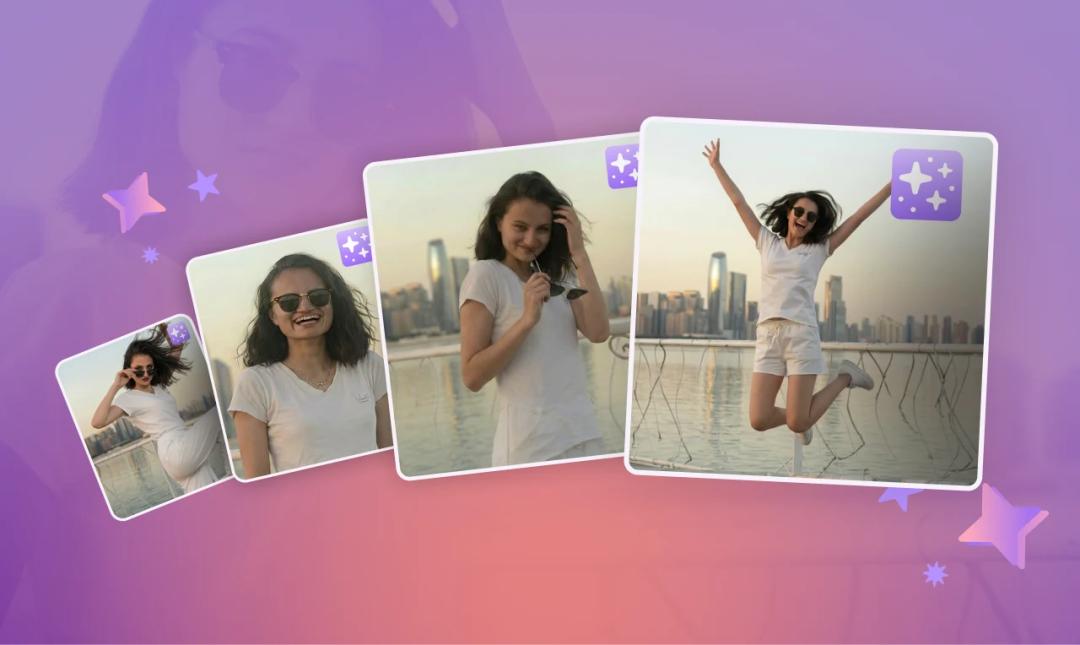
Example of reference poses generated by "Superpose" | Source: Official website of "Superpose"
Users can select their favorite pose from the results, then click "Match Pose". After that, the reference picture will appear in the upper left corner of the screen, and the corresponding action outline will also be overlaid on the real-time viewfinder. The photographer can follow the wireframe to guide the subject to adjust the positions of their limbs and body.
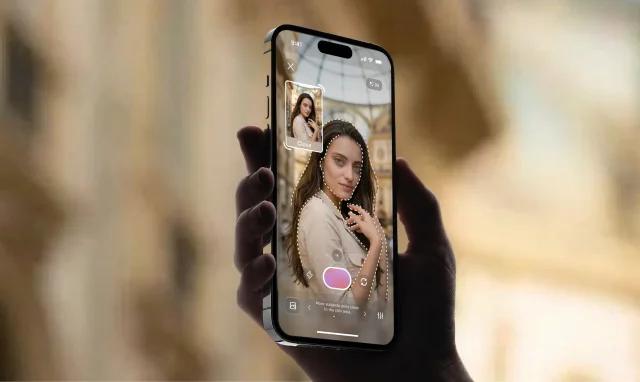
The action outline feature of "Superpose" | Source: Official website of "Superpose"
At the same time, the product also provides real-time guidance for photographers to maximize the alignment with the reference pose, such as adjusting the distance between the lens and the subject, moving the lens position and so on.
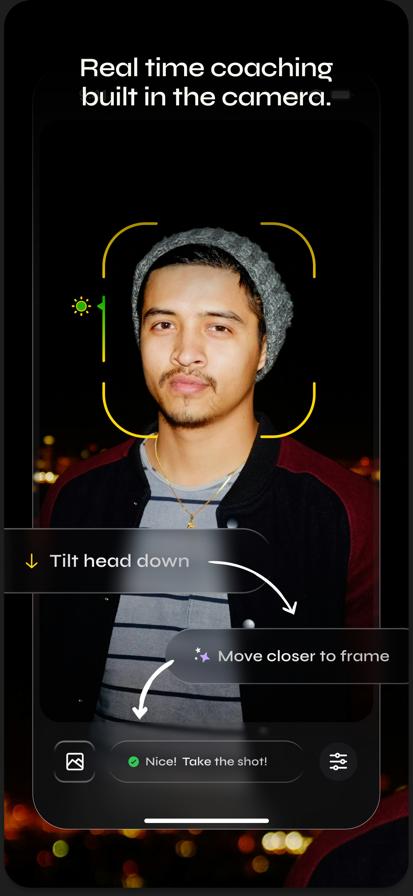
Example of shooting guidance from "Superpose" | Source: "Superpose" product promotion page
In addition, if users are satisfied with the AI-generated reference pictures, they can directly save the AI-generated results. Users have 5 generation opportunities per day, and 4 reference photos can be generated each time. The app currently does not adopt a subscription model. After the free quota is exhausted, users can purchase additional generation credits: 5 times for $2.99, and 20 times for $9.99.
The "Superpose" team hopes that AI can take over part of the responsibilities of photographers, helping ordinary users find more appropriate poses, lighting, composition and other elements. According to official disclosed data, since the product was launched in July this year, it has been installed more than 20,000 times, and users have completed more than 190,000 "Superpose" generations in total.
With pose reference and guidance, getting satisfying photos seems to be a sure thing. However, can beautiful photos be taken only by adjusting poses?
II. Can you get satisfying photos just by posing properly?
"Superpose" is not the first product that tries to use AI to guide photography. Google has launched "Camera Coach" on Pixel phones, which can prompt users to adjust lighting, composition and shooting methods according to the picture in the viewfinder; Adobe has also added an AI review feature in "Project Indigo" to give suggestions on the taken photos.
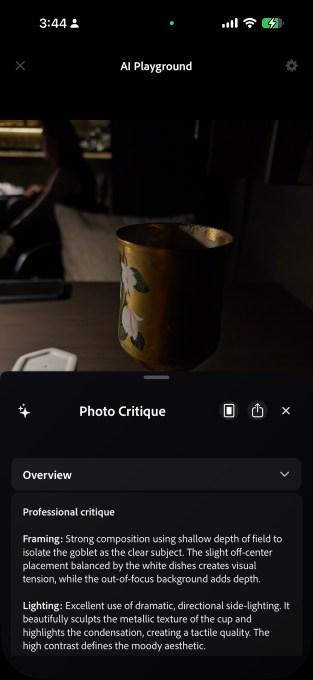
Example of Adobe's AI review feature | Source: Adobe official website
The features of Google and Adobe mainly provide suggestions around shooting links such as lighting and composition, while "Superpose" focuses on portrait photography: it first generates a pose reference picture, and then guides the photographer to shoot it on site. The problem is that whether a portrait photo can be satisfying is related to both the person behind the lens and the person in front of the lens. In other words, if "Superpose" wants to help users take good photos, it not only needs to consider whether the reference pictures match the user's aesthetic preference, but also help photographers restore the reference effect into actual photos.
The first step is not easy. The AI-generated reference picture may not be the "photo in the user's mind". For example, when standing on the street, some people want a natural and casual candid shot, some want to show their full outfit, and some hope the photo has a stronger atmosphere; but "Superpose" currently does not provide sufficiently detailed options for styles and shot sizes.
Although the product is gradually recording user preferences, such as asking for reasons when users delete unsatisfactory generated results, there is no major improvement for now. According to the author's actual test, most of the poses generated by the product are relatively exaggerated, and some are awkward to perform, with limited reference value; there are only 4 options for each group of generation results. If none of them are liked, users need to regenerate and select repeatedly. When users enter the paid stage, it is more likely to cause user dissatisfaction.
Even if users pick a favorite reference pose, they may not be able to take beautiful photos. The wireframe can indicate the approximate positions of the limbs and body, but it can hardly solve the user's nervousness when facing the camera. The movements that look natural in the reference picture may appear stiff when performed by real people; expressions, sight lines and action states can hardly be restored only by aligning the outline.
For photographers, the help of "Superpose" is also limited. The product will remind photographers to restore the subject's pose, but other factors that affect photo quality, such as how the timing of pressing the shutter affects lighting and other conditions, still need to be judged by the photographers themselves.
At present, the most direct help of "Superpose" is to provide reference pictures for people who have no idea about poses when taking photos, and let people holding mobile phones know how to adjust. However, there are still many details that users need to master by themselves from the reference picture to the final actual photo. Providing only a reference picture with a good pose may not be enough.
Final Notes
The "AI Photographer" track is heating up. There are many hardware players in the market, such as "Beni", an automatic follow-shot device launched by Miaodong Technology, "Suiling X", an intelligent camera movement device from Yueqian Innovation, and the autonomous shooting device that Xingshi Technology plans to launch. However, there are few shooting guidance software for ordinary users, which is very likely because ordinary consumers may be the biggest uncertain factor in the shooting process.
In any case, "Superpose" has selected a direction that sounds like a real pain point, but it may not be feasible to get users to pay just for avoiding the trouble of making pose strategies.
This article is from the WeChat official account "Baijing Outbound" (ID: baijingapp), written by Pei Zhengkai, edited by Yin Guanxiao, published by 36Kr with authorization.