Embodied toys cannot tell the story of LABUBU
The breakout hit of embodied toys will never grow out of the "trendy toy plus AI" model
At Pop Mart's factories, LABUBU units are rolling off the vinyl production lines in Dongguan at a monthly output of 10 million units.
At the same time, in a conference room of an office building in Nanshan District, Shenzhen, the CEO of an embodied toy startup is explaining to investors why only half of their 3,000 initial launch units were sold in two months, while the return rate remains stuck at 30% with no sign of dropping.
The gap between these two scenarios is exactly what this article will discuss.
What Qualifies as an Embodied Toy
First, let's clarify what an "embodied toy" means.
Not every toy with a chip can be categorized as this. A talking plush pendant? That's just an AI speaker with a new shell. A learning machine with a screen? That's a tablet with a stand. Programmable building blocks? That's just a remote-controlled car with a renamed label.
A real embodied toy must meet four criteria: it has a physical form that can be perceived (tangible, visible, and capable of movement), it can make autonomous decisions and give feedback (not just move when you press a button), it targets consumer-grade entertainment or companionship scenarios, and its price is not unreasonably high — ranging from 200 to 5000 yuan.
Filtering all products on the market by this standard, less than "two fingers' worth" of offerings remain.
UBTech's Wukong 2, equipped with 14 servo motors, can walk, jump, and hold conversations, priced at 3999 yuan. There is also UBTech's Meng You UU Youzai, priced from 469 to 898 yuan, a plush pendant that can chat and develop unique personalities.
Ropet by Mengyou Intelligence, which nuzzles your palm, maintains a 37°C body temperature, and acts coquettishly through eye contact, is priced from 1500 to 2000 yuan.
Lobot's Fu Zai, priced at 399 yuan, has sold nearly 300,000 units relying on its memory and personality development system.
That's all. You can count them all on the fingers of one hand.
There are no more than 10 commercially available products across the entire industry that fit the definition, and the number of products with annual sales exceeding 10,000 units can be counted on one's fingers.
The supply pool is this small, and none of the offerings have even reached the starting line for a breakout hit.
Why Did LABUBU Succeed?
Now let's look at the situation on the LABUBU side.
According to Pop Mart's 2025 financial report, the revenue of the series that LABUBU belongs to reached 3.04 billion yuan, with a year-on-year increase of 726.6%. What makes this Nordic elf with fangs and a crooked mouth so popular?
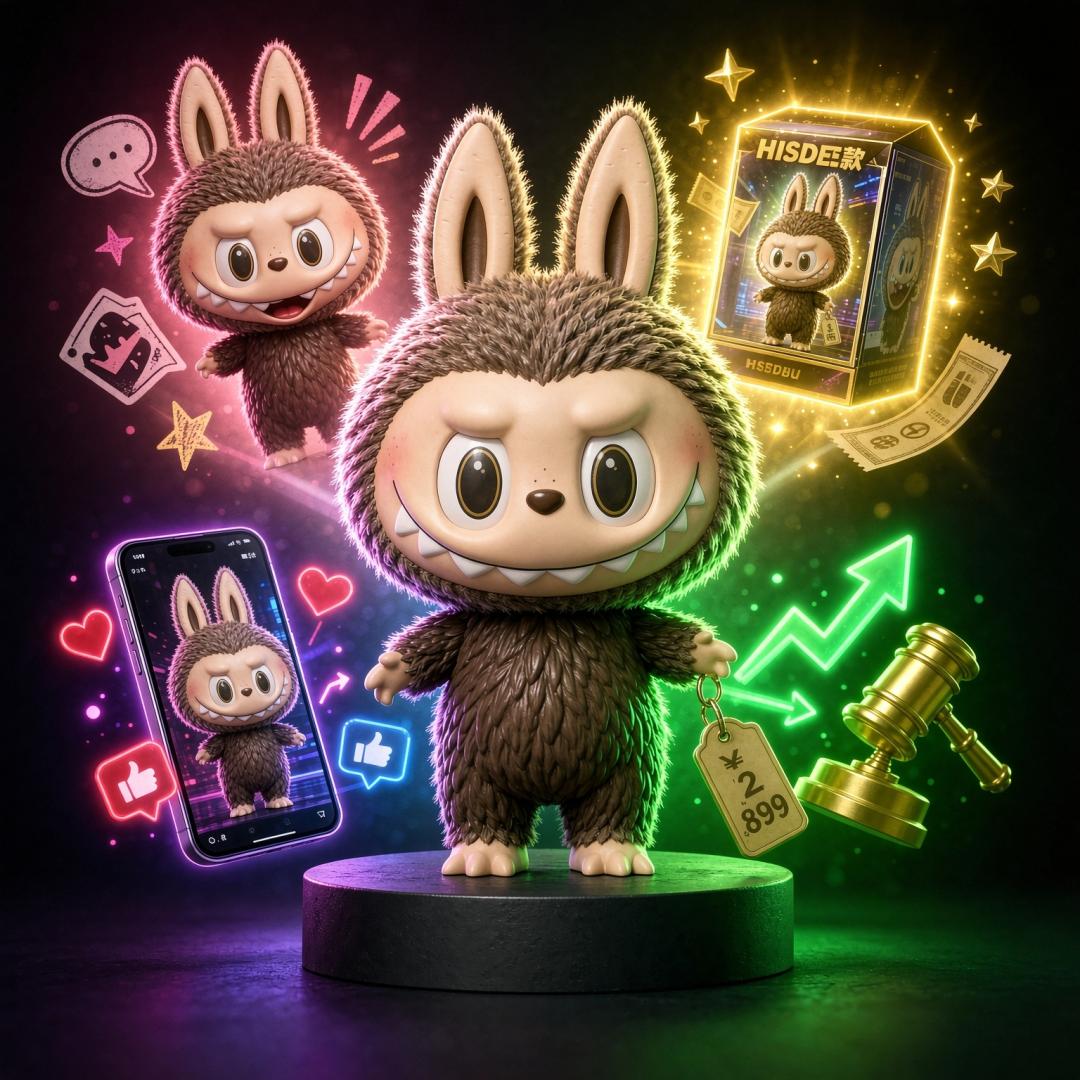
To put it simply, there are four core points: distinct personality, limited availability, shareable on social media, and tradable for speculative profit.
This character drawn by Kasing Lung is ugly yet cute, rebellious, and has a complete story line, making it naturally suitable for fan-created secondary content. With hidden blind box editions and co-branded limited releases, its resale price on Xianxian can reach more than ten times the original retail price. More than 2000 fan groups are active every day modifying, sharing, and trading their LABUBU figures. With the vinyl production capacity in Dongguan fully activated, producing 10 million units per month is no challenge at all.
LABUBU does not require you to love it — it is already worth the price once you take a photo and post it on your social media moments; while embodied toys require you to talk to them every day to prove that they are worth the price tag.
This sentence is the key to understanding the essential difference between the two categories.
LABUBU sells "the pleasure of possession". You spend 59 yuan to draw a figure, unbox it, take a photo, post it on social media, then store it in a cabinet or list it on second-hand platforms. The whole process takes 30 minutes, with no follow-up investment required. Its marginal cost drops sharply as the scale expands, and its gross profit margin is surprisingly high.
Wang Ning, the founder of Pop Mart, is fully aware of this. He has publicly stated that LABUBU will not add AI functions. Many people think this is technical conservatism, but in fact it is commercial sobriety — once AI is added, a collectible will turn into a service product, completely changing the gross profit margin and business model.
Additional features will shorten the collection lifecycle. Adding AI means continuous operation and maintenance, cloud support, and content updates, all of which bring extra costs. Wang Ning's choice not to add AI is the calmest protection of LABUBU's commercial essence.
In contrast, for embodied toys, the real experience only starts after you bring them home.
Ropet requires a 14 to 20 day "bonding period" to establish two-way interaction with you. LOVOT takes three months to develop a sense of attachment. Fu Zai has a development system, you need to tap it and chat with it every day, so that it can gradually develop its unique personality. These products do not sell "possession", but "companionship".
Companionship costs money.
The first major cost comes from cloud inference. There is a companion robot called Moxie in the US, which burned through all the company's capital due to excessive token consumption from unlimited dialogues, leaving the devices completely bricked, and more than 50,000 children "lost a friend". Domestic manufacturers have learned their lesson and adopted a subscription system — annual membership for Fu Zai, and 9.9 yuan monthly subscription for BubblePal.
The second major cost comes from compliance. Voice collection, facial data, and dialogue logs all need to go through strict censorship. The new 2026 regulation on anthropomorphic interaction explicitly prohibits providing virtual relative or companion functions to minors. FoloToy was previously reported due to out-of-control adult content, and a domestic brand was fined for illegally collecting children's information. Every regulatory rule pushes up operating costs.
The third major cost comes from content updates. Character consistency, memory continuity, holiday voice packs, and course packages all require long-term human resource investment. Embodied's Moxie went bankrupt twice, which is the most tragic negative example — the company closed down, and users who paid 1499 US dollars for the hardware were left with nothing but electronic waste.
While the gross profit margin of hardware seems to be between 50% and 85%, after deducting these three continuous expenses, it is even questionable whether the net profit can break even. Some industry practitioners have calculated that for a 399-yuan plush toy, after accounting for API calls, marketing, and return losses, the profit is not necessarily higher than that of traditional toys.
Price, Supply Chain, and Secondary Market: Three Uncrossable Barriers
Price is another huge barrier.
A LABUBU blind box costs 59 to 99 yuan, the price of a cup of milk tea, triggering impulsive consumption. What about embodied toys? The cheapest Fu Zai is 399 yuan, UBTech's Meng You UU Youzai is 469 to 898 yuan, Ropet starts at 1500 yuan, and Wukong is 3999 yuan.
The decision-making threshold differs by 20 to 50 times. The target user group shrinks from "the whole public" to "geeks and middle-class parents who are willing to pay a premium for emotional value". If you ask an ordinary consumer to spend half a month's salary on a moving plush ball, he has to convince himself first that it is not a waste of money.
The supply chain does not help either. The vinyl and plush craftsmanship of LABUBU in Dongguan is so mature that production capacity can scale infinitely as soon as the mold is opened. The micro servo motors, high-precision sensors, and edge computing chips for embodied toys are all customized components, and the capacity scaling is measured by "thousands of units per month". Even if a breakout hit appears tomorrow, the factory cannot handle the order — the capacity ceiling will directly kill the product's lifecycle.
There is no chance for a secondary market either. LABUBU's growth flywheel relies on hidden editions driving up prices, social media hype, more users pouring in, and further pushing up the premium. Embodied toys come with unique personalities and memories. Trading a fully developed AI pet? Virtual asset compliance, data ownership, and minor protection, every item is a red line. You cannot speculate on an emotional carrier that is restricted by regulatory rules.
Data Does Not Lie
Data does not lie.
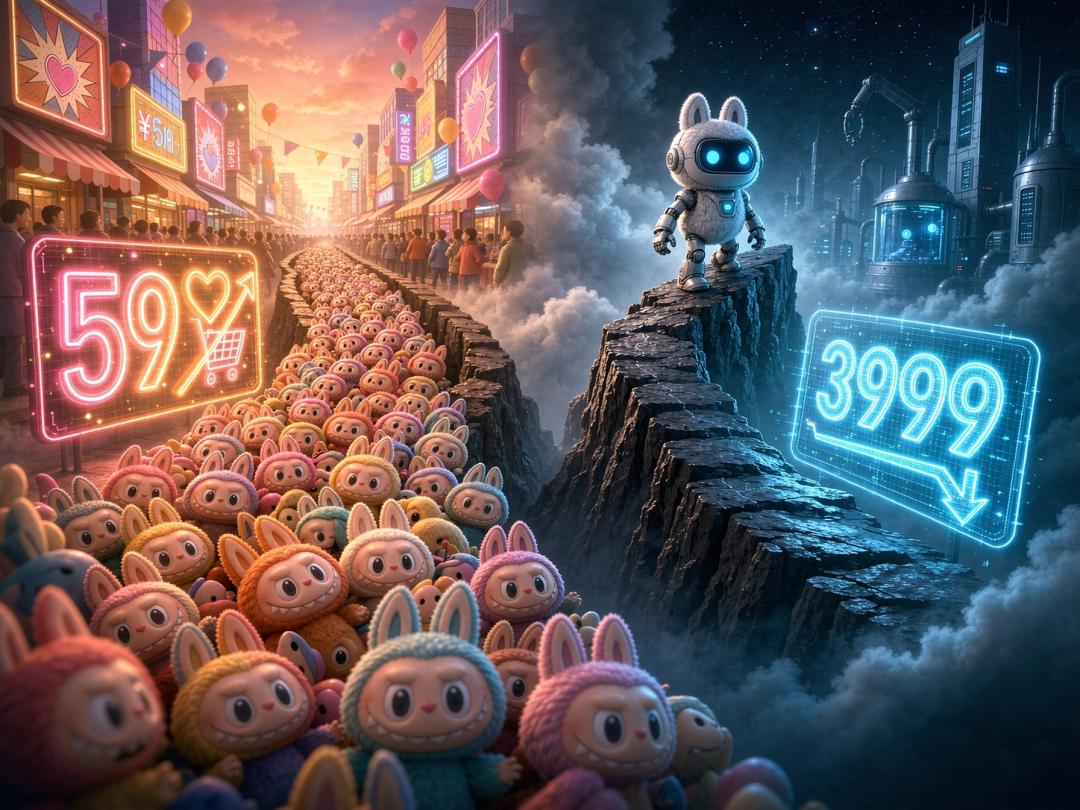
If you lay out the embodiment level and sales volume of these products on the market, you will see a harsh scissors gap:
Fu Zai, with a 2-star embodiment level, has sold nearly 300,000 units. BubblePal, which barely qualifies as embodied, has sold 250,000 units. Ropet, with a 4-star embodiment level, only has more than 2000 reviews.
300,000 units of sales are concentrated on the "least embodied" product, while the most technically advanced product has only sold more than 10,000 units globally.
The market's voting result with wallets is clear: currently people are willing to pay for the function of "remembering you", but are not willing to pay a large sum of money for the function of "being able to move". The more advanced the technology, the further away it is from the mass public.
An industry institution surveyed the entire industrial chain, and got feedback that the return rate can reach 30%, the generic "large model plus doll" products are highly homogeneous, and parents' exact words are "children get bored of it after three days of play". JD's statistics are even more harsh: the 7-day retention rate of AI toys is less than 15%.
The enemy of embodied toys is not competing products, but parents' return button and children's 3-minute passion.
Every return is a drain on trust.
Every case of being left unused after three days is shrinking the window for this category to penetrate the mass market.
The Million-Sale Embodied Toy Product Will Most Likely Look Like a Small Home Appliance
So does embodied toy have a way out after all?
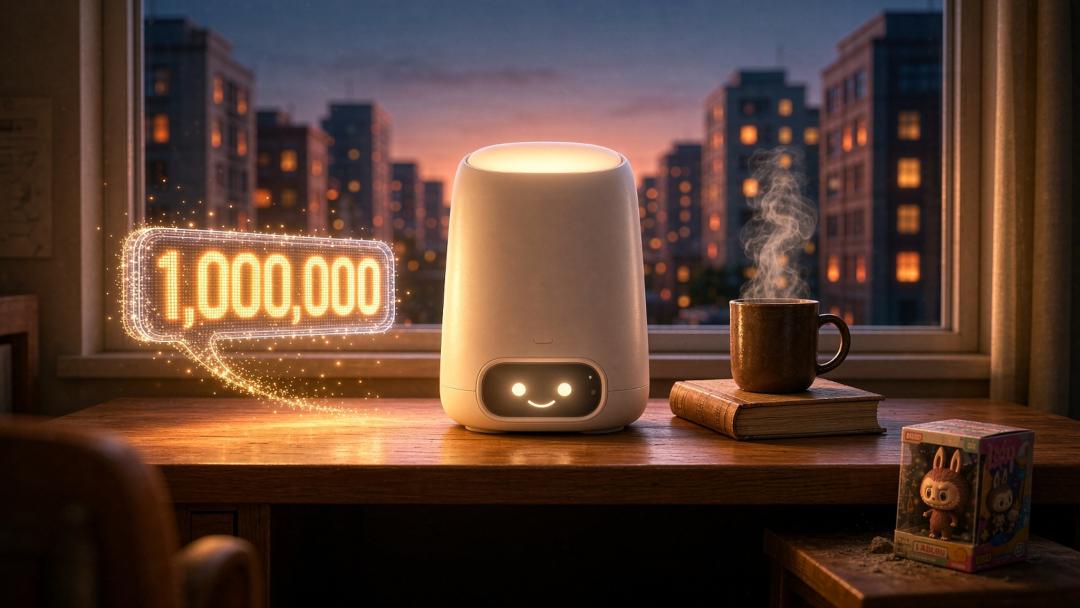
Yes. But you have to accept a fact first: its first million-sale product will most likely not look like a toy, but a small home appliance.
This is not a joke.
For embodied toys to achieve breakthroughs, a redefinition of product form may be required — not "a moving plush doll", but "an emotional home appliance on the desktop". It is similar to a screenless smart speaker but with additional body language, similar to a desk lamp but with a unique personality. Its price is anchored at 800 to 1500 yuan, roughly the same as a decent air purifier. Users are not buying a collectible, but an existence that "waits for you to come back every day on your desk".
This positioning does not pursue blind-box-style impulsive consumption, but home-appliance-style repurchase trust — once the relationship is established, the replacement cost is extremely high. You will not easily replace a desktop companion that remembers all your habits, just like you will not easily replace a speaker that you have used for three years.
There are several possible specific paths:
Children's early education with well-known animation IP. Alpha Group and Tom have content assets, but they are most strictly restricted by privacy and virtual companion regulations, so they can only do auxiliary education rather than emotional substitution.
Gen Z desktop emotional pet. The Ropet and MOMOTOY line is the most typical example, relying on appearance design, personality development, and social media secondary creation, with no strong education attributes and high flexibility.
Trendy pendant toy plus star variety IP. The 4G and tap-to-interact social direction of Meng You UU Youzai is correct, but the price has to be lowered to 200 to 300 yuan to trigger impulsive consumption.
Go global to make region-limited AI characters, replace LABUBU's local limited strategy with "local language plus local folk custom personality", avoid domestic supervision while gaining dividends from cultural differentiation.
The business model also needs to change. Shift from "selling hardware" to "selling relationships", keep hardware profit thin or break even, rely on 99 to 299 yuan annual subscription fee, plus peripheral derivatives — doll clothes, skins, tradable "personality customization codes".
Two Different Species, Two Different Sets of Genes
At this point, the conclusion is already very clear.
Embodied toys will never produce another LABUBU, not because they are not good enough, but because they are not the same species at all.
LABUBU is a collectible multiplied by social currency multiplied by secondary market value, selling the pleasure of possession. Embodied toy is hardware multiplied by service multiplied by relationship, selling the cost of companionship. The former reaches its final state the moment you buy it, the latter becomes a useless brick once the server shuts down. The former creates premium through scarcity, the latter maintains experience through continuous operation and maintenance.
Two different sets of genes cannot follow the same formula.
Stop staring at Pop Mart's blind box display cabinet for ideas