The cost per seat is 60 yuan, when will the low-altitude economy truly take off?
The low-altitude economy has witnessed a noticeable boom in recent years. With national policy support, rising financing and accelerated local industrial layout, new aircraft models and orders keep emerging. This industry, which used to be mostly showcased at exhibitions and in concept videos, is gradually moving from vision to reality. However, as the market heats up, more practical challenges have come to the forefront. The fact that an aircraft can fly does not mean its business model is already viable; the growing number of orders does not directly equal a mature market. What stage has the low-altitude economy actually reached at present? Where will it first enter daily life, and when will it become a truly accessible mode of transportation? In this article, Huang Xiaofei (CEIBS EMBA 2026), Co-Founder and President of Shanghai Volant Aerospace Technology Co., Ltd., shares his judgments.

01
The Inflection Point Is Not Order Volume, But Operation of 100 Aircraft
To answer when the low-altitude economy will truly take off, we first need to look at what the industry has accumulated over the past few years.
In the past five to ten years, the eVTOL (electric vertical takeoff and landing aircraft) sector of the low-altitude economy has actually been in a stage of industrial accumulation. On the one hand, during the development of civil aircraft models including C909 and C919, China has gradually built a relatively complete aviation industrial capacity covering R&D system, manufacturing system, supply chain system and airworthiness system; on the other hand, the rapid development of the new energy vehicle industry has also formed mature industrial capabilities for motors, batteries and electronic control systems.
These two sets of capabilities used to belong to different industrial systems, but in the era of electric aviation, they have truly "converged". In the traditional aviation industry, aero-engine has long been our short board. But when the power system shifts from traditional aero-engine to motor, the "three electric" capabilities accumulated by the new energy vehicle industry will instead become a new industrial advantage. What eVTOL enterprises like Volant have done in the past few years is to stand on the shoulders of the two industrial chains of aviation industry and new energy vehicles, and gradually develop from scaled-down aircraft, full-size aircraft, and prototype aircraft to aircraft that meet airworthiness requirements.
It is precisely because the previous technical and industrial preparations have been basically completed that the industry has entered a new stage today: shifting from "building a flyable aircraft" to "proving that this aircraft can be safely put into commercial operation". Airworthiness certification is the last mile of R&D, and also the first mile of commercialization. It is totally different for an aircraft to fly in the test field and to carry ordinary paying passengers. Aviation products must first prove that they meet the safety standards acceptable to the public. Only after passing this threshold can subsequent commercialization be possible.
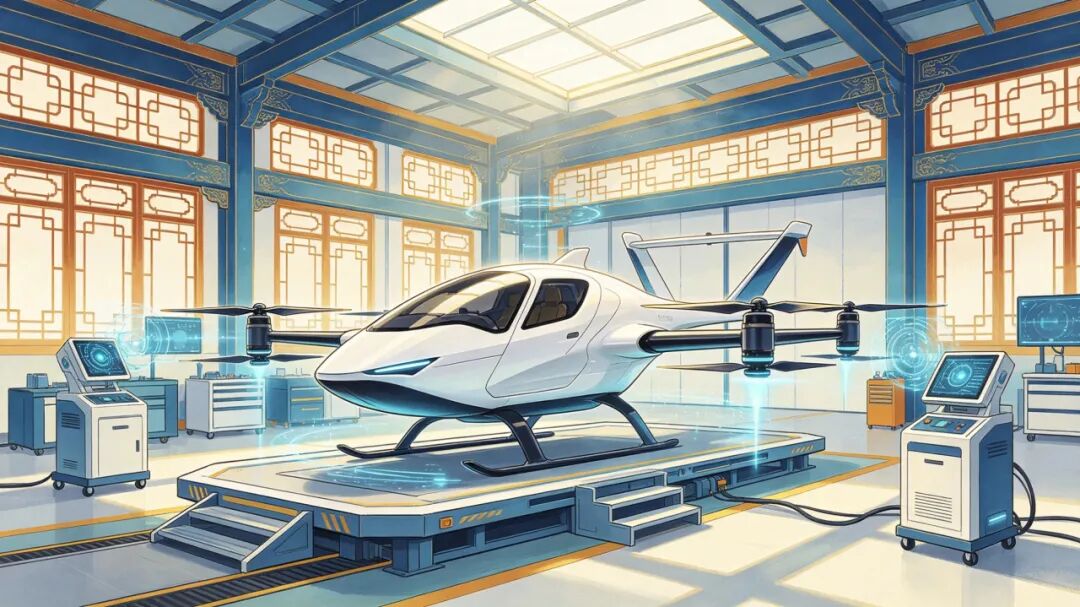
Therefore, I judge that the real inflection point of the industry should not only depend on whether an enterprise has completed its first flight or signed more new orders, but also refer to some industrialization milestones: first, leading enterprises need to obtain airworthiness certification; second, about 100 aircraft need to be actually put into market operation; furthermore, these 100 aircraft need to operate continuously in several core scenarios to verify safety, reliability, market demand and economic efficiency layer by layer.
If one day, about 100 eVTOL aircraft are actually in operation in China, which can complete a 20km flight in about 5 minutes at a single-seat cost of around 60 yuan, and such experience has been stably available in three or four main scenarios, I will believe that this industry has truly completed the development from 0 to 1. The problem we face next will no longer be whether 100 aircraft can fly, but how to expand the fleet from 100 to 10,000 units.
Based on our current judgment on the industrial progress, this time window may appear around 2028 to 2029. The reason why we keep emphasizing "100 aircraft" is that the aviation industry is different from the internet industry. Internet products can be quickly replicated after getting the first user, but aircraft must go through real operation, continuous optimization, and continuous verification of safety, demand and economic efficiency. Therefore, to judge whether the low-altitude economy has developed from a "hot concept" to a real industry in the next few years, we should not only focus on the financing and orders in news, but also pay attention to whether new-type aircraft have started to operate on a large scale.
When "100-aircraft operation" becomes the real watershed of the industry, the next question comes naturally: where will these 100 aircraft take off first?
02
The First Scenarios to Achieve Commercial Viability Are Cultural Tourism and Passenger Transport
If 100-aircraft operation is the symbol of the commercialization of the low-altitude economy, to achieve this goal, we must first find a number of truly feasible scenarios. Now the public has two typical misunderstandings about the low-altitude economy: one is to equate the low-altitude economy directly with drones, and the other is to assume that everyone will own a flying car in the future. The former sees too close, while the latter sees too far.
Of course, drones are a very important part of the low-altitude economy. Over the years, drones have created real value in fields including logistics transportation, inspection, industrial operation, agricultural plant protection and consumer aerial photography. Low-altitude logistics has also been continuously verifying its business model in high-value, high-time-sensitive cargo transportation and small drone distribution. But if we only focus on drones, we are likely to underestimate the changes that the next generation of manned aircraft may bring; on the contrary, if we start discussing how many of hundreds of millions of private cars will fly in the sky right away, we will skip a long period of commercialization process in between.
I prefer to regard manned low-altitude travel as a gradual evolution process. After eVTOL completes airworthiness certification and delivery, the first batch of scenarios that appear on a large scale are most likely not urban air taxis, but cultural tourism and short-haul transportation. The reason is simple: cultural tourism and short-haul scenarios are relatively closed with clear routes, and the support conditions are easier to meet. In addition, scenic spots and transportation hubs have natural passenger flow, which is a very suitable environment for early verification of products and business models.
For example, for a mountain scenic area, tourists are already willing to pay hundreds of yuan for cable cars, shuttle buses and other transportation tools to go from the foot of the mountain to the core scenic spot. If an aviation product can take you to the destination in a few minutes, and at the same time bring you a new experience of viewing the scenery from the air, what it provides is not only transportation service, but also a tourism product. With the superposition of transportation value and experience value, consumers' willingness to pay is easier to establish. Therefore, I regard cultural tourism as the 1.0 stage of manned low-altitude travel.
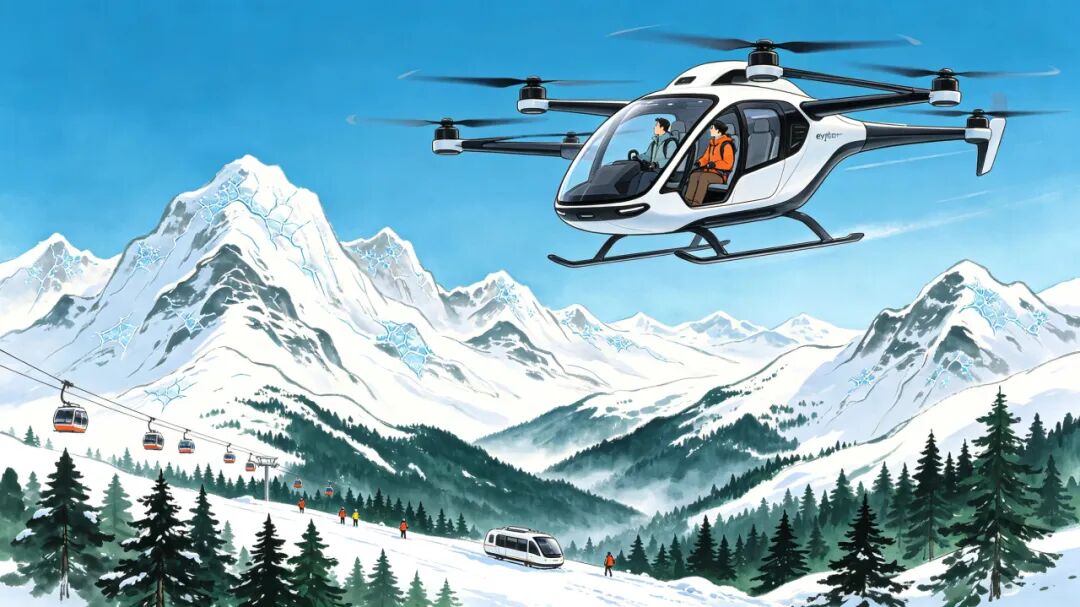
After the cultural tourism scenario is fully verified, the industry will gradually move to more typical transportation scenarios in the next stage, such as airport shuttle, high-speed railway station shuttle and point-to-point transportation between cities. This can be understood as the 2.0 stage of manned low-altitude travel. These scenarios are essentially no different from the underlying logic of traditional aviation: they form a relatively fixed route network between point A and point B, point A and point C, or between several cities, only with shorter range, more takeoff and landing points, and closer proximity to urban areas.
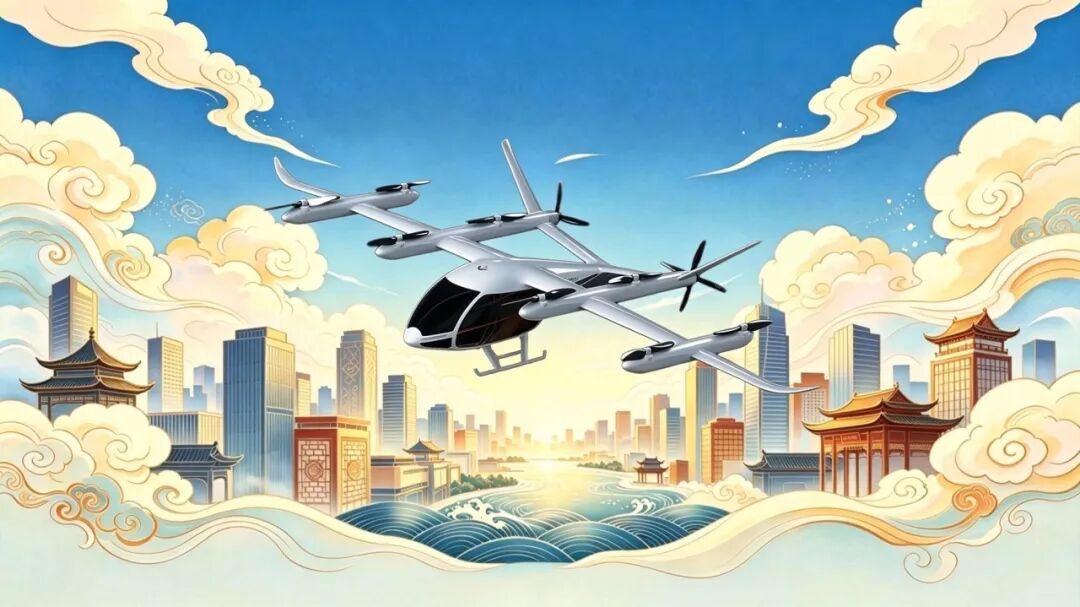
The large-scale urban commuting scenario will come even later. My own judgment is that around 2030, we will see more and more airport shuttle, intercity travel, and even some urban transportation scenarios. At that time, taking such aircraft to the airport, to meetings, or to other cities will gradually change from today's novel attempt to a common transportation choice, and from a niche experience to mass consumption. As for private flying cars, I think it may be another stage around 2035 or even later.
Therefore, we should neither be short-sighted nor overly optimistic about this industry. In the next five to eight years, what is worth paying more attention to is how manned eVTOL will enter from relatively easy scenarios such as cultural tourism, and then gradually expand to airport shuttle, intercity transportation and urban travel, rather than discussing when every household can buy a flying car from the very beginning.
But finding suitable scenarios only solves the problem of "where to fly". To turn these scenarios from demonstration projects into long-term sustainable businesses, we have to answer another more practical question: after the aircraft takes off, can the business account break even?
03
The Core Lies in Utilization Rate
Many people, when hearing about air taxis for the first time, will ask a very practical question: such an expensive aircraft, can it really make money? This is actually the second threshold that the low-altitude economy must cross to move from scenario verification to large-scale commercialization. The fact that some people are willing to try a scenario does not mean that it can operate for a long time; a real viable business model ultimately depends on whether revenue and cost can form a closed loop.
According to our calculation, in some typical scenarios, the aircraft can complete a 20km flight in about 5 minutes, with a single-seat operating cost of around 60 yuan. This means that the cost of such products in the future will not be at the level of business jets as most people imagine. Of course, cost does not equal the final ticket price. But if the ticket price can be set at about 100 to 200 yuan in the early stage of commercialization, I think a considerable number of people will be willing to try it for higher time efficiency and better experience.
However, the ticket price is only the result consumers see. For operators, what really determines whether this business is viable is the underlying cost structure. For original equipment manufacturers like Volant, we sell aircraft to airlines and general aviation companies first, and the business closed loop at the OEM level is basically completed. But after airlines get the aircraft, they need to calculate another set of accounts, including depreciation and amortization of the aircraft itself, personnel cost, energy cost and maintenance cost.
One important advantage of electric aircraft is that all these costs have room to decline, but among all variables, I think the most critical one is aircraft utilization rate. Aircraft is first and foremost an asset. If it only flies two trips a day, the cost allocated to each hour, each seat and each ticket will be completely different from that of high-frequency daily operation. So if I have to rank the priorities, for operators, aircraft utilization rate ranks first, and passenger load factor ranks second, which is actually consistent with the logic of traditional airlines.
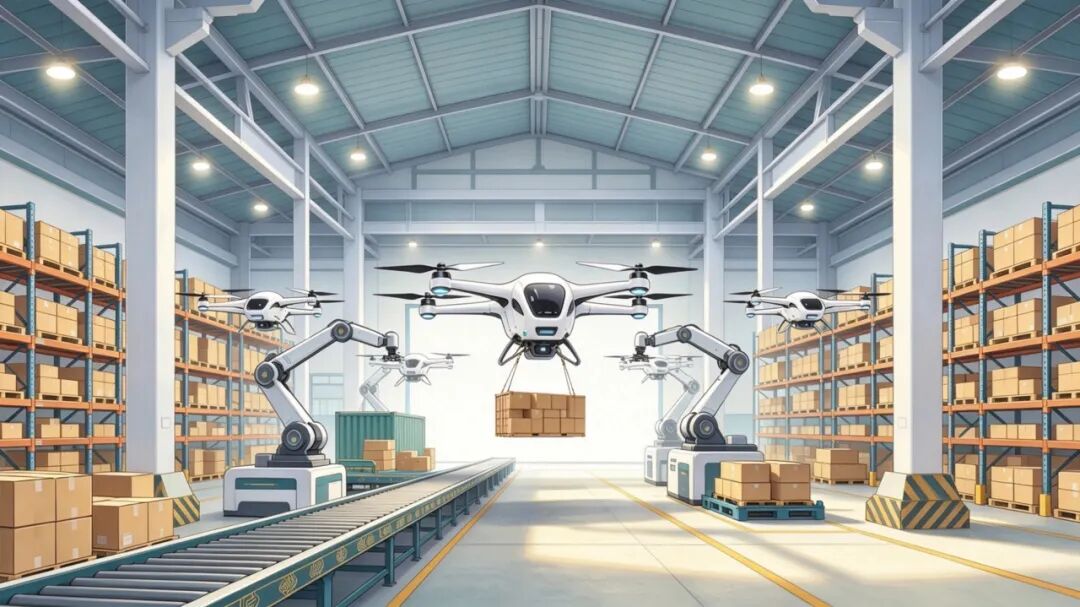
But from the consumer's side, their concerns are completely different. Consumers do not care how many hours the airline flies a day, nor will they carefully study the depreciation rate of the aircraft and the battery cost. What they really care about is the ticket price, departure time, and whether the whole travel process is convenient enough. In other words, operators calculate "how many trips this aircraft can make in a day", while consumers calculate "whether it can really bring me better experience and save my time".
This is also where eVTOL can truly create value. When you take a civil aviation flight and a low-altitude route today, what really affects your experience is often not just the one hour or more in the air. You may have to set off for the airport very early, spend one or two hours on the road, and spend another one or two hours getting into the city after landing. What eVTOL can truly change is not just the speed of flight itself, but the efficiency of the entire end-to-end travel process.
Therefore, the truly competitive low-altitude travel companies in the future will not only focus on making an aircraft fly, but will ultimately provide an integrated travel solution. How to reconnect the departure point, takeoff and landing points and the final destination, to make the whole process from leaving home to arriving at the destination faster, more convenient and more stable, is the foundation for consumers to keep paying for the service.
Only when both the asset utilization rate of operators and the travel value of consumers are realized, can this business truly run smoothly. At this stage, another number that the market is most concerned about today — orders — will begin to have more practical significance.
04
Orders Do Not Equal Deliveries
Another easily misunderstood figure in the low-altitude economy is order volume. People often see a company announce hundreds or thousands of orders, and naturally ask, can all these aircraft really be sold? In fact, as can be seen from the previous logic, orders only reflect market intention and the certainty of customer demand. What really determines whether the industry can survive is still certification, delivery and continuous operation after delivery.
Take Volant as an example, we currently have more than 1,900 orders with a total amount of nearly 50 billion yuan. But I think the industry neither needs to overvalue the letters of intent, nor think that they are completely meaningless. Because the product R&D cycle of the aviation industry is very long, customers cannot wait until the aircraft is fully developed and obtains the airworthiness certificate to participate in the project for the first time.
In the early design stage, what enterprises get are mostly letters of intent. On the one hand, they can prove the existence of market demand, on the other hand, they allow customers to participate in product definition and demand confirmation in advance. With the completion of detailed design, the aircraft enters the stage of engineering development and even certification test flight, and the orders will gradually shift from letters of intent to firm orders. At this time, the criteria for evaluating order quality will change.
One very important signal is whether customers are willing to pay real deposits. Once the deposit is received, for the OEM, it is no longer just a market intention, but begins to represent a real commercial commitment and delivery responsibility. Therefore, when looking at the orders in this industry, we must distinguish at least three levels: letters of intent, firm orders and final deliveries. The first two are to verify demand, while final delivery and subsequent operation are to verify the viability of the business.
This also means that the low-altitude economy will definitely experience a round of industry consolidation in the next few years. Some trends are already visible now: customers are starting to concentrate on a few enterprises, financing is also concentrated, and the R&D progress and certification progress of different enterprises are constantly widening the gap. In the early stage, enterprises compete on who can develop a flyable aircraft. In the next stage, the competition will focus on who can take the lead in obtaining certification, complete delivery, and put the product into continuous operation.
No matter how the industry changes, the first principle of aviation products remains unchanged. Aircraft must first be safe, then cost-effective, and finally efficient. Safety, cost and efficiency form an "impossible triangle