This year's Nobel laureates have a characteristic that is opposite to Lu Xun's.
The 2026 Nobel Prize in Physiology or Medicine is awarded to three people: Karl Deisseroth, Peter Hegemann, and Georg Nagel. The award is presented for their discovery of a light-controllable "optical switch" (light-gated ion channel) that can be activated by light, which gave rise to the field of optogenetics.
But if we trace back to their earlier lives, none of the three looked like a "future Nobel laureate" at all.
Some of them originally wanted to study creative writing; some were extremely skilled at playing the flute and riding motorcycles, with their biggest dream being to become nautical explorers; the third one suffered from serious illness since the age of five, and spent most of his childhood summer vacations in hospital beds.
Three paths that all seemed to deviate from the expected track eventually converged into the same beam of light.
Born into a family of all doctors, he wanted to study creative writing
On November 18, 1971, Karl Deisseroth was born in Boston. Logically speaking, Deisseroth was supposed to become a doctor.
The Deisseroth family can be described as a "household of outstanding achievers". His father Albert B. Deisseroth dedicated his entire life to hematological cancer research, and once served as the director of the Department of Experimental Hematology at the National Cancer Institute/National Institutes of Health. His two sisters are respectively an orthopedic surgeon and a clinical psychologist.
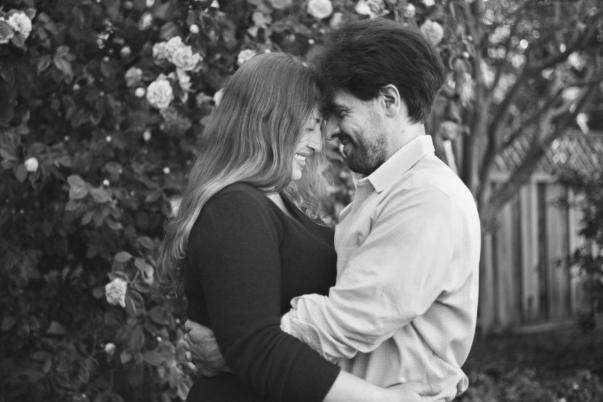
A retrospective note: His current wife Michelle Leigh Monje-Deisseroth is also a doctor, focusing on pediatric brain cancer, and won the MacArthur Fellowship several years ago 丨 Andrew Brodhead
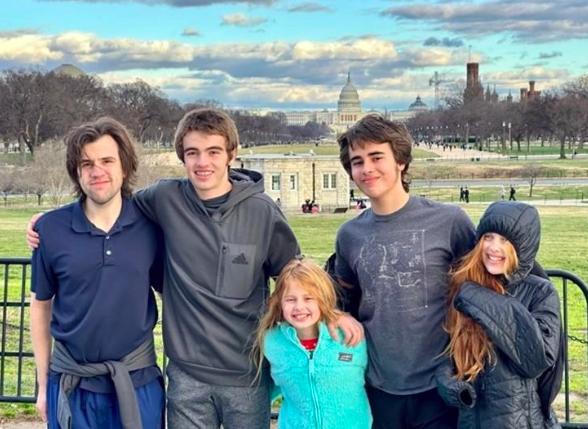
Another retrospective note: His eldest son (first from left) is also a Doctor of Medicine 丨 brainprize.org
But Deisseroth loved reading books very much.
Due to the nature of his father's work, the Deisseroth family moved frequently for a period of time. During long drives, little Karl would read aloud to his father who was driving; later he rode to school, spread the book open on the handlebars and read while riding — This is of course not advisable, and he did crash into a car parked by the roadside as a result.
He graduated from high school at the age of 16 and entered Harvard University, where his original idea of studying creative writing began to waver. In an interview with *The New Yorker*, Deisseroth said that he had many confusions during reading: Why can people be influenced by words? How does human imagination work? Where do human feelings come from exactly?
Science might be an answer to these literary questions.
Deisseroth's life path has since run on two parallel tracks: the main track is what we all see, he became a doctor and a scientist; the other smaller track extends to writing.
Sometimes, you can hardly tell a person's occupation from their dressing. But Deisseroth just looks exactly like a professor who teaches creative writing.
*The New Yorker* once described that he likes to wear T-shirts, jeans and old leather jackets, shuttles through the campus in a dented pickup truck, looking just like "a professor of creative writing".
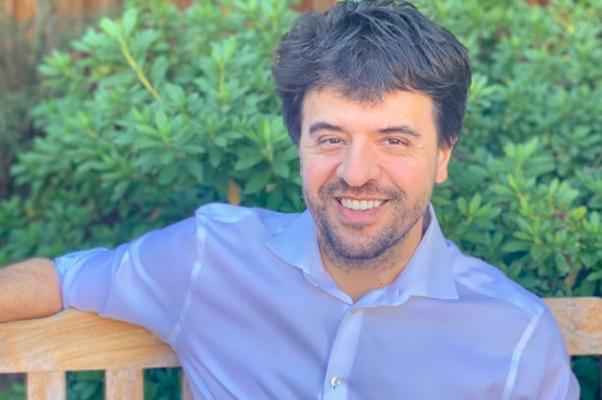
Does he look like your contemporary literature class teacher? 丨 Michelle Monje-Deisseroth
And in fact, he is still writing.
During his graduate studies at Stanford, he took fiction writing courses at the adjacent community college, with classes two nights a week.
And after he actually became a psychiatrist, literature entered his work in an unexpected way.
The first time he came into contact with psychiatric patients, he met a patient whose speech was extremely chaotic. The constant emerging neologisms and strange language structures reminded Deisseroth of James Joyce's *Finnegans Wake* — the novel famous for its linguistic experiments, which even many literature enthusiasts find extremely difficult to read.
After a person's mental state changes, why can even language become completely different? This seems to go back to those questions he had when he was a child reading books: How exactly do human imagination, emotions and consciousness work?
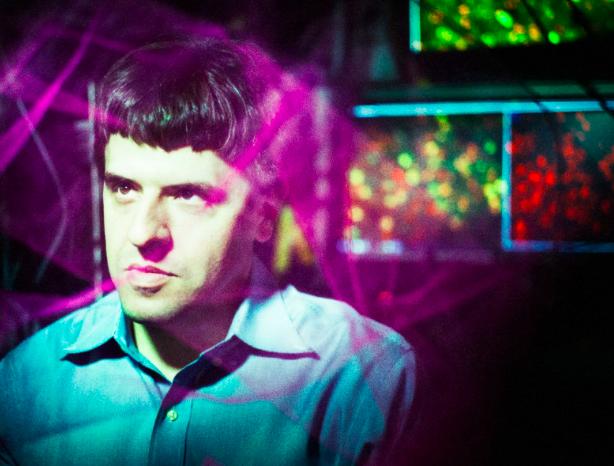
He uses science to solve the confusions he generated from literature 丨 Ioulex
He himself has been looking for his favorite words all the time.
In a conversation with neuroscientist and podcast host Andrew Huberman, Huberman asked him if there was any writer he would reread repeatedly and always keep in mind. Deisseroth mentioned Jorge Luis Borges, the Argentine writer.
Borges had a great influence on him. He learned Spanish all the way, kept reading Borges' works, and could appreciate his poems in both English and Spanish. Although he can't say his Spanish is still completely fluent now, he often needs to use Spanish in the clinic, so his medical Spanish is quite good.
Hearing this, Huberman also talked about his little connection with Borges: As the son of an Argentine, he grew up hearing about Borges, and knew that Borges' favorite city was Geneva. So later he really made a special trip to Geneva just for this reason, and found that Geneva itself is indeed a very interesting city.
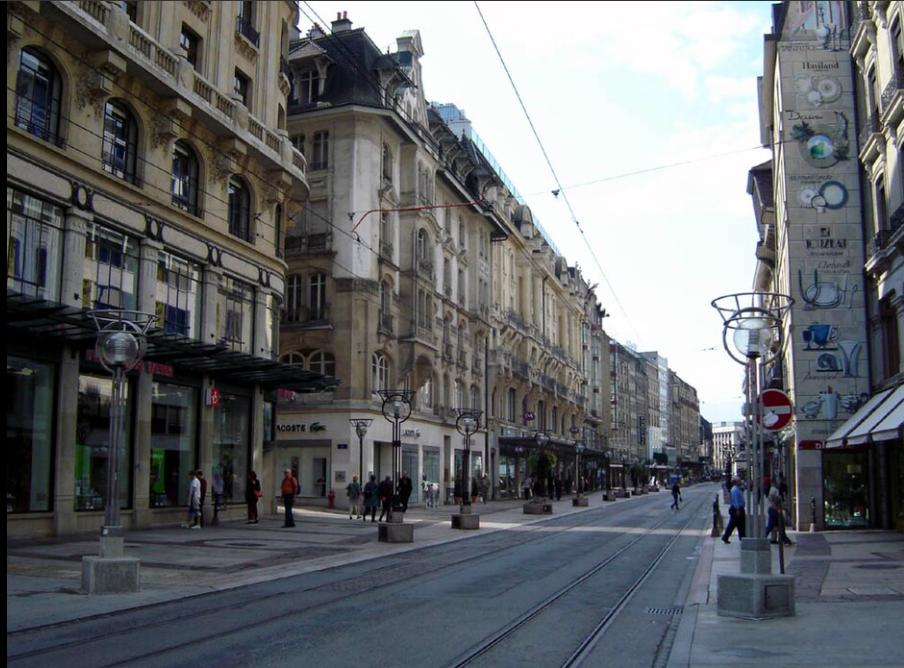
Streets of Geneva 丨 wikimedia commons/Sikander Iqbal
Later, Deisseroth wrote these experiences into *Projections: A Story of Human Emotions*. This non-fiction work includes clinical cases, neuroscience content, and his own thinking about human emotions. Those literary questions he had when he was a child finally returned to his words in a different form.

The simplified Chinese translation is titled *Light Up the Broken Heart* 丨 Douban
He could not memorize Latin well, but was extremely skilled at playing the flute and riding motorcycles
Peter Hegemann was born on December 11, 1954 in Münster, Germany. Now he is a professor of biophysics at the School of Life Sciences of Humboldt-Universität zu Berlin, Germany.
Hegemann grew up in Aachen. There are many doctors in his family, including his parents, two grandfathers, brothers, and several cousins, uncles and aunts. But he was "partial to certain subjects" since he was a child.
Although Hegemann was sent to a gymnasium focusing on humanities and classical subjects, and studied Latin and Greek for many years, he said he "hated translating those boring accounts of wars between Rome and Greece".
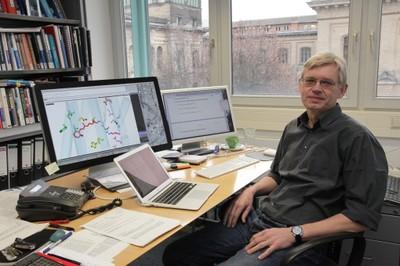
Hegemann's childhood life was very traditional | Bernd Prusowski
In the whole school, Hegemann was only interested in minor subjects such as chemistry, physics, biology, art and music, and most of these subjects were insignificant in that kind of classical school. The real fun was outside the campus, he thought "playing the flute in the orchestra and riding a motorcycle for a joyride are extremely fun".
It was also during this period that Hegemann became fascinated by the great nautical explorers, including Vasco da Gama, Christopher Columbus, Amerigo Vespucci, Ferdinand Magellan, James Cook, and Joshua Slocum who completed single-handed global circumnavigation. When he was about to graduate, his most admired heroes became Fridtjof Nansen and Roald Amundsen.
Hegemann said he learned from these people "the factors required for exploring new fields: courage, thorough preparation, great patience, and a group of trustworthy, knowledgeable and reliable partners who you can count on in difficult situations".
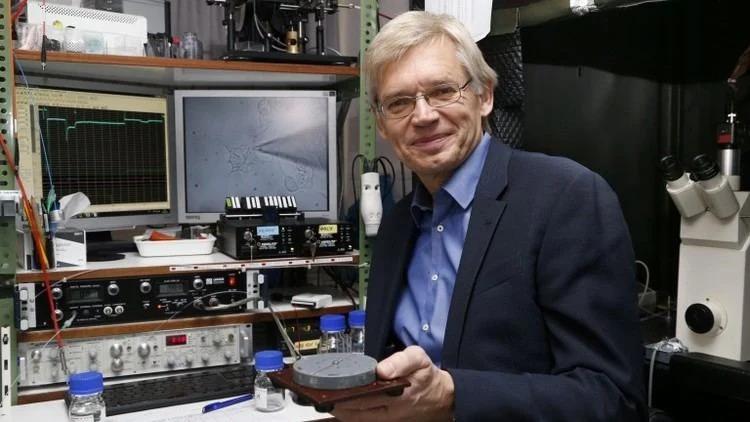
The barely adventurous thing Hegemann actually did later was probably skiing, mountaineering and participating in sailing competitions with his mentor | alchetron
But after graduation, he felt he was born in the wrong era, because at that time there were almost no unexplored areas on the earth except the deep sea. He then fell in love with astronomy, but was discouraged by his "insufficient mathematical ability".
After going around in circles, Hegemann came to the conclusion that "discovery" is not the only way to satisfy himself, to "create" new things that have never existed before is also a very challenging choice.
So in 1975, Hegemann entered the University of Münster to study chemistry, transferred to the University of Munich two years later to major in biochemistry, and focused on biophysics and photobiology during his doctoral and postdoctoral periods.
Eventually, Hegemann published two papers that laid the cornerstone of "optogenetics" when he was 47 to 48 years old, which won him the 2026 Nobel Prize in Physiology or Medicine.
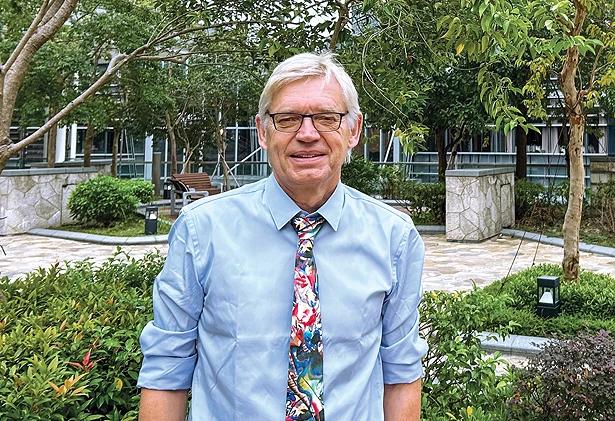
Figure | Benjamin Plackett
He spent most of his childhood summer vacations in hospital
Nagel was born in Weingarten, southern Germany, and is the eldest of five children in the family. He suffered from a serious illness since he was 5 years old, and it took many years for the illness to finally remit.
Nagel's childhood summer vacations were often spent at the University Hospital of Würzburg, where he was hospitalized to receive surgical treatment. In 2004, he was appointed as a professor of molecular plant physiology at the University of Würzburg, returning to the city that witnessed his years of hospitalization once again.
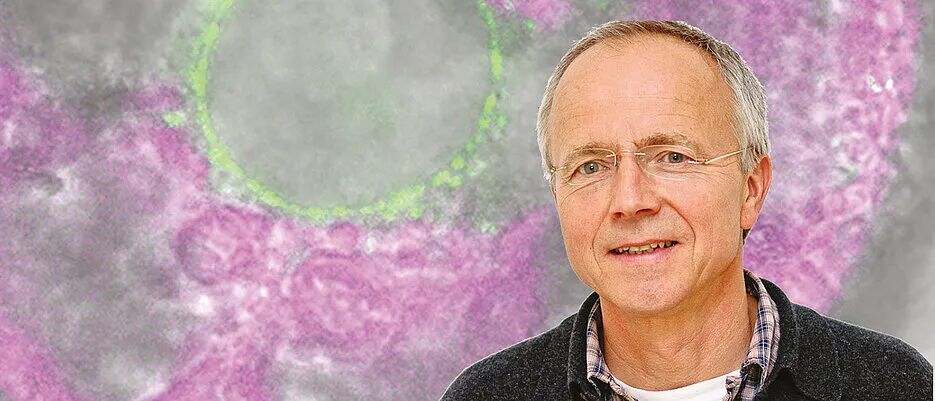
Georg Nagel, with the algae he studies as the background of the picture. | Eva Laura von der Heyde / Uni Bielefeld / privat
Due to his poor health, when his other brothers and sisters went skiing in neighboring Austria, he always stayed at home playing with the popular science toys given by his parents, assembling steam engines or radios by himself.
When he first started studying biology, he never considered awards or achievements, but was curious about the origin of life, and hoped to figure out whether biology could solve the medical problems he encountered.
Before formally starting his research career, he once taught at a private high school in Switzerland, and also co-founded a café named "Café Chaos" in Konstanz, Germany with other partners. After his illness remitted, he also tried hang gliding in his spare time.

Hang gliding is an aerial sport of unpowered gliding suspended under a delta wing. | Wikipedia
Nagel's wife Anna Maria Musti is a molecular biologist. When they lived in New York, they often rode bicycles together. Anna not only enjoys life with Nagel, but also provides Nagel with a broader scientific research perspective.
Conclusion
None of these three Nobel laureates were sent to the laboratory along a completely straight path.
Deisseroth wanted to use writing to answer "why people can be touched by words", but finally used light to explore where emotions come from; Hegemann thought that all new continents on the earth had long been fully explored, so he turned around and dived into the micro world; Nagel, who took apart and reassembled toys on the hospital bed when he was a child, grew up to study the proteins in algae that will move once exposed to light.
Optogenetics allows people to precisely light up a single neuron with a beam of light for the first time. As for the teenager who read books while riding a bike and crashed into a car parked by the roadside, he probably never thought that one day he would light up the entire field of neuroscience.
References