Millions of ride-hailing drivers are waiting for a miracle during the peak tourism season of the National Day holiday.
When traveling during the National Day holiday, a very important part of the travel plan is to work out how to take online ride-hailing services to travel between scenic spots on the round trip.
In the peak tourist season, hailing a car at the sun-scorched and crowded entrance and exit of scenic spots is always a tough task. The navigation route on your phone is always marked red for heavy congestion. Tourists keep increasing the ride fare, upgrading their order type from express to premium, even luxury car, but still fail to get an online car that is just one kilometer away.
Meanwhile, online car-hailing drivers in the same city are also suffering from waiting for hours without getting a single high-quality order push.
Before the arrival of the National Day holiday, many drivers had high expectations for the holiday peak.
In the past few years, online car-hailing drivers have witnessed the frenzy of subsidy wars, and also experienced the seasonal slump with sparse orders. Especially in this era when the number of online car-hailing drivers is obviously saturated, everyone is holding their breath waiting for the peak season, for holidays, and for the explosion of passenger flow.
The surging number of tourists brings soaring travel demand, and can also pull the continuously declining daily income back to normal. Millions of online car-hailing drivers are waiting for the annual miracle of peak season.
After the warm-up of the Mid-Autumn Festival, the National Day holiday has arrived. After several days of running around, online car-hailing drivers begin to realize that all the bustle belongs to the city, and exhaustion is all they get for themselves.
Tourists Who Fail to Hail a Car
And Drivers Who Fail to Get Passengers
On the second day of the National Day holiday, Chen Dan, who was already physically exhausted, had been standing on the roadside at the gate of Chengdu Research Base of Giant Panda Breeding for 50 minutes. She switched between several different ride-hailing apps on her phone, and the queuing number changed from "78 people ahead" to "the driver is expected to arrive in 42 minutes".
She raised the fare several times but saw no obvious improvement. Several groups of tourists beside her were also waiting for a ride at the same spot. Some simply gave up waiting and took the scenic area shuttle bus instead, leaving the others waiting for online cars facing each other anxiously in silence.
At first, Chen Dan was unwilling to pay extra for a 3-kilometer trip, but as the waiting time went longer, she found it hard to hail a car even if she doubled the fare.
Based on her past travel experience, during peak tourist seasons like the National Day holiday, it is often in vain to order a premium car at the entrance of a scenic spot.
But if she switches to express car or discounted car, the driver's order acceptance rate will be higher, yet she usually needs to wait for a very long time. The driver may ask the passenger to raise the fare a second time, or discuss whether they can share the ride, and in most cases, the driver is in a very unstable mood.
During the peak tourist season, a large number of tourists near many scenic spots are hesitating between "reluctantly paying extra fare" and "reducing travel experience", switching between different ride-hailing apps, canceling and placing orders repeatedly.
On the same map, the overloaded online car-hailing drivers are bearing another kind of pressure and anxiety.
Zhang Liyuan has been working as an online car-hailing driver for half a year. This National Day holiday, his income is even lower than usual.
The whole city is shrouded in the momentum of surging orders due to tourism, but after 8 hours of driving, his physical strength and energy are draining, while his income is getting less and less.
"No discounted fare, no order" is almost an unspoken rule in this industry. The average fare is only 1 yuan per kilometer, and after counting the mileage to pick up passengers, it is only about 0.8 to 0.9 yuan per kilometer. On normal days, he could earn 500 yuan a day, but he never expected that after a whole busy day in the peak tourist season, his total revenue is only over 300 yuan.
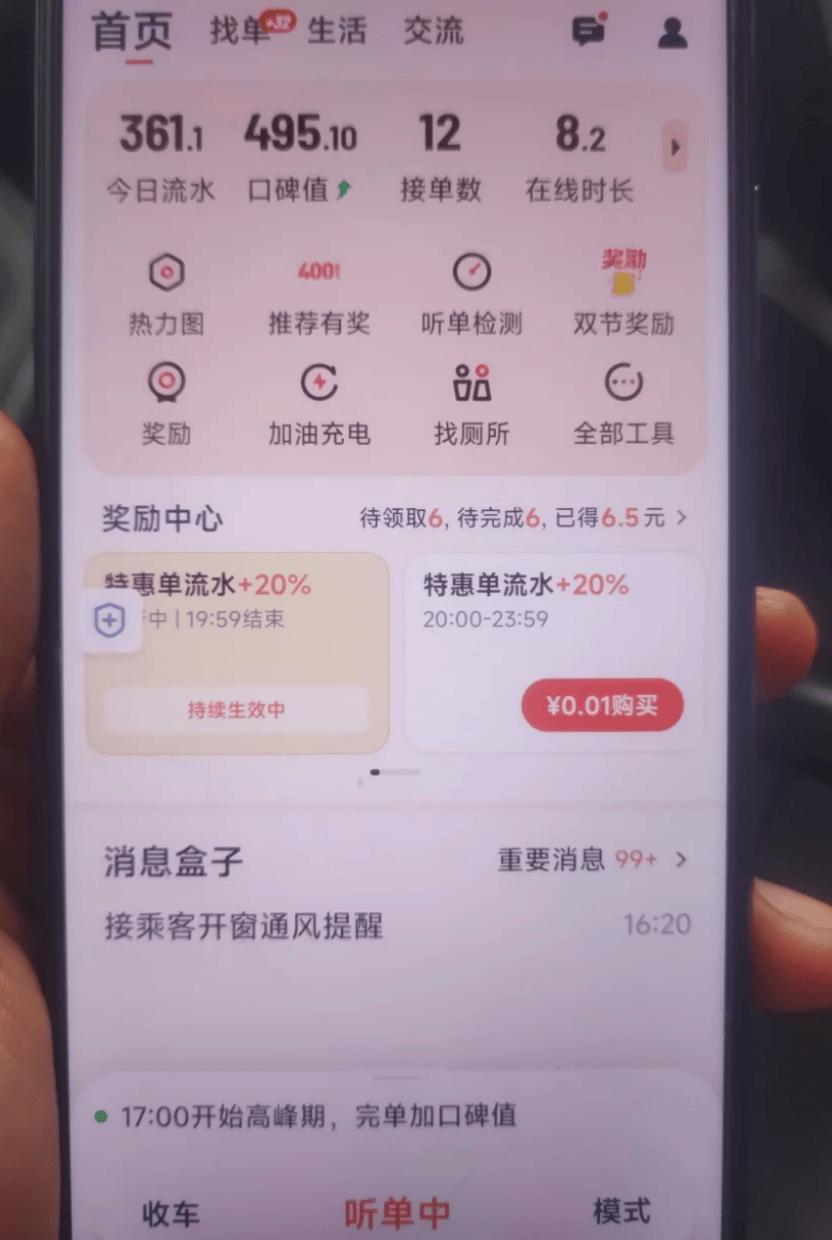
Income is completely out of proportion to input
After he bit the bullet and turned on the discounted order mode, he had to face another extreme challenge.
The discounted car implements a fixed-price mode, which means that no matter how serious the traffic jam is, the driver's final payment will not change at all.
Therefore, as long as there is a choice, online car-hailing drivers are unwilling to take orders to and from scenic spots, where traffic jams can easily last for an hour. During the trip, passengers will obviously get more and more impatient, and as the driver, they are actually more anxious than the passengers.
Zhang Liyuan's new energy electric car has a basic monthly rent of 3,800 yuan, and the electricity fee is about 1,500 to 2,000 yuan a month. Plus parking, car washing, maintenance and repair costs, on the premise of no traffic fines, he has to earn at least 200 yuan a day to cover the basic cost.
Normally, he sits in the car for more than ten hours a day and can only earn 400 to 500 yuan at most. He can't work nonstop for 30 days, and if he has a minor health problem, he will earn nothing for the whole month.
This is not only his account book. Other drivers in the group also have dismal income, and some did not even earn their usual daily income before the system forced them to go offline on National Day.
"Many colleagues said that after looking forward to the peak season for so long, the earnings are even worse than a rainy day in the past. In fact, the Mid-Autumn Festival peak was not as good as we expected."
The peak tourist season, which was supposed to be the lifeline for all online car-hailing drivers, has now become the last straw that crushes the camel.
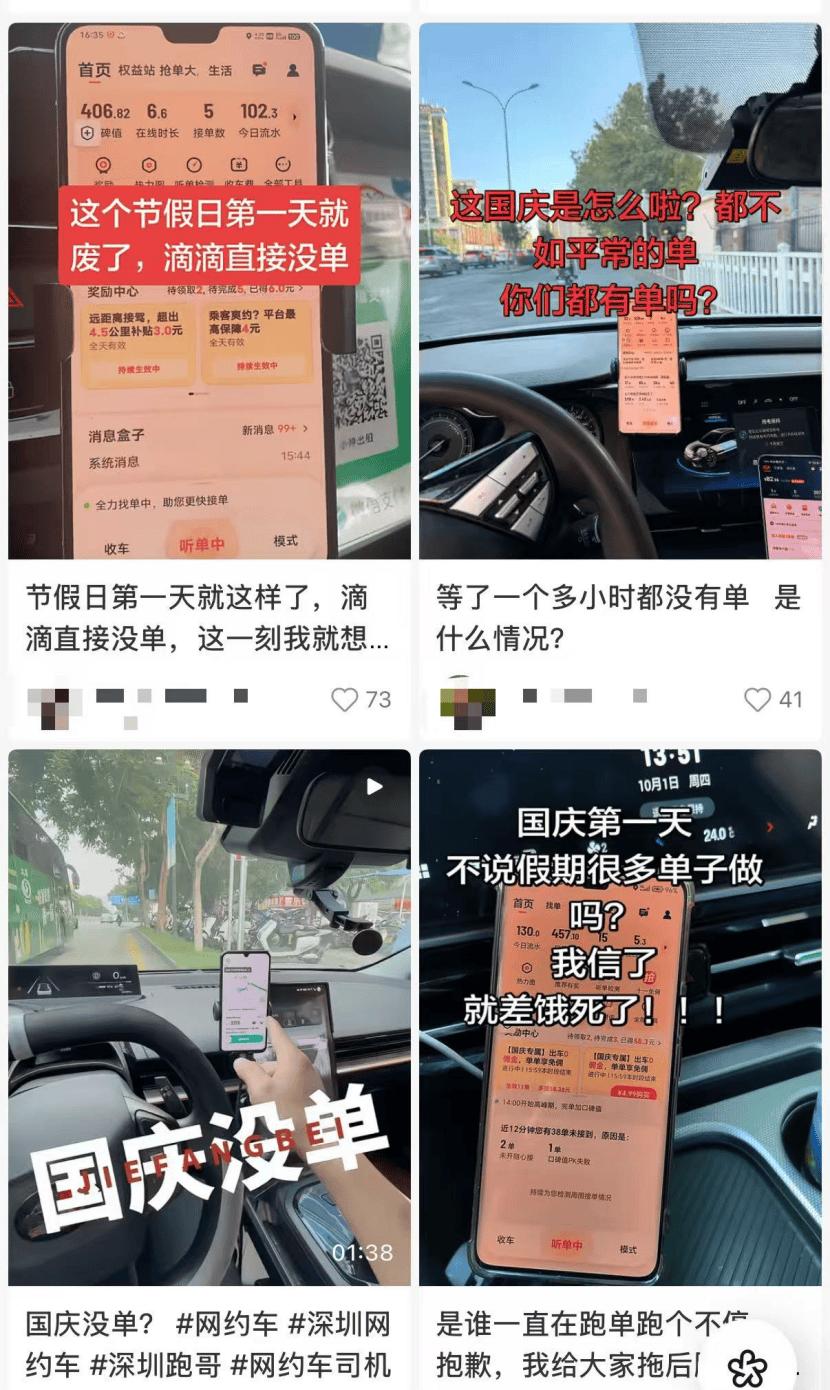
No orders during the National Day holiday has become a common phenomenon
The bustling heat map does confirm the increase in orders, but the total number shared by each driver is not large, and the number of truly cost-effective and profitable effective orders is extremely small.
The peak season does raise the total revenue of online car-hailing drivers, but everyone's actual income is getting thinner and thinner at the same time.
Moreover, the real problem of the online car-hailing industry lies beyond the peak season.
Seven Million Online Car-Hailing Drivers
Are All Crowded on the Same Escape Route
Today, being an online car-hailing driver is no longer a simple part-time job, but is more like the last escape route for countless ordinary middle-aged people.
When facing layoffs, physical store closures, business losses and job hunting difficulties, when almost all the ways to make a living seem blocked, many people will finally pour into the same track: working as an online car-hailing driver.
Before becoming an online car-hailing driver, Zhang Liyuan had just closed his small restaurant in his hometown, which not only emptied his savings but also left him in debt. He was too old to deliver food for a long time, and could not find other jobs. At that time, online car-hailing seemed to be the only industry that required little initial investment, and he could make money as long as he was willing to work hard and spend long hours on the road.
It was not until he entered the industry that he found it was already overcrowded.
As of July 2026, there are 402 operating online car-hailing platforms across China, and the number of certified online car-hailing drivers has exceeded 7.48 million. Excluding those who have been idle for a long time or have switched to other industries, the number of active practitioners who take orders online all year round is stable at around 7 million.
Since April this year, the Shenzhen Municipal Transport Bureau has issued a saturation warning for online car-hailing drivers. At the same time, the saturation of the online car-hailing industry is not unique to first-tier cities, and many third- and fourth-tier cities are also facing the situation of too many drivers and too few orders.
This escape route that seems to accommodate all the frustrated people has long been squeezed into a red ocean.
It is easy to imagine what the massive influx of new drivers will lead to: the price war of online car-hailing has lasted for quite a long time. Not to mention long-distance orders and premium orders, now when online car-hailing drivers open the order receiving page, all they can see are discounted fixed-price orders.
Either stop taking orders and stop earning, or earn thin profit instead of no profit. Every online car-hailing driver has his own calculation in mind.
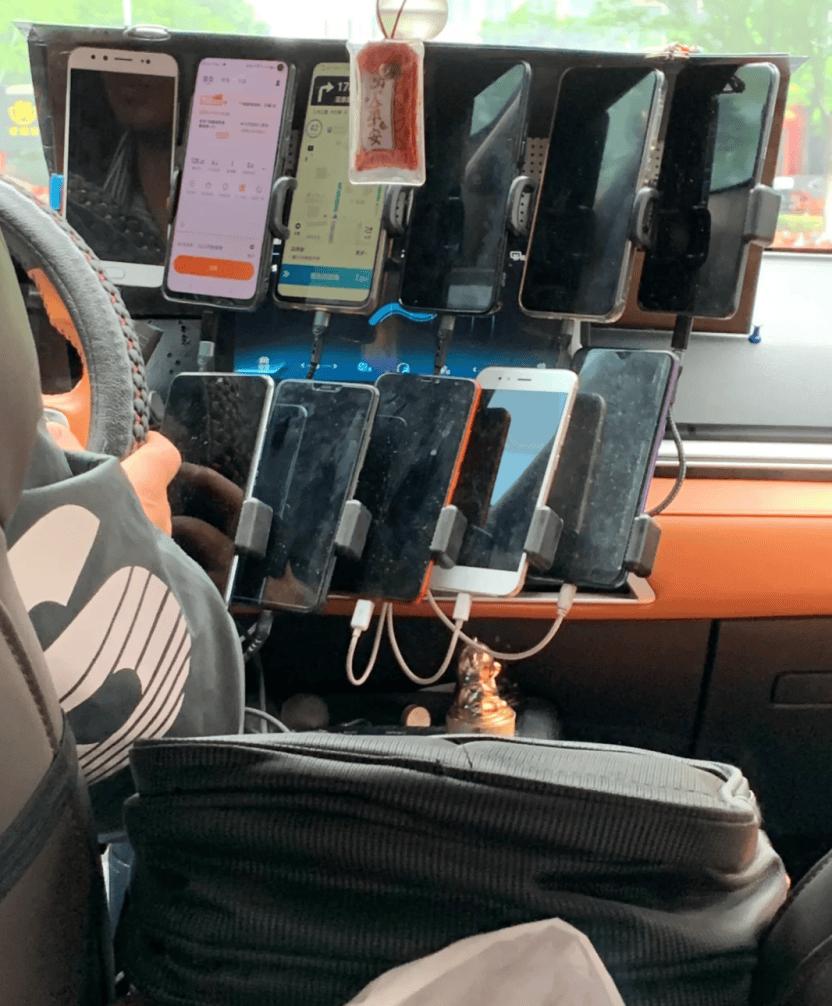
Drivers have to come up with all kinds of tricks to get more orders
The number of drivers is increasing, the industry is getting more and more involuted, and the pricing on the platform is becoming more and more complicated.
Passengers can choose express cars, discounted cars or premium cars, and can also compare prices on different platforms. The price stratification of ride-hailing seems to give consumers more choices, and also allows the platform to cover different consumer demands.
But when it comes to individual drivers, everything is close to a long-term obedience test.
The surge in the number of drivers, industry involution, and economic environment are all macro reasons. Early online car-hailing drivers still remember when the unit price was just cut down.
Lao Luo is one of the veteran online car-hailing drivers who once earned more than 10,000 yuan a month. When the discounted order was first launched, he even denounced in the driver group that "this is exploitation, anyone who takes discounted orders is a traitor to this industry".
Soon he also found that as long as he went out to work, discounted orders accounted for more than 80% of the order pool. Drivers have little choice: they are restricted by the required online hours and have to meet the platform task requirements. In order to reach the required total revenue and cover the daily car rental cost, most drivers are forced to compromise and passively enter the low-price order pool.
In less than a month, Lao Luo himself became one of those who complain while working. It is not uncommon for him to spend half an hour on a trip and get less than 10 yuan as payment.
"For a 5-kilometer trip, an electric tricycle can charge 15 yuan, but we can't even earn 10 yuan."
With the profit margin being extremely compressed, all the efforts of drivers have become cheap.
Under this mode, online car-hailing drivers are naturally suffering a lot, let alone their service attitude and quality. It is hard for a driver taking an order that only pays a few yuan to take the initiative to carry luggage for passengers.
The driver's impatience when rushing to complete orders may easily turn into a bad review. The lower the driver's rating is, the lower the platform's priority for assigning high-quality orders to him, and the driver can only receive more low-price discounted orders.
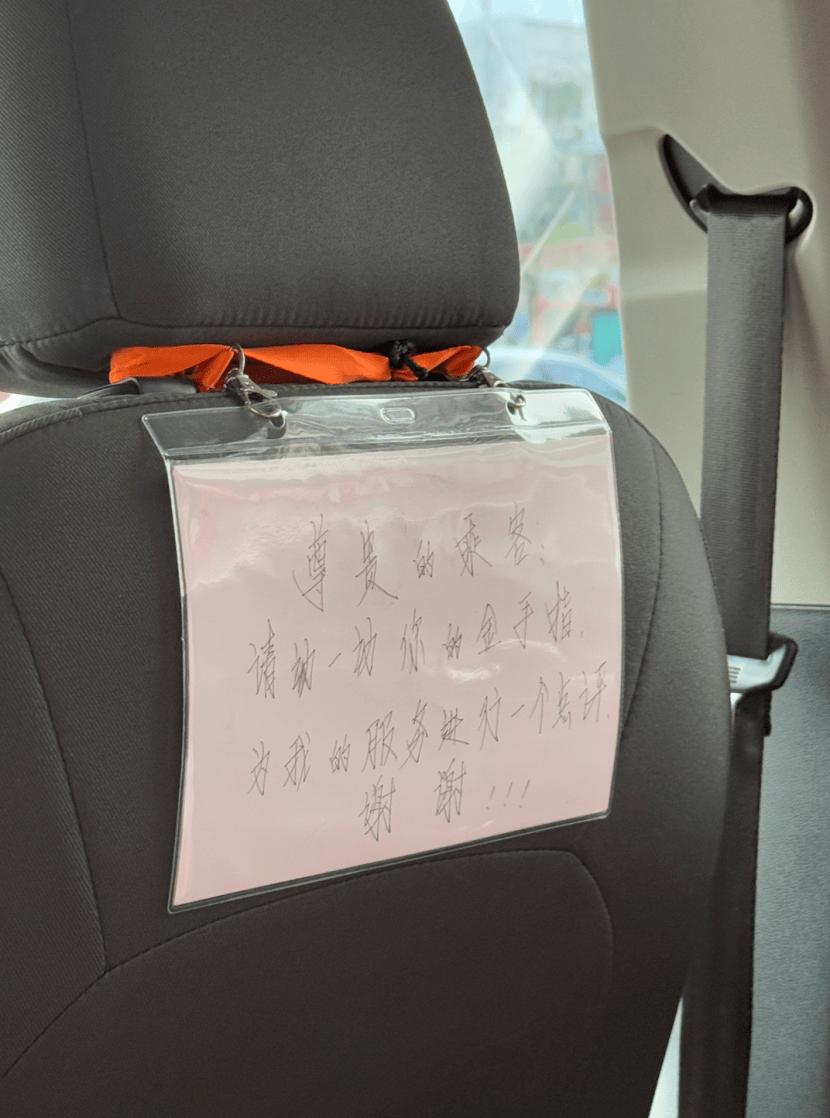
Good reviews have real practical value
They didn't make money, but they got tired and angry.
All this forms an unsolvable vicious circle, which traps millions of drivers.
Some people think that premium car drivers, express car drivers and discounted car drivers belong to different tracks, and their fates should be different. But in the online car-hailing industry, everyone's final destination is almost the same.
Premium car drivers seem to have higher unit price and better treatment, but the access threshold is correspondingly higher, and the cost they need to pay is also more. Just the basic "five consecutive checks" require premium car drivers to pay a lot of extra energy.
High pressure is equal for all online car-hailing drivers.

Premium cars do not necessarily mean higher earnings
Almost all online car-hailing drivers have to face the same dilemma: there are more and more drivers, fewer and fewer orders, and it is harder and harder to make money.
Facts have proved that the online car-hailing industry is no longer a safe haven, but more like a new walled city for frustrated middle-aged people.
The Peak Season Is a Painkiller
Not a Cure for Online Car-Hailing Drivers
The online car-hailing industry is more and more like a huge reservoir.
When people from all walks of life lose their original source of income, some of them will flow into this industry. Theoretically, when other industries provide new opportunities, some people will leave, but in recent years, the online car-hailing reservoir has always been highly overcrowded.
Different people enter the online car-hailing industry for completely different reasons, but they are all faced with the same thing: how to get more income within limited time
Therefore, every National Day holiday, drivers still keep their expectations. They are willing to grit their teeth and endure the usual downturn, involution, loss and exhaustion, just waiting for the arrival of the peak season to earn more and make up for the losses of the whole year.
A tourist city can suddenly add hundreds of thousands of tourists during the National Day holiday, but it cannot make the effective working hours of all drivers increase at the same time.
When everyone is waiting for the peak season, the peak season is no longer just an opportunity, but also becomes a new competition.
In the end, there are still some drivers who get high-price orders, some who get short-distance discounted orders, some who are stuck in traffic at scenic spots, some who drive to the airport, and some who sit in the car from morning to night only to find that their total revenue has not changed significantly.
Lao Luo, who has been driving online cars for many years, can quickly calculate whether his income in each peak season is higher or lower. This National Day holiday, his daily income is only over 100 yuan higher than usual, and this meager increase is exchanged for twice as much tiredness.
The working hours in peak season are greatly extended. In order to grab passenger flow, many drivers go out to work at 5 a.m. in the first two days of the National Day holiday, heading for high-speed railway stations and airports. They do not stop working until after 12 p.m. at night, and the average daily online time exceeds 14 hours, which