15 years after Steve Jobs' death, AI has posed problems that he never encountered.
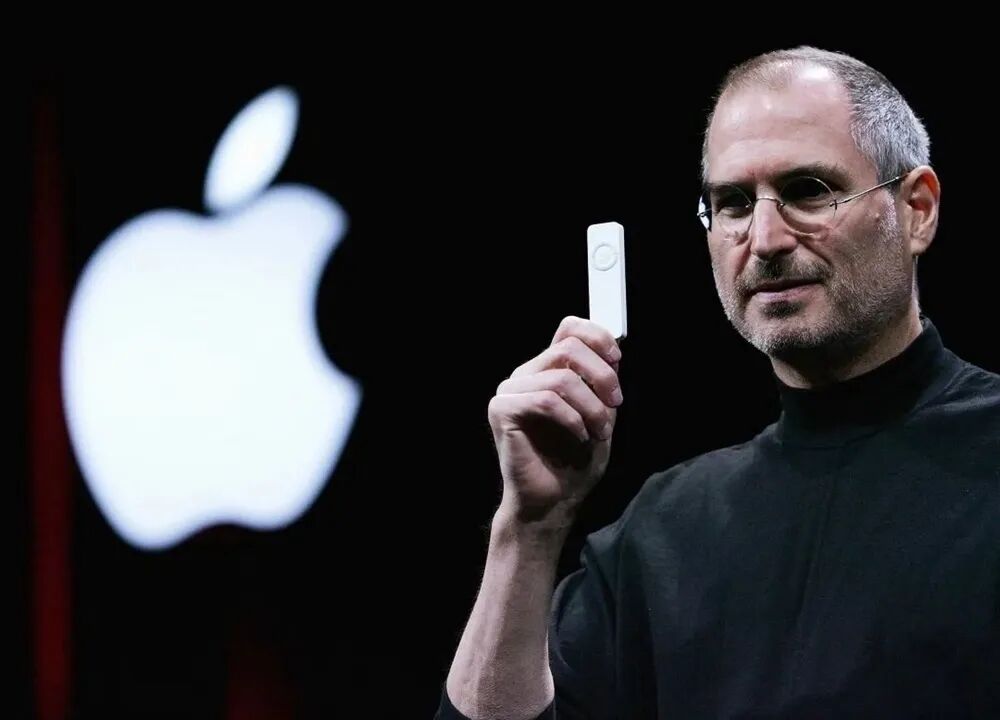
Steve Jobs is an unavoidable benchmark for Apple.
From Tim Cook to John Ternus who took over the position, from Apple Watch to iPhone Duo, no matter who takes over the leadership or what new products are launched, people will always subconsciously measure them against Jobs.
On September 18, the UK edition of GQ published an interview with John Ternus and Apple's design team. When talking about iPhone Duo in the article, Ternus said: "Steve talked about the intersection of technology and the humanities, and I think iPhone Duo is a perfect example of that."
External critics also often bring up Steve Jobs.
In March 2025, after the launch of the new personalized Siri feature was delayed, tech commentator John Gruber revisited the past incident where Jobs summoned the team to hold them accountable after problems occurred with MobileMe, Apple's mail and sync service, in 2008. He then wrote directly: "Tim Cook should have held a meeting like this long ago to address and correct this fiasco of Siri and Apple Intelligence."
Steve Jobs passed away on October 5, 2011, exactly 15 years ago. Over these 15 years, the product problems Apple faces have changed. Product commitments have extended from playing music and presenting information to understanding requests, generating content, and operating on behalf of users.
For example, according to Apple's introduction in September this year, the new Siri can combine personal context from messages, emails, and photos, understand on-screen content, and perform related operations. That means what users hand over is not only operations, but also part of their judgment. At this point, how much the machine should do and how much users still need to check has also become a question that products must answer.
So 15 years later, in the AI era, can the experience, focus, simplicity, integration and taste left by Jobs still guide these choices?
1
The "Ancestral Precept" of an Innovative Company
A stylus brought the new head of Apple face to face with Steve Jobs from 19 years ago.
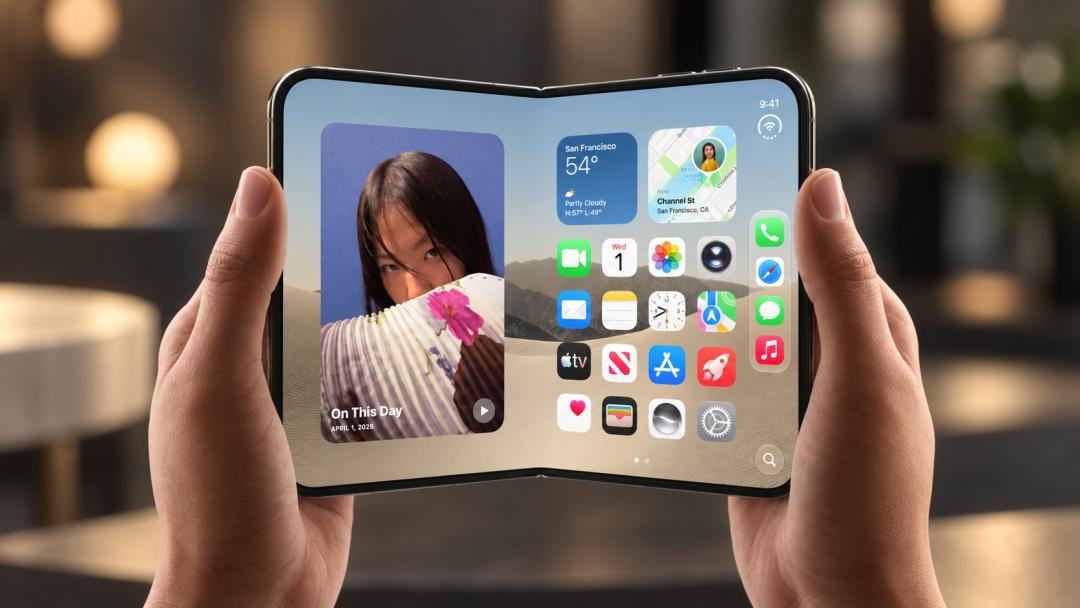
In the early morning of September 10, 2026 Beijing time, Apple released its first foldable smartphone iPhone Duo, announcing that it will support the USB-C version of Apple Pencil later this year. When the first-generation iPhone was launched in 2007, Steve Jobs' famous line "Who wants a stylus" became the starting point of discussions again. As a result, many netizens joked that this was "violating the ancestral precept".
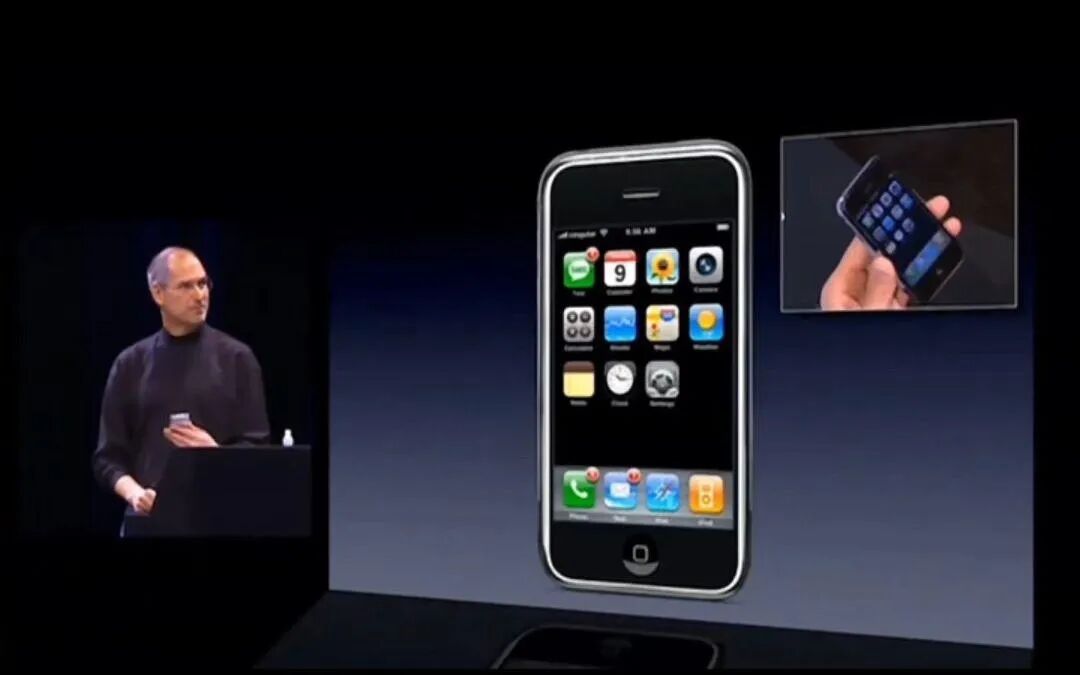
Shortly after the launch event, Ternus responded to this question in an interview: "I’ve never really thought of it as a rule." He then explained that the large screen has given the stylus new use cases, while users do not need to rely on the stylus to operate the phone, but can choose to use it to complete certain tasks.
On September 9, a related review from TechRadar even wrote: "I suspect Steve Jobs might appreciate this distinction." People who are in favor of the change also have to invoke the late founder to justify the rationality of the change.
But what Jobs left behind is ultimately an untouchable product list, or a set of methods for making trade-offs?
In May 1997, at Apple's Worldwide Developers Conference in San Jose, he faced a much sharper question. At that time, he had just returned to the company with Apple's acquisition of NeXT, and had not yet become interim CEO. A developer questioned whether he understood the technical differences between OpenDoc and Java, and also pressed him on what he had done in the past seven years.
It is understood that OpenDoc allows components from different software to participate in the creation of the same document. Behind the developer's question was a technology that developers had invested energy in but was abandoned by Apple.
Jobs admitted that there were good features in it. But his answer turned to another thing: whether these features can form a direction that allows the company to keep selling products. He said to "start from the customer experience and work backwards to the technology".
Prioritizing experience means first answering what customers can get; focusing means deciding where to invest resources based on that.
The iPod released four years later gave a concrete form to this kind of trade-off.
On October 23, 2001, Apple released the first-generation iPod in Cupertino, California: 5GB hard drive, about 1000 songs, priced at 399 US dollars.
However, before putting songs in your pocket, there was a troublesome problem: how to get the songs into the device? Apple left the management of music and playlists on the Mac, handed it over to iTunes; after connecting the iPod, the software syncs automatically. According to the data from the announcement at that time, it took less than ten minutes to transfer 1000 songs via FireWire.
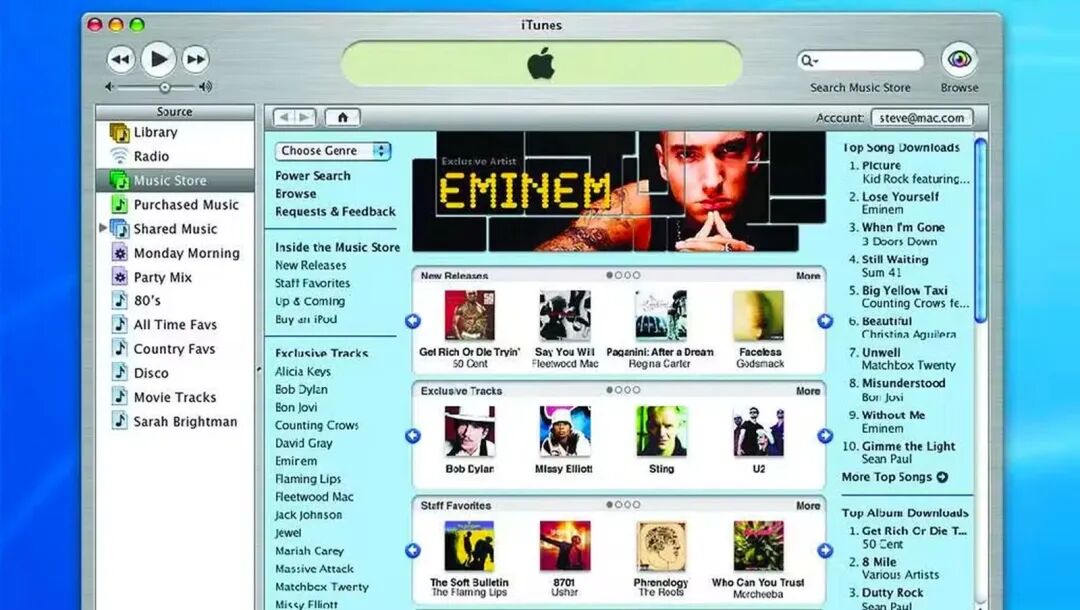
Thus, these complex technologies and engineering processes are uniformly packaged into the "simplicity" perceived by users. At this point, the complex work of organizing music does not disappear, it is just left to the computer which is more suitable for handling it, and the small player is responsible for playing music on the go.
Subsequently, Apple extended its reach beyond the player. On April 28, 2003, the iTunes Music Store went online, partnering with five major record companies to offer more than 200,000 songs at 99 cents each without a subscription. Jobs said in the announcement: "Consumers don't want to be treated like criminals, and artists don't want their precious work to be stolen."
Purchasing songs, managing them, syncing them, and listening to them on the go began to form a complete process. Copyright and transaction rules also became matters that products needed to address. On October 16 of the same year, Apple released the Windows version of iTunes in San Francisco, bringing the same music library and price to Windows users.
Integration is responsible for connecting these links, and control gives the company the ability to arrange how key links cooperate. Apple owns the store, software and players, and also needs authorization from record companies, and chooses to enter the Windows ecosystem.
And taste determines which details people refuse to compromise on. In a report published in The New York Times Magazine on November 30, 2003, Jobs concluded: "Design is not just what it looks like and feels like. Design is how it works." The details discussed by Jony Ive, Apple's head of industrial design, included packaging, headphones and cables. That means how a product is unpacked, picked up, and put into use all fall under the scope of design.
David Pogue, a tech author, in his book *The Apple Story: 50 Years of Legend*, summarizes Apple's strength as identifying the potential of emerging technologies, then "simplifying, perfecting and popularizing them".
These methods together complete a kind of "translation": experience sets the goal, focus determines trade-offs, integration and control ensure the cooperation of all links, taste is implemented in details, and finally makes users feel simplicity.
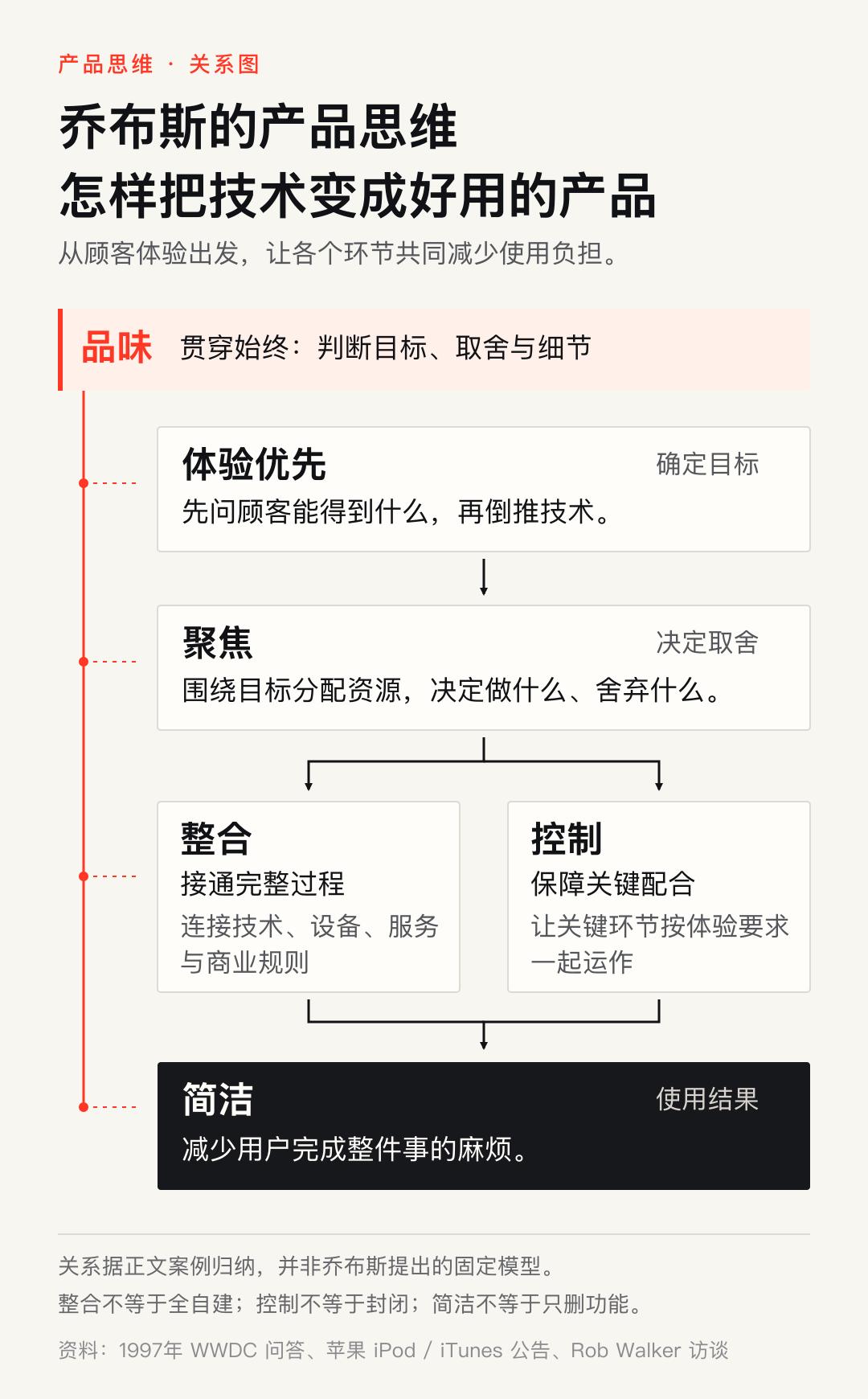
Figure: Summarized based on the cases in this article, not a fixed model proposed by Steve Jobs. Taste runs through trade-offs and detail judgments, and simplicity is the user experience generated by all these arrangements together.
2
When AI Can Perform Tasks, There Is Still a Product Threshold to Cross
Steve Jobs also thought about whether machines could go further.
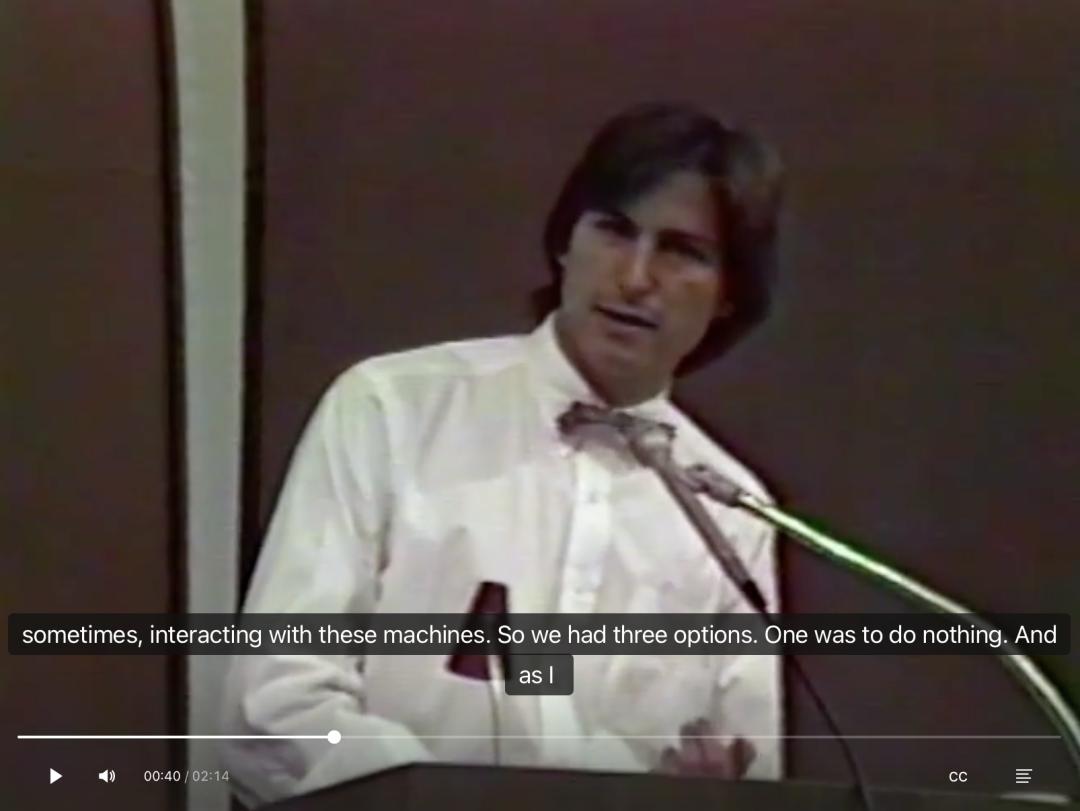
On June 15, 1983, at the International Design Conference in Aspen, Colorado, 28-year-old Jobs talked about the regret of reading: "The problem is, you can't ask Aristotle a question." He hoped that machines could preserve how a person views the world, so that future generations could continue to ask him questions.
A different technical path has emerged today.
On November 30, 2022, OpenAI publicly released the ChatGPT research preview, allowing users to ask follow-up questions and modify requirements in conversations.
After that, the tasks assigned to machines extended from answering to execution.
In early 2026, personal agents like OpenClaw were able to connect to chat software such as WhatsApp and Telegram, allowing users to assign tasks from familiar entrances. In January of the same year, Anthropic, the developer of Claude, launched the research preview of the office assistant Cowork, allowing agents to process local files. In February, the new agent introduced by programming tool Cursor could run and test code in its own development environment, and return videos, screenshots and logs for users to check.
The dialog box is used to put forward intentions, the canvas and editing tools retain partial modifications, and the task interface displays execution progress and deliverables. They can all appear in the same product. In such product design, people sometimes ask follow-up questions, sometimes modify things manually, and sometimes inspect after delegating tasks.
Such usage logic is changing the boundary and definition of products.
Mustafa Suleyman, head of Microsoft AI, hopes that machines first know who they are helping. On April 4, 2025, he wrote on the official blog: "Eventually there will be as many different Copilots as there are people using them." The memory function announced that day plans to remember user preferences after obtaining permission, while the Actions feature proposes to book restaurants, buy tickets, and send gifts on behalf of users.
Take ordering food as an example. Originally, people had to select the restaurant, number of diners, and time slot one by one. After assigning the task to the agent, the requirements can all be put into one sentence. But filling in fewer boxes does not complete the commission. Whether the conditions are accurately understood and whether the reservation is properly completed are the things users ultimately need to confirm.
When it comes to creation, users may not want the machine to make all the decisions for them.
Figma is a design platform for designers and teams to collaborate. Its co-founder and CEO Dylan Field summarized the direction as "lowering the barriers, raising the ceiling" in a conversation announced on March 14, 2025. On May 7 of the same year, Figma launched the public beta version of Buzz for brand and marketing teams at the Config conference in San Francisco.
According to the official introduction, designers can publish brand templates in Buzz and lock some of the content; marketing colleagues replace text and images, while AI helps generate images, remove backgrounds, and adjust copywriting. When necessary, people can still enter the editing tool to continue modifying.
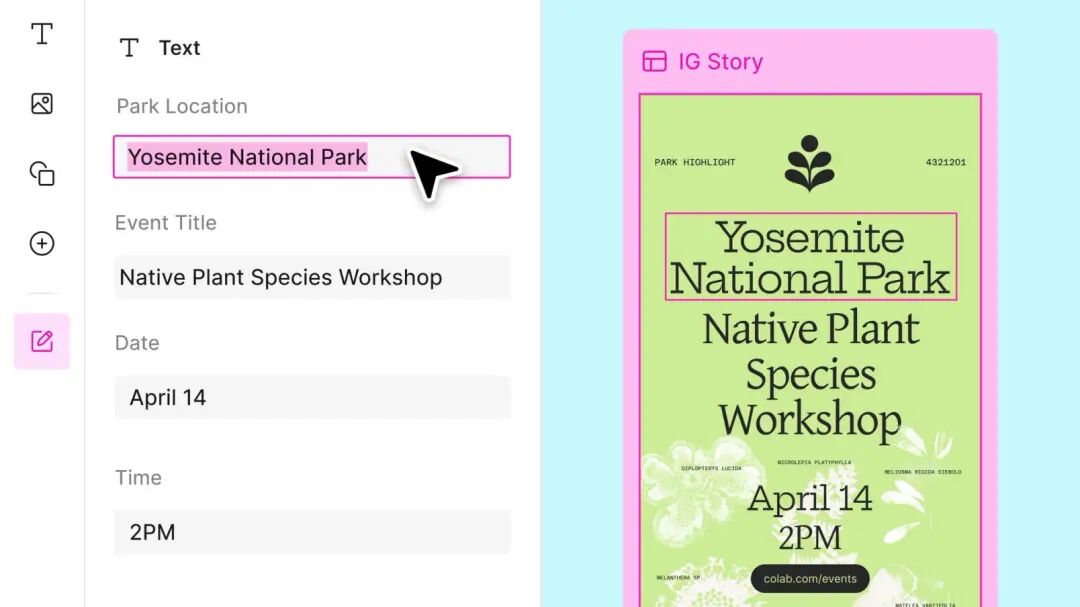
After production becomes easier, users still need to modify the results to meet their own requirements.
More importantly, even if the work is done, there is still the threshold of usage rights. On November 25, 2025, Warner Music and AI music platform Suno announced a settlement and cooperation. The agreement involves an authorization model, and also stipulates that artists and songwriters can choose whether to allow their names, voices and song works to be used in new AI songs. Beyond the generation button, the permission of creators has also begun to be included in product arrangements.
There are also some scenarios where "completing tasks faster" is not even suitable as the primary goal.
Khan Academy, a non-profit organization that provides free courses and exercises, began experimenting with the AI teaching assistant Khanmigo in 2023. Founder Sal Khan said in a review announced in June 2026: "We want to improve learning outcomes, measured by the scores of formative assessments and summative exams."
Another independent study provided a control. In the autumn of 2023, researchers carried out a mathematics teaching experiment in a high school in Turkey.
At that time, students who used the basic chat teaching assistant "GPT Base" developed based on GPT-4 scored 48% higher in practice than the control group that did not use AI, but after removing the tool, their scores in independent tests were 17% lower. Another teaching assistant "GPT Tutor" that added problem-solving materials and guiding prompts provided by teachers basically eliminated this negative impact, but students' independent test scores were not significantly higher than the control group.
Letting the machine do a little more cannot become a unified product standard. Which tasks should be done on behalf of users and which participation is worth retaining should be determined by the purpose of use. Can the methods left by Jobs help teams make these trade-offs?
3
To Learn From Him, You Don't Have to Copy Him Blindly
What still works is to start from human needs, focus on problems, and be responsible for the complete experience.
The music industry once went through a similar test.
In February 2001, when the U.S. Court of Appeals for the Ninth Circuit announced the ruling of the Napster case, users were already able to search and copy MP3 files on each other's computers through this software. The unauthorized copying and distribution triggered lawsuits from record companies. Songs could be found and downloaded, but it still did not solve who had the right to provide them and how users could get permission. Later, iTunes connected record companies, stores and players, and integrated authorized purchases into the process of listening to music.
For AI dubbing, the authorization problem has an extra layer: in addition to the copyright of the recorded work, it also involves the personal rights of the voice owner.
On April 23, 2024, Beijing