Just now, Tibo promised to "release or reset for 28 consecutive days", and OpenAI is facing a trust crisis.
Tibo has posted yet again...
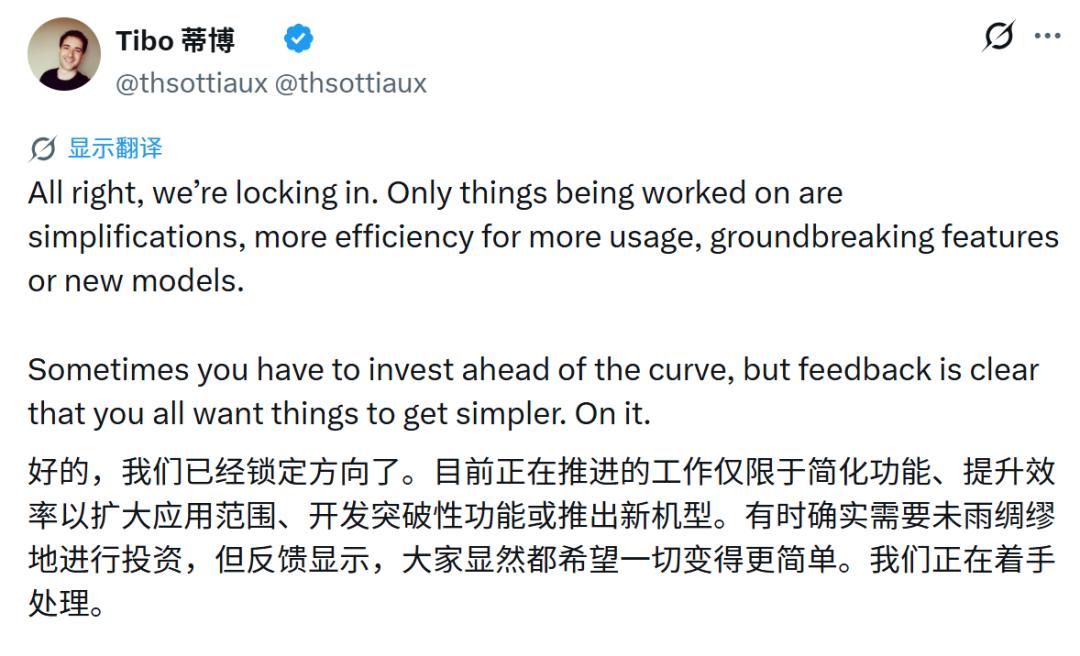
This time, he said OpenAI has "locked in its direction": going forward, it will only focus on four categories of work — simplifying products, improving efficiency to support more usage, delivering breakthrough features, and launching new models.
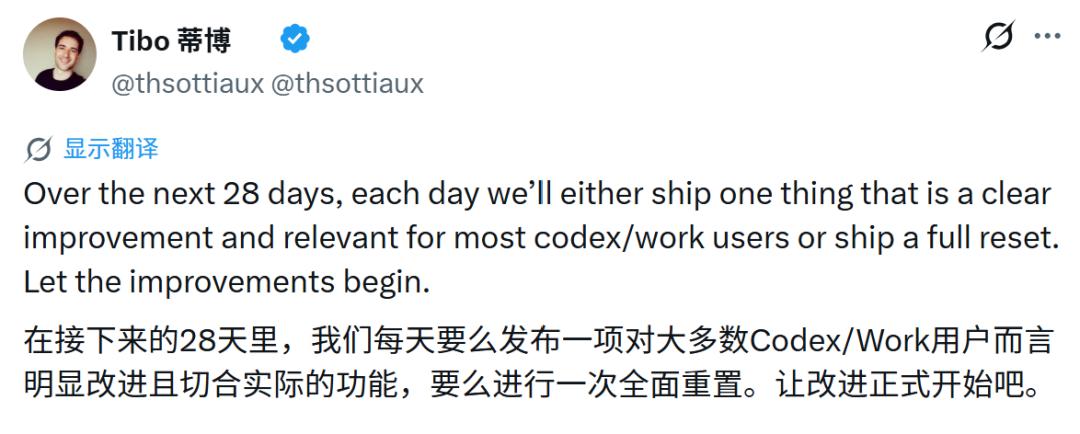
Not long after, he previewed again that there will be 28 consecutive days of releases or resets, and emphasized "features that are obviously improved and practical for users".
As always, some people in the comment section are cheering, but another voice is more noticeable than ever before.
Many people are asking: "Is this time worth trusting?"
Ahead of the Developers Day, OpenAI raised expectations extremely high, and users have heard too many similar remarks: 20 new features, major updates, about to change the way of working...
However, after the conference ended, many heavy users found that several problems that really affect the daily experience have not disappeared: the quota is reduced, the model runs slower, and the most anticipated new product does not immediately show the value promoted in the publicity.
One user directly said that before DevDay, OpenAI gave people the feeling that "this time everything will be changed", but after the actual release, "it is basically useless". The GPT-6.1 Sol he was most looking forward to also disappointed him after actual use: the performance and efficiency on paper are very impressive, but it is still slow when actually working. Compared with Claude, the usage experience after TPS standardization is still a notch worse.
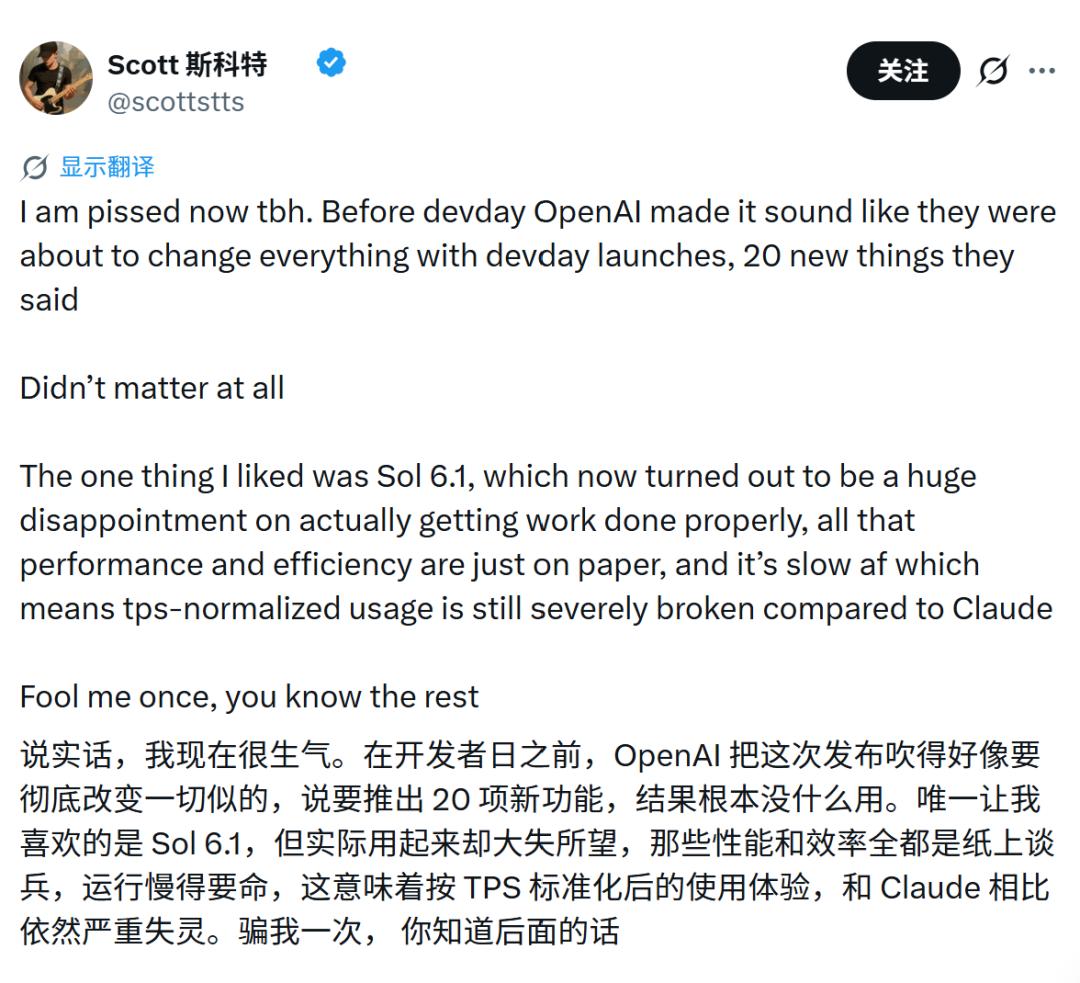
After the Developers Day, OpenAI is going through a user trust crisis.
A big battle has already begun
Just now, Lauren Tan from the SpaceXAI Grok Bot team, who is @poteto on X, posted a rather provocative sentence with a picture directly targeting OpenAI.

Tibo responded quickly, and the post became even more confrontational.
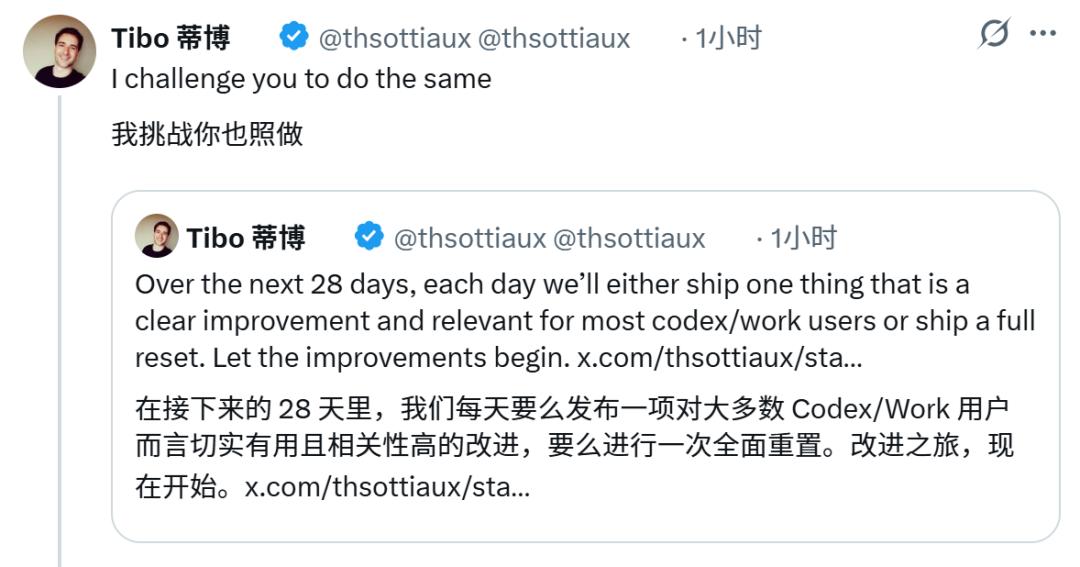
Lauren did not pick up the gauntlet, but pointed out OpenAI's recent predicament: the publicity momentum is extremely high, but the quality cannot keep up at all.
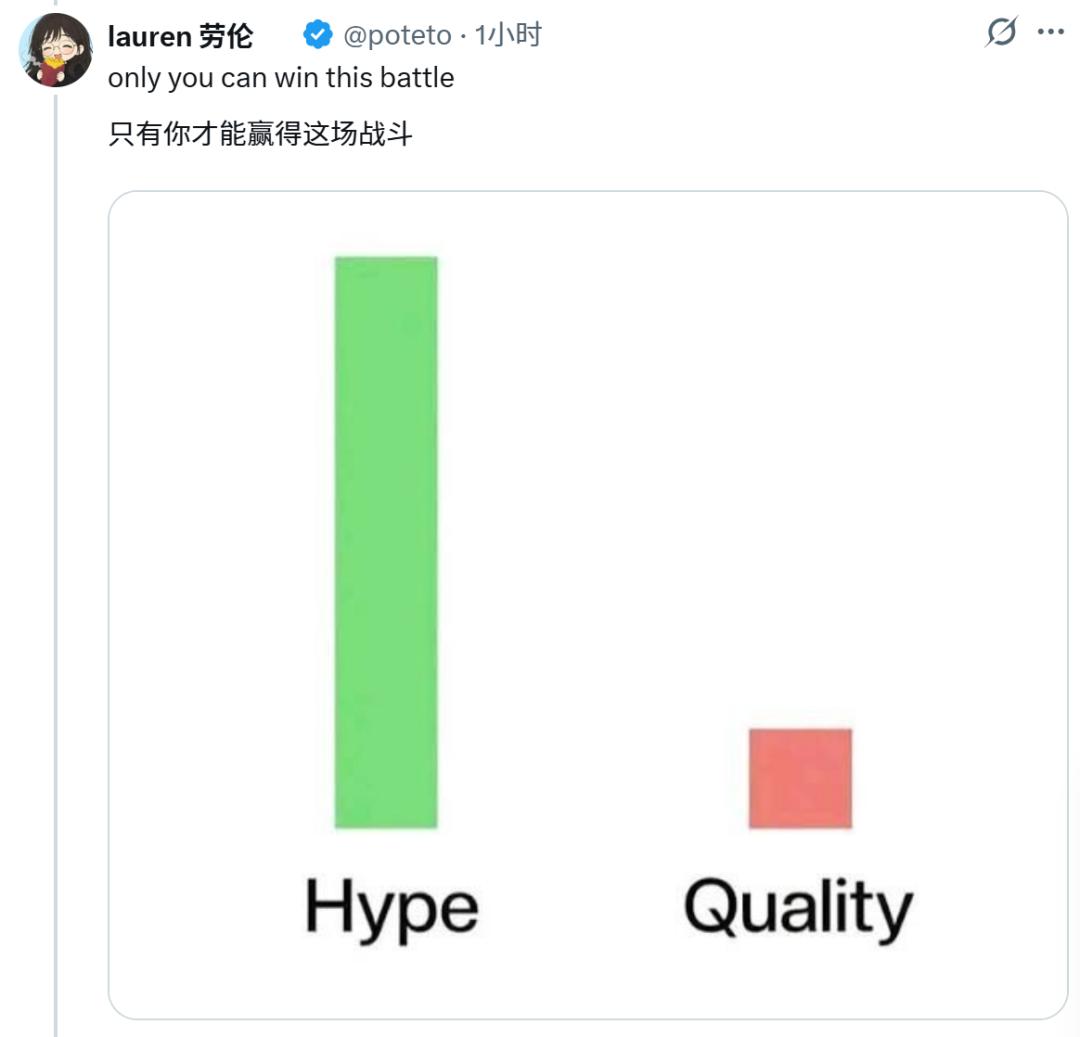
What makes OpenAI headache is that this is not just the idea of competitors. All the spearheads are pointed at the just-concluded Developers Day.
Twenty releases, are users satisfied?
The problem with OpenAI's Developers Day this time is precisely that there are a lot of releases, but few of them are retained in actual use.
Before the conference, OpenAI kept raising expectations. Tibo even previewed in advance that about 20 new things would be announced, giving people the feeling that there would almost be a full product line refresh.
When the Developers Day actually arrived, there were indeed a lot of new contents.
GPT-6.1 Sol, new Codex / Work capabilities, Dots, and a series of updates around Agent, developer tools and ChatGPT were launched one after another. Judging only by the number of releases, it is hard to say this DevDay has "no real content".
But users' feedback is also obvious: among so many new things, how many of them have really changed the daily usage experience?
In addition to the disappointment conveyed by Scott earlier, other users also gave similar evaluations. And these complaints just overlapped with another layer of greater dissatisfaction.
OpenAI has previously adjusted subscriptions and usage quotas due to computing power pressure, and registration for new users of the $200 package was once suspended; later the usage quotas were significantly tightened. At the same time, the official explanation emphasized more that "the efficiency of the model has been improved" and "the same quota can complete more work".
Users are not buying this statement: the money paid has not decreased, but the usage limit has been reduced, what good things do you expect us to say?
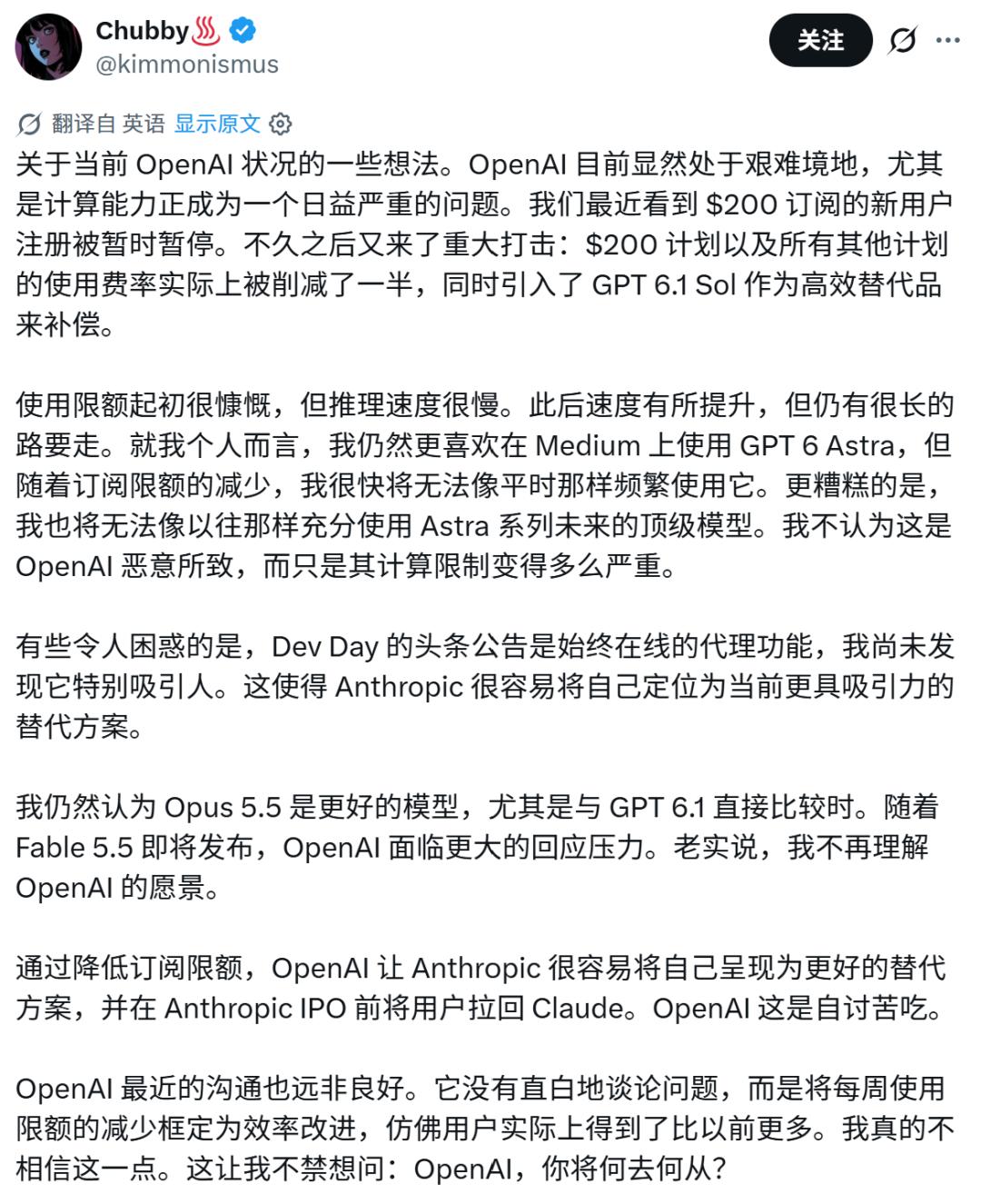
The Developers Day did not meet the core needs of heavy users, and the 20 new features will also turn from "surprise" to another kind of noise.
It is also under this background that the "simplification" goal proposed by Tibo may be more worthy of in-depth consideration.
Therefore, "becoming simpler" may be the right direction
The direction OpenAI has locked in next is: simplifying products, improving efficiency to support more usage, delivering breakthrough features, and launching new models.
Tibo clearly stated: "Sometimes it is indeed necessary to make layouts in advance, but the feedback is already very clear: everyone hopes everything becomes simpler."
For an AI company with high-speed iteration, complexity is almost inevitable. But once the complexity exceeds a certain critical point, it will start to erode the value of the product itself in turn.
Users certainly want more powerful models, as well as new Agents and new ways of working. But before that, they first hope that the most basic things are clear, stable and in line with expectations.
So this time putting "simplification" in the first place may be the right choice.
Because OpenAI no longer lacks new stories, what it needs more now is to deliver on the stories it has already told.
Looking at Lauren's picture again, the publicity momentum has been high enough. In the next 28 days, let's see if the quality can catch up.
Reference links:
https://x.com/thsottiaux/status/2106610099720720811
https://x.com/TokenGremlin/status/2106809323917877536
https://x.com/kimmonismus/status/2106726110868234553
© THE END
This article is from WeChat official account “Almost Human” (ID: almosthuman2014), the author is an AI follower, and is published by 36Kr with authorization.