You agreed to the APP's user terms without a second thought, only to find a clause inside requiring you to clean public toilets.
Do you know? Back in 2013, someone found a clause in Apple's iTunes Terms of Service that reads: Do not use iTunes to build nuclear weapons.
Do you know? In 2016, someone spotted a clause in one of Amazon's service terms stating that the software is not applicable to XXX scenarios, but it can still be used if the zombie apocalypse breaks out.
You never noticed that, because actually... no one ever bothers to carefully read the Terms of Service of tech companies!

Everyone who has ever tried to read the Terms of Service gets dizzy...
When we download a new APP, or register as a new user on a website, we are usually prompted: Please agree to the XXX Terms of Service and Privacy Policy. The vast majority of people will just click "Agree" directly, because they are far too long.

When registering for an account, we almost always choose "Agree" directly
Several studies have surveyed users' behavior of reading Terms of Service. In a survey of over 2,000 people, researchers found that 91% of users have never actually read the Terms of Service, and among users aged 18 to 34, the proportion of people who have never read the terms reaches 97%.
Researcher Jonathan Obar ran a "sneaky" little survey: he set up a fake website called NameDrop, where users had to agree to a ridiculous Terms of Service clause before registration. The clause reads: You agree to give up your children, and you agree to send any content you share to the National Security Agency of the United States.
As a result, 98% of the users selected "Agree".

The clauses are so long that it feels like they are deliberately designed to make people skip reading and click "Agree" directly.
While this experiment sounds like a prank, it fully demonstrates how many users could get hurt by this. After all, in real life, there are countless people who have suffered losses due to these Terms of Service.
A 2017 news report stated that more than 20,000 users agreed to the Terms of Service for connecting to public Wi-Fi. As it turned out, when they clicked agree, they also consented to complete 1000 hours of community service, including cleaning toilets and unclogging sewers. (?)
Apart from these seemingly joke-like contents, more importantly, people who click "Agree" without carefully reading the user terms unknowingly give up some of their privacy rights. What's worse, if you click "Disagree", you cannot even register an account or use the features you need.
All of this happens because the Terms of Service are just way, way, way too long.
One study input the Terms of Service of several commonly used apps into an online reading tool, and found that most app terms have an excessive number of words, which takes more than an hour to finish reading, and the longest one takes up to 92 minutes.
In another survey, researchers found that the Terms of Service of a very simple free mobile game actually takes 1 hour and 53 minutes to finish reading. After reading that, are you curious about what exactly is written in those terms? Go find an APP and read its terms
People really get dizzy after finishing reading the user terms
Moreover, the content written in the Terms of Service is often extremely complicated. If you are not a professional in the field, even if you force yourself to finish reading patiently, you may still feel confused. A survey by the Georgia Institute of Technology shows that understanding the user terms on websites requires at least the average reading level of a second-year college student... In the United States, even if people read the terms, about 60% of them still cannot understand what each specific clause means.
But experts advise that for security reasons, we actually should spend time reading and understanding these clauses.
However, some people have come up with some ridiculous methods to try to make you read these terms as much as possible in daily life. A Swedish art collective called TLDR turned the lengthy Terms of Service of social media platforms into "audiobooks", not for people to listen to for information, but for hypnosis.
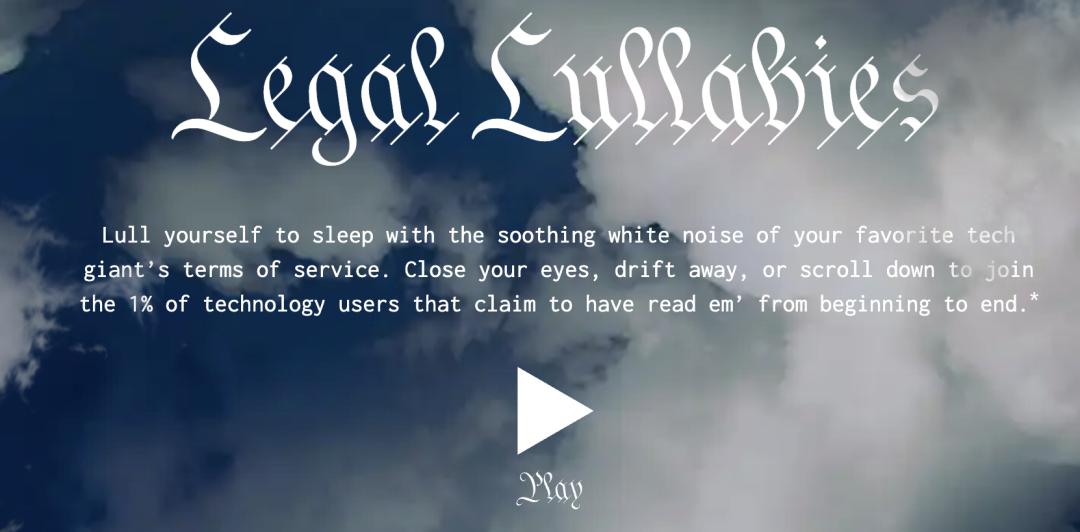
Come listen to the user terms! The kind that puts you to sleep | Website: https://www.zzzuckerberg.com/
The members of the TLDR team hired a person to read out these clauses, and it turns out that the recorded audiobook works perfectly! The founder of the team also said that he was very excited at the beginning of the recording process, but he became extremely sleepy as he kept listening.
"Listening to this content is like falling into a dream. It reaches a perfect balance between being understandable and completely incomprehensible."
If you want to experience its hypnotic effect, you can go to this website and listen to this "Terms of Service Lullaby".

Our editor tested it personally, everyone who listened to it felt sleepy | Giphy
However, there are people who really want to seriously improve the reading experience of user terms. Some studies suggest replacing complex clauses and jargon in the terms with more understandable content, and writing the terms in simpler language.
The startup Skirtswap can automatically "adapt" complex agreements into more everyday language, with shorter sentences and simpler paragraphs, so that users can get a relaxed and clear reading experience.
Others have founded websites that mark out the privacy clauses you need to pay attention to, so you can check them in advance before registration if you need to.
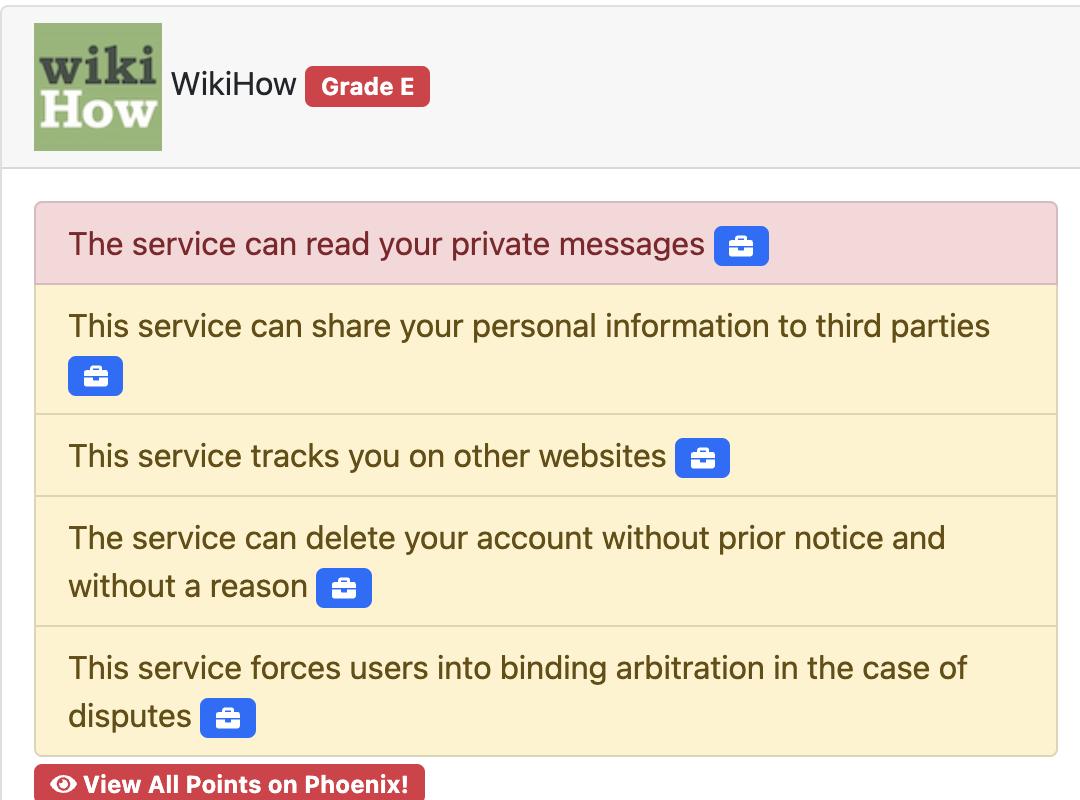
Some websites will directly mark the privacy issues you need to pay attention to on large mainstream platforms
Also, even though the Terms of Service for one of Apple's products contains more than 20,000 words, the company did a great thing: one of the most important updates in the iOS 15 and iPadOS 15 systems released in 2021 is: User behavior cannot be tracked without user authorization.
Therefore, when users running iOS 15 and above open a mobile APP, they may see reminders asking if the APP can track their location information, network services, camera access and photo albums.
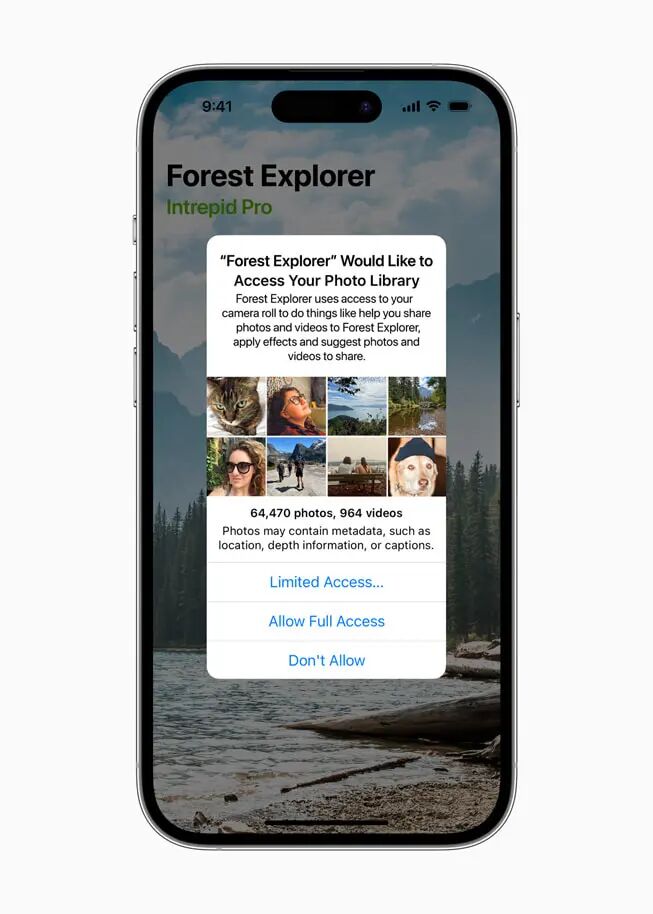
When you select photos through an APP, your phone will ask if the APP can access your photos. | apple
Maybe in most cases, we will still choose "Allow". However, for the sake of privacy and security, before these terms become safer and more convenient, we still need to spend a little more time to consider and adjust the relevant settings, and even read the user terms carefully.
References:
[1] https://www.nytimes.com/2021/01/23/opinion/sunday/online-terms-of-service.html
[2]https://www.theguardian.com/money/2011/may/11/terms-conditions-small-print-big-problems
[3]https://www.businessinsider.com/deloitte-study-91-percent-agree-terms-of-service-without-reading-2017-11?r=US&IR=T
[4] Obar, Jonathan A., and Anne Oeldorf-Hirsch. "The biggest lie on the internet: Ignoring the privacy policies and terms of service policies of social networking services." Information, Communication & Society 23.1 (2020): 128-147.
[5]https://dailyinfographic.com/how-long-does-it-take-to-read-the-terms-of-service
[6] https://www.pewresearch.org/internet/2019/11/15/americans-attitudes-and-experiences-with-privacy-policies-and-laws/
[7] https://www.cbc.ca/news/canada/you-don-t-read-terms-of-service-agreements-so-let-a-bot-do-it-1.4944904
[8]https://www.theguardian.com/technology/2017/jul/14/wifi-terms-and-conditions-thousands-sign-up-clean-sewage-did-not-read-small-print
[9] Karanicolas, Michael. "Too Long; Didn't Read: Finding Meaning in Platforms' Terms of Service Agreements." U. Tol. L. Rev. 52 (2021): 1.
This article is from the WeChat Official Account "Bring Science Home" (ID: steamforkids), written by All About Magazine, and published with authorization from 36Kr.