Who are salaried workers indebted to? How much of their monthly salary will be taken away by AI every month?
Recently OpenAI pulled a bold move: the $200-per-month ChatGPT Pro keeps its original price, but the available usage quota has been cut, which immediately sparked widespread outrage on overseas social platforms. Even more outrageous, it also launched a new tier priced at $500 per month, which essentially means the former "unlimited access version" has been downgraded to a "trial version". If you want to keep enjoying full features, you have to pay more!
The first reaction of many people after seeing this is not anger, but a sense of unease. These days, AI tools are "getting higher and higher pay" at an increasingly fast pace. As their "bosses", shouldn't we also consider cutting unnecessary costs and improving efficiency?

(You just woke up, and your AI is still waiting for you to "feed" it with tasks.)
For the gaming industry, using AI tools is far from a new thing. Nowadays, it has become the norm for everyone to have one or several AI tools at their disposal. However, due to different job positions, usage volumes, and company equipment policies, everyone's expenses on AI vary greatly.
At least in this era, paying for AI tools on a monthly basis has long been a common practice. Working these days is no different from playing a video game: if you want a "comfortable experience", you have to buy a "monthly pass" every month.
How's Your AI Bill Looking?
If you do a little research and browse various platforms, you will find that current AI expenses can be roughly divided into three tiers based on different usage demands of different users.
The basic tier costs around 150 yuan per month. For example, you can rely on one ChatGPT Plus account for all your needs, and make do with free versions for the rest. There are even more extreme "shared account users" who split the cost of one account with several other people, paying only around 45 yuan per person per month, which is reminiscent of the old days when people shared video streaming memberships.
The mid-tier ranges from 400 to 700 yuan per month. A typical breakdown of this tier could be GLM 49 + GPT 150 + Cursor 150 + Qwen 39 + Volcano Ark 49 + transfer station 20, adding up to a total of 460 yuan. Some people call this the "AI full package", where you pay a little for every tool, just like spending in a gacha mobile game.
The high-usage tier starts at 1200 yuan with no upper limit. On many social media platforms, you can find posts from netizens discussing their AI bills, and quite a few of them say their monthly AI expenses exceed four-digit yuan.

What does this thousands-of-yuan expense mean? It is probably more expensive than the total of many people's budgets for video streaming memberships, gym cards, and coffee combined.
Is AI Usage Counted As Part of Your KPI?
If paying for tools out of your own pocket can still be considered "investing in yourself", the following situations are starting to get absurd. There have been plenty of news reports online recently that AI usage has been converted into work indicators and included in performance assessments.
Overseas, in the middle of this year, Meta established a ranking list of employees' token consumption, and some employees even tried to game the ranking list. As early as February this year, the Financial Times reported that consulting giant Accenture linked AI usage to promotion eligibility.
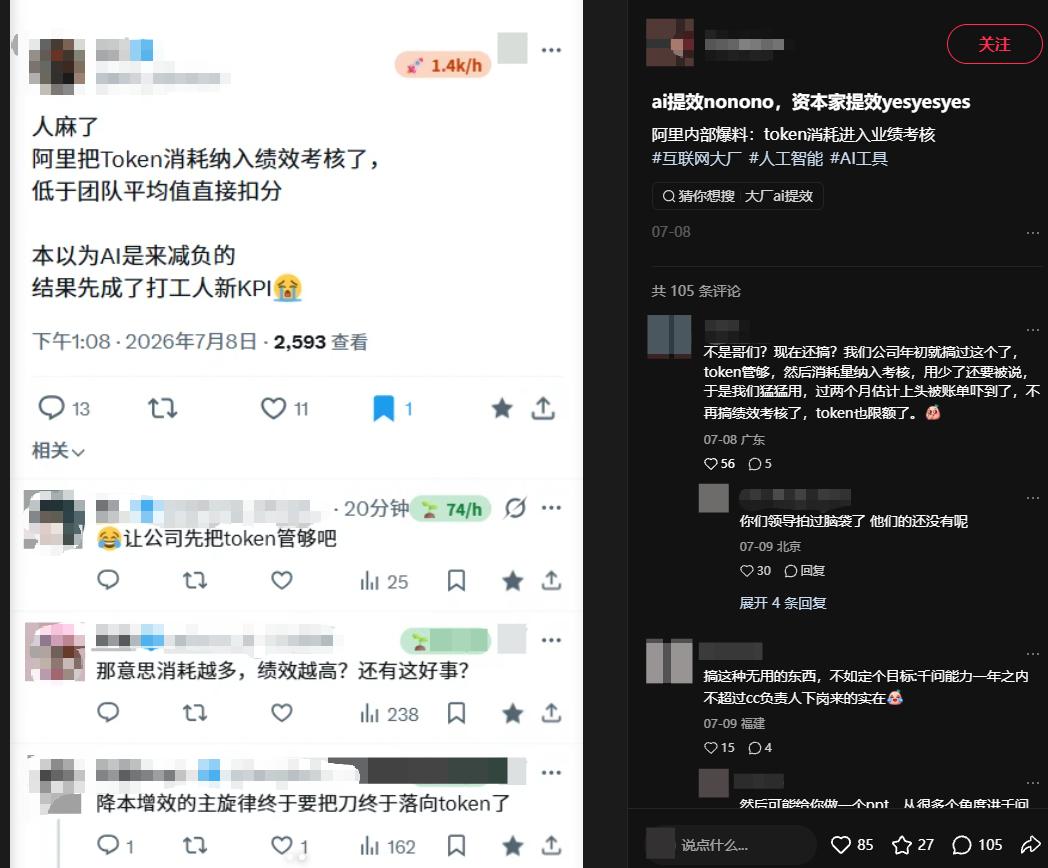
The same situation exists in China. Some companies require that AI-generated code accounts for more than 80% of the total code, and failure to meet the standard will affect year-end bonuses; some teams set up internal consumption rankings, and employees with low usage will be called in for a talk by their supervisors. There are even more extreme cases where management patrols workstations in the afternoon to check if the AI tool interface is open on employees' screens.
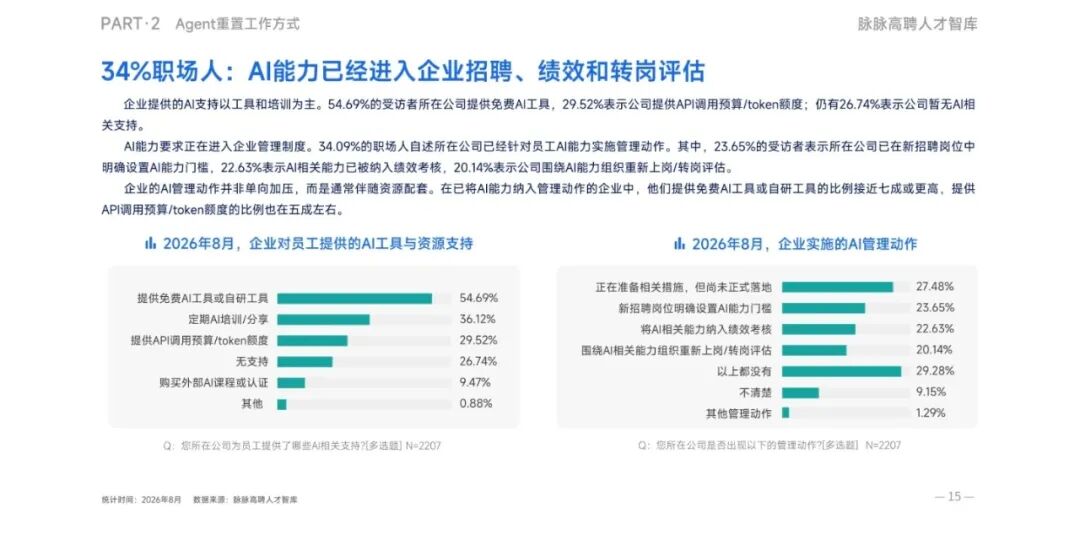
According to statistics from Maimai in August this year, 34% of respondents said AI proficiency has been included in corporate recruitment, performance evaluation, and internal transfer assessment. There are also many discussion posts on Xiaohongshu about AI being included in performance assessment, with people holding different views: some are against it, some support it, and some say their companies once encouraged AI usage but later canceled the relevant rules after finding that the token bills were out of control.
In the gaming industry, the widespread application of AI is even less of a novelty. According to statistics from Gamma Data, among the top 50 Chinese companies by gaming revenue, 80% have made layouts in the AI field. Among them, 82% have introduced external AI technologies, 72% are conducting independent R&D of AI, and 37% have invested in or acquired AI-related enterprises.
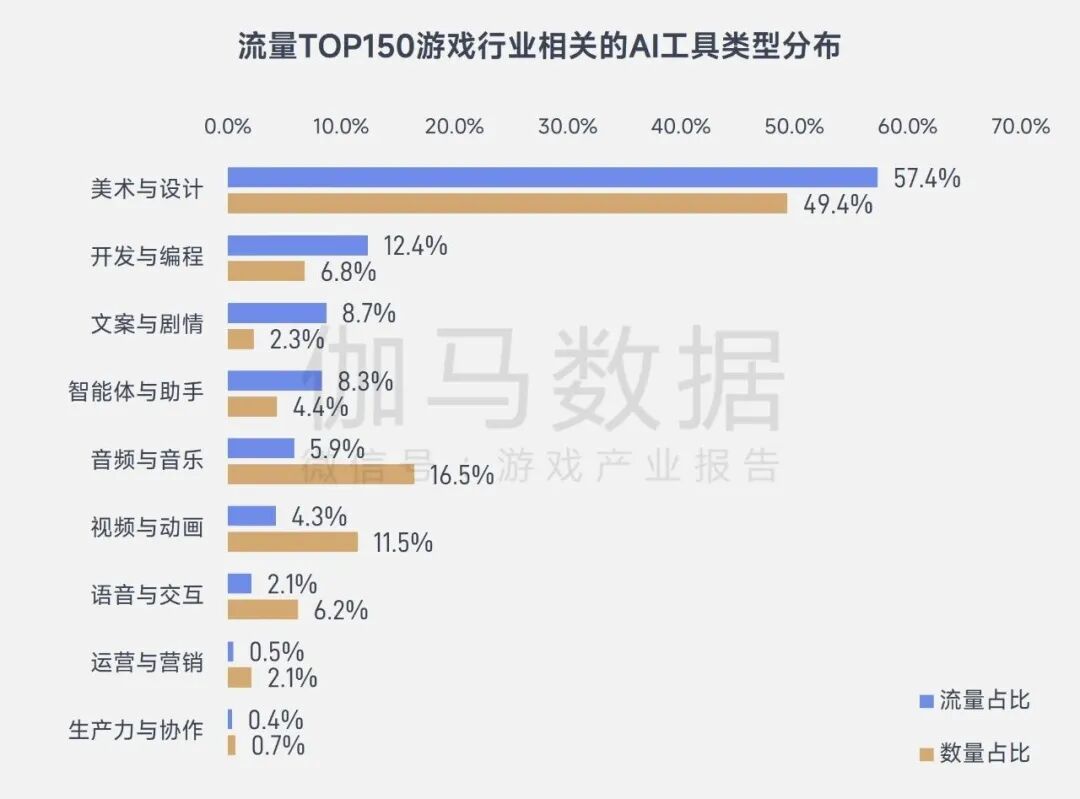
Currently in the gaming industry, AI tools are most widely used in three sectors: art design, development programming, copywriting and plot creation. If you work at a leading company in the gaming industry, it is estimated that everyone is already using AI tools.
When you calculate the total expenses, it is acceptable if the company provides free AI tools or a certain amount of token quota. But if the company sets relevant requirements without offering any AI support, employees' wallets will take a big hit.
Some people summed it up very poignantly: "I spend my own salary buying tokens, my work efficiency is improved for the company, and the large model manufacturers make profits. I am the only one who ends up paying to work, with no reduction in my workload at all."
Are You Paying for AI for Efficiency, Or Just For Job Security?
To be honest, when I ask people around me why they renew their AI tool subscriptions, many of them don't directly tell me how useful a certain AI tool is. Instead, a lot of them complain about price hikes, high expenses, and slow connection speeds. Some even answer: "Everyone is using it now, I feel uneasy if I don't."
It seems that this money spent on AI now also functions as a kind of "workplace insurance". It is not simply spent to ensure work efficiency, but to give people a sense of security that "I am not falling behind". After all, in this current AI era, many people can't help but sigh:
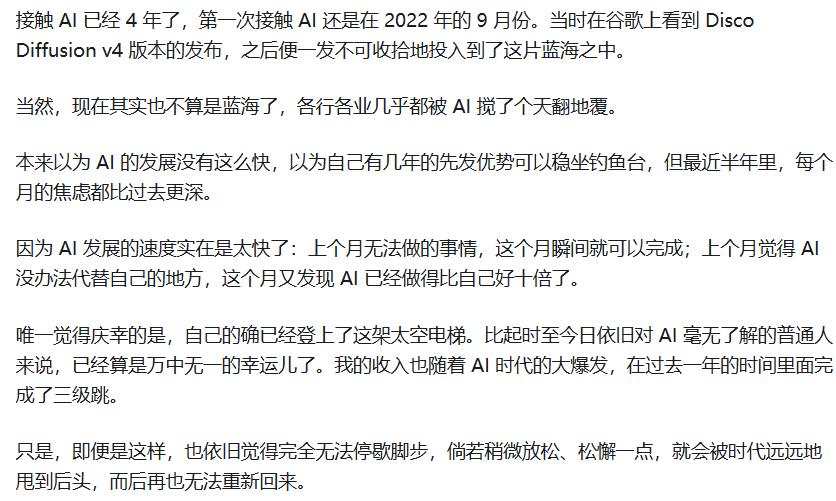
"I originally thought the development of AI wouldn't be so fast, and that I had several years of first-mover advantage to stay steady. But now my anxiety is deeper every month than it was in the past. The development speed of AI is so fast that tasks that were impossible to complete last month can be done instantly this month; the areas where I thought AI couldn't replace me last month, I now find AI can do ten times better than me."
Since you have free time during the holiday, you might as well calculate your own AI expenses. How much do you pay for AI tools every month? Does your company reimburse you? Is this sum of money an investment for you, or a "protection fee"?
This article is from the WeChat Official Account "Mobile Game Daily" (ID: sykong_com), written by a gaming industry focused content creator, and authorized for release by 36Kr.