A post-70s entrepreneur from Nantong, Jiangsu, who sells AI driver systems, posted a revenue of 163 million yuan in half a year and has been listed on the Hong Kong Stock Exchange.
In May this year, UISEE, an autonomous driving company, was listed on the Hong Kong Stock Exchange with a market value of nearly 10 billion yuan.
The unmanned vehicles that transfer passenger luggage to the aircraft cargo hold at airports are products of UISEE.
This marks the 10th year since UISEE was founded. Every day, its founder Wu Gansha thinks about one thing: to stay alive.
The key to UISEE's survival lies in its choice of a non-consensus direction in the industry:
It focuses on autonomous driving for commercial vehicles in closed scenarios such as airports, factories and mines, and did not squeeze into the open-road passenger vehicle track that attracted higher capital enthusiasm.
Nowadays, UISEE mainly sells three types of products: unmanned vehicles, autonomous driving software, and AI drivers.
Commercialization has already begun. In the first half of this year, its revenue was about 163 million yuan, a year-on-year increase of 64.9%; its gross profit was about 85.99 million yuan, with a gross profit margin of 52.9%.
Wu Gansha is a post-70s technology entrepreneur: he was born in Nantong, Jiangsu in 1976, and graduated from Fudan University with a master's degree in computer science. He worked at Intel for 16 years, and eventually served as the dean of Intel China Research Institute. At the beginning of the entrepreneurship, the team established the R&D direction of full-scenario L4-level autonomous driving.
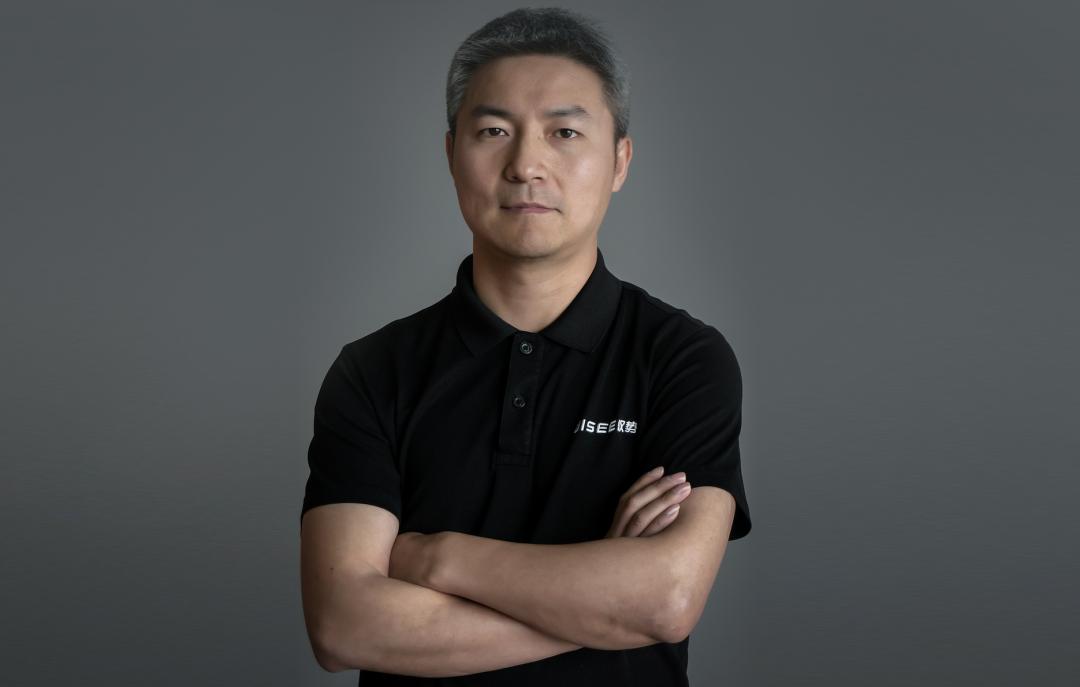
Wu Gansha, founder of UISEE, looks very much like the director Tsui Hark
In a recent communication with Pencil News, the topic Wu Gansha talked most about was accounting: how expensive a driver is in Europe, and how many drivers an unmanned vehicle can replace; the marginal cost of AI drivers is very low, and it can be sold in the same way as selling memberships for large models.
Statement: The following is Wu Gansha's oral account, and the information in the article has been confirmed to be true and accurate. Pencil News is willing to endorse the credibility of its content. This article is a joint column launched by Index Capital and Pencil News.
Spend tens of millions to get one single data point
Around 2019, the most popular saying in the industry was: in another year or two, unmanned vehicles will be everywhere on the streets.
Looking back, this statement is so naive that it makes people feel a little embarrassed.
In the past few years, everyone has underestimated how far it is for technology to advance from 99 points to 100 points.
Assuming that "one accident occurs every 100 days" is taken as the safety assessment standard for unmanned vehicles, to obtain safety operation data with practical reference value, it is necessary to complete 100 consecutive days of real operation.
How many people are serving the vehicle during these 100 days?
Hundreds of people. Calculated at a cost of 50,000 yuan per person per month, the monthly cost is 20 million yuan, and the three-month cost reaches 60 million yuan.
In other words, you are very likely to invest tens of millions of yuan just to get one single data point.
The first 99 points can be achieved in three or five years; but for the last 1 point, many people have been stuck for ten years.
What exactly is the bottleneck for this last 1 point? It boils down to four things.
First, safety. If this level cannot be passed, the leading 1 does not exist, and all the following 0s are completely meaningless.
Second, efficiency. We cannot sacrifice operation speed for the sake of pursuing safety. Airport customers have strict punctuality assessment standards. Once the operation efficiency of unmanned vehicles is lower than that of manual workers, customers will no longer purchase them.
Third, all-weather operation. The entire fleet cannot be paralyzed when heavy rain or heavy snow falls, and it is impossible to temporarily recall drivers to take over the work.
Fourth, the operation and maintenance of the entire fleet. For ordinary private cars, the owner is responsible for the vehicle condition; there is no "owner" for the L4 fleet, so this burden has to be fully shouldered by the autonomous driving company itself. If the operation and maintenance are not in place, problems will occur sooner or later.
These four things are all concentrated in that last 1 point.
This is why there were countless bold statements across the industry in the past ten years, but only a few companies have finally achieved real progress.
Help customers "earn" money
Up to now, the vast majority of autonomous driving business scenarios have not brought profits to enterprises.
If we, who are engaged in unmanned vehicles, chips and software, include all the R&D costs invested in the past ten years, no company has yet achieved profitability. Many peers have achieved an annual revenue of 1 billion yuan, but their gross profit margin is only 10% to 20%, which cannot even cover the comprehensive operating costs.
But we have helped our customers "earn" money. If we only count the customers' investment in purchasing and maintaining vehicles, and compare it with the saved labor costs, many customers have already achieved positive unit economic models.
I reviewed the customers whose economic models have turned positive over the years, and the most typical one is the baggage tractors at airports. The quotation we give to overseas customers can directly help them save half of the cost. Why? One vehicle can replace three or four drivers. The annual cost of one driver is very clear once you do the math.
Nowadays, overseas airports are facing both high labor costs and labor shortages. Restricted by regulations, drivers cannot work more than 40 hours a week, but airports operate 7*24 hours non-stop; airport drivers also need to obtain special certificates and receive special training, which leads to high costs, and many people leave their jobs after only a few days of work. The cycle of recruiting, training, employees leaving, and recruiting again repeats.
When you lay out all the accounts clearly, the customer will nod and agree. In the past two years, the number of customers willing to try new things has increased significantly.
The civil aviation industry used to be a very conservative industry, but now its initiative is visibly stronger. A few days ago, we just officially announced our cooperation with Lufthansa at Munich Airport, and they took the initiative to contact us.
Different airports have different pain points.
Overseas airports face "expensive and scarce labor"; many domestic airports need to use unmanned vehicles to reduce accident rates; airports in the Middle East attach the most importance to carbon reduction. Replacing diesel vehicles with electric vehicles and cutting the carbon emissions of three or four drivers are also rigid indicators.
The moat of To B business is "cost switching", which is also listed by Warren Buffett as one of the four major moats.
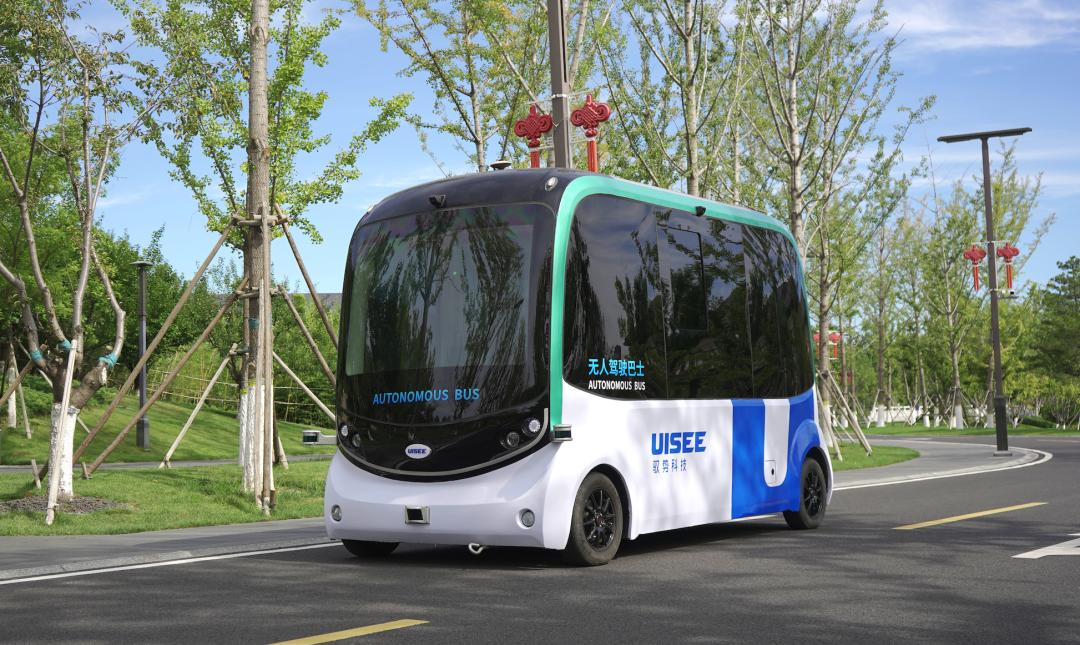
UISEE's unmanned minibus B08
The airport operation team is already familiar with the existing system, and replacing the new system will bring high adaptation costs; only when the benefits created by the new solution are significantly higher than the comprehensive cost of replacement, will customers choose to change suppliers.
Therefore, the company that enters the market first and gets familiar with the system first will seize the advantageous position.
Earn money from AI drivers in the future
Autonomous driving is essentially a "new type of labor force". In the future, China will become an exporter of this new type of labor force.
100 years ago, Chinese people traveled far to the United States to build railways, which was the old type of labor force. Today, the Philippines exports domestic workers to the whole world, which is also the old type of labor force.
The AI drivers we will export in the future are a new type of labor force: they are stable, reliable, tireless, and can work 24 hours a day, 365 days a year without rest.
Overseas peers still don't value these "hard labor" scenarios. They are flocking to develop Robotaxi, and a small number of them are engaged in trunk logistics. They basically do not touch scenarios such as airports, ports, and mines.
This obviously leaves a whole blank market for us.
We can no longer only sell vehicles, we have to sell services. In the past, customers who bought an unmanned vehicle had to pay a large sum of money at one time. We thought about whether we could convert the labor cost of drivers into the subscription fee of "AI drivers"? You pay the subscription fee monthly, and we guarantee that the AI driver will work well all the time.
After this adjustment, even the payment collection cycle is shortened. The revenue form becomes the same as that of large model companies calculating annual recurring revenue (ARR), and the account period is greatly compressed.
It is not realistic for one enterprise to take all the benefits of all products, intellectual property rights and the entire value chain. What we want to do more is to make "AI driver" a general-purpose capability, embed it into factories, ports, mining areas, logistics, buses... cooperate with the leading enterprise in each industry, the partner is responsible for delivering the overall product, we deliver the AI driver, and the subscription revenue is shared by all parties.
In the next few years, customers' sensitivity to prices will gradually decrease. On the one hand, we will continue to make technological progress and reduce costs. On the other hand, we will use more flexible business methods to lower the capital threshold for customers in the initial stage, so that they can use unmanned vehicles faster and drive the growth of the overall market size.
When the threshold is lowered, the market volume will rise.
Today, if you pick any segmented scenario at random, the penetration rate of autonomous driving is often only 1%.
There is an old saying in the industry called the "hockey stick effect" — once the penetration rate climbs to 10% to 15%, the inflection point will arrive, and the growth will rise sharply. As long as one or two of the five or six peers around you start to use the technology, the entire industry will be driven forward.
I judge that this inflection point can be reached within five years.
I often tell my team: whoever takes the first step to achieve the leap from 99 to 100 will face countless opportunities to make money. The difficulty lies in the fact that this step is really extremely hard to take.
On May 20 this year, we rang the bell at the Hong Kong Stock Exchange. Before the listing dinner, the team dug up an old document — the first version of the business plan in 2016. We originally just wanted to pick a few sentences as retrospective materials.
When we opened it, the phrases "AI driver" and "full-scenario unmanned driving", which we still talk about every day, were clearly written on paper ten years ago.
In the past ten years, countless peers have disappeared. Our journey has not been all smooth sailing. We have tried Robotaxi, unmanned minibuses, unmanned distribution, and complete vehicle development... all of which were launched and then scaled back. Our original intention of developing AI drivers has never changed.
*This article does not constitute any investment advice.
*This article is a joint column of Pencil News and Index Capital.
This article is from the WeChat official account "Pencil News" (ID: pencilnews), author: Pencil News, authorized for release by 36Kr.