White Rhino completes $100 million Series C financing, accelerating the ecological layout of L4 autonomous delivery | 36Kr Exclusive
The autonomous logistics track continues to boom.
36Kr has exclusively learned that White Rhino, an L4-level autonomous driving enterprise, has recently completed a $100 million Series C financing round led by Hidden Hill Capital, with participation from Xiangtan State-owned Capital, Shenzhen Heavy Investment, Hunan Caixin, Woori Financial Group of South Korea, Bozheng Capital and other institutions. The funds will be mainly invested in the iteration of L4 end-to-end technology and physical AI capabilities, as well as the continuous expansion of urban operation networks.
Founded in April 2019 by Zhu Lei and Xia Tian, former members of Baidu's autonomous driving team, White Rhino is an autonomous driving technology company that provides full-stack autonomous delivery solutions and has realized the normalized operation of autonomous vehicles. The company has obtained more than 8 rounds of financing since its establishment, and this round marks the largest single financing in the company's history.
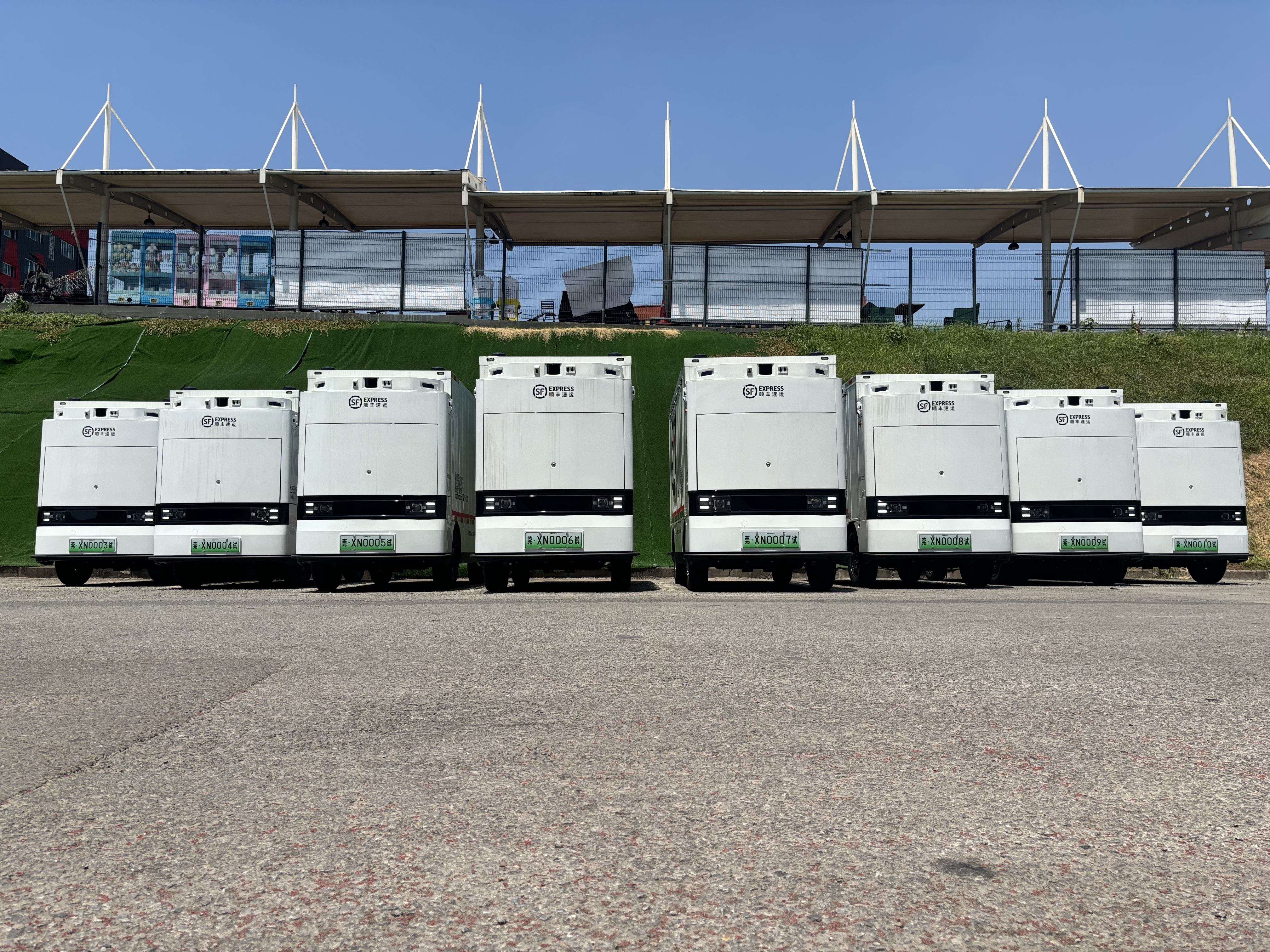
White Rhino autonomous vehicle
"In every round of financing, we insist on introducing shareholders that match the company's development stage," Yu Yang, CFO of White Rhino, told 36Kr. A major feature of this round of financing is the construction of a composite capital structure of "industry + government + finance". Capital with diversified backgrounds brings not only funds themselves, but also an ecological resource network: capital not only supplies blood to the company, but also brings multiple levers of scenarios, road access rights, financial services and global expansion.
Leading investor GLP Hidden Hill Capital is one of the most industry-focused players in China's logistics and supply chain equity investment that best understands assets and scenarios, and has injected capital into White Rhino twice in a row this year.
GLP's global industrial resources not only provide White Rhino with stable business orders, but also open up channels for its global expansion; the simultaneous capital injection from Woori Financial Group of South Korea also indirectly confirms the progress of White Rhino's overseas business.
In addition, local capitals including Xiangtan State-owned Capital, Shenzhen Heavy Investment and Hunan Caixin have participated in this round of financing. Yu Yang pointed out that local state-owned capital is not only related to road access rights and policies, but also can provide systematic support for the large-scale implementation of autonomous vehicles in terms of industrial fund linkage, state-owned resource introduction and diversified financial services. Different investors are gradually building up White Rhino's ecosystem.
In Yu Yang's view, financing is only a means: White Rhino's goal is to take the identity of an autonomous driving technology provider, inject L4 capabilities into all links of the logistics industry chain, and cooperate with scenario parties, manufacturing partners and operation service providers to jointly build an autonomous delivery ecosystem. "It can be said that we are accelerating on the way to building the ecosystem."
The effectiveness of the ecological layout has also begun to show. In April 2026, White Rhino launched RX, the industry's first vehicle-grade autonomous vehicle, which was defined and forward-developed by White Rhino, and implemented in coordination with scenario parties and manufacturing partners.
This vehicle model took 18 months to develop, passed rigorous environment tests such as high temperature and extreme cold, and more than 200,000 kilometers of reliability verification, with a designed service life of 8 years and 300,000 kilometers, meeting the standards of traditional light trucks for urban distribution. This product enables the industry to have an autonomous delivery model that is forward-developed according to vehicle grade standards and can be delivered on a large scale for the first time.
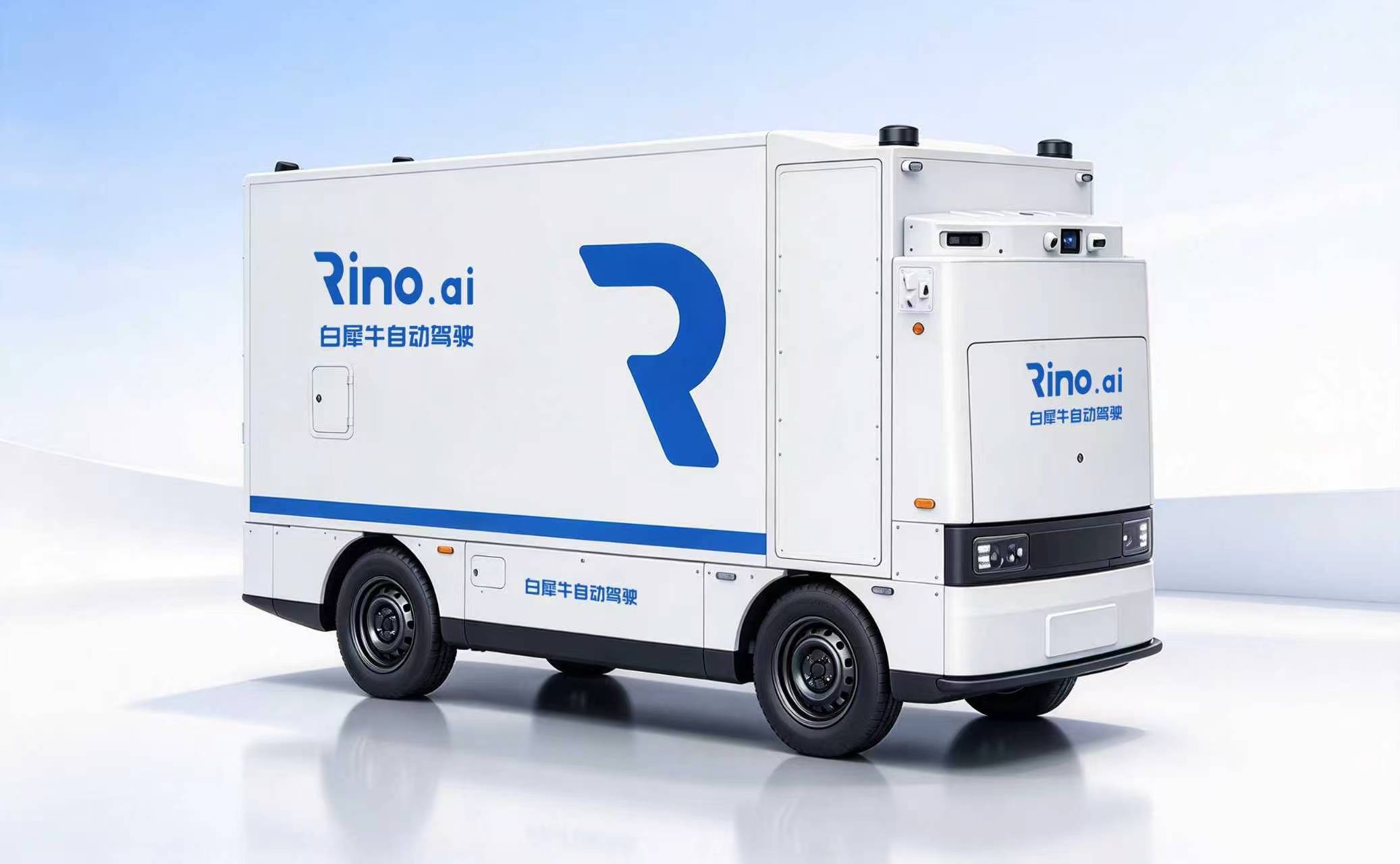
White Rhino Double-cage Dumper
In addition, White Rhino added a new large-capacity light truck autonomous vehicle R24 with a cargo box of 24m³ in 2026. At present, R24 has started delivery and carried out public road tests in some cities simultaneously. Yu Yang told 36Kr that R24 fills the market gap of large-item transfer in parks, warehouse-to-store allocation, and short-distance large-capacity urban distribution, and together with the RX model, forms a product portfolio covering all kinds of urban distribution and freight demands.
At the business model level, White Rhino also launched the FaaS (Fleet as a Service) model this year, extending from L4 technology output to capacity services, and cooperated with leading partners such as SF Express and Huolala to build a cloud dispatching system, realizing the dynamic dispatching of vehicles between different scenarios and different customers.
Yu Yang said that the logistics industry itself has the characteristics of uneven busy and idle capacity. White Rhino's capacity service can realize the dynamic scheduling of vehicles between different scenarios and different customers. "For example, during the low period of express delivery business, vehicles can be switched to the urban freight scenario, which can improve the asset utilization rate of a single vehicle."
In 2026, the autonomous delivery industry has entered the climbing period of "vehicle-grade and large-scale commercial application" from "pilot demonstration": products began to be forward-developed according to automotive standards, scenarios expanded from the end of express delivery to warehouse-to-store and urban freight, and the business model also shifted from selling vehicles to selling capacity.
However, the industry has not yet reached the stage of easy profitability. There are still problems such as city-specific policies for road access rights and vehicle identities, which are difficult to replicate across regions. The safety of long-tail scenarios on public roads such as rain, snow, night, and mixed traffic of people and vehicles still needs to be optimized.
For White Rhino, the subsequent competition is not only about the number of vehicles put into operation, but also about who can take the lead in opening up the complete ecological closed loop of technology, products, road access rights and operation services. After completing this largest single financing, White Rhino's ecological layout and global expansion narrative are entering a new stage.