Frontline | Building a "Space 4S Store", Future Aerospace Xiong'an Intelligent Manufacturing Base is Put into Use, "Fengxing-1" Embarks on Its Maiden Flight
On September 29, Future Aerospace Xiongan Intelligent Manufacturing Base was officially put into operation in the Pilot Test Base of the Science and Innovation Center of Xiongan New Area. At the ceremony site, Fengxing-1 (FX-1), the first space vehicle developed by Future Aerospace, rolled out of the final assembly workshop and entered the pre-first-flight engineering node, and will carry out on-orbit technical verification as planned afterwards.
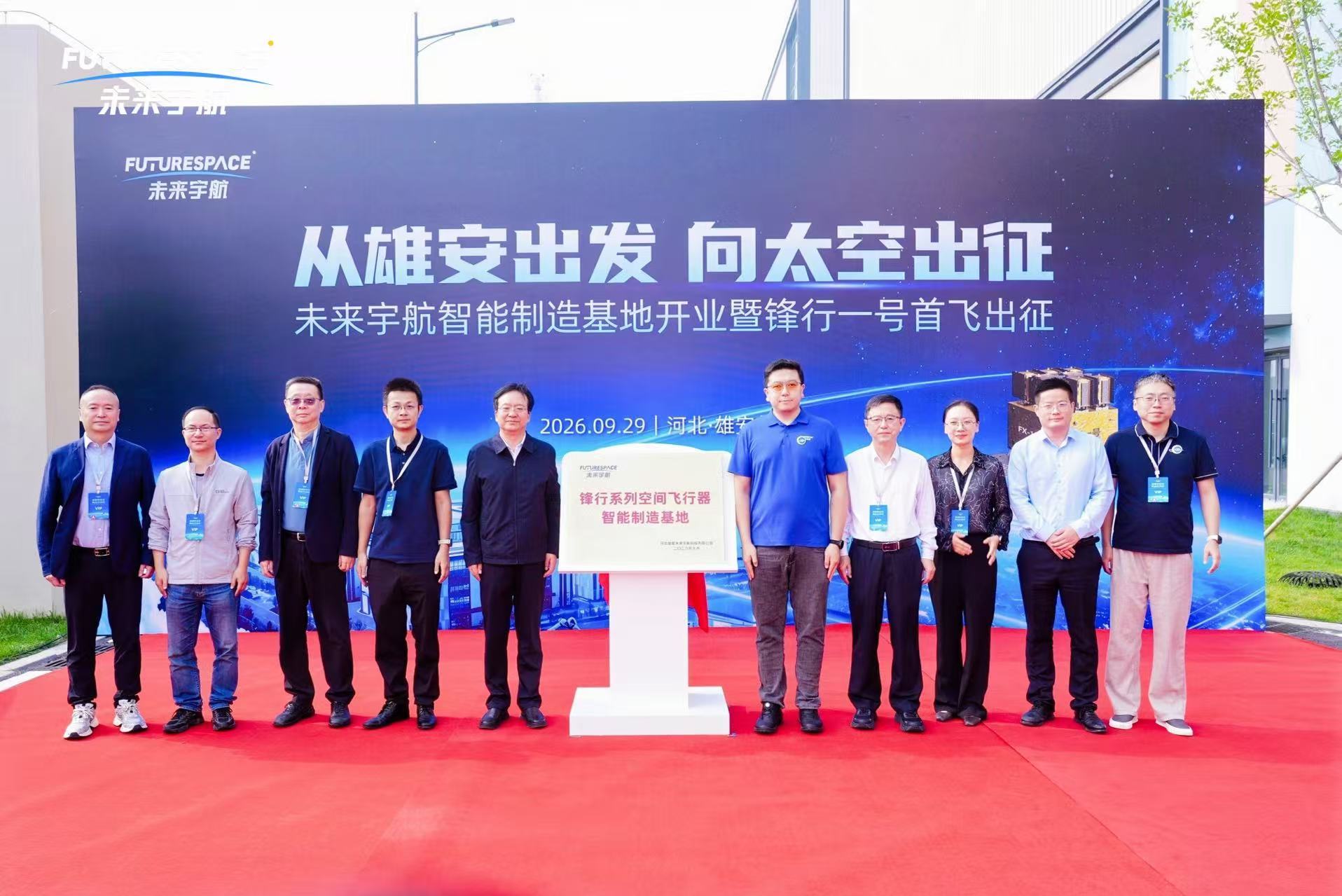
Unveiling Ceremony of the Intelligent Manufacturing Base
Niu Min, Founder and CEO of Future Aerospace, said on site that, The industrialization of space vehicles not only requires the completion of product R&D, but also the establishment of manufacturing and testing capabilities matching the large-scale delivery of products. Taking the Xiongan Base as an important fulcrum, Future Aerospace will implement engineering capabilities into the engineering manufacturing links, accumulate experience in actual missions, further improve product maturity, and promote the formation of a more complete engineering chain between R&D, manufacturing and mission execution.
In recent years, Xiongan has continued to lay out future industries such as aerospace information and satellite internet. Up to now, it has gathered 69 aerospace information enterprises and 9 innovation platforms, relying on application scenarios and supporting guarantees to promote the extension of the industrial chain to R&D, manufacturing, testing and application links.
It is reported that the intelligent manufacturing base settled in Xiongan this time, in response to the engineering manufacturing requirements of space vehicles, has built a manufacturing and testing system covering final assembly integration, precision measurement, performance testing, environmental testing and digital production management, equipped with automatic final assembly, intelligent transfer and other equipment, and is planned to achieve an annual production capacity of about 60 units.
Relying on the manufacturing base and the supporting industrial services of Xiongan public testing platform, Future Aerospace will further open up the engineering process from product final assembly, system integration to testing and verification, and promote the transformation of R&D achievements to stable manufacturing and mass production delivery.
Over the past decade, the narrative of China's commercial aerospace has revolved around "building satellites" and "launching satellites". However, when constellation networking enters the large-scale stage, thousands of satellites are scattered in different orbital planes and orbital altitudes, and the precise delivery of the "last mile" is becoming a new segmented link in the industrial chain.
The equipment undertaking this link of tasks is called Orbital Transfer Vehicle (OTV), also known as "space ferry" — the rocket acts like a shuttle bus, sending all satellites to the initial station, while the vehicle undertakes the subsequent orbital transportation, so that the satellites can reach the target position from the initial orbit.
In the past, most of such orbit climbing tasks were completed by the satellite's own propulsion system, which would consume satellite propellant and reduce the on-orbit service life. However, when the constellation scale reaches the level of tens of thousands of satellites, the contradiction between networking efficiency and cost structure of this method has become increasingly prominent, and the demand for space vehicles that can perform orbit climbing and orbit transfer tasks has emerged accordingly. Fengxing-1 is developed and built based on this demand.
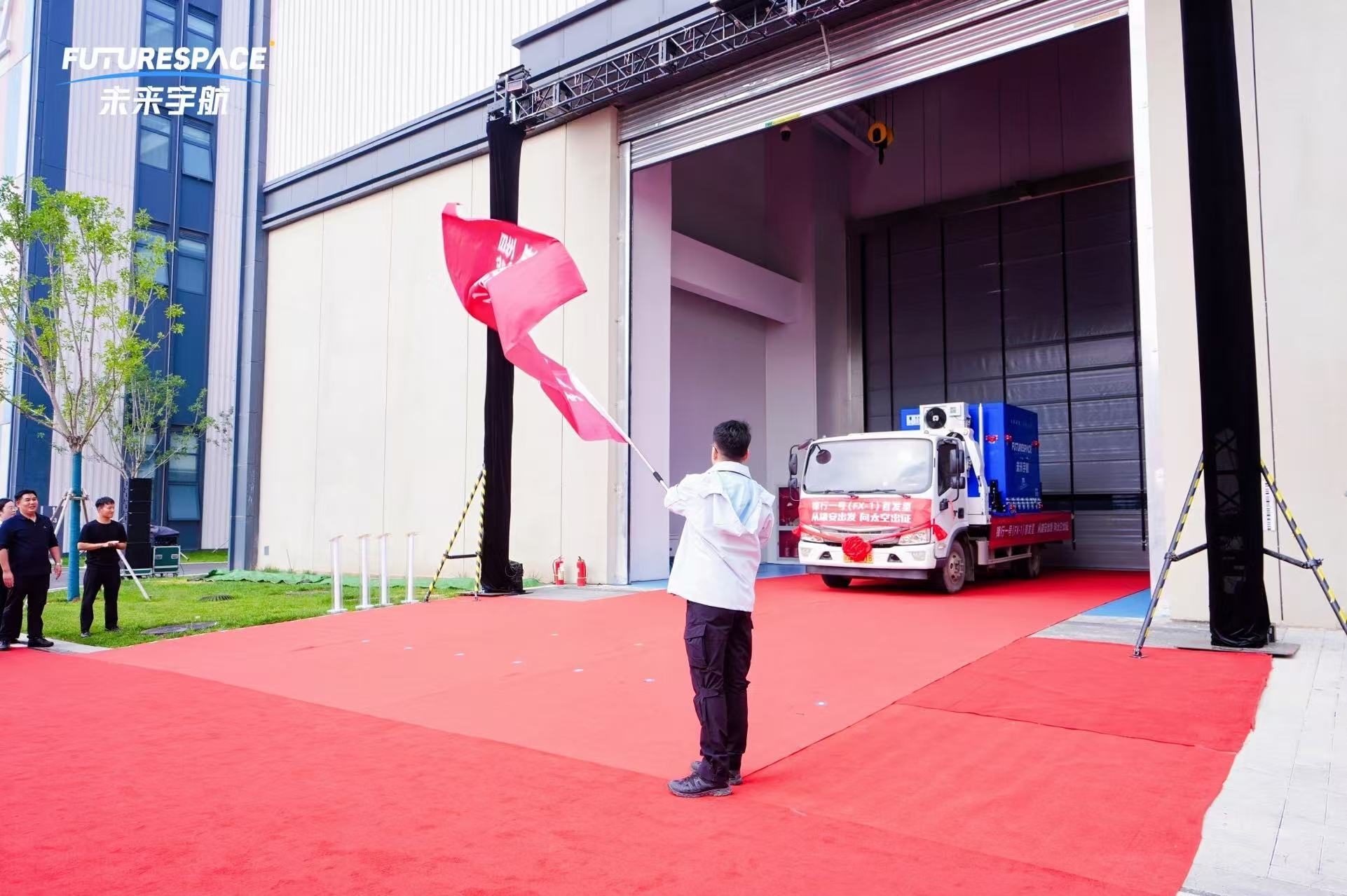
Fengxing-1 (FX-1) Rolling Out of the Final Assembly Workshop
In accordance with the established plan, Fengxing-1 will make its first flight within this year and carry out on-orbit technical verification. According to the project leader, after entering orbit, Fengxing-1 will carry out multi-orbit transfer missions to verify the working stability of the vehicle at different orbital altitudes, as well as the reliability of avoiding space debris and other spacecraft during orbit transfer; the star sensor carried by the vehicle will also collect space debris observation data to lay a foundation for subsequent missions.
In terms of application scenarios, space vehicles are currently mainly used for satellite deployment missions, and will be gradually expanded to complex scenarios such as on-orbit maintenance and debris removal in the future. For the future, based on the Fengxing series, Future Aerospace has put forward the concept of "Space 4S Store", building one-stop on-orbit delivery engineering capabilities, and providing full-chain services for satellite companies, scientific research institutions and commercial users, ranging from platform development, payload integration, orbit deployment to on-orbit operation and data application.