ByteDance Ecosystem's AI Education Layout: "Tools" Exit the Stage, "Classrooms" Evolve
Doubao focuses on the domestic market, while Gauth targets the overseas market.
In 2026, ByteDance has rolled out far more frequent moves in the AI education sector than ever before:
In January, the Doubao App with over 100 million daily active users pushed "Doubao Learning" into its core bottom navigation entry, upgrading its AI teacher function from "explaining one problem well" to "explaining one knowledge point thoroughly";
In May, Doubao Learning launched the "Doubao Classroom" feature, turning ancient Chinese poems and texts into AI interactive video courses;
In July, the overseas education application Gauth released AI Course, with cinematic history courses launched on the same day as the Seedance 2.5 video model;
In September, Gauth announced the full launch of AI courses, adding more than 200 new math courses at once, and opening the user-created course function. In the same period, Doubao Learning received another major version upgrade, launching the "Synchronous Course" feature that connects explanation, follow-up questioning, practice and review into a complete closed loop...
And most recently, Doubao Learning launched a series of outdoor advertisements, bringing the core message of "Don't let your child's questions go unanswered" to users around them.

Despite different product lines and different markets, their development directions are consistent: the capability boundary of ByteDance's AI education products is being redrawn. What it aims to participate in is no longer just a specific question-answering session, but the entire learning closed loop for students from preview to review.
And it is getting closer and closer to actual user demands.
01 From 8 History Courses to 200 Math Courses
For AI education products, question answering is one of the scenarios that is relatively easy to get started with. The logic of photo recognition, step-by-step solution and knowledge point explanation has been repeatedly verified by the market. With the enhancement of model capabilities, whether AI can further take on the task of course explanation has become a new exploration direction.
Gauth, under ByteDance, has taken particularly prominent actions this year.
In August 2026, Gauth announced the launch of the AI Course function. The first batch of launched courses focused on history, producing themes such as the Pacific War, the two World Wars, the Meiji Restoration, and the Industrial Revolution into AI video courses.
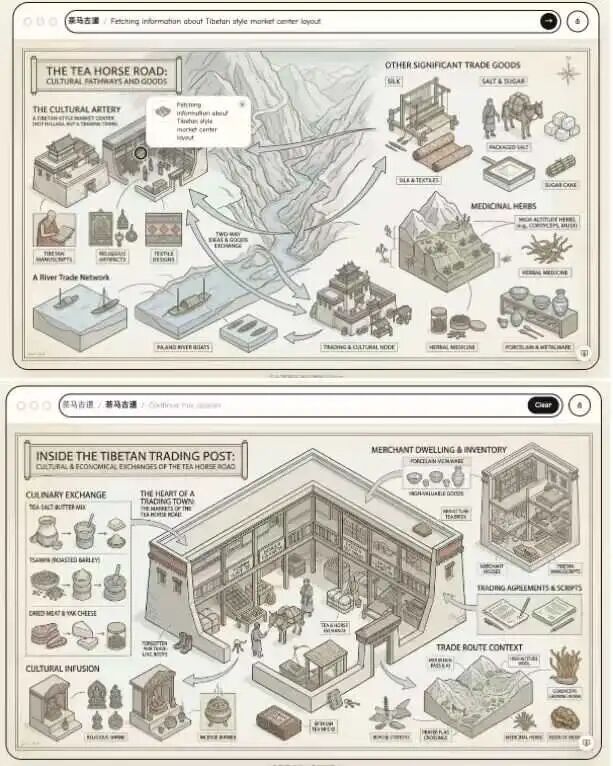
Different from the "answer machine next to the problem", these courses try to organize a knowledge theme into a relatively complete learning process: in addition to videos, they are equipped with mind maps, knowledge frameworks, interactive quizzes and AI Tutor. Students can pause the video at any time and ask the AI Tutor questions directly.
At that time, some industry practitioners analyzed that "Gauth launched the product one week before the school semester starts. With a user base of 86 million and the traffic dividend of the back-to-school season, the data of AI courses in the first week will directly determine ByteDance's investment in this product line."
On September 1, AI Course was fully launched. In addition to the first batch of cinematically produced history courses, more than 200 new math courses were added, covering American high school math content such as Algebra 1, Algebra 2, Geometry and even AP Calculus.
For this update, the Gauth team revealed that globally, mathematics is the subject with the highest demand, and among mathematics, the demand for algebra learning is very high.
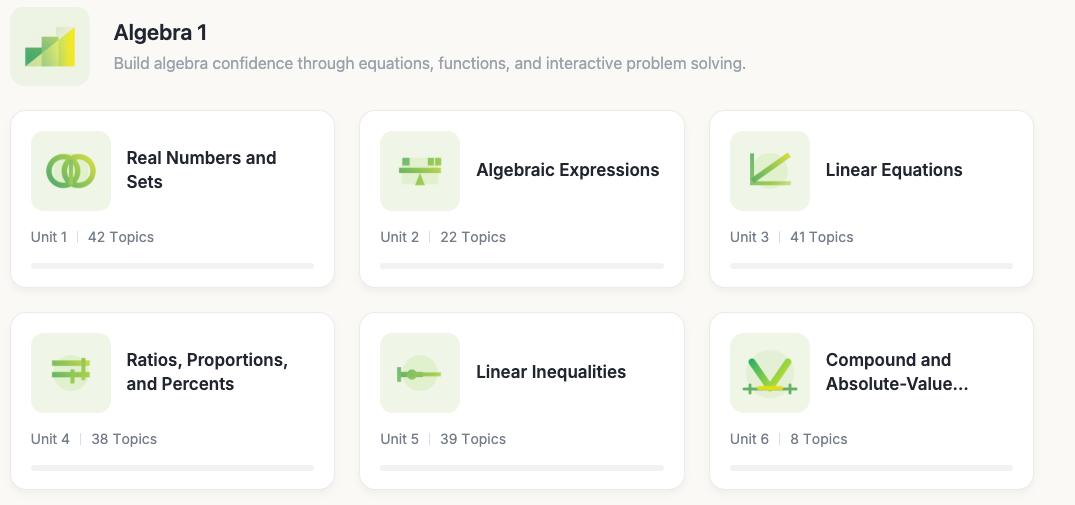
Experience shows that the new AI math courses are organized at three levels: discipline, unit and topic, and each unit displays learning content and objectives.
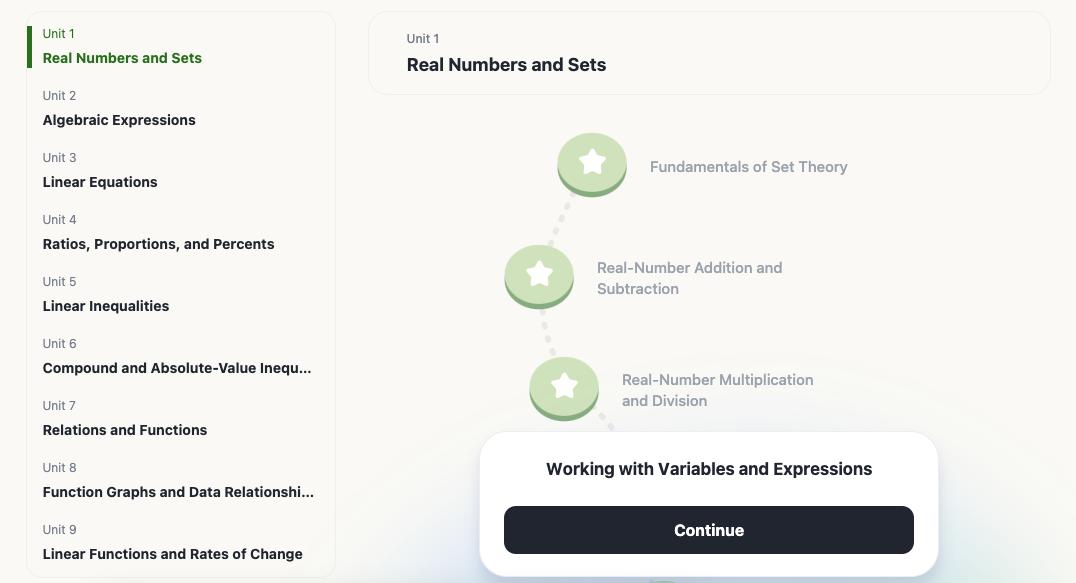
The course page integrates learning progress, explanation content, synchronized text and AI tutoring entrance on the same interface.
Different from history courses that focus on contextualized narration, math courses visualize abstract concepts through visual images, examples, metaphors and mind maps.
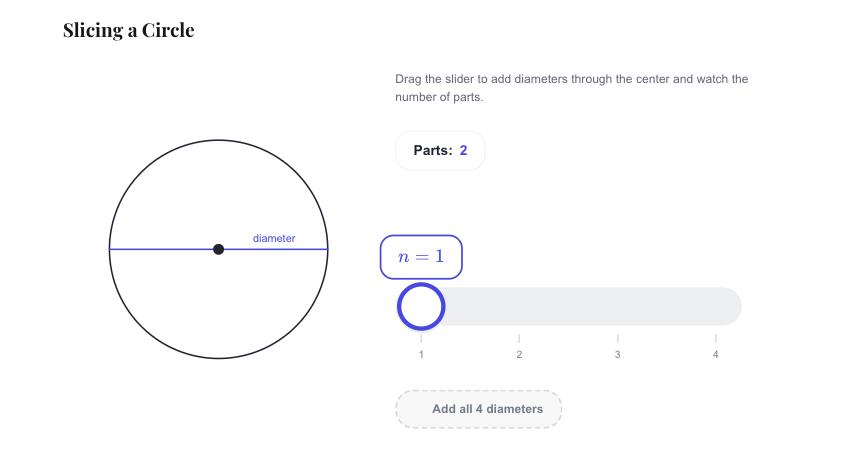
It is worth noting that Gauth does not only provide students with a fixed set of course libraries.
At present, students can input the theme they want to learn, their current level and the direction they focus on, and the system will generate an interactive course including AI explanation, videos, quizzes and AI tutoring, which can also be shared with others after completion...
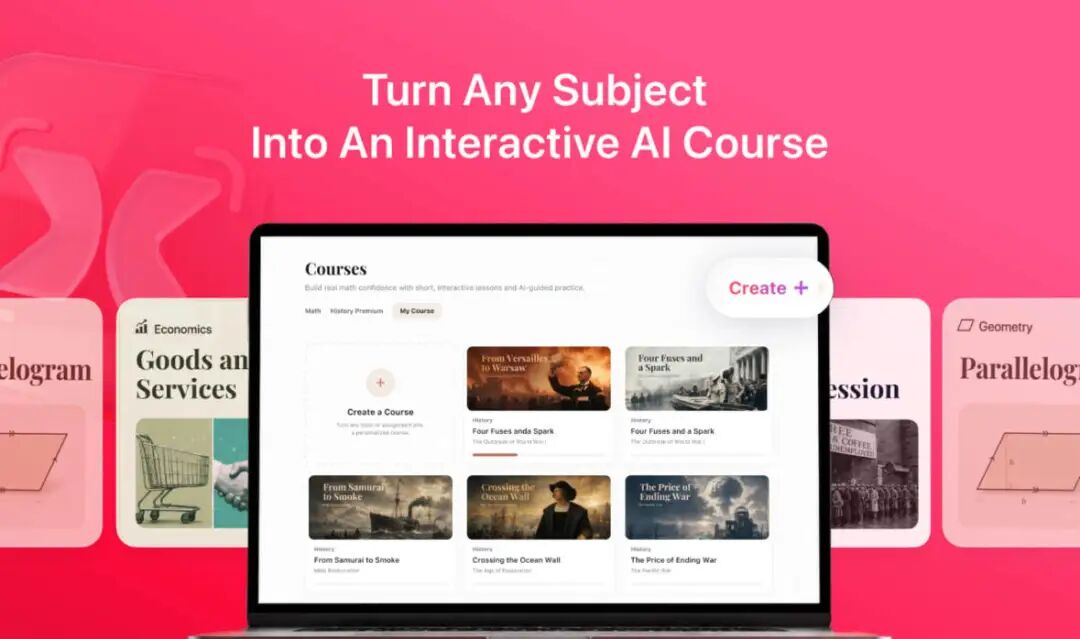
Gauth is trying two paths at the same time: platform-generated courses, and courses generated instantly around the specific confusion of specific students.
The production logic of traditional courses is to first find a large enough user group, and then produce content around common needs. AI courses provide another possibility — courses do not have to serve a large group, but can also be provided instantly and dynamically around a specific student and a specific knowledge point.
Of course, this does not mean that AI-generated courses can replace traditional courses. Content accuracy, instructional design and actual learning effects still need to be verified.
According to official data, since its launch in 2020, Gauth has been downloaded more than 200 million times, among which mathematics is the most frequently consulted subject by global users, accounting for 40.52% of the consultation volume of American students and 42.71% globally. In the mathematics subject, algebra accounts for 64.3% of the consultation volume in the United States and 62.8% globally.
02 Moving Forward, and Retreating Backward
If AI courses solve the problem of "how to organize knowledge", then another change is that AI has begun to enter more learning links.
In the past, the use of AI learning products often started with a specific problem and ended when the problem was solved: take a photo of a problem, the AI gives the answer and analysis, and one interaction is completed.
But when AI has courses, knowledge bases and continuous dialogue capabilities, products begin to extend before and after the problem occurs: pre-class preview, knowledge learning, and after-class review may all become scenarios where AI intervenes.
The actions of Doubao Learning this year have precisely reflected this change.

Doubao Learning already had the capabilities of photo-based question answering, homework correction, error question sorting, essay tutoring, and knowledge Q&A before.
The Doubao Classroom launched at the end of May combines ancient Chinese poems and texts with ByteDance's Seedance video model, launching an immersive video course of "AI scenario short film + intensive explanation of knowledge points" — the first batch covers classic texts in primary and secondary schools such as "Leaving Baidi City at Dawn", "The Seven Steps Poem", "Prelude to Water Melody", and "The Chu Shi Biao", and supports interruption and questioning at any time throughout the process.
Entering September, Doubao Learning has further completed a major upgrade.
On September 17, Doubao Learning officially announced four new moves: brand new AI Q&A, AI teacher, Doubao Classroom, and Doubao Synchronous Course.
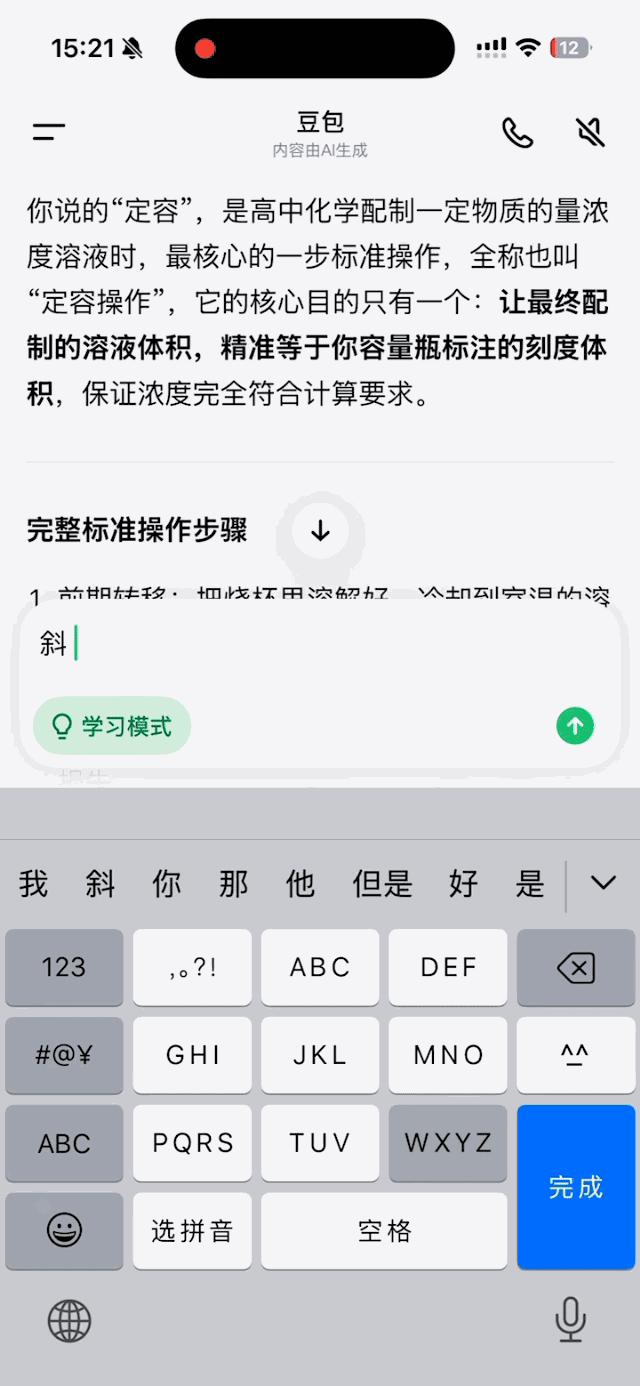
Take the brand new AI Q&A as an example. Doubao has designed more than 2000 special capabilities for learning scenarios, which is officially called "Exclusive Learning Skills".
Exclusive Learning Skills are based on children's real learning behaviors, and can be naturally invoked in links such as new lesson preview, knowledge point explanation, after-class practice, Chinese character stroke order, and word dictation.
For example, when a child asks "Help me quickly review the Pythagorean theorem", Doubao will continue the conversation: a set of knowledge flashcards to review the formula and key points in one minute; an after-class exercise to confirm which part has not been truly mastered through several questions; if necessary, it can also generate an interactive courseware to re-explain this knowledge point...
Another example is Doubao Synchronous Course. According to the official WeChat account post of Doubao Learning, the synchronous course matches the learning progress and knowledge points of the school by grade, follows the chapters of the textbook, and mainly serves pre-class preview and after-class review.
The feedback from the market is direct.
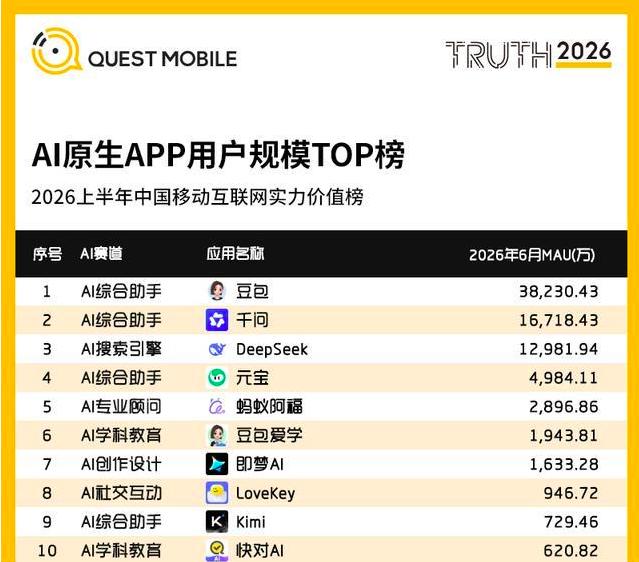
According to the statistical data of QuestMobile, as of June 2026, the monthly active users (MAU) of the independent "Doubao Learning" App has reached 19.4381 million, ranking sixth in the domestic AI native application list in the first half of 2026.
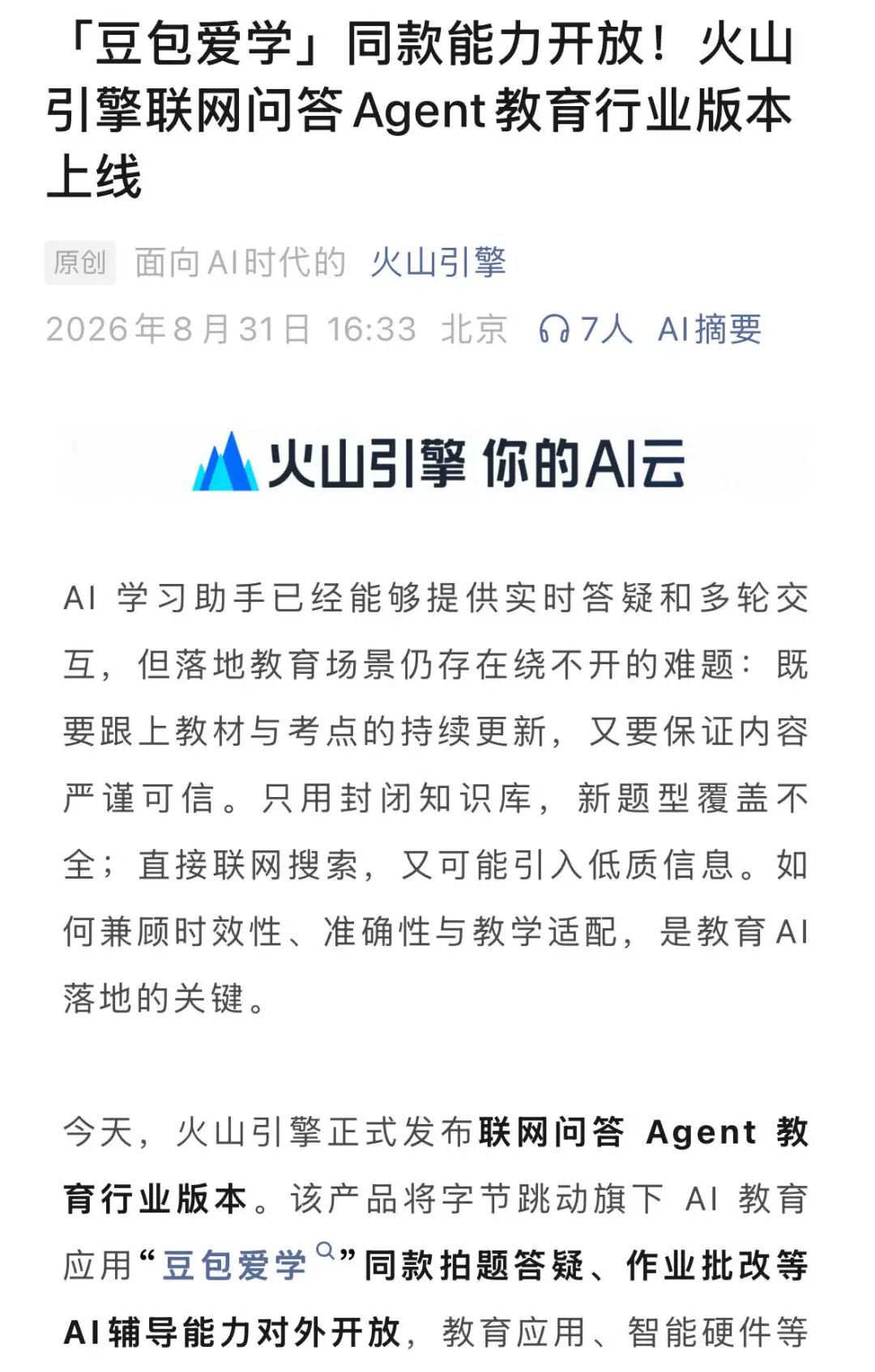
The same capabilities of Doubao Learning, such as photo-based question answering and homework correction, have also been opened to education industry customers through Volcano Engine in August this year — ByteDance's AI education capabilities are extending from C-end products to B-end services.
At this point, Doubao Learning has formed a more complete learning scenario: if you can't do the problem, you can ask; after finishing the homework, you can correct it; if there are wrong questions, you can sort them out; if you want to preview and review, you can enter the synchronous course; when you encounter knowledge points, you can continue to ask the AI questions.
One observation that needs to be retained is: putting more learning links into one product does not mean that a learning closed loop is truly formed.
Functions can be integrated, but whether students truly understand, can practice independently, and whether AI can accurately judge where students are confused still requires actual use and data verification.

The competition for AI education products in the next stage may not only be about more functions, but about whether it can truly understand the learning state of students.
03 When Knowledge is Dynamically Expressed
In addition to courses and learning processes, generative AI is changing the presentation of educational content.
In the past, the content of AI education products was mainly text, pictures and dialogues. However, a large amount of knowledge in history, literature and science has strong situational nature — characters, scenes, processes and spatial relationships cannot be intuitively explained by a single text.
ByteDance chose to start with video generation, which it is best at.
The Doubao Classroom at the end of May is the landing scenario in China: AI short films restore historical situations, and then AI teachers analyze them sentence by sentence.
Two months later, the capability base was upgraded — Seedance 2.5 released on July 31 increased the single video generation duration to 30 seconds and supported multi-round extension, enhancing the capabilities of long narrative, multi-modal reference and precise editing. It was launched on Doubao, Jimeng and other products on the same day.
For education scenarios, this means that the technical space for AI to generate teaching videos has been further expanded.
An interesting intersection has emerged between the two education products in China and overseas: Doubao Learning uses AI videos to explain ancient Chinese poems and texts, and Gauth uses AI videos to explain history and mathematics — the course systems are different, but the changes brought by technology are the same: knowledge content has the possibility of dynamic expression.
This intersection has a more dramatic annotation in August: 72-year-old actor Tang Guoqiang incarnated as Zhuge Liang in the form of an AI digital human, and launched the movie-level "The Chu Shi Biao" AI course on Doubao Learning.
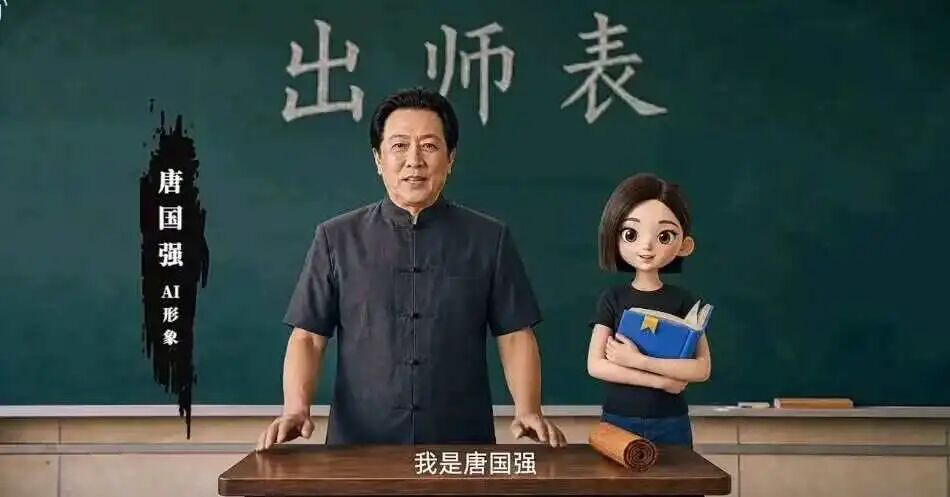
The course was generated by Seedance 2.5 based on thousands of minutes of its film and television materials, and the reading volume of related topics on Weibo exceeded 200 million. The combination of star IP and video model pushed "AI classroom" from the functional level to the communication level.