Robots stepping into our homes? Their price cannot exceed that of a refrigerator.
In the autumn of 2026, the robotics industry reached its peak of both widespread hype and stark reality gap at the same time.
The hype is backed by concrete figures: according to the Ministry of Industry and Information Technology, by the end of July, China's annual output of humanoid robots is expected to surge from around 20,000 units in 2025 to 100,000 units, with more than 40,000 units already delivered in the first half of this year alone. 1X's home robot NEO received 10,000 orders in five days last October, originally scheduled for delivery this year, but its delivery timeline has now been pushed to the first quarter of 2027. At BMW's Spartanburg plant, the previous generation of Figure robots completed 11 months of pilot operations and handled over 90,000 parts, while Figure 03 was deployed at the same plant in June this year.
The cold hard facts lie in the details: Elon Musk admitted earlier this year that no Optimus unit is currently performing any useful work. NEO's product page offers vague descriptions of its "expert mode", and rumors online say that when it encounters an unfamiliar household chore, a 1X employee will remotely take over the robot, and may accidentally see the user's living room in the process.
Between the era of demonstration and the era of real home deployment, what separates them is not time, but a completely different set of operational logics and cost calculations.
Factory deployment has been normalized, while home scenarios are still stuck on exhibition booths
The criteria for judging whether a robot has achieved real landing have changed.
It is no longer about how stunning the demonstration videos are, but about the continuous operation duration, calculable economic returns, and replicable cycles. By this standard, some players have already submitted qualified answers for factory scenarios. On Siemens' SMT production line in Nanjing, robots from Galaxy Universal handle 23-kilogram material bins at a 120-second beat rate, with a stable success rate of over 94%. Figure 03 runs for about 16 hours per unit per day at BMW's production sites. However, all these figures are based on a major premise: the environment has been pre-conditioned and standardized. In factories, the size of material bins, operation beats, and workstations are all fixed, and robots only need to perform repetitive movements with high accuracy.
Home scenarios are the exact opposite.
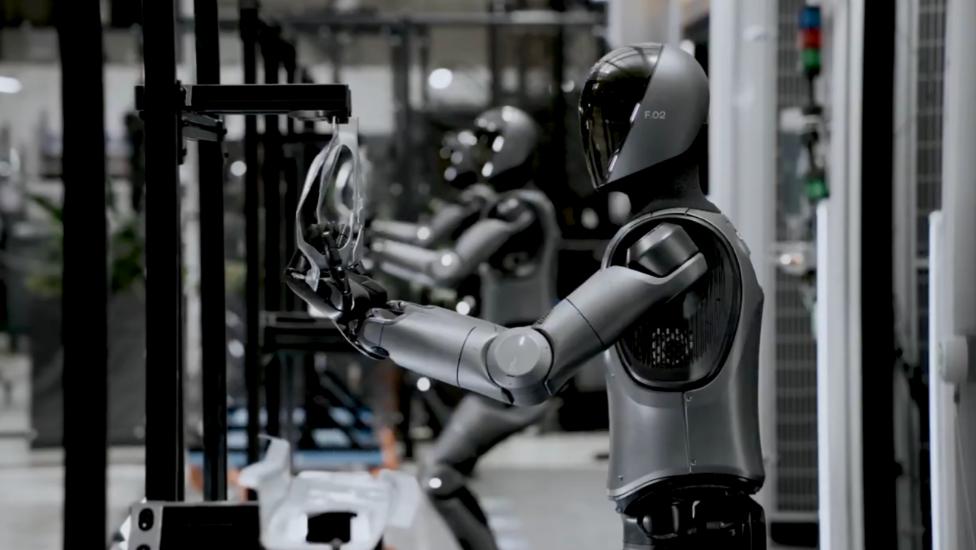
(Image source: Figure 03)
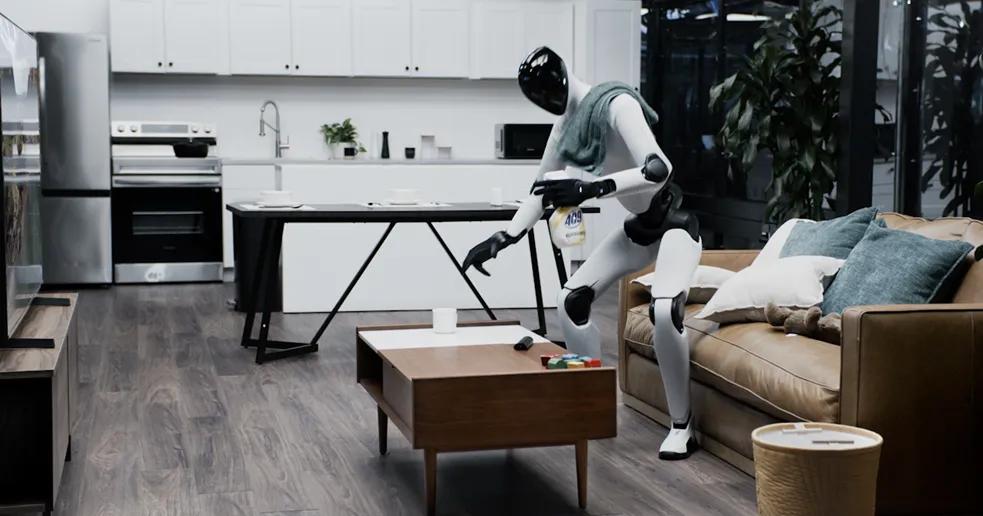
Wang Qian, founder of robotics firm Zili Yanzili, described an ordinary morning like this: slippers are kicked somewhere unknown, dishes in the kitchen are unwashed, the child's schoolbag is thrown on the floor, and the cat knocks over a glass of water. This means no two households, and no two days of life scenarios in any single home, are completely identical. The 2026 World Humanoid Robot Games launched the home scenario competition for the first time this August, but the performance of the participating robots was far from satisfactory. Some robots scratched the shells of wardrobes and washing machines, while others pulled off door handles.
In their demonstration videos, they perform far more delicately than that.
Home is the scenario closest to the definition of "general-purpose", yet also the examination room farthest from achieving true "general-purpose". For this reason, whoever first enables robots to operate normally in real households will hold the data entry point for general-purpose robots.
Ngoro, the new firm founded by Shen Yanan, co-founder of Li Auto, plans to deploy the first batch of 2,000 robots to real households in 2027. 1X is turning every NEO unit into a distributed data collection node, all pinning their hopes on the realization of home scenario deployment.
Four barriers, none of which can be crossed by demonstration videos alone
Breaking down the challenges, there are four core barriers standing in the way.
The first is the "unbalanced" intelligence
Although robots can already outperform humans in half marathons, Mao Shijie, Vice President of Lenovo Group, commented that these stunning performances mostly stay at the "cerebellum" level, and there are still many unresolved problems at the "cerebrum" level. Zhao Pu, founder of Hesisi Thinking, cited two examples: a human child who has sat on three stools will understand that stools are for sitting, while a robot only recognizes the specific stool it was trained on. If a robot is only trained to open parcels with a paper cutter, it will never realize that keys and nail clippers can also cut adhesive tape, as it does not understand the common sense that "a hard object is needed to cut adhesive tape". The dexterous hand is another major bottleneck: to fit motors, reducers and sensors in a space roughly the size of a human hand, while taking into account cost, performance and reliability, Fang Hainan from In-Time Robotics calls it an "impossible triangle". Elon Musk also admitted that dexterous hands and forearms account for about half of the engineering difficulty of the entire humanoid robot.
The second is the data desert
Nie Kaixuan, CEO of Songying Technology, estimated that training a physical AI model adapted to home scenarios requires trillions of levels of data, which would take more than 100 years to collect at the current speed. The contradictions are threefold: first, households are extremely private, making data collection very difficult; second, all industries regard data as core assets and do not share it with each other; third, simulation data has a noticeable gap with real data in terms of flexible objects and force control interactions. The quality of data is also worth noting. Li Xiang, who is in charge of model training at Ngoro, said that current ego data, simulation data and teleoperation data all share a common flaw: "there are only successful cases, no failure cases", while reinforcement learning precisely needs failure data to iterate. Looking back at NEO's expert mode, its essence is to use remote manual operation to obtain real data: every time the robot is taken over, it generates a valid training sample.
Users pay for the product, and incidentally help manufacturers complete data collection.
The third is the economic calculation
Jiang Lei, Chief Scientist of the National Joint Humanoid Robot Innovation Center, revealed that the current cost of a humanoid robot is around 100,000 RMB, of which the computing power solution alone accounts for 20,000 to 30,000 RMB; NEO's selling price is 20,000 USD. A survey of more than 1,000 American consumers conducted by consulting firm Altman Solon shows that 69% of respondents are unwilling to pay more than 5,000 USD for a home robot, and 25% will not buy one at any price. The value anchor on the demand side is even stricter: 54% of people expect robots to save a maximum of 6 hours per week, and 61% are willing to pay up to 14 USD for each hour saved. Calculated on an annual basis, that adds up to exactly around 5,000 USD.
In other words, at the point where the value calculation barely breaks even, the actual selling price is still four times higher.
The fourth is safety and trust
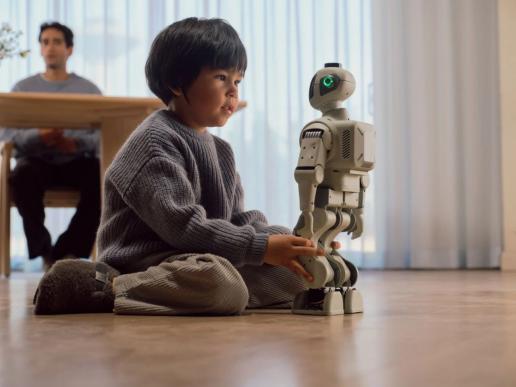
When a metal body weighing dozens of kilograms lives with the elderly and children day and night, physical collision avoidance is only the bottom line; the robot is also equipped with cameras and microphones to collect household data 24 hours a day. Surveys show that about half of the respondents feel uneasy about the presence of humanoid robots in their homes, and their main concerns are physical danger and being spied on, rather than abstract ethical issues. A survey of 4,890 people by Chiba University in Japan better illustrates the stratification of trust: 80% of people are willing to hand over their health data to medical institutions, while only 40% to 50% are willing to give such data to robot companies.
(Image source: M1)
In other words, people are not rejecting robots, but rejecting robots that have not yet proven to be trustworthy.
Some people will get to use robots in 2027, which does not mean everyone can afford them
As for when this problem will be solved, the answers from industry insiders are converging.
Experts interviewed by *Outlook* magazine generally divide the development path into three stages: first, large-scale deployment in industrial and commercial scenarios, then entering a small number of well-off households to complete simple household chores, and finally entering thousands of households with the breakthrough of general intelligence and the decline of costs.
Cheng Xin, a global partner at Bain, measured the development from four dimensions: input-output ratio, competition intensity, demand urgency, and social acceptance, and concluded that the home scenario does not have advantages in any of these dimensions at present. Shen Yanan from Ngoro gave a timeline that it will take another three to five years for the technology to mature.
According to forecasts, 2027 will be the first year of intensive delivery. The first batch of 2,000 units from Ngoro, the mass delivery of NEO, and Tesla's home robot plan all point to around this year. But between "some people can use it" and "everyone can afford it", there lies a huge gap that needs to be filled by the cost reduction curve and data flywheel.
It will take five years in the broadest sense, and ten years in the narrow sense.
Its popularization path is similar to that of electric vehicles, but the difference is that cars only need to learn to drive, while robots need to learn to live.
(Image source: Figure)
The public wants robots, but is only willing to pay the price of a refrigerator for them
The public's acceptance is far more pragmatic than the industry's narrative.
In the same survey, 65% of people are interested in owning a home robot, and 85% consider themselves to have only below-average understanding of robots, meaning that most of this interest is built on imagination. The comfort level is almost evenly split: people prefer soft, low-profile forms, while the tall, tough Optimus-style design has polarized reviews. Families with children do not show more anxiety towards robots. Intergenerational differences are real: in Japanese surveys, people under 65 are the most open to new technologies, while in European and American surveys, young people are also the most willing to pay a premium for data transparency.
Acceptance is not a wall, but a demand curve that shifts with price and performance.
Its inflection point does not depend on how stunning the product launch event is, but on whether the robot can really reduce the burden of household work for a family. When users have high-frequency demands, the product performance exceeds certain expectations, and the price is within an acceptable range, the inflection point will arrive.
Counting from the birth of the word "robot" in 1921, it has taken a hundred years for robots to move towards households, and the path to home deployment has always been very narrow.
In most Chinese households, the minimum passage distance between the wardrobe and the bed is 60 centimeters.
Perhaps the most difficult problem is not on the technology roadmap. On the other side of this narrow gate, what is needed is not a robot that is better at putting on performances, but a robot that has been verified for thousands of days and nights, and is trustworthy enough for users to hand over their house keys to.
We will wait and see how the most popular robots perform at this narrowest threshold of home deployment.
This article is from the WeChat Official Account "Shi Tianhao Observation" (ID: shitianhao01), written by Chen Cong, and republished with authorization from 36Kr.