The final showdown in the wrist-wearable track: who will be the first to successfully close the loop?
At 7 a.m., the watch on the wrist vibrates once.
I raise my wrist, tap to start the micro health checkup. Sixty seconds later, 20 indicators including heart rate, blood oxygen, blood pressure trend, electrocardiogram, and vascular elasticity are fully measured, generating a summary that is directly synchronized to the health archive in the mobile phone. This scenario was nothing more than a demo at product launches three years ago, but it is now commonplace, and the entire market landscape has fully taken shape this year.
Comprehensive public information from Tianyancha Media and data cited from KPMG's 2026 China Smart Wearable Market Insight Report based on China Industry Research Institute statistics show that the global smart wearable market reached 7.977 billion yuan in 2025, while the Chinese market hit 1.053 billion yuan. At the policy level, the Special Action Plan for Boosting Consumption issued in March 2025 included smart wearables in the "new technology and new product" list, and smart watches and bands are also covered by new purchase subsidies.
IDC data shows that in the first quarter of 2026, the shipment of wrist-worn devices in China reached 18.14 million units, a year-on-year increase of 3.5%, accounting for 38.6% of global shipments, maintaining its position as the world's largest market. The market is large enough and its position is stable enough. There is only one question left: after the market landscape is fully formed, what exactly is the competition in this industry about?
The first half: the pattern has been settled
Let's first look at the two major players at the table.
According to comprehensive public information from Tianyancha Media and IDG statistics, in the Chinese wrist-worn market in the first three quarters of 2025, Huawei shipped 20.8 million units with a 35.5% market share; Xiaomi shipped 15.9 million units with a 27.2% market share. The two together took more than 60% of the total market.
Interestingly, this 60% share was achieved through two completely opposite paths.
Huawei is moving upward toward the medical-grade track. The registered name of its WATCH D series is directly "Wrist Dynamic Blood Pressure Recorder", which has obtained the Class II medical device registration certificate from the National Medical Products Administration, supports 24-hour periodic blood pressure monitoring, and has completed clinical verification in cooperation with Ruijin Hospital, Peking Union Medical College Hospital and 301 Hospital. Its micro health checkup can measure up to 20 health indicators in one minute (caliber from Huawei's official website), which is the signature integrated display of its full set of sensor capabilities. Xiaomi is moving downward toward inclusive popularization: it expands sales in the thousand-yuan price range, its watches function as both car keys and home control hubs, ensures sales volume in the low-end segment, and raises prices in the high-end segment.
The two paths go in opposite directions, but they point to the same end goal: to convert one-time hardware revenue into continuous health data services. Hardware sales end after one transaction, but data brings sustained returns every year. According to public statistics from Tianyancha, the monthly active users of domestic wearable apps are about 150 million — these 150 million users are the real assets that the two companies are competing for, and the wrist is only the entry point.
Apart from the two leading players, new entrants have developed three different development paths, each with its own underlying logic.
The story of Amazfit is a 10-year process of "de-coupling from Xiaomi". In 2015, Xiaomi's products contributed 97.1% of Huami Technology's revenue, and it was basically a contract manufacturer for Xiaomi bands; by the fourth quarter of 2025, the revenue related to the Xiaomi brand had dropped to zero in Huami's financial report, and 100% of its revenue came from its own brand. The accounts are clear: its gross profit margin rose from 26.2% in 2023 to 38.5% in 2024, and remained at a high level of 38.3% in 2025. Its products have entered more than 90 countries, with over 24 million users.
Under the OEM model, users and data are all in the hands of the brand owner, and the profit is determined by others. To regain pricing power, it is necessary to regain user ownership first.
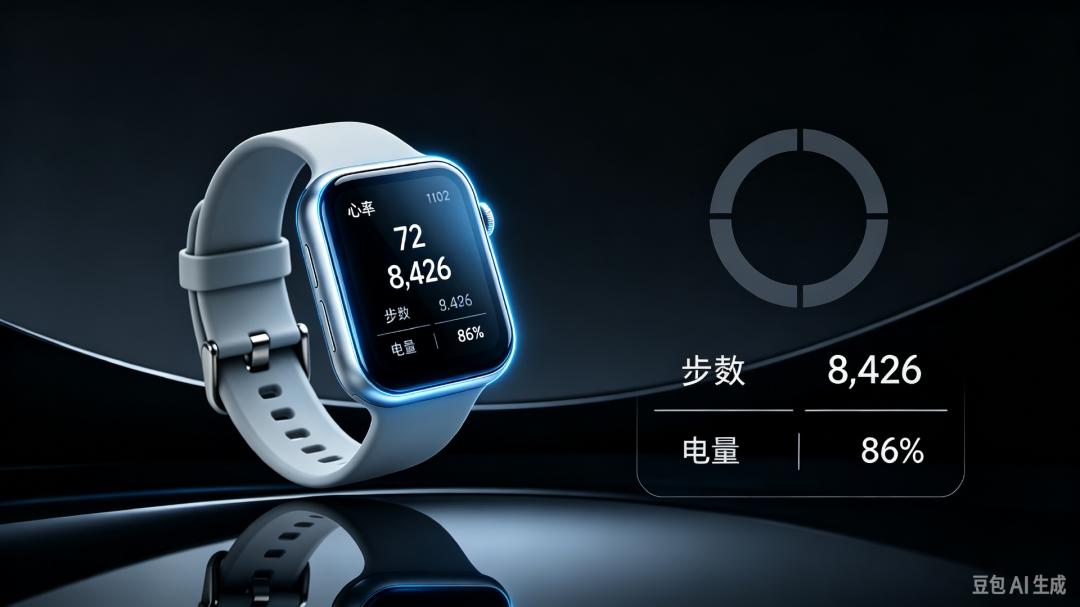
Kumi has chosen another path: selling terminals, and even more selling underlying capabilities.
According to public media reports compiled by Tianyancha, this company founded in 2019 independently develops RISC-V architecture and open-source HarmonyOS, launches 5G-A communication modules, its products have entered the centralized procurement list of operators, and it also exports technical solutions to vendors such as Honor, Transsion, and Lenovo.
What it sells is the threshold for others to enter this industry — when everyone needs wrist-worn devices, making "shovels" is more stable than grabbing "gold mines".
SKG has transformed from massage devices to health management. According to information from Tianyancha and its prospectus, the company's revenue in 2025 was 1.218 billion yuan, a year-on-year increase of 16.5%; in terms of GMV, it holds a 21.6% share in China's smart soothing wearable market and 4.6% globally, ranking first in both markets. Its "Little Guard Watch" has obtained the national Class II medical device certification, and the revenue of its fitness recovery business in the first five months of 2026 increased by 72.3% year-on-year; in August 2026, SKG submitted its listing application to the Hong Kong Stock Exchange again. From massaging necks to monitoring blood pressure, the confidence for this cross-sector transformation comes from obtaining medical device certifications first.
Apple and Samsung are a mirror for the whole industry.
Counterpoint statistics show that in the global smart watch market in the second quarter of 2026, Huawei ranked first with a 22% share, and Apple ranked second with 20.1% — but Apple's shipments increased by 14% year-on-year, the fastest among the top five brands.
Apple's moat lies in its closed ecosystem. When iPhone users switch to a watch of another brand, all data, applications and interconnection experiences need to be migrated again, and this cost is much higher than the price difference of hardware.
Samsung is a counterexample. In the first quarter of 2026, Galaxy Watch shipments fell by 28% year-on-year, and its market share dropped to 5%; it has no lack of single-point innovations. The 3nm processor on its official parameter list, and the first FDA-approved watch for sleep apnea detection, all have strong parameters, but these parameters cannot stop user churn.
Without the support of ecosystem stickiness, innovation is nothing more than parameters displayed at press conferences. The first half is over, and the pattern has been settled. But the pattern only represents the results of the past five years, not the qualification for the next stage of competition.
Three tickets: the threshold for the second half
There are three clear thresholds for the second half of the competition.
The first is medicalization. According to the NMPA official website query by media, there are currently only four companies including Huawei, Xiaomi, OPPO and SKG that hold domestic medical device registrations for products named "wrist ECG and blood pressure recorder". The high value of this certificate lies in its application process: products must pass registration testing, complete clinical evaluation in top-tier hospitals, and the blood pressure measurement error must be controlled within ±3mmHg. For devices without this certificate, the measured data can only be marked as "for entertainment reference only" according to regulations, and cannot be used as the basis for any health-related decisions.
A tiny difference in wording separates two completely different industries.
Technical paths are also diverging: certified products generally use the physical oscillometric method with airbags, and the error can be controlled within ±3mmHg; most consumer-grade watches rely on PPG photoelectric algorithms for estimation, which can only show general trends.
Consumer electronics competes on iteration speed, and catching up with parameters means winning; medical devices compete on certification cycles, clinical resources and trust costs. It takes years for a Class II certificate to go from project initiation to final approval, and clinical cooperation with top-tier hospitals is not something that can be obtained simply by paying money.
Gross profit structures are also different: SKG's prospectus discloses that in 2025, the gross profit margin of its smart soothing wearable devices was 53.2%, and that of fitness recovery and shaping devices was 42.1%, meaning businesses with medical attributes are 11 percentage points higher in gross profit.
Qualification itself is pricing power. This also explains why Huawei directly named its product a "recorder" in the registration, and why SKG would rather slow down watch shipments than get the certificate first — the ticket is expensive, but there is far less competition after entering the market.
The second is AI integration.
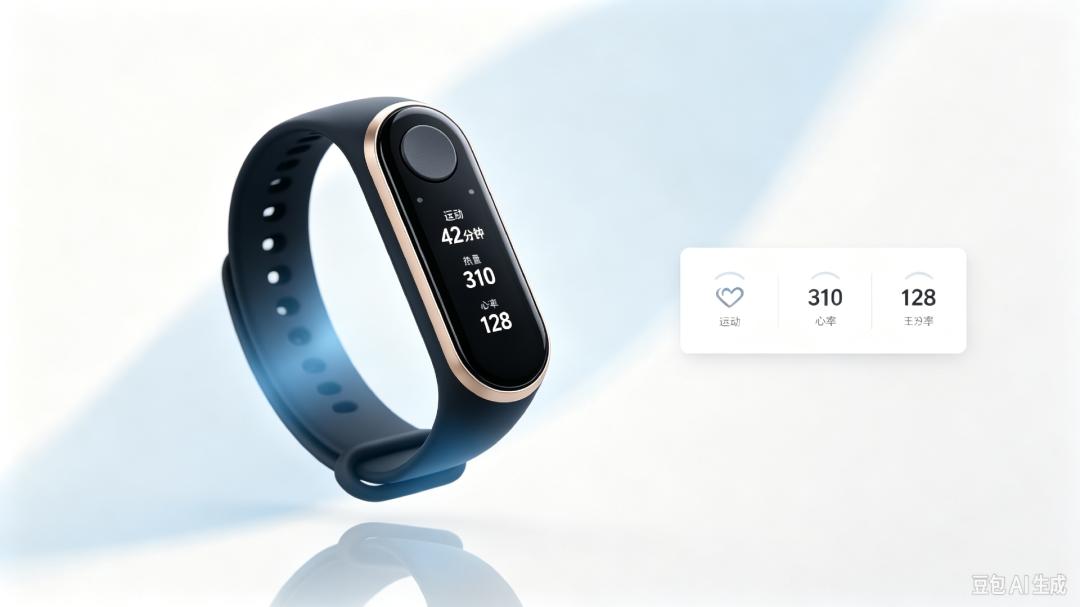
Large language models are being embedded into watches. Huawei has integrated both the Pangu large model and DeepSeek on its WATCH 5, with an additional professional sports health model; Xiaomi's on-device AI turns the watch into a distributed node of the personal AI system; in public communications, Kumi focuses on integrating multiple AI models into a single watch.
The direction of change is consistent: wearable devices are evolving from "displaying data" to "providing suggestions". In the past, the watch would tell you that you had two hours of deep sleep last night, and the next-generation watch will tell you what time you should go to bed tonight and why. The watch happens to be the cheapest entry point for on-device AI: it is close to the body, always on, stays on the wrist 24 hours a day, and continuously generates continuous sensor data such as heart rate and blood oxygen.
Wearable devices are the first batch of hardware that can support the implementation of cloud-based large models for individual users.
The gap is also widening here — Huami's Zepp Coach has been positioned as a subscribable software service, but subscription revenue has not been disclosed separately, and its commercialization is still in the early stage.
Whoever can first smooth the closed loop of "data input, suggestion output, user willingness to pay" will upgrade the watch from an accessory to a value-added service.
The third is globalization, and the meaning of this round of overseas expansion has changed. Let's look at a side case: smart glasses. EssilorLuxottica's financial report shows that its AI glasses in cooperation with Meta sold more than 7 million units in 2025 — while the total sales of the previous two years was only 2 million units; the company plans to increase its annual production capacity to 10 million units by the end of 2026, and is discussing raising it to 20 million to 30 million units.
IDC predicts that Chinese manufacturers will account for 45% of global smart glasses shipments in 2026, and four Chinese manufacturers including Xiaomi and RayNeo have already entered the global top five. The role of Chinese manufacturers in the global wearable market is expanding from selling watches to covering every new product category.
Watch manufacturers are going even deeper.
Amazfit's products are available in more than 90 countries, and Kumi's products are sold to more than 80 countries, and it also authorizes technologies to peer companies according to public reports compiled by Tianyancha.
The previous generation of Chinese manufacturing going overseas earned processing fees, with orders and pricing power all in the hands of others; this generation earns brand premium, channel networks and technology licensing revenue. Huami's gross profit margin rising from 26.2% to over 38% is the direct manifestation of the transformation from OEM to independent brand.
The three tickets are superimposed as thresholds: medical qualifications first screen out companies that only know how to make consumer electronics, on-device AI then screens out companies that lack investment in data and algorithms, and after passing the two checks, companies still need to have control over global channels.
The first half of the competition is about who runs faster, and the second half is about who gets all the necessary qualifications.
The second entry point and the competition for the ultimate watch
The competition for entry points has already begun. The best sample is smart rings. The Finnish company Oura has sold more than 5.5 million rings in total, its valuation doubled to 11 billion U.S. dollars within one year, and it was revealed in 2026 that it had secretly submitted an IPO application with a target valuation of more than 16 billion U.S. dollars.
What makes the capital market give this valuation is its business model: in addition to one-time hardware sales, a monthly subscription of 5.99 US dollars unlocks full analysis functions, and the annual recurring revenue from subscriptions alone has reached 144 million U.S. dollars.
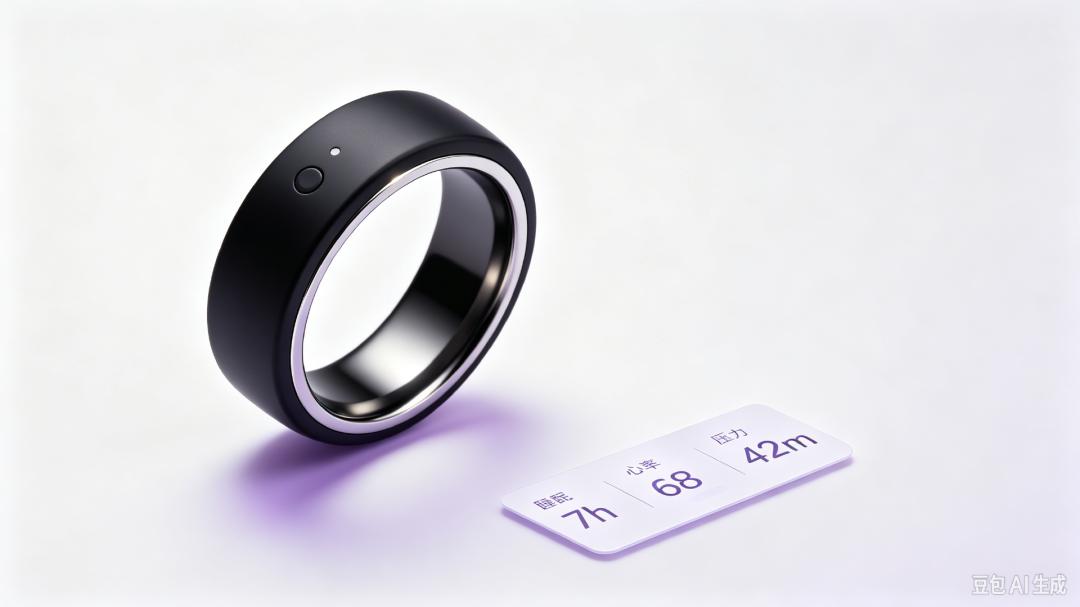
According to Omdia statistics, Oura's global market share in the smart ring market reached 74% in the first half of 2025, ranking first steadily. Samsung is also following up — it announced in July that it would extend this risk assessment function to Galaxy Ring via software update in autumn 2026, which will be the first smart ring with FDA approval for over-the-counter sleep apnea risk assessment.
The ring proves that the model of non-inductive wearable plus subscription service is feasible.
People who feel uncomfortable wearing watches while sleeping are willing to wear a ring all night, and continuous and complete nighttime data is exactly the most valuable part of health analysis.
For all watch manufacturers, this points to the same path: the form of the entry point can change, rings, glasses, earphones are all viable options, but the business model behind the entry point remains the same.
Back to the question at the beginning: after the market landscape is fully formed, what exactly is the competition in this industry about? Market share in the first half only represents the pattern, and the three tickets for the second half determine the qualification. Whoever obtains all three tickets including medical qualifications, on-device AI and global channels will enter the final round of competition.
Behind the three tickets is the same core test: transform hardware sales into data services, and turn devices from "one-time sales" into "recurring annual revenue sources".
Whether this path is feasible has been answered by Oura's 144 million U.S. dollar subscription revenue; at the end of this path, SKG's 53.2% gross profit margin marks the profit ceiling. The largest shipment volume does not mean that a company can define the entire industry.
The final competition on the wrist is about who first gets this closed loop running, and who first turns the wrist into a continuously renewed revenue-generating asset.
This article is from the WeChat official account "LingTai LT" (ID: LingTai_LT), author: Ma Duoduo, editor: Hu Zhanjia, published with authorization from 36Kr.