SF Express takes the lead, with a large number of express delivery enterprises stepping into this track one after another, and the commercialization of this sector is still fraught with numerous obstacles.
Low-altitude UAV logistics is no longer a concept confined to laboratories, and has truly flown into our cities and industries.
Take the data of Shenzhen as an example, from January to August this year, the total number of low-altitude logistics flights across Shenzhen has reached 736,000, a year-on-year increase of 30.4%. With the continuous improvement of aircraft performance and the gradual implementation of ground supporting facilities, it has formed a dislocation and complementary relationship with ground logistics. The entire air logistics network in the Guangdong-Hong Kong-Macao Greater Bay Area is being rolled out at a fast pace.
Fengyi UAV under SF Express is a very representative player in the low-altitude logistics sector of the Greater Bay Area. By the end of June 2026, Fengyi has opened more than 1,100 routes in the Greater Bay Area in total, with a cumulative number of flights approaching 1 million, delivering over 12.8 million parcels. In the first half of this year alone, its transportation order volume in Shenzhen rose by 20% year-on-year.
Of course, SF Express is not the only express enterprise that has deployed low-altitude logistics. JD Logistics, China Post, and the "Three Links One Reach" express enterprises are also eager to try. Some are testing express delivery to villages in mountainous areas to solve the last-mile delivery problem in rural areas; some are building air-ground integrated operation centers to plan intercity air transportation. An industry competition in the low-altitude field has quietly escalated.
Unavoidable Practical Bottlenecks
It is worth mentioning that Fengyi's business is no longer limited to high-end urgent parcels. It has gradually started to undertake regular time-sensitive express services, so that ordinary people can also enjoy the dividends brought by low-altitude logistics. At present, its routes have covered core areas including Bao'an in Shenzhen, Nansha in Guangzhou, and Hualong in Guangzhou. The transported categories include business documents, fresh food, and industrial spare parts for factories.
According to Yibao Online, relying on the air routes, a large number of logistics services between Shenzhen and Dongguan have been directly upgraded from half-day delivery to hour-level delivery in the past, effectively improving the speed and efficiency of the manufacturing supply chain in the Greater Bay Area.
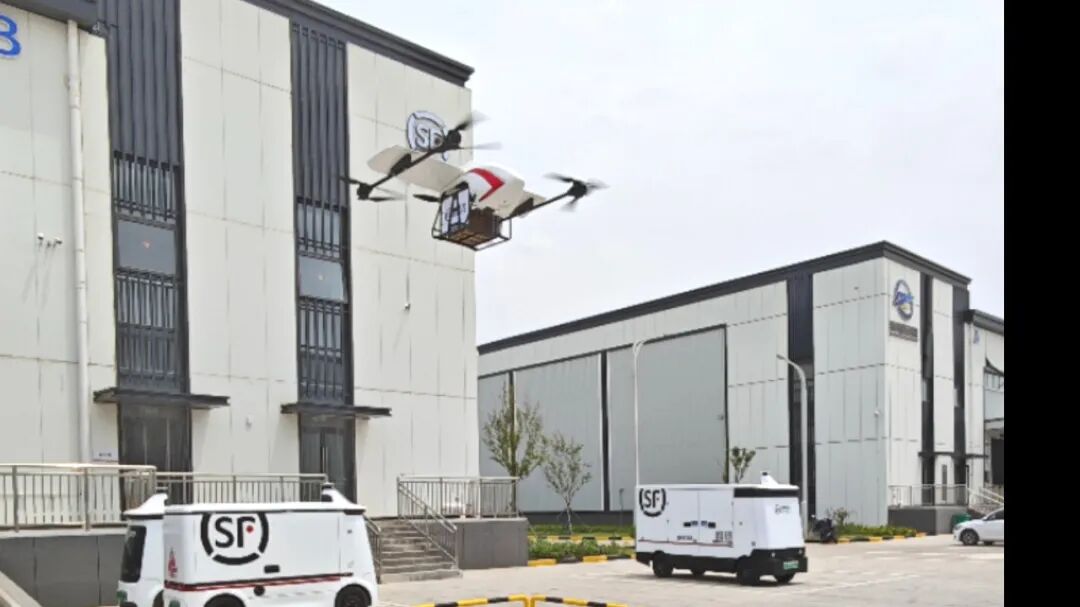
Judging from the current layout of major express enterprises, SF Express started early. Relying on the policy environment of the Greater Bay Area that allows pilot implementation, it has built a large-scale and normalized route network; JD Logistics focuses on county and rural markets; while the "Three Links One Reach" enterprises are mostly in the pilot exploration stage, with only partial route tests, and there is still a long way to go before large-scale commercialization.
In short, the entire industry is currently in the transition stage from demonstration pilots to commercialization. The positioning of low-altitude logistics is not to replace trucks and couriers, but to form a dislocation and complementary relationship with them. The ground system is suitable for large-volume, low-cost ordinary parcels; the low-altitude system prioritizes the transportation of urgent parcels, fresh food, high-value spare parts, and delivery in remote villages, to build a three-dimensional logistics system combining "ground + air".
While the UAV industry is developing prosperously, if we look beyond the superficial boom, we will find that there are still many obstacles on this track. If low-altitude logistics wants to achieve large-scale operation, it is currently facing several major hurdles.
The first unavoidable problem is the difficulty of airspace management and approval. The sky is different from the ground, where there are no ready-made roads. Every UAV route needs to be filed and coordinated. Once the flight crosses cities, the difficulty of coordination will further increase. If airspace scheduling cannot keep up with the speed of business expansion, it will directly restrict the outward expansion of the low-altitude logistics network.
The second is the cost pressure, which is also the most headache problem for all express enterprises. A large logistics UAV costs hundreds of thousands of yuan just for procurement, and it is also necessary to build special takeoff and landing sites, charging and maintenance facilities, leading to very large upfront investment. At present, the flight scale has not been fully expanded, and the costs of equipment depreciation, operation and maintenance, and scheduling personnel are allocated to each order, so the single-parcel delivery cost of UAVs is significantly higher than that of traditional ground transportation, and the risk of "losing money on every flight" always exists.
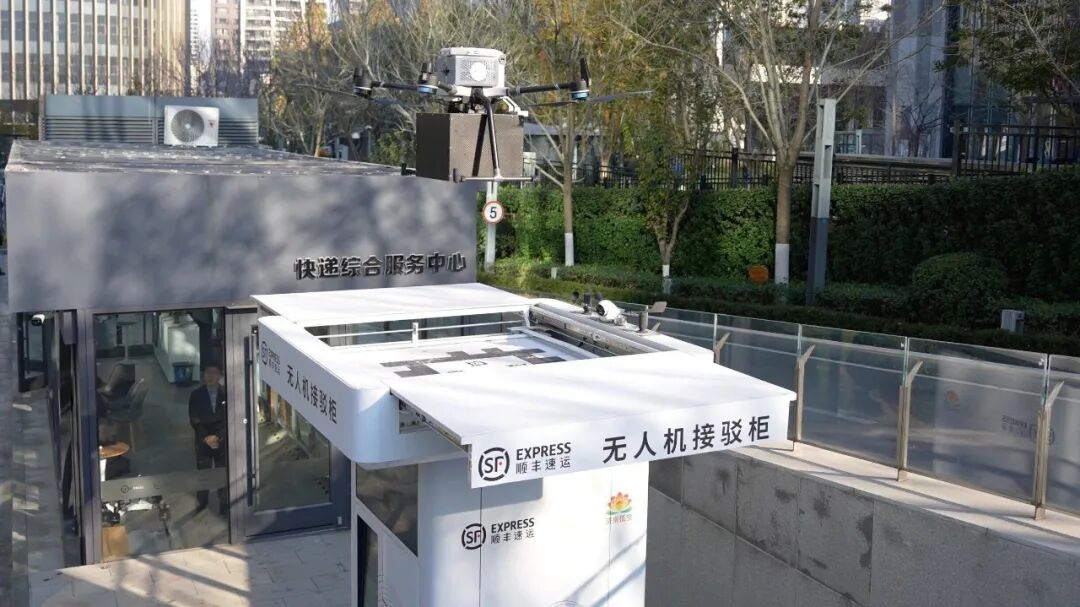
In addition, the ground supporting facilities are severely insufficient. Except for a few cities such as Shenzhen that have started to build takeoff and landing sites in batches, most cities do not have standardized UAV takeoff and landing platforms, charging and operation and maintenance stations. Even if the UAV flies over the community, there is no mature and unified solution for how to safely deliver the parcels to users and how to connect the end link with outlets and service stations. After the flight in the air, the landing link often gets stuck.
At the same time, the noise caused by UAVs and the safety risk of UAV crashes are issues of concern to the general public. Once a flight accident occurs, it is easy to cause public controversy. The public's acceptance of low-altitude logistics is also a practical factor that cannot be ignored in the development of the industry.
Do Not Blindly Chase the Trend
Under the trend, the bottlenecks exist objectively, but this does not mean that low-altitude logistics has no prospects. If the express industry wants to successfully develop this track, it should not only pursue more and faster UAV flights, but also find the correct development path and move forward step by step.
Yibao Online believes that first of all, it is necessary to clarify the positioning in the business model, recognize that low-altitude logistics is a supplement rather than a replacement, and do not rush to use UAVs to compete for ordinary low-cost e-commerce parcels.
No matter it is serving the manufacturing industry, carrying out intercity allocation of urgent spare parts, solving the pain points of delivery to villages in remote mountainous areas and islands, or undertaking time-sensitive cargo such as fresh food and medical samples, we should first deepen and implement these high-value scenarios, gradually spread the equipment and operation costs through the growth of business volume, and then extend to ordinary express services slowly, instead of blindly burning money to pursue scale expansion.
Secondly, infrastructure construction should follow the path of "government-enterprise collaboration". It is too stressful for express enterprises to invest alone in building a large number of takeoff and landing sites. Local governments can combine urban planning to incorporate UAV takeoff and landing points and low-altitude scheduling service stations into the new urban infrastructure. Just like what Shenzhen is promoting, deploying standardized takeoff and landing points in industrial parks, logistics parks, and large communities.
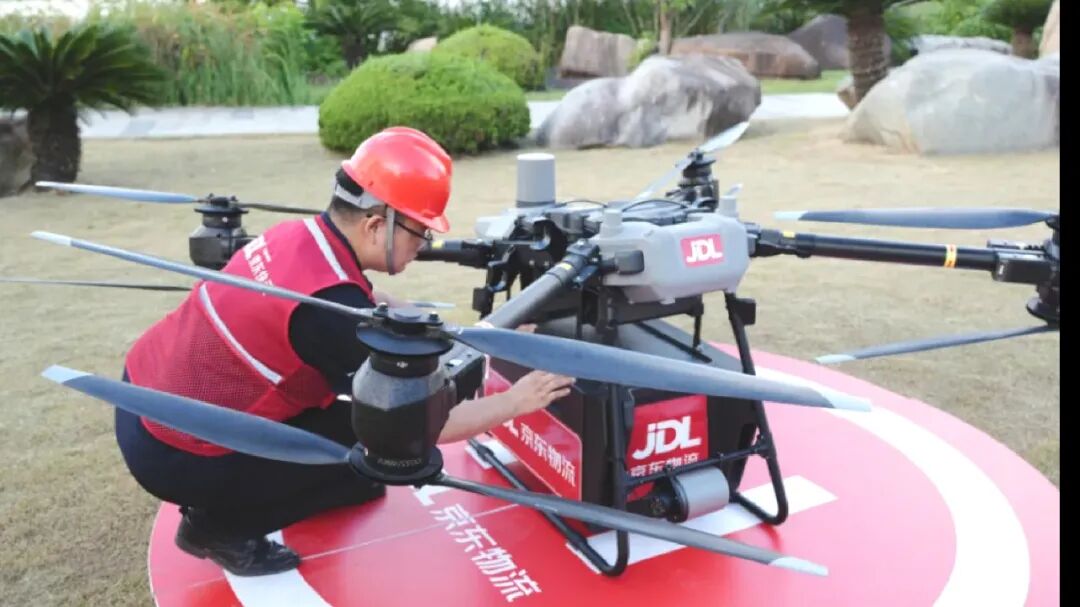
At the same time, we will accelerate the improvement of the airspace management mechanism, explore dynamic routes, simplify the approval process for normalized operation routes, and build a unified low-altitude scheduling platform, so that UAVs can have "air express lanes" dedicated to the express industry.
Furthermore, appropriate collaboration can be explored within the industry to avoid each enterprise building an independent low-altitude network separately. At present, SF Express, JD, and the "Three Links One Reach" enterprises are all making layouts. If each enterprise builds its own sites and applies for routes separately, it will cause a lot of redundant investment. In the future, we can explore the sharing of takeoff and landing sites and ground support facilities to lower the entry threshold for the entire industry.
At the same time, continuous technical breakthroughs are the foundation. Technologies including batteries, lightweight fuselage, wind and rain resistance flight, and noise reduction need continuous iteration and upgrading. It is also necessary to accelerate the construction of airworthiness standards for logistics UAVs and unify the safe operation specifications. Only by firmly ensuring flight safety, reducing accident risks and flight noise, can UAVs be truly integrated into urban life.
All in all, the Greater Bay Area has set a good example for the whole country now, and the commercialization of low-altitude logistics in Shenzhen has taken a very important step. However, we should be aware that low-altitude logistics is still in the early stage of development. While actively trying based on policy dividends, we must also respect the objective laws of cost and market, so as to open up a new growth space for the entire express industry.
This article is from the WeChat official account "Express Observer" (ID: exobserver), written by Yibao Online, and authorized for release by 36Kr.